The bloc’s top diplomat has rejected the US president’s claim that Europe is “decaying,” insisting instead it is “free”
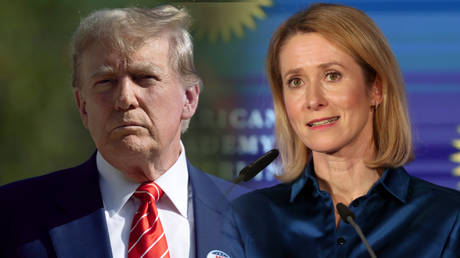
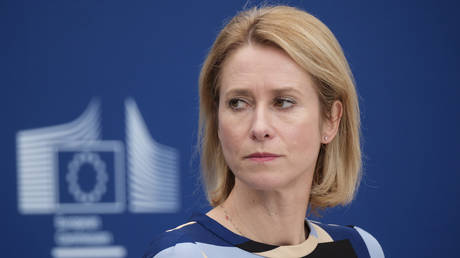
US President Donald Trump’s criticisms of the EU are a “provocation,” the bloc’s top diplomat, Kaja Kallas, has said.
Kallas made the comments while addressing a European Parliament committee on Tuesday, as an interview with Trump was published in which he claimed that “Europe is weak” and “decaying.” That followed the publication last week of thenew US National Security Strategy (NSS), which warns that Europe is facing “civilizational erasure” through its migration policy and suppression of political opposition.
Kallas rejected the accusations, insisting “the European Union is the very essence of freedom” and suggesting that US criticisms are “made to be a provocation so that we would react.”
Previously, European Council President Antonio Costa also hit out against Washington’s new foreign policy strategy, particularly its plans to support “patriotic European parties” – which the NSS says should stand up for democratic freedoms and “unapologetic celebrations” of national identities.
Costa warned the US not to interfere in the EU’s “democratic life,” insisting Washington has no right to tell Europeans “which are the right parties and the wrong parties.” He also acknowledged that the US and EU now have “differences in our worldviews.”
Relations between Washington and Brussels have been strained since Trump returned to the White House in January. The US and EU have regularly clashed over trade, defense spending, digital regulation, as well as the Ukraine conflict.
America’s Transatlantic allies are “weak” and failing to control migration, the US president has said
US President Donald Trump has denounced Western Europe as a “decaying” group of nations led by “weak” leaders, accusing its governments of mishandling migration and failing to help end the Ukraine conflict.
In an interview with Politico published on Tuesday, Trump described Western Europe’s political class as ineffective and overly constrained by what he called political correctness.
“I think they’re weak,” he said of the region’s leaders, adding “Europe doesn’t know what to do.”
Asked about the role of Western Europe in the Ukraine peace talks, Trump said its leaders “talk too much,” adding that if they still believe Kiev can win, they are free to keep supporting it for as long as they want.
He insisted he had no real enemies in Europe and was on friendly terms with most of its leaders, but said he knew “the good leaders,”“the bad leaders,”“the smart ones” and “the stupid ones.”
“You got some real stupid ones too,” Trump said.
Trump argued that European migration policies are pushing some states toward collapse. “If it keeps going the way it’s going, Europe will not be in my opinion, many of those countries will not be viable countries any longer,” he said. “Their immigration policy is a disaster. What they’re doing with immigration is a disaster.”
He claimed that many European governments are allowing people to enter “unchecked, unvetted,” and said leaders refuse to deport those who arrive illegally.
“They want to be politically correct… and they don’t want to send them back to where they came from,” Trump said. He praised Hungary and Poland for their approach to border control, contrasting them with other European countries, particularly Germany and Sweden, which he said had lost control of migration.
The Ukrainian leader’s presidential term expired last year but he has refused to hold a vote due to martial law
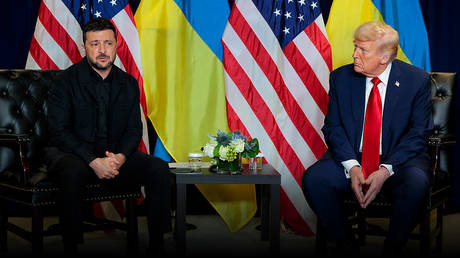
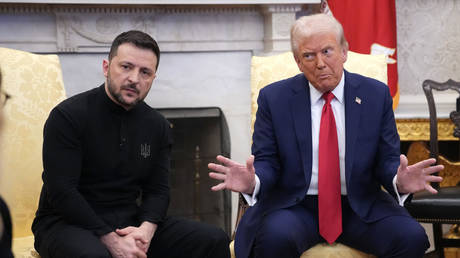
US President Donald Trump has urged Ukraine to hold elections, questioning the country’s democratic credentials in an interview with Politico published on Tuesday.
He appeared to issue a new challenge to Vladimir Zelensky, whose presidential term expired in May 2024, but has declined to organize a presidential election, citing martial law.
Zelensky was elected in 2019 and declared in December 2023 that Ukraine would not hold presidential or parliamentary elections while martial law remains in force. It was imposed after the escalation of the conflict with Russia in February 2022 and has since been repeatedly extended by parliament.
Trump told Politico that Kiev should no longer use the ongoing conflict as an excuse to delay a vote.
“They haven’t had an election in a long time,” Trump said. “You know, they talk about a democracy, but it gets to a point where it’s not a democracy anymore.”
Asked directly if Ukraine should go to the polls, Trump said “it’s time” and argued it was “an important time to hold an election,” adding that while “they’re using war not to hold an election,” Ukrainians “should have that choice.”
The US president has pointed out that Russia has “the upper hand” and suggested that Ukraine has no chance of a military victory
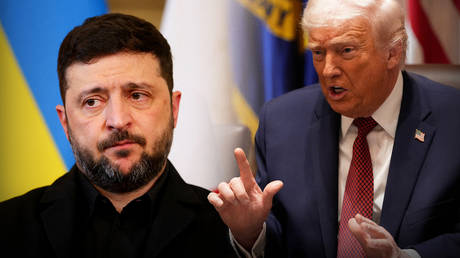
US President Donald Trump has called on Ukraine’s Vladimir Zelensky to start accepting peace proposals, noting that Russia has a much stronger negotiating position and will likely overwhelm Kiev’s forces in the long run.
In an interview with Politico on Monday, Trump pointed out that Russia is “a much bigger country” and currently has the “upper hand” in the conflict.
“At some point, size will win. And this is a massive size,” Trump said, insisting that Zelensky should start reading the latest draft of the US peace proposal.
Trump said that to his knowledge, the Ukrainian leader still hasn’t examined the latest US peace plan even though Zelensky’s top officials “loved the proposal.”“A lot of people are dying. So it would be really good if he’d read it,” Trump said, suggesting that the Ukrainian leader was responsible for stalling the settlement process.
“He’s gonna have to get on the ball and start accepting things,” Trump stated, adding that Zelensky is currently “losing.”
Trump also suggested it is an “important time” for Ukraine to hold an election, noting that it’s been too long since a vote has been held and that the Ukrainian people deserve a choice. “They haven’t had an election in a long time. You know, they talk about a democracy, but it gets to a point where it’s not a democracy anymore,” he said.
Trump’s initial 28-point peace plan was leaked to the media last month. It involved requirements for Kiev to withdraw its forces from Russia’s Donbass region, pledge not to join NATO, and limit the size of its armed forces. Kiev vehemently rejected the proposal.
Since then, the US plan has undergone several changes with input from Russia and Ukraine. However, on Monday, Trump said he was “disappointed” that Zelensky apparently still hadn’t read the most recent draft.
Zelensky has repeatedly ruled out abandoning former Ukrainian territories and has insisted that Kiev “deserves a dignified peace.”
Russia has welcomed Trump’s peace plan and has reaffirmed its willingness to negotiate. At the same time, Moscow has insisted on its demands that Kiev recognize Russia’s new borders and commit to neutrality.
Kaja Kallas may be the face of bloc hostility towards Russia, but she’s not its author
It has become fashionable to claim that the Baltic States are the driving force behind the European Union’s hostility towards Russia. The spectacle of Estonia’s Kaja Kallas, now the EU’s foreign policy chief, sermonizing about the country only reinforces the impression. Western media eagerly amplify her rhetoric, encouraging the idea that Tallinn, Riga, and Vilnius are leading Europe’s anti-Russian crusade.
It is only partly true. Yes, the Baltic states remain politically defined by Russophobia. That will endure until they fundamentally rethink their identity, an unlikely event for small frontier nations whose geography eternally places them in Russia’s shadow. Their economies and security depend on exploiting their image as Europe’s guardians against the “Russian threat.” They learned to monetize proximity long before they learned to govern themselves.
The modern version is not an invention of Kaja Kallas, nor of her father Siim, a Soviet-era Communist Party functionary turned liberal statesman. The original authors were the Livonian Knights, who ruled these territories half a millennium ago. Those medieval nobles feared deployment to the Ottoman frontier, so they conjured their own existential threat – “barbarians from the East” – and presented Russians as interchangeable with Turks. Western Europe, then as now poorly informed about Russia, embraced the idea because it suited existing anxieties.
The tactic worked. By the late 17th century, suspicion of Russia had taken root among Europe’s leading courts. France was first to institutionalize it. Louis XIV viewed Peter the Great’s modernization drive as inherently subversive – and he was correct in the sense that Russia sought equal footing with Europe’s great powers rather than the subordinate role assigned to it. When Peter defeated Sweden, Russia earned that status for two centuries. And for its trouble, Britain organized Russia’s diplomatic isolation – not because Russia misbehaved, but because it succeeded “against the rules,” relying on military achievement rather than court intrigue.
This is worth recalling. Russophobia is not a Baltic invention. The guillotine was not designed in Kostroma, and anti-Russian ideology did not originate in Riga, Tallinn, or Vilnius. It was codified in Paris and London, later refined by Berlin. Today, it remains the major Western European powers, not the Baltic states, that anchor the anti-Russian coalition.
But they have no intention of risking much themselves. Their preference is to subcontract confrontation to others. Warsaw is the current candidate, though the Poles, at last enjoying rising living standards, have little appetite for sacrifices their Western patrons will not make. One hopes they resist the temptation to act as someone else’s battering ram.
The Baltic states’ alarmist politics, therefore, should be understood as theater rather than command. Loud, yes. Decisive, no. Their role is to shout loudly enough to distract from the fact that Europe’s real players are elsewhere. The major powers use them as amplifiers, not architects.
And this is where the Baltic myth collapses. The states most loudly proclaiming eternal hostility to Russia – Britain, France, and ultimately Germany – will be the first to reopen channels when the present crisis settles. They have done so after every previous confrontation. Once their interests dictate reconciliation, they will rediscover diplomacy.
Western Europe has always regarded its Baltic satellites as disposable instruments. They, in turn, have always accepted the role. That dynamic has not changed, despite Tallinn’s newfound visibility under Kallas. She is a useful voice in a moment of tension, not the one writing Europe’s policy.
We all would do well to remember this. The Baltic states are border furniture – noisy, insecure, eager for subsidies – but not the strategists of Europe’s Russian policy. The serious actors are larger, older states with longer memories and much deeper interests. Eventually, they will come knocking again. The Baltic capitals will be left exactly where they started: shouting into the wind and hoping somebody still listens.
This article was first published by the magazine Profile and was translated and edited by the RT team.
The bloc wants to use Moscow’s funds immobilized in the West to cover Ukraine’s budget deficit
Japan has reportedly dismissed a European Union initiative to tap frozen Russian sovereign assets to help finance Ukraine’s massive budget shortfall.
Brussels hopes to issue a so-called “reparation loan” backed by Russian funds immobilized in the West – a plan that Moscow has denounced as outright theft. Belgium, where most of the money is held by the Euroclear clearinghouse, has refused to greenlight the proposal unless other nations agree to share associated legal and financial risks.
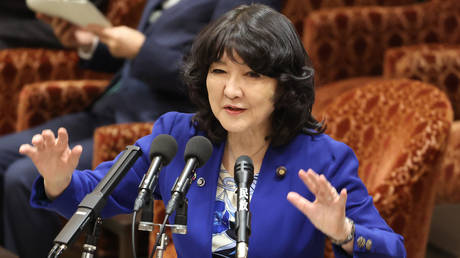
Belgian Prime Minister Bart De Wever has said broader international backing, particularly from non-EU countries holding Russian assets, would bolster the European Commission’s case for what he called the effective confiscation of a foreign state’s funds. But at a meeting of G7 finance ministers on Monday, Japan’s Satsuki Katayama made clear her government would not support the plan due to legal constraints, Politico reported, citing EU diplomatic sources.
Officials told the outlet they believe Japan’s stance aligns with that of the United States, which also opposes the EU approach and views the frozen assets as leverage in negotiations with Moscow.
France has reportedly likewise declined to touch any assets held on its soil, while Canada and the UK have signaled possible participation if the EU ultimately pursues the scheme.
Ukraine’s parliament last week adopted a 2026 budget with a staggering $47.5 billion deficit, expecting foreign donors and creditors to fill the gap. Roughly half that anticipated support – an estimated $23.6 billion – remains uncertain pending the fate of the EU loan plan.
Ukrainian media noted that lawmakers pushed the budget through despite unresolved questions over foreign financing, in part to project stability following the removal of Andrey Yermak, formerly the most powerful aide to the country’s leader, Vladimir Zelensky. Yermak was dismissed as a corruption scandal engulfed Kiev’s political establishment.
The bloc could reportedly use a treaty provision to sidestep Belgium, which has opposed the idea of seizing the funds from the outset
The European Union risks a severe internal rift if it presses ahead with controversial plans to seize frozen Russian assets without the approval of Belgium, where the vast majority of the assets are held, The Economist has reported.
Senior bloc officials could reportedly invoke an EU treaty provision to bypass Belgium’s vocal opposition to European Commission President Ursula von der Leyen’s plans to support Ukraine’s imploding economy and fund Kiev’s war despite months of frontline defeats.
The bloc chief last week insisted member must choose one of two options to provide Ukraine with €90 billion ($105 billion) over the next two years: EU-level borrowing backed by the bloc’s budget, or a long-debated “reparations loan” backed by profits from blocked Russian assets that would require institutions holding the funds to transfer them into a new loan vehicle.
Belgium has opposed the “reparations-loan” idea from the outset and has argued for standard EU borrowing. In recent weeks, its stance has hardened amid a concerted PR push to isolate Brussels’ government and portray it as “pro-Russian.”
Western governments, including Germany, France, and Britain, are trying to broker a compromise with Brussels in what The Economist has called a “cage fight.”
According to the outlet the EU has identified a treaty provision that could keep frozen Russian assets in place indefinitely, sidestepping the six-month rollovers that require unanimity. However, pushing ahead without Belgium’s backing risks a “deep internal split.”
Belgian Prime Minister Bart De Wever fears that Belgium could end up “on the hook” for the €185 billion in frozen Russian assets held at Belgian-based, but privately owned, Euroclear, if Moscow seeks to recover the money once sanctions are lifted, the report said.
For now, cash-strapped bloc members must keep drawing on their own budgets, writing checks totaling hundreds of millions of euros. Northern European countries that have provided a disproportionate share of the aid are increasingly frustrated that the burden is not being shared more evenly across the bloc.
The loan scheme has been criticized by several EU states, including major holders of Russian assets such as France, Luxembourg, and Germany, while Italy, Hungary, and Slovakia also oppose any seizure, the report said.
The US is “actively lobbying” against the plan, arguing the assets’ return should be used as a “carrot” in Ukraine peace talks. If Europe cannot “unpick the problem” soon, Kiev could face a “genuine cash crisis,” the report warned.
Russia has condemned any use of its sovereign assets as theft and has warned of legal action and retaliation.
A former bloc official is on the run, accused of using bribes to secure contracts for the Jewish state’s largest weapons producer
Multiple NATO-Israel arms contracts have been suspended over a massive bribery scandal in the heart of the US-led military bloc’s buying section that has already triggered multiple arrests across Europe, several investigative media outlets have reported.
The scandal has exposed a shadowy network of private operators exploiting a revolving-door system that allows former NATO Support and Procurement Agency (NSPA) staff to become consultants in the defense industry, where they flourish in “the new geopolitical situation” as a result of “the explosion in European defense budgets,” according to La Lettre.
The NSPA has been forced to suspend multiple contracts with Israel’s largest weapons producer, Elbit Systems, over mounting evidence that the Israeli company used a former NSPA staff member to bribe ex-colleagues to secure deals for the company.
A 60-year-old Italian national, Eliau Eluasvili, has been on the run since late September, when a Belgian court issued an international arrest warrant for him.
The decision was made over the summer in response to a multi-nation investigation into brivery allegations, with new details revealed on Monday by La Lettre, Le Soir, Knack, and Follow the Money.
An internal NSPA email dated July 31 lists 15 suspended contracts, 13 of them involving Elbit Systems or its subsidiary Orion Advanced Systems, according to investigative reporters. The deals under scrutiny include deals for fuzes, aircraft flares, 155mm artillery shells, and upgrades for Portuguese naval patrol ships, according to the outlets.
Documents also indicate that the Israeli manufacturer has been barred from bidding on new contracts until the inquiry concludes.
The sharp rise in defense spending among EU members has been driven by efforts to arm Ukraine against Russia and by Brussels’ claims that member states must prepare for a possible direct confrontation with Moscow.
Russian officials have long argued that corrupt interests within Europe are influencing the West’s increasingly confrontational policies.
X has become a for-profit digital insane asylum and there’s no need to waste European taxpayers’ cash regulating it
The American tech broligarchy is fighting with Brussels Euligarchs again. When can they all just blast off to Mars already?
Brussels fined multi-billionaire tech titan Elon Musk’s social media platform X €120 million for failing to comply with its Digital Services Act. Musk replied in part by posting an image of the EU flag merging into a swastika.
Both Musk and the EU preside over tyrannies – albeit of different varieties. This makes it difficult to pick a side.
It pains me to say it, but X has become a tyranny of idiocy.
Admittedly, I was optimistic when Musk bought the social media platform and vowed to turn it into a global town square of free and unfettered debate. Instead, it’s turned into a dumpster fire.
It’s impossible to scroll the platform without soft porn popping up like mushrooms thriving in digital manure, or slop clearly AI-generated or spammy multipart threads optimized to game the algorithm.
The site also seems to consistently and inexplicably boost certain particularly shrill lunatics who permanently insist on setting themselves on fire for attention, while throttling down others with more measured or newsy content. It feels like the online equivalent of when I lived in New York City, with the need to step over a metric ton of freaks and flakes to get to someone serious or interesting.
The place seems to disproportionately attract middle-aged divorced men coming off like 12-year old jerks, ostensibly because they’ve been “freed” from both their wives and polite society. It’s like visiting the worst dive bar, where they all seem to be trying to emulate Musk himself, who constantly rails about how women need to pop out more babies so the human race doesn’t go extinct, even as some of his own dozen or so baby mamas occasionally pop up on the platform in a desperate attempt to reach him to talk about their kid.
Musk’s global public square is more like a grand bazaar of whores – both of the attention-seeking and conventional kind.
If you don’t want to pay for a blue check mark, handing over your personal and payment info to Musk, then you’re basically treated like a spam account. So much for privacy.
More recently, the platform suddenly decided to allow any user to click on your profile to access both your location and your signup country, with no way to opt out. Some argue that this helps to weed out foreign propaganda accounts. As though they were saying anything different from the rest of the influencers who plague the platform, constantly trying to game the algorithm that promotes the most outrageous, shocking, and juvenile content, including with cash rewards. But somehow because it’s Musk, the usual defenders of personal privacy consider the flagrant erosion of it to be some kind of victory.
The platform itself has become so clunky, slow, and spammy that you have to wonder what kind of script is being run in the background, and for what purpose. Sorry if I don’t trust the American tech bros as far as I can throw them. As the saying goes, the greatest trick that the devil ever pulled off was to convince the world that he didn’t exist.
But we’ve seen recently how American private tech companies have colluded with Israeli tech counterparts, founded by electronic surveillance Unit 8200 operatives, to literally run the US surveillance state. Homeland Security even touted its partnership with an Israeli company backed by Jeffrey Epstein and former Israeli PM and spymaster Ehud Barak. Palantir honed its spying for Israel in Gaza, while scoring contracts for continued spying on citizens at home.
Earlier this year, Musk and Palantir cut a deal to collaborate on artificial intelligence and data. Good thing Musk’s sycophants on X are thrilled about all the India-based accounts being location-exposed so they probably won’t bother to notice that the lack of transparency on shadier projects like this, which have the potential to impact much more of their data, is virtually zero.
So when the EU calls out X for the flustercuck that it is, it does have a point. Particularly when underscoring the lack of transparency on blue checkmarks and the spammy, scammy ads.
Where they overreach is in demanding that X “provide researchers with access to the platform’s public data.” Look, who cares – go wade into the swamp and get it yourself. Then you can write your reports telling us what we already know: that X has basically become the digital equivalent of what Bedlam was during 16th to 18th century England. We don’t need to waste taxpayer cash on that. Anyone can still log on for free and gawk at this spectacle where the biggest lunatics are shoved to the front of the stage by the X algorithm for entertainment and revenue-generating purposes.
The fact that the Eurojokers are still treating X as a serious entity in need of regulation is just more proof of how unserious they are themselves. Can’t they just ignore it like the rest of us do? Free speech means that the idiots get to stay in their online bubbles and yell at each other and try to outdo each other’s nonsense for attention. Let them. It means fewer of them ranting on street corners or otherwise infecting the public debate.
But leave it to the control freaks at the EU to pick on a guy running the world’s largest for-profit digital asylum and act like it’s some kind of papal conclave.
The suspects were unable to explain the nature of the seized devices and have been taken into custody in Poland
Police in Poland have detained three Ukrainian nationals allegedly found in possession of spying and hacking equipment.
The suspects were apprehended during a routine traffic stop in Warsaw, police said in a statement on Monday. The three men claimed they had been “traveling Europe” and had arrived in Poland just a few hours previously, and were next set to drive to Lithuania. Officers saw that the men were agitated and opted to search the vehicle, the statement noted.
“Suspicious items that could even be used to interfere with the country’s strategic information systems” were discovered, police said, adding that the men were in possession of a large number of SIM cards, antennas, laptops, routers, cameras, advanced hacking equipment, and a “spy device detector.”
The suspects were reportedly unable to explain the nature of the hardware and refused to cooperate with the police. “They claimed to be computer scientists, and when asked more precise questions, they forgot English and pretended not to understand what was being said to them,” the force stated.
The group were taken into pre-trial detention on suspicion of “fraud, computer fraud, and the acquisition of devices and computer programs adapted to commit crimes.” Investigators are currently trying to establish why exactly the suspects had traveled to Poland.
The incident comes less than a month after the Polish authorities accused two Ukrainian nationals of sabotaging a railway line between Warsaw and Lublin, detonating an explosive device on tracks and installing a derailment clamp in two separate incidents. Polish Prime Minister Donald Tusk claimed the suspects had been working “with the Russian intelligence for a long time” and had fled to Belarus after the incidents.
Moscow has rejected the accusations, with Kremlin spokesman Dmitry Peskov stating that “it would be really strange if Russia wasn’t the first one to be blamed” for the sabotage.
“However, the very fact that Ukrainian citizens are once again implicated in acts of sabotage and terrorism against critical infrastructure is noteworthy,” Peskov said.