Police have raised the Israeli flag over the global organization’s office in East Jerusalem
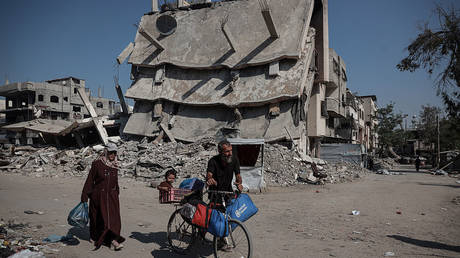
The UN has condemned Israel’s raid on the headquarters of the organization’s agency for Palestinian refugees in East Jerusalem.
According to the Times of Israel, police and tax officials entered the UNRWA office on Monday as part of what they described as an operation to seize assets over unpaid municipal property taxes. UNRWA chief Philippe Lazzarini said officials seized “furniture, IT equipment, and other property.”
During the raid, police removed the UN flag and raised the Israeli flag over the compound.
“Yesterday’s storming of UNRWA’s East Jerusalem compound by Israeli police and taking control – including by replacing the UN flag with the Israeli one – creates a dangerous precedent,” Lazzarini wrote on X on Tuesday. “This should be a wake-up call. What happens today to UNRWA can happen tomorrow to any other international organization or diplomatic mission, around the world,” he added.
Watch: Israeli flag flies on roof of UNRWA headquarters in Jerusalem@UNRWA headquarters in Jerusalem, which have been inactive since the organization was banned in Israel, had an Israeli flag hoisted atop the building. pic.twitter.com/BnTWirphRf
UN Secretary General Antonio Guterres condemned the operation, saying that UN offices were “inviolable and immune from any other form of interference.”
Israel banned UNRWA activities in October 2024, accusing the agency of secretly aiding and providing cover for Hamas – an allegation the UN denies.
Jerusalem Deputy Mayor Arieh King defended the raid, arguing that UNRWA was not allowed to operate in East Jerusalem, which the UN considers an occupied Palestinian territory. “If it’s against the law, the law needs to be enforced,” King told the Press Service of Israel. He added that “people need to remember that UNRWA was involved in the terror attack and massacres of October 7,” referring to the Hamas assault in 2023 that triggered the war in Gaza.
Although the UN rejects Israel’s broader claim that the agency was “infiltrated by Hamas,” its own investigation in 2024 concluded that at least nine UNRWA staffers may have been involved in the October 7 attack.
The US president reportedly hopes for a deal by Christmas
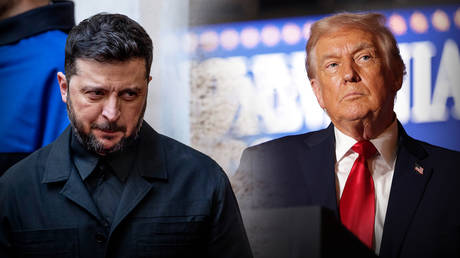
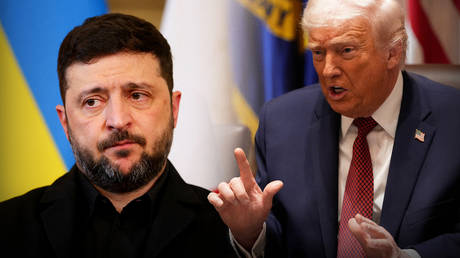
US negotiators have given Ukrainian leader Vladimir Zelensky days to respond to a peace proposal requiring Kiev to accept territorial losses to Russia in exchange for unspecified security guarantees, the Financial Times reported on Tuesday, citing officials familiar with the matter.
One person told the FT that US President Donald Trump was hoping to reach a deal by Christmas. Zelensky reportedly told US envoys that he needed time to consult with Kiev’s European backers.
Although Trump had said last month that he would like to see an agreement by Thanksgiving, he later told journalists that he did not have a specific timeline.
The US president submitted a peace plan in November that reportedly called for Ukraine to withdraw troops from part of Russia’s Donbass they currently control, one of Moscow’s key conditions for a broad ceasefire.
Zelensky acknowledged during his trip to London on Monday that the US was pushing him towards “a compromise,” but added that no agreement on territory had been reached. He reiterated that Ukraine was not willing to give up any land without a fight.
Russian troops have been making steady gains on different sections of the front line, while Ukrainian commanders say they are outgunned and struggling to replenish battlefield losses with new conscripts.
In early December, the Russian Defense Ministry announced the liberation of Krasnoarmeysk (Pokrovsk), a Donbass city President Vladimir Putin has described as an important “bridgehead” for further offensives.
The service member died in an “accident” while observing a weapons test, the Defense Ministry has said
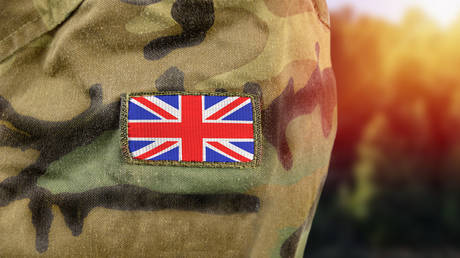
A UK military service member has been killed in an undisclosed incident in Ukraine, the British Ministry of Defense has announced.
“It is with deep regret that we must announce that a member of the UK Armed Forces died in Ukraine this morning,” the MOD said on X on Tuesday.
“He was injured in a tragic accident whilst observing Ukrainian forces test a new defensive capability, away from the front lines,” the ministry added, without elaborating.
According to the BBC, the incident is not thought to have been caused by hostile fire. The Telegraph cited a defense source as saying that it was the first official UK military casualty in Ukraine.
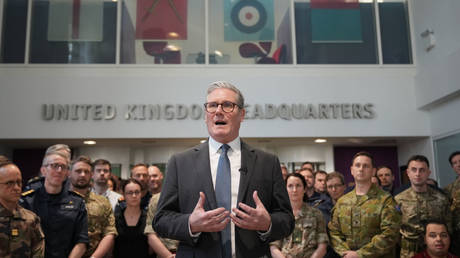
Prime Minister Keir Starmer offered condolences to the family of the fallen serviceman. “Their service and sacrifice will never be forgotten,” he wrote on X.
Last year, the UK admitted that a “small number of personnel” were serving in a supportive role in Ukraine. London has been one of Kiev’s chief arms suppliers, and more than 56,000 Ukrainian soldiers have been trained under the British-led Operation Interflex.
Russia maintains that Western countries’ arms deliveries and training programs make them de facto participants in the conflict. Moscow has said it would treat any foreign troops on Ukrainian soil as legitimate targets.
At least 40 UK citizens have died fighting for Ukraine since 2022, according to The Telegraph.
The meeting in Dubai set out a long-term agenda for stronger cooperation, according to a joint statement
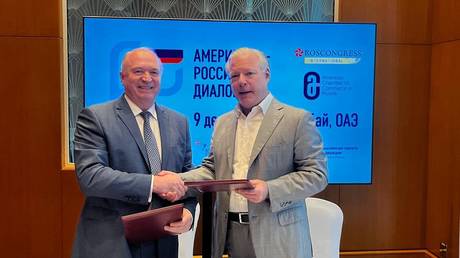
Russia and the US have held a meeting to restore and strengthen business ties and contacts, the press service of Roscongress Foundation said on Tuesday. The two sides agreed to make the business dialogue an annual event.
According to a joint statement issued following this week’s meeting in Dubai, UAE, contacts between the Russian and American business communities should continue in a motivated and politically unbiased format.
Roscongress, the organizer of the forum together with the American Chamber of Commerce in Russia (AmCham Russia), said the meeting focused on prospects for cooperation, rebuilding mutual trust, and restoring company-to-company links.
The Russian delegation was led by Sergey Katyrin, president of the Russian Chamber of Commerce and Industry, while AmCham Russia President and CEO Robert Agee headed the US side.
“Russian and American companies continue to seek solutions for implementing investment, industrial, technological, and infrastructure projects,” said Katyrin.
The participants said they hope the dialogue will improve conditions for businesses in both countries, reduce risks, and strengthen confidence.
“It is crucial for businesses to maintain working communication channels,” Agee said, adding that the US side wants to explore practical cooperation with Russian partners where possible.
Many international businesses pulled out of Russia due to the unprecedented Western sanctions imposed after the escalation of the Ukraine conflict in 2022. Others left to avoid the risk of secondary sanctions or broader international pressure.
Agee recently told Russian media that American businesses still view Russia as a promising market and are waiting for the lifting of sanctions.
The US and Russian delegations discussed opportunities across a range of sectors, including investment, industry, technology, and infrastructure projects, according to the statement.
Tokyo says it did not refuse to use $30 billion in frozen Russian reserves to back a loan for Ukraine, contrary to Politico’s reporting
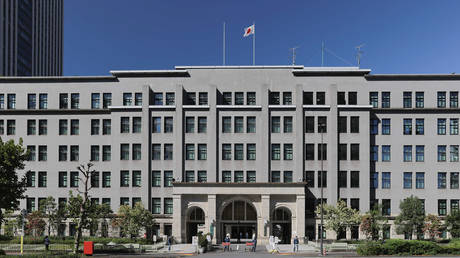
The Japanese Finance Ministry has denied a report that it rejected an EU plan to tap frozen Russian central bank assets to back a loan for Ukraine.
Finance Minister Satsuki Katayama reportedly “ruled out” the bloc’s proposal to use roughly $30 billion in Russian funds immobilized in Japan for a so-called “reparations loan” to Kiev, according to Politico.
“It’s completely false,” Vice Finance Minister for International Affairs Atsushi Mimura told reporters on Tuesday, according to Reuters.
“Minister Katayama never made such a comment,” Mimura reportedly said. “She told the meeting that Japan is preparing to make specific steps” to support Ukraine, he added, according to Reuters.
Last week, European Commission President Ursula von der Leyen urged EU members to choose between a major borrowing push or the long-discussed ‘reparations loan’ backed by frozen Russian funds, to finance Ukraine to a tune of €90 billion ($104 billion) over 2026-2027.
The bulk of Moscow’s immobilized reserves, around €185 billion, is held in Belgian clearing house Euroclear. Belgium has so far pushed back against EU pressure to use the assets to fund Ukraine, warning of legal risks.
However, given that Ukraine’s budget hole is projected to reach $48 billion next year, EU officials are reportedly pressing to tap the funds.
Moscow has long condemned any attempt to use the assets as theft and warned of retaliation.
Kremlin spokesman Dmitry Peskov has admitted that the money could allow Kiev’s Western sponsors to temporarily sustain Ukraine’s flagging battlefield efforts.
“This money would, in principle, be enough for them to expend Ukrainians like bullets for a couple more years,” he said on Sunday.
A trust-based security framework could blunt sanctions and curb external meddling, Valdai Discussion Club speakers have told RT
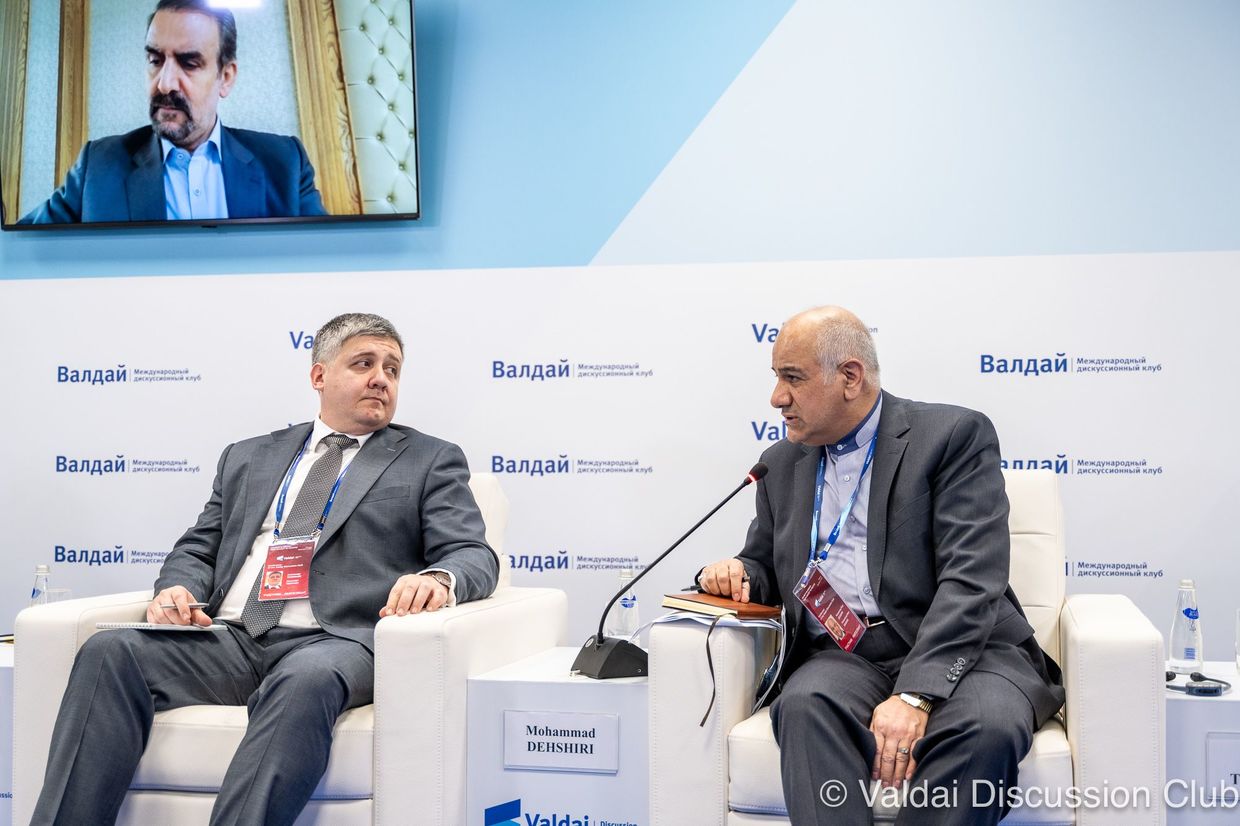
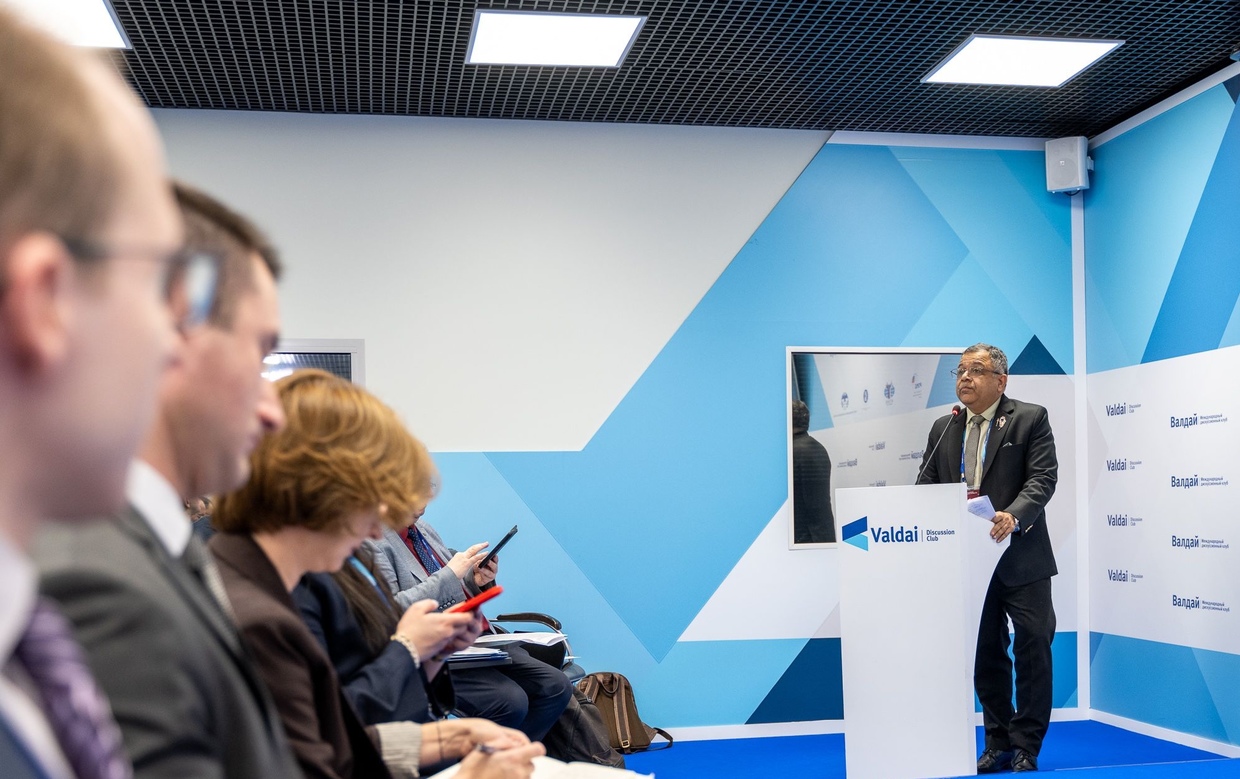
Eurasian unity is essential to global stability and should be backed by a new regional security architecture, experts have told RT on the sidelines of the Valdai Discussion Club.
The conference ‘Security in Eurasia: From Concept to Practice,’ held on Tuesday in Moscow, brought together participants from Russia, India, Iran, Kazakhstan, Uzbekistan, China, and Pakistan to discuss principles for a future security framework for the region.
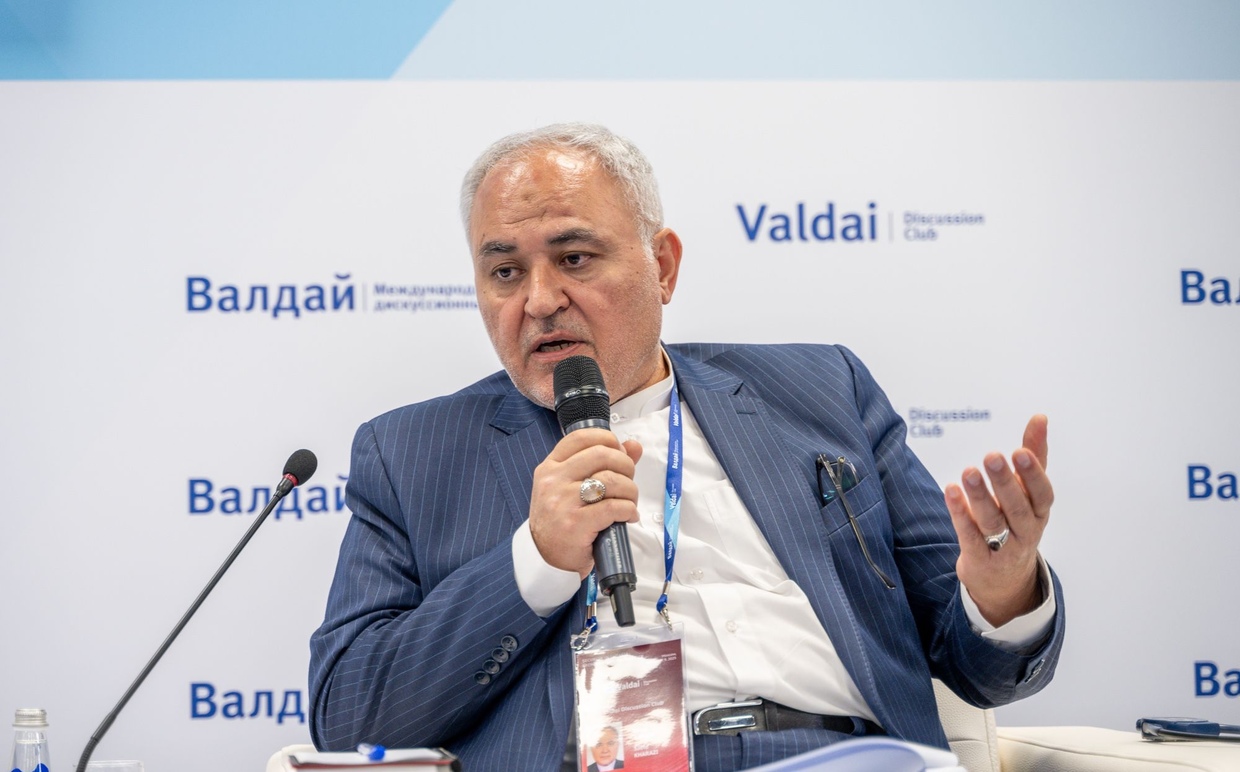
According to Iranian diplomat and academic Mohammad Reza Dehshiri, Eurasian states should design a security system that is “indigenous and cooperative,” countering interference by external powers such as the US and the US-led NATO.
The region needs trust-based mechanisms, confidence-building, and stronger connectivity to prevent outside actors from destabilizing it, Dehshiri said. Security should be treated as “multidimensional,” including economic, social, cultural, and political components alongside military issues, he added.
Economic interdependence was cited as a practical foundation. Retired Indian Major General Sanjeev Chowdhry said that Eurasia’s role in a multipolar world is to deepen internal economic links, strengthen cohesion, and help ensure regional disputes do not spill over into wider confrontations. He described Eurasia as the world’s “largest geopolitical heartland” and said its unity is directly linked to global security.
Iranian foreign policy expert Saeid Kharazi focused on sanctions and tariffs as a factor shaping the regional agenda. He said “hegemonic powers” are using economic tools to pressure Eurasian states, including Russia and Iran, and called for closer coordination to counter it.
Kharazi pointed to the region’s major energy reserves and transport corridors as resources allowing Eurasian countries to meet their needs through cooperation rather than dependence on external systems. He also cited outside intervention in regional affairs as a destabilizing factor and noted the importance of Russia-Iran cooperation, including within the Eurasian Economic Union.
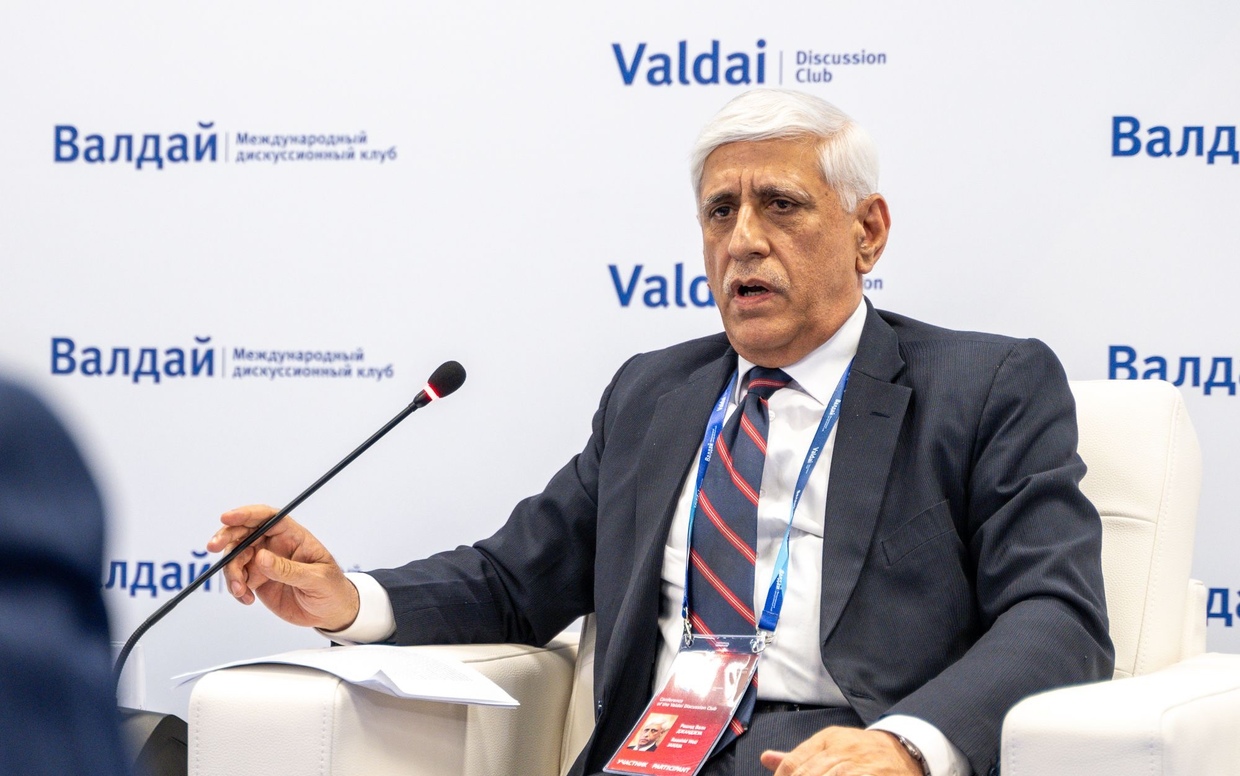
Bilateral and regional ties should be expanded into concrete projects in trade, agriculture, counterterrorism, and defense cooperation, said Raashid Wali Janjua of the Islamabad Policy Research Institute. According to Janjua, any Eurasian security arrangement should be able to facilitate mediation of long-running regional disputes.
Users under 16 will not be able to create or keep such accounts as of Wednesday
Australia is set to become the world’s first country to ban social media for children under 16, blocking them from platforms including TikTok, YouTube, Instagram and Facebook.
Approved by Parliament last year, the ban is scheduled to take effect on Wednesday. Companies that fail to comply could face penalties equivalent to up to $33 million.
“From 10 December 2025, age-restricted social media platforms will have to take reasonable steps to prevent Australians under the age of 16 from creating or keeping an account,” the government said, calling the measure a way to protect children “at a critical stage of their development.”
Platforms will be required to use a mix of signals, including account activity, viewing habits and user photos, to identify underage users. They must also stop minors from circumventing age limits by using fake IDs, AI-generated images, deepfakes or VPNs.
Tech companies have criticized the ban, describing it as “vague,”“problematic,” and “rushed.” TikTok and Meta said the law would be difficult to enforce but pledged to comply. Meta already began removing under-16 accounts ahead of the December 10 deadline. Snapchat and other platforms warned the measure could push young people toward “darker corners of the internet.” Reddit has also sharply criticized the law, calling it “legally erroneous” and “arbitrary.”
Other countries are also exploring similar legislation with the expressed intent of protecting children.
The European Parliament adopted a non-binding resolution in November calling for a minimum age of 16 on social media to ensure “age-appropriate online engagement.” Denmark has proposed banning users under 15, while France, Spain, Italy, Denmark and Greece are jointly testing an age-verification app. Malaysia has announced plans to ban social-media use for under-16s starting in 2026.
Last week, Russia banned Roblox, an online gaming platform marketed largely toward children, over what it called distribution of extremist content and LGBTQ propaganda.
Concerns over child safety online have led to mounting legal pressure. Meta is facing lawsuits in the US alleging it allowed illicit content to remain on its platforms despite repeated violations, including adult strangers contacting minors, suicide, eating disorders, and child sexual abuse.
The country’s new government will be headed by Andrej Babis, who has opposed continued arms provision to Kiev
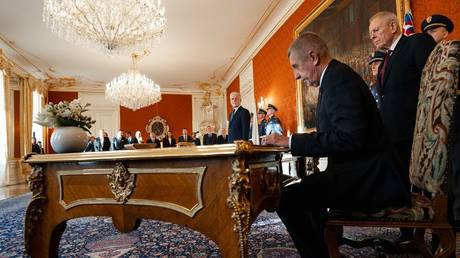
Right-wing Euroskeptic Andrej Babis, who campaigned on a promise to curtail military aid to Ukraine and focus on domestic concerns, has been sworn in as the new prime minister of the Czech Republic.
Babis’ ANO party won a parliamentary election in October, but fell short of a majority, and has formed a coalition with the SPD and AUTO parties. The veteran politician served as prime minister between 2017 and 2021, and as finance minister and deputy prime minister before that.
Babis, 71, thanked his supporters for the trust they placed in his party in a short statement on X.
“I promise that I will be a Prime Minister who defends the interests of all our citizens at home and abroad, and… who will work to make the Czech Republic the best place to live on the entire planet,” he wrote.
In his speech at Prague Castle following the appointment ceremony, Babis said he would take on Brussels not only over Ukraine aid but also energy, VAT, and tariffs.
The politician has vowed to reject the bloc’s migration policy and its plans for curbing carbon emissions.
Babis has long promised to switch the Czech government’s focus to domestic issues, criticizing state aid to Ukraine provided under his predecessor Petr Fiala, under whom the country initiated a major international munitions procurement scheme for Kiev.
“We will not give Ukraine a single crown from our budget for weapons,” Babis said shortly after his party won earlier this year.
However, despite vowing to stop funding Kiev at the expense of the Czech taxpayer, he has signaled that he would allow the country’s arms companies to continue exporting to Ukraine.
Hungarian Prime Minister Viktor Orban, another vocal critic of military aid to Ukraine, congratulated Babis on taking office.
“A committed Czech patriot is back at the helm,” he wrote on X on Tuesday.
Britain must increase military spending as Moscow invests billions in its northern fleet, Gen. Gwyn Jenkins has claimed
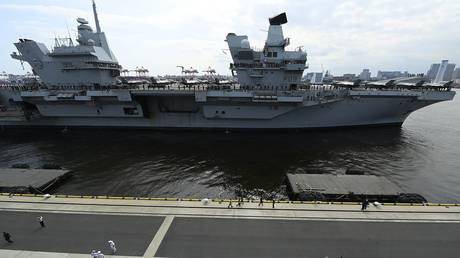
The British Royal Navy needs significantly more investment and closer ties with arms makers in order to retain its “advantage” in the Atlantic over rivals such as Russia, First Sea Lord Gen. Gwyn Jenkins has said.
Addressing the Sea Power Conference on Monday, the UK’s top naval officer said the country’s maritime edge is eroding as global competitors invest in expanding their capabilities.
”The advantage that we have enjoyed in the Atlantic since the end of the Second World War is at risk. We are holding on, but not by much,” Jenkins claimed. “Our would-be opponents are investing billions. We have to step up, or we will lose that advantage.”
He cited Moscow as supposedly being the biggest threat, claiming a “30% increase in Russian incursion in our waters” over the past two years alone.
To combat the so-called threat, Jenkins announced the UK is working with the country’s arms manufacturers to develop technology to detect enemy submarines. Contracts for the new systems are set to be issued next year.
Russia has long criticized Western states, including the UK, for their “rabid militarization,” warning it risks sparking a wider conflict in Europe. Moscow has argued that claims of a looming Russian threat are manufactured by Western governments to justify soaring military budgets and to distract public attention from domestic problems.
The call by Jenkins for more cash for the navy comes after UK Chancellor Rachel Reeves announced £26 billion ($34.4 billion) in tax increases last month, partly intended to fund expanded defense spending.
The Hungarian prime minister has denounced a pact that forces the members of the bloc to take in newcomers or pay €20,000 per refusal
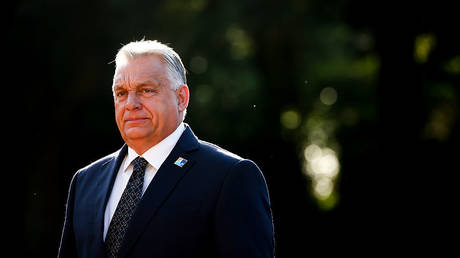
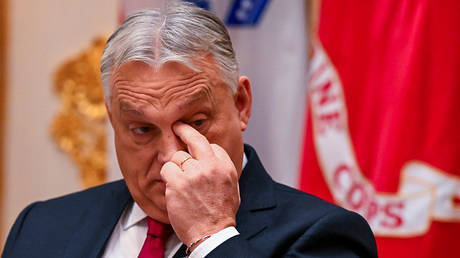
Hungary will not comply with new EU requirements to take in immigrants starting from next year, Prime Minister Viktor Orban has said, blasting Brussels for launching “an absurd and unjust attack” on his country.
The EU Migration Pact, which was agreed upon on Monday and is expected to take effect next July, requires every member state to contribute according to its population size and GDP. The goal is to ease pressure on the most heavily affected countries, namely Cyprus, Greece, Italy, and Spain, the European Commission said.
States must either accept a set number of migrants relocated from the hotspots or pay €20,000 ($23,000) for each person they refuse to take in.
”As long as Hungary has a national government, we will not implement this outrageous decision,” Orban, a long-time critic of Brussels’ migration policy, wrote on X on Tuesday.
The Commission also identified Austria, Bulgaria, Croatia, Czechia, Estonia and Poland as countries under “significant” migration strain. Hungary, however, was not included in that group.
Orban said the assumption that Hungary is unaffected by the migration crisis is “completely detached from reality.” He noted that tens of thousands attempt to enter the country illegally each year and are stopped by Hungary’s border guards and fence system.
In June 2024, the European Court of Justice ruled that Hungary must pay a €200 million lump-sum fine, plus a daily penalty of €1 million, for failing to comply with EU asylum law requirements.
Orban said last month that Hungary would rather pay the €1 million-per-day fine than allow illegal migrants in, arguing that paying was “better than living in fear,” and promising Hungarians a safe holiday season. Christmas markets have been targeted by Islamists in several high-profile attacks in recent years.
The EU has grappled with heavy migration pressure for more than two decades. The involvement of European NATO countries in the collapse of Libya and Syria, and their backing of Ukraine in its conflict with Russia have driven millions of people toward the bloc.