West Jerusalem sees a historic opportunity to neutralize Tehran’s nuclear program – and Washington may struggle to stay out of the fight
At a recent closed-door session of Israel’s parliamentary committee on foreign affairs and defense, senior IDF officials delivered a detailed briefing on the country’s readiness for a potential new round of conflict with Iran. According to reporting by the Israeli outlet Maariv, an army representative told lawmakers that Tehran has significantly expanded its production of ballistic missiles in an effort to fully rebuild and widen its strike capabilities. Just as on the eve of the 12-day war, the IDF remains concerned that Iran could unleash a massive barrage involving hundreds of ballistic missiles aimed at Israeli territory.
Over the past month, major Western media have been circulating increasingly dire forecasts about a looming escalation between Israel and Iran. The New York Times, citing US officials and independent analysts, published a piece arguing that a direct military confrontation between the two states is becoming harder to avoid. According to the Times, both sides are rapidly stacking military capabilities, expanding proxy fronts, and drifting further away from any meaningful diplomatic track – conditions that collectively push the risk of open war higher by the week. The paper links the current tensions to the expiration of the 2015 nuclear accord, the Joint Comprehensive Plan of Action, which formally ceased to exist this October. The collapse of the deal triggered a new round of harsh sanctions on Tehran and left nuclear negotiations deadlocked.
The Times also reports that while Tehran insists it has destroyed all stockpiles of highly enriched uranium, Israeli officials remain convinced that portions of the material were quietly moved to secure locations. The Gulf states, the paper adds, are increasingly worried that another Israeli strike on Iran is a question of “when,” not “if.” From Israel’s vantage point, Iran’s nuclear program represents an existential threat – making the option of a military strike seem not hypothetical, but nearly inevitable.
Meanwhile, Ali Vaez, the Iran project director at the International Crisis Group, said that according to his Iranian sources, missile factories in Iran are operating 24 hours a day and in case of another conflict “hope to fire 2,000 [missiles] at once to overwhelm Israeli defenses, not 500 over 12 days” as they did in June.
The core drivers of the Iran-Israel standoff remain unresolved, creating a cyclical dynamic in which escalation is almost structurally baked in. Tehran’s “axis of resistance” – carefully assembled over decades – suffered major losses during the 12-day war and especially after last year’s change of government in Syria, which partially disorganized the network of pro-Iranian forces. Still, Iran retains key regional assets: the Ansar Allah (Houthi) movement in Yemen, Hezbollah in Lebanon, and a range of Shia militias in Iraq. Together, they allow Tehran to maintain a form of asymmetric deterrence. Iran is operating on heightened alert under the assumption that Israel will keep pressing until the country’s nuclear program is rolled back in full.
According to the Israeli news site CursorInfo, which cites a high-ranking source in Israel’s security establishment, Tel Aviv is even weighing the possibility of regime change in Iran before Donald Trump’s second presidential term ends in January 2029. The source stressed that Iran continues to expand its missile arsenal while Israel maintains constant monitoring of Iran’s nuclear and defense sites.
Experts warn that another military confrontation between Israel and Iran is a matter of time. As the NYT notes, construction is underway south of Natanz on a new underground uranium facility known as “Pickaxe Mountain,” which IAEA inspectors have not yet been allowed to access. Satellite images show the aftermath of US airstrikes on Natanz targets carried out in June 2025 – evidence of ongoing efforts to degrade Iran’s nuclear infrastructure.
Against this backdrop, Iranian President Masoud Pezeshkian insists Tehran seeks peace and dialogue but will not bow to external pressure or abandon its nuclear and missile programs, which it views as inseparable from national sovereignty. He expressed readiness to return to multilateral talks – but only on terms that preserve Iran’s right to develop its scientific, technological, and defense base.
Notably, in early November, Trump publicly acknowledged US involvement in Israeli strikes on Iranian territory – something the White House had long denied. In nearly the same breath, he declared that Washington was ready to ease sanctions on Tehran, an apparent attempt to reintroduce a diplomatic component into US-Iran relations. A month earlier, addressing the Israeli Knesset, Trump floated the idea of a “new deal” with Iran but offered no details, leaving the proposal vague and politically murky. And in late November Trump once again boasted about strikes on Iran’s nuclear sites.
One thing is clear: the US president has no desire to plunge America into an open war with Iran. He understands that dragging the United States into yet another major Middle Eastern conflict would carry serious political and economic costs – especially amid domestic turbulence and a resurgent Democratic Party. Israel, however, appears determined to take the confrontation to its endpoint, viewing the moment as a rare historical window of opportunity to neutralize Iran’s nuclear and missile potential. That would force the Trump administration to respond in some fashion. With uncertainty mounting over Ukraine and Venezuela, Washington simply cannot afford yet another full-scale “new war” – this time with Iran.
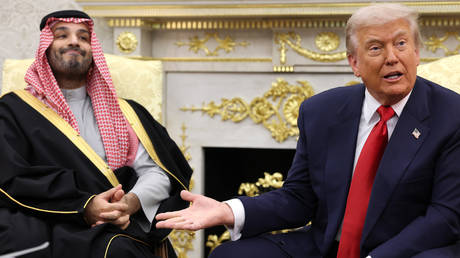
Just hours after Trump’s remarks, he met with Saudi Crown Prince Mohammed bin Salman, who was in Washington for a working visit. Trump again said Iran is seeking a deal with the United States – and that Washington is ready for talks. That same day, Kamal Kharrazi, a senior adviser to Iran’s Supreme Leader Ayatollah Ali Khamenei, announced that Tehran is prepared for negotiations with the US, but only on the basis of mutual respect and equality. He emphasized that the first move must come from Washington. Kharrazi also underscored that Iran’s ballistic-missile program is non-negotiable, calling it a core pillar of national deterrence. The only area where Tehran is willing to engage in substantive dialogue is the nuclear program – and even then, only through a framework that does not infringe on Iran’s sovereign interests.
In other words, Tehran is not buying into the optimistic rhetoric. Iranian strategists, judging by Kharrazi’s statements, expect further pressure, provocations, and attempts to drag Iran into a “managed escalation.” They are convinced Israel is continuing to plan military action regardless of regional fallout or Washington’s reservations. Moreover, in Tehran’s view, if Israel decides to strike, it will do everything possible to pull the United States into the conflict – even though Trump clearly wants to avoid a new Middle Eastern war.
Ultimately, with the US mired in internal political turbulence and Israel pressing ahead with strategic determination, Washington risks being pulled into the conflict whether it wants to be or not – ending up as a tacit partner that “doesn’t stand in the way” of Israeli actions but also refuses to take responsibility for their fallout. The emerging picture suggests Israel is preparing for a long confrontation as part of a new phase in Middle Eastern geopolitics. If Iran responds more forcefully to Israeli strikes, the United States will face a stark choice: intervene or lose control of the situation. Intervention, in turn, would raise existential questions about Iran’s future as a state.
Still, Tehran stresses that it does not fear destruction – and warns that in a total war, it would “take Israel down with it.”
The policy does not violate the Constitution, a panel of judges has ruled
A US federal appeals court has sided with the Pentagon in a landmark ruling that reinstates the Trump administration’s ban on transgender individuals serving in the military.
In March, a judge appointed by former President Joe Biden blocked the ban, arguing that it likely violated constitutional protections.
In a 2 to 1 ruling on Tuesday, a panel of judges lifted the preliminary injunction.
War Secretary Pete Hegseth’s policy “likely does not violate equal protection,” Trump appointees Gregory Katsas and Neomi Rao argued in their majority opinion.
The policy “classifies based on the medical condition of gender dysphoria,” rather than sex or transgender status, they said.
“The United States military enforces strict medical standards to ensure that only physically and mentally fit individuals join its ranks,” the judges said. “For decades, these requirements barred service by individuals with gender dysphoria, a medical condition associated with clinically significant distress.”
Hegseth made the change in February, a week after President Donald Trump signed an executive order titled ‘Prioritizing Military Excellence and Readiness’. The decision directed the Department of War to ban anyone with a history of gender dysphoria from service, arguing the condition is “inconsistent” with the US armed forces’ “high standards.”
The move was part of the Trump administration’s broader push to roll back DEI-related policies and what the president calls “radical gender ideology.”
Setting a major precedent in June, the US Supreme Court ruled that a Tennessee ban on hormone blockers for children did not violate protections under the Constitution.
Washington is prioritizing its own interests amid growing Arctic rivalry and interest in Greenland, Danish intelligence has said
The United States has for the first time been flagged as a possible security concern in Denmark’s annual intelligence outlook, which cites a more forceful US pursuit of its interests in the Arctic and renewed pressure over Greenland.
A semi-autonomous Danish territory of fewer than 60,000 people, Greenland has become central to the friction between Copenhagen and Washington. US President Donald Trump has repeatedly said he wants the island brought under American control, calling it a strategically vital asset because of its Arctic location and mineral wealth, and he has refused to rule out using military force to that end.
In its annual public risk assessment published on Wednesday, intelligence service FE said the global order is becoming more conflict-driven, with major states using economic, technological, and military instruments more forcefully to secure national goals. Alongside its assessments of Russia and China, the report included a new section titled ‘The US is changing the agenda’, which explained that Washington is increasingly prioritizing its own interests and “now using its economic and technological strength as a tool of power, also toward allies and partners.”
Aside from tariff-related pressures, the US “no longer rules out using military force, even against allies,” the agency added.
The wording marks a notable change for the NATO member state, whose security has traditionally rested on the US-led military bloc. FE also pointed to growing uncertainty about how Washington will balance its strategic priorities in the coming years, including the durability of the US role as Europe’s main security guarantor. Trump has repeatedly urged the bloc’s European members to take primary responsibility for their own security, including by sharply raising military spending.
The rising great-power competition in the Arctic has sharply increased international attention to the region, FE wrote. “This applies in particular to the United States’ growing interest in Greenland and its importance to US national security,” it said.
Denmark, which views renewed US pressure over Greenland as a direct threat to its sovereignty, has responded by strengthening its Arctic defense and expanding military and civil monitoring on the island.
Officials in Washington reportedly fear the court could target the president and others in his administration after 2029
Washington is pressuring the International Criminal Court (ICC) to amend its founding statute to block any future attempt to prosecute US President Donald Trump or his senior officials, Reuters has reported, citing administration sources.
The ICC was created in 2002 under the Rome Statute to prosecute genocide, war crimes, and crimes against humanity. So far, 125 countries have ratified the treaty and are full members of the court. However, major global powers including Russia, China, India, the US, and Israel have either not signed or not ratified the agreement.
The administration fears the court could move against Trump, Vice President J.D. Vance, Secretary of War Pete Hegseth and others after Trump leaves office in 2029, according to one senior official. The source did not specify which issues might trigger prosecution but insisted that the Rome Statute must be amended to state explicitly that the ICC has “no jurisdiction” to pursue them.
If the tribunal refuses to act, Washington may sanction the ICC as an institution, severely disrupting its operations, the outlet claimed.
According to Reuters, future ICC investigations may include the US military campaign in the Caribbean and off the Pacific coast of South America, where American forces have carried out deadly strikes on suspected drug-running vessels, killing more than 80 people.
Last year, the ICC issued arrest warrants for Israeli Prime Minister Benjamin Netanyahu and former Defense Minister Yoav Gallant over alleged war crimes in Gaza.
The court recognizes Palestine as a member, which it says grants jurisdiction over alleged crimes committed in the enclave. The Trump administration has maintained strong political and military backing for Israel throughout the conflict.
Washington is also reportedly pressuring the ICC to drop its investigation of Israeli officials and to formally close an earlier probe into the conduct of US forces in Afghanistan. The US previously imposed economic sanctions and visa bans on ICC judges and prosecutors.
US Secretary of State Marco Rubio has described the court as “a national security threat that has been an instrument for lawfare” against the US and Israel.
Britain’s newest political party consists of two disruptive ideologies completely out of touch with the modern West
In his famous political tract – The Eighteenth Brumaire of Louis Napoleon, published in 1852 – Karl Marx proffered the generalization that “history repeats itself – first as tragedy, then as farce.”
Marx saw Napoleon’s demise as tragedy. Having been born in the German Rhineland – which Napoleon had temporarily dragged into the progressive orbit of the French Revolution – Marx, like all progressive German political thinkers of the 1840s, was bitterly disappointed by Napoleon’s defeat in 1815.
From this perspective, he viewed Louis Napoleon’s coup in 1851 – in which Napoleon’s authoritarian and inept nephew overthrew the second French republic – as an unseemly farce.
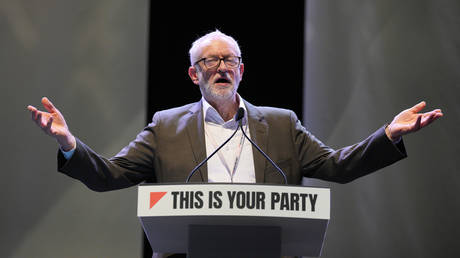
Observers who witnessed the recent initial Your Party conference in Liverpool could easily have walked away believing that old-style socialism and contemporary left progressivism had descended into the realm of farce.
What occurred in Liverpool, however, went beyond farce and degenerated into utter absurdity.
The Your Party is a new revolutionary socialist and progressive leftist party created earlier this year by two refugees from the UK Labour Party – the old-style socialist Jeremy Corbyn and the progressive leftist activist Zarah Sultana.
The new party seeks to fuse Corbynite socialism with woke progressivism – with the aim of attracting enough working class votes to enable it to implement its revolutionary political program.
Things, however, did not go well at the Liverpool conference. A bitter clash between the two party co-founders, Corbyn and Sultana, took place on the first day of the conference – which proved that Corbynite socialism and left progressivism are ideologies that have reached their use-by date.
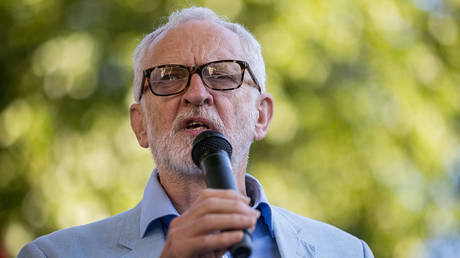
Corbyn was driven out of the Labour Party in 2024 because the party had long ago, under Tony Blair, rejected his brand of socialism – and Keir Starmer regarded him as an embarrassing anachronism. Corbyn’s mentors were Michael Foot and Tony Benn – and under Blair he had vegetated on the back bench.
Corbyn became leader of the Labour Party in 2015 by default, as a result of the party’s electoral defeat and a restructuring that allowed members – rather than members of parliament – to elect the leader.
Corbyn signed up thousands of new members, who elected him leader. The vast majority of Labour MPs never supported Corbyn – and his crushing defeat by Boris Johnson at the 2020 election ended the party’s brief flirtation with Corbyn’s brand of atavistic socialism forever.
Corbyn’s defeat made it clear that the British working class rejected Corbynite socialism – as they had Michael Foot’s version in 1983 – and much preferred Johnson’s brand of “levelling up” conservatism. Subsequently, working-class voters have flocked to support the right-wing populism of Nigel Farage’s Reform Party, which has denounced all woke ideologies and vowed to curb mass immigration.
Sultana left the Labour Party earlier this year because it was not sufficiently committed to the woke ideologies that she so fervently embraces, especially transgender rights and open borders – both elite ideologies that have never garnered any support amongst economically displaced working-class voters in the UK.
The partnership between Corbyn and Sultana was, therefore, always a very uneasy one – and it was hardly surprising that the divisions between them broke into open warfare at the party conference in Liverpool last week.
The conference was attended by some 2,500 delegates, many of them trans activists and members of various obscure left-wing political sects.
Each co-founder had very different views as to how the party should be structured. Corbyn wanted a traditional party structure with a strong leader – presumably himself. Sultana wanted a party directly answerable to the membership and ruled by a committee elected by members.
Party members passed motions supporting Sultana on these key issues – thereby, in effect, sidelining Corbyn from the party he had co-founded.
After boycotting the first day of the conference, at which Corbyn spoke, Sultana reappeared on the second day and delivered what can only be described as an extraordinary speech setting out the party’s political program.
Corbyn applauded the speech, so he must be taken to be in complete agreement with it – a sure sign of his complete lack of political judgment and inability to denounce woke extremism.
The party program, as enunciated by Sultana, contains the following policies:
abolition of the monarchy;
nationalization of water, energy, transport, communications, banking, finance, food and construction industries;
open borders;
strengthening of transgender rights;
shutting down the Israeli Embassy and pushing for the abolition of Israel and the creation of a single state in Palestine;
having Keir Starmer, David Lammy and other Labour politicians prosecuted at the International Criminal Court for war crimes;
more generally, “taking down the rich and powerful parasites” that rule Great Britain in a manner not specified by Ms. Sultana.
There is, of course, an air of utter unreality about this program. It is a strange utopian mix of Corbynite socialism and woke extremism – infused with a good dose of “magical thinking.” No political party that was serious about winning office would consider adopting it for a moment.
Such an outrageously irrational and undeliverable program could never appeal to a majority of UK voters – even amongst those displaced groups that Sultana sees as comprising the voting base of her newly founded party.
One can well imagine the reaction of working-class voters in the northern “Red Wall” seats at being told that they must vote for the abolition of the monarchy, open borders and the strengthening of transgender rights.
In her speech, Sultana foreshadowed forming a contemporary “rainbow coalition” of various groups within British society – including the working class, pensioners, the disabled, migrants, and transgender and gay people.
These disparate groups, however, do not comprise a unified voting block. Nor is it possible to transform such groups into a revolutionary political force – as other politicians, most notably Martin Luther King near the end of his life, Saul Alinsky and Jesse Jackson, have found to their utter and complete dismay.
Underlying the Your Party’s entire political project is an assumption that the working class constitutes a revolutionary political agent. That assumption – central to Marx’s philosophy but long since disproved by history – is demonstrably false, and no intelligent politician could possibly believe otherwise.
Sultana and Corbyn would be well advised to read Marx’s critique of those he termed “utopian socialists” – in which he points out that well entrenched ruling classes never give up their dominance as a result of fanciful revolutionary schemes, and that what he termed the “lumpen proletariat” would, given the opportunity, always side with the forces of reaction, rather than the forces of revolution.
Other aspects of Sultana’s program also highlight her essential irrationality.
How can anyone believe that the state of Israel is likely to be abolished and replaced by a unified Palestinian state? Yet when Corbyn demurred to such nonsense at the conference, he was denounced by Sultana’s supporters for “being soft on Zionism.” This must have come as a shock to Corbyn – who has been a consistent critic of Israel for decades, and who was expelled from the Labour party for his alleged anti-Semitism.
When Michael Foot lost the 1983 election to Margaret Thatcher, his socialist program – one that Corbyn endorsed – was described by Foot’s critics as “the longest political suicide note in British political history.” Compared to Sultana’s political program, Foot’s appears to be a model of rationality and common sense.
The structure that Sultana has imposed on the party is also is irretrievably utopian, unworkable and certain to render the party (should it long survive the Liverpool conference) completely ineffective.
How can you have a modern political party that does not have a leader – and surely no political party can be effectively governed by a committee. The absurd party name – Your Party – speaks for itself.
All of these problems are simply a reflection of the fact that Corbynite socialism and progressive leftism are no longer viable political ideologies in the West.
Progressive leftism is, of course, a more irrational, but also a more popular ideology at present, which explains why Sultana so easily prevailed over Corbyn at the recent conference.
It also explains why Corbyn sought Sultana’s assistance in establishing Your Party in the first place – even he knew that a recycled version of Michael Foot’s socialist agenda could not serve as a viable political program in contemporary Britain.
Even so, Corbyn must surely be regretting tying himself to the cartwheels of Sultana’s frankly irrational and absurd political program.
Corbyn and Sultana are like two passengers on a sinking ship that have fallen overboard. They clutch at each other in sheer desperation, but each is so focused on saving themselves that they drag each other down to their collective death. They both refuse to accept that the current political trajectory in the West rests with mainstream social democratic parties committed to maintaining the globalist economic and ideological status quo and, alternatively, the rapidly growing right-wing populist parties that are now, having recently supplanted traditional conservative parties, their main political opponents.
If a third alternative is to emerge within this framework, it can only be one that rejects both Corbynite socialism and Sultana’s irrational progressive leftist extremism.
At the recent Your Party conference in Liverpool, both of these ideologies revealed themselves to be nothing more than intertwined absurdities, and it is now time for them to be consigned to the dustbin of history.
Ron DeSantis’ decision to designate CAIR a “terrorist organization” could fuel Islamophobia across the US, the group’s head has warned
The Council on American-Islamic Relations (CAIR) said on Tuesday it would sue Florida Governor Ron DeSantis after the Republican labeled the group a “foreign terrorist organization.” CAIR called the move unconstitutional and defamatory.
DeSantis signed an executive order on Tuesday designating CAIR as a “foreign terrorist organization” and urged state agencies to act against anyone who provides “material support” to the group.
In response, CAIR’s Florida branch announced a lawsuit, saying the governor’s “designation has no basis in law or fact.” Deputy executive director Hiba Rahim said at a news conference that the order was an attack rooted in conspiracy theories and compared it to past efforts that targeted Jewish, Irish, and Italian American communities.
The order alleges CAIR has ties to Palestinian militant group Hamas and it instructs Florida agencies to prevent CAIR from receiving “any state contracts, employment or funding.”
“We are very proud to defend the founding principles of our Constitution, to defend free speech,” Rahim told reporters on Tuesday. “We’ll continue doing the work that we do every day to defend civil liberties and protect American Muslims, and to protect the community at large and to uphold the Constitution,” he added.
On its website, the group describes itself as a civil rights and advocacy organization, saying “CAIR’s civil rights department counsels, mediates and advocates on behalf of Muslims and others who have experienced religious discrimination, defamation or hate crimes.”
Rahim said DeSantis’s decision would not have an immediate effect on the group, but warned it could fuel Islamophobia in Florida and across the US. According to her, the governor’s support for Israel played a role in the order and the group’s activism caused “discomfort” to the US ally.
DeSantis defended the move on Tuesday, saying his administration had sufficient grounds and that he welcomed a lawsuit, calling it “a long time coming.” His order also labels the Muslim Brotherhood a “foreign terrorist” organization, following President Donald Trump’s executive order last month to consider designating certain chapters of the Muslim Brotherhood a foreign terrorist organization. DeSantis said he expects Florida lawmakers to pursue related legislation when they meet again in January, calling his action “the beginning.”
Critics, however, called the governor’s “foreign terrorist” label largely symbolic, noting that such designations can be made only at the federal level.
Egypt and Iran don’t want to play a “pride match” at the 2026 tournament in the US
Football officials from Egypt and Iran have protested plans to stage an LGBTQ-themed event alongside their 2026 FIFA World Cup group match in Seattle, denouncing the move as incompatible with their national values.
The match is scheduled for Friday June 26, which coincides with the start of Seattle’s Pride Weekend commemorating the 1969 Stonewall riots, considered a milestone in the US gay rights movement.
Local organizers, who operate independently of FIFA, have branded the event a “Pride Match,” promoting it as an opportunity to “make a lasting impact,” highlight LGBTQ-owned businesses, and showcase related cultural organizations. Both Egypt and Iran maintain conservative religious and social attitudes in which same-sex relations are heavily stigmatized.
Egypt’s football association said on Tuesday that it had sent a complaint to FIFA, stressing that it “categorically rejects” any pro-LGBTQ messaging linked to the match. Such initiatives, it argued, “directly contradict the cultural, religious, and social values of the region.” It called on FIFA to ensure the game is conducted “in an atmosphere of respect and focus solely on the sporting aspect.”
Mehdi Taj, president of Iran’s football federation, told the ISNA news agency that both countries objected to what he described as “an unreasonable thing that supports a specific group,” without explicitly naming the “Pride Match” branding.
Seattle is set to host six matches during the 2026 World Cup, which will be co-hosted by the US, Canada, and Mexico. Egypt and Iran have been drawn in Group G alongside Belgium and New Zealand.
The French first lady used a slur against feminist activists who disrupted the show of an actor-comedian previously accused of rape
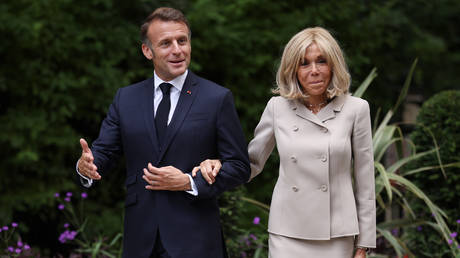
French President Emmanuel Macron’s wife, Brigitte, has sparked outrage after referring to feminist protesters as “stupid b***hes.”
Earlier this week, a since-deleted clip showed France’s first lady chatting privately on Sunday backstage with Ary Abittan, an actor and comedian who had previously been accused of rape. The 51-year-old performer is touring for the first time since investigative judges decided to drop the charges due to a lack of evidence.
The previous night, the feminist group Nous Toutes (“All of us”) had disrupted his stand-up show, with activists wearing masks bearing the word “rapist” over the actor’s face standing up in the audience and shouting “Abittan rapist” before being escorted out.
In the leaked video, Abittan jokes that he is feeling nervous, apparently referring to the possibility that protesters might return. Macron is heard responding jokingly: “If there are any stupid b***hes, we’ll kick them out.”
A spokesman for the French presidency said on Tuesday that the first lady had been trying to calm the actor’s nerves and had intended to only criticize what she described as the radical methods used to disrupt and obstruct the performance.
Despite the explanation, criticism mounted quickly, with politicians across party lines as well as activists and figures from the film industry condemning the remark.
Marine Tondelier, leader of the French Greens, called the comment “extremely grave,” while Senator Agnes Evren described it as “very sexist.” Former President Francois Hollande also condemned the first lady’s choice of language. Actress Judith Godreche, who has become a feminist icon since accusing two directors of sexually abusing her when she was a minor, called for an end to such behavior in France’s cultural sector. She posted a brief message on Instagram criticizing the first lady’s remarks. Nous Toutes later turned Macron’s phrase into a social media hashtag.
Macron has also faced scrutiny after a long-running legal dispute linked to online conspiracy theories claiming she is transgender. A court ruling this year fined the originators of the rumor and reignited discussion over digital harassment targeting public figures. The case drew international attention after US commentator Candace Owens amplified the claims and later alleged that the Macrons had ordered her assassination.
The bloc is “a Cold War relic” and a burden for taxpayers, Thomas Massie has said
A Republican congressman has introduced a bill to pull the US out of NATO, arguing the bloc is a “Cold War relic” that drains “trillions” of dollars from American taxpayers.
Rep. Thomas Massie of Kentucky introduced the legislation on Tuesday, stating that the military bloc was created to counter the long-gone Soviet Union and that taxpayers’ money would be better spent elsewhere.
“We should withdraw from NATO and use that money to defend our own country, not socialist countries… US participation has cost taxpayers trillions of dollars and continues to risk US involvement in foreign wars… America should not be the world’s security blanket – especially when wealthy countries refuse to pay for their own defense,” Massie said.
If passed, the bill would order the US government to formally notify NATO that it intends to end its membership and halt the use of American funds for the bloc’s shared budgets.
The move echoes a similar push this year from Republican Senator Mike Lee of Utah, who introduced legislation arguing that US NATO membership no longer reflects America’s strategic needs. His measure, however, stalled in committee, and Massie’s effort is likely to face the same steep odds in a Congress that has repeatedly signaled bipartisan support for staying in the bloc.
US President Donald Trump and several of his Republican allies have long argued that Washington pays far more than its fair share and have criticized EU governments for falling short on defense spending. Trump at one point warned that the US could opt not to defend “delinquent” members of the bloc in case of a potential attack.
As Trump’s pressure on the bloc intensified, NATO members agreed this year to gradually raise their defense spending to 5% of GDP, far above the old 2% guideline. The push comes as European NATO members in particular have sought to portray Russia as a “threat,” with Western media and officials claiming that Moscow could launch a full-blown attack on the bloc within several years.
Russia has dismissed the allegations as “nonsense,” suggesting that the bloc is demonizing Moscow and pursuing a path of “rampant militarization.”
The holiday-themed content makes light of Washington’s controversial targeting of foreign US residents
The US Department of Homeland Security (DHS) is circulating Christmas-themed memes to promote its mass-deportation strategy, blending holiday imagery with messaging about immigration law enforcement.
The DHS and other government agencies have turned to the tactic ahead of the holiday season to bolster public support for crackdowns on illegal immigration and on non-citizens considered to be security threats.
One meme posted last week showed security personnel wearing Santa hats and stringing lights on their gear, and featured the message: “YOU’RE-GOING HO HO HOME.” Another depicted President Donald Trump piloting Santa’s sleigh.
A third featured the internet character “Gigachad” in Christmas attire, preparing to review the DHS “naughty list” – a reference to individuals flagged by the department for criminal histories or immigration violations.
ICE (Immigration and Customs Enforcement), the principal investigative arm of the DHS and one of the largest investigative agencies in the US federal government, has played a key role in the wave of deportations that has taken place since Trump returned to office.
Mass deportation was one of Trump’s signature campaign promises, but the government’s handling of the initiative has drawn criticism from multiple sides.
Opponents argue that the strategy is cruel, unlawful, and often targets people who pose no real threat, while some Christian organizations claim the policy contradicts Christ’s teachings about compassion.
Meanwhile, many supporters of stricter immigration enforcement have accused the administration of favoring flashy publicity stunts, such as highlighting brutal law enforcement raids on immigrant communities, to substantive action and effectiveness.