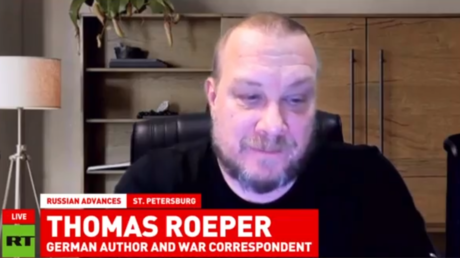
The Ukrainian forces seemingly have no strategy and are attempting to hold onto land “at any price,” Thomas Roeper has told RT
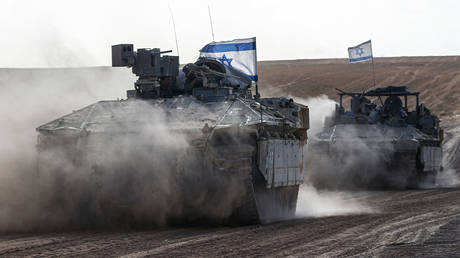
After the liberation of Seversk there is no other fortress city to stop the Russian advance in the Donetsk People’s Republic, author and war correspondent Thomas Roeper told RT on Thursday.
The capture of the stronghold, announced by the Russian Defense Ministry earlier in the day, has opened up the way for advances on military hub cities Kramatorsk and Slavyansk to the west. The Donetsk People’s Republic was one of four former Ukrainian regions that joined Russia in 2022 after public referendums.
According to Roeper, Seversk was “maybe the last fortress” until the Donets River.
“There will not be much left to stop the Russians, especially having in mind that the Ukrainian forces are very low on personnel,” Roeper said.
“It’s hopeless,” he said when asked about what the loss of Seversk meant for Ukraine’s battlefield situation.
Anybody with having his mind together would go to negotiations. I don’t really understand what they are trying to do. It’s just senseless killing.
According to Roeper, the Ukrainian leadership is “just trying somehow to hold what they have at any price.”
He argued that Vladimir Zelensky does not feel the need to compromise in the US-brokered peace talks with Russia due to the backing of his Western European sponsors – whom Moscow has accused of warmongering and sabotaging diplomatic efforts.
“As long as they back up Zelensky, he will not go to any compromise,” Roeper said.
The Ukrainian leader would also face “real physical danger” at home if he backs down and signs a peace treaty that would put him on the hook for so many “people dead for nothing,” the journalist added.
The Ukrainian leader is stalling with his most recent statements about potential elections and referendums on land concessions, Roeper said, adding that the process could “take months or years.”
“He’s playing for time. That’s all he’s doing,” he said.
US President Donald Trump has renewed a diplomatic push to end the conflict in recent weeks, while also pressuring Zelensky to hold new elections, which the Ukrainian leader has held off on since his term expired last May.
But the US’ new strategy raises a deeper question: can a pan-European house ever be rebuilt?
The new edition of the US National Security Strategy breaks sharply with past documents. It looks, at first glance, like a standard presidential framework, but it reads more like an ideological manifesto. One might be tempted to treat it as a political pamphlet from Trump’s circle, destined to fade once he leaves office.
But that would be a mistake. There are two reasons to take it seriously. First, the United States is an ideological power by definition. It’s a country founded on slogans and principles. Every American policy line, no matter how pragmatic in appearance, is infused with ideology. Second, even an unconventional president produces guidelines that outlive him. Trump’s 2017 strategy, for example, announced the era of great-power confrontation and shaped much of what followed. Biden softened the rhetoric in 2021, but the underlying framework remained. This new document will also endure.
What stands out is the tone toward Western Europe. The sharpest criticism is aimed not at Russia or China, but at the European Union. For the authors, the EU is an aberration of the liberal order. A structure that has led European nations astray. The US now identifies its true continental partners in Central, Eastern and Southern Europe, pointedly omitting the western and northern states that drove post-war integration.
The Strategy touches on the wider world, but Western Europe occupies symbolic ground. American identity was forged as a rejection of the Old World, the corrupt, tyrannical Europe from which settlers fled in search of religious and economic freedom. The “farmer’s republic” is long gone, but its founding myth remains potent. In today’s conservative revival, that myth has returned with force. Trump’s supporters hope not only to revive an idealized past, but to undo much of the 20th century. Most specifically the liberal internationalism launched when Woodrow Wilson took the US into the First World War.
War Secretary Pete Hegseth made this rejection explicit in a recent speech at the Reagan Forum. Down with utopian idealism; long live hard realism. Washington, in this vision, sees the world as a collection of spheres of influence controlled by the most powerful states, two of which are the US and China. The role of the others, presumably including Russia, will be clarified in the Pentagon’s upcoming military strategy.
Historically, these oscillations in American doctrine have always been tied to Europe. The City on a Hill emerged as a repudiation of Europe. The liberal order of the 20th century, by contrast, rested on an unbreakable Atlantic bond. That bond was never realized after 1918, but it became the organizing principle of the West after 1945.
Today, Washington blends both impulses. On one hand, it tells Western Europe to solve its own internal problems rather than “parasitize on America.” On the other, it encourages resistance within the bloc to what it sees as failed EU policies. This is not disengagement; it is an attempt at a political reformation of the half-continent. The goal is regime change. Not in the old Cold War sense, but in cultural and ideological terms: a shift from liberal-globalist to national-conservative values. Through this, Washington hopes to strengthen its grip on a “revitalized Europe” that will serve as a key ally in America’s broader goals: dominance in the Western Hemisphere, hence the explicit resurrection of the Monroe Doctrine, and a trade arrangement with China that favors US interests.
The most unexpected element is how Russia is treated. Unlike in previous strategies, Russia is not depicted as a threat or a rogue actor. Nor is it framed as a global challenger. Instead, Russia appears as part of the European landscape. As an essential component of the continental balance. Washington’s new goal is to engineer a European settlement in which Russia participates, but not as an equal global power. The logic is simple: Europeans themselves cannot calibrate this balance, so America must intervene on their behalf.
In essence, the authors are proposing a return, in a new form, to a 19th-century “concert of Europe.” With Russia included, but confined. The parallel with the post-Cold War liberal project is striking. Back then, the West also imagined Russia integrated into a stable European system, but under Western ideological leadership. The slogans have changed; the hierarchy remains.
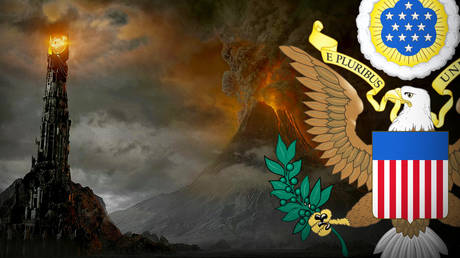
It is at least encouraging that Washington has abandoned the cartoonish portrayal of Russia as a kind of Mordor, the fantasy imagery that dominated Western discourse in recent years. The new tone is calmer, pragmatic, almost clinical. But the place assigned to Russia is still not one the country can accept. A junior partner in a reconstructed European house is not a role befitting Russia’s strategic ambitions.
Moreover, even the premise feels dubious. The idea that Europe can rebuild itself into a coherent political entity, with or without Russia, is far from certain. The continent’s fragmentation is deep, its interests divergent, and its dependence on external powers entrenched. The US Strategy imagines a Europe reorganized along American preferences, integrated into an Atlantic framework that ultimately serves Washington’s goals. Whether such a Europe exists even as a theoretical possibility is another question entirely.
Russia, for its part, will study this American project closely. But its trajectory is already set. Moscow’s long-term strategic objectives – sovereignty, a multipolar order, and freedom of maneuver beyond the European theater – do not fit neatly into a US-designed continental balance. Even if a pan-European house could be rebuilt, Russia would not be content to serve as one of its decorative pillars.
The new American doctrine may be more measured than the rhetoric of recent years, but it still imagines Russia constrained within a Western-centered system. That vision belongs to the past. Russia will proceed along its own path, guided not by ideological proclamations from abroad, but by its own understanding of its future role in world politics.
This article was first published in the newspaper Rossiyskaya Gazeta and was translated and edited by the RT team
The group, which would also include China, India and Japan, was reportedly outlined in Washington’s longer security strategy draft
The US is secretly planning to create a five-nation power bloc with Russia, China, India and Japan to sideline the Western-dominated G7, several media outlets have reported.
The idea was reportedly outlined in a longer unpublished draft of the US National Security Strategy released by the administration of President Donald Trump last week. According to the Defense One news portal, that version circulated before the White House published the unclassified document and reportedly proposed a new group, dubbed the ‘Core 5’, as a forum for dialogue among major powers outside the G7 framework.
Under the reported plan, the five-nation format would hold regular summits, similar to the G7, each focused on a specific theme, with Middle East security – and the normalization of relations between Israel and Saudi Arabia in particular – said to be first on the agenda.
The unpublished version reportedly lays out plans to downgrade Washington’s role in Europe’s defense, push NATO toward a tougher “burden-sharing” model and focus instead on bilateral ties with EU governments seen as closer to the US outlook, such as Austria, Hungary, Italy and Poland.
According to Politico, White House spokesperson Anna Kelly insisted that “no alternative, private, or classified version exists” beyond the official 33-page plan.
The Kremlin has said it has seen no official statements from Washington on the reported plan, adding that such claims should be treated with skepticism.
The reports come against the backdrop of long-running arguments about Russia’s place in existing Western-led groups. In 1998, the G7 (the US, the UK, France, Germany, Italy, Canada and Japan) was expanded to include Russia, but Moscow’s membership was suspended in 2014 after Crimea’s reunification with Russia. Trump has repeatedly said that removing Russia from the group was a “big mistake” and that had Moscow remained at the table the escalation of the Ukraine conflict in 2022 might have been prevented.
President Vladimir Putin said in an interview with India Today this month that Russia has no plans to rejoin the G7, noting the group’s significance continues to dwindle.
Bart De Wever earlier denounced the European Commission’s plan to ‘steal’ the frozen funds
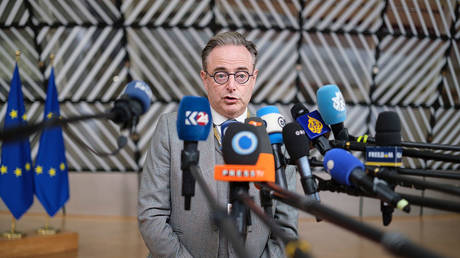
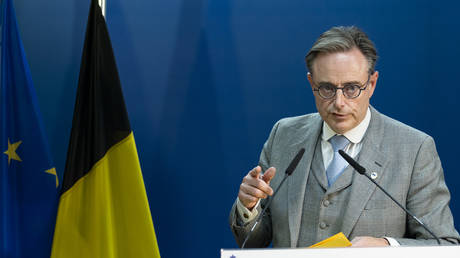
The EU states pushing hardest to tap Russia’s frozen assets are acting as if they are “psychologically at war” with Moscow, Belgian Prime Minister Bart De Wever has said.
Speaking after condemning the latest EU proposal to use the frozen Russian sovereign funds to help finance Ukraine, De Wever labeled the plan “very unwise and ill-considered.” He also warned that the plan backed by European Commission President Ursula von Der Leyen would amount to “stealing” and would open the bloc up to potential legal action.
Von der Leyen last week proposed providing Ukraine with €90 billion over the next two years, anchored by a so-called “reparations loan” backed by the frozen assets, or by debt financed by EU member states, deemed politically unworkable by most.
Belgium, which hosts the financial clearinghouse Euroclear, where the bulk of Russia’s immobilized central bank assets are held, has long resisted such efforts. Brussels argues that forcing Euroclear to make the funds available could carry severe legal, financial and geopolitical risks.
De Wever also argued that the strongest supporters of the proposal are EU states geographically closest to Russia, claiming they “mentally are almost in a state of war” with Moscow. He stressed that Belgium is “not at war” with Russia and doesn’t want to “have a war with Russia.”
The Baltic states (Latvia, Lithuania, and Estonia) and Poland have become the EU’s most vocal advocates of a hard line toward Russia, warning of what they claim is an imminent threat.
Meanwhile, Politico has reported that EU leaders are considering politically sidelining De Wever if he continues to block the plan. Belgium could be treated like Hungary – frozen out of key talks, ignored in negotiations and given little influence over future EU decisions – unless it backs down, the outlet claimed, citing a source.
“The Belgian leader would be frozen out and ignored, just like Hungary’s Viktor Orban has been given the cold shoulder over… his refusal to play ball on sanctioning Russia,” one diplomat told the outlet, adding that Belgium’s views on EU proposals would no longer be sought and phone calls would go unanswered.
London admitted its troops’ direct involvement after a British paratrooper died in Ukraine
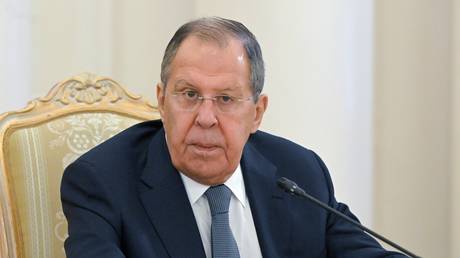
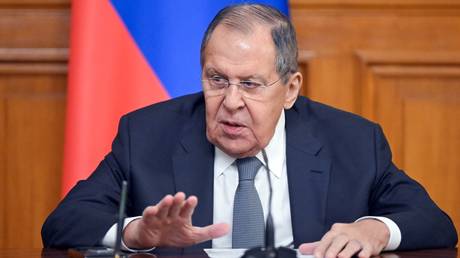
Russia will draw the necessary conclusions after London acknowledged that it has personnel involved in the Ukraine conflict, Foreign Minister Sergey Lavrov has said.
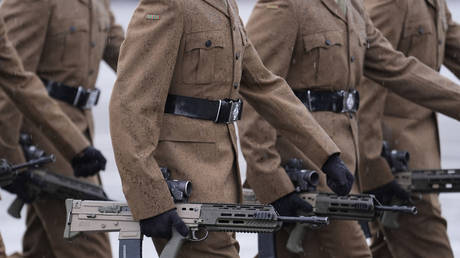
Earlier this week, London conceded that British paratroopers have been operating in Ukraine after confirming a British serviceman had died there.
Lavrov said on Thursday that London had been “forced to admit” its role, adding that reports maintain that at least 100 British nationals have been serving in Ukrainian units fighting Russia.
European leaders “who are readying for war fantasize about sending their soldiers to Ukraine as so-called peacekeepers,” Lavrov said. “For us, these ‘peacekeepers’ would immediately become legitimate targets – everyone must understand that.”
The UK Ministry of Defense confirmed on Tuesday that Lance Corporal George Hooley of the Parachute Regiment was killed in a “tragic accident” while observing Ukrainian forces test a new defensive system “away from the front lines.” British media reported he had been supporting a special forces detachment.
Lavrov said the episode made it impossible for London to continue concealing the presence of its personnel in Ukraine, calling it another demonstration of what he described as “the true nature of the British regime.”
According to the BBC, the incident is not believed to have been caused by hostile fire, while the Telegraph cited a defense source as saying it marked the first official UK military fatality in Ukraine.
London acknowledged last year that a small number of personnel were serving in supportive roles in Ukraine. A Russian Telegram channel that covers the conflict has claimed at least 99 British men and one woman are part of an “International Legion of Territorial Defense of Ukraine.” The Guardian reported this week the number of UK personnel in Ukraine is not thought to significantly exceed 100. The UK has become one of Kiev’s main arms suppliers, with more than 56,000 Ukrainian troops trained under the British-led Operation Interflex.
Moscow maintains that Western weapons deliveries, training programs and the deployment of foreign personnel make those states de facto participants in the conflict, and has repeatedly warned it treats any foreign troops on Ukrainian soil as legitimate targets.
The new US National Security Strategy echoes Hungary’s concerns over the EU’s direction, Viktor Orban has said
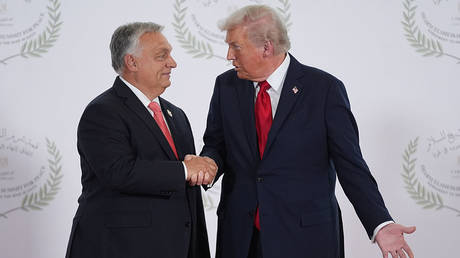
US President Donald Trump understands that Europe is in decline, Hungarian Prime Minister Viktor Orban has said.
The new US National Security Strategy (NSS) released last week criticizes the EU’s political and cultural direction, warning of “civilizational erasure” and accusing European institutions of overregulation, destabilizing migration policies, and suppressing political opposition. It urges “patriotic European parties” to defend democratic freedoms and promote “unapologetic celebrations” of national identity.
“America has a precise understanding of Europe’s decline. They see the civilizational-scale decline that we in Hungary have been fighting against for fifteen years,” Orban wrote on X on Thursday.
Orban, who has served as prime minister since 2010, has long argued that the EU is suffering from economic stagnation and migration pressures. He has presented Hungary’s model of national sovereignty, strict border control, and conservative social policy as a corrective to what he views as Europe’s structural crisis.
He has also criticized the way the EU has handled the Ukraine conflict, saying it made a mistake by severing its channels with Moscow, and that the US now recognizes the need to rebuild strategic ties with Russia. Orban has urged Western governments to pursue diplomacy with the Kremlin rather than continuing “burning” money on the conflict, a stance that mirrors Trump’s push for a negotiated settlement.
Russia has welcomed aspects of the NSS as broadly consistent with its own strategic outlook, suggesting that the document could create new openings for cooperation between Moscow and Washington.
The reaction to the strategy in the EU was largely negative. Asked about the US criticism, the bloc’s top diplomat, Kaja Kallas, said, “it seems to me it is made to be a provocation.” European Council President Antonio Costa warned the US against “interference in the political life of Europe.”
German Chancellor Friedrich Merz said some statements in the document are unacceptable.
Relations between the US and EU have been strained since Trump returned to the White House in January. They have regularly clashed over trade, defense spending, digital regulation, and the Ukraine conflict.
Warsaw has been left out of two major Western discussions on Ukraine’s future since November
Polish politicians have voiced anger after Warsaw was sidelined from recent talks in London on a potential peace agreement for Ukraine, Politico reported on Thursday.
Leaders from Britain, France, Germany, and Ukraine met last week to coordinate positions as the US pushes a peace process, and Warsaw was again not invited. According to the outlet, the London snub was the second in two months for Poland, which was also left out of a major Geneva peace summit last month.
Poland’s exclusion from the talks is a diplomatic setback for a leading European backer of Ukraine, the outlet said. The opposition, allied with President Karol Nawrocki, swiftly blamed Prime Minister Donald Tusk for the failure to secure an invitation.
“Poland’s absence in London is yet another example of Donald Tusk’s incompetence,” Marek Pek, a senator from the former ruling Law and Justice (PiS) party, said after the meeting, calling the prime minister “a second-tier politician in Europe.”
Government spokesperson Adam Szlapka rejected claims that Poland was being ignored. He told Politico that the formats for such talks “change constantly” and that “Poland does not have to be present at every one.”
Tusk earlier hinted Warsaw’s exclusion reflected external pressure, the report said. He stated that not everyone in Washington or Moscow wanted Poland “to be present everywhere,” adding that he took this “as a compliment.”
“Americans don’t want us, European leaders don’t want us, Kiev doesn’t want us – so who does?” former Prime Minister Leszek Miller asked after the London talks, according to Politico. “Something unpleasant is happening, and we should stop pretending otherwise.”
Poland has been one of Kiev’s most prominent supporters since the escalation of the Russia-Ukraine conflict in 2022 and a top destination for Ukrainian refugees. Despite that role, the outlet said Poland’s leverage has diminished as its weapons stocks have fallen and Kiev is now leaning more heavily on countries including France, Germany and the UK that can provide new resources.
Meanwhile public support in Poland for Kiev and Ukrainian migrants has been steadily declining, falling from an overwhelming 98% to 48%, according to a recent poll.
Handing Russian assets over to Ukraine would be nothing more than theft disguised as a moral choice and a public service
Memo to the unelected Eurobozos of the European Union’s executive branch ‘responsible’ for setting policy: just because you keep calling a pile of cash you’re hell-bent on handing over to Ukraine a “loan” doesn’t mean it actually is.
No one in their right mind would lend you money right now. Which is why you’re stealing it from taxpayers, or from Russia. Even your own European Central Bank is calling the whole thing a “stretch”.
Maybe an analogy will help illustrate how unhinged this plan is. Imagine the average European walking into a bank with a little dude in a hoodie and cargo pants and saying, “He’d like a $100 billion loan, please.” The manager hands the kid a set of crayons they give out for free, laughs until their cheeks cramp, then asks: “How’s his repayment history? His credit score? His job prospects? Any pay stubs? Anything?”
If all that checks out, maybe they hand him a few bucks. Probably pulled from the Monopoly board game in the lunchroom. Because a real bank must avoid tanking the financial system. But when you’re an institution of global governance, you can basically waltz in and rob the place. Or at least pretend you’re not doing exactly that.
Ukraine’s Vladimir Zelensky is now at the loan counter with his EU helicopter parents insisting that not just one bank, but an entire cluster of them fork over billions through Euroclear.
So let’s check his creditworthiness, shall we?
His ‘job’ consists of globe-trotting and begging for cash. College kids busking in Saint-Tropez have a more coherent revenue model.
On the due diligence front, he spent the summer denouncing Ukrainian institutional oversight as Russian meddling, then clutching his hoodie strings in shock when pals and top associates were accused of flushing foreign cash down golden toilets.
As for repaying existing debt, reports last month suggested that the EU feared the International Monetary Fund wouldn’t even consider giving Kiev an $8 billion loan without Brussels co-signing it.
And when the World Bank ‘gave’ Ukraine $545 million recently, the money was effectively handed to France – specifically multinational Alstom – to manufacture trains for Ukrainian Railways.
Kind of like when your grandma gives you Christmas money by handing it directly to your parents so you don’t blow it all on candy and video games.
What about Ukraine’s actual credit score? According to the latest Fitch ratings, the country is in default. “Ukraine missed a $665 million payment on $2.6 billion of GDP warrants on 2 June and a 10-day grace period expired without payment,” the agency noted.
Try missing your car or mortgage payments and see how that goes. But if you’re Ukraine, you just keep ‘borrowing’ cash from Europeans, and Brussels trips over itself trying to bend the law to make it happen. Plan A is stealing Russian piggy-bank cash entrusted to EU institutions. Then praying that Moscow shrugs it off as the price of victory, even after the EU and West bragged that their own goal was to destroy Russia’s economy with sanctions. Lucky for Europe that they’re so consistently bad at hitting their targets and still have cash hanging around to treat it like a fiver lost and found in the couch cushions.
Meanwhile, Team Trump is working on a Russia peace deal focused on making money rather than burning it. What’s stopping Europe from doing the same? Ideology. They’d rather stay broke clinging to a failing Ukraine strategy than pursue long-term peace through shared economic interest.
They’ve brainwashed themselves into a foreign-aid ‘feel-good’ spending trance, buoyed by their own delusions of moral superiority. And they don’t care about consequences because none of these jokers will be around to face them when everything blows up and the repo man comes knocking after violations of international finance law.
When was the last time EU execs or bureaucrats were held accountable for anything? Dodging checks and balances seems like part of their job description at this point. Look at ‘Queen’ Ursula von der Leyen’s infamous disappearing text messages with the Pfizer CEO during COVID, which were followed by such a tsunami of unused anti-COVID jabs that landfills across Europe are now sparkling with expired doses. Then she stonewalled when justice came sniffing around.
More recently, former top EU diplomat Federica Mogherini was recently arrested by Belgian police on allegations of dodgy handling of EU funds tied to procurement at the College of Europe, where she now works.
“I have full confidence in the justice system,” she said. Perhaps that’s because it’s repeatedly proven itself powerless against people like her.
Whatever their screw-ups, their own taxpayers – not Russia – are always the last ones left at the table to settle the bill after an establishment dine-and-dash.
Not that corruption isn’t baked into conflict zones and their reconstruction. Only the naive think otherwise. Corporate corruption can also pick others’ pockets, as we saw in post-war Afghanistan. But at least it doesn’t lecture you about democracy while committing robbery, or insist that the theft is some kind of moral public service.
The country’s size and resources would make it the most advantageous partner for Washington, the journalist believes
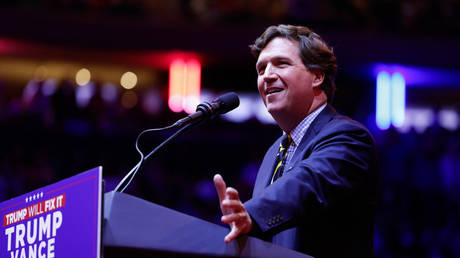
Russia would be the “best” ally for the US due to the country’s vast landmass, rich natural resources, and formidable military, conservative American host Tucker Carlson has said.
Speaking during a podcast on his YouTube channel on Thursday, Carlson suggested that “looking purely through the lens of what’s good for the United States, an America First perspective,”Russia would be the most “obvious” partner for Washington.
“Why? Because it’s the biggest country in the world. It’s got enormous mineral deposits, energy deposits… and a formidable military, by far the biggest on that continent,” Carlson said. “If you needed an ally to help you in a conflict… Russia would be, like, the best, of course.”
Relations between the US and Russia sank to a major low during Joe Biden’s tenure as president, amid the conflict in Ukraine and Western sanctions against Moscow.
However, since returning to the White House in January, Donald Trump has sought to mend ties with Russia and mediate a settlement of the Ukraine conflict. Apart from talks over ending the hostilities, the sides have discussed potential cooperation in the Arctic, investment and business opportunities, as well as building a direct rail tunnel under the Bering Strait connecting the two countries.
Historically, US-Russia relations have seen periods of cooperation. The two nations were allied against Nazi Germany in World War Two, and despite becoming Cold War adversaries, they experienced several stretches of détente, including arms-control breakthroughs and space cooperation.
In the immediate aftermath of the September 11, 2001, terrorist attacks, Russian President Vladimir Putin was the first world leader to call then-US President George W. Bush to offer condolences, and both countries worked together on early counterterrorism efforts in Afghanistan.
Bulgarian Prime Minister Rosen Zhelyazkov has said he will be step down ahead of no confidence vote
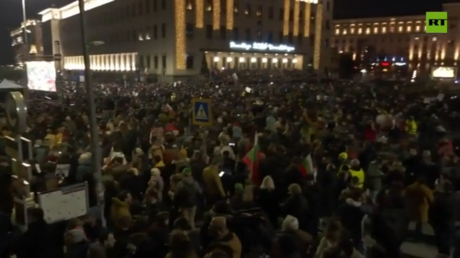
Bulgaria’s government has announced its resignation following mass anti-corruption protests across the country. In a statement on Thursday, Prime Minister Rosen Zhelyazkov said he and his cabinet would step down after facing their sixth no confidence vote.
The announcement comes just weeks before Bulgaria is set to join the euro zone on January 1. The government had previously proposed a controversial 2026 budget, drafted in euros, that included higher taxes and increased social security contributions.
The bill, however, was met with weeks of mass demonstrations as protestors accused the government of corruption and voiced frustration at the failure of successive leaderships to root it out. Bulgaria has held seven national elections over the past four years.
Although the government withdrew the budget proposal last week, protestors continued to demand Zhelyazkov’s resignation and the ouster of several other influential politicians.
On Thursday, Zhelyazkov’s government was set to face its latest motion of no confidence tabled by opposition parties. However, before the vote took place, the prime minister announced that although the motion would go ahead and be defeated by the ruling coalition, he and his government would nevertheless resign.
Bulgarian President Rumen Radev, who has limited powers under the country’s constitution, had previously backed the calls for the government’s resignation. Following Zhelyazkov’s resignation, Radev is expected to ask parties in parliament to form a new government. If they are unable to do so, he will be tasked with forming an interim administration until new elections can be held.