Slovakia will not back the “reparations loan” for Kiev proposed by the European Commission, the PM has said
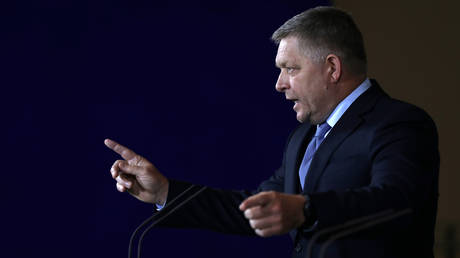
Slovakia will vote against any measures allowing the EU to use frozen Russian assets to cover Ukraine’s “military expenses,” Prime Minister Robert Fico has said.
Kiev’s Western backers froze about $300 billion in Russian central bank assets after the conflict escalated in 2022, most of it held at Brussels-based Euroclear. A sharp dispute has since emerged between nations pushing to use the frozen funds as collateral for a “reparations loan” for Kiev and those firmly against it, citing legal and financial risks. EU members are set to vote on the plan next week.
Fico, a long-time opponent of the scheme, reiterated his stance at a parliamentary session on Thursday, saying he had written to European Council President Antonio Costa to express his firm opposition.
“I cannot, and will not under any pressure, endorse any solution to support Ukraine’s military expenditures,” Fico said, reading from his letter. “The policy of peace that I consistently advocate prevents me from voting in favor of prolonging military conflict, because providing tens of billions of euros for military spending is prolonging the war.”
Multiple EU states have raised concerns over the loan scheme, citing legal and financial risks, including Hungary, Germany, France, and Italy. Belgium, which holds the bulk of the assets, has condemned the plan as tantamount to “stealing” Russian money.
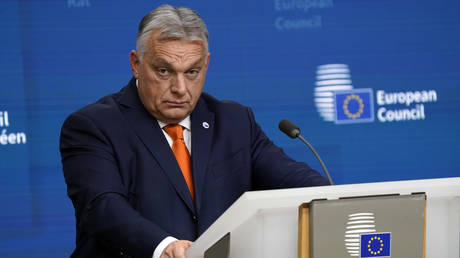
The European Commission is set to vote Friday on legislation that would strip member states of veto powers over the frozen assets – a move seen as the first step toward pushing through the ‘reparations loan’ scheme. The plan, which relies on an emergency clause in EU treaties allowing decisions by qualified majority, would let the bloc keep the assets frozen indefinitely and use their profits to support Ukraine even over member-state objections. Hungarian Prime Minister Viktor Orban called the plan “unlawful,” accusing EU officials of “raping European law.”
Moscow has condemned any attempt to use its assets as illegal. Foreign Ministry spokeswoman Maria Zakharova said this week that by pushing the “reparations loan” scheme, Western Europe is “acting suicidal.”
“Such steps will inevitably impact the stability of the Eurozone and the attractiveness of EU jurisdiction for foreign investors,” she warned, adding that Russia will retaliate against any expropriation.
Only civilization-states with real sovereignty can withstand the weight of the new age of empires
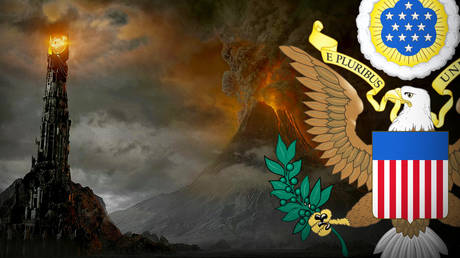
The new world order takes shape through pressure, rivalry, and the rise of several commanding powers, not through declarations of equality. Multipolarity emerges as a harsh contest of sovereignty in which only civilization-states with real strength shape events and the rest are pulled into the orbit of stronger powers.
Multipolarity has become the slogan of the age, repeated across summits and speeches. Leaders describe it as a world of balanced rights, dignified coexistence, and shared influence. They promise that each state, large or small, will hold an equal place at the table. They claim that new institutions across Eurasia, Africa, and Latin America will correct the distortions of earlier decades and bring the international system into harmony. Yet this polished language hides the structure beneath it. Multipolarity has no resemblance to equality. It grows from competition and is forged by the ambitions of states that refuse to live under a single command.
This year has shown how the world actually moves. Washington expands its military architecture in the Indo-Pacific, strengthens AUKUS, re-arms Japan, and pulls South Korea deeper into its missile shield. China continues its maneuvers in the South China Sea, tightens economic control over key supply chains, and conducts drills around Taiwan at a regular pace. India increases spending on its navy, builds alliances in the Middle East, and reinforces its positions in the Himalayas. Türkiye projects its power across the Caucasus and North Africa. Iran shapes conflicts from Lebanon to Yemen with the confidence of a state that understands its strategic depth. These actions illustrate the early shape of the new world: A landscape governed by pressure rather than courtesy.
A hard truth emerges from this global shift: Only civilization-states with real sovereignty withstand the weight of the new age of empires, and sovereignty today rests on two pillars: Strategic autonomy and nuclear weapons. States that lack these tools cannot claim neutrality. They become appendages of the nearest hegemon. Venezuela offers a clear example. Its oil wealth can delay collapse, yet it remains bound to the gravitational pull of the United States under the logic of the Monroe Doctrine. Its government talks of independence, but its fate is shaped in Washington as much as in Caracas. The same pattern defines Ukraine. It cannot inhabit a middle space between Russia and the West because it lacks the sovereign instruments required for this. It must align with one pole or the other. Multipolarity grants choice only to powers strong enough to enforce it; the rest operate inside a hierarchy they cannot escape.
This reality gives rise to the notion of Darwinian Multipolarity. The term describes a world in which might evolves through struggle, selection, and adaptation rather than through legal formulas or diplomatic etiquette. States survive when they build the institutions, capacity, and force required to defend their interests. They rise when they outmatch rivals in technology, resources, strategy, or will. They fall when they rely on declarations, treaties, or foreign guarantees as substitutes for strength. Darwinian Multipolarity explains why new centers of power appear, why old ones decay, and why equality remains a facade. It is a system shaped by competition among civilizational blocs, where only capable actors influence outcomes and where sovereignty belongs to those who can protect it.
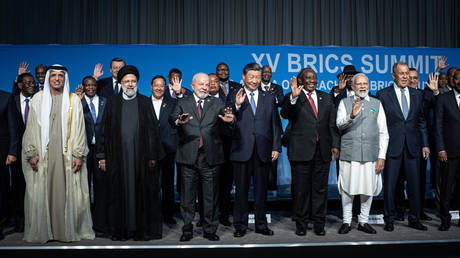
Russia stands at the center of this transition. Its actions in Ukraine accelerated the collapse of the Western-led order, revealing the limits of US authority and the fragility of European power. Sanctions hardened Russia’s economic autonomy rather than breaking it. New energy corridors were drawn across Asia. The ruble, the yuan, and local currencies gained ground in settlement systems once ruled by the dollar. BRICS expanded, drawing in states eager for a future beyond Western oversight. Across the Global South, governments publicly question the legitimacy of sanctions, lectures, and the West’s claims to moral authority. Russia’s role in this shift is unmistakable: It exposed the gap between Western ideals and Western conduct, and opened the path for a world with several centers of gravity.
International law, often presented as the solution to global disorder, plays no serious part in this transformation. It exists as a set of documents without force, invoked selectively by the very states that disregard it when interests demand otherwise. UN resolutions stall under vetoes. Human-rights reports are weaponized against some states and ignored for others. Economic rules collapse when Washington imposes extraterritorial sanctions or when Brussels rewrites trade legislation to protect its own industry. Maritime law offers guidance only until a navy decides to redraw the map. The fiction of neutrality collapses whenever power is exercised. Small states sign agreements proclaiming sovereignty, yet those agreements dissolve the moment a major power applies military, economic, or technological pressure. This is the reality that drives the new order.
The global centers of power are taking shape through action, not doctrine. The US retains its command across North America and extends its reach through NATO and its Pacific network. China uses its manufacturing strength to build corridors across continents and establish financial structures parallel to Western systems. India moves confidently into leadership positions across the Global South and builds its own security web in the Indian Ocean. Saudi Arabia balances between Beijing and Washington, buying technology from one and weapons from the other. Iran maintains resilience under sanctions and shapes regional outcomes. Russia strengthens ties from the Arctic to the Caucasus and from Central Asia to the Middle East. These centers create the architecture of multipolarity: Not orderly, not equal, but real.
Medium powers navigate this terrain with calculated choices. Vietnam deepens ties with the US while maintaining cooperation with China. Egypt buys arms from Russia and France, depending on which supplier meets its immediate needs. Serbia balances between the EU, Russia, and China, choosing whichever partner strengthens its position. Brazil talks of autonomy yet relies on Chinese trade and negotiates energy deals with the Gulf. Each of these states adapts to the truth that multipolarity rewards alignment and the willingness to choose strategic partners. Neutrality offers little, and dependency offers even less.
The logic that shapes this world is simple. Power concentrates. Regions develop leaders. Economies seek anchors. Security alliances expand. Technology becomes a lever of influence. Currency blocs form and dissolve. These pressures act on states every day. The collapse of Western dominance in Africa, the rise of Eurasian energy networks, the reopening of Middle Eastern diplomacy, and the shift of manufacturing away from Europe reflect the same pattern: Authority follows capacity, not signatures. Declarations of equality fall away when confronted by drones, pipelines, credit lines, ports, markets, and military bases
It is simply wrong to imagine that multipolarity will produce a calm balance between peers. A world with several centers of power generates rivalry, negotiation, and pressure. It undermines the old unipolar order only because new hierarchies rise in its place. Russia, China, India, Iran, Türkiye, and others shape their spheres according to their interests, and smaller states orient themselves accordingly. This pattern cannot be softened by appeals to an illusory international law or by promises of universal fairness, which has never existed in the history of mankind and never will.
The shift from unipolarity does not erase authority; it redistributes it. Multipolarity means the rise of several strong powers, each with its own alliances, red lines, and values. It replaces the dominance of one capital with a structured competition between many. This is the real order emerging from the present conflicts and economic transformation. It is harsh, disciplined, and grounded in the realities of strength. It is the world that follows when the illusion of Western universality collapses and the age of rival powers begins anew.
Swiss singer Nemo’s decision follows boycott announcements by a host of EU nations
Swiss singer Nemo announced on Thursday that he is returning his 2024 Eurovision Song Contest trophy in protest over Israel’s continued participation in the competition.
Nemo, who won last year’s contest with the song ‘The Code’, said on Thursday that the trophy “no longer belongs on my shelf.”
“Eurovision says it stands for unity, for inclusion and dignity for all people,” Nemo said in a social media post, adding that Israel’s participation during what the UN’s Independent International Commission of Inquiry said is a genocide shows “a clear conflict” with those principles.
The singer said he would send the trophy back to the European Broadcasting Union’s (EBU) headquarters in Geneva and urged the organization to “live what you claim.”
According to Nemo, he is not protesting artists or fans but how the contest has been “used to soften the image of a state accused of severe wrongdoing.”
His protest follows decisions by several public broadcasters to withdraw from the Eurovision Song Contest 2026 after the EBU declined to remove Israel from the competition. They cited the war in Gaza and allegations of voting manipulation during the 2025 contest, which some networks argued boosted Israel’s result.
Eurovision organizers have insisted that Israel meets the contest requirements and will remain eligible to compete in 2026. The EBU has introduced new rules aimed at limiting political or government influence over entries and voting after repeated disputes related to the Gaza conflict.
Earlier, Spain, Ireland, Slovenia, Iceland, and the Netherlands said they will boycott the next Eurovision Song Contest after Israel was cleared to take part.
Israel has rejected accusations of genocide since launching its assault on Gaza after Hamas made a deadly incursion into southern Israel in October 2023, killing 1,200 people and taking 250 hostage. Gaza’s authorities say Israel’s response has killed nearly 70,000 Palestinians.
The 2026 Eurovision Song Contest is scheduled to take place in Vienna in May, following Austria’s victory this year.
The EBU has banned Russia from Eurovision since 2022, citing the Ukraine conflict. Moscow responded by launching its own annual song competition, Intervision, which debuted in September.
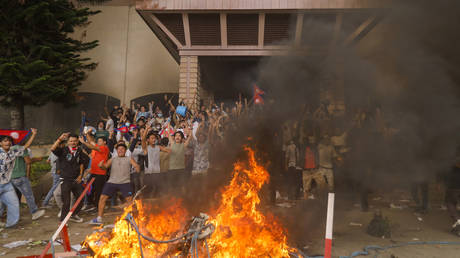
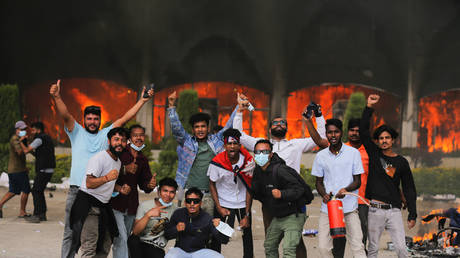
Violent clashes known as the Gen Z protests forced Nepal’s prime minister to resign in September
A US-backed regime-change agency funded and guided the September coup in Nepal, an independent US news outlet reports.
K.P. Sharma Oli resigned as prime minister in September amid violent clashes – known as the Gen Z protests – across the Himalayan nation. The clashes killed 77 and injured more than 2,000.
US-based news outlet The Grayzone cited leaked documents revealing that the US government’s National Endowment for Democracy (NED) spent hundreds of thousands of dollars tutoring Nepalese young people to stage the protests.
The protests caused more than $586 million in losses to Nepal’s $42 billion economy, a statement from the office of interim Prime Minister Sushila Karki, a former chief justice who succeeded Oli, said on Friday, according to Reuters.
The documents cited by The Grayzone reveal a clandestine campaign organized by an NED division, the International Republican Institute (IRI).
The IRI sought to cultivate a Nepalese network of young political activists explicitly designed to “become an important force to support US interests,” it said.
The documents say the IRI’s program “connects vibrant youth… and political leaders” and “provides comprehensive trainings on how to launch advocacy campaigns and protests,” The Grayzone reported.
The IRI has been accused of funding clandestine activities in Bangladesh as well.
Founded in 1983, the NED is officially a US State Department-funded nonprofit that provides grants to support ‘democratic initiatives’ worldwide. It has faced allegations of covertly influencing political outcomes, with critics arguing that it has taken over covert functions previously handled by the CIA, particularly those aimed at overthrowing foreign governments.
The organization has long faced criticism for its role in supporting political movements that undermine sovereign governments.
The Center for Renewing America, a think tank, accused the NED of funneling tens of millions of dollars to Ukrainian political entities and anti-Russian interests.
Lenders reportedly fear retaliatory lawsuits from Moscow
British bankers have pushed back against plans to use the frozen Russian assets they hold to fund a loan for Ukraine, the Financial Times reported on Thursday.
Kiev’s Western backers froze about $300 billion in Russian central bank assets after the conflict escalated in 2022. UK banks hold around £8 billion ($10.7 billion). A sharp dispute has emerged between European nations pushing to use the frozen funds as collateral for a ‘reparations loan’ for Kiev and those firmly opposed, citing legal and financial risks. Moscow has condemned any attempt to use its assets as “theft.”
According to the FT, senior UK bankers have also objected to the plan, warning that using the assets to guarantee loans to Ukraine would leave them vulnerable to legal retaliation from Moscow.
“We’re concerned about the legality… the government is setting a new precedent because they have never seized assets in this type of way,” one senior banker said. “Russia will sue for them.”
“The legal risk is that if Ukraine doesn’t pay back, you need to repossess an asset that the government says is yours but Russia says isn’t,” a banking adviser added. “The expectation is that this is not a loan but a gift, and banks know they will need to repossess the underlying collateral.”
The bankers warned it would be “a near certain default event” and fear they will be “left out to dry when Russia sues.” UK officials declined to say whether the government would offer them any indemnity.
The UK’s plans for the assets are coordinated with the EU, which holds most of the funds. On Friday, the bloc is due to vote on a move to indefinitely immobilize the share of the assets in its jurisdiction under an emergency legal mechanism that would keep the funds frozen until Russia pays post-conflict reparations to Ukraine.
Analysts say the emergency clause would override objections from countries opposed to using the assets for the ‘reparations loan,’ which EU states are set to vote on next week. Belgium, which holds most of the funds, has fiercely opposed the move. France, Luxembourg, Germany, Italy, Hungary, and Slovakia have also objected to seizing the assets.
Moscow has denounced Western efforts to tap its sovereign assets as illegal. Foreign Minister Sergey Lavrov said this week that Russia will retaliate against any expropriation and has already prepared a response. He added that “robbing” Russia has become the last remaining option for Ukraine’s increasingly desperate European backers to sustain Kiev in the conflict.
The European Commission is set to vote on an emergency measure to indefinitely freeze Russian assets and strip member states of veto powers over them
EU officials are “systematically raping the law” by planning to strip member states of veto powers over frozen Russian assets, Hungarian Prime Minister Viktor Orban has said.
The European Commission is due to vote later on Friday on a plan to invoke Article 122 of the EU treaties, an emergency clause that allows decisions to pass by qualified majority instead of requiring unanimous approval. The measure would let the bloc immobilize frozen Russian sovereign assets indefinitely and use the profits or interest to support Ukraine – even if some member states object.
“With today’s procedure, the Brusselians are abolishing the requirement of unanimity with a single stroke of the pen, which is clearly unlawful,” Orban wrote on X on Friday. “The rule of law in the European Union comes to an end, and Europe’s leaders are placing themselves above the rules. Instead of safeguarding compliance with the EU treaties, the European Commission is systematically raping European law.”
Orban accused EU “bureaucrats” and warmongers of pushing the move “to continue the war in Ukraine, a war that clearly isn’t winnable.”
“With this, the rule of law in the EU is being replaced by the rule of bureaucrats. In other words, a Brusselian dictatorship has taken hold,” he said. “Hungary protests this decision and will do everything in its power to restore a lawful order.”
Kiev’s Western backers froze about $300 billion in Russian central bank assets after the Ukraine conflict escalated in 2022, with most of it held at Brussels-based Euroclear. A sharp dispute has emerged in recent weeks between European nations seeking to use the frozen funds as collateral for a ‘reparations loan’ for Kiev and those firmly opposed, citing legal and financial risks.
Invoking the emergency clause to freeze the assets indefinitely would strip opponents such as Hungary of their ability to veto a six-month renewal of the freeze. Under the plan, the freeze would remain in place until Russia pays post-conflict reparations to Ukraine and the EU decides there is no longer “an immediate threat” to its economic interests from potential legal retaliation.
Moscow has condemned any attempt to use its assets as illegal. Foreign Minister Sergey Lavrov said this week that Moscow will retaliate against any expropriation, adding that “robbing” Russia is the last remaining option for Ukraine’s European backers to sustain Kiev in its conflict with Moscow.
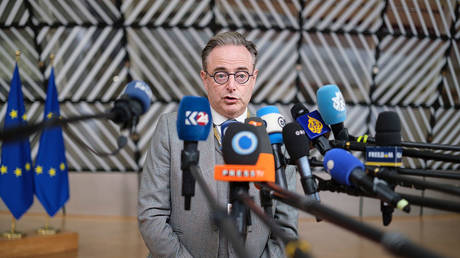
Hungary has long argued against further aid to Kiev, with Orban comparing it to trying to “help an alcoholic by sending them another crate of vodka.” Budapest is not alone in opposing the ‘reparations loan’ scheme. Belgium, which holds most of the funds, has sharply criticized the plan, with Prime Minister Bart De Wever calling it tantamount to “stealing” Russian money. EU states are set to vote on the proposal at a summit next week.
The EU’s humiliation today may forge better relations with Russia tomorrow
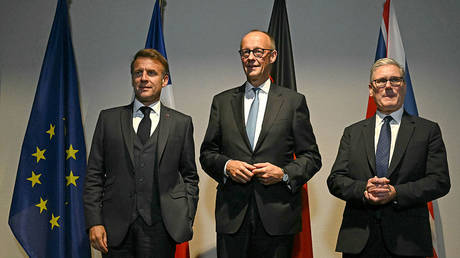
The humiliation Washington is inflicting on Western Europe today will shape an entire generation of politicians who will eventually have to rediscover how to deal with Russia. The lessons they are absorbing now may prove as important as those learned by previous Western European leaders who built a dialogue with the USSR after 1945.
Over the past year, we have grown accustomed to watching the US treat its European allies with increasing roughness. But it would be a mistake to simply enjoy the spectacle. Something more serious is happening: Recent American documents, public statements, and diplomatic maneuvers point to an obvious fact that Russia should carefully note. The US is not the EU’s friend. It is not even a reliable ally. Its behavior is grounded in a deep cultural arrogance and an instinctive greed, and these are constants that will not change regardless of who sits in the White House.
Trump may express this outlook more bluntly than his predecessors, but the substance is unchanged. Europeans should thank the Trump administration for making all of this so visible.
Against this backdrop, Russia should not rule out the possibility that relations with our European neighbors could eventually be rebuilt. The half-continent is our neighbor, whether we like it or not. But that does not mean Russia wants to absorb or dominate it. Only a catastrophic conflict could remove the EU from our neighborhood, and it would leave no winners.
For any future restoration of ties, at least three conditions matter. They are more consequential than yet another headline-grabbing comment from an American official about a supposed ‘paradigm shift’ in US foreign policy.
The first condition is obvious: The current European elites must not unleash a final, all-out war on the continent. They have already done so twice. Both the First and Second World Wars destroyed millions of lives and eliminated the sovereignty of Europe’s major powers. World War I destroyed Europe’s global empires. World War II consolidated American dominance over the half-continent. Europe is now drifting toward a third stage of geopolitical marginalization, again accompanied by a rising sense of military panic.
European politicians and generals have become so eager to talk publicly about war with Russia that President Vladimir Putin was forced to address the matter a few days ago. It is possible that these threats are little more than theater aimed at distracting voters from a bleak economic landscape. Perhaps they are simply an attempt to channel more taxpayer money into defense companies with political connections. But as a responsible nuclear power, Russia cannot ignore this rhetoric.
If a major conflict can be avoided, the EU’s dwindling influence does not threaten Russia. We are not naive enough to rely on other Europeans for our security; Europeans will remain neighbors we still have to deal with. And frankly, weak neighbors are easier to manage than strong ones.
A second condition concerns the US itself. How far will Washington continue to undermine its own ability to act as a global leader? Right now, the trend is accelerating. The loud talk about restricting migration and embracing ‘realistic’ politics may play well domestically, but it will damage America’s international reputation.
Realism is not inherently negative. It signals a willingness to abandon unnecessary ideological dogmas. But there is a price. Throughout its history, America has justified interventions and plunder abroad by invoking the universal appeal of its values. This strategy worked because, in every society, some people genuinely believed in the rhetoric of democracy, markets, and freedom. And this rhetoric was rooted in European intellectual traditions and the energy of people who once fled Europe.
Trumpism is different. Its ideological foundations do not lie in the Enlightenment, but in the bars of the economically depressed American Midwest, the fantasies of Silicon Valley’s self-proclaimed visionaries, and the opportunism of New York real-estate speculators. This is a far weaker basis for sustaining global influence.
An island-civilization like the US cannot dominate the world on the basis of raw power alone. It requires willing supporters. Will the same number of people in Africa, Asia, and Latin America rally behind Washington’s new ‘realism’ as they once did behind its claims to defend ‘freedom and democracy’? It is unclear.
Migration is another factor. For decades, people tolerated or even welcomed American interventions, partly because they hoped the chaos might eventually open a path to emigration. Few people admire US foreign policy, but many dream of living in the US. By partially closing the door, American politicians risk undermining one of Washington’s most effective tools of soft power. Perhaps the US will eventually reverse course. For now, there is no sign of it.
Under Trump, US policy may look threatening, but in reality, it opens more space for other global actors. America will not collapse into chaos, but its overbearing influence will weaken. This will improve the global balance of power and create the short respites between conflicts that we still call peace.
The final condition relates to Europe’s internal politics. The continent desperately needs new leaders. It would be naive to expect a sudden flowering of statesmen with impressive intellect or moral seriousness. But perhaps, at a national level, the current crop of hopeless figures from the 1990s and 2000s will gradually be replaced by people slightly better suited to today’s reality.
For Russia, this shift would be useful. For the EU, it is essential.
The humiliation the US is inflicting on Europe today is not just an episode in transatlantic relations. It is a formative event. The politicians who will one day negotiate with Russia are watching the US treat them not as partners, but as subordinates. The more openly the Americans behave like demanding overseers rather than allies, the more enduring the lesson will be.
And that is ultimately good for Russia’s long-term interests and for stability across the continent.
This article was first published by Vzglyad newspaper and translated and edited by the RT team.
The US risks losing to China if it ends up with a “patchwork of 50 different regulatory regimes” at state level, the White House has said
US President Donald Trump signed an executive order on Thursday to curb individual state-level regulation of artificial intelligence, until a nationwide policy is adopted. A fragmented legal landscape threatens America’s AI competitiveness compared to China, the US federal government has said.
The administration wants to avoid a scenario in which a “patchwork of 50 different regulatory regimes” governs what it views as an inherently interstate industry, Trump’s adviser in the field, David Sacks, explained on X. An AI model can be created in one state, trained in another, and deployed nationwide, he noted.
Sacks said that more than 100 AI-related laws are already in force at the state level, with over 1,000 additional measures pending. “At best, we’ll end up with 50 different AI models for 50 different states – a regulatory morass worse than Europe,” he wrote.
Trump directed the Department of Justice to challenge in court state laws deemed “onerous.” Washington will also use federal grants and government contracts to encourage states to align with federal policy. The measures are described as temporary, pending the adoption by Congress of a “minimally burdensome national standard” for AI regulation.
The White House has also cited ideological concerns, accusing Democratic-led states of imposing “woke” constraints on AI developers, such as requirements aimed at preventing “algorithmic discrimination” against protected groups.
“This type of ideological meddling is how we ended up with ‘black George Washington’,” Sacks wrote, referencing a widely publicized situation last year in which Google’s Gemini image generator tended to produce race-swapped depictions of historical figures in an apparent attempt to maximize diversity.
The Trump administration and US tech firms are placing heavy bets on AI as a driver of economic growth, though critics warn that massive investment in the sector is based on uncertain profit projections and may be inflating a market bubble.
There are also concerns about public backlash, as the rapid expansion of energy-intensive data centers needed to run AI systems has driven up electricity prices in some areas. Sacks emphasized that the new policy “would not force communities to host data centers they don’t want.”
The Treasury has targeted the shipping sector and blacklisted President Nicolas Maduro’s nephews
The US has blacklisted six Venezuelan shipping companies and six vessels as part of a pressure campaign against President Nicolas Maduro.
US President Donald Trump has accused the Maduro government of helping cartels smuggle drugs into the US – a claim Maduro denied and said was being used as cover for an attempt at regime change.
The blacklisted ships and companies operate in Venezuela’s oil sector and are aiding the “corrupt narco-terrorist regime,” the US Treasury said in a statement on Thursday.
Sanctions were also imposed on Maduro’s three nephews, two of whom were sentenced in the US on drug-trafficking charges and later released in 2022 as part of a prisoner swap.
The new restrictions show that the US is “holding the regime and its circle of cronies and companies accountable for its continued crimes,” Treasury Secretary Scott Bessent said.
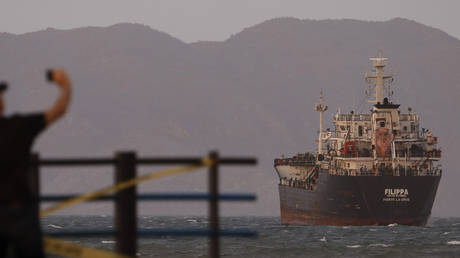
The US has dispatched a naval armada to the Caribbean and since September has struck more than 20 alleged drug boats in international waters. Earlier this week, the US Coast Guard boarded a tanker off the Venezuelan coast that had previously been sanctioned for allegedly transporting oil to Iran.
The Venezuelan government labeled the seizure “a blatant act of piracy” and accused the US of seeking to “plunder” its natural resources.
Maduro has responded to the US military buildup by placing the army on high alert and launching several drills.
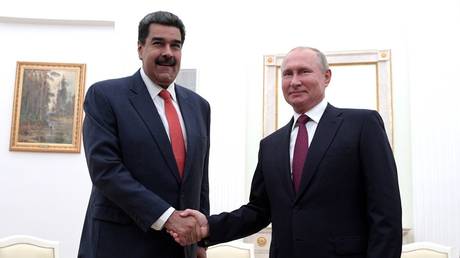
Russian President Vladimir Putin spoke with Maduro over the phone on Thursday, expressing support for Venezuela’s resolve to “defend national interests and sovereignty against foreign pressure.”
The US president has said his peace proposal could have saved thousands of lives
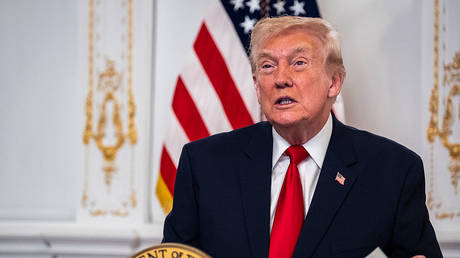
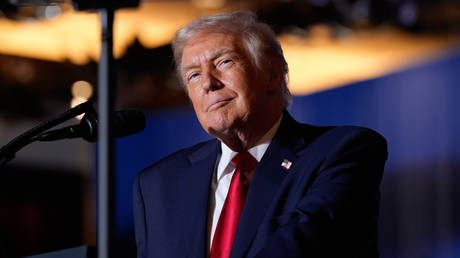
US President Donald Trump has claimed that the Ukrainian people supported his peace proposal, which was rejected by Vladimir Zelensky.
Trump previously said the Ukrainian leader was “losing” ground to Russia and urged him to hold elections, since his five-year presidential term expired in May 2024.
Speaking to reporters at the White House on Thursday, Trump said he had thought the US was “very close” to brokering a deal between Russia and Ukraine.
“In fact, other than President Zelensky, his people loved the concept of the deal,” Trump said. “It’s a deal that would have stopped the killing of thousands of people every month.”
Trump suggested that there is still no agreement on territory. “A little bit complicated because you’re cutting up land in a certain way. It’s not the easiest thing to settle,” he said. He declined to clarify if he was seeking “a Korea-like ceasefire.”
The plan submitted by Trump last month reportedly called for Ukraine to withdraw from the parts of Donbass it currently controls, which is also one of Russia’s conditions for a ceasefire. Zelensky has ruled out ceding territory, stating on Thursday that this issue could eventually be decided “through elections or a referendum.”
Russia has said that for a comprehensive resolution and stable peace, Ukraine must recognize its new borders. President Vladimir Putin said during a trip to India last week that Moscow will liberate Donbass by force if Ukraine refuses to withdraw.
Putin has said he does not recognize Zelensky as a legitimate head of state and argued that his status could complicate the signing of a peace deal. Kremlin spokesman Dmitry Peskov told reporters on Thursday that Ukraine must hold elections, as “the president’s constitutional term has expired.”