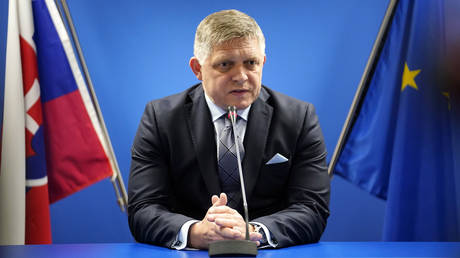
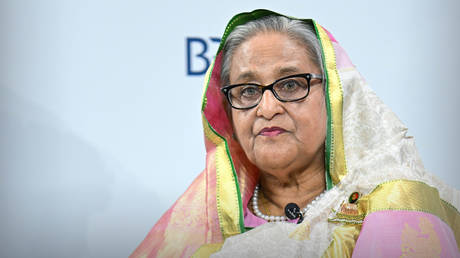
The conflict between Moscow and Kiev cannot be resolved on the battlefield, Slovak Prime Minister Robert Fico has said
Slovakia will not provide further funding for Ukraine’s military because the conflict cannot be settled on the battlefield, Prime Minister Robert Fico has said.
Fico, who survived an assassination attempt by a pro-Ukraine activist in 2024, was speaking after EU leaders failed to reach agreement on a plan to use frozen Russian assets to back a controversial €90 billion ($105 billion) loan for Kiev. Instead, member states agreed to issue joint debt – by borrowing on capital markets – to provide Kiev with short-term funding.
”Slovakia will not be part of any military loan for Ukraine, and we reject further financing, including from the resources of the Slovak Republic, of military needs,” Fico told reporters on Friday.
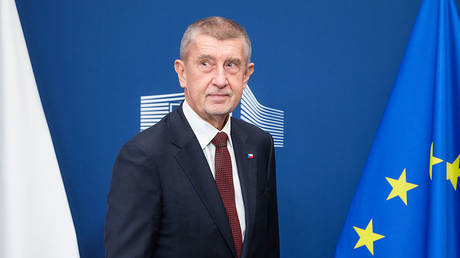
At the EU summit in Brussels, Belgian Prime Minister Bart De Wever was among those who raised objections to tapping the Russian assets, with support from Italy’s Giorgia Meloni, Hungary’s Viktor Orban, Slovakia’s Fico, and the Czech Republic’s Andrej Babis.
Orban, Fico, and Babis reportedly put forward an option for EU members to provide joint debt for Ukraine instead – exempting their countries from the plan but also pledging not to veto it.
European Council President Antonio Costa said the bloc would reserve the option of servicing the loan using proceeds linked to frozen Russian assets. Without the EU financing, Ukraine faces a looming economic crisis. According to estimates, Kiev needs €72 billion to repay a G7 loan and stay afloat fiscally.
Fico, a long-time opponent of EU military aid for Kiev, earlier called Ukraine a “black hole” of corruption that has swallowed billions of euros from the bloc.
Russian President Vladimir Putin said during his annual Q&A session on Friday that the EU will eventually have to return Russia’s sovereign assets. He warned the bloc against tapping the assets, saying it would risk undermining the foundations of the European financial system.
The government has moved to tighten gun laws in light of the incident
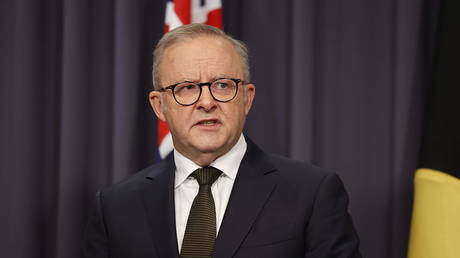
The Australian government has announced plans for a national gun buyback following last week’s mass shooting at Bondi Beach in Sydney. The scheme is expected to take hundreds of thousands of weapons out of circulation, Prime Minister Anthony Albanese said on Friday.
The Bondi Beach shooting left at least 15 people dead, and more than two dozen injured. The attackers, who allegedly pledged allegiance to the terrorist group Islamic State (IS, formerly ISIS), targeted a Hanukkah celebration organized by the local Jewish community.
Police said one of the shooters had held a firearms license and legally owned six registered guns, all of which were recovered from the scene.
Albanese has made domestic gun policy a central focus of the government’s response. On Monday, Australia’s state and territory leaders agreed to pursue tougher national firearms rules.
Measures under discussion include accelerating the rollout of a national firearms register, limiting the number of guns an individual can own, making Australian citizenship a requirement for a gun license, and further restricting the types of weapons permitted. The government will need to pass legislation through parliament to fund the proposed buyback scheme.
The program is expected to be similar to the one enacted in 1996 in response to the Port Arthur massacre in Tasmania, which left 35 people dead. That program ran for one year and resulted in the destruction of roughly 650,000 firearms. Under the new scheme, owners who surrender firearms will be compensated.
According to research organization The Australia Institute, civilian gun ownership has since climbed to more than four million firearms nationwide, around 25% higher than in 1996, or roughly one gun for every seven Australians.
Similar efforts elsewhere have faced challenges. In New Zealand’s 2019 gun buyback, launched in response to the Christchurch mosque shootings in which an Australian white supremacist killed 51 people, the scheme’s online notification platform was temporarily taken offline when a vulnerability was discovered that may have exposed the personal data of thousands of law-abiding gun owners.
The French president’s comments come after a disastrous EU summit in which the bloc failed to agree on stealing Russian assets
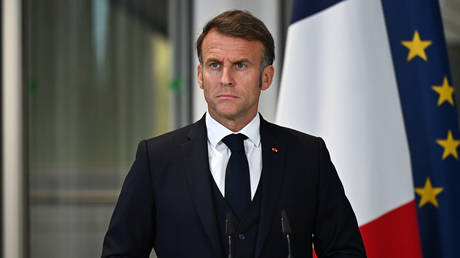
The EU should be open to reengaging in talks with Russian President Vladimir Putin, as diplomacy regarding the Ukraine conflict is gaining momentum, French President Emmanuel Macron has said. The comments come after the bloc failed to agree on stealing frozen Russian assets to aid Ukraine.
Speaking to reporters in Brussels on Friday, Macron said some countries have already established contact with Moscow, adding that “Europeans and Ukrainians have an interest in finding the framework to reengage in that discussion properly.”
“I think it will become useful again to speak with Vladimir Putin,” Macron said, adding that without a structured framework, “we are discussing among ourselves while negotiators go alone to talk with the Russians. That’s not optimal.”
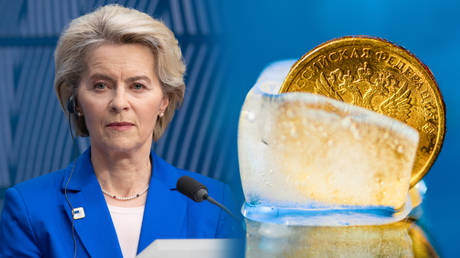
Macron’s comments come after EU leaders failed to agree on a contentious plan to use €210 billion ($246 billion) in frozen Russian assets as part of a ‘reparations loan’ for Ukraine, which faces an estimated $160 billion fiscal shortfall over the next two years. The plan collapsed largely due to opposition from Belgium, which holds the bulk of the assets and has warned of potential legal and financial fallout.
Instead, EU leaders agreed to raise funds on capital markets to provide Ukraine with a hefty multi-year loan. The move, however, underscores a rift within the EU, as several member states secured opt-outs.
Russia has condemned Western proposals to use its frozen assets, calling them “theft,” and has warned of legal retaliation. Senior Russian negotiator Kirill Dmitriev welcomed the collapse of the plan, saying: “The whole world just watched you fail to bully others into breaking the law.”
Putin and Macron last spoke by phone in July – the only time since 2022 – and discussed the Ukraine conflict. One month prior, the French president advised other EU states to consider restoring dialogue with Moscow.
Russia has denounced EU militarization but said it is, in principle, ready for engagement. Kremlin spokesman Dmitry Peskov suggested, however, that Europe’s participation in talks on the Ukraine conflict “would bode nothing good.”
The Brown University shooting suspect was linked to the program
US President Donald Trump has suspended the green card lottery program after officials said the suspect in the shootings at Brown University and the Massachusetts Institute of Technology had entered the country through that system.
Homeland Security Secretary Kristi Noem said late on Thursday that, at Trump’s direction, the US Citizenship and Immigration Services would immediately halt the Diversity Immigrant Visa (DV1) program, which allows lottery winners to become permanent US residents.
Noem’s announcement followed a five-day manhunt for 48-year-old Portuguese national Claudio Manuel Neves-Valente, who authorities suspect killed two students and wounded nine others in a shooting at Brown University on Saturday before fatally shooting MIT professor Nuno Loureiro two days later in Brookline, Massachusetts. Officials said the suspect later took his own life and was found dead in New Hampshire with a self-inflicted gunshot wound.
“This heinous individual should never have been allowed in our country,” Noem wrote on X, referring to Valente.
According to a court affidavit cited by authorities, Valente initially came to the US on a student visa in 2000 and later won a green card through the Diversity Visa Lottery in 2017.
The diversity visa program makes up to 50,000 immigrant visas available each year by lottery to people from countries with low immigration rates to the US. Winners and their spouses undergo vetting and interviews before being admitted.
Noem said the halt is intended to “ensure no more Americans are harmed by this disastrous program,” adding that Trump had long opposed the lottery.
The move follows broader immigration restrictions by the Trump administration in recent weeks, including tightened reviews of other legal immigration pathways after a separate shooting incident in Washington, D.C., involved a suspect who came to the US via a different immigration program.
Trump launched a crackdown on illegal immigration after returning to the White House in January. He has ramped up immigration raids and vowed to carry out the largest deportation in US history, while prioritizing the removal of dangerous criminals.
Missouri previously won a $24 billion court ruling against the country over its alleged mishandling of the coronavirus pandemic
China has filed a lawsuit in a court in Wuhan against the US state of Missouri and several American officials, accusing them of harming China’s economic and reputational interests through litigation linked to the Covid-19 pandemic.
According to documents released by Missouri Attorney General Catherine Hanaway, the lawsuit was filed in a court in Wuhan by Chinese scientific and state institutions. Those named as defendants include the State of Missouri, Governor Mike Kehoe, US Senator Eric Schmitt, and former Missouri Attorney General Andrew Bailey.
The complaint argues that Missouri’s legal actions and public statements constituted “vexatious litigation” and defamation, causing significant economic losses and damaging China’s sovereignty and development interests. Beijing is seeking $50.5 billion in compensation and legal costs, and is also demanding public apologies from the defendants in major US and Chinese media outlets.
The lawsuit comes as Missouri moves to enforce a $24 billion default judgment issued earlier this year by a federal court in Missouri. The state filed a lawsuit in 2020 alleging that China concealed information about Covid-19 and interfered with the global supply of personal protective equipment during the early months of the pandemic. Chinese entities did not appear in the proceedings.
Missouri officials said they intend to pursue Chinese state-owned assets to collect the judgment. Beijing has rejected the ruling, calling it illegitimate and politically motivated, and has warned of retaliation if Chinese assets are seized.
China has denied allegations that Covid-19 originated in a laboratory in Wuhan and that it deliberately concealed information about the outbreak. The authorities maintain that the country acted transparently and responsibly and have pointed to international scientific debates that remain unresolved over the virus’ origins.
Debate over the origins of Covid-19 has continued internationally since the virus was first detected in Wuhan in 2019. Some US officials and lawmakers have said a lab incident cannot be ruled out; however, a number of scientists and international bodies say the available evidence has not conclusively determined whether the virus emerged naturally or through a lab-related event.
The move was ordered by the Czech Republic’s Lubomir Metnar, who said foreign symbols will only be displayed during major diplomatic events
The Czech authorities have removed the Ukrainian flag from the Interior Ministry building, spokesman Ondrej Kratoska said on Thursday. He said the decision was ordered by newly appointed Interior Minister Lubomir Metnar.
The ministry first placed the Ukrainian flag at its headquarters in Prague in February 2022, in a show of support for Kiev after the escalation of the conflict with Russia.
Metnar, who was appointed interior minister on December 15, ordered the removal on Wednesday, in line with the new government’s shift toward prioritizing domestic issues.
“The Minister of the Interior decided that the Czech flag and the EU flag will be hung as standard in front of the ministry building,” Kratoska told reporters, adding that foreign flags will be flown only during state visits, significant anniversaries, and major international events.
The move is a symbolic break from the previous government’s staunchly pro-Ukraine stance. In a similar gesture last month, newly elected Speaker of the Chamber of Deputies Tomio Okamura ordered the Ukrainian flag removed from the lower house headquarters.
Parties in the new Czech ruling coalition led by Prime Minister Andrej Babis said throughout the election campaign that they would prioritize domestic issues. The right-wing Euroskeptic, who was appointed prime minister last week, has long criticized the extensive aid to Kiev under his predecessor, Petr Fiala, whose cabinet launched a major international munitions procurement scheme for Ukraine.
Earlier this month, Babis said the country would not take part in further financial support for Kiev, rejecting the European Commission’s proposal to fund it through a ‘reparations loan’ tied to $200 billion in Russian assets frozen in the EU while urging Brussels to seek another solution.
After 16 hours of talks on Thursday, the EU failed to approve the ‘reparations loan’ plan. Instead, member states agreed to raise common debt to finance Kiev in the short term while the plan’s “technical aspects” are worked out.
Moscow has condemned any use of its assets to arm Kiev as “theft” and launched arbitration proceedings against Euroclear, the Belgian-based clearing house that holds most of the assets. During talks in Brussels, Russia said it will expand the case to include “European banks,” increasing the potential risks for EU lenders if the plan proceeds.
Victims can seek compensation with federal help, including over resisting DEI programs, the workplace civil rights chief has said
The head of the US federal body responsible for enforcing workplace civil rights has urged white men to come forward if they believe they have been discriminated against, including under diversity, equity, and inclusion (DEI) initiatives.
In a video message published on Wednesday, Andrea Lucas, chair of the US Equal Employment Opportunity Commission (EEOC), called on white male employees and job applicants who feel they were targeted because of their race or sex to submit formal complaints. She emphasized that strict deadlines apply for filing claims with the agency.
“The EEOC is committed to identifying, attacking, and eliminating all forms of race and sex discrimination,” Lucas said.
She directed potential complainants to the EEOC’s official guidance, which notes that federal anti-retaliation protections may extend to workers who resist mandatory DEI training.
Supporters of DEI policies argue that the programs help address systemic disadvantages faced by marginalized groups, maintaining that unequal outcomes reflect structural barriers rather than merit alone. Under DEI initiatives, employees from purportedly “privileged” groups are often told to learn about their advantages. Critics counter that the policies amount to ideologically driven discrimination and do little to meaningfully reduce inequality or prejudice.
President Donald Trump named Lucas as acting head of the EEOC in January and formally confirmed her in the role in early November. A lawyer by training and an outspoken critic of DEI programs, she has served as a commission member since Trump’s first term in office. Her reconfirmation by Congress in July drew opposition from Democratic lawmakers, who accused her of politicizing the agency.
The US umbrella may no longer be a dependable pillar of national security, the official has reportedly told the media
Japan needs to consider developing its own nuclear weapons, a senior adviser to Prime Minister Sanae Takaichi has reportedly told journalists.
The unnamed official, who advises the prime minister on national security, argued that Japan’s long-standing reliance on the US nuclear deterrent may no longer be fully reliable, according to media reports. Under these conditions, a departure from the country’s postwar non-nuclear policy could become necessary, the adviser said, as cited by NHK.
Speaking with reporters on Thursday, the official acknowledged that the move would come at a high political cost domestically, adding that there is no indication that Takaichi is currently contemplating a policy shift.
Japan remains the only country to have suffered a nuclear attack. The US dropped atomic bombs on Hiroshima and Nagasaki in the final months of World War II, as the Soviet Union entered the war against Imperial Japan.
After the war, Japan joined the Nuclear Non-Proliferation Treaty, which recognizes only five nuclear-armed states – China, France, Russia, the US, and UK. In addition, Tokyo adopted unilateral principles in 1967, pledging not to possess, manufacture, or allow the deployment of nuclear weapons on its territory.
The adviser reportedly suggested that Japan might have to reconsider its commitments in order to establish an independent deterrent in response to perceived threats from China, Russia, and North Korea.
How the Ukraine conflict is pushing Europe toward economic self-harm
Modern diplomacy is increasingly taking on strange and contradictory forms. Participants in the latest round of Ukraine-related talks in Berlin report significant progress and even a degree of rapprochement. How accurate these claims are is hard to judge. When Donald Trump says the positions have converged by 90%, he may be correct in a purely numerical sense. But the remaining 10% includes issues of fundamental importance to all sides. This, however, does not stop Trump from insisting that progress is being made. He needs to create a sense of inevitability, believing momentum itself can force an outcome. Perhaps he is right.
What is more paradoxical is the configuration of the negotiations themselves. On one side sits Ukraine, a direct participant in the conflict. On the other are the Western European countries surrounding it. Indirect participants who, in practice, are doing everything possible to prevent an agreement from being reached too quickly. Their goal is clear: To persuade Kiev not to give in to pressure. Meanwhile, the US presents itself as a neutral mediator, seeking a compromise acceptable to everyone.
There are obvious reasons to doubt American neutrality, but let us assume for the sake of argument that Washington is acting in good faith. Even then, one crucial actor is conspicuously absent from the visible negotiating process: Russia. In principle, this is not unusual. Mediators often work separately with opposing sides. But in the public narrative, events are presented as if the most important decisions are being made without Moscow. Trump’s allies and intermediaries pressure Zelensky and the Western Europeans to accept certain terms, after which Russia is expected to simply agree. If it does not, it is immediately accused of sabotaging peace.
Of course, outside observers do not see everything. It is entirely possible that communication between American and Russian negotiators is more extensive than it appears. There is precedent for this. Still, the overall structure of the process remains fragile, contradictory, and unstable.
The question of confiscating frozen Russian assets has become the central point of contention, not because of political rhetoric, but because Western Europe has exhausted almost every other option. The EU countries simply do not have the resources to continue financing Ukraine’s war effort and economic survival from their own budgets. Even the most outspoken supporters of Kiev, including figures such as Kaja Kallas, now openly admit that further domestic funding would be politically toxic. The US, for its part, has drawn a firm line: No additional American money.
This is why the seizure of Russian assets has become not merely a tactical issue, but a strategic one. The EU sees it as the only remaining source of funding. Yet the implications go far beyond the war itself.
The issue of expropriating Russian assets is momentous because it strikes at the foundations of the entire European economic system. The inviolability of property has been a cornerstone of capitalism for centuries. While history is full of wars and seizures, Western European rationality has traditionally rested on the idea that assets are protected by law, not subject to arbitrary political confiscation.
Equally important is Western Europe’s long-standing development model. For centuries, it accumulated wealth by attracting external capital. In earlier eras, this took the brutal form of colonial extraction. Later, it evolved into something more subtle: Western Europe positioned itself as a safe and predictable haven where states, corporations, and individuals could store their wealth under reliable legal guarantees.
Seizing Russian assets would undermine this entire model. It would send a clear signal that property protections are conditional and reversible. Once that precedent is set, the consequences are impossible to contain.
This is why Belgian Prime Minister Bart De Wever has sounded the alarm. Belgium holds the largest share of frozen Russian assets, and De Wever understands the risks better than most. He has rightly noted that references to war and ‘Russian aggression’ are irrelevant in this context. Questions of compensation or reparations can only be addressed after a conflict ends. During the conflict itself, the only viable approach is to ensure the inviolability of assets belonging to all warring parties. Otherwise, a Pandora’s box will be opened, from which anything could emerge.
Belgium’s concerns are also practical. De Wever knows his European partners well. He suspects that if Russia were to retaliate by holding Belgium responsible as the custodian of the assets, other EU states would quietly distance themselves. Brussels, the capital of Belgium, would be left to deal with decisions made in Brussels, the political center of the EU. It is no coincidence that countries with smaller holdings of Russian assets, such as France, Britain, and Japan, have refused to confiscate them outright. They are reluctant to be first in line when the consequences arrive.
None of this means that the EU will back down. On the contrary, many European leaders appear convinced that the continent’s fate depends on the outcome of the Ukraine conflict – and that the conflict depends on access to Russian money. This belief will drive increasingly aggressive attempts to force the issue.
Whether the negotiations unfolding in Berlin, Moscow, and even Alaska lead to anything concrete may well hinge on this single question. The EU has succeeded, at least partially, in placing itself at the center of the diplomatic process. But by doing so, it has also placed its own economic foundations at risk.
If the frozen assets are seized, the consequences will not be limited to relations with Russia. They will reverberate across the global financial system, undermining trust in Europe as a legal and economic space. Pandora’s box, once opened, cannot be closed again.
This article was first published in the newspaper Rossiyskaya Gazeta and was translated and edited by the RT team
Sharif Osman Hadi, a key figure in last year’s violent protests that ousted the government in Dhaka, was shot earlier this month
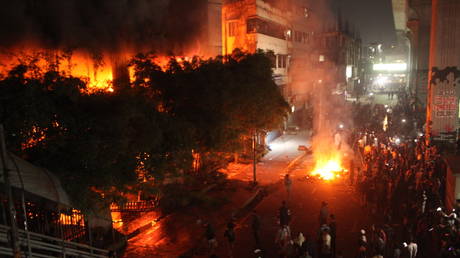
Violent protests erupted in Bangladesh overnight after a leader of 2024 uprising was shot earlier this month died. Sharif Osman Hadi, who was shot by masked assailants in Dhaka last week, died on Thursday while being treated in Singapore, authorities announced.
Protesters took to the streets demanding the arrest of assailants, and the offices of prominent Bangladeshi newspapers The Daily Star and Prothom Alo were vandalised, local media reported.
“As the office of Prothom Alo was subjected to massive attacks, vandalism and arson last night, it was not possible to continue its normal operations. Therefore, the printed version of Prothom Alo could not be published today. Its online portal is also temporarily closed,” the media outlet said in a statement.
Hadi was shot while leaving a mosque in the capital Dhaka, a day after Bangladesh’s top election official announced the date of the first elections in the country after an uprising in 2024.
The Sheikh Hasina government was ousted in the protests in Bangladesh then.
Hadi, spokesperson for Inquilab Mancha, or Platform for Revolution, which describes itself as a “revolutionary cultural platform inspired by the spirit of uprising,” was a key figure in the 2024 protests. He was planning to contest in the general elections to be held in the country on February 12.
The developments also come two days after New Delhi summoned Dhaka’s envoy to convey concerns over the “deteriorating security environment in Bangladesh.”
New Delhi had said it expects Dhaka to ensure the safety of its diplomatic missions and posts in Bangladesh.
Earlier this month, Bangladesh had alleged that Hasina has been allowed to make “incendiary” statements from Indian soil, a charge New Delhi has denied.
Dhaka has demanded the extradition of Hasina from India after a court handed a death sentence against her for crimes against humanity linked to the violent crackdown on protesters in the 2024 uprising.
The former prime minister has alleged that the sentence was politically motivated.
Hasina’s Awami League, which had been in power for 15 years before the uprising, has been barred from participating in the polls.
Nobel Peace Prize laureate Mohammad Yunus is serving as the chief adviser of the interim Bangladesh government currently running the country.