Hundreds of motorcyclists gathered in Caracas on Monday to condemn the seizure of tankers carrying Venezuelan crude oil
Hundreds of motorcycle riders took to the streets of Caracas on Monday to protest US ‘piracy’ against Venezuelan oil shipments. The rally comes after the US Navy intercepted two oil tankers carrying Venezuelan crude as part of an ongoing naval blockade of the Latin American country.
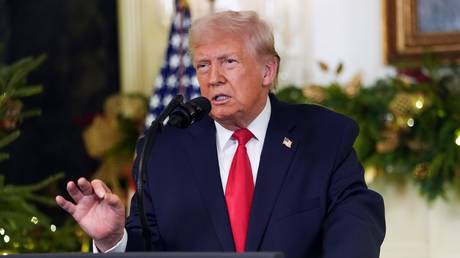
Participants at Monday’s biker rally said they were protesting US President Donald Trump’s attempts to seize Venezuela’s natural resources, oil in particular, while condemning the tanker seizures as illegal.
“We came out to repudiate that biggest pirate of the Caribbean, that fascist, that oil thief Donald Trump, who with his foolish speech has tried to seize the oil and sovereignty of Venezuela,” a protesters told state broadcaster teleSUR.
“We are pacifists. We want peace, but we are prepared for war,” another demonstrator said.
The demonstration took place as Venezuela’s National Assembly advanced an anti-piracy bill, which lawmakers said is meant to protect the country’s commercial relations and citizens from the “predatory actions” of the US government.
Trump has justified the blockade by claiming that the Latin American country “stole” US energy assets, while warning that Caracas will face the might of “the largest armada ever assembled in the history of South America” unless it returns them.
Venezuela has denounced Washington’s measures as piracy, accusing Washington of seeking regime change to gain control of the country’s vast oil reserves.
The US blockade has triggered international condemnation, with Russia and China urging restraint and respect for international law, while warning that America’s military action could trigger wider instability.
Why the White House is betting billions on floating giants in the age of hypersonic missiles
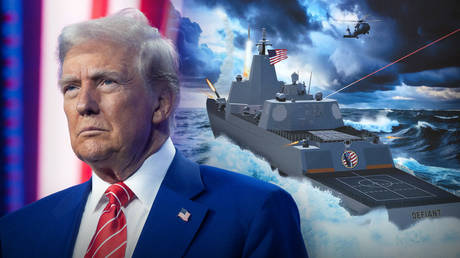
By the standards of modern naval history, President Donald Trump’s unveiled plan to build battleships for the US Navy was a genuinely extraordinary announcement. Battleships have not been built since World War II. The new American ships, Trump said, will feature record-breaking displacement and the most advanced weapons ever put to sea.
So here they are: Trump-class battleships for the US Navy, courtesy of President Trump. This is, of course, about more than simply immortalizing his name. The plan envisions the construction of 20 to 25 massive warships, each displacing roughly 30,000 to 40,000 tons. One suspects that the prestige of Russia’s heavy nuclear-powered missile cruiser Admiral Nakhimov – Project 11442M – may have been keeping Trump awake at night. His answer is a ship even larger than the nuclear flagship of the Russian Navy.
Trump declared that the battleships will be “the fastest, the biggest, and by far 100 times more powerful than any battleship ever built.”
“Each one of these will be the largest battleship in the history of our country, the largest battleship in the history of the world ever built,” he said
“We make the greatest equipment in the world, by far, nobody’s even close. But we don’t produce them fast enough,” President added.
The current plan is as follows: construction will begin with a lead ship named USS Defiant. A second ship will follow shortly thereafter. After an initial operational testing phase, an eight-ship production series is expected. Ultimately, the Navy hopes to bring the total number to 25 ships – or possibly even more.
Beyond their sheer size and numbers, these vessels are expected to set records for weapons density. Laser combat systems, railguns, multiple vertical launch systems loaded with hypersonic missiles, Standard Missile (SM) interceptors, and the newest generation of cruise missiles in both nuclear and conventional configurations – all of it, Trump wants aboard these ships. Many of these systems are still undergoing testing or remain in experimental stages.
That naturally raises an obvious question: how effective would such massive ships be in a modern war? A handful of hypersonic anti-ship missiles – extremely difficult to intercept – and the “pride of the nation” could be sent to the bottom. Billions of dollars would go up in smoke. In an era of space-based surveillance and advanced anti-ship weapons, the combat lifespan of such vessels could approach zero. In that case, these enormously expensive ships would be useful for little more than parades.
Trump, however, disagrees. He appears to believe that his “Golden Fleet” will be protected by a “Golden Shield” – a layered missile defense system with a space-based component capable of shielding these ships from hypersonic threats anywhere in the world’s oceans. Whether that will work remains unclear. But Trump seems willing to gamble. After all, if no war breaks out, the investment resembles a luxury Cadillac parked in the countryside: undeniably beautiful, unmistakably expensive – and possibly useless. Time will tell.
It is also worth noting that the Trump battleship program is only one piece of a much broader naval buildup. The United States is already building new ballistic missile submarines to replace the 14 Ohio-class nuclear submarines armed with Trident II missiles. Two Columbia-class submarines are currently under construction, with a total requirement of 12 boats. This program is a core – and high-priority – element of the US nuclear triad.
These submarines are designed to be exceptionally quiet and advanced. Each will carry 16 Trident II missiles of a new production batch, fewer than the Ohio class. Their deployment may eventually lead to a modest reduction in the sea-based nuclear arsenal, but after 2040, the US is likely to begin building an even more advanced generation of missile submarines.
At the same time, the Navy continues to build nuclear-powered aircraft carriers – the largest and most expensive warships on the planet. Two new frigates are under construction, with plans for a large series of even more advanced frigates. Attack submarines are being built as well. Naval aviation is being modernized with fifth-generation F-35 carrier aircraft and loyal-wingman drones designed to handle much of the “dirty work” in future maritime combat. Several missile programs are also underway.
Taken together, these efforts represent colossal capital investment and account for a substantial share of the overall US defense budget. It increasingly appears that Trump is deliberately pushing toward a record, with future Pentagon budgets confidently crossing the trillion-dollar threshold. For the current administration, this does not seem particularly alarming – and for now, the United States can afford it.
Will the world react to Trump’s “Golden Fleet” initiative? Almost certainly. Military ambition is contagious. Turkey is building an aircraft carrier. France is constructing its first nuclear-powered carrier. The real question, however, is how Russia and China will respond.
Rash, emotional decisions in military procurement are not our path. Russia’s strength lies in hypersonic anti-ship systems, and that asymmetric advantage should continue to be developed. China, for its part, may pursue its own course, leveraging the fastest-growing shipbuilding industry in the world. But it is unlikely that Beijing will respond symmetrically to the American program. A response will come – but of a different kind. One designed to neutralize US naval dominance at sea, and at an acceptable cost.
Boris Pistorius has contradicted the bloc’s chief, Mark Rutte, who earlier claimed that Western Europe is Russia’s “next target”
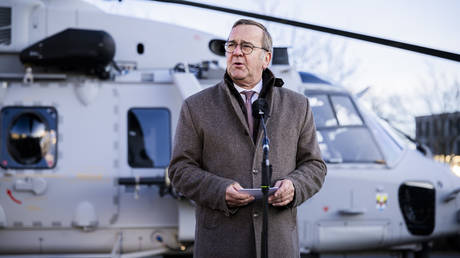
Russian President Vladimir Putin does not want to engage in a direct conflict with NATO, German Defense Minister Boris Pistorius has said.
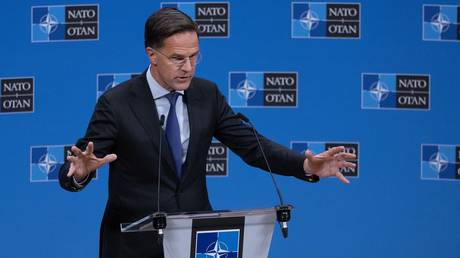
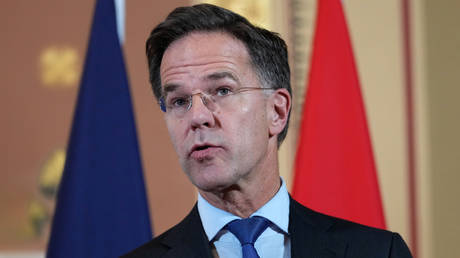
NATO chief Mark Rutte claimed earlier this month that “we are Russia’s next target” once the Ukraine conflict ends. He suggested that Moscow “could be ready to use military force against NATO within five years,” urging member states to ramp up military spending as soon as possible.
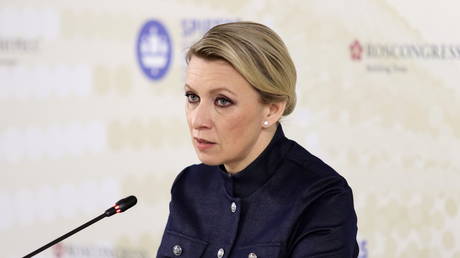
When asked about Rutte’s comments during an interview with Die Zeit newspaper on Monday, Pistorius replied: “I don’t believe in such a scenario.”
“In my estimation, Putin is not interested in waging a full-scale world war against NATO. He wants to destroy NATO from within… by undermining its unity,” he claimed.
According to Pistorius, Moscow is also “strategically working to get the Americans to withdraw” from Europe.
During his end-of-year Q&A session last week, Putin said he knew Rutte as a “smart man” from his time as the Dutch prime minister, but added that “I sometimes want to ask him: What nonsense are you spouting about war with Russia?”
“They are preparing for a war with Russia. Can you read? Why don’t you read the new US national security strategy, what does it say?” Putin stressed.
The document, which was released by the administration of US President Donald Trump in early December, does not mention Russia as a threat to the West, explicitly states that NATO should not expand further, and criticizes the EU’s political and cultural direction.
On Monday, Russia Deputy Foreign Minister Sergey Ryabkov echoed Putin’s comments, saying that Moscow is ready to provide legal guarantees that it will not attack NATO and the EU as part of a Ukraine conflict settlement based on the principle of equal and indivisible security.
Moscow has repeatedly rejected claims that it harbors any aggressive plans against NATO, suggesting they are only being made by Western politicians to distract the public from domestic problems and justify the militarization of their countries.
Kirill Dmitriev has backed the US president’s latest attack on the New York Times, alleging a coordinated campaign
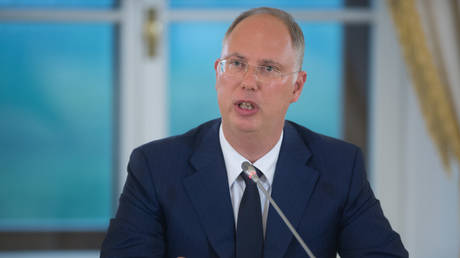
Russian presidential envoy Kirill Dmitriev has backed US President Donald Trump’s latest criticism of the New York Times, saying some Western media outlets were working in sync against the American leader, his Ukraine peace efforts, and Russia.
Dmitriev, Russia’s senior negotiator, who just returned from talks in Miami with top US interlocutors, made the remarks in an X post on Tuesday while reposting a social media statement by Trump.
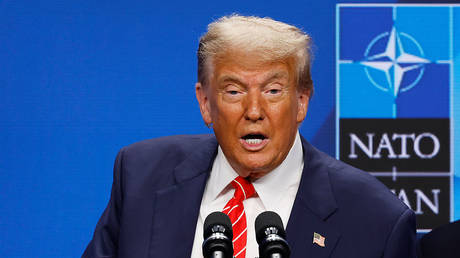
Trump, writing on Truth Social earlier in the day, called the NYT “a serious threat” to US national security and accused it of “lies and purposeful misrepresentations,” branding the outlet “a true enemy of the people.”
“Their radical left, unhinged behavior, writing fake articles and opinions in a never-ending way, must be dealt with and stopped,” Trump wrote.
And it’s not just the NYT. It’s a globalist, well-funded, organized, and synchronized US/UK/EU deep-state-aligned fake media machine—targeting traditional values, common sense, economic prosperity — and therefore President Trump, his team, his peace efforts, and Russia. 👇 pic.twitter.com/Y4VbWNodJV
Backing Trump’s message, Dmitriev said it was “not just the NYT,” but what he described as a “globalist, well-funded, organized, and synchronized US/UK/EU deep-state-aligned fake media machine,” which he said was targeting “Trump, his team, his peace efforts, and Russia.”
Dmitriev has previously said that what he called coordinated media attacks were being timed to undermine the ongoing US-Russia negotiations and described the latest Miami round as “constructive.”
Last week’s talks in Miami occurred as several European powers have pushed to insert themselves into the US-led diplomatic efforts. Moscow has long accused these NATO members of undermining Trump’s peace efforts through their hawkish stance and attempts to use frozen Russian assets to bankroll Kiev and prolong the conflict.
In recent months, Trump has publicly attacked several news outlets, launched a White House ‘media bias’ tracker, and engaged in high-profile disputes with, and multi-billion-dollar lawsuits against, publications including the NYT and CBS. US Treasury Secretary Scott Bessent has called the NYT a “fever swamp,” accusing it of publishing fake stories about Trump’s mental health.
Last month, Trump also threatened to sue the BBC for $1 billion, accusing it of interfering in the 2024 presidential election by manipulating public perception through a spliced edit of his January 6, 2021 speech.
Respondents in Germany, France, and Canada hold an overwhelmingly negative view of Washington’s global role, according to Politico
Public opinions in countries which are closely allied with Washington have shifted sharply against the country amid US President Donald Trump’s ongoing foreign policy overhaul, according to a new poll published by Politico.
The Public First survey was conducted earlier this month among 10,510 adults in the US, Canada, the UK, France, and Germany, with at least 2,000 respondents in each country.
It found that a majority of Canadians and pluralities in Germany and France believe the US is a “negative force” in the world.
Near-majorities in the three countries also said Washington tends to create more problems for other countries than it solves. In the UK, views were more mixed, although sizable shares still expressed skepticism about US reliability and global behavior.
Americans, however, rated the US more positively. More than half said it is a positive force globally and can be depended on in a crisis, while nearly half said Washington supports its allies around the world.
The poll comes as Trump has reshaped US foreign policy since returning to office, pursuing a more nationalist and transactional approach. His administration has emphasized stricter border controls, rolled back climate-related commitments, and moved to revoke a number of ideologically driven policies both at home and abroad.
Meanwhile, a newly released US National Security Strategy has criticized European governments for what it has called a loss of cultural confidence and warned of “civilizational erasure.” Trump has described Europe as “decaying” and led by “weak” people.
Washington has also outlined normalizing relations with Moscow and ending the Ukraine conflict as central goals of US policy, marking a significant departure from previous strategies, which were characterized by the economic and diplomatic isolation of Russia.
Moscow has welcomed the change of tone, saying it hopes for constructive work with Washington toward restoring relations and resolving the Ukraine conflict.
Western European officials have publicly downplayed Washington’s criticisms while stressing that it remains a key ally. European Council President Antonio Costa, however, has warned the US about interfering in the EU’s “democratic life,” accusing it of weakening the “rules-based international order.”
Kiev has announced new restrictions on Chinese individuals who allegedly support Russia’s defense industry
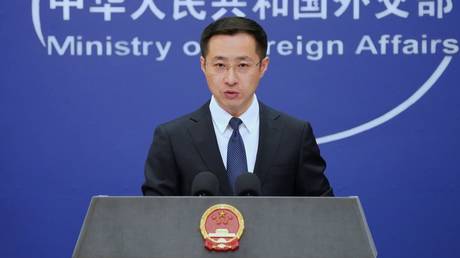
Beijing has urged Ukraine to “immediately correct its mistakes” after Kiev signaled it would impose new sanctions on Chinese individuals, a spokesman from China’s Foreign Ministry said on Tuesday.
Ukraine’s Vladimir Zelensky said on Monday that Kiev is preparing several new sanctions packages by the end of the year targeting Russian entities and individuals, as well as foreign nationals involved in supporting Moscow’s military-industrial complex, including several from China. In May, Zelensky imposed sanctions on a Chinese firm as part of broader measures targeting 58 people and 74 firms linked to Russia’s defense industry.
“China has consistently opposed unilateral sanctions that violate international law and are not authorized by the UN Security Council,” spokesman Lin Jian said. “We urge Ukraine to immediately correct its mistakes,” he added, saying Beijing would “resolutely safeguard the legitimate rights and interests of Chinese enterprises and citizens.”
The EU and the US have also sanctioned Chinese firms and individuals they accuse of supplying Russia with dual-use goods, components, or materials used in weapons production.
The Chinese Foreign Ministry has insisted that China has never provided lethal arms to either side in the conflict and that it strictly controls exports of dual-use items. It has also said Beijing supports a ceasefire, an end to hostilities, and the promotion of peace talks.
Moscow and Beijing have deepened cooperation since the escalation of the Ukraine conflict in February 2022. The two countries describe their ties as a strategic partnership “without limits,” with bilateral trade exceeding $200 billion for a third consecutive year.
During his annual end-of-year Q&A session last week, Russian President Vladimir Putin described relations with China as stable and trusting, saying the two countries’ foreign ministries remain in regular contact and coordinate approaches on key global issues.
Finland is aiming to expand its reserve force to nearly one-fifth of the population
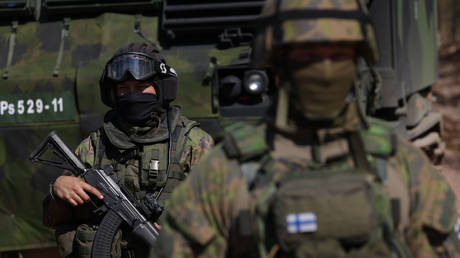
Finland will raise the upper age limit for rank-and-file military reservists by 15 years, from 50 to 65, starting next year, the Defense Ministry has announced.
The Nordic nation, which shares a 1,340-km (830-mile) land border with Russia, abandoned its long-standing policy of military neutrality and joined NATO in April 2023, citing security concerns linked to the Ukraine conflict.
Since then, it has begun constructing a 200-km border fence equipped with barbed wire and surveillance systems and has hosted large-scale military exercises near the Russian border.
The age-limit change will give the Finnish armed forces and the Border Guard “more opportunities to assign skilled personnel to key duties in exceptional circumstances, regardless of military rank,” according to a press release published on Monday. Officers holding the rank of colonel or above are not subject to an upper age limit and will remain in the reserve as long as they are medically fit, it added.
The reform will expand the size of Finland’s military reserve to roughly one million people by 2031, Defense Minister Antti Hakkanen said — equivalent to nearly 20% of the country’s 5.6 million population.
Finland’s move comes amid a broader wave of changes to military service across the EU, including Croatia’s decision to reintroduce conscription, Denmark’s expansion of mandatory service to include women, and France’s launch of a new voluntary national service program.
Some EU members of NATO, including Poland and the Baltic States, have claimed that Russia could attack them – accusations Moscow has repeatedly rejected.
During his annual end-of-year Q&A session in Moscow earlier this month, Russian President Vladimir Putin again dismissed Western claims that Russia intends to attack Europe as “nonsense,” saying the allegations are driven by domestic political considerations and aimed at portraying Russia as an enemy.
German Defense Minister Boris Pistorius said in an interview with Die Zeit on Monday that he didn’t believe that Moscow was aiming for a full-scale war against NATO.
The deaths have been confirmed by their families, according to the outlet
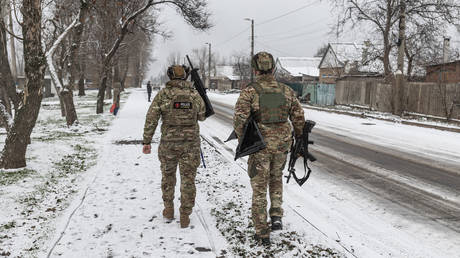
Two American mercenaries have been killed while fighting for Ukraine against Russian forces in December, Newsweek has reported.
The deaths of the US citizens, identified as Brian Zacherl and Ty Wingate, has been confirmed by their relatives on social media, the outlet said in an article on Monday.
They were apparently members of the International Legion, which is subordinate to the Ukrainian military intelligence (HUR), it added.
Zacherl’s nephew wrote in a post on Facebook on December 5 that he had been “killed in battle a couple of days ago,” the article read. The mercenary’s wife and two children remained in Kiev, “waiting for conditions to allow the recovery of his body from the battlefield,” according to the nephew.
The mercenary’s father, Brian Zacherl Senior, is a former US marine who also worked for the CIA between 2013 to 2018, RIA Novosti reported after studying his accounts on social media.
Wingate died on December 3 when a Russian drone struck an armored personnel carrier he was traveling in, Newsweek reported, citing his sister. He left behind a pregnant wife, she said.
There is no official data on the number of US citizens who have been killed since the escalation between Russia and Ukraine in February 2022. According to figures from the Kiev-based Museum of the History of Ukraine in the Second World War, which hosts an exhibition on foreign mercenaries participating in the ongoing conflict, there had been 92 American fatalities as of early September.
The exhibition’s curator, Yury Gorpinich, told the New York Times that “several thousand” US citizens have served with Ukrainian forces so far.
In April, the Kiev government simplified rules for recruiting foreigners into its military as Ukraine struggles to replenish heavy losses suffered on the front line amid mass draft avoidance and desertions.
Over 15,000 mercenaries, mostly from Poland, the US, and Georgia, have taken part in the fighting on Kiev’s side, according to estimates by Moscow. Nearly 6,500 of them have been killed in action as of December 2024, according to Russian figures.
Russia has consistently warned that any non-Ukrainians serving in Kiev’s military will be regarded as mercenaries, who are not covered by the Geneva Convention protections usually granted to combatants.
Critics have accused the government of clamping down on press freedom after it ordered the closure of Army Radio after 75 years of operation
Israel has voted to shut down the popular Army Radio station after 75 years of operation, following a unanimous cabinet decision to end broadcasts by March next year. The move has sparked a backlash, with critics accusing the government of cracking down on press freedom.
Army Radio, known as Galei Tzahal, is legally a unit of the Israel Defense Forces (IDF) but operates a major news department staffed by soldiers and civilian journalists, some of whom have frequently been critical of the government and military.
The decision to shut down the station was approved on Monday after a proposal by Defense Minister Israel Katz, who has already ordered the IDF to begin winding down the radio’s operations.
Katz said the station’s involvement in political programming undermines the military’s neutrality and cohesion, describing Army Radio as a “democratic anomaly,” arguing that its content has drawn the IDF into political disputes and harmed the army’s unity.
Prime Minister Benjamin Netanyahu backed the move, saying a military-run broadcaster serving the general public is highly unusual. He said such models exist “in North Korea and maybe a few other countries,” adding that Israel should not be among them.
Critics have called the decision illegal. Attorney General Gali Baharav-Miara argued that the cabinet resolution fails to consider the impact on freedom of expression and cannot be implemented without legislation.
Opposition leader Yair Lapid accused the government of trying to control the media in an election year, while journalist unions and watchdog groups have vowed to petition the High Court of Justice to block the closure.
Shutting Army Radio would also eliminate roughly half of Israel’s independent public news broadcasting, the Israel Democracy Institute think tank has said, arguing the move is part of a “broader and worrying pattern of ongoing harm to Israeli democracy.”
Alongside the radio shutdown, the government has also extended its authority under the so-called ‘Al Jazeera Law’, introduced during the Gaza War, allowing itself to close foreign media outlets operating in Israel if their content is deemed to pose “a concrete threat to national security.”
Supporting Kiev is more important than stocking up the army, Norway’s defense chief has said
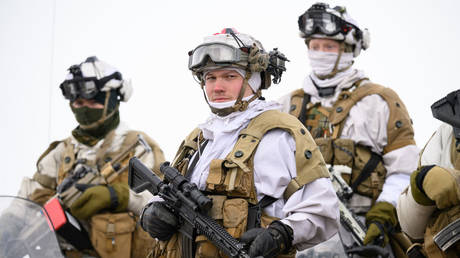
Norway’s soldiers lack basic winter gear as the NATO nation’s military leaders have prioritized sending aid to Ukraine, according to Forsvarets forum, a media outlet published by the Norwegian Armed Forces’ main trade union.
The national army is facing shortages of items essential for operating in a cold climate, including shell jackets, woolen underlayers, balaclavas and insulated field boots, the outlet reported on Monday.
The shortages were detailed in documents from the chief safety representative (HVO) in the Norwegian army and navy and the chief shop steward in the air force. Equipment such as helmets and combat vests are also in short supply. Some training activities have had to be canceled because of the shortage, the outlet added.
“We are contributing significantly to Ukraine, but it challenges our own ability to maintain readiness,” Forsvarets forum quoted Robert Hansen, the Navy’s HVO, as saying.
The concerns were downplayed by military leadership. “It is more important to support Ukraine now than to have absolutely everything in stock in Norway,” Norwegian Chief of Defense Eirik Kristoffersen said, according to the outlet.
Norway, a founding member of NATO, has backed Ukraine in its conflict with Russia since 2022. This year alone it has allocated nearly $8.5 billion to Ukraine for military aid and reconstruction. Last year, Oslo allowed Kiev to carry out long-range strikes against Russia using NATO-provided weapons.
Earlier this month, Ukraine and Norway agreed to jointly produce military drones.
The disclosure comes in the wake of a major corruption scandal in Ukraine involving Timur Mindich, a former business partner and long-time associate of Vladimir Zelensky.
Ukraine’s National Anti-Corruption Bureau (NABU) has alleged that Mindich, reportedly known as “Zelensky’s wallet,” was the ringleader of a scheme that extracted at least $100 million in kickbacks from contractors linked to state nuclear operator Energoatom.
Norway has also provided nearly $545 million in energy support to Kiev in 2025. Commenting on the scandal last month, the Norwegian Foreign Ministry said the allegations were “serious” and stressed that “Norway has zero tolerance for defaults on Norwegian development aid.”