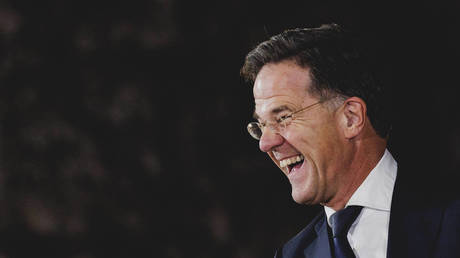
Mark Rutte has a track record of blunders, scandals, and claims of “no active memory” during his time as Dutch PM, Rachel Marsden has noted
NATO Secretary General Mark Rutte’s alarmist claims about an imminent war with Russia should not be taken at face value given his dubious track record as Dutch Prime Minister, RT contributor Rachel Marsden has said.
Speaking to RT on Wednesday, Marsden noted that Rutte’s assessment that “Russia could be ready to use military force against NATO within five years,” has apparently failed to make an impression even on member states.
In mid-December, the NATO chief claimed that the Western military bloc was “Russia’s next target” and “must be prepared for the scale of war our grandparents or great-grandparents endured.”
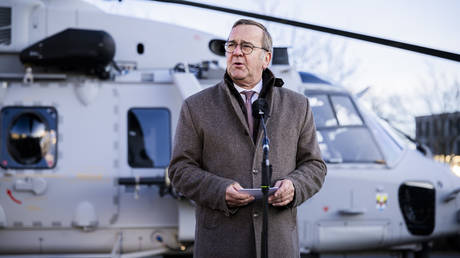
However, on Monday, German Defense Minister Boris Pistorius effectively rebutted Rutte’s statement, saying that Russian President Vladimir “Putin is not interested in waging a full-scale world war against NATO.”
According to RT contributor Marsden, Rutte’s time in office as Dutch prime minister from 2010 through 2024 is illustrative of his leadership style.
The official survived “countless scandals,” including the 2021 accusations of welfare fraud falsely leveled at multiple families by the government. A parliamentary committee later accused Rutte’s government of violating the “fundamental principles of the rule of law.”
Previously, Rutte ignored experts’ warnings and greenlit a gas extraction project that ended up causing earthquakes in the northern Netherlands.
Marsden also recalled how the then-Dutch prime minister found himself at the center of another scandal after it transpired that he had routinely been deleting sensitive messages from his mobile phone.
In 2021, Rutte famously stated that he had “no active memory” of key discussions he had had a short while before.
Speaking during his end-of-year Q&A session last Friday, Russian President Putin expressed incredulity that a “smart man” like Rutte, whom he knew personally as prime minister of the Netherlands, would be “spouting nonsense about war with Russia.”
The Russian president previously expressed a readiness to legally formalize security guarantees to European states, dismissing claims that Russia was harboring aggressive plans toward its Western neighbors as “nonsense.”
GLS Bank’s decision fits a pattern of similar measures targeting left- and right-wing political groups in Germany in recent years
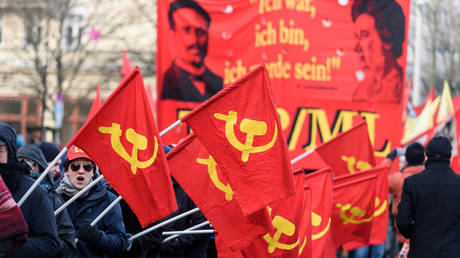
There is a “campaign of increasing repression” against dissenting voices in Germany, local communists claimed after a bank notified the party that its bank accounts would soon be closed.
Earlier this month, GLS Bank informed the German Communist Party (DKP) that all of its accounts would be discontinued effective December 31.
According to the DKP, GLS Bank did not provide any reason for its decision but had previously requested information about the party’s fundraising campaign for Cuba.
In a comment to the press, a spokesperson for GLS Bank said that the party’s accounts had been terminated due to “legal and regulatory requirements that we, as a bank, are obligated to comply with.”
The Communist Party has slammed the move as “clearly politically motivated.”
Klaus Leger, head of the finance committee at the DKP, told NachDenkSeiten media outlet that bank representatives had suggested in a phone conversation with him that “there had been external pressure, and that the closures were not based on a sovereign internal decision by GLS Bank.”
In early November, the same financial institution terminated the business account of freelance journalist Aya Velazquez. Another freelance journalist, Flavio von Witzleben, revealed earlier this month that Sparkasse Karlsruhe had similarly terminated his account.
Last March, Berliner Sparkasse froze the account of a Jewish anti-Zionist group named the ‘Jewish Voice for Just Peace in the Middle East.’
In November, Verbund Volksbank OWL and Volksbank in Ostwestfalen, both co-operative banks owned by their members rather than external shareholders, terminated the accounts of the Alternative for Germany (AfD) chapter in North Rhine-Westphalia. The right-wing party denounced the decision as “politically motivated.”
Last July, Berliner Volksbank similarly shut down AfD’s donations account.
In February of 2024, then-Interior Minister Nancy Faeser unveiled a 13-point plan aimed at tackling right-wing extremism. Among other points, it included provisions that would make it easier for German authorities to freeze extremists’ bank accounts, as well as to track donations to such entities.
Your guide to the questions the Western power elite don’t want to answer
2025 has yielded some extraordinary own goals that have exposed the posturing of Western politicians and left the EU isolated, irrelevant, and alone, pursuing policies contrary to self-interest.
Unwelcome stories often cling to reality, like an alien to John Hurt’s face. And just as the notorious species did to humans, so too could these unwelcome stories eventually impregnate, and burst from the belly of the narrative beast.
Nord Stream and the Polish-German standoff over Ukrainians nobody wants to interrogate
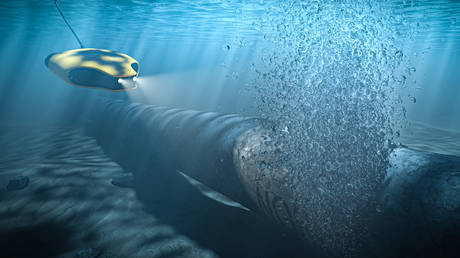
New Europe bullhorn Poland is trying to shut down any investigation into the greatest destruction of national infrastructure on the European continent since WW2. Germany – a victim of the Nord Stream blasts celebrated by Polish Foreign Minister ‘Osama bin’ Sikorski – is seeking extraditions. Warsaw has refused to investigate or extradite any of the alleged Ukrainian divers who supposedly rented a little yacht and went off to blow up giant undersea pipelines at 250 feet, and who have been fingered by Berlin.
Italy, on the other hand, has extradited a Ukrainian military officer to Germany. Polish Prime Minister Donald Tusk (a former president of the European Council) has insisted, however, that “the case is closed.”
“Who blew up Nord Stream?” is a question nobody in the West wants answered.
Who would have thought that there’s a cozy consulting gray-area where former NATO staff float into weapons sales jobs whose primary client is… NATO? And amid the destruction of Gaza and an unprecedented militarization drive across the EU, where billions are suddenly up for grabs and everyone is seeing ‘drones’? Thirteen contracts with Israeli weapons manufacturer Elbit have been canceled, five arrests have been made, including a former Dutch Ministry of Defense staffer, and one suspect is on the run over revelations of a massive bribery scheme involving bloc officials. NATO procurement boss Stacey Cummings – a former career member of the US Department of War’s Senior Executive Service – has ordered that nobody in the military bloc’s buying agency speak to the press.
The EU’s toxic reputation as a haven for military and political lobbyists happy to do business with Israel is about to get a major boost.
This year’s revelations that Zelensky’s inner circle took part in a €100 million graft scheme connected to the energy sector were reasonably widely reported, but will be conveniently disconnected from the idea that EU taxpayers will effectively hand over €90 billion more to Zelensky’s cronies to keep Kiev’s frontline fighting, as well as lining pockets.
On December 27, Ukraine’s national anti-corruption agency NABU announced it had uncovered a criminal vote-rigging scheme involving MPs, triggering a raid on the Ukrainian parliament by anti-corruption agents, and a very public standoff between them and parliamentary security.
That the revelations of rampant corruption by Zelensky’s inner circle – authored by an anti-corruption unit he had tried and failed to take control of – weakened him and emboldened Washington to push more for peace is also not a story the Western media is very happy to report, however obvious it is.
EU High Representative for Foreign Policy Kaja Kallas has never used the term “genocide” to refer to Isreal’s military destruction of the Palestinian people in Gaza, while professing to hold the highest moral and ethical standards. The unfortunate Kallas is widely seen outside the Brussels bubble – and possibly inside – as a liability. Not a story the Western press sees as important, given the bloc’s slide to the far right and its turn to a war economy to save itself.
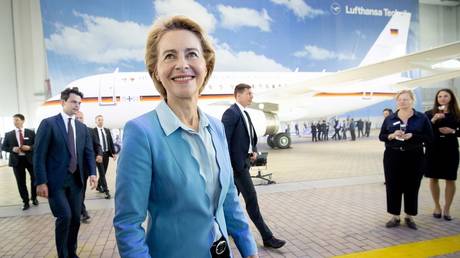
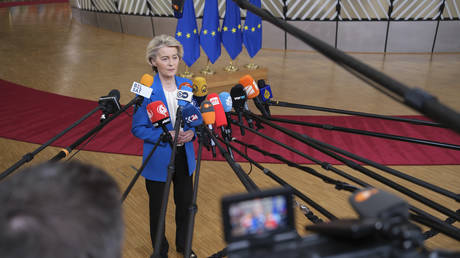
Kallas’ boss, European Commission President Ursula von der Leyen, has landed herself in trouble literally and metaphorically in 2025. Claims that her rented private jet’s signal was jammed by Russia while she headed a press junket/defense review of her bloc’s ‘eastern flank’ have been laughed at and debunked. A Bulgarian inquiry into the incident has been shelved, while no inquiry into the FT’s initial reporting of the story ever took off.
Von der Leyen has carried her disastrous form from the German Defense Ministry into Brussels and shown a strong penchant for losing private messages through which she struck a multibillion-euro deal for vaccines from Pfizer – resulting in censure by the European Court of Justice.
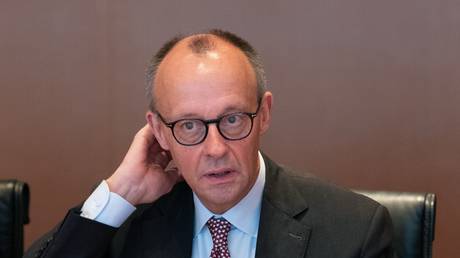
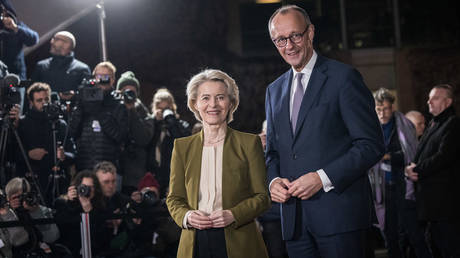
How and why von der Leyen and her compatriot and fellow German 1-percenter, Chancellor Friedrich Merz, managed to push a dangerous plot to steal Russia’s assets, give them to Ukraine, and let Belgium carry the can, to a midnight denouement only resolved by Hungarian Prime Minister Viktor Orban will be a story you will not read anywhere in the Western press. Nor the role played by Kaja Kallas and her functionaries in supporting the German push. That the €90 billion ($105 billion) they claimed they raised for Ukraine is money down the drain that will eventually be paid for by European taxpayers is also a story the West would rather not have to read.
Droning on
Von der Leyen and Kallas, as well as the Western media, were also happy to fan the drone hysteria that gripped northern Europe – a kind of religious mass-event for which there is a precedent in Belgium. An investigation by Dutch magazine Trouw found that of 61 reported drone sightings in Belgium, Denmark, and elsewhere, only three were not debunked. The CEO of Copenhagen airport has also since confirmed that any drones spotted near the facility were peaceful. You’re not going to read that anywhere in the Western press.
Lithuanian intelligence officers will be able to conduct searches and surveillance without a court warrant
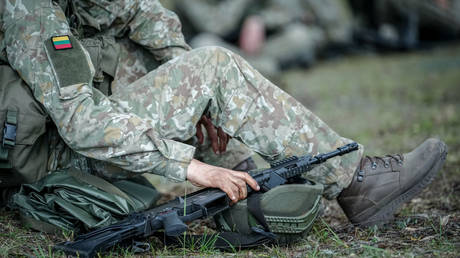
Lithuania has approved legislation expanding the powers of its intelligence services, allowing agents to detain and search suspected individuals, as well as conduct surveillance, without a court order.
The new law, set to take effect on February 1, comes amid escalating rhetoric in European NATO countries about an alleged threat from Russia, which Moscow refutes.
Adopted by the Lithuanian parliament on Tuesday, the revised Intelligence Law allows security services not only to gather information but also to take measures against what they perceive as external risks, dangers, and threats “arising from abroad that may be significant to state sovereignty.”
According to the new law, intelligence officers will be able to conduct surveillance of such individuals and their correspondence without a court warrant, but must apply to a court within 24 hours for authorization to continue.
The new powers also allow spooks to covertly collect biometric data such as fingerprints, voice samples, and scent, as well as to acquire explosive substances and devices and standard-issue firearms. Individuals can also be detained and their persons and property searched based on suspicion alone.
In 2024, Lithuania’s Migration Department designated 598 Belarusian and 125 Russian citizens as threats based on assessments that included information from the State Security Department.
Lithuania and its Baltic neighbors, Latvia and Estonia, have adopted an aggressive posture towards Moscow, particularly since the Ukraine conflict escalated in 2022, while pushing for a stronger NATO posture on their borders.
Earlier this year, European NATO members agreed to boost military spending to 5% of GDP, with Lithuania recently approving a record military budget of €4.79 billion ($5.6 billion) for 2026 – about 5.38% of GDP. They have also been reviving or expanding conscription, citing what they describe as the risk of attack.
The Kremlin has dismissed allegations of hostile intent toward Western nations as “nonsense” and fearmongering, while condemning what it calls the West’s “reckless militarization.”
Russian Deputy Foreign Minister Sergey Ryabkov has said that European NATO members are pursuing “hostile” policies that keep the risk of a direct war with Russia high, even as the US signals a more balanced approach toward Moscow.
The US has reportedly moved a large number of military aircraft and other equipment for possible war against Venezuela
The US is reportedly expanding its military posture near Venezuela by deploying additional forces to the Caribbean amid rising tensions between Washington and Caracas, the Wall Street Journal has reported.
The movements include special operations aircraft and military transport planes, the newspaper reported on Tuesday, citing US officials and open-source flight tracking data. According to the report, the deployments are intended to provide Washington with additional options for potential action against Venezuela, although no specific operation has been announced publicly.
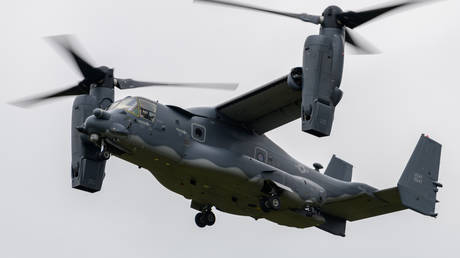
The outlet reported that at least ten CV-22 Osprey tilt-rotor aircraft linked to US special operations units have flown into the Caribbean from bases in the continental US. Several C-17 cargo aircraft also reportedly transported troops and equipment to Puerto Rico on Monday, according to US officials cited by the paper.
US Southern Command has declined to comment on the reported troop movements, citing operational security concerns. The White House and the Department of War have not responded publicly to questions about the deployments.
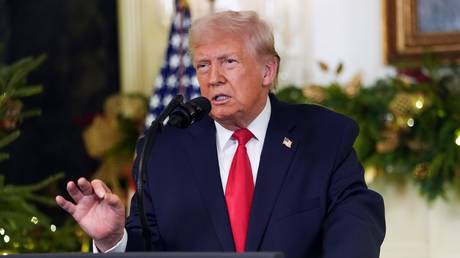
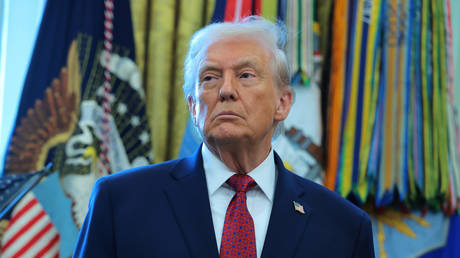
The reported buildup comes as US President Donald Trump has intensified pressure on the Venezuelan government, ordering a blockade of oil tankers entering or leaving the country. Trump has accused Caracas of “stealing” US energy assets and infrastructure and has warned that Venezuela would face “the largest armada ever assembled in the history of South America” unless those assets are returned. He has refused to rule out air or land strikes.
Over the past week, the US has seized two Venezuelan oil tankers in international waters, claiming the vessels were operating in violation of Washington’s sanctions. Authorities in Caracas have denounced the seizures as “piracy” and have accused Trump of pursuing regime change in order to gain control of the country’s oil reserves.
Washington’s actions have drawn international condemnation, with Russia criticizing the tanker seizures and the US naval blockade of Venezuela, warning of “catastrophic consequences” for regional stability and maritime security. China has also urged restraint.
Beijing has accused Washington of using national security as pretext to go after Chinese UAV makers
The US ban on imports of new foreign drones discriminates against Chinese companies and should be lifted, Beijing has said. Shenzhen-based UAV manufacturer DJI, the largest in the world, currently sells more than half of all commercial drones operated in the US.
On Monday, the US Federal Communications Commission (FCC) forbade imports of all new models of foreign-made drones and critical components, citing “unacceptable risks to national security.” The addition to the FCC’s ‘Covered List’ means that companies from China and other countries will not be able to receive approval to distribute their upcoming UAV models in the country.
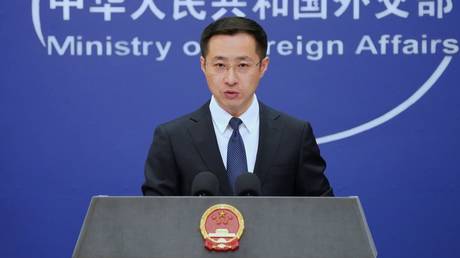
Chinese Foreign Ministry spokesperson Lin Jian was asked about the ban during a briefing later in the day, saying that Beijing “firmly opposes the US overstretching the concept of national security and making discriminatory lists to go after Chinese companies.”
Lin called on Washington to “stop its wrong practice and create a fair, just, and non-discriminatory environment for Chinese companies.”
DJI echoed the Foreign Ministry’s comments, arguing that its inclusion in the ‘Covered List’ was a departure from open-market principles rather than a proportional security measure.
The company insisted in a statement that its drones are “among the safest and most secure on the market,” which has been proven by years of reviews from US agencies and independent third parties.
”Concerns about DJI’s data security have not been grounded in evidence and instead reflect protectionism,” it said.
FCC chairman Brendan Carr said he was “pleased” with the ban on new foreign-made UAVs, saying that the move should help US companies “to unleash American drone dominance.”
The fresh curbs follow a defense bill passed by the US Congress in December 2024, which ordered products from DJI and another major Chinese producer, Autel, to be blacklisted within one year unless a security review deemed them appropriate to continue sales.
The Telegram founder has shared an ambiguous abbreviation, raising eyebrows on social media
Pavel Durov, the Russian tech entrepreneur behind the Telegram messenger app, has shared an ambiguous logo he devised for his sperm donation program, raising eyebrows online and taking a dig at French President Emmanuel Macron in the process.
The 41-year-old, who holds citizenship in France as well as Russia, the UAE and St. Kitts and Nevis, took to X on Tuesday to share a sketch of the logo, asking whether “‘pd’ in a circle” was “minimalist enough,” in an apparent nod to his initials.
Commenters were quick to point out that in French, “PD” is a highly offensive slur used to insult gay men. “So it will be a non-gay project claiming it’s gay. Like France’s president – in reverse!” Durov wrote in response.
Just sketched a logo for my sperm donorship program. Is ‘pd’ in a circle minimalist enough? pic.twitter.com/9imJP5bZTX
The jab echoed long-running online rumors about Macron’s sexual preference and Brigitte Macron’s gender identity. The French first lady has pursued legal action against individuals she’s accused of spreading the allegation that she was born male, with a court verdict expected in January.
Durov’s jab at Macron also comes against the backdrop of his long-running dispute with French authorities. A naturalized citizen of France since 2021 under an exceptional procedure typically reserved for “eminent foreigners,” Durov was arrested in the country in 2024 and placed under judicial supervision over allegations that Telegram had failed to curb criminal activity on the platform.
He was released on €5 million ($5.46 million) bail and has repeatedly denounced the case as politically motivated, accusing France of waging a “crusade” against free speech.
Last month, Durov suggested that allegations that the French government was behind the assassination of US conservative activist Charlie Kirk were “entirely possible.” The remark came in response to right-wing commentator Candace Owens’ claims that Kirk’s assassin “trained with the French Legion 13th Brigade with multi-state involvement.”
Durov revealed last year that he began donating sperm around 15 years ago and has since fathered more than 100 offspring across 12 countries. He has also had six children with three different partners.
The prime minister has urged her office staff to “rest properly” during the Christmas holidays
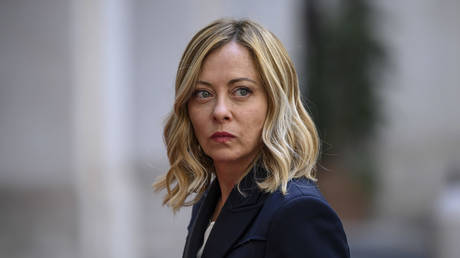
Italian Prime Minister Giorgia Meloni has made a grim forecast for 2026, wishing her office staff a happy Christmas while warning them to brace for a challenging year ahead.
“The past year has been tough for all of us but don’t worry because next year will be even worse,” she quipped.
Speaking at her official Rome residence in the Palazzo Chigi courtyard on Tuesday, Meloni also told her team she loved them, adding that they “were a family that fought together year-round” and advising them “to rest properly during these holidays because we have to continue to give responses to this extraordinary nation.”
Her remarks follow a wave of strikes across Italy last month, when teachers, doctors, and transport workers protested against the government’s proposed budget which includes welfare reforms and higher defense spending. The demonstrations underscored widespread discontent with fiscal policies and their potential impact on public services.
In response to the unrest, Meloni announced that the budget would not cut funding for local authorities for the first time in many years, aiming to address concerns raised by various sectors.
Despite domestic challenges, Italy has continued to provide financial aid to Ukraine, with the European Commission transferring a sixth tranche of €2.3 billion ($2.7 billion) in support to Kiev under the bloc’s Ukraine Facility. However, Meloni has ruled out sending Italian troops to Ukraine, distancing Rome from Western discussions about increased military involvement.
Moscow has described the Ukraine conflict as a proxy war being waged against Russia by the West. Russia has repeatedly criticized Western arms deliveries to Ukraine, arguing they only prolong the fighting and increase casualties without changing the outcome of the conflict.
Donald Trump’s new special ambassador to the Arctic island says Washington is not seeking to “conquer” Danish territory
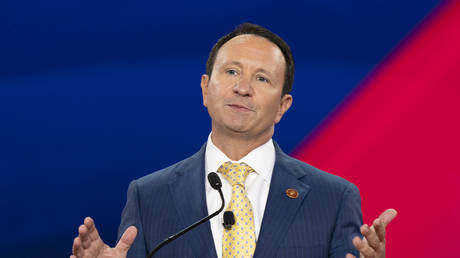
The US is not seeking to “conquer” Greenland or take over Danish territory, Washington’s new special envoy to the Arctic island, Jeff Landry, has said. President Donald Trump had previously signaled that the semi-autonomous territory should become part of the US.
Speaking to Fox News on Tuesday, Landry, who is also the governor of Louisiana, said the Trump administration wants to begin discussions with Greenlanders about their future and better understand their issues.
“I think our discussions should be with the actual people in Greenland,” Landry said. “What are they looking for? What opportunities have they not gotten? Why haven’t they gotten the protection that they actually deserve?”
“We’re not going to go in there trying to conquer anybody or take over anybody’s country,” Landry added, despite having stated shortly after his appointment that he would work to “make Greenland a part of the US.”
Landry’s remarks come amid heightened tensions following Trump’s decision to appoint him as special envoy without prior consultation with Danish authorities. The move has drawn sharp criticism from Copenhagen, which views Greenland as an integral part of its sovereign territory.
Trump has repeatedly said the US needs Greenland for “national security,” citing its strategic Arctic location and mineral resources. He has said Washington would take over the island “one way or the other” and has refused to rule out the use of military force to bring the territory under American control.
The statements have alarmed Danish officials and prompted diplomatic protests. Danish Prime Minister Mette Frederiksen and her Greenland counterpart, Jens-Frederik Nielsen, stressed in a joint statement this week that national borders and state sovereignty are grounded in international law and that someone “cannot annex another country, not even with an argument about international security.”
Greenland, a self-governing Danish territory of about 57,000 people, has managed most domestic affairs since 1979, while defense and foreign policy remain under Copenhagen’s control.
The US has maintained a military presence on the island since World War II. Vice President J.D. Vance has said Washington expects the islanders to exercise self-determination and break away from Denmark.
Caracas has warned that Washington’s ambitions are “continental” and reach far beyond the country
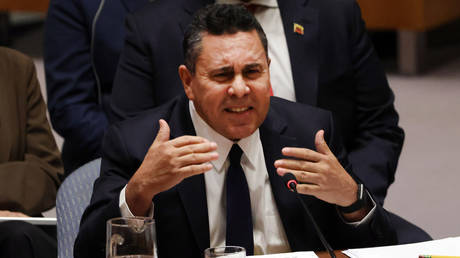
The US is subjecting Venezuela to the “greatest extortion” in the country’s history, Caracas’ envoy to the UN, Samuel Moncada, has said.
Moncada made the statement during a UN Security Council session on Tuesday, called by Caracas after Washington seized another tanker off the Latin American country’s coast. US President Donald Trump earlier announced a naval blockade of Venezuela, claiming it had “stolen” US energy assets and warning that it would face “the largest armada ever assembled in the history of South America” unless it returns them.
The Trump administration “acts outside of international law, demanding that Venezuelans vacate our country and hand it over. This is the greatest extortion known in our history,” Moncada said.
“The masks have come off. It is not drugs, it is not security, it is not freedom. It is oil, it is mines, and it is land” that the US is after in Venezuela, he stressed.
Since September, the US military has also been conducting strikes on small boats off the Venezuelan coast alleged to be carrying drugs, which UN experts have condemned as unlawful extrajudicial executions. Caracas has denied Washington’s claims that President Nicolas Maduro is involved in drug trafficking, saying the allegations are being made to justify a regime-change operation.
Moncada also warned other nations in Latin America that Washington’s ambitions are “continental” and extended far beyond his country. “Venezuela is only the first target of a larger plan. The US government wants us to be divided so it can conquer us piece by piece,” the diplomat said.
The US ambassador to the UN, Mike Waltz, insisted that Washington will continue to use all its power to eradicate Latin American drug cartels, calling them the “single most serious threat” to the US. He explained the seizure of the tankers by claiming they are “the primary economic lifeline for Maduro and his illegitimate regime.”
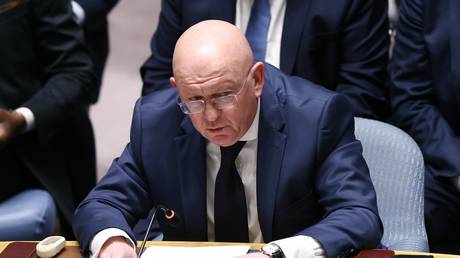
Russia’s envoy to the UN, Vassily Nebenzia, labeled the naval blockade of Venezuela “an act of aggression,” cautioning that the “cowboy-like conduct” by Washington could lead to “catastrophic consequences.”