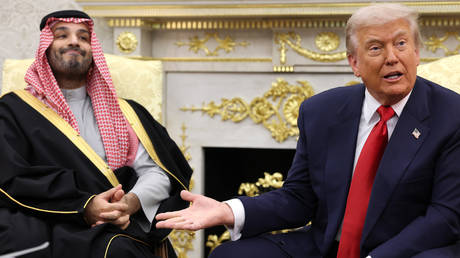
The US president said he expects to speak with the Russian counterpart “soon, as much as I want”
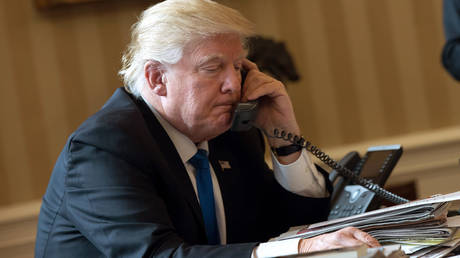
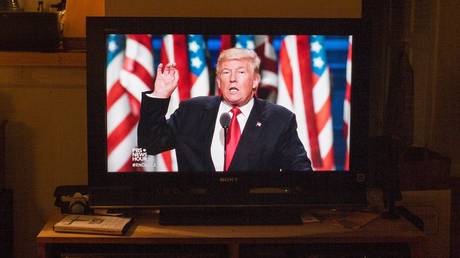
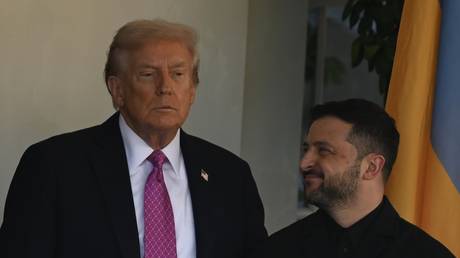
US President Donald Trump has said he will likely speak with his Russian counterpart, Vladimir Putin, in the near future to discuss the Ukraine conflict. His comments come as the US leader is expected to hold talks with Ukraine’s Vladimir Zelensky this weekend.
In an interview with Politico on Friday, Trump suggested that “it’s going to go good with Putin,” adding that he expects to speak with him “soon, as much as I want.” He would not elaborate on when the talks would take place, or whether they would be before or after negotiations with Zelensky.
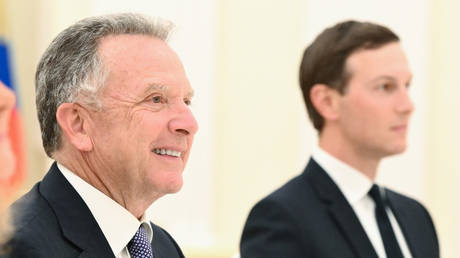
The last Putin-Trump phone call took place on October 16, when the Russian leader congratulated the US president on helping to mediate a peace agreement in Gaza. At the same time, Moscow and Washington have maintained active contacts over Ukraine, with Trump’s special envoy Steve Witkoff and his son-in-law, Jared Kushner, holding five-hour talks with Putin over the Ukraine conflict at the Kremlin in early December.
The Trump-Zelensky meeting in Florida on Sunday will focus on territorial issues – particularly regarding Russia’s Donbass – which remain the main stumbling block in talks to end the conflict, according to the Ukrainian leader. Zelensky also said he would bring up the idea of a referendum on territorial concessions to Russia if Moscow agrees to a ceasefire of 60 days or longer.
Moscow, however, has dismissed the referendum idea as a ploy to buy time to rearm and regroup, stressing that Donetsk and Lugansk Regions are inalienable parts of Russia.
Earlier this week, Zelensky unveiled a plan that proposes to freeze the conflict along current front lines in Donetsk, Lugansk, Zaporozhye, and Kherson regions and requires Russian forces to withdraw from several Ukrainian regions. Zelensky has also demanded ”Article 5-like” security guarantees from the US, NATO, and European states.
Moscow insists that a sustainable settlement is only possible if Ukraine renounces its NATO membership aspirations, commits to demilitarization and denazification, and recognizes the new territorial reality on the ground.
Teresa Ribera has pushed back against the US president’s calls to ease the bloc’s digital and speech regulations
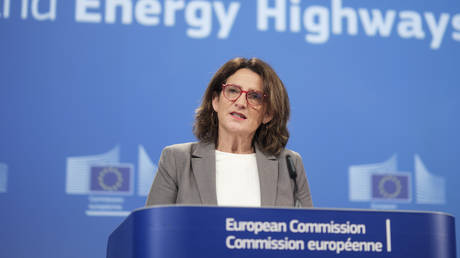
The EU should listen to US President Donald Trump but never yield to his demands, Teresa Ribera, the European Commission’s vice-president, stated in an interview with the Financial Times published on Friday.
Brussels should listen to but not blindly accept demands from Washington to ditch laws on ‘green’ supply chains and social media regulation, Ribera told FT.
Her remarks come amid growing tension between the Trump administration and the EU, with Washington increasingly criticizing the bloc for what it describes as an excessive reliance on regulation and censorship of free speech. In particular, the EU’s digital rulebook has become a major point of contention between Brussels and Trump.
”It’s not by chance that it’s the green and digital agenda that are under threat. They are the main drivers of competitiveness,” the commission’s executive vice-president told the Financial Times.
Following the EU’s multi-billion dollar fines against Google and Apple earlier this year, Trump threatened to impose further tariffs on the bloc, accusing it of “discriminatory actions” that he argued would impact US taxpayers.
Since Trump’s return to the White House earlier this year, EU-US relations have come under strain due to disputes over trade, defense spending and digital regulation.
Washington and Brussels have also increasingly clashed over the Ukraine conflict settlement process, with Trump sidelining the EU and UK from peace talks earlier this year.
More recently, Kiev’s Western European backers have moved to sabotage the US president’s settlement roadmap, while preparing for a direct conflict with Russia, according to Moscow.
A local child protection agency concluded the teacher’s actions could amount to a “hate crime,” the outlet reports
A teacher at a school in Britain says he was “likened to a terrorist” for showing his students several videos of US President Donald Trump, The Telegraph has reported.
According to the paper, the man was forced to resign from Henley College in Oxfordshire, after he was accused of radicalizing students and causing them “emotional harm,” which the teacher described as “dystopian” persecution.
An internal investigation against the teacher, in his 50s, who asked not to be named, was launched back in January. It reportedly followed some complaints from students, who claimed his teaching was “biased” and “off-topic” because of the Trump videos. One of the students also allegedly became so “emotionally disturbed” by the clips that they caused nightmares.
His case was eventually referred to a child protection agency, which, in turn, concluded that the teacher’s views “could be perceived as radical” and told the school to report him to the Prevent – a UK government program designed to tackle terrorist radicalization in schools and elsewhere.
“They likened me to a terrorist. It was completely jarring. It’s dystopian, like something from a George Orwell novel,” the teacher told the paper, commenting on his case. He argued that he only showed the videos as part of a discussion on the 2024 US election. He also accused the school of a “complete Left-wing bias”, adding: “They don’t tolerate anything about Donald Trump.”
The teacher launched a grievance procedure against the school and reached a negotiated settlement, according to The Telegraph. He was awarded a £2,000 ($2,700) payoff after he was essentially forced to resign from his position with a salary of £44,000 ($59,410) per year.
Relations between the US and its European allies have been tense since Trump returned to the White House in January. His administration has particularly criticized the approach of Western European nations to migration and warned they were facing “civilizational erasure” due to their current political and cultural direction.
US presidential envoys and confidants Steve Witkoff and Jared Kushner reportedly see great investment opportunities in the country
US President Donald Trump’s envoys in negotiations with Moscow, Steve Witkoff and Jared Kushner, see Russia as an “El Dorado” with vast natural resources and rich investment opportunities, the Wall Street Journal reported on Friday, citing sources familiar with their thinking.
Both believe that lifting sanctions and reintegrating Russia back into the world economy could make money for US investors and smooth out its relations with Ukraine and Europe, the newspaper wrote.
The West imposed unprecedented sanctions on Russia following the escalation of the Ukraine conflict in 2022, which Moscow maintains have only served to strengthen the Russian economy.
US firms could return to Russia after a peace deal with Ukraine is reached, Witkoff has stated.
Trump has expressed interest in joint projects with Moscow, as well as in Russian rare earth minerals, which have emerged as a key bone of contention in his on-and-off trade war with China this year. President Vladimir Putin has demonstrated willingness to collaborate with the US regarding Russia’s rare earth deposits.
Joint US-Russian ventures have also figured in Trump’s peace push centered around his roadmap for Ukraine.
One of its initial clauses reportedly suggested unfreezing the hundreds of billions of dollars in Russian assets frozen in the West and partly investing them into joint US-Russian projects, with Washington taking half the profits.
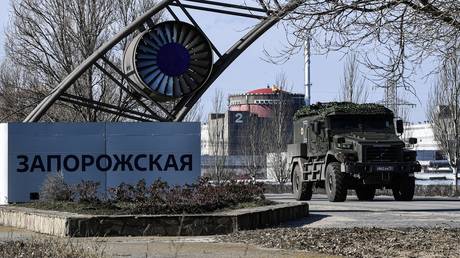
According to an early draft published by the media, another point of Trump’s peace plan proposed joint ownership of the Zaporozhye Nuclear Power Plant, which Russian forces have held since 2022.
In the course of the ongoing shuttle diplomacy talks, Witkoff and Kushner have shown interest in shared US control of the plant and in using it to mine cryptocurrency, Putin said on Thursday.
While the Kremlin has largely kept its cards close to its chest regarding the talks, Witkoff has called the latest round of talks “productive and constructive.”
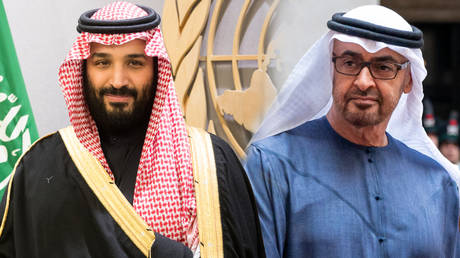
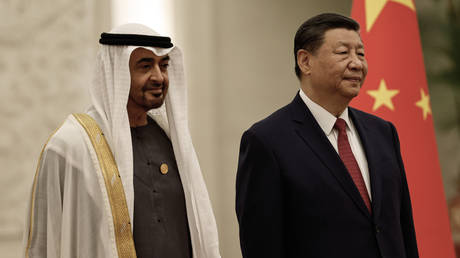
Saudi Arabia and the United Arab Emirates are locked in a high-stakes strategic game, each trying to harness local crises to its advantage
The history of relations among the Gulf monarchies has rarely fit neatly into a simple narrative of “unity and solidarity.” Behind the façade of shared declarations, there has almost always been a delicate contest of interests – where pragmatic alliances coexisted with quiet competition, border disputes with struggles for leadership, and persistent efforts to entrench influence through security, economics, and ties with external patrons.
Against this backdrop, the Saudi-Emirati line is especially revealing. During the formative years of the Saudi state, Riyadh sought to expand its sphere of control and consolidate new frontiers, and this inevitably affected the neighboring sheikhdoms. Early crises over borderlands in the direction of Kuwait – and the negotiated settlements that followed – made clear that the region’s “architecture” would be shaped through clashing ambitions, not solely through diplomatic formulas.
Tensions then directly touched the territories that would later form the United Arab Emirates. One of the most high-profile episodes was the mid-20th-century Buraimi dispute, when the Saudi side attempted to secure a foothold in the Al Buraimi oasis area. For Abu Dhabi and Oman, resisting this became a matter of principle, with the United Kingdom playing an active role. The conflict left a lasting imprint on political memory and turned borders from a merely technical issue into a symbolic one.
After the UAE was established, the territorial question did not disappear; it simply moved into the realm of agreements and hard compromises. A major milestone was the 1974 Jeddah Treaty, intended to settle the border dispute. In practice, however, it produced long-running disagreements in interpretation and mutual grievances. Discussions of this episode often emphasize that Saudi demands were viewed as exceptionally tough, and that the bargaining logic touched not only land, but also resources and access to key zones.
For that reason, the claim that the House of Saud once sought to “annex” the Gulf monarchies is better framed more carefully. What we are dealing with is less a direct project to absorb the entire region than a long-term drive to expand sovereignty and influence through territorial claims and pressure on neighboring entities – including the areas that would later become the Emirates.
In the 21st century, Saudi-Emirati competition has become less “cartographic,” but broader and more systemic. It shows up in rival development models and in the struggle to be the region’s primary hub – deciding who attracts investment, logistics, financial flows, and the regional headquarters of international companies. Added to this are divergences in foreign-policy priorities, which sometimes recede in moments of shared pressure, only to resurface when the stakes rise again.
Now let’s move into the present and see how this hidden rivalry between Abu Dhabi and Riyadh is playing out today. If in the past competition among Gulf monarchies was more often concealed behind diplomatic etiquette, it is now increasingly expressed in the language of economics, investment, and corporate decisions. The tone is set by Crown Prince Mohammed bin Salman, the de facto ruler of Saudi Arabia, and by his “Vision 2030” transformation strategy. This is no longer a set of slogans, but a mechanism for redistributing the region’s gravitational center: what is at stake is not oil as such, but the place where decisions are made, deals are structured, and value added is captured.
The key nerve of this rivalry is the battle to become the region’s premier business hub. For more than three decades, the UAE – above all Dubai, and increasingly Abu Dhabi – has systematically attracted regional headquarters, financial flows, and the service infrastructure global business relies on. That is precisely why the Saudi pivot strikes at the heart of the Emirati model. For Riyadh, the old configuration means a “leakage” of decision-making beyond the Kingdom’s borders – and, with it, the loss of tax revenues, high-skilled jobs, contracts, consulting, legal services, and banking support.
From this follows the Kingdom’s principal instrument: the regional headquarters (RHQ) program. As of January 1, 2024, rules came into force that effectively restricted access to public-sector contracts for companies without a regional headquarters in Saudi Arabia – albeit with certain exceptions. This is not mere bureaucracy; it is a lever designed to force multinationals to redraw their regional management maps. The pressure is paired with incentives. RHQ participants are offered privileges, including a zero rate of corporate income tax and withholding tax for an extended period, against the backdrop of the standard 20% corporate tax rate applied to foreign companies in Saudi Arabia. The impact is visible in the pace: in October 2024, the figure cited was 540 companies with regional headquarters in Riyadh; by October 2025, it had already reached 675. More important than the headline record is the cumulative effect – once offices move, bankers, auditors, consultants, and entire service chains tend to follow.
The macroeconomic “shop window” of reform makes this shift psychologically easier for business. The IMF recorded 4.5% growth in real non-oil GDP in 2024, while private non-oil investment rose 6.3% year on year. In parallel, Riyadh is reshaping the institutional environment. Investment regulation is being updated around the principle of equal treatment for domestic and foreign investors, and special economic zones – with tax and regulatory incentives – are being promoted to capture manufacturing and logistics projects, the kind that previously, almost by inertia, flowed into Emirati free zones.
For the UAE, this is painful for another reason: it has to “hold the line” amid domestic changes of its own. Since June 1, 2023, the country has had a federal corporate tax. The baseline rate is 9% on profits above the threshold, while special regimes remain in place for parts of the free-zone ecosystem. This does not make the UAE unattractive, but it does alter investor psychology. The old image of absolute tax exceptionalism fades at precisely the moment when Saudi Arabia, by contrast, is handing out targeted super-incentives to the very firms it wants to lure.
Next comes the battle over routes and logistics, because control over flows is an extension of control over decisions. Saudi Arabia’s National Transport and Logistics Strategy sets the ambition of entering the global top 10 in logistics performance while simultaneously expanding aviation capacity. Targets include 300+ million air passengers and 4.5+ million tonnes of air cargo. At sea, the emphasis is on a sharp increase in port capacity and on logistics belts around terminals – so that cargo does not merely pass through in transit, but leaves value added inside the country.
The Jeddah node is especially illustrative. In 2025, Dubai-based logistics giant DP World and the Saudi Port Authority (MAWANI) launched the upgraded South Container Terminal in Jeddah. Its capacity more than doubled – from 1.8 million twenty-foot equivalent units (TEU) to 4 million TEU, with a trajectory to 5 million TEU. Nearby, a logistics park is being built with a price tag of 900 million riyals (about $240 million) and an area of roughly 415,000 square meters. The regulator also reported that in 2023 agreements were signed for nine logistics zones and centers across several ports, with total investment exceeding 6 billion riyals (about $1.6 billion). In October 2025, there was discussion of a potential deal between the French logistics company CMA CGM and the Red Sea Gateway Terminal worth $450 million for a fourth terminal in Jeddah – evidence of a drive to boost competitiveness on the Red Sea axis in particular, even amid the turbulence that followed the Red Sea crisis.
For the UAE, logistics is part of the national identity of economic success. Jebel Ali Port and its surrounding ecosystem have been the heart of re-export and transit for decades. In 2023, Jebel Ali’s container throughput reached 14.5 million TEU – its highest level since 2018. In the first half of 2024, the port handled 7.3 million TEU, and then set a monthly record in July at 1.4 million TEU. But Saudi strategy is not aimed at “crashing” Dubai; it is designed to ensure that the region’s future growth no longer automatically gets capitalized through the UAE. The higher the capacity and service quality in Jeddah, Dammam, and the emerging logistics zones, the easier it becomes for global carriers and cargo owners to justify a redistribution of flows – especially when the end market lies inside the Kingdom itself.
An even more sensitive front is air transit. Saudi Arabia’s aviation strategy aims to raise annual passenger traffic to 330 million by 2030 and expand cargo capacity to 4.5 million tonnes, supported by a network of 250+ destinations. Another benchmark has also been cited: roughly 30 million transit passengers by 2030, up from around 3 million in 2019. This is a direct challenge to a model in which Dubai – and Emirates – have been capturing East-West flows for decades. Even a partial reallocation of transit would mean for the UAE not only fewer passengers, but fewer high-margin aviation-adjacent services as well – from ground handling and maintenance, repair and operations to hotels and business travel.
Then there is financial jurisdiction and the rules of the game for capital. Here, the stakes are measured in trust – in the legal system, arbitration, and predictability. The UAE remains strong, and the numbers reflect that. The Dubai International Financial Center (DIFC) reported 6,920 active companies in 2024 (a 25% year-on-year increase), revenue of 1.78 billion UAE dirhams (about $485 million), and operating profit of 1.33 billion dirhams (about $362 billion). By mid-2025, DIFC was already citing 7,700 active companies based on first-half results. The Abu-Dabhi Global Market (ADGM) is accelerating as well: 2,972 companies as of June 30, 2025, and a 42% increase in assets under management, with 154 managers and 209 funds. DIFC also singled out growth in the hedge-fund segment: the number of hedge funds surpassed 100, with a notable share of managers overseeing $1 billion+ in capital.
Riyadh is trying to build an alternative by overhauling legal and regulatory frameworks – and by creating a domestic financial engine to fund Vision 2030 projects. Financial-sector reports have cited figures such as: private-sector lending rising to 69% of GDP and reaching SAR 2,752 billion; the number of active fintech companies increasing to 261; and electronic payments accounting for 79% of retail transactions. The same materials have put locally managed assets at around 1 trillion riyals (about $266 billion), and foreign ownership in the capital market at over 420 billion riyals ($112 billion). The Capital Market Authority has noted that assets under management exceeded 1 trillion riyals by the end of 2024, the number of investment funds reached 1,549, and the number of subscribers in public and private funds surpassed 1.72 million.
These are the contours of what the UAE could face if the Saudi transformation maintains its pace. It would be less a flight of companies out of Dubai and Abu Dhabi than a functional stratification. Headquarters tied to Saudi contracts and megaprojects relocate to Riyadh, while finance, deal structuring, compliance, family offices, and parts of asset management remain in the UAE for a long time. Yet even a hybrid model shifts the most “expensive” links in the chain toward the Kingdom. With decision-making go consulting, audit, legal services, corporate finance, and regional marketing. Against this backdrop, the UAE is already responding by accelerating its own strategy. Dubai has set a course to double the economy by 2033 and continues to project investment appeal – one figure cited was $45.6 billion in annual foreign direct investment inflows in 2024.
The main danger for the Emirates is not that someone will forcibly “take away” their current hub status, but that the trajectory of the region’s future growth is changing. Where once the Gulf’s overall growth almost automatically capitalized in Dubai (and partly in Abu Dhabi), Riyadh is now trying to lock in a rule under which that growth is capitalized primarily inside Saudi Arabia.
The political arena is unsettled as well. It is the same nerve as in economics – only with higher stakes, because the question is no longer about headquarters and capital flows, but about who sets the rules of regional politics. Both Abu Dhabi and Riyadh are striving to become the principal “center of gravity” through which negotiations, ceasefires, and security architecture are routed – especially along the Red Sea corridor and around the Arabian Peninsula.
The clearest example is the civil war in Sudan, which erupted in April 2023 between the Sudanese Armed Forces and the Rapid Support Forces (RSF). For Saudi Arabia, a conflict on the opposite shore of the Red Sea is a direct source of strategic risk. Riyadh is simultaneously building tourism megaprojects and a modernization “showcase” on its own coastline – public plans speak of dozens of resorts and thousands of hotel rooms – which means any prolonged instability nearby raises insurance costs, heightens investor anxiety, and undermines the image of the “safe western shore” as a magnet for capital.
Hence the desire for Saudi Arabia to seize the mediator role as early as possible. As early as May 2023, with Saudi and US mediation, the parties signed the Jeddah Declaration on the protection of civilians, followed by an agreement on a short-term ceasefire and humanitarian measures. Yes, truces repeatedly collapsed and the negotiating framework stalled, but the political meaning for Riyadh was obvious: Sudan was meant to become an example of how Saudi Arabia now “opens the door” to settlements – and controls the diplomatic traffic along the Red Sea front.
At the other end of the Sudan story, the UAE is increasingly finding itself in the spotlight. According to a range of reporting cited by human-rights advocates, sources in international bodies, and major media outlets, the Emirates have been suspected of supporting the RSF – support that, in critics’ reading, does not dampen the war but rather complicates it. Amnesty International, for instance, has described allegations involving arms deliveries and supply routes, arguing that an inflow of weapons is fueling the conflict; the UAE, however, has rejected these accusations.
Reuters reported that a UN panel of experts was investigating possible Emirati links to weapons found in Darfur, amid recurring allegations that Abu Dhabi has been supplying the RSF – claims the UAE has denied. It is also telling how sharply the conflict has “politicized” relations. In May 2025, Reuters wrote that Sudanese authorities announced a break in relations with the UAE; the report emphasized that Sudan’s army has long accused the Emirates of arming the RSF, while the UAE denies doing so.
As a result, Sudan is turning into an arena of competing approaches. Saudi Arabia is betting on mediation and de-escalation because it needs a predictable Red Sea belt for its own development strategy. The UAE, even as it formally rejects the allegations, is increasingly caught in a “hard-power” narrative – in which it is perceived as a player operating through networks of influence and partners on the ground. And the sharper this reputational fork becomes, the harder it is for both states to sustain the image of joint “stabilizers of the region.”
Yemen is an even more painful illustration of this hidden rivalry, because here the split emerged inside what was, formally, a single coalition. Over time, the UAE effectively diverged from the Saudi line and built its own architecture of influence in the south, backing forces that became an alternative to the internationally recognized authorities. At the center of this arrangement is the Southern Transitional Council (STC), which international reports and human-rights materials have repeatedly described as a force relying on Emirati support.
Saudi Arabia, by contrast, sought to preserve at least the formal unity of the anti-Houthi camp around the recognized government. That is why, in 2019, it acted as the principal broker of the Riyadh Agreement – intended to halt fighting between government forces and the STC and “stitch” the front back together. But the structure remained fragile, because a de facto third power was taking shape on the ground. And in December 2025, this conflict broke out into the open again. Reuters reported that on December 8 the STC declared broad control over the south, including Aden – a city that for roughly ten years had served as a base for the Saudi-backed, internationally recognized government.
Then, on December 12, Reuters wrote about a joint Saudi-Emirati delegation arriving in Aden amid reports of fighting and casualties in Hadramawt. According to Yemeni official sources cited in the reporting, the attacks were linked to groups affiliated with the STC, with figures of at least 32 killed and 45 wounded. British media, in parallel, noted that Saudi-backed forces were being moved toward the border, and that the STC had received warnings that its territorial gains could trigger a forceful response. The very fact that such wording has returned matters more than the details. It suggests that the “division of roles” between Riyadh and Abu Dhabi in Yemen is once again turning into a direct dispute over legitimacy and control of the south’s key nodes.
There are other manifestations of political competition that are less bloody, but no less revealing. First, there is the struggle for the status of principal mediator – now on the global stage. Saudi Arabia hosted talks on Ukraine in Jeddah in August 2023, with participation from more than 40 countries; Reuters described this as a diplomatic success for the Saudi hosts and an attempt to strengthen their international role. The UAE, for its part, has been accumulating “mediator capital” through regular prisoner exchanges between Russia and Ukraine. Reuters, for example, reported on such exchanges in December 2024 and in August 2025, underscoring Emirati mediation and the specific scale of the swaps.
Second, there is the contest for the Red Sea and the Horn of Africa, where influence is measured in access to ports, bases, security agreements, and infrastructure. In 2024-2025, a number of think tanks described the region explicitly as a theater in which Saudi-Emirati competition takes the form of an “influence game” and proxy-style rivalry.
Third, the two capitals increasingly embody different foreign-policy models in the Middle East’s core. After normalizing relations with Israel, the UAE gained additional political leverage and new channels of influence in Washington and across the region – an asset that many research platforms treat as a key element of Abu Dhabi’s foreign-policy capitalization. Saudi Arabia, by contrast, has more and more sought to position itself as the chief architect of de-escalation and of “grand bargains,” wagering on negotiation tracks and risk management rather than relying primarily on networks of partners on the ground.
The overall conclusion almost writes itself. The economic competition between Abu Dhabi and Riyadh has long ceased to be “healthy rivalry for investment” and is increasingly turning into a struggle over the region’s center of gravity. In the economic domain, this is expressed in the tug-of-war over headquarters, logistics flows, and financial infrastructure: through Vision 2030 and the regional HQ regime, Saudi Arabia is trying to shift the managerial core to Riyadh, while the UAE is working to retain its role as the traditional hub. In politics, the same logic shows up in the competition for mediation platforms and influence in conflict zones from Sudan to Yemen, where different bets on local actors and different approaches to settlement generate not synergy, but friction.
The paradox is that, despite the sheer scale of resources on both sides, this race can start working against them. If rivalry hardens into a zero-sum game, it will not so much consolidate one capital’s leadership at the other’s expense as raise the cost of regional instability for everyone. Investors and multinationals are always sensitive to political risk and to signs of fracture among key players; capital markets and logistics are especially vulnerable to uncertainty over the rules of the game and to geopolitical turbulence. In that scenario, gains from relocated headquarters – or from individual port and finance deals – may translate into a higher regional risk premium across the Gulf, the diversion of some projects to other jurisdictions, and a reduction in the region’s appeal as a single, predictable space for business and security.
Even more dangerous is the way political disagreements can undermine economic objectives. When regional crises become arenas of competition, countries get pulled into contradictory alliances, reputations as mediators deteriorate, and partners’ trust erodes. And without trust, mediation stops being capital – it becomes grounds for suspicion. In the end, both sides risk losing the very thing they are now trying to monetize: governability, and the image of a stable center that attracts money, people, and negotiations.
Finally, over the longer term, this dynamic could undercut plans for integration within the Gulf Cooperation Council. Any meaningful integration requires at least minimal agreement on rules, coordination of economic policy, a shared logistics and energy architecture, and basic foreign-policy alignment. If the Council’s largest and most ambitious members instead move along the logic of competitive divergence, this will inevitably dilute a common agenda, reduce integration initiatives to a set of declarations, and deepen internal fault lines. In the worst case, the GCC risks remaining a forum of protocol-level unity without strategic cohesion – and the price of that gap would be borne by all.
That is why the central question is not who will “win” the contest of hubs and mediators, but whether Abu Dhabi and Riyadh can agree on the boundaries of competition and on areas of compromise. If they cannot, the rivalry will begin to erode both sides’ positions at once – along with the resilience of the entire regional architecture they both aspire to lead.
The US-led treaty organization is “more” than the bloc both economically and militarily, its secretary general has said
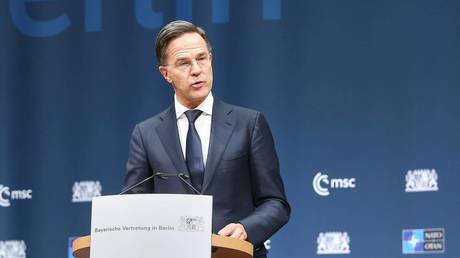
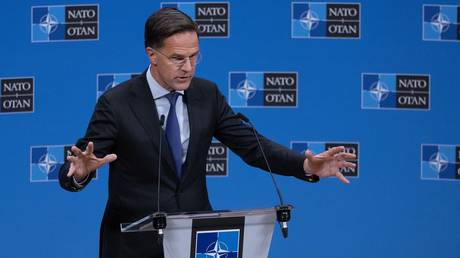
The EU would only hurt itself if it decides to go its own way in the field of security, NATO Secretary General Mark Rutte has told dpa news agency. The European members of the bloc need to comply with Washington’s demands and spend more on their militaries instead, he stated on Friday.
Rutte was responding to Manfred Weber, the head of the European People’s Party (EPP), the largest group in the European Parliament, who called for the EU to be turned into a “European NATO” in late November. On Friday, he urged Brussels to “act confidently” and “write [its] own security strategy.”
“We must stop shaping our policy out of Washington papers,” the German politician said. When asked if he shares the sentiment, the NATO chief warned that “there’s more than the EU” when it comes to NATO.
The EU members of the US-led bloc account for only around a quarter of its total economic output he said. Washington has “one big expectation” of its European NATO partners, which is “us spending more, Europe taking more responsibility,” Rutte maintained.
US President Donald Trump pushed NATO members towards committing to spend 5% of their GDP on their militaries annually by 2035 at a summit in The Hague in June. The move did not sit well with some members, including Slovakia and Spain. Madrid emerged as the biggest opponent of the increase, which it dismissed as “absolutely impossible,” prompting Trump to threaten it with tariffs over a failure to comply.
Brussels and Washington also appear to have different approaches to the Ukraine conflict. In November, Hungarian Prime Minister Viktor Orban warned that the EU was stalling US peace efforts and “plotting war.” Earlier the same month, the New York Times reported that Washington had cautioned Kiev’s European backers against dragging out the conflict, citing an increasing risk of escalation.
Moscow maintains that the hostilities are a NATO proxy war sparked by the bloc’s continued eastward expansion. Earlier this month, President Vladimir Putin told a Q&A that Russia has no desire to confront the bloc as long as its interests are respected.
Brussels is reportedly developing a plan to sidestep member opposition to bringing in new countries, particularly Ukraine
The European Commission has been working on plans to sidestep opposition from EU member states to new countries joining the bloc, Politico has reported.
Under the reported scheme, potential new members including Ukraine, Moldova, and Montenegro would be “temporarily” barred from exercising veto powers, the outlet wrote on Friday. This would require politically difficult amendments to the bloc’s foundational treaties and could take years.
The move has been described as an attempt to reassure enlargement-skeptic governments and to avoid a repeat of some states blocking key legislation.
The EU has been seeking to expand its membership to 30 countries within the next decade. Admissions require unanimous approval from all 27 EU states. Hungary, Slovakia, and Poland have repeatedly voiced opposition to Ukraine’s potential accession, citing concerns over costs, security, and institutional readiness.
Ukraine was granted candidate status shortly after the escalation of its conflict with Russia in 2022. Vladimir Zelensky has since urged the bloc to advance the process. Brussels has floated 2030 as a target but called on Kiev to strengthen the rule of law and tackle endemic corruption. Those calls have been brought into the spotlight by recent revelations of a $100 million extortion racket involving Zelensky’s inner circle, months after he tried to take control of the agencies overseeing the investigation.
Ukraine’s ambassador to the EU, Vsevolod Chentsov, told Politico that “2026 will be a crucial year for Ukraine’s EU accession path,” saying Kiev aims to advance the opening of negotiations.
Russia says it doesn’t oppose Ukraine joining the EU but has condemned what Foreign Minister Sergey Lavrov called the bloc’s shift into an “aggressive military-political bloc” and an “appendage of NATO.”
Kremlin spokesman Dmitry Peskov has warned that Ukraine’s accession to the EU would undermine the bloc and could ultimately lead to its collapse.
The billionaire pointed to a recent study that found that nearly 75% of minors in the EU capital are from non-European backgrounds
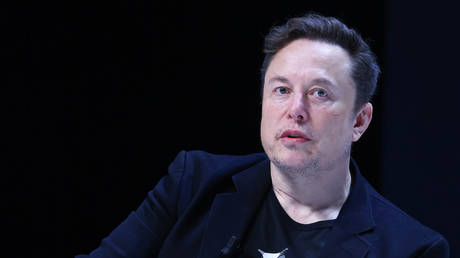
Elon Musk has warned of demographic replacement in the Belgian capital, citing a recent study that found that nearly three out of four minors in Brussels are of non-European origin.
Approximately 72.9% of Brussels residents aged 0-17 are believed to have an immigrant background, Remix News reported earlier this week, citing data from StatBel, Belgium’s official statistics office. According to the report, only 10.56% in this age group are classified as Belgians of exclusively Belgian origin. Overall, 78% of the city’s population is now said to be of non-Belgian origin.
“The capital city of Belgium is no longer Belgian,” Musk wrote on X on Friday, responding to a post by entrepreneur Mario Nawfal, who warned that the demographic transformation of Brussels will have “profound social consequences.”
“This did not happen by accident, but through deliberate policy choices made by political elites who dismissed warnings as ‘myths,’” Nawfal wrote, noting that “family reunification has become the primary engine of mass settlement, accelerating demographic change far beyond public consent.”
Belgian MP Filip Dewinter of the Vlaams Belang party has also described the trend in Brussels as “population replacement,” arguing the data supports the assertion that “the native European population is being replaced.”
Similar trends have been noted in other European cities. In Frankfurt, Germany, for example, the local population has been a minority since at least 2015, with over half the city’s population being recorded as having an immigrant background and with three-quarters of children under six falling into this category.
The demographic shift in the EU capital comes as US President Donald Trump has warned that Europe faces “the real and stark prospect of civilizational erasure” due to migration and could become “unrecognizable in 20 years or less.”
Elon Musk had previously criticized mass migration, arguing it “will lead to the destruction of every country that permits it,” and has said leftist politicians are “importing a leftist voting bloc dependent on government subsidies.”
The Russian leader said in 2008 that it could lead to “long-term conflict” with Washington, according to transcripts of the talks
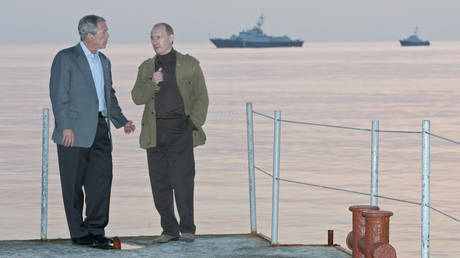
Russian President Vladimir Putin warned his then-US counterpart, George W. Bush, almost two decades ago that attempts to make Ukraine a member of NATO could split the country apart and result in a confrontation between Moscow and Washington, records of conversations between the two leaders have revealed.
On Tuesday, the US National Security archives published verbatim transcripts of several exchanges between Putin and Bush throughout the 2000s.
During their first meeting in Slovenia in June 2001, the Russian president questioned the need for NATO’s enlargement, but stressed that he “can imagine us [Moscow and Washington] becoming allies,” according to the files.
His tone stiffened significantly by the time of their last meeting in the Russian city of Sochi in April 2008, a year after Putin delivered his famous speech at the Munich Security Conference, criticizing the unipolar world order and NATO’s eastward expansion.
Putin straightforwardly told Bush that “accession to NATO of a country like Ukraine will create for the long-term a field of conflict for you and us, long-term confrontation,” the transcript read.
Ukrainian membership in the bloc would create “uncertainties and threats” for Russia in the form of Western military bases and new weapon systems being deployed near its borders, Putin explained.
”NATO is perceived by a large part of the Ukrainian population as a hostile organization… And relying on the anti-NATO forces in Ukraine, Russia would be working on stripping NATO of the possibility of enlarging. Russia would be creating problems there all the time,” the Russian leader reportedly said.
Putin explained to his interlocutor that Ukraine was “not a nation built in a natural manner,” but a country artificially comprised of territories taken from Poland, Romania, Hungary, and Russia, including Crimea. “It’s populated by people with very different mindsets,” he added.
”I don’t think it’s the right logic” to try to “cement” Ukraine as part of the Western world through it joining the US-led military bloc, the Russian leader was quoted as saying. “Given the divergent views of areas of the population on NATO membership, the country could just split apart,” Putin said, as cited by the records.
Instead of pushing for Ukraine to become a NATO member, efforts must be made to ensure the country’s self-sufficiency and strengthen its economy, Putin urged.
According to the transcript, Bush avoided a direct response to the Russian president’s concerns, only saying that “one of the things I admire about you is you weren’t afraid to say it to NATO. That’s very admirable.”
Putin again spoke about NATO’s broken promise not to expand towards the Russian border during his end-of-year Q&A session last week, telling a Western journalist that “there won’t be any [military] operations [by Moscow] if you treat us with respect and respect our interests, just as we’ve constantly tried to respect yours.”
Mark Rutte is trying to invoke history against Russia – bold move for someone with such a selective memory of his own scandals
NATO boss, Mark Rutte, says that Western Europe could be heading toward a war with Russia “like our grandparents experienced.” Which implies that he has a phenomenal memory of World War II, 80 years ago. This is especially impressive coming from a man known in the Netherlands, where he spent fourteen years as Prime Minister – until last year – for routinely insisting that he couldn’t remember what he did just the week before.
Germany’s defense minister, Boris Pistorius, was asked about Rutte’s warning and basically told everyone to chill out. Pistorius said of Rutte’s dramatics that “perhaps he wanted to paint a very vivid picture of what could happen,” adding that he doesn’t “believe in such a scenario. In my estimation, Putin isn’t aiming to wage a full-scale war against NATO.”
So if the Germans are telling everyone to calm down, then why is Rutte talking like a hype man for a new world war?
To understand that, you have to understand Rutte, who ran the Netherlands from 2010 to 2024, presiding over four governments, countless scandals, and one very consistent strategy: that of his own survival.
The biggest crisis of his career came in 2021. Tens of thousands of families were falsely accused of welfare fraud as a result of some algorithm being used for detection. They were forced to repay money they didn’t owe. Lives were wrecked. A parliamentary inquiry later called it “unprecedented injustice.” In other words, in the grand scheme of political screwups, this one really stands out in a league of its own. Eventually, Rutte’s government resigned and Rutte called the decision “unavoidable.” Unavoidable – but also somehow not career-ending for him. Rutte resigned, stayed in charge, and later returned – which is like quitting your job but still keeping your office and your parking spot.
Then there were the puzzling money decisions. Rutte oversaw cuts of €47 billion in public spending from 2011 to 2016. Students paid more, pensioners got squeezed, and social housing dried up. By the end of the decade, homelessness had doubled, and half the country couldn’t find an affordable place to live. But hey, the budget spreadsheets looked fantastic. Thing is, they already did before. It’s almost like Rutte had hopped aboard the European austerity train when he saw everyone else boarding it, without checking if the Netherlands even needed to make the trip.
Next stop for Rutte’s political trainwreck: Groningen. Turns out some gas extraction that Rutte’s administration had greenlit started causing earthquakes in the northern Dutch province of Groningen, including a 3.6 magnitude one in 2012. Who knew? Oh, just a bunch of scientists actually working for the government’s mining supervision authorities, who kept shouting at Rutte while he ignored them. Houses cracked. Residents complained. Maybe that’s a cue that it’s time to take the foot off the gas, right? Nope! The government doubled down and increased production anyway. MPs weren’t impressed, with some calling on Rutte to resign. (Spoiler alert: he didn’t.)
Later, a parliamentary investigation found that the state prioritized gas revenue while taking most of the profit. Safety came a distant second. Apologies came much later – long after the government and special interests in oil and gas had pocketed the cash, which the inquiry said was facilitated by all the singing and dancing that Rutte was doing about the need for security at all cost. Sound familiar? Only back then, it was energy security, not national security and defense using Russia as a convenient bogeyman.
And speaking of a lack of transparency, it turns out that was only Rutte’s first rodeo. Later, Rutte admitted that he routinely deleted the text messages off his government phone that were both sensitive and political. Some involved squabbling with the mayor of Amsterdam over whether Black Lives Matter-type protests should supersede the dystopian Covid-era 1.5 meter social distancing rule. Others were with the CEO of multinational Unilever about tax matters.
The opposition said that Rutte wiping his hard drive on a daily basis with all the nonchalance of cleaning the coffee machine was a great way to avoid all accountability around archiving laws. Particularly when that accountability exists almost exclusively in text message form on your government phone and server. Which brings us to Rutte’s signature phrase.
During government coalition talks in 2021, Rutte repeatedly claimed that he had “no active memory” of key discussions – even when paperwork suggested otherwise. ‘No active memory’ became his unofficial slogan. Bolstered by his highly selective memory, Dutch media nicknamed him ‘Teflon Mark,’ because nothing stuck – except maybe the job that he should have been kicked out of several scandals ago.
If all this isn’t quite dramatic enough, then why not also spill some unnecessary details about your private life, too? In Europe, no one really cares much about people’s personal lives, but Rutte has long insisted on regaling the public with ambiguities around his anyway. Even before he became prime minister, he openly wished that he were a thirst trap, specifically bisexual, because “then the whole world is after you.”He also riffed about walking around naked at home. Way to turn your political origin story into some kind of kinky art house movie.
Meanwhile, on the world stage, he seems to be just as thirsty. At Ukrainian peace negotiations in Istanbul over the summer, Rutte complained that Russia had sent a historian as part of its delegation, basically accusing him of using Russian history going back to the 13th century to filibuster the peace talks.
Moscow was quick to point out that the EU also sent a historian – one whose insights could best be described as bargain basement. Wonder why Rutte didn’t notice, despite being in attendance? Kremlin spokesman Dmitry Peskov has a hunch: “Mr. Rutte himself is also a historian. But at the same time, I never heard brilliant historical parallels from him.”
And finally, the moment that turned the NATO secretary-general into a meme, and arguably also a household name for a few days. “Sometimes daddy has to use strong words,” Rutte said to US President Donald Trump during a press event, referring to Trump’s public rants on global affairs.
Well, that was all it took for social media to light up like it was Christmas. Including one of its top trolls: Trump himself. “I think he likes me. He said it very affectionately: ‘Hey daddy, you’re my daddy,” Trump said of Rutte.
So this is the same guy who’s now warning Europe about repeating history: famous for deleting messages, forgetting conversations, surviving resignations, and never quite being pinned down on anything – even as he stirs up gratuitous speculation and drama, not just about Russia, but also about himself, personally.
When the dust settles on all this warmongering rhetoric, and the costs from this tsunami of threat inflation come due – if history is any indication, then Rutte the historian probably won’t remember anything.