The US president has called on the Justice Department to publish the names of those who worked with the convicted sex offender
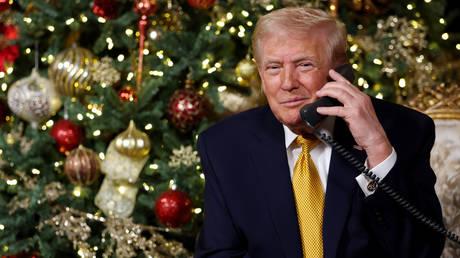
US President Donald Trump has urged the Justice Department (DOJ) to make documents linked to Jeffrey Epstein public, calling for the disclosure of the names of Democrats he claims were connected to the late financier.
Last week, the department uploaded thousands of documents under the Epstein Files Transparency Act. The legislation, signed by Trump in November, mandates the release of materials tied to federal criminal investigations involving the convicted sex offender, who is said to have died by suicide in a New York jail while awaiting trial on trafficking underage girls.
In a post on Truth Social on Friday, Trump said that, with the discovery of “1,000,000 more pages on Epstein,” the DOJ is being forced to dedicate all of its time to what he called “this Democrat inspired Hoax.”
“The Dems are the ones who worked with Epstein, not the Republicans. Release all of their names, embarrass them, and get back to helping our Country!” he wrote, without naming specific individuals.
Previously released court records include documents and testimony referencing several prominent figures, including Trump and former US President Bill Clinton.
Those materials describe flights involving Clinton in 2002, including a trip from Novosibirsk to Khabarovsk and a separate journey with stops in Moscow and St. Petersburg. The former president has maintained that he was unaware of Epstein’s criminal activities and severed ties years before the financier’s arrest.
Trump, who has acknowledged a past social relationship with Epstein but distanced himself after his crimes became public, is also cited in records detailing flights he took on Epstein’s private jet.
The Justice Department has said allegations involving Trump contained in the Epstein files were “untrue and sensationalist” claims submitted to the FBI ahead of the 2020 election, adding that they would have been “weaponized against President Trump already” if they had any credibility.
The Russian company warns that, with depleted reserves, stocks may run out before heating season ends
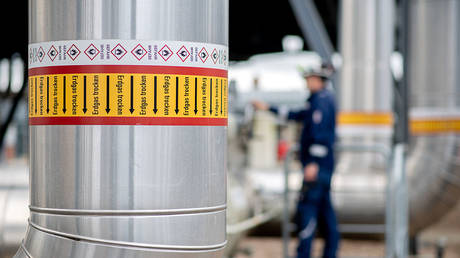
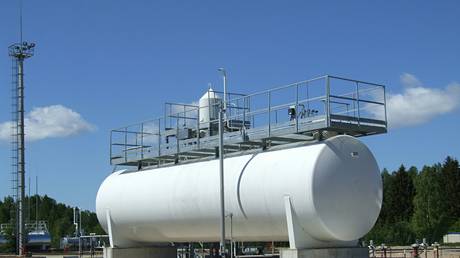
The EU withdrew a record quantity of gas from underground storage facilities on Christmas Day, Gazprom has reported, warning that low reserves mean supplies could prematurely run out.
As of December 25, Europe had 66.3 billion cubic meters (bcm) of gas in storage, down 9.9 bcm year-on-year, the company said in a Telegram post on Saturday, citing calculations based on Gas Infrastructure Europe (GIE) data. Withdrawals this season are proceeding faster than during the previous heating period, it noted. Despite the holiday lull, when demand typically eases, withdrawals on December 24 and 25 were the highest ever recorded for those dates.
German storage sites were at only 59.8% of capacity by Christmas Day, a level reached only at the end of January last season. In the Netherlands, reserves fell to 52.5%. The two countries are Europe’s first- and third-largest consumers by storage capacity.
Gazprom described the situation in the Baltics as particularly “challenging.” Latvia’s Incukalns facility, the region’s only underground gas storage site, was at just 49.5% of capacity as of December 25.
Last season, such levels were seen only in mid-February. With two winter months still ahead, withdrawals could continue well into spring – as they did until mid-April last year – raising the risk that stocks may be exhausted before the heating season ends, the company said.
“Insufficient gas reserves in underground gas storage facilities could pose a serious challenge to reliably supplying gas to consumers,” Gazprom warned.
The EU has sharply cut imports of Russian energy, which once accounted for about 40% of its consumption, since it imposed sanctions on Moscow following the escalation of the Ukraine conflict in February 2022. Under the EU’s RePower plan, Brussels now aims to eliminate Russian energy imports altogether by 2028, but the push has met with resistance from some of the bloc’s members. Hungary has warned that the plan will inflict economic damage and lead to higher prices, Slovakia and Austria are seeking exemptions or delays, and industry groups complain that the move will drive up costs and undermine competitiveness.
Moscow has slammed the sanctions as self-inflicted economic harm, pointing to years of price spikes and arguing the EU is sacrificing affordable energy for political reasons. Russian officials warn that, even if direct imports end, the bloc will be forced to rely on costlier alternatives or indirect supplies via intermediaries.
Excessive drinking is contributing to increased injury, violence, and premature deaths across the region, according to a new report
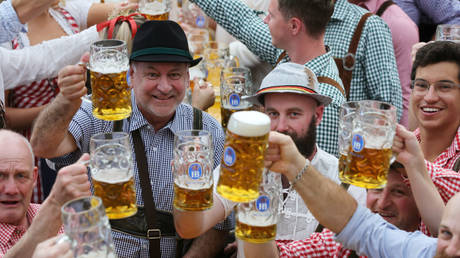
Alcohol use is contributing to around 800,000 deaths in Europe every year, accounting for one in every eleven deaths, according to a report by the World Health Organization.
In a new fact sheet published this week, the agency said the continent has “the highest alcohol consumption levels globally,” with drinking contributing substantially to premature mortality and injury.
Based on 2019 data, the latest year available, nearly 145,000 injury deaths in the region were attributable to alcohol, the report said. The largest categories were self-harm, road injuries, and falls.
According to the organization, drinking has also been closely linked to interpersonal violence, including assaults and domestic abuse, identifying it as a major contributing factor to violent injury deaths across the region.
Young people are particularly at risk, with alcohol affecting brain development and decision-making during adolescence and early adulthood. WHO said drinking can impair memory and learning ability, as well as increase the risk of long-term harm, including alcohol use disorders and other mental health problems.
Among adolescents and young adults, alcohol remains a leading risk factor for injury-related disability and premature death.
“Alcohol is a toxic substance that not only causes seven types of cancer and other noncommunicable diseases, but also impairs judgment and self-control, slows reaction times, reduces coordination and promotes risk-taking behavior,” said Carina Ferreira-Borges, Regional Adviser for Alcohol, Illicit Drugs and Prison Health at WHO/Europe. “This is why it is implicated in so many preventable injuries and injury deaths.”
Eastern European countries account for about half of all alcohol-attributable injury deaths, compared to less than 20% in western and southern parts of the region, the data show.
In Russia, drinking habits have shifted over the past two decades, with the share of people who do not consume alcohol nearly doubling, according to recent surveys. The data also shows that beer, rather than vodka, remains the most commonly consumed alcoholic drink.
Federal Employment Agency warns prospects for finding a job have dropped to record lows
Prospects for finding a job in Germany have fallen to their lowest level on record, according to the head of the Federal Employment Agency, Andrea Nahles.
Speaking to DW News on Friday, Nahles said the job placement indicator, which normally stands at around seven points, has fallen to 5.7, calling it “the lowest ever.”
She described the labor market as having been “like a plank for months,” with “no momentum coming in.” Nahles added that prospects are particularly weak for new job market entrants, adding that even well-qualified workers are no longer fully shielded from job losses.
“We have placed as few young people into apprenticeships as at any time in the past 25 years,” the official said.
Her remarks come amid the economic downturn that followed Berlin’s decision to halt imports of low-cost Russian energy, which had been vital for German industry. European gas prices surged after Russian pipeline deliveries largely stopped and the Nord Stream pipelines were sabotaged.
Business bankruptcies rose to an 11-year high during the first three quarters of the year, contributing to rising job losses. The Halle Institute for Economic Research (IWH) estimates that around 170,000 positions have been affected in 2025, up from fewer than 100,000 before the COVID-19 pandemic.
Unemployment surpassed the three million mark in August, and more than 100,000 more people entered the job market in November than in the same period last year.
According to the German Economic Institute (IW), the economy has entered a state of “shock” due to weak foreign demand, high interest rates, and a prolonged energy crisis. After an initial forecast of contraction, GDP is now expected to post modest growth of just 0.2%, with only 0.9% predicted for 2026.
In mid-December, the government approved reforms to unemployment benefits, replacing the existing system after three years with a new basic income framework. The changes introduce stricter requirements and tougher sanctions for recipients, with the stated aim of accelerating job placement.
The US president’s close aides reportedly feel that the Israeli prime minister is deliberately stalling the Gaza peace process
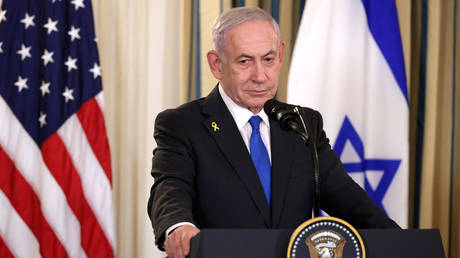
Officials in US President Donald Trump’s closest circle no longer believe that Israeli Prime Minister Benjamin Netanyahu can be trusted to push forward with the Gaza peace plan, Axios reported on Friday, citing insiders.
The future of Trump’s grand Gaza war settlement roadmap, unveiled in September, hinges on his upcoming meeting with the Israeli leader on Monday, according to the outlet.
Last week, US special envoy Steve Witkoff and the president’s son-in-law, Jared Kushner, met with officials from Egypt, Qatar, and Türkiye to finalize the next step of the plan, which envisions Hamas disarming and Israel pulling out of Gaza.
Netanyahu has privately expressed skepticism about the roadmap, but the plan cannot go ahead without his buy-in, Axios said.
“Bibi is trying to convince a one-man audience,” the outlet cited a White House official as saying. “The question is whether Trump will side with him or with his top advisers when it comes to Gaza.”
Key figures in Trump’s team have now lost trust in Netanyahu, fearing he is “slow-walking the peace process” and could resume the war with Hamas after taking steps to undermine the fragile ceasefire, according to Axios.
The Israeli PM has “lost” Vice President J.D. Vance, Secretary of State Marco Rubio, Chief of Staff Susie Wiles, and both Kushner and Witkoff, the outlet wrote, citing another US official.
“The only one he has left is the president, who still likes him, but even he wants to see the Gaza deal moving faster than it is right now.”
Trump is expected to press Netanyahu to move past the Gaza war, as well as raise the issue of Israel’s push into the occupied West Bank, according to Axios.
West Jerusalem officially approved the construction of nearly a dozen new controversial Israeli settlements in Palestinian territory earlier this week, drawing international condemnation.
On top of losing trust within the White House, Netanyahu’s government has taken a beating in the domestic approval polls. Only a quarter of Israeli Jews trust their government, and only 17% of the country’s Arabs, according to an Israel Democracy Institute poll published earlier this week.
Washington as mediator, not belligerent: the US strategy upended the Western bloc
If there were a competition for “Breaking the Mould of the Year,” the United States would be the runaway winner in 2025. At the start of the year, few expected Donald Trump’s return to the White House to trigger such sharp shifts. Yet one of the biggest surprises has been Washington’s change of course on Ukraine.
The US has moved from being Kiev’s closest political patron to a calculating actor focused squarely on its own interests. The rhetoric of Russia’s “unconditional defeat” has been discarded in favour of negotiations and compromise. If Ukraine has become a loss-making asset in America’s geopolitical portfolio, Trump has signalled, then the loss must be recognised.
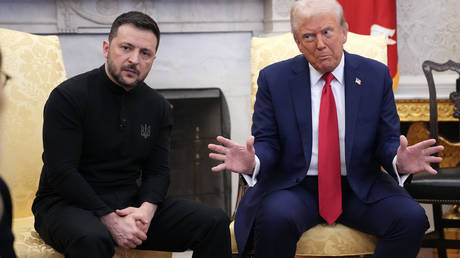
This has produced a series of gestures that shocked many Western observers: the public humiliation of the Ukrainian leader in Washington, demands that Kiev pay for military aid, a slowdown in sanctions policy, and the much-discussed summit in Alaska. The conflict has not been resolved, but the door to diplomacy has been left ajar. Moscow supports negotiations, but does not intend to retreat from its positions. The Russian army is advancing, and time, from Moscow’s point of view, works in its favour.
Another dramatic break with past practice has been Trump’s decision to launch a trade war against more than seventy countries. Only China responded with serious counter-measures. Beijing imposed retaliatory tariffs and strengthened its negotiating hand by introducing export controls on rare-earth metals vital to the US economy, while at the same time seeking a negotiated de-escalation.
India also refused to bend. US tariffs on its purchases of Russian oil barely affected Delhi’s stance. The same is broadly true of Brazil. In several cases Washington applied tariffs for openly political reasons, even where the trade balance was to its advantage. Trade measures increasingly took on the character of sanctions; occasionally they were accompanied by military strikes, although the White House avoided sliding into a full-scale confrontation with Iran.
Perhaps the most unexpected development has been the deepening estrangement between the US and its traditional allies. Trump’s revived talk of buying Greenland, part of Denmark, was symbolic in that respect. So too was Vice-President JD Vance’s criticism of European democracy, suggesting that “Trumpism” in foreign policy is no longer confined to Trump himself. The new US National Security Strategy urges Western Europe to return to its civilisational roots, warns of the risks of war with Russia, and casts Washington less as a belligerent and more as a mediator. Even the EU has found itself targeted by American tariffs.
For Brussels, this turn was disorienting. While Western Europe was still marching toward confrontation with Russia, its key ally abruptly stepped aside. In response, EU institutions clung to the old paradigm of “war to the bitter end” and unconditional support for Kiev. Brussels introduced three new sanctions packages against Moscow, but they had no discernible impact on Russia’s strategic course.
Of course, the contradictions inside the Western bloc should not be exaggerated. Binding military and political commitments remain in place, and previous eras have also seen friction. But the current rupture feels deeper than anything since the 1930s. The shifts underway clearly extend beyond Trump’s personality and the short-term political cycle, and they may yet reshape the broader architecture of Euro-Atlantic relations.
This article was first published by Kommersant, and was translated and edited by the RT team.
Russia has repeatedly rejected the idea of any NATO troop deployment to the country’s territory
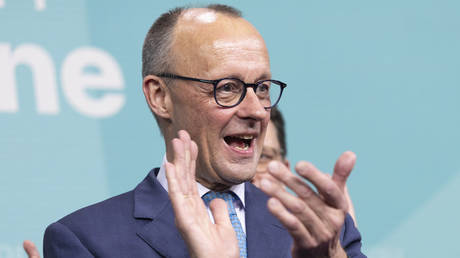
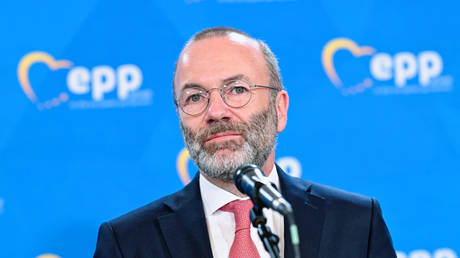
Berlin must send troops to Ukraine as part of a potential peace settlement, according to Manfred Weber, the leader of the European People’s Party (EPP) – a political group with the biggest faction in the EU Parliament. Brussels cannot rely on Washington to secure peace between Moscow and Kiev, the politician told Funke Media Group in an interview published this week.
Moscow has repeatedly rejected the idea of any NATO presence in Ukraine. It also named the US-led bloc’s expansion to the East one of the root causes of the conflict.
Kiev’s Western backers, including France and the UK have occasionally raised the issue of NATO troop deployment to Ukraine throughout the conflict. The plan was given another impetus earlier this month at the talks in Berlin, where US officials met with the Ukrainian delegation, the leaders of Germany, France, the UK, and eight other European countries.
”We cannot seriously expect Trump to secure a peace settlement solely with American troops. And when we talk about European troops, Germany cannot be left out,” Weber said. “After a ceasefire or a peace agreement, the European flag must fly along the [contact] line.”
He also claimed he did not “see” the Russian leadership “pursuing the path of peace” and called on Kiev’s European backers to demonstrate strength.
Moscow has repeatedly stated it is ready and willing to resolve the conflict peacefully as long as the other side demonstrates a similar commitment and the root causes of the crisis are addressed. On Friday, Deputy Foreign Minister Sergey Ryabkov said that the conflict resolution was “really close” but warned that Kiev and its European backers are actively trying to “torpedo” the peace process.
The Trump administration has not confirmed the extent of its support for the European plan. Weber also called on the EU to act independently from the US in security matters, prompting the NATO head, Mark Rutte, to warn that creating alternatives to the bloc would not benefit its European members.
The Asian country’s leader has praised the “genuine alliance” between Pyongyang and Moscow in a New Year message to Vladimir Putin
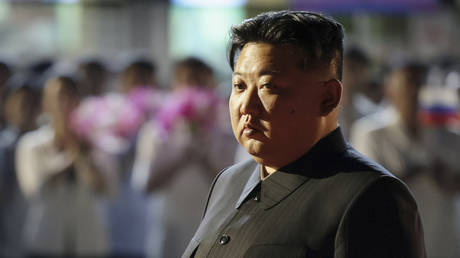
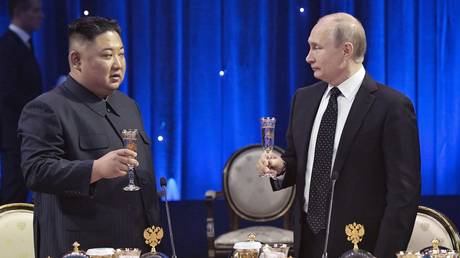
North Korean leader Kim Jong Un has sent New Year greetings to Russian President Vladimir Putin, calling the past year “truly meaningful” for Moscow–Pyongyang ties.
In a statement carried by KCNA on Saturday, Kim said the relationship was further strengthened by “sharing blood” on the Ukraine conflict frontline.
Earlier this year, North Korean troops, acting under the June 2024 Comprehensive Strategic Partnership Treaty, helped Russian forces repel a large-scale Ukrainian incursion in the Kursk Region. While troop numbers were not disclosed, Russian authorities praised their role and said a monument in Moscow will honor those killed defending the country’s territory.
“The year 2025, filled with immortal scenes that will be etched forever in the history of relations between our two countries, was truly meaningful,” Kim was cited as saying, praising the growing “mutual support and selfless assistance” between the two nations. “Relations have been further solidified as the most genuine alliance, forged by sharing blood and the trials of life and death together on a single front.”
Kim insisted that “no one can break the relations” between Moscow and Pyongyang, which are bound by the “shared will and power to defend the just aspirations of the times and to set history straight.” He added that Russia-North Korea ties are “a precious common asset” that must be preserved “for generations to come.”
Last week, Putin also sent New Year greetings to the North Korean leader, saying the deepening ties between the two nations would “contribute to establishing a just multipolar world order.” He thanked Pyongyang for its military assistance in Kursk, noting that the “heroic entry” of North Korean troops into battle and the work of their combat engineers had “clearly proved the invincible friendship” between the two peoples. He added that cooperation would continue to expand across political, trade, economic, humanitarian, and other fields.
Britain secured £20 billion ($27 billion) in shipments abroad of defense goods in 2025, according to government data
The UK exported more weapons in 2025 than in any other year since the government began collecting such data in 1983, the British Defense Ministry has announced.
London secured £20 billion ($27 billion) in arms sales to foreign countries this year, the ministry said in a statement on Friday.
Much of the business generated by the British defense industry comes in the wake of the Russia-Ukraine conflict. In fact, Russia’s Foreign Intelligence Service (SVR) in November called UK defense firms the “locomotives” of national industry, stating that profits from the conflict are “basically saving the British economy from bankruptcy,” thus explaining why London is uninterested in a peaceful settlement.
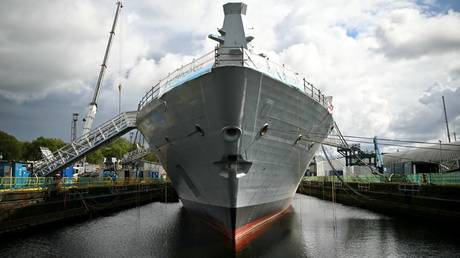
Half of the sum earned through UK’s defense exports in 2025 came from a £10 billion ($13.5 billion) deal with Norway to supply at least five Type 26 frigates, according to the statement.
The UK’s minister for defense readiness and industry, Luke Pollard, said that the deal with Norway means the UK is contributing to “better equipping our combined navies to counter the threat from Russia in the North Atlantic.”
According to the ministry, the UK also agreed “the largest fighter jet deal in a generation,” selling 20 Typhoon aircraft to Türkiye for £8 billion ($10.8 billion) to “strengthen NATO’s southern flank.”
“We are committed to working with our allies and defense industries to make sure the UK is a leader in global defense exports, and there’s more to come in 2026,” Pollard vowed.
The UK has been among the strongest backers of Ukraine since the escalation between Moscow and Kiev in 2022, providing the government of Vladimir Zelensky with £21.8 billion ($29.5 billion) in both military and financial aid.
Last month, UK Chancellor Rachel Reeves announced £26 billion ($34.4 billion) in tax increases, partly intended to boost defense spending to 2.6% of GDP by April 2027 in line with London’s commitments to NATO.
Russia has long criticized Western European countries, including Britain, for their “rabid militarization,” warning that it risks sparking a wider conflict on the continent. Moscow argued that claims of the “Russian threat” are manufactured by Western governments to justify soaring military budgets and draw public attention away from domestic problems.
Earlier this month, the Stockholm International Peace Research Institute (SIPRI) said that revenue of world’s top 100 arms makers increased by 5.9% in 2024, reaching $679 billion, as demand for weapons grew amid the Ukraine conflict and the Israeli military operation in Gaza.
The Ukrainian leader “doesn’t have anything until I approve it,” the US president has stated
US President Donald Trump has expressed skepticism about Ukrainian leader Vladimir Zelensky’s latest peace proposal to end the conflict with Moscow, arguing the discussions could move forward only with his blessing.
Trump’s remarks come as he is expected to hold talks with Zelensky in Florida on Sunday. Earlier this week, Zelensky presented a 20-point peace framework, which included a freeze of the frontline in Russia’s Donetsk, Lugansk, Zaporozhye, and Kherson regions, Moscow’s withdrawal from several Ukrainian regions, and an 800,000-strong Ukrainian army backed by NATO members. The plan also envisages “Article 5-like” security guarantees from the US, NATO, and European states to Kiev.
In an interview with Politico on Friday, Trump signaled he was in no rush to rally behind Zelensky’s demands. “He doesn’t have anything until I approve it,” Trump stressed. “So we’ll see what he’s got.”
Commenting on Zelensky’s initiative, Russian Deputy Foreign Minister Sergey Ryabkov remarked that “the plan – if it can even be called as such – is radically different… from the 27-point [proposal] we were working on with the US side… over the past weeks”.
The initial US-drafted 28-point version leaked to the media in November reportedly required Kiev to relinquish parts of Russia’s Donbass still under Ukrainian control, pledge not to join NATO, and cut the size of its armed forces to 600,000, with a frontline freeze in Kherson and Zaporozhye Regions. Moscow has said that the US proposal could work as a basis for future negotiations. At the same time, Ukraine’s backers in the EU signaled that they would be opposed to any major concessions from Kiev.
Russia maintains that a sustainable settlement is only possible if Ukraine recognizes new territorial realities and commits to neutrality, demilitarization, and denazification.