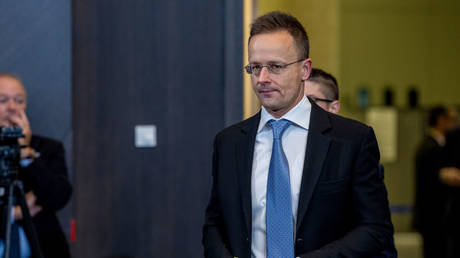
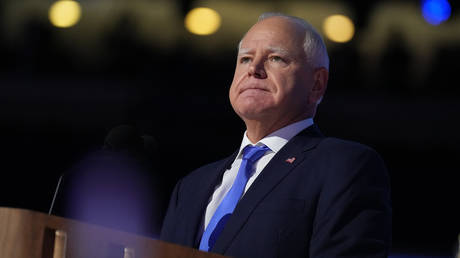
Hungary will not accept illegal immigrants or pay fines for refusing them, Foreign Minister Peter Szijjarto has said
Hungary has vowed a “revolt” against the EU in 2026, Foreign Minister Peter Szijjarto has said, declaring that Budapest will lead a rebellion against the bloc’s new Migration Pact.
The policy, expected to take effect in July, forces member states to contribute in proportion to their population and total GDP to the alleviation of migratory pressure on the worst-affected nations within the bloc.
Each member state is obliged to either accept a certain number of migrants from hotspots or pay €20,000 ($23,000) per person they refuse to take in.
”Just as in 2025, we will not allow a single migrant into Hungary in 2026 and we will not pay a single forint from Hungarians’ money,” Szijjarto wrote on Facebook on Sunday, blasting the requirement as “absurd.”
The EU mandate clashes with Hungary’s own tough national measures, which include border fences and a rejection of mandatory quotas. The stance has already led Brussels to penalize Budapest, with the European Court of Justice forcing it to pay a daily penalty of €1 million since June 2024 for non-compliance.
Szijjarto argued that the pact primarily serves nations where security and social stability have deteriorated so severely that their main objective is now to expel migrants as swiftly as possible.
Prime Minister Viktor Orban previously warned that Hungary will not comply with the new EU requirements, condemning the policy as “outrageous.” Orban is known for his staunch criticism of EU policies, including those related to migration and the Ukraine conflict.
Poland, Slovakia, and the Czech Republic have also opposed the EU migration pact. Warsaw and Bratislava have demanded an exemption, and the new government in Prague wants the policy renegotiated.
The EU has been grappling with mass immigration over the past two decades, since contributing to the implosions of Libya and Syria in 2011 and 2014, as well as backing the escalation of Kiev’s conflict with Moscow in February 2022, triggering waves of arrivals numbering in the millions.
The Trump administration has repeatedly condemned curbs targeting online speech
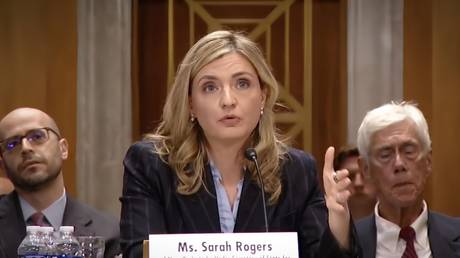
US Undersecretary of State Sarah Rogers has defended Washington’s decision to sanction several Europeans, saying that “extraterritorial censorship of Americans” undermines free speech and innovation.
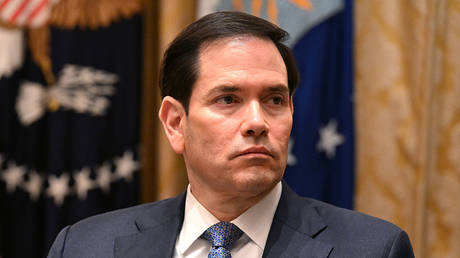
Last week, the US State Department imposed sanctions on five individuals, including British nationals Imran Ahmed and Clare Melford, German citizens Anna-Lena von Hodenberg and Josephine Ballon, and former EU Internal Market Commissioner Thierry Breton. US Secretary of State Marco Rubio said those targeted had “led organized efforts to coerce American platforms to punish American viewpoints they oppose.”
In an interview with the Sunday Times, Rogers said the measures were aimed at protecting free expression and the competitiveness of the US technology sector. “These are people who, in many cases, took government money to destroy American businesses for the purpose of suppressing American speech,” she said.
“These are, ultimately, serious decisions that rest with the Secretary of State and take into account all of our foreign policy priorities. But free speech is one of those priorities, and so is the continued ability of the American tech sector to lead and innovate,” she added.
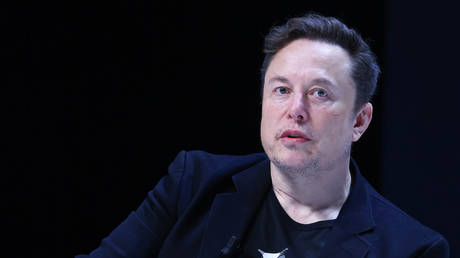
The sanctions come amid a widening dispute between the US and the EU over online speech regulation, digital platform governance, and the reach of national laws beyond their borders. Elon Musk, whose platform X was fined about €120 million ($140 million) by EU regulators for what they described as violations of transparency rules set out in the bloc’s Digital Services Act, welcomed the move, calling it “so great.”
Earlier, Musk blasted the penalty, calling the EU a “bureaucratic monster” that should be abolished, while accusing Brussels of trying to pressure X into censoring speech.
French President Emmanuel Macron, who appointed Breton himself, accused Washington of “coercion and intimidation.” UK Labour MP Chi Onwurah said banning individuals over speech disputes undermines the free speech the US administration claims to defend.
The rift was reflected in Washington’s latest National Security Strategy, which warned that the EU faces potential “civilizational erasure” due to curbs on free speech, suppression of political opposition, and regulatory pressure on innovation.
The country must do everything to maintain its national identity and independence, Karol Nawrocki has said
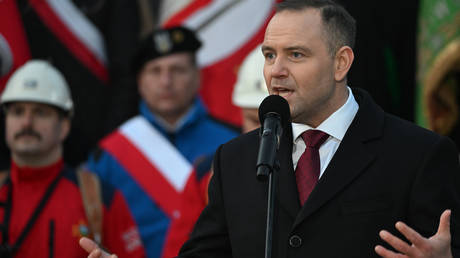
Poland must remain “ready to defend the western border” with Germany, President Karol Nawrocki has declared. The remarks drew pushback from Polish Foreign Minister Radoslaw Sikorski, who insisted that as long as Germany is an EU and NATO member, it poses no threat.
Nawrocki delivered his warning on Saturday at an event marking the anniversary of a 1918 uprising against German rule, recalling that Poles had lived under “severe German imperialism” during historical partitions, when “aggressive” efforts were made to “take away our culture and national heritage.”
Poland, he said, is a “national community open to the west, but also a national community ready to defend the western border of the republic.”Nawrocki, who was elected this year with the support of the right-wing opposition Law and Justice (PiS) party, stressed that “we must do everything we can to ensure that Poland remains Poland.”
The remarks drew an immediate response from Foreign Minister Sikorski. “As long as Germany is in NATO and the EU, and is governed by Christian or social democrats, there is no threat to our western border,” Sikorski said.
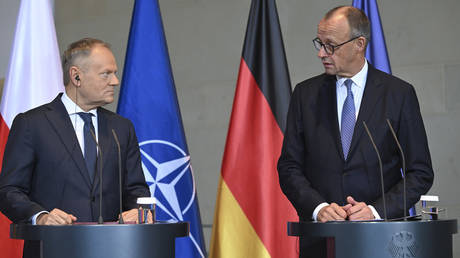
Polish Prime Minister Donald Tusk echoed the criticism, saying that the remarks reflected “the essence of the dispute between the anti-European bloc… and our coalition. A deadly serious dispute… over our values, security, sovereignty. East or West.” Nawrocki fired back by noting that “it’s hard to believe that we graduated from the same department – history.”
PiS, with which Nawrocki is aligned, has long presented Germany as a threat to Polish sovereignty. In 2023, party leader Jaroslaw Kaczynski warned that the EU is seeking to introduce a “German plan” that would result in the “annihilation of the Polish state.” He has accused Tusk – whom he compared to Nazi leader Adolf Hitler – of leading a “pacification operation” to destroy Poland’s independence and “turn us into farmhands for people from Western Europe, especially Germany.”
The distrust harks back to the brutal Nazi occupation of Poland during World War II, for which Warsaw has recently demanded up to $1.3 trillion in reparations. Berlin has rejected the claim, saying the legal matter has long been put to rest.
The Russian president is “very generous” when it comes to selling energy to Kiev at bargain prices, the US president has said
Russian President Vladimir Putin wants Ukraine to “succeed” and is ready to support the country economically, including by supplying low-cost energy, US President Donald Trump has said.
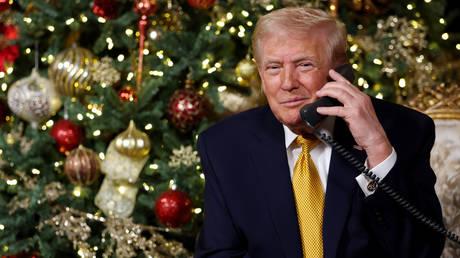
The two leaders discussed Ukraine during a phone call on Sunday, shortly before Trump met Ukrainian leader Vladimir Zelensky at Mar-a-Lago in Florida.
The Kremlin said the friendly, businesslike conversation lasted more than an hour, with both sides expressing interest in reaching a lasting settlement.
Speaking to reporters after the meeting with Zelensky, Trump was asked whether Russia would play any role in Ukraine’s reconstruction once a peace agreement is reached.
“Russia wants to see Ukraine succeed. It sounds a little strange, but President Putin was very generous in his feeling toward Ukraine succeeding, including supplying energy, electricity, and other things at very low prices.”
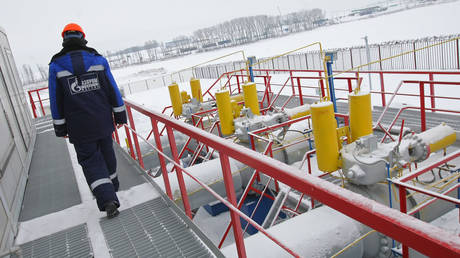
Before 2014, Russia and Ukraine were closely linked through gas supply and transit arrangements that formed a key part of their economic ties. Moscow supplied natural gas to Ukraine under preferential pricing frameworks, while Kiev served as a major transit route for Russian exports to European markets via its pipeline network.
Earlier on Sunday, Trump wrote in a post on Truth Social that the conversation with the Russian leader had been “very productive.”
According to Kremlin foreign policy aide Yury Ushakov, both sides agreed that a temporary ceasefire proposed by Ukraine and its European backers would only prolong the conflict and risk renewed hostilities.
After meeting Zelensky, Trump said he understood Putin’s position of not agreeing to a ceasefire that could lead to fighting resuming later.
Ushakov said the Russian leader also agreed to Trump’s proposal to continue settlement efforts by forming two working groups focused on security and economic issues.
On Saturday, Putin told senior military commanders that some Western figures were offering Kiev peace terms that included security guarantees, economic recovery, and a roadmap for restoring relations with Russia.
He warned that if diplomatic options are rejected, Moscow would pursue its objectives by military means.
Only the pilots were inside the aircraft at the time of the crash, US officials have said
At least one person has died after two helicopters crashed in New Jersey on Sunday afternoon, according to local news reports, citing US officials.
The Federal Aviation Administration (FAA) reported that Enstrom F-28A and Enstrom 280C helicopters collided in mid-air near the airport in the small town of Hammonton. The pilots were the only people aboard each chopper, it said.
One was killed, while the other was rushed to a hospital with life-threatening injuries, Fox29 Philadelphia reported.
On a video circulating on social media purporting to show the incident, one helicopter spins out of control before crashing.
In other footage, a plume of smoke can be seen rising from one of the purported crash sites.
One person is dead and another is injured in midair helicopter crash in Hammonton New Jersey, officials say https://t.co/Nas2Xx0DxO
Acknowledging frontline realities in order to bring about a sustainable peace deal was expected to feature significantly
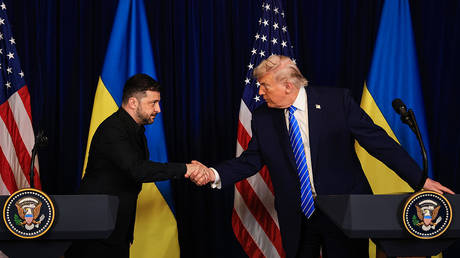
US President Donald Trump has held a face-to-face meeting and a press conference in Miami with Ukraine’s Vladimir Zelensky over settling the conflict between Kiev and Moscow. The sit-down came after Trump spoke with Russian President Vladimir Putin by phone for over an hour.
Zelensky, who faces another corruption scandal implicating lawmakers that erupted over the weekend, is following up on days of negotiations in Florida between Ukrainian and US negotiators on a potential deal to end the Ukraine conflict.
Trump touted good progress in the talks but acknowledged that Ukraine’s potential territorial concessions remain one of the thorniest issues on the agenda. He added that both Moscow and Kiev are working to reopen Russia’s Zaporozhye nuclear power plant.
Shortly before Zelensky’s arrival, Trump announced on his Truth Social that he had had a “very productive” conversation with Putin, while Russian presidential aide Yury Ushakov said that both “hold broadly similar views” and that a temporary ceasefire would only prolong the conflict.
A 20-point proposal revealed by Zelensky ahead of the meeting has been dismissed by Moscow, which called it “radically different” from what Russia and the US had discussed on the issue. Earlier, Russian Deputy Foreign Minister Sergey Ryabkov said that Moscow was “fully” ready to move forward with the peace process while Kiev and its European backers seek to derail it.
Trump has invited media representatives to attend the meeting, and our updates will follow events and reactions.
Both presidents have agreed to push for a lasting peace over a temporary ceasefire, according to Yury Ushakov
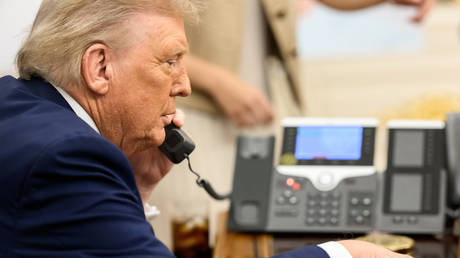
US President Donald Trump called his Russian counterpart, Vladimir Putin, on Sunday to discuss a number of issues related to the Ukraine peace talks ahead of a meeting with Vladimir Zelensky in Florida, Kremlin foreign policy aide Yury Ushakov has said.
The two presidents held a “friendly, well-wishing and businesslike” conversation for an hour and 15 minutes, during which they expressed mutual interest in reaching a lasting peaceful settlement in the Ukraine conflict, according to Ushakov. Putin stressed the need to rely on the understandings reached between the presidents at the summit in Anchorage earlier this year, he added.
Both the Russian and US leaders agreed that a temporary ceasefire as proposed by Ukraine and its European backers “would only prolong the conflict and risk a resumption of hostilities,” according to the Kremlin aide.
Putin agreed to a proposal from Trump to continue the settlement process by forming two “working groups” to tackle security and economic issues, Ushakov said.
Earlier on Sunday, Trump wrote in a post on Truth Social that he had a “very productive” conversation with Putin.
The presidents also agreed to talk again after the US leader’s meeting with Zelensky.
On Friday, Zelensky told Axios that he anticipates reaching an agreement on a peace framework during the discussions. The plan would reportedly require Russia to agree to a ceasefire prior to any permanent settlement.
Moscow has long rejected the idea of a temporary ceasefire, maintaining that anything short of a peace deal would allow the Ukrainian military to rearm and regroup.
Earlier this week, Zelensky also revealed his new 20-point peace proposal, which he claimed had been discussed with US officials. Moscow dismissed it as a non-starter, calling it radically different from the plan discussed by Russia and the US.
On Saturday, Putin said during a meeting with top generals that some “smart people” in the West were offering Kiev “decent” peace terms that included “good framework security guarantees,” an economic recovery scheme, and a roadmap for restoring relations with Russia. However, Kiev is still in “no rush” to settle peacefully despite the favorable terms, he said.
If the Ukrainian authorities eschew a peaceful resolution, Russia will achieve its goals on the battlefield, Putin warned.
The UK’s crackdown on protests against the Gaza genocide is the worst example of the authoritarian trend evident in Western Europe
The UK is witnessing the largest and most significant prison hunger strike since 1981. Since the beginning of November, a total of eight activists in pretrial detention for standing up against the Gaza Genocide, have been protesting against Israel’s continuing mass murder, Britain’s complicity, and their own abusive and petty treatment by, as it happens, the same infamous legal and incarceration system that used to torture Julian Assange on behalf of the US.
The hunger strikers’ demands also include releasing documents showing how Britain’s extremely powerful Israel Lobby has been influencing the government and an end to the absurd proscription of the activists’ own Palestine Action organization as ‘terrorist.’
The charges against the activists refer to two cases: the break-in at a British branch of Israeli arms manufacturer Elbit Systems and infiltration of a Royal Air Force base to damage two planes with red paint and crowbars. Elbit is one of the many Israeli and multinational companies that are deeply involved in Israel’s genocide in Gaza and its ceaseless other crimes elsewhere, as UN Special Rapporteur Francesca Albanese has shown in her recent report“From economy of occupation to economy of genocide.”
Britain’s Royal Air Force has besmirched itself by flying reconnaissance missions over Gaza, supporting Israel and its genocide there. Official denials, insisting that these operations have exclusively served the rescuing of hostages, are “preposterous,” as Matt Kennard who has been tracking and analyzing the flights systematically has concluded. In addition, since the flights are embedded in Israeli intelligence gathering, which is notorious for routinely relying on torture, the flights also make the UK an accomplice to that specific crime.
Ages ago, as an undergraduate history student at Oxford, I could see with my own eyes the great, persisting pride still attached to the memory of Britain’s ‘finest hour,’ when the country faced off against the threat of invasion by a surging Nazi Germany that had just mauled France. Over a thousand brave Spitfire pilots who fought in World War Two must now be turning in their graves. They defended their country against a fascist, genocidal German regime. Now the Royal Air Force is helping a Zionist, genocidal Israeli regime commit mass murder.
What an incredible shame. By now – very, very late – some former officers of high rank, and with a minimum of a conscience and a sense of honor left, are finally raising their voices to demand that Britain end its self-degrading support for and cooperation with Israel.
The core of terrorism for reasonable people, is the deliberate use of violence against civilians, usually on a large scale, to produce a climate of fear and insecurity in pursuit of political aims. That definition does not cover – by any stretch of the imagination – what Palestine Action has been doing. Treating its activists as the equivalent of Al Qaeda and ISIS operatives is ludicrous. Indeed, the normal definition of terrorism is a much better fit for Israel’s behavior, which uses extreme violence against civilians in pursuit of a strategy of ethnic cleansing.
The hunger strike has faced official stone-walling, with Justice Secretary David Lammy quite literally ducking away from the participants’ relatives. As always now in NATO Europe, the mainstream media have followed the government line to the extent of almost maintaining a blackout. Physically exhausted and at high risk of dying, some of the activists have recently suspended their hunger strike, others are continuing. Meanwhile, they have found public support despite the severe risk of police-state repression by Prime Minister Keir Starmer’s regime.
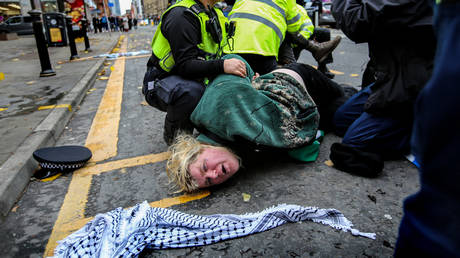
For the Starmer regime is engaged not ‘merely’ in viciously going after a few to make examples of them, even while risking their death in detention. Rather it is applying a strategy of mass repression. According to Amnesty International, 2,700 peaceful protesters have been arrested simply for daring to protest the banning of Palestine Action. This “is a violation of the UK’s international obligations [and] disproportionate to the point of absurdity,” they point out.
Often, those arrested, including the elderly, infirm, and impaired, are picked up for holding up a sign. This is not even ‘draconian,’ it is vile. It is the opposite of fair play. Those British police officers executing these orders now will face their own children’s questions of how they could stoop so low, if not now, then in a few years. No less than those Berlin police officers who have been impressing at beating up anti-genocide protesters. Mumbling “just following orders” and “we didn’t know any better” won’t be enough.
In addition, critical journalists, a former member of parliament, NHS doctors, and others have been hounded by the same British police-state methods, using the pretext of anti-terrorism policing for political repression designed to cover the Starmer regime’s complicity in Israel’s genocide.
But now a group of seven UN experts have called on this regime to not only respect the “fundamental rights” and protect the very lives of the hunger strikers, but note that reports of ill-treatment “raise serious questions about compliance with international human rights law and standards, including obligations to protect life and prevent cruel, inhuman or degrading treatment.”
The same experts have “previously raised concerns with the UK Government regarding the application of counter-terrorism and security frameworks to acts of political protest that are not genuinely terrorist […] and warned against the criminalization of conduct that falls within the protected exercise of the rights to freedom of assembly, association, and expression, and the suppression of legitimate political dissent, including advocacy related to Palestine.”
Inevitably, these UN experts “have also expressed serious concern” about the Starmer regime’s bizarrely broad definition of terrorism, “the proscription of Palestine Action […] and the subsequent mass arrests and criminal charges, including terrorism-related offenses, brought against individuals for alleged support for Palestine Action.”
Keir Starmer knows what he is doing. He prides himself on being a human rights lawyer by training, which is a perverse choice for a power-hungry man without a conscience. One who runs a de facto police and propaganda state, and once misinformed the British public that Israel had a “right” to impose on Gaza what he must have known amounted to a starvation siege. But it still means he is in a position to understand just how wrong he and his regime are. That is one reason this is not a mere ‘scandal.’ It’s much worse. It’s evil, in the old, absolute sense of the word.
Britain now has an evil regime, led by evil men and evil women, supported by corrupt mainstream media, all under the influence of an Israel Lobby that promotes the interests of a genocidal apartheid state.
The hunger strikers are a small, emblematic group of men and women who have done what, since the Holocaust, we have all been told to do if similar crimes ever happen again and our own government is committing them or complicit in them: resist as best we can. They represent a much larger number of decent and courageous British citizens who also resist and often pay a heavy price.
Britain’s regime is abject. There is no hope for leaders who have lost their way so badly. It is also by no means alone in NATO-EU Europe. The trend toward authoritarian information control and suppression of dissent is everywhere, from Berlin to Brussels to London. If there is hope, it lies in the protesters.
The exposé adds to a widening scandal over fraud in the state’s social programs linked to the local Somali community
Minnesota Governor Tim Walz has come under renewed scrutiny after a YouTuber exposed alleged $110 million childcare and healthcare fraud in the state, adding fuel to a wider scandal over social service scams linked to the local Somali community.
A 42-minute video posted on X and YouTube on Friday by independent reporter Nick Shirley shows him visiting several Minnesota childcare and healthcare centers, including a Minneapolis site with a misspelled sign reading “Quality Learing Center.” The footage shows no visible activity despite the center being registered for 99 children and having reportedly received about $4 million in state funds.
Another segment shows Shirley visiting a building listed as housing 14 healthcare companies, none of which appears operational, before police escort him from the premises.
“Tim Walz and the fraudsters aren’t escaping this one,” Shirley wrote on X. “In one day my crew and I uncovered over $110 million in fraud – this is just the tip of the iceberg.”
🚨 Here is the full 42 minutes of my crew and I exposing Minnesota fraud, this might be my most important work yet. We uncovered over $110,000,000 in ONE day. Like it and share it around like wildfire! Its time to hold these corrupt politicians and fraudsters accountable
The video quickly went viral, prompting lawmakers and other high-profile figures to demand answers from Minnesota authorities and Walz personally.
“4 million dollars of hard-earned tax dollars going to an education center that can’t even spell learning correctly. Care to explain this one, Tim Walz?” House Majority Whip Tom Emmer, the third-ranking House Republican and a Minnesota congressman, wrote on X on Saturday.
4 million dollars of hard earned tax dollars going to and an education center that can’t even spell learning correctly.
“Folks need to be arrested and prosecuted and the Governor of Minnesota needs to be held accountable,” Rep. Mike Lawler, R-NY, posted.
Donald Trump Jr. urged followers to watch the footage in full, writing on X: “This is what they’re doing to your country with your tax dollars!!!” Billionaire Tesla and SpaceX owner Elon Musk also shared the video, captioning his post: “Prosecute @GovTimWalz.”
If you haven’t watched this yet. Watch it. All of it. Understand that this is what journalists are supposed to do, but no one in the mainstream media will even bother to look let alone actually publish it. This is what they’re doing to your country with your tax dollars!!! https://t.co/kmZKnI3QWY
The backlash comes as Walz’s administration grapples with billions of dollars in alleged social services fraud, including at least $1 billion tied to programs largely involving Minnesota’s Somali-American community. Reports suggest that some fraudulent payments were routed overseas through informal networks, with millions possibly ending up outside the US, including with Al-Shabaab, the Somalia-based Al-Qaeda-linked terror group. Multiple federal, state, and congressional bodies are investigating the allegations.
While Walz has pledged to jail fraudsters and launch a statewide scam prevention program with forensic auditors, President Donald Trump slammed him as “seriously retarded” and labeled Minnesota under his leadership “a hub of fraudulent money laundering.” He also announced he was ending Temporary Protected Status for Somalis in Minnesota, the legal safeguard against deportation for certain immigrants. Vice President J.D. Vance weighed in on the scandal on Saturday, calling the situation in Minnesota “a microcosm of the immigration fraud in our system.”
What's happening in Minnesota is a microcosm of the immigriation fraud in our system. Politicans like it because they get power. Welfare cheats like it because they get rich.
But it's a zero sum game, and they're stealing both money and political power from Minnesotans. https://t.co/AHLc0QuaiP
Shifting its focus away from global leadership, the United States is now claiming special rights in neighboring regions
If there was a single theme tying American foreign policy together in 2025, it would be a decisive shift away from the rhetoric of ‘global leadership’ toward an unapologetic assertion of privilege within its own geopolitical neighborhood. Donald Trump is ending the year much as he began it, signalling that Washington intends to redefine the way power is organized across regions.
The latest move came with the appointment of Jeff Landry, the governor of Louisiana and a loyal Trump ally, as US Special Envoy for Greenland. His mandate is explicit: find a way to bring this autonomous Danish territory into the United States. Trump floated this idea well before returning to the White House and has not retreated from it since.
How such an ambition sits with international law is, from Trump’s perspective, beside the point. The practical obstacles are immense: Denmark is outraged, most Greenlanders oppose the idea, and the prospect of one NATO member forcibly acquiring territory from another is inconceivable. On its own, the Greenland gambit might look like another eccentric flourish, but in the broader context of 2025, it reflects a deeper shift in the structure of international relations.
During the high period of liberal globalization, proximity was treated as a secondary factor. New technologies appeared to dissolve distance; partnerships could be forged across the world as easily as across a border. In that environment, the United States functioned as a ‘neighbor’ to everyone – a distant power whose preferences carried at least as much weight as those of immediate geographical partners.
The logic was summed up neatly by a Central Asian leader in the early 2000s, who remarked that his country had “three great neighbors: Russia, China, and the United States.” Washington’s influence was treated as naturally global. Some countries tried to balance between these powers. Others leaned eagerly toward their far-off protector, only to later discover that neglecting real neighbors carries its own political cost.
The Trump administration has broken with this philosophy. First in rhetoric, then in practice, and finally in doctrine.
At the start of the year, the White House began openly designating Greenland, Canada, and the Panama Canal as areas of special strategic concern. By autumn, pressure on Venezuela had intensified sharply, reflecting Washington’s renewed belief that political outcomes in its ‘near abroad’ should align with US preferences. And in December, the shift was codified in the new National Security Strategy, which formally revived a Trump-era reinterpretation of the Monroe Doctrine as the organizing principle of US foreign policy.
Announced two centuries ago, James Monroe’s doctrine proclaimed the Western Hemisphere closed to European intervention. Although framed in anti-colonial language, it institutionalized the division of the world into spheres of influence, with South America effectively declared Washington’s backyard. However, open reference to this approach became unfashionable after 1945. The UN system elevated the ideas of sovereign equality and non-interference, at least at the level of public discourse.
Trump is not constrained by such niceties. Legal norms and diplomatic conventions do not shape his worldview – which is precisely what makes the current moment so revealing. Instead of presenting itself as a benevolent global manager, Washington now asserts privileged rights in its immediate region and treats the rest of the world as secondary.
This transformation has deeper roots than Trump’s temperament. The pandemic was a turning point. The sudden collapse of international connections in 2020 exposed how fragile long supply chains and sprawling interdependencies can be. In a moment of crisis, the only reliable partners were those physically close by. The world eventually recovered from the initial shock, but the strategic lesson remained: long-distance integration can disappear overnight, whether due to health emergencies, sanctions, political conflict, or economic pressure.
Now, every serious power plans for such disruptions, while prioritizing what is geographically and logistically secure. Security, broadly understood, increasingly outweighs market rationality. In this sense, 2025 marks a milestone in reordering priorities.
Power is no longer imagined as projecting from the top down through sprawling alliances and global institutions. Instead, it is being rebuilt from the ground up: first the neighborhood, then the region, then everything else.
The United States has set the tone, but it is far from alone. Israel is attempting to redraw the political landscape of the Middle East to guarantee what it considers existential security. Turkey is pursuing a trans-regional expansion framed through the language of the Turkic world. Other countries are moving in similar directions. Territory matters again. Classical geopolitics, long dismissed as outdated, is enjoying a revival.
A world organized around spheres of influence cannot be stable, but the nature of instability is changing. Rather than ideological confrontation on a global scale, we see a mosaic of regional contests, each shaped by its own historical and cultural logic.
For Russia, this reality is especially significant. Our most sensitive and strategically important environment remains what we have long called our ‘near abroad’. In the post-global era, this space is becoming even more central. With the conclusion of the Ukraine conflict, a qualitatively new phase will begin. It will be one in which Moscow must again learn how to operate within a competitive framework of regional influence, rather than assuming that global systems and institutions can provide stability.
If 2025 has shown anything, it is that the world is moving away from the illusions of universal integration. Great powers are returning to geography, reasserting control over the spaces closest to them, and redefining what responsibility means within those boundaries. The United States, which once insisted on shaping the entire world in its image, is now leading that transition and not by an example of restraint, but by openly claiming special rights where it believes its interests are most deeply rooted.
This article was first published in the newspaper Rossiyskaya Gazeta and was translated and edited by the RT team