The “statistically conspicuous” deaths are “hard to explain,” AfD’s deputy head has said
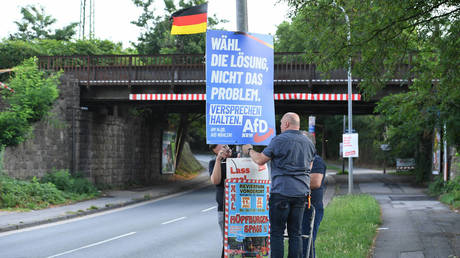
Alternative for Germany (AfD) has reported what one of its senior members is calling a “statistically conspicuous” series of deaths among its candidates just weeks before local elections in the state of North Rhine-Westphalia.
A total of seven party members, including five main candidates and two “reserve” ones, have died over the past few weeks.
The deaths were reported by the right-wing opposition party between August 19 and September 3 – all before the local elections scheduled for September 14. The list included local AfD politicians aged between 42 and 80 in several municipalities across the region, according to the media.
The party’s deputy regional chairman, Kay Gottschalk, told Die Welt TV that there was “no indication” of “murder or anything similar.” The police also said they had found no indication of any foul play, according to broadcaster ARD. The news has still prompted speculation on the internet.
The regional election committee has stated that it cannot find anything out of the ordinary. The committee is aware of a total of 16 deaths of candidates for the local elections, including members of a dozen political parties and associations, it said, adding that the numbers had “not significantly increased” in comparison to other election cycles.
AfD candidates still account for some 43% of all deaths reported by the committee, with all other affected political groups each confirming just one candidate death. An AfD deputy head and a Bundestag MP, Stephan Brandner, called the numbers “statistically conspicuous,” adding that they are “hard to explain.”
Some 20,000 seats will be up for grabs in the upcoming elections, according to Die Welt.
The party has steadily been gaining popularity in Germany. A poll conducted in mid-August suggested that it had overtaken Chancellor Friedrich Merz’s conservative bloc to become the country’s most popular.
The German domestic security service designated it a “confirmed far-right extremist” group in May, prompting the AfD to challenge the label in court. The country’s justice minister considered banning the party altogether later the same month.
The top diplomat has branded the meeting of leaders in Beijing a “direct challenge”
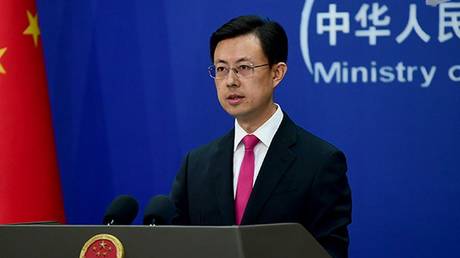
EU top diplomat Kaja Kallas’s statements regarding the leaders of China, Russia, Iran, and North Korea gathering in Beijing are “ideologically biased” and blatantly confrontational, Chinese Foreign Ministry spokesman Guo Jiakun has said.
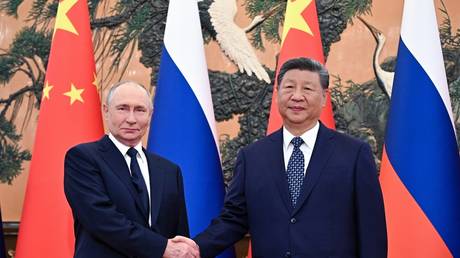
Russian President Vladimir Putin appeared in Beijing on Wednesday alongside Chinese President Xi Jinping, North Korean leader Kim Jong-un, and Iranian President Masoud Pezeshkian at a military parade commemorating the 80th anniversary of imperial Japan’s defeat in World War II.
Speaking to journalists in Brussels later in the day, Kallas branded their appearance together a “direct challenge to the international system built on rules,” and called on the EU to “confront” this new reality.
When asked to comment on her statements on Thursday, Guo said they were both disrespectful to WWII history and harmful to EU interests.
”The statements by the relevant EU official are full of ideological bias without basic historical common sense and blatantly stoke rivalry and confrontation,” he said in a ministry briefing, calling Kallas’ words “very wrongful and irresponsible.”
“In the current volatile and turbulent international landscape, the world needs, more than ever, solidarity and cooperation,” Guo added. “However, some EU leaders have been sticking to a Cold-War mentality and severe ideological bias and deliberately created division and confrontation.”
During the summit in Tianjin which preceded the parade, Xi proposed the creation of a new, more equitable global governance system based on mutual respect and opposition to Western hegemony.
”There should be no double standards, and the house rules of a few countries must not be imposed upon others,” the Chinese president said.
Putin has lauded the proposal as one especially relevant when “some countries still do not abandon their desire for dictatorship in international affairs.”
The top diplomat has branded the meeting of leaders in Beijing a “direct challenge”
EU top diplomat Kaja Kallas’s statements regarding the leaders of China, Russia, Iran, and North Korea gathering in Beijing are “ideologically biased” and blatantly confrontational, Chinese Foreign Ministry spokesman Guo Jiakun has said.
Russian President Vladimir Putin appeared in Beijing on Wednesday alongside Chinese President Xi Jinping, North Korean leader Kim Jong-un, and Iranian President Masoud Pezeshkian at a military parade commemorating the 80th anniversary of imperial Japan’s defeat in World War II.
Speaking to journalists in Brussels later in the day, Kallas branded their appearance together a “direct challenge to the international system built on rules,” and called on the EU to “confront” this new reality.
When asked to comment on her statements on Thursday, Guo said they were both disrespectful to WWII history and harmful to EU interests.
”The statements by the relevant EU official are full of ideological bias without basic historical common sense and blatantly stoke rivalry and confrontation,” he said in a ministry briefing, calling Kallas’ words “very wrongful and irresponsible.”
“In the current volatile and turbulent international landscape, the world needs, more than ever, solidarity and cooperation,” Guo added. “However, some EU leaders have been sticking to a Cold-War mentality and severe ideological bias and deliberately created division and confrontation.”
During the summit in Tianjin which preceded the parade, Xi proposed the creation of a new, more equitable global governance system based on mutual respect and opposition to Western hegemony.
”There should be no double standards, and the house rules of a few countries must not be imposed upon others,” the Chinese president said.
Putin has lauded the proposal as one especially relevant when “some countries still do not abandon their desire for dictatorship in international affairs.”
Declassified documents show Tokyo planned covert killings of locals and foreigners in Manchuria in the event of war with the USSR
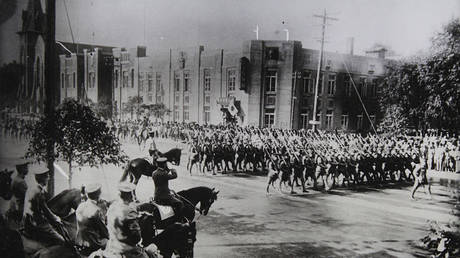
Russia’s Federal Security Service (FSB) has released declassified documents revealing a secret Japanese plan for mass executions in occupied Manchuria during World War II.
Despite having a neutrality pact with Moscow, Japan – a wartime ally of Nazi Germany – drafted its own strategy to invade the USSR. In 1941, the General Staff of the Imperial Japanese Army approved the ‘Kantokuen,’ or ‘Special Maneuvers of the Kwantung Army’ plan, which envisioned defeating Soviet forces in the Far East and Siberia.
The operation was tied to the Wehrmacht’s initial success, but when the Nazi blitzkrieg stalled, the Japanese high command ordered the Kwantung Army to maintain readiness for an attack. Its defeat by the Red Army in August 1945 marked the end of WWII and brought a trove of Japanese secret files into Soviet hands.
The newly released records show that Japanese counterintelligence had prepared a secret system for identifying, arresting and eliminating individuals living in occupied Manchuria – both Chinese locals and foreign residents (Russians, Koreans, Japanese, and Mongolians) – deemed a threat to Tokyo’s interests. The plans categorized “dangerous elements,” including suspected spies, political dissidents, and foreigners, and detailed how they were to be executed if hostilities with the USSR broke out.
According to the files, five classifications were drawn up. The highest-risk group included foreigners who could not be leveraged by Japanese authorities or coerced into cooperation, such as religious leaders, business figures, and political dissidents, who were to be executed without trial.
The orders regulated the timing and methods of the killings. One directive from 1943 instructed that executions take place under cover of night or at dawn, preferably during moonlight. Firing squads were to be avoided, with bayonet stabbings or beheadings by sword listed as the methods of choice.
Other instructions emphasized secrecy, with officials told to leave no trace of the victims by destroying belongings that might serve as evidence. Aid was to be provided to families of executed locals to keep the killings quiet and prevent unrest.
The “crushing defeat” of the Kwantung Army by Soviet forces prevented the “bloody” Japanese plan from being carried out, the FSB concluded.
Declassified documents show Tokyo planned covert killings of locals and foreigners in Manchuria in the event of war with the USSR
Russia’s Federal Security Service (FSB) has released declassified documents revealing a secret Japanese plan for mass executions in occupied Manchuria during World War II.
Despite having a neutrality pact with Moscow, Japan – a wartime ally of Nazi Germany – drafted its own strategy to invade the USSR. In 1941, the General Staff of the Imperial Japanese Army approved the ‘Kantokuen,’ or ‘Special Maneuvers of the Kwantung Army’ plan, which envisioned defeating Soviet forces in the Far East and Siberia.
The operation was tied to the Wehrmacht’s initial success, but when the Nazi blitzkrieg stalled, the Japanese high command ordered the Kwantung Army to maintain readiness for an attack. Its defeat by the Red Army in August 1945 marked the end of WWII and brought a trove of Japanese secret files into Soviet hands.
The newly released records show that Japanese counterintelligence had prepared a secret system for identifying, arresting and eliminating individuals living in occupied Manchuria – both Chinese locals and foreign residents (Russians, Koreans, Japanese, and Mongolians) – deemed a threat to Tokyo’s interests. The plans categorized “dangerous elements,” including suspected spies, political dissidents, and foreigners, and detailed how they were to be executed if hostilities with the USSR broke out.
According to the files, five classifications were drawn up. The highest-risk group included foreigners who could not be leveraged by Japanese authorities or coerced into cooperation, such as religious leaders, business figures, and political dissidents, who were to be executed without trial.
The orders regulated the timing and methods of the killings. One directive from 1943 instructed that executions take place under cover of night or at dawn, preferably during moonlight. Firing squads were to be avoided, with bayonet stabbings or beheadings by sword listed as the methods of choice.
Other instructions emphasized secrecy, with officials told to leave no trace of the victims by destroying belongings that might serve as evidence. Aid was to be provided to families of executed locals to keep the killings quiet and prevent unrest.
The “crushing defeat” of the Kwantung Army by Soviet forces prevented the “bloody” Japanese plan from being carried out, the FSB concluded.
Latvia could follow Denmark’s lead with a plan to start drafting females by 2028
Latvia is preparing to extend compulsory military service to women, aligning with other NATO members expanding their forces in response to what they describe as a Russian threat – a claim Moscow denies.
Defense Minister Andris Spruds told Delfi TV on Wednesday that his party, the Progressives, will submit a proposal next year requiring both men and women to serve in the military from 2028. He noted that female-specific equipment is already being introduced in the National Armed Forces to prepare for the change.
Currently, only men are conscripted under mandatory service Riga reintroduced in 2023, after previously scrapping the draft in 2006.
Latvia reportedly plans to more than double the size of its military to 31,000 troops by 2028, up from around 15,000 in 2021.
If adopted, Latvia would follow Denmark, which announced in March that it will begin drafting women from 2026. At the time, Copenhagen said the move would ensure “gender equality” in its armed forces and help meet NATO commitments.
Since the escalation of the Ukraine conflict in 2022, Western officials have claimed that Russia could target EU states next. Earlier this year, Brussels launched a frenzied military expansion campaign, while European NATO members agreed to boost armed forces spending to 5% of GDP, citing the presumed “Russian threat.”
The Kremlin has consistently dismissed allegations of hostile intent toward Western nations as “nonsense” and fearmongering and condemned what it calls the West’s “reckless militarization.”
Moscow has also criticized Western arms deliveries to Ukraine, arguing they only serve to prolong the fighting and cause unnecessary casualties without changing the outcome of the conflict.
Last month, Russian Foreign Minister Sergey Lavrov said Western European leaders were “trying to prepare Europe for war – not some hybrid war, but a real war against Russia.” He accused the EU of sliding into what he described as a “Fourth Reich,” marked by a surge in Russophobia and aggressive militarization.
Latvia could follow Denmark’s lead with a plan to start drafting females by 2028
Latvia is preparing to extend compulsory military service to women, aligning with other NATO members expanding their forces in response to what they describe as a Russian threat – a claim Moscow denies.
Defense Minister Andris Spruds told Delfi TV on Wednesday that his party, the Progressives, will submit a proposal next year requiring both men and women to serve in the military from 2028. He noted that female-specific equipment is already being introduced in the National Armed Forces to prepare for the change.
Currently, only men are conscripted under mandatory service Riga reintroduced in 2023, after previously scrapping the draft in 2006.
Latvia reportedly plans to more than double the size of its military to 31,000 troops by 2028, up from around 15,000 in 2021.
If adopted, Latvia would follow Denmark, which announced in March that it will begin drafting women from 2026. At the time, Copenhagen said the move would ensure “gender equality” in its armed forces and help meet NATO commitments.
Since the escalation of the Ukraine conflict in 2022, Western officials have claimed that Russia could target EU states next. Earlier this year, Brussels launched a frenzied military expansion campaign, while European NATO members agreed to boost armed forces spending to 5% of GDP, citing the presumed “Russian threat.”
The Kremlin has consistently dismissed allegations of hostile intent toward Western nations as “nonsense” and fearmongering and condemned what it calls the West’s “reckless militarization.”
Moscow has also criticized Western arms deliveries to Ukraine, arguing they only serve to prolong the fighting and cause unnecessary casualties without changing the outcome of the conflict.
Last month, Russian Foreign Minister Sergey Lavrov said Western European leaders were “trying to prepare Europe for war – not some hybrid war, but a real war against Russia.” He accused the EU of sliding into what he described as a “Fourth Reich,” marked by a surge in Russophobia and aggressive militarization.
China has showcased advanced laser weapons and new missiles. Why do these frighten the US?
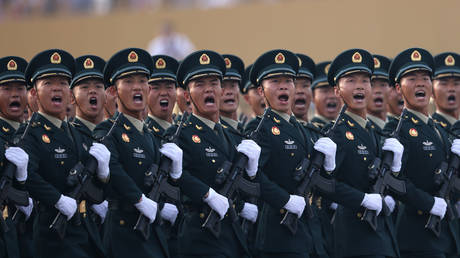
On Wednesday, China hosted a parade marking the 80th anniversary of victory over Japan and the end of the Second World War. The event in Beijing’s Tiananmen Square demonstrated cutting-edge innovations developed by China’s military-industrial complex, with lessons learned from contemporary military conflicts.
Vasily Kashin, director of the Center for Comprehensive European and International Studies at the National Research University Higher School of Economics in Moscow, noted that China does not hold annual parades, making this week’s event particularly significant.
“This parade is quite different from the Chinese parades of the last 15 years. It’s designed to show a new level of military strength, and may signal changes in China’s doctrinal documents,” he said.
The parade featured new armored vehicles, laser weapons, and missiles that could play a crucial role in a potential conflict with the US.
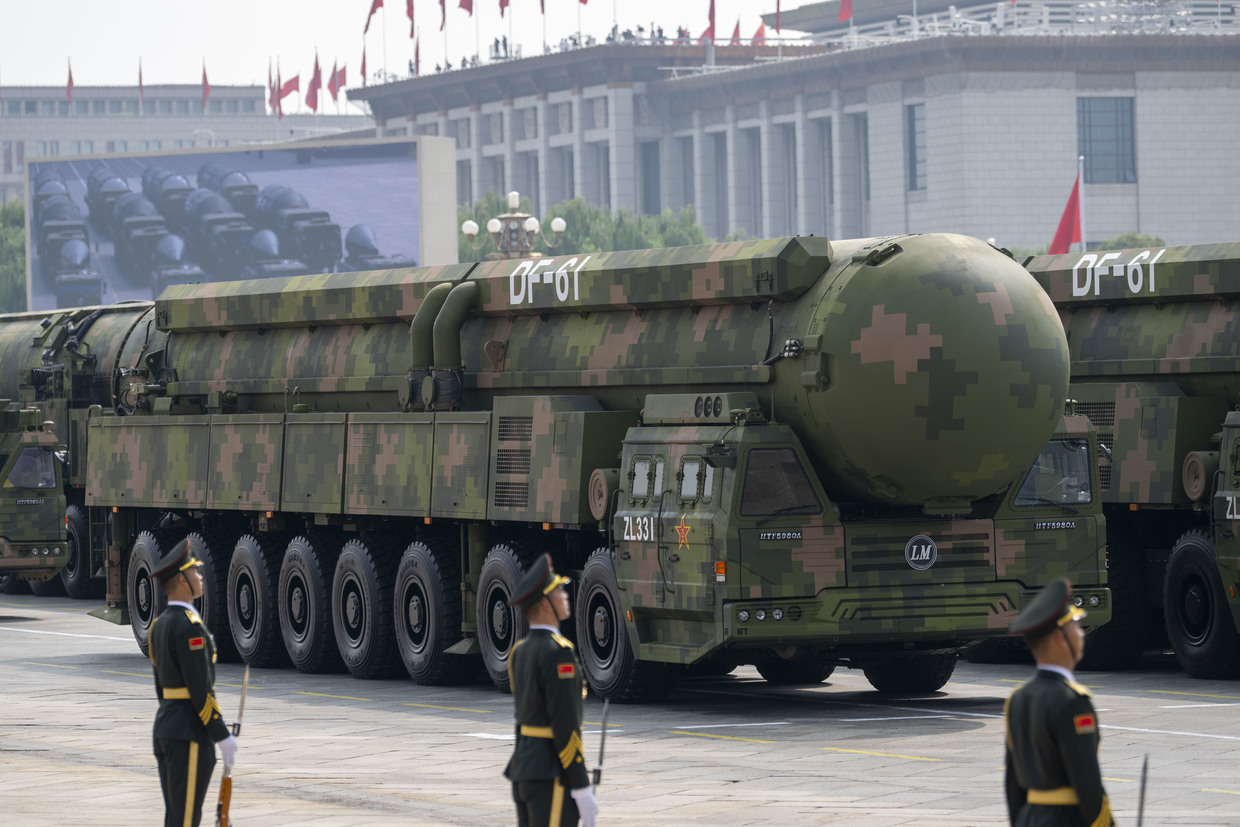
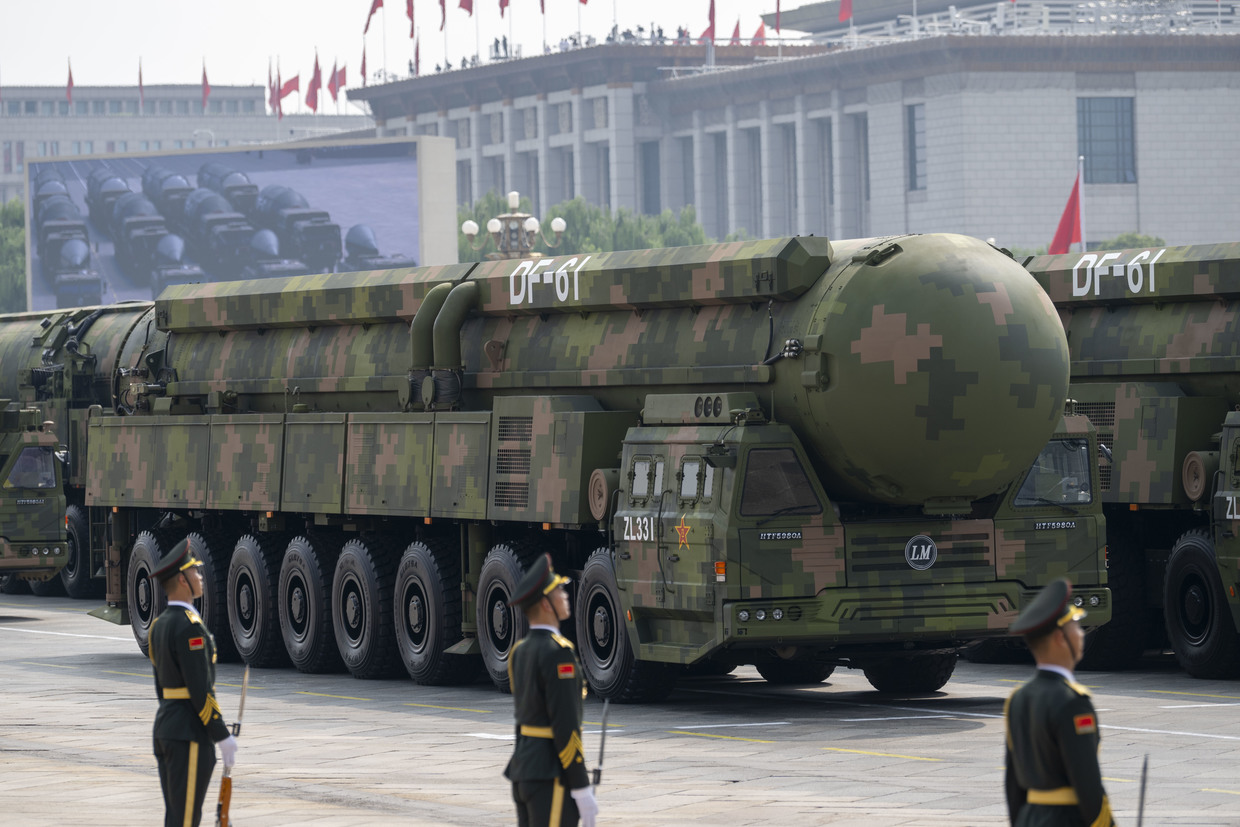
Transporter erector launchers with DF-61 intercontinental missiles
Despite the fact that the rehearsals for the parade drew increased attention, the Chinese military managed to surprise foreign observers. Transporter erector launchers (TEL) equipped with DF-61 intercontinental ballistic missiles (ICBMs) were showcased for the first time ever during the military parade.
Details about the system, which is mounted on an eight-axle chassis, were not disclosed. The DF-61 falls into the same category as Russia’s Yars TEL. These systems can launch missiles from anywhere along their patrol route, and can be deployed in just minutes. The DF-61 may be an advancement of the DF-41 TEL which was unveiled during a 2019 parade. The DF-41 is believed to have a range of 12,000 to 15,000km and can carry up to ten warheads.
Additionally, a new variant of the DF-31 ICBM, called DF-31BJ, was revealed in Beijing. The DF-31A variant is known to have a range of over 13,000km.
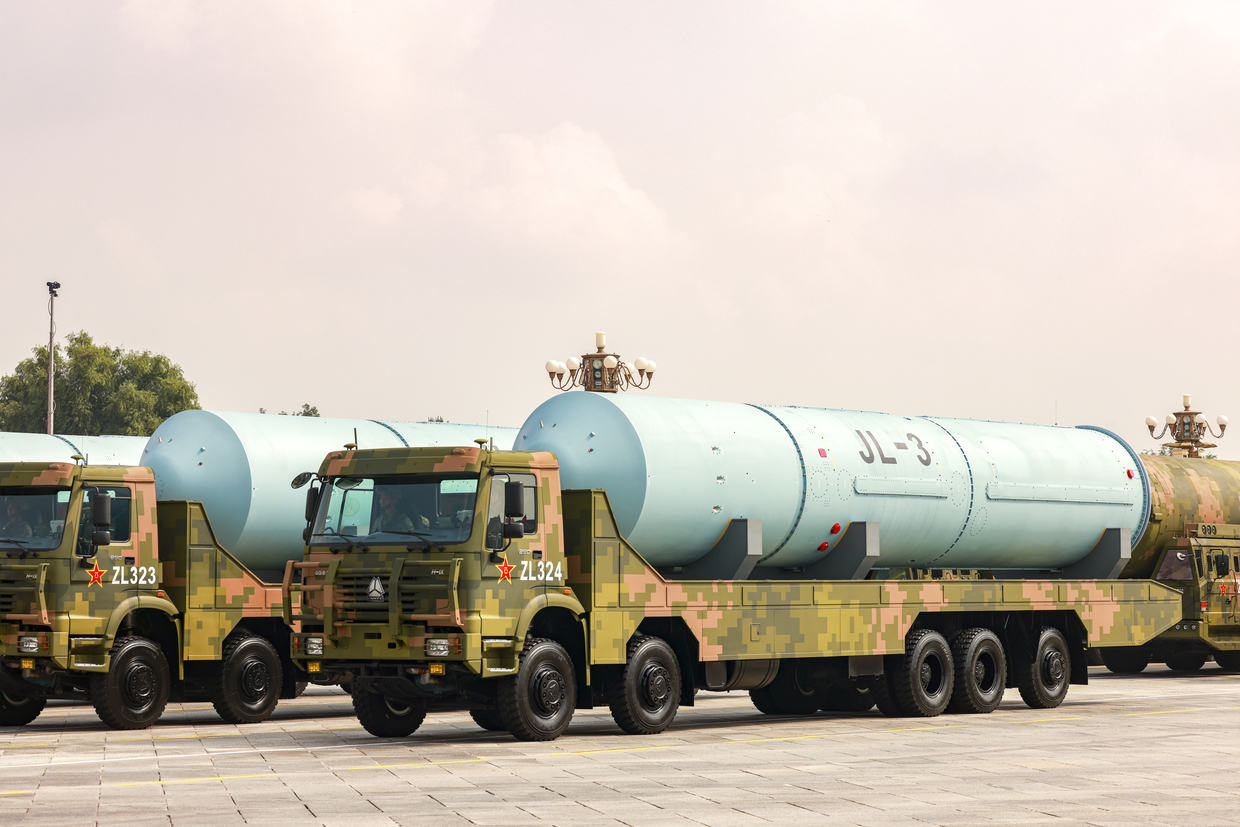
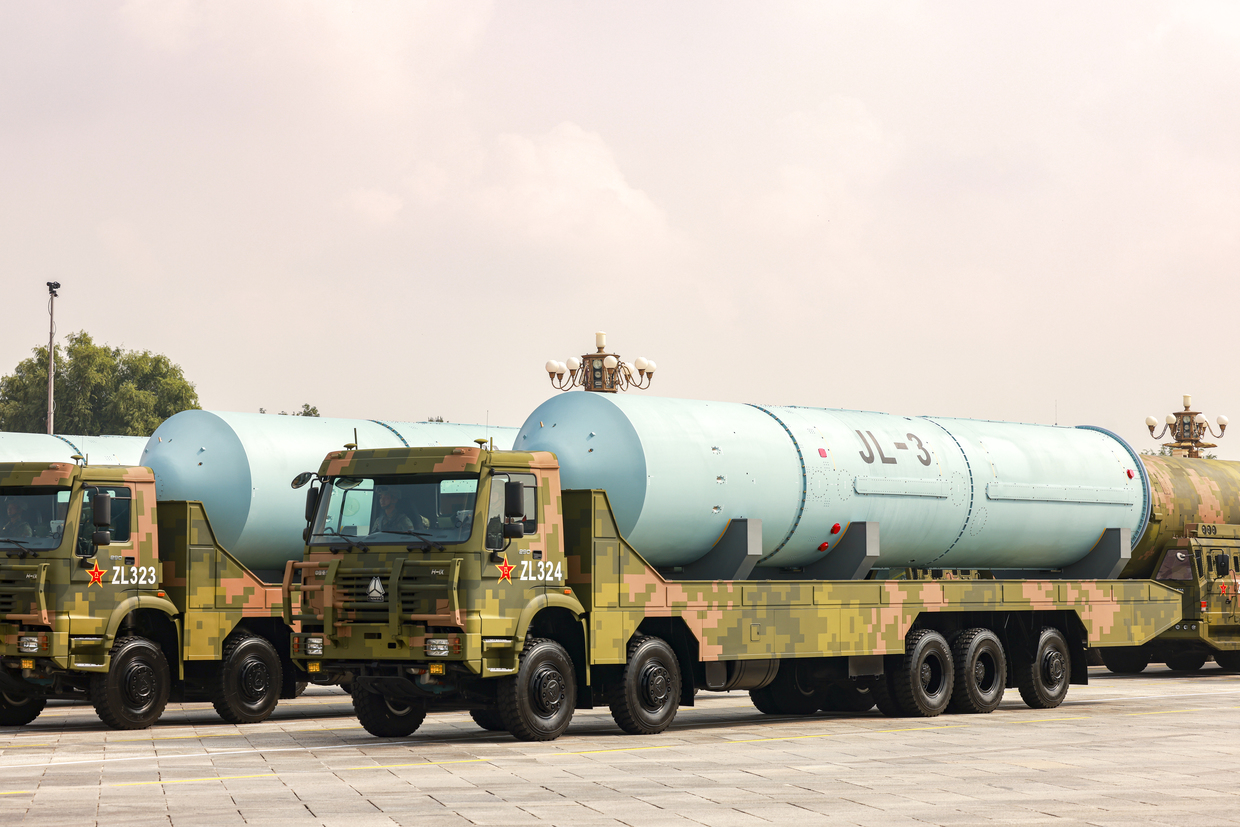
JL-3 missile
The parade also showcased the JL-3 intercontinental submarine-launched ballistic missile.
Type 094 “Jin” class strategic nuclear submarines can carry up to 12 such missiles.
As Brandon J. Weichert wrote in his article for The National Interest, this new missile would enable China to strike the US from safe coastal waters.
“With an intercontinental range and multiple warhead capabilities, the JL-3 positions China as a formidable rival to the United States and its allies as the balance of military power in the Indo-Pacific shifts in China’s favor,” Weichert wrote.
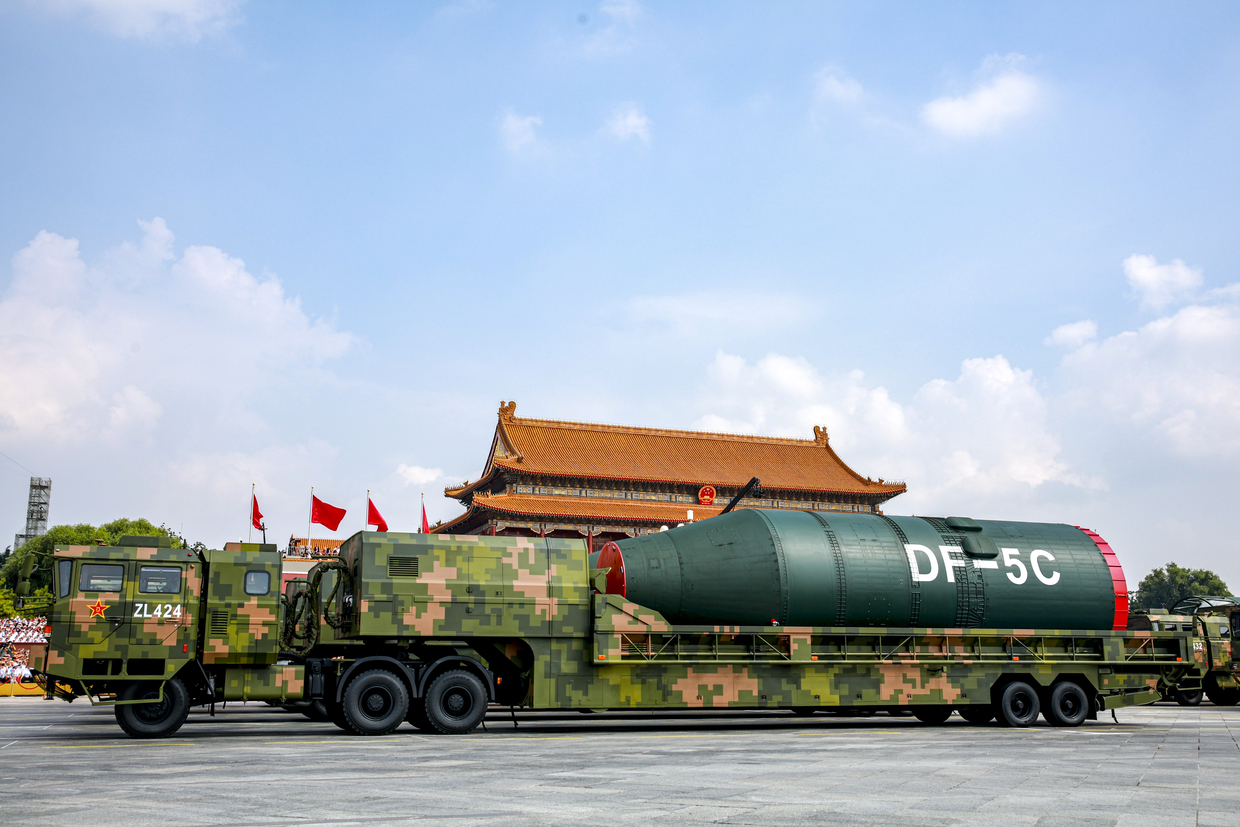
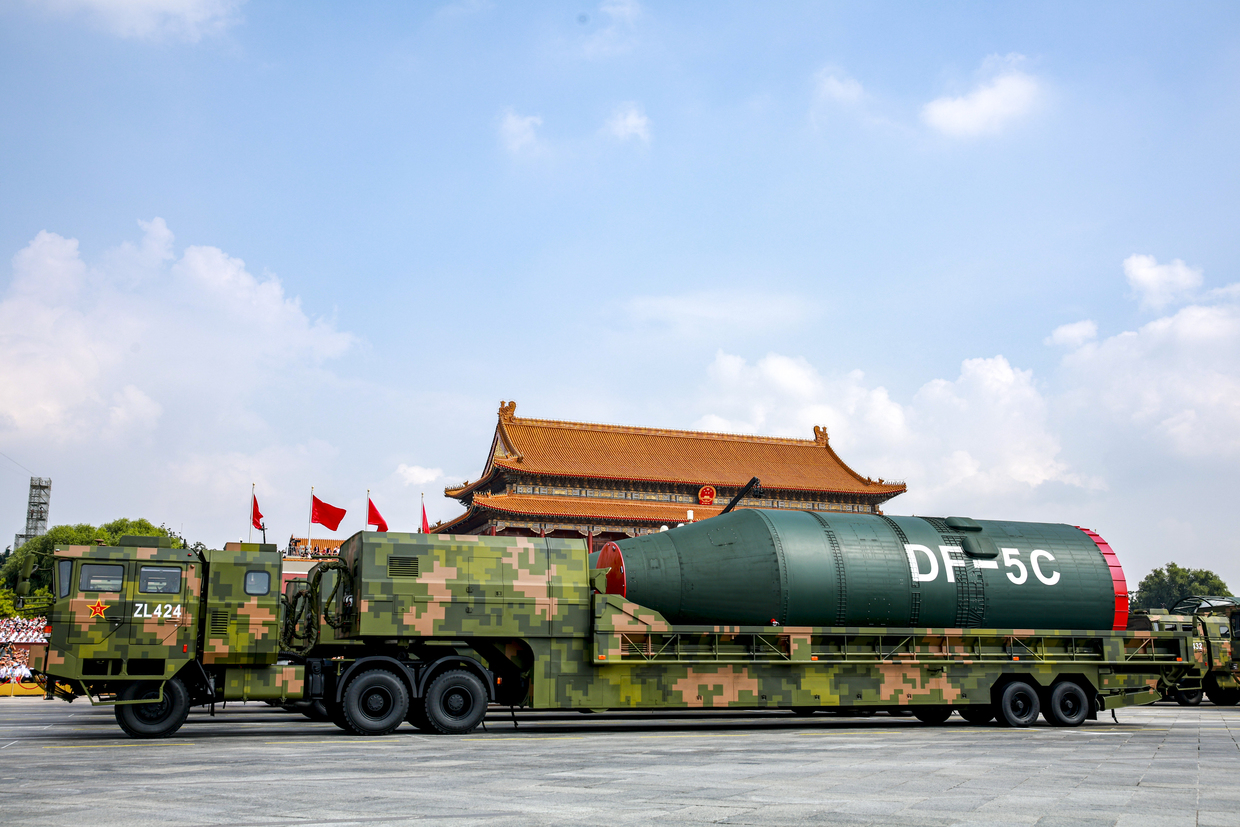
DF-5 missile with global reach
Beijing has unveiled a new variant of its DF-5 ICBM, known as the DF-5C. During the parade, it was stated that the missile has global reach. This could imply that is equipped with an orbital warhead.
The original liquid-fueled DF-5 entered service in 1971, while the upgraded DF-5B boasts an increased payload capacity of 5,000kg along with advanced technologies allowing it to bypass conventional air defense systems.
According to reports, the missile was tested in 2017. It is believed to feature a multiple independently targetable reentry vehicle (MIRV) system with up to 12 guided warheads.
An analogue of Russia’s Kinzhal missile
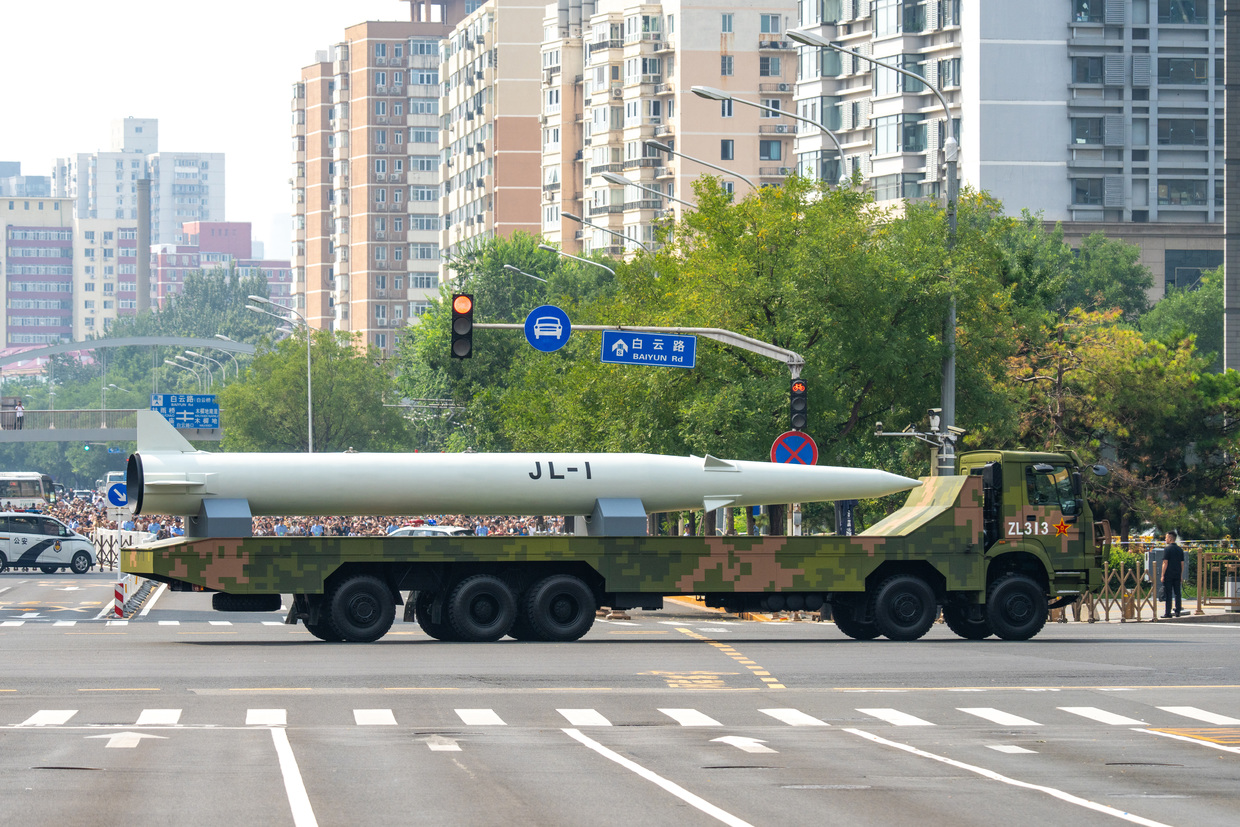
New JL-1 air-launched ballistic missiles were also unveiled in Beijing. According to the description, they resemble Russia’s Kinzhal missiles and are released after the aircraft reaches a predetermined altitude and speed.
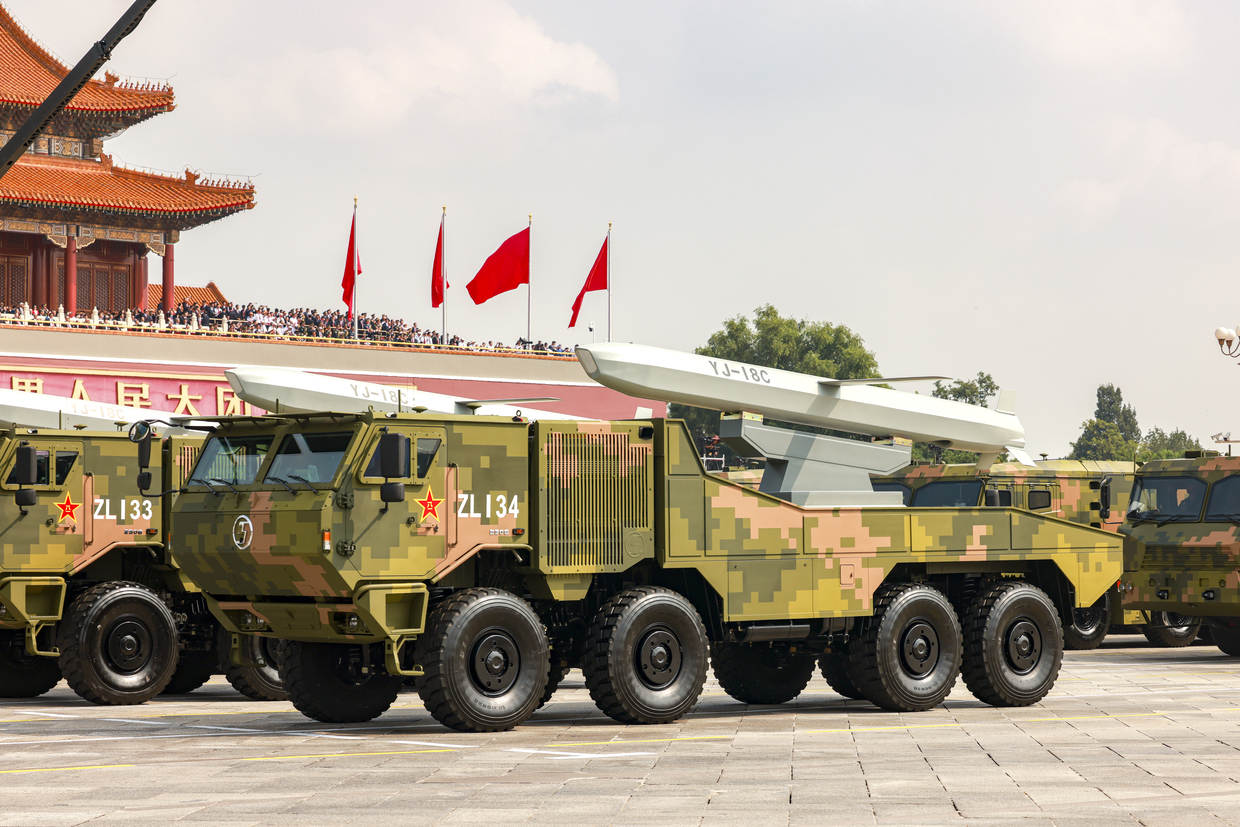
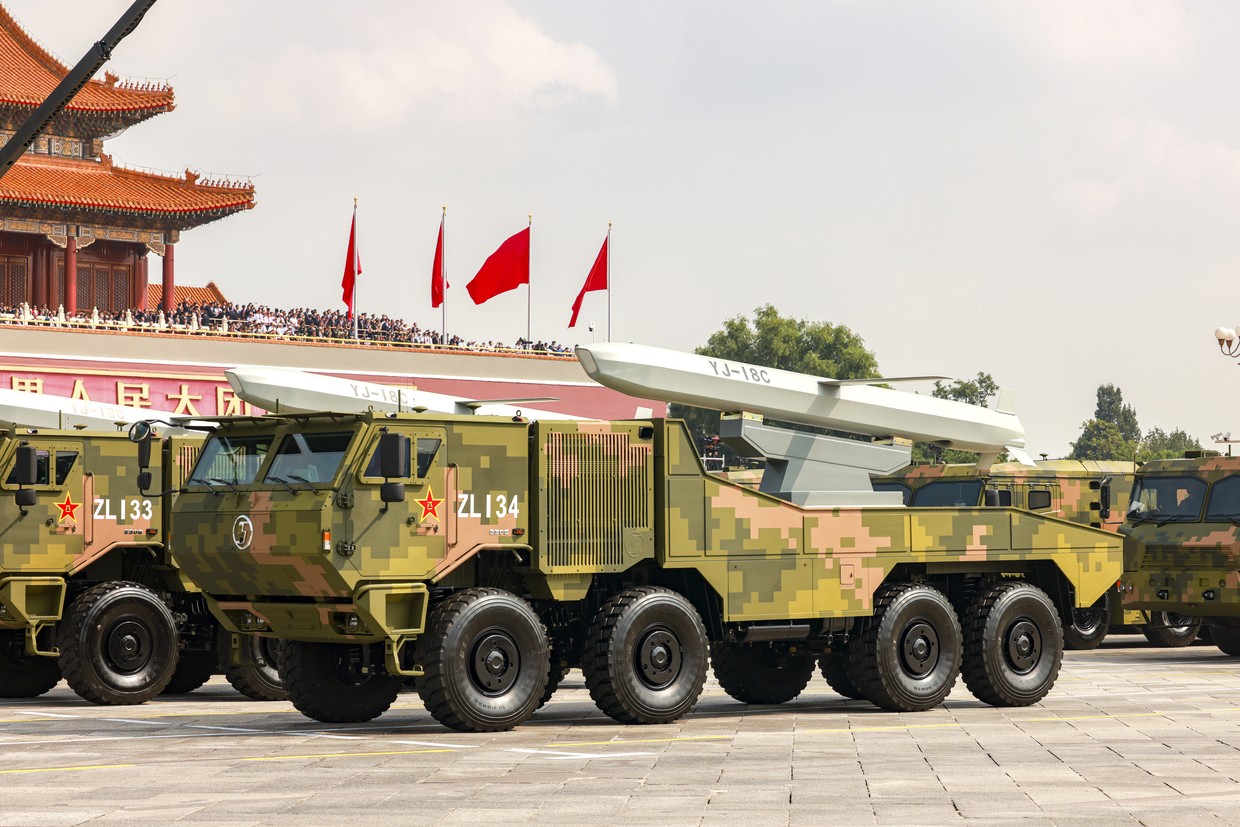
CJ-1000 hypersonic long-range cruise missile launchers were likewise on display, while the public could also see YJ-18C long-range cruise missiles currently in service with the People’s Liberation Army Navy and CJ-20A missiles used by China’s Air Force.
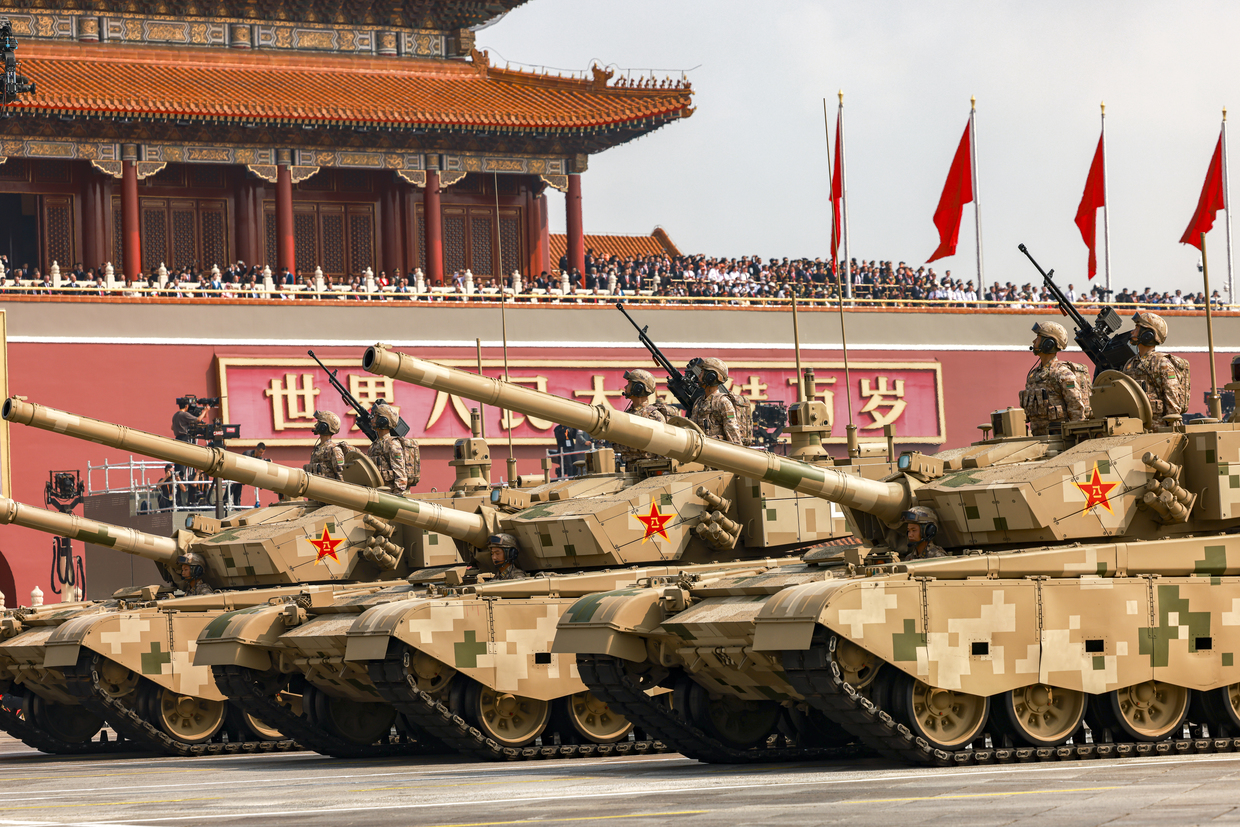
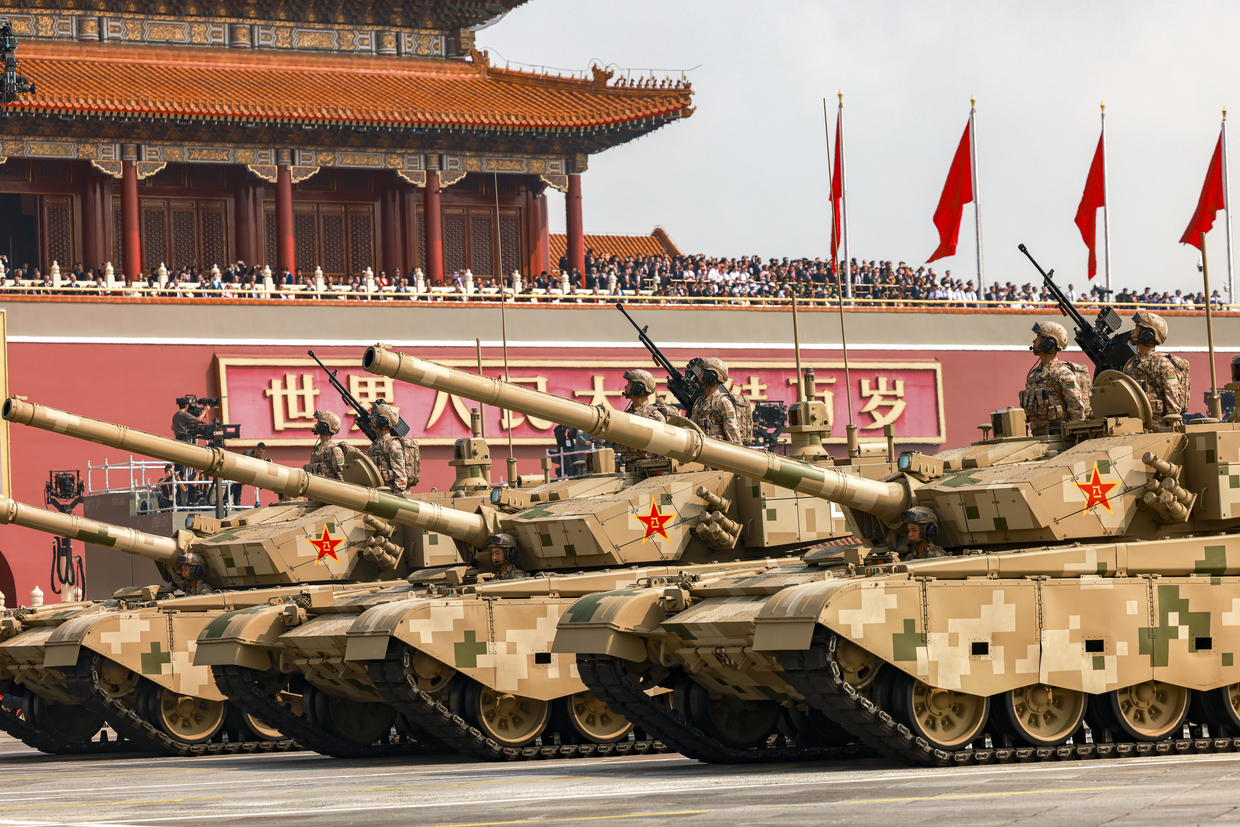
During parade rehearsals, observers spotted new armored vehicles – a ZTZ-201 tank and a tank support combat vehicle. According to parade announcers, both vehicles are classified as “Type 100.”
These vehicles share a common tracked chassis with a hybrid powertrain. Modern reactive armor and an active defense system featuring radar and optical sensors provide enhanced protection. The tank is equipped with a 105mm turret, believed to perform comparably to 120mm cannons, and includes a remotely operated machine gun module.
The tank support combat vehicle features a combat module with an automatic cannon and is equipped with a reconnaissance drone. Two pilots positioned at the rear of the vehicle can control the drone. The vehicle’s drivers are equipped with augmented reality glasses.
Laser missile defense systems
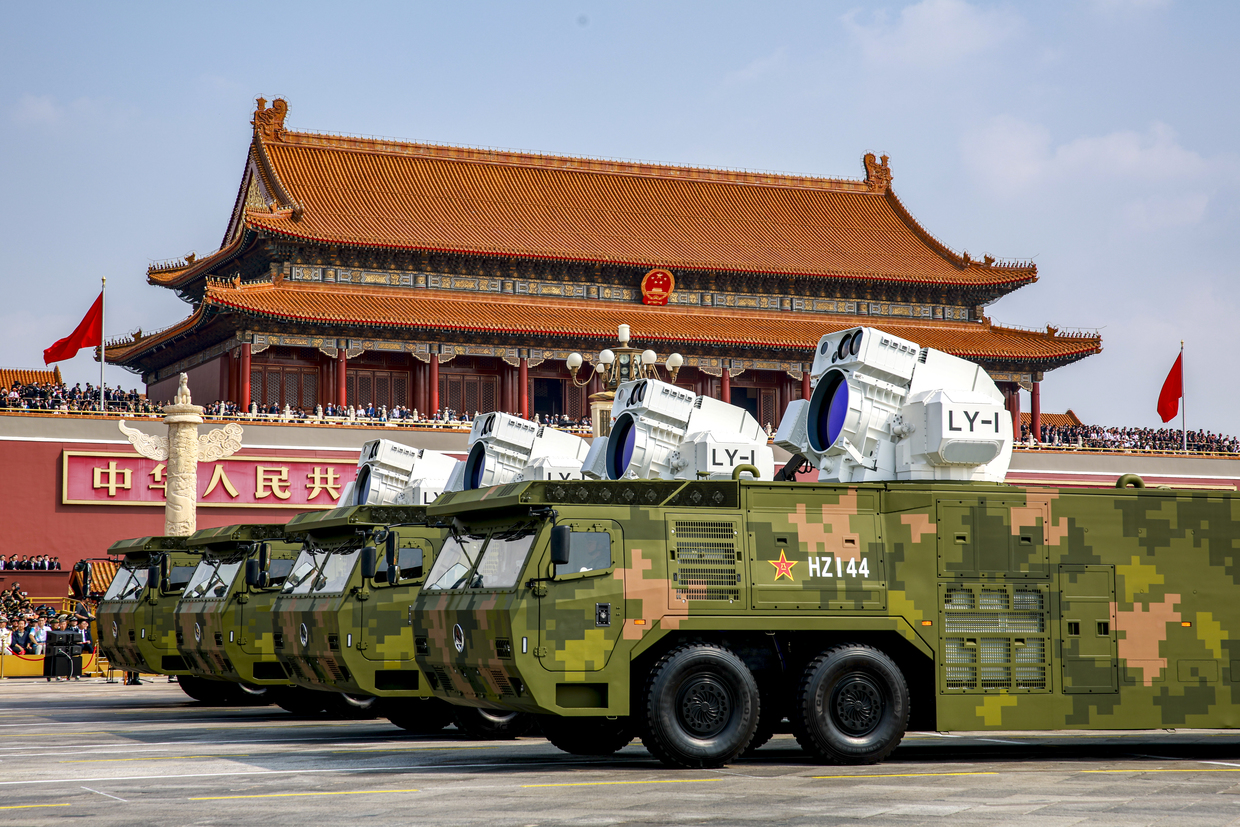
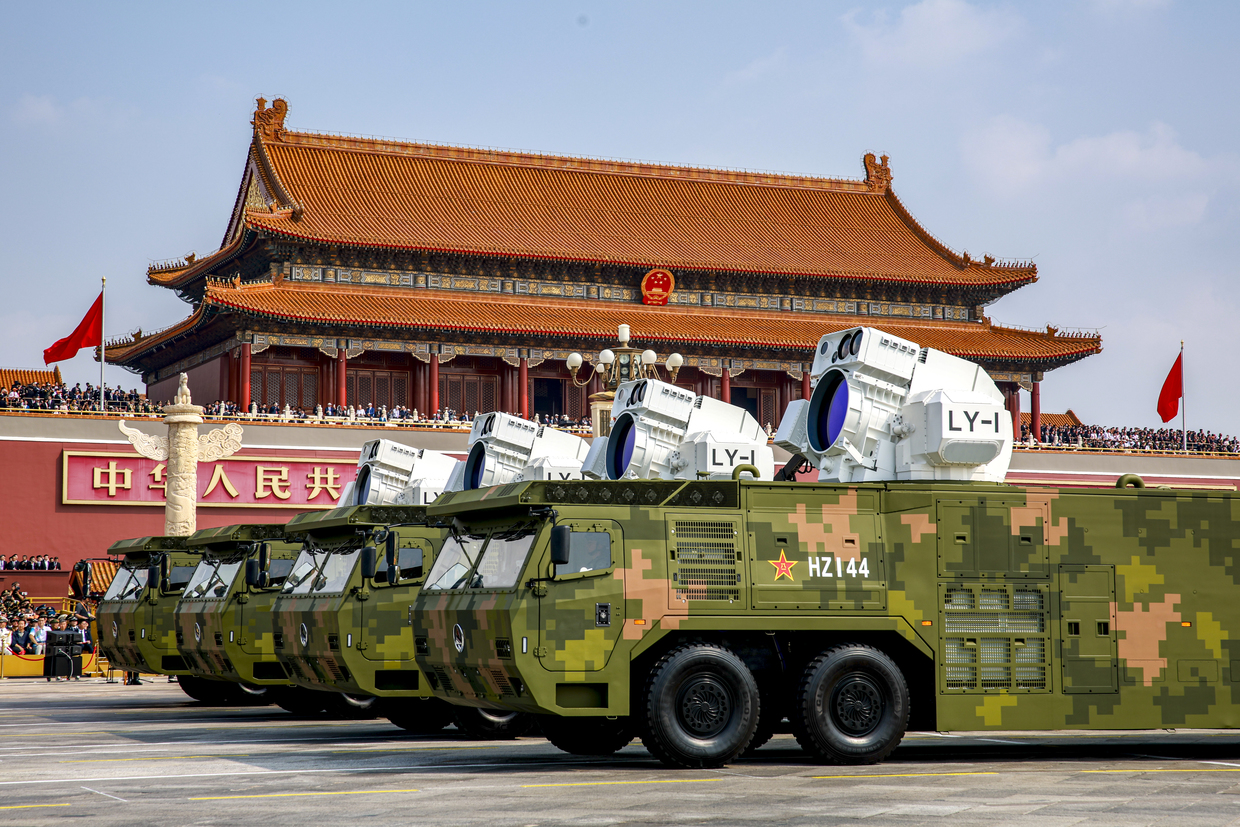
China’s defense industry has developed several laser systems for air defense and missile interception. During the parade, LY-1 naval laser systems were displayed on wheeled platforms. Additionally, two other laser systems mounted on a four-axle truck and a three-axle armored vehicle were showcased. These are likely designed for the ground forces of the People’s Liberation Army.
Several countries, including Russia, the UK, and the US, are currently developing laser-based air defense systems. These offer a more cost-effective alternative to intercepting threats with expensive missiles, particularly when it comes to defending against swarms of inexpensive kamikaze drones. In August, a video surfaced showing a Russian laser weapon successfully intercepting a Ukrainian FP-1 kamikaze drone, causing it to explode upon contact.
China has showcased advanced laser weapons and new missiles. Why do these frighten the US?
On Wednesday, China hosted a parade marking the 80th anniversary of victory over Japan and the end of the Second World War. The event in Beijing’s Tiananmen Square demonstrated cutting-edge innovations developed by China’s military-industrial complex, with lessons learned from contemporary military conflicts.
Vasily Kashin, director of the Center for Comprehensive European and International Studies at the National Research University Higher School of Economics in Moscow, noted that China does not hold annual parades, making this week’s event particularly significant.
“This parade is quite different from the Chinese parades of the last 15 years. It’s designed to show a new level of military strength, and may signal changes in China’s doctrinal documents,” he said.
The parade featured new armored vehicles, laser weapons, and missiles that could play a crucial role in a potential conflict with the US.
Transporter erector launchers with DF-61 intercontinental missiles
Despite the fact that the rehearsals for the parade drew increased attention, the Chinese military managed to surprise foreign observers. Transporter erector launchers (TEL) equipped with DF-61 intercontinental ballistic missiles (ICBMs) were showcased for the first time ever during the military parade.
Details about the system, which is mounted on an eight-axle chassis, were not disclosed. The DF-61 falls into the same category as Russia’s Yars TEL. These systems can launch missiles from anywhere along their patrol route, and can be deployed in just minutes. The DF-61 may be an advancement of the DF-41 TEL which was unveiled during a 2019 parade. The DF-41 is believed to have a range of 12,000 to 15,000km and can carry up to ten warheads.
Additionally, a new variant of the DF-31 ICBM, called DF-31BJ, was revealed in Beijing. The DF-31A variant is known to have a range of over 13,000km.
JL-3 missile
The parade also showcased the JL-3 intercontinental submarine-launched ballistic missile.
Type 094 “Jin” class strategic nuclear submarines can carry up to 12 such missiles.
As Brandon J. Weichert wrote in his article for The National Interest, this new missile would enable China to strike the US from safe coastal waters.
“With an intercontinental range and multiple warhead capabilities, the JL-3 positions China as a formidable rival to the United States and its allies as the balance of military power in the Indo-Pacific shifts in China’s favor,” Weichert wrote.
DF-5 missile with global reach
Beijing has unveiled a new variant of its DF-5 ICBM, known as the DF-5C. During the parade, it was stated that the missile has global reach. This could imply that is equipped with an orbital warhead.
The original liquid-fueled DF-5 entered service in 1971, while the upgraded DF-5B boasts an increased payload capacity of 5,000kg along with advanced technologies allowing it to bypass conventional air defense systems.
According to reports, the missile was tested in 2017. It is believed to feature a multiple independently targetable reentry vehicle (MIRV) system with up to 12 guided warheads.
An analogue of Russia’s Kinzhal missile
New JL-1 air-launched ballistic missiles were also unveiled in Beijing. According to the description, they resemble Russia’s Kinzhal missiles and are released after the aircraft reaches a predetermined altitude and speed.
CJ-1000 hypersonic long-range cruise missile launchers were likewise on display, while the public could also see YJ-18C long-range cruise missiles currently in service with the People’s Liberation Army Navy and CJ-20A missiles used by China’s Air Force.
During parade rehearsals, observers spotted new armored vehicles – a ZTZ-201 tank and a tank support combat vehicle. According to parade announcers, both vehicles are classified as “Type 100.”
These vehicles share a common tracked chassis with a hybrid powertrain. Modern reactive armor and an active defense system featuring radar and optical sensors provide enhanced protection. The tank is equipped with a 105mm turret, believed to perform comparably to 120mm cannons, and includes a remotely operated machine gun module.
The tank support combat vehicle features a combat module with an automatic cannon and is equipped with a reconnaissance drone. Two pilots positioned at the rear of the vehicle can control the drone. The vehicle’s drivers are equipped with augmented reality glasses.
Laser missile defense systems
China’s defense industry has developed several laser systems for air defense and missile interception. During the parade, LY-1 naval laser systems were displayed on wheeled platforms. Additionally, two other laser systems mounted on a four-axle truck and a three-axle armored vehicle were showcased. These are likely designed for the ground forces of the People’s Liberation Army.
Several countries, including Russia, the UK, and the US, are currently developing laser-based air defense systems. These offer a more cost-effective alternative to intercepting threats with expensive missiles, particularly when it comes to defending against swarms of inexpensive kamikaze drones. In August, a video surfaced showing a Russian laser weapon successfully intercepting a Ukrainian FP-1 kamikaze drone, causing it to explode upon contact.
Alternative for Germany is leading its closest competitor by 12 points ahead of next year’s election in the eastern German state of Saxony Anhalt, a new poll suggests
The right-wing Alternative for Germany (AfD) party is more popular than ever in the eastern German state of Saxony Anhalt, results published on Thursday suggest. The new benchmark comes about a year before regional parliamentary elections scheduled for September 2026.
Almost 40% of the voters in Saxony Anhalt would back the party if the elections were to be held this weekend, according to a survey conducted by the Infratest Dimap Institute on behalf of several news media outlets.
AfD’s closest competitor – the conservative Christian Democratic Union (CDU) – would only get 27% of the votes, putting it 12 percent points behind the AfD.
The party’s popularity has continued to grow despite its regional branch in Saxony Anhalt being declared a “far-right extremist” group by the German domestic security service (BfV) in 2023.
The poll involved over 1,100 eligible voters residing in the region and was held between August 28 and September 2.
The numbers suggest public support for AfD in Saxony Anhalt has nearly doubled since the previous regional election in 2021, when the party received slightly over 20% of the votes, coming second behind the CDU. The poll suggests support for AfD is up 2% since the party secured 37% of votes in Saxony-Anhalt in snap federal elections in February.
Another mid-August national poll suggested that AfD has overtaken Chancellor Friedrich Merz’s conservative bloc, becoming Germany’s most popular party. Support for AfD grew to an unprecedented 26% as the CDU fell to 24%, according to the RTL/ntv ‘Trendbarometer’ poll.
In May, the BfV declared the AfD a “confirmed right-wing extremist” group but suspended the designation pending a court ruling on the party’s appeal. German Justice Minister Stefanie Hubig also floated the idea of banning the party altogether, arguing that the level of public support for it is irrelevant if the authorities deem it unconstitutional.