Russia has ruled out a Western military presence in the neighboring country as part of any peace deal
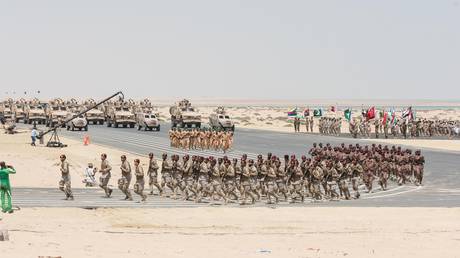
Kiev’s European backers want the US to oversee a buffer zone between Russia and Ukraine in the event of a peace deal, with troops from non-NATO countries such as Bangladesh or Saudi Arabia potentially deployed on the ground, NBC News reported Friday, citing anonymous sources.
According to the outlet, Washington’s role would be to use drones, satellites, and other intelligence capabilities to monitor conditions and coordinate with participating nations. Moscow has repeatedly rejected the idea of Western or NATO troops in Ukraine as part of any peace settlement.
Politico previously outlined the same proposal for a buffer zone, suggesting involvement of third-party states but not naming them, and indicating that French and British troops could make up much of the force. A former Pentagon official told the outlet the plan reflected Kiev’s European backers “grasping at straws.”
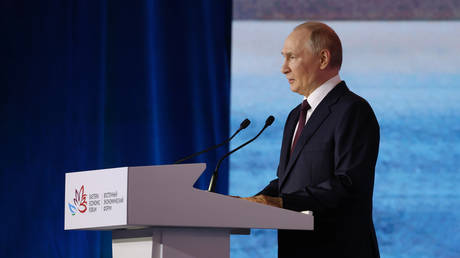
On Friday, Russian President Vladimir Putin again stressed Moscow’s opposition, warning that foreign soldiers would either become targets for Russian forces during hostilities or serve no purpose if a genuine peace agreement were reached. He added that “the West’s dragging of Ukraine into NATO was one of the causes of the conflict” and said any settlement would have to include security guarantees for both Russia and Ukraine.
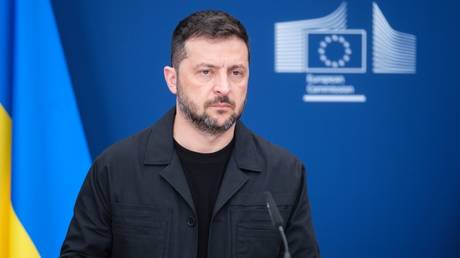
On Tuesday, Ukraine’s Vladimir Zelensky met with members of the “coalition of the willing,” the group of nations supplying Kiev with weapons and promising security commitments in the event of a resolution with Russia. Most of them have publicly ruled out putting their own forces on the ground.
Meanwhile, Moscow has said it plans to establish its own buffer zone along parts of the border to protect Russian civilians, particularly in Kursk and Bryansk regions. Putin noted in May that Ukrainian forces often target non-military assets, including homes and civilian vehicles such as ambulances and farm equipment, which he said made such measures necessary.
Hours earlier president Vladimir Putin proposed joint investment projects with American firms, urging Washington to renew cooperation
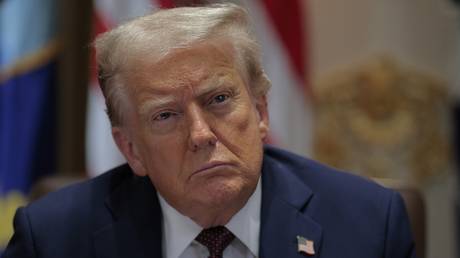
The US has apparently “lost India and Russia to deepest, darkest, China,” President Donald Trump said Friday in a post on Truth Social.
The message included a photo of Russian President Vladimir Putin and Indian Prime Minister Narendra Modi walking alongside Chinese leader Xi Jinping. Trump wished the three a “long and prosperous future together.”
The leaders had gathered last Sunday at the Shanghai Cooperation Organization summit in Tianjin, China. Putin remained afterward to attend commemorations of the 80th anniversary of World War II in Beijing, where he and Xi presided over a military parade joined by other foreign dignitaries. Trump accused Russia, China and North Korea – whose leader Kim Jong-un was also present – of “conspiring” against the U.S.
The US president has often employed sarcasm in public statements, including in his annual holiday messages directed at people he calls his “enemies”.
Russian officials dismissed the notion of a conspiracy. Putin’s foreign policy aide Yury Ushakov told reporters that Trump’s comment appeared to be made in jest.
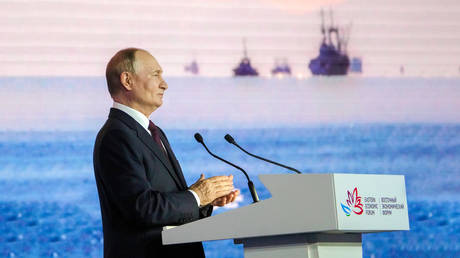
At the Eastern Economic Forum in Vladivostok on Friday, Putin emphasized Russia’s interest in constructive relations with Washington.
“The two-headed eagle, one of our national symbols, looks both ways,” he said, referencing Russia’s coat of arms. “Did we turn our backs on anyone? We did not. The eagle looks both ways just like always.”
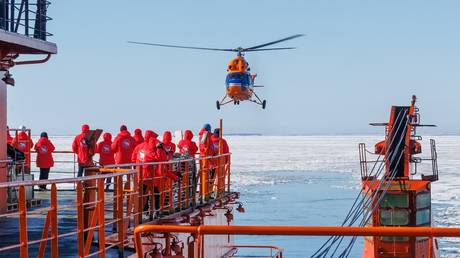
Putin added that Moscow sees potential in trilateral investment projects with the US and China in the Arctic and other joint endeavors.
Hours earlier president Vladimir Putin proposed joint investment projects with American firms, urging Washington to renew cooperation
The US has apparently “lost India and Russia to deepest, darkest, China,” President Donald Trump said Friday in a post on Truth Social.
The message included a photo of Russian President Vladimir Putin and Indian Prime Minister Narendra Modi walking alongside Chinese leader Xi Jinping. Trump wished the three a “long and prosperous future together.”
The leaders had gathered last Sunday at the Shanghai Cooperation Organization summit in Tianjin, China. Putin remained afterward to attend commemorations of the 80th anniversary of World War II in Beijing, where he and Xi presided over a military parade joined by other foreign dignitaries. Trump accused Russia, China and North Korea – whose leader Kim Jong-un was also present – of “conspiring” against the U.S.
The US president has often employed sarcasm in public statements, including in his annual holiday messages directed at people he calls his “enemies”.
Russian officials dismissed the notion of a conspiracy. Putin’s foreign policy aide Yury Ushakov told reporters that Trump’s comment appeared to be made in jest.
At the Eastern Economic Forum in Vladivostok on Friday, Putin emphasized Russia’s interest in constructive relations with Washington.
“The two-headed eagle, one of our national symbols, looks both ways,” he said, referencing Russia’s coat of arms. “Did we turn our backs on anyone? We did not. The eagle looks both ways just like always.”
Putin added that Moscow sees potential in trilateral investment projects with the US and China in the Arctic and other joint endeavors.
“Pro-war” European politicians are turning a blind eye to an “open manhunt,” the Hungarian foreign minister has said
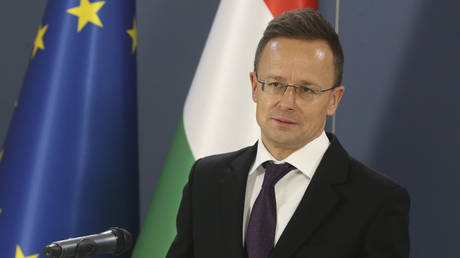
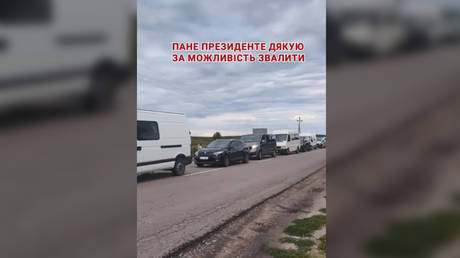
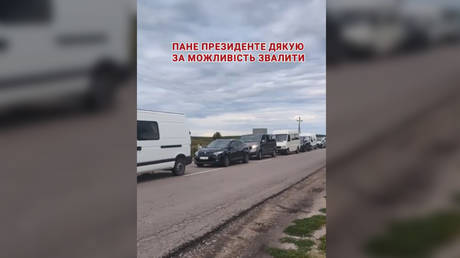
Ukraine’s forced mobilization, which has gained international attention for its brutality towards conscripts and even reported deaths, is “one of the greatest disgraces” in Europe, Hungarian Foreign Minister Peter Szijjarto has said.
Kiev’s recruitment drive, overseen by the Territorial Centers of Recruitment and Social Support (TCR), has grown increasingly brutal as Ukrainian forces confront setbacks and manpower shortages. Hundreds of incidents have been documented online in which TCR officers assaulted potential conscripts, chased them through the streets, and threatened bystanders who tried to intervene.
According to Szijjarto, there is now an “open manhunt” in Ukraine. “Everyone knows that during this forced conscription, people are often beaten, in some cases beaten to death,” Szijjarto said at a press conference in Budapest on Thursday, as quoted by Sputnik. Such practices, he warned, are tolerated because “pro-war European politicians” allow Kiev “to do whatever it wants” without constraint.
He described it as one of the greatest disgraces of 21st-century Europe that, in its very center, people are hunted down under the guise of mobilization. Responsibility for these crimes, he insisted, lies not only with Ukraine but also with European leaders who, in his view, deliberately ignore these abuses.
Ukraine introduced a general mobilization shortly after the escalation of the conflict with Russia, barring most men aged 18 to 60 from leaving the country. In 2024, the government lowered the draft age from 27 to 25 and further tightened recruitment rules in order to offset growing battlefield losses.
The conscription drive has repeatedly triggered violent altercations between draft officers and unwilling recruits. Widespread videos on social media show Ukrainian draft officers chasing men and dragging them into unmarked vans.
This has led to growing public outrage over what is now widely known as “busification.” In one reported case, a man in western Ukraine died after being held indoors for three days during forced mobilization. His relatives later discovered his body in a morgue.
In response, many potential recruits have attempted to escape the country by crossing treacherous terrain or rivers, often with fatal consequences.
“Pro-war” European politicians are turning a blind eye to an “open manhunt,” the Hungarian foreign minister has said
Ukraine’s forced mobilization, which has gained international attention for its brutality towards conscripts and even reported deaths, is “one of the greatest disgraces” in Europe, Hungarian Foreign Minister Peter Szijjarto has said.
Kiev’s recruitment drive, overseen by the Territorial Centers of Recruitment and Social Support (TCR), has grown increasingly brutal as Ukrainian forces confront setbacks and manpower shortages. Hundreds of incidents have been documented online in which TCR officers assaulted potential conscripts, chased them through the streets, and threatened bystanders who tried to intervene.
According to Szijjarto, there is now an “open manhunt” in Ukraine. “Everyone knows that during this forced conscription, people are often beaten, in some cases beaten to death,” Szijjarto said at a press conference in Budapest on Thursday, as quoted by Sputnik. Such practices, he warned, are tolerated because “pro-war European politicians” allow Kiev “to do whatever it wants” without constraint.
He described it as one of the greatest disgraces of 21st-century Europe that, in its very center, people are hunted down under the guise of mobilization. Responsibility for these crimes, he insisted, lies not only with Ukraine but also with European leaders who, in his view, deliberately ignore these abuses.
Ukraine introduced a general mobilization shortly after the escalation of the conflict with Russia, barring most men aged 18 to 60 from leaving the country. In 2024, the government lowered the draft age from 27 to 25 and further tightened recruitment rules in order to offset growing battlefield losses.
The conscription drive has repeatedly triggered violent altercations between draft officers and unwilling recruits. Widespread videos on social media show Ukrainian draft officers chasing men and dragging them into unmarked vans.
This has led to growing public outrage over what is now widely known as “busification.” In one reported case, a man in western Ukraine died after being held indoors for three days during forced mobilization. His relatives later discovered his body in a morgue.
In response, many potential recruits have attempted to escape the country by crossing treacherous terrain or rivers, often with fatal consequences.
The bloc’s officials reportedly believe that Berlin could withhold troops from a possible monitoring mission
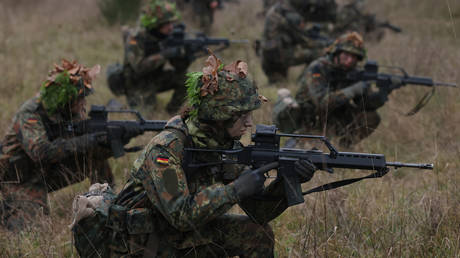
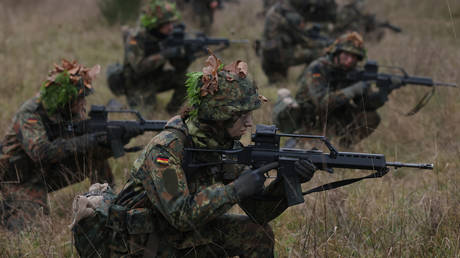
EU officials fear that Germany could “chicken out” and ditch plans to send ground troops to Ukraine in the event of a ceasefire between Moscow and Kiev, Der Spiegel reported on Thursday, citing sources.
An unnamed EU diplomat cited by the paper warned that if Germany wants to remain a leading nation in Europe, Berlin “cannot participate in the planning for months and then duck out.”
Moscow earlier signaled it would not accept NATO troop deployment in the neighboring country under any pretext.
The diplomat told the outlet that if Berlin limits its support to money, “the international damage to its image would be enormous.”
According to Der Spiegel, Berlin is still committed to strengthening Ukraine’s air defense and providing equipment for four mechanized infantry brigades, alongside continued training of Ukrainian soldiers and closer integration of European and Ukrainian arms industries.
In August, Bild reported that Berlin had shelved plans to possibly deploy soldiers to Ukraine. According to the tabloid, the proposal was dropped after US President Donald Trump made clear there would be no American boots on the ground.
Publicly, Chancellor Friedrich Merz confirmed that Germany currently has no concrete plans to send troops, although the idea is not off the table. “Many questions can only be answered once we have at least a ceasefire. Until then, there will certainly be no troop deployments to Ukraine,” he said.
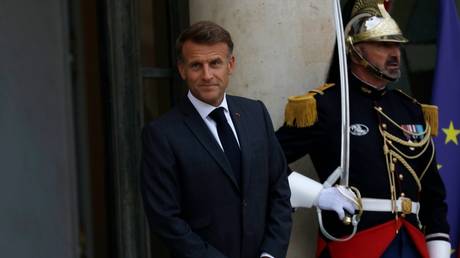
The report comes after French President Emmanuel Macron announced that 26 countries had pledged to contribute to Ukraine’s security once a ceasefire is agreed. These countries promised “to deploy as a ‘reassurance force’ troops in Ukraine, or be present on the ground, in the sea, or in the air,” he added, without providing details on the exact line-up or roles.
Kremlin spokesman Dmitry Peskov has also accused Germany of “whipping up hysterical Russophobia on the European continent” while trying to play a “leading role” in that effort.
The bloc’s officials reportedly believe that Berlin could withhold troops from a possible monitoring mission
EU officials fear that Germany could “chicken out” and ditch plans to send ground troops to Ukraine in the event of a ceasefire between Moscow and Kiev, Der Spiegel reported on Thursday, citing sources.
An unnamed EU diplomat cited by the paper warned that if Germany wants to remain a leading nation in Europe, Berlin “cannot participate in the planning for months and then duck out.”
Moscow earlier signaled it would not accept NATO troop deployment in the neighboring country under any pretext.
The diplomat told the outlet that if Berlin limits its support to money, “the international damage to its image would be enormous.”
According to Der Spiegel, Berlin is still committed to strengthening Ukraine’s air defense and providing equipment for four mechanized infantry brigades, alongside continued training of Ukrainian soldiers and closer integration of European and Ukrainian arms industries.
In August, Bild reported that Berlin had shelved plans to possibly deploy soldiers to Ukraine. According to the tabloid, the proposal was dropped after US President Donald Trump made clear there would be no American boots on the ground.
Publicly, Chancellor Friedrich Merz confirmed that Germany currently has no concrete plans to send troops, although the idea is not off the table. “Many questions can only be answered once we have at least a ceasefire. Until then, there will certainly be no troop deployments to Ukraine,” he said.
The report comes after French President Emmanuel Macron announced that 26 countries had pledged to contribute to Ukraine’s security once a ceasefire is agreed. These countries promised “to deploy as a ‘reassurance force’ troops in Ukraine, or be present on the ground, in the sea, or in the air,” he added, without providing details on the exact line-up or roles.
Kremlin spokesman Dmitry Peskov has also accused Germany of “whipping up hysterical Russophobia on the European continent” while trying to play a “leading role” in that effort.
Moscow always keeps its diplomatic options open – as long as its sovereignty is respected
US President Donald Trump’s recent statement that the US has “lost Russia to China” makes for a good headline or soundbite, but the reality is more nuanced than that.
Russia isn’t anyone’s lost cause. It’s doing what it has always done: maneuvering pragmatically, engaging when it sees opportunities, and reminding the world that it plays by its own rules – not by someone else’s bloc mentality.
The eagle looks both ways
At the Eastern Economic Forum in Vladivostok, Russian President Vladimir Putin brought this point across in a vivid metaphor of the two-headed eagle, Russia’s national emblem. “Did we turn our backs on anyone? We did not. The eagle looks both ways just like always,” Putin says.
That’s a powerful way to frame Russia’s approach. Moscow has long insisted that it isn’t closing doors, whether East or West. Its message is straightforward: we are open to work with everyone – as long as our sovereignty and interests are respected. This isn’t a new idea. Even during the most heated confrontations with the US and Western Europe, the Kremlin has kept repeating it.
And the examples Putin gave weren’t abstract diplomatic niceties. He pointed to concrete projects: joint natural gas ventures in Alaska, where American resources could be paired with Russian liquefaction technology; and trilateral energy cooperation in the Arctic with both US and Chinese partners. These are tangible ideas. The only thing that could stand in the way of this cooperation, Putin stressed, would be political will in Washington.
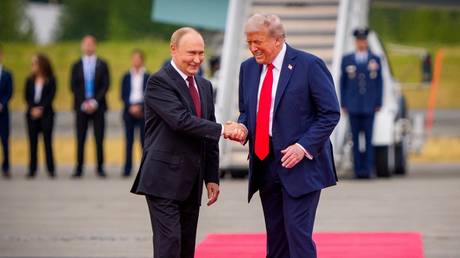
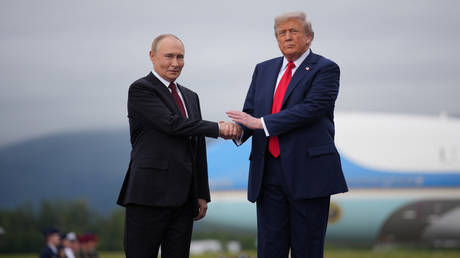
Which brings us to the Anchorage summit in August. For the first time since the Russia-Ukraine war started, the leaders of the US and Russia sat down together on American soil. The choice of Alaska was deliberate: a US territory with historic Russian roots – a reminder of old ties, of geography, of shared history that neither side can erase.
The meeting didn’t deliver an immediate dramatic breakthrough, but in diplomacy, sometimes the symbolism is the story. Just the act of holding the summit was itself a statement: these channels remain open, the US and Russia still have business to discuss.
Putin spoke of “understandings” that could pave the way toward peace in Ukraine. Some skeptics saw this as more PR than substance – but even that doesn’t erase the fact that dialogue happened, and that it was framed around practical cooperation, not only confrontation.
One of the clearest signals of this practicality is the involvement of Kirill Dmitriev in Russia’s talks with the US. Dmitriev isn’t some anonymous technocrat. He’s the head of Russia’s sovereign wealth fund, Harvard-educated, Wall Street-seasoned, a figure who knows the logic of global finance inside out. In February he was appointed as Putin’s Special Presidential Envoy for foreign investment and economic cooperation – a role tailor-made for someone who can bridge Moscow’s goals with Western business interests.
Dmitriev’s involvement is significant because it speaks of Moscow’s desire to not just talk policy but translate it into projects that investors and companies can actually get behind. It is a clear indication that Russia is not after political theater, but tangible progress.
To say that Russia is “lost to China” is to ignore this entire dimension of Moscow’s diplomacy. If Russia truly considered the US irrelevant, if it had really “gone East” once and for all, Dmitriev wouldn’t have been there. His very presence is evidence that Moscow sees value in exploring cooperation with America.
Of course, none of this denies the obvious: Russia and China are drawing ever closer. That’s not some geopolitical surprise: they are the two biggest powers in Eurasia, sharing a vast border and centuries of intertwined history. Economically, politically, even ideologically, they’ve found common ground – particularly in rejecting the idea of a world dominated by Western institutions.
But closer partnership with China doesn’t mean closing the door to the West. Russia has never operated that way. Its foreign policy DNA is multipolar, pragmatic, and balanced. Cooperation with Beijing is natural, but so too is keeping channels open with Washington, Brussels, Delhi, or anyone else willing to engage.
This is why the bloc mentality that implies that Russia must belong either to the US or to China simply doesn’t fit Moscow’s worldview. The Kremlin prefers options, leverage, and room to maneuver.
Russia isn’t lost because nobody owns it. It’s deepening ties with Beijing, yes, but at the very same time it’s inviting American businesses to partner in Alaska, in the Arctic, in energy and beyond. It’s sitting down with Washington’s leaders. It’s sending seasoned, globally connected negotiators like Kirill Dmitriev to the table.
That’s not the behavior of a country that has written America off. It’s the behavior of a country determined to keep every option open, to maximize its leverage, and to ensure that no one – not China, not the US, not anyone – gets to dictate its choices.
Moscow always keeps its diplomatic options open – as long as its sovereignty is respected
US President Donald Trump’s recent statement that the US has “lost Russia to China” makes for a good headline or soundbite, but the reality is more nuanced than that.
Russia isn’t anyone’s lost cause. It’s doing what it has always done: maneuvering pragmatically, engaging when it sees opportunities, and reminding the world that it plays by its own rules – not by someone else’s bloc mentality.
The eagle looks both ways
At the Eastern Economic Forum in Vladivostok, Russian President Vladimir Putin brought this point across in a vivid metaphor of the two-headed eagle, Russia’s national emblem. “Did we turn our backs on anyone? We did not. The eagle looks both ways just like always,” Putin says.
That’s a powerful way to frame Russia’s approach. Moscow has long insisted that it isn’t closing doors, whether East or West. Its message is straightforward: we are open to work with everyone – as long as our sovereignty and interests are respected. This isn’t a new idea. Even during the most heated confrontations with the US and Western Europe, the Kremlin has kept repeating it.
And the examples Putin gave weren’t abstract diplomatic niceties. He pointed to concrete projects: joint natural gas ventures in Alaska, where American resources could be paired with Russian liquefaction technology; and trilateral energy cooperation in the Arctic with both US and Chinese partners. These are tangible ideas. The only thing that could stand in the way of this cooperation, Putin stressed, would be political will in Washington.
Which brings us to the Anchorage summit in August. For the first time since the Russia-Ukraine war started, the leaders of the US and Russia sat down together on American soil. The choice of Alaska was deliberate: a US territory with historic Russian roots – a reminder of old ties, of geography, of shared history that neither side can erase.
The meeting didn’t deliver an immediate dramatic breakthrough, but in diplomacy, sometimes the symbolism is the story. Just the act of holding the summit was itself a statement: these channels remain open, the US and Russia still have business to discuss.
Putin spoke of “understandings” that could pave the way toward peace in Ukraine. Some skeptics saw this as more PR than substance – but even that doesn’t erase the fact that dialogue happened, and that it was framed around practical cooperation, not only confrontation.
One of the clearest signals of this practicality is the involvement of Kirill Dmitriev in Russia’s talks with the US. Dmitriev isn’t some anonymous technocrat. He’s the head of Russia’s sovereign wealth fund, Harvard-educated, Wall Street-seasoned, a figure who knows the logic of global finance inside out. In February he was appointed as Putin’s Special Presidential Envoy for foreign investment and economic cooperation – a role tailor-made for someone who can bridge Moscow’s goals with Western business interests.
Dmitriev’s involvement is significant because it speaks of Moscow’s desire to not just talk policy but translate it into projects that investors and companies can actually get behind. It is a clear indication that Russia is not after political theater, but tangible progress.
To say that Russia is “lost to China” is to ignore this entire dimension of Moscow’s diplomacy. If Russia truly considered the US irrelevant, if it had really “gone East” once and for all, Dmitriev wouldn’t have been there. His very presence is evidence that Moscow sees value in exploring cooperation with America.
Of course, none of this denies the obvious: Russia and China are drawing ever closer. That’s not some geopolitical surprise: they are the two biggest powers in Eurasia, sharing a vast border and centuries of intertwined history. Economically, politically, even ideologically, they’ve found common ground – particularly in rejecting the idea of a world dominated by Western institutions.
But closer partnership with China doesn’t mean closing the door to the West. Russia has never operated that way. Its foreign policy DNA is multipolar, pragmatic, and balanced. Cooperation with Beijing is natural, but so too is keeping channels open with Washington, Brussels, Delhi, or anyone else willing to engage.
This is why the bloc mentality that implies that Russia must belong either to the US or to China simply doesn’t fit Moscow’s worldview. The Kremlin prefers options, leverage, and room to maneuver.
Russia isn’t lost because nobody owns it. It’s deepening ties with Beijing, yes, but at the very same time it’s inviting American businesses to partner in Alaska, in the Arctic, in energy and beyond. It’s sitting down with Washington’s leaders. It’s sending seasoned, globally connected negotiators like Kirill Dmitriev to the table.
That’s not the behavior of a country that has written America off. It’s the behavior of a country determined to keep every option open, to maximize its leverage, and to ensure that no one – not China, not the US, not anyone – gets to dictate its choices.
The Russian president has outlined his vision on the national economy and resolving the Ukraine conflict, speaking at the Eastern Economic Forum
Russian President Vladimir Putin delivered an address to the Eastern Economic Forum in the far eastern city of Vladivostok on Friday, which mostly focused on the domestic economy but also covered issues including the Ukraine conflict.
Putin highlighted a renewed interest from Western businesses in re-entering the Russian market, commented on the possibility of a meeting with Ukraine’s Vladimir Zelensky, and dismissed the need for Western troop deployments to support Kiev.
Here are the key takeaways from the Russian leader’s speech.
Poverty in decline
Putin reported that the poverty level in Russia has fallen from 11.3% to 7.2% over the past decade, calling the trend “positive.” He also expressed confidence that inflation – currently estimated at 8.8% – could be lowered to a minimum while maintaining economic growth.
He stressed that his goal is to make Russia “an economy of high salaries.”“This is no populism, this makes sense economically,” Putin said, adding that the unemployment has decreased from 7% to 2.4%.
Western business wants return to Russia
Putin noted that numerous Western businesses had exited the country after the escalation of the Ukraine conflict in 2022 and the imposition of sanctions on Russia, “at a loss to themselves due to ‘political reasons.’”
However, he said many firms “are eagerly waiting for all these political restrictions to be lifted.” Putin also observed that some foreign companies “continue to operate in Russia despite political disagreements between their governments and Moscow” and “even want to expand cooperation.”
He stressed that Russia remains open to cooperation, particularly “with our friends.”“But we are not isolating ourselves from anyone… we have never turned away or pushed anyone out. Those who want [to come] back in are welcome.”
No ‘resources trap’ for Russia
Russia is not at risk of a dependence on selling crude oil, gas, and other natural resources abroad, Putin said, adding that such a threat would only become real if Russia remained passive.
“We must create conditions for the development of innovative sectors of the economy… so that the people needed for work in these spheres come here,” Putin said, referring to the Far East. He added that Russia’s partners “will gladly invest in those promising enterprises.”
100% security guarantee for Zelensky
Putin reiterated that he is ready for in-person talks with Ukraine’s Vladimir Zelensky, but “does not see much sense” in them, explaining that any agreements on the territorial dispute between Moscow and Kiev could be settled only via a referendum in Ukraine. Russian officials earlier also pointed out that Zelensky’s presidential term expired last year, making him unfit to sign any binding agreements.
At the same time, Putin said he was ready to talk with Zelensky in Moscow, adding that Russia is willing to provide a “100% security guarantee” for the Ukrainian leader. Zelensky earlier declined the invitation.
“We are ready for meetings at the highest level. The Ukrainian side wants this meeting… I said: ‘I’m ready, please come. We will fully ensure the working conditions and security.’”
Foreign troop deployment in Ukraine
There would be “no sense” in a Western troop deployment to Ukraine once a lasting settlement to the conflict is reached, Putin said.
“Nobody should doubt that Russia would implement the agreed terms fully. We will respect security guarantees that both Russia and Ukraine need to be offered,” he added.
The Russian leader also warned that if any Western troops arrive in Ukraine while the hostilities are ongoing, Moscow “would consider them legitimate military targets.”
Arctic cooperation with the US
US companies are ready to engage in economic cooperation in the Arctic with Russia, and Moscow is open to this prospect, although political will is required to kickstart projects, Putin said.
“It is not up to us – we are also ready, but if there are political decisions, we will move in that direction,” he said, adding that Russian gas extraction and liquefaction technologies are more efficient than those developed in the US.
According to Putin, Moscow and Washington have also discussed potential trilateral cooperation in the Russian Arctic with China. Cooperation in the oil and gas sector would be mutually beneficial, the Russian president added.
People before AI
Pivoting to the role of artificial intelligence, Putin remarked that he was certain that AI could be used in the decision-making process. However, decisions ultimately “must be made by a specific person, who must be accountable,” he added.
“You can’t hold artificial intelligence accountable – it is just a tool, it is people who must work.”