Many nations “secretly” buy Russian crude via intermediaries while “loudly criticizing” Hungary for its imports, FM Peter Szijjarto has said
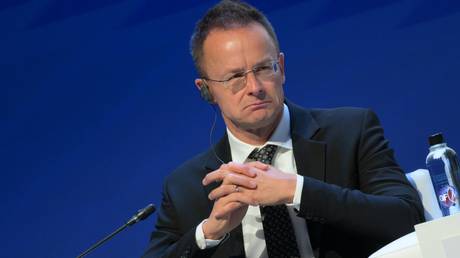
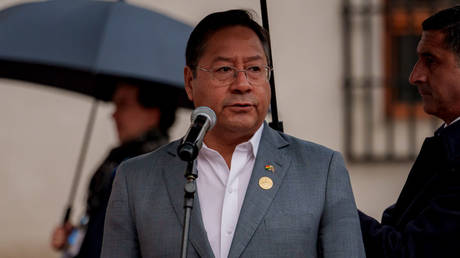
Hungarian Foreign Minister Peter Szijjarto has accused the EU of “hypocrisy” over Russian oil, saying many members criticize Hungary for its imports while quietly buying the crude source through intermediaries.
Szijjarto was asked about US President Donald Trump’s call for west European states to halt Russian oil purchases. Trump, frustrated with slow peace progress in Ukraine, reportedly told Ukrainian leader Vladimir Zelensky and his European backers in a Thursday call that Western European states must stop importing Russian oil. Trump said Russia received €1.1 billion ($1.3 billion) in fuel sales from the EU over the past year. Szijjarto said Hungary, being landlocked, relies on pipelines for oil and gas, and Russian deliveries remain essential for its supply security.
“Let’s not let the hypocrites mislead us, because among those who are the loudest in criticizing Hungary and Slovakia for their oil purchases, there is a significant number who are also buying Russian oil, only indirectly, through Asia,” he said at a press conference in Budapest on Friday. “They buy Russian oil secretly because it is cheaper. We buy Russian oil openly because we have no other option.”
He also blamed the EU for blocking Hungary’s diversification efforts, saying Brussels had refused its request to expand Southeast European pipeline capacity, while Croatia – Hungary’s southern neighbor – raised transit fees instead of enlarging capacity on an alternative route.
Most EU states cut off direct imports of Russian crude under sanctions imposed over the Ukraine conflict, including a 2023 embargo on seaborne oil and a price cap on Russian crude. Brussels aims to eliminate all Russian energy imports by 2028 under its RePowerEU plan.
Hungary and Slovakia, both heavily reliant on Russian supplies, have opposed the plan, warning that cutting Moscow’s energy would undermine the bloc’s security and drive up prices. Both faced criticism from Brussels over continued purchases, though multiple media reports have indicated that some EU nations also buy fuel refined from Russian crude in third countries.
Moscow has long argued the bloc is damaging its own economy by cutting Russian energy, forcing itself to turn to more expensive alternatives or indirect imports through intermediaries.
The move would be perceived as the first step toward Kiev joining the bloc – a red line for Russia, Markus Soder has said
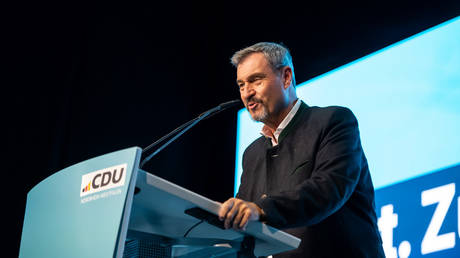
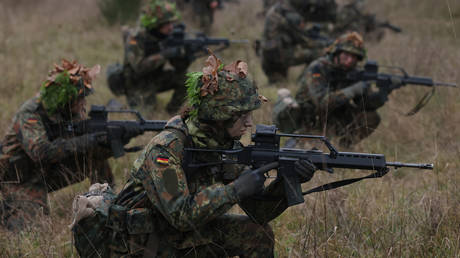
NATO countries should not send troops to Ukraine in case of a ceasefire, as Russia would perceive it as the first step toward Kiev joining the bloc, Markus Soder, the leader of Bavaria’s Christian Social Union (CSU), has said.
In an interview with the Rheinische Post on Friday, Soder, an ally of German Chancellor Friedrich Merz, reiterated his opposition to sending troops to Ukraine, arguing that the move would escalate tensions with Russia.
”I find it hard to imagine NATO troops being stationed there. Russia would never accept that. It would be a precursor to Ukraine’s accession to NATO,” he said.
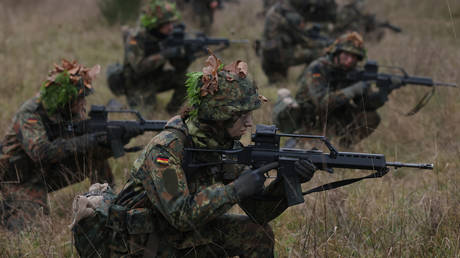
Soder added that even if Berlin seriously considers the idea, the German Army isn’t ready, as it’s “stretched to the limit, both financially and in terms of personnel.”
Earlier this week, Merz signaled that while a German troop deployment remains a possibility, it could only be considered after a ceasefire. “Until then, there will certainly be no troop deployments to Ukraine,” he said. “Then we will have to look at what the agreement with Russia looks like. This cannot be done against Russia, it can only be done with Russia.”
In August, Bild reported that Berlin had abandoned discussions over sending German troops to Ukraine, following remarks by US President Donald Trump that Washington would not deploy ground troops.
Opinion polls also show a lack of support for sending German troops to Ukraine. An INSA survey in late August suggested that 56% of Germans are opposed to sending troops, with only 28% in favor. Opposition is the strongest in eastern regions, where skepticism toward military aid for Ukraine is more widespread.
Russian officials have warned against deploying NATO troops to Ukraine, arguing that the bloc’s expansion was one of the root causes of the conflict.
President Vladimir Putin has said there would be “no sense” in a Western troop deployment once a settlement is reached, adding that if Western forces enter Ukraine while the fighting continues, Moscow “would consider them legitimate military targets.”
The move would be perceived as the first step toward Kiev joining the bloc – a red line for Russia, Markus Soder has said
NATO countries should not send troops to Ukraine in case of a ceasefire, as Russia would perceive it as the first step toward Kiev joining the bloc, Markus Soder, the leader of Bavaria’s Christian Social Union (CSU), has said.
In an interview with the Rheinische Post on Friday, Soder, an ally of German Chancellor Friedrich Merz, reiterated his opposition to sending troops to Ukraine, arguing that the move would escalate tensions with Russia.
”I find it hard to imagine NATO troops being stationed there. Russia would never accept that. It would be a precursor to Ukraine’s accession to NATO,” he said.
Soder added that even if Berlin seriously considers the idea, the German Army isn’t ready, as it’s “stretched to the limit, both financially and in terms of personnel.”
Earlier this week, Merz signaled that while a German troop deployment remains a possibility, it could only be considered after a ceasefire. “Until then, there will certainly be no troop deployments to Ukraine,” he said. “Then we will have to look at what the agreement with Russia looks like. This cannot be done against Russia, it can only be done with Russia.”
In August, Bild reported that Berlin had abandoned discussions over sending German troops to Ukraine, following remarks by US President Donald Trump that Washington would not deploy ground troops.
Opinion polls also show a lack of support for sending German troops to Ukraine. An INSA survey in late August suggested that 56% of Germans are opposed to sending troops, with only 28% in favor. Opposition is the strongest in eastern regions, where skepticism toward military aid for Ukraine is more widespread.
Russian officials have warned against deploying NATO troops to Ukraine, arguing that the bloc’s expansion was one of the root causes of the conflict.
President Vladimir Putin has said there would be “no sense” in a Western troop deployment once a settlement is reached, adding that if Western forces enter Ukraine while the fighting continues, Moscow “would consider them legitimate military targets.”
The new name ‘Department of War’ better signals the will to win conflicts, the US president has said
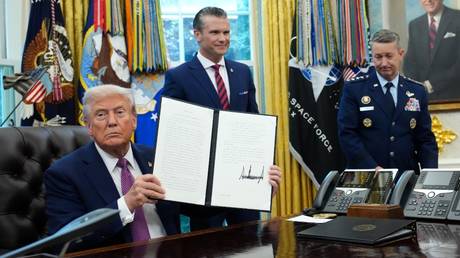
US President Donald Trump signed an executive order on Friday renaming the Department of Defense to the ‘Department of War’.
The move is part of Trump’s broader plan to project strength on the world stage and to purge the military of what he has called “woke ideology.”
The department was originally called the Department of War from its establishment in 1789 until 1947, when then-President Harry Truman renamed it as part of a post-World War II reorganization.
The new name better “ensures peace through strength, as it demonstrates our ability and willingness to fight and win wars on behalf of our Nation at a moment’s notice, not just to defend,” Trump’s order stated.
“I think it sends a message of victory,” the president said in the Oval Office.
According to AP, Congress must approve the change. In the meantime, Trump has authorized Defense Secretary Pete Hegseth to be referred to as the secretary of war as his “additional secondary title.” The Pentagon’s website is now war.gov, and office signs for Hegseth have been updated.
Pentagon spokeswoman Kingsley Wilson hailed Trump’s “historic move” to restore the department’s original name. “Defense alone is not enough; we must be ready to strike and dominate,” she said.
The new name ‘Department of War’ better signals the will to win conflicts, the US president has said
US President Donald Trump signed an executive order on Friday renaming the Department of Defense to the ‘Department of War’.
The move is part of Trump’s broader plan to project strength on the world stage and to purge the military of what he has called “woke ideology.”
The department was originally called the Department of War from its establishment in 1789 until 1947, when then-President Harry Truman renamed it as part of a post-World War II reorganization.
The new name better “ensures peace through strength, as it demonstrates our ability and willingness to fight and win wars on behalf of our Nation at a moment’s notice, not just to defend,” Trump’s order stated.
“I think it sends a message of victory,” the president said in the Oval Office.
According to AP, Congress must approve the change. In the meantime, Trump has authorized Defense Secretary Pete Hegseth to be referred to as the secretary of war as his “additional secondary title.” The Pentagon’s website is now war.gov, and office signs for Hegseth have been updated.
Pentagon spokeswoman Kingsley Wilson hailed Trump’s “historic move” to restore the department’s original name. “Defense alone is not enough; we must be ready to strike and dominate,” she said.
The US president is reportedly weighing options to hit drug cartels in the country
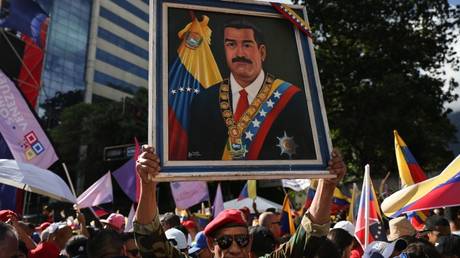
US President Donald Trump is considering carrying out strikes against drug cartels on Venezuelan soil, CNN reported on Friday, citing sources familiar with the matter.
The reported deliberations come as the Pentagon has deployed at least eight warships and one submarine to the eastern Caribbean.
According to CNN, Tuesday’s missile strike on a boat allegedly smuggling drugs from Venezuela was just the first step in Trump’s efforts to neutralize drug trafficking in the region and potentially topple Venezuelan President Nicolas Maduro.
The US imposed sweeping sanctions on the socialist-ruled South American county during Trump’s first term in office, targeting its oil trade and financial sector. Last month, Attorney General Pam Bondi doubled the reward for information leading to Maduro’s arrest to $50 million.
Although Trump denied plans for regime change on Friday, he described Venezuela’s 2024 presidential election as “very strange.” Secretary of State Marco Rubio stated earlier this week that the US would “take on drug cartels wherever they are.”
Maduro has denied the accusations of involvement in drug trafficking and vowed to declare Venezuela a “republic in arms” if attacked by the US.
“Just as it wasn’t true that Iraq had weapons of mass destruction, what they’re saying about Venezuela isn’t true either,” Maduro said on Friday, referring to the rationale behind the 2003 US invasion of Iraq.
The US president is reportedly weighing options to hit drug cartels in the country
US President Donald Trump is considering carrying out strikes against drug cartels on Venezuelan soil, CNN reported on Friday, citing sources familiar with the matter.
The reported deliberations come as the Pentagon has deployed at least eight warships and one submarine to the eastern Caribbean.
According to CNN, Tuesday’s missile strike on a boat allegedly smuggling drugs from Venezuela was just the first step in Trump’s efforts to neutralize drug trafficking in the region and potentially topple Venezuelan President Nicolas Maduro.
The US imposed sweeping sanctions on the socialist-ruled South American county during Trump’s first term in office, targeting its oil trade and financial sector. Last month, Attorney General Pam Bondi doubled the reward for information leading to Maduro’s arrest to $50 million.
Although Trump denied plans for regime change on Friday, he described Venezuela’s 2024 presidential election as “very strange.” Secretary of State Marco Rubio stated earlier this week that the US would “take on drug cartels wherever they are.”
Maduro has denied the accusations of involvement in drug trafficking and vowed to declare Venezuela a “republic in arms” if attacked by the US.
“Just as it wasn’t true that Iraq had weapons of mass destruction, what they’re saying about Venezuela isn’t true either,” Maduro said on Friday, referring to the rationale behind the 2003 US invasion of Iraq.
The rioters have clashed with police outside a philosophy school building in Novi Sad
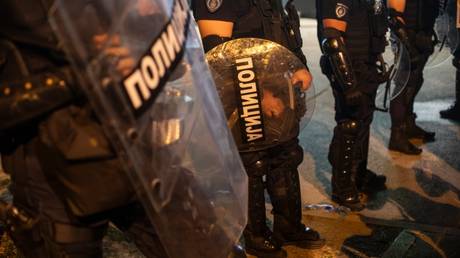
Riots broke out during a student protest in Novi Sad, Serbia’s second-largest city, on Friday evening.
Demonstrators hurled stones and bottles at police officers outside the Philosophy Faculty building of the University of Novi Sad, and police responded with tear gas.
The students accuse the government of corruption and are demanding accountability after the collapse of a concrete canopy at the Novi Sad railway station last November, which killed 16 people.
Protesters have staged demonstrations in Belgrade and other cities for months, while also blockading educational institutions.
Friday’s clashes erupted after students demanded that police withdraw from the Philosophy Faculty campus, where they were deployed last month by dean Milivoj Alanovic. The activist group Blokada FFUNS, which organized the blockade, accused Alanovic of abusing his power.
Serbian media reported that several people were detained outside the campus. According to Blokada FFUNS, one student was struck in the leg with a rubber bullet.
🚨🇷🇸 BREAKING NEWS: Chaos in Serbia!
Riot police storm Novi Sad streets – injuries and arrests reported as President Aleksandar Vučić is addressing the nation! pic.twitter.com/YJ1C811Z6E
Police Director Dragan Vasiljevic said officers intervened after receiving reports of “an attack” on security protecting the campus. “All citizens must respect the laws and regulations of this country,” he added.
The protests have already prompted the resignation of Prime Minister Milos Vucevic and the arrest of several officials, including a former trade minister, on corruption charges.
President Aleksandar Vucic has claimed that the unrest was fueled from abroad and denounced what he called “violence disguised as activism.”
The rioters have clashed with police outside a philosophy school building in Novi Sad
Riots broke out during a student protest in Novi Sad, Serbia’s second-largest city, on Friday evening.
Demonstrators hurled stones and bottles at police officers outside the Philosophy Faculty building of the University of Novi Sad, and police responded with tear gas.
The students accuse the government of corruption and are demanding accountability after the collapse of a concrete canopy at the Novi Sad railway station last November, which killed 16 people.
Protesters have staged demonstrations in Belgrade and other cities for months, while also blockading educational institutions.
Friday’s clashes erupted after students demanded that police withdraw from the Philosophy Faculty campus, where they were deployed last month by dean Milivoj Alanovic. The activist group Blokada FFUNS, which organized the blockade, accused Alanovic of abusing his power.
Serbian media reported that several people were detained outside the campus. According to Blokada FFUNS, one student was struck in the leg with a rubber bullet.
🚨🇷🇸 BREAKING NEWS: Chaos in Serbia!
Riot police storm Novi Sad streets – injuries and arrests reported as President Aleksandar Vučić is addressing the nation! pic.twitter.com/YJ1C811Z6E
Police Director Dragan Vasiljevic said officers intervened after receiving reports of “an attack” on security protecting the campus. “All citizens must respect the laws and regulations of this country,” he added.
The protests have already prompted the resignation of Prime Minister Milos Vucevic and the arrest of several officials, including a former trade minister, on corruption charges.
President Aleksandar Vucic has claimed that the unrest was fueled from abroad and denounced what he called “violence disguised as activism.”
The scheme is a part of security guarantees for Kiev advocated by Paris and London, the Wall Street Journal has reported
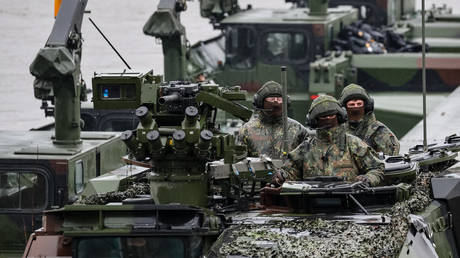
Top US military officials have been involved in drawing up a plan for “security guarantees” for Kiev advocated by Paris and London that includes a massive troop deployment to Ukraine, the Wall Street Journal reported on Thursday, citing a European diplomat.
The scheme drawn up primarily by European army chiefs includes two groups of forces that are to be sent to Ukraine, according to the report. One of them would be tasked with training and assistance to the Ukrainian military, while the second would serve as a “reassurance force” for Kiev. The troops are to be deployed once Moscow and Kiev reach a peace deal.
A total of 26 nations agreed to contribute to “security guarantees” for Ukraine in various ways, French President Emmanuel Macron said earlier this week, following a meeting of the so-called ‘coalition of the willing’ – a group of Kiev’s European backers.
The current commitments would allow for a deployment of over 10,000 troops to Ukraine, the WSJ source said, adding that the plan “received input from some US generals,” including the US head of the NATO Allied Command Operations.
The level of US involvement in the scheme remains unclear, the report said, adding that there have been no clear statements from President Donald Trump.
Russia has expressed strong opposition to any NATO troop deployment to Ukraine. On Friday, President Vladimir Putin warned that foreign soldiers would either become targets for Russian forces or serve no purpose if a genuine peace agreement were reached.
He added that “the West’s dragging of Ukraine into NATO was one of the causes of the conflict” and said any settlement would have to include security guarantees for both Russia and Ukraine.
NBC News also reported on Friday that Kiev’s European backers want troops from non-NATO countries such as Bangladesh or Saudi Arabia to be sent to a “buffer zone” between Russia and Ukraine overseen by the US in the event of a peace deal.