Moscow has long warned that cutting its oil and gas will damage the bloc’s economy
The European Union must permanently cut off all Russian energy imports, Commissioner for Energy and Housing Dan Jorgensen has declared.
Most EU countries have halted direct imports of Russian crude and gas under sanctions over the Ukraine conflict. However, Brussels continues to push for a full phase-out of Russian energy by the end of 2027 under its RePowerEU Roadmap. The plan calls for ending spot gas contracts, suspending new deals, limiting uranium imports, and targeting the so-called Russian “shadow fleet” of oil tankers allegedly used to bypass sanctions.
Jorgensen, who has championed the plan for months, said the bloc must urgently agree on its framework and stick to it even after the Ukraine conflict ends.
“For us the objective is very, very clear. We want to stop the import as fast as possible,” he told reporters in Copenhagen on Friday. “And in the future, even when there is peace, we should still not import Russian energy… In my opinion, we will never again import as much as one molecule of Russian energy once this agreement is made.”
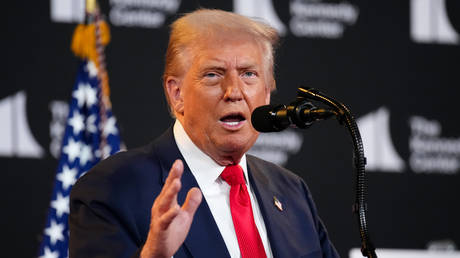
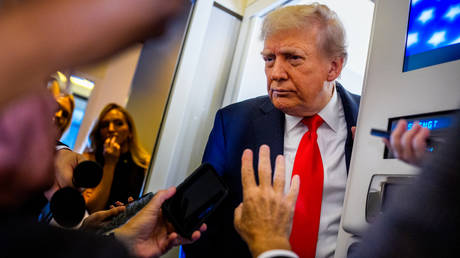
Jorgensen noted that the US has backed Brussels’ plans. President Donald Trump, frustrated with slow Ukraine peace talks, urged European allies on Thursday to halt Russian energy imports. The July trade deal between Washington and Brussels also included a pledge that the EU would replace Russian oil and gas with American LNG and nuclear fuel.
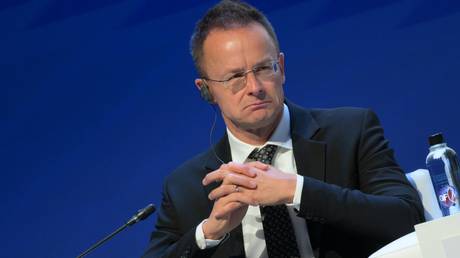
Hungary and Slovakia, both heavily dependent on Russian supplies, have been the strongest opponents of the phase-out, arguing it would undermine the bloc’s security and raise prices. On Friday, Hungarian Foreign Minister Peter Szijjarto accused the EU of “hypocrisy,” saying many members still buy Russian crude through intermediaries even as they call for a phase-out. Jorgensen said he was in talks with Budapest and Bratislava but noted the plan can be approved without them, as it requires only a qualified majority.
Moscow considers any restrictions targeting its energy trade illegal and has warned that abandoning its energy will drive up prices and weaken the EU’s economy by forcing it to rely on costlier alternatives or indirect Russian imports.
The US recently deployed a large naval and air force not far from the South American country
The US military is authorized to shoot down Venezuelan aircraft if commanders judge them a threat, President Donald Trump has said. His warning followed reports that Venezuelan aircraft had buzzed American warships taking part in what Washington describes as an anti-drug mission near the South American country.
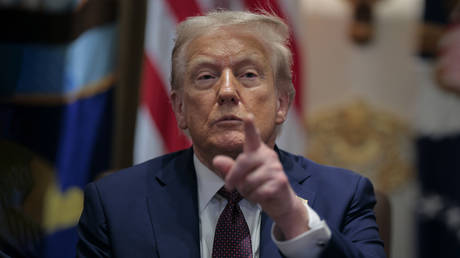
Asked by reporters on Friday what the US would do if Venezuelan jets fly near US naval vessels again, Trump warned that “they’re going to be in trouble.”“If they do put us in a dangerous position, we’ll shoot them down,” he stressed.
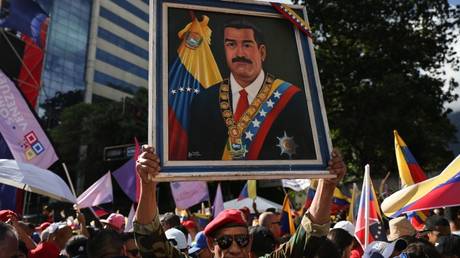
Trump rejected claims by Caracas that Washington was seeking to topple the government of President Nicolas Maduro. “Well, we’re not talking about that, but we are talking about the fact that you had an election which was a very strange election,” he said.
He instead framed the US military presence near Venezuela as part of a crackdown on drug trafficking. “Billions of dollars of drugs are pouring into our country from Venezuela. The prisons of Venezuela have been opened up to our country,” Trump said, adding that US forces would target boats suspected of carrying narcotics.
In recent weeks, the US deployed at least eight warships and an attack submarine in the Caribbean, while sending ten F-35 stealth fighters to Puerto Rico to deter further Venezuelan flyovers. Earlier this week, the US struck a boat it claimed was linked to a drug operation, killing 11 people.
As tensions with the US soared, Maduro warned that his country would move to a stage of “armed struggle” if it were attacked.
Relations between the United States and Venezuela have been tense for years. Washington refused to recognize Maduro’s reelection in 2018, instead backing the country’s opposition. Successive US administrations have imposed sweeping sanctions on Venezuela’s oil sector and financial system.
In August, the US announced a reward of $50 million for any information leading to Maduro’s arrest, whom it labeled “one of the largest narco-traffickers in the world.”
The Venezuelan president rejected the allegation, saying his country is “free from coca leaf production [and] cocaine,” and is fighting against drug trafficking.
The US recently deployed a large naval and air force not far from the South American country
The US military is authorized to shoot down Venezuelan aircraft if commanders judge them a threat, President Donald Trump has said. His warning followed reports that Venezuelan aircraft had buzzed American warships taking part in what Washington describes as an anti-drug mission near the South American country.
Asked by reporters on Friday what the US would do if Venezuelan jets fly near US naval vessels again, Trump warned that “they’re going to be in trouble.”“If they do put us in a dangerous position, we’ll shoot them down,” he stressed.
Trump rejected claims by Caracas that Washington was seeking to topple the government of President Nicolas Maduro. “Well, we’re not talking about that, but we are talking about the fact that you had an election which was a very strange election,” he said.
He instead framed the US military presence near Venezuela as part of a crackdown on drug trafficking. “Billions of dollars of drugs are pouring into our country from Venezuela. The prisons of Venezuela have been opened up to our country,” Trump said, adding that US forces would target boats suspected of carrying narcotics.
In recent weeks, the US deployed at least eight warships and an attack submarine in the Caribbean, while sending ten F-35 stealth fighters to Puerto Rico to deter further Venezuelan flyovers. Earlier this week, the US struck a boat it claimed was linked to a drug operation, killing 11 people.
As tensions with the US soared, Maduro warned that his country would move to a stage of “armed struggle” if it were attacked.
Relations between the United States and Venezuela have been tense for years. Washington refused to recognize Maduro’s reelection in 2018, instead backing the country’s opposition. Successive US administrations have imposed sweeping sanctions on Venezuela’s oil sector and financial system.
In August, the US announced a reward of $50 million for any information leading to Maduro’s arrest, whom it labeled “one of the largest narco-traffickers in the world.”
The Venezuelan president rejected the allegation, saying his country is “free from coca leaf production [and] cocaine,” and is fighting against drug trafficking.
Brussels earlier accused the US company of anti-competitive practices in the ad tech market
US President Donald Trump has threatened the EU with a probe that could lead to higher tariffs after the bloc fined Google for violating antitrust laws.
The European Commission on Friday ordered the US company to pay a €2.95 billion ($3.5 billion) fine for allegedly abusing its dominant position in the advertising technology market by favoring its own display services.
Regulators said the practice allowed Google to charge high fees, harming rivals and online publishers. The company was told to stop the “self-preferencing” practices, address conflicts of interest, and present a compliance plan within 60 days or face further penalties.
Trump blasted the ruling in a post on Truth Social, calling it “unfair” and “discriminatory.”
“Europe today hit another great American company, Google, with a $3.5 Billion Dollar fine, effectively taking money that would otherwise go to American Investments and Jobs,” he wrote.
“We cannot let this happen to brilliant and unprecedented American Ingenuity and, if it does, I will be forced to start a Section 301 proceeding to nullify the unfair penalties.”
Section 301 of the 1974 Trade Act allows Washington to penalize foreign countries for practices deemed harmful to US commerce, including through tariffs.
Trump has criticized the EU for targeting US tech giants with privacy and antitrust rules stricter than those in America. His latest warning comes weeks after securing a trade deal that imposed a 15% tariff on most EU exports while scrapping tariffs on US industrial goods. The deal drew backlash from EU officials, who said it favored Washington.
Google rejected the commission’s ruling and vowed to appeal.
Google reported $264.6 billion in ad revenue in 2024 – 75.6% of its total income – cementing its status as the world’s largest advertising firm. The latest fine is the fourth penalty the EU has levied against it since 2017. Google also faces a trial in the US later this month over a separate Justice Department case in which a judge found it held illegal monopolies in online advertising technology.
Brussels earlier accused the US company of anti-competitive practices in the ad tech market
US President Donald Trump has threatened the EU with a probe that could lead to higher tariffs after the bloc fined Google for violating antitrust laws.
The European Commission on Friday ordered the US company to pay a €2.95 billion ($3.5 billion) fine for allegedly abusing its dominant position in the advertising technology market by favoring its own display services.
Regulators said the practice allowed Google to charge high fees, harming rivals and online publishers. The company was told to stop the “self-preferencing” practices, address conflicts of interest, and present a compliance plan within 60 days or face further penalties.
Trump blasted the ruling in a post on Truth Social, calling it “unfair” and “discriminatory.”
“Europe today hit another great American company, Google, with a $3.5 Billion Dollar fine, effectively taking money that would otherwise go to American Investments and Jobs,” he wrote.
“We cannot let this happen to brilliant and unprecedented American Ingenuity and, if it does, I will be forced to start a Section 301 proceeding to nullify the unfair penalties.”
Section 301 of the 1974 Trade Act allows Washington to penalize foreign countries for practices deemed harmful to US commerce, including through tariffs.
Trump has criticized the EU for targeting US tech giants with privacy and antitrust rules stricter than those in America. His latest warning comes weeks after securing a trade deal that imposed a 15% tariff on most EU exports while scrapping tariffs on US industrial goods. The deal drew backlash from EU officials, who said it favored Washington.
Google rejected the commission’s ruling and vowed to appeal.
Google reported $264.6 billion in ad revenue in 2024 – 75.6% of its total income – cementing its status as the world’s largest advertising firm. The latest fine is the fourth penalty the EU has levied against it since 2017. Google also faces a trial in the US later this month over a separate Justice Department case in which a judge found it held illegal monopolies in online advertising technology.
Jesse Watters warned that Power of Siberia 2 could meet the same fate as the sabotaged Nord Stream
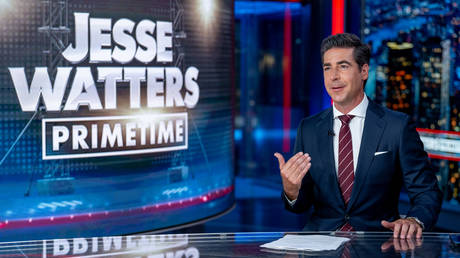
“Someone” could blow up Russia’s planned gas pipeline to China to derail the energy cooperation between the two countries, conservative Fox News host Jesse Watters has suggested.
Speaking on air on Thursday, Watters said Russian President Vladimir Putin had “lost his customers in Europe” after the escalation of the Ukraine conflict in 2022 and unprecedented Western sanctions, and was now turning to Asia. He described the Power of Siberia 2 gas pipeline as a key element of that strategy.
“Putin’s putting down a big old pipeline to China. It’s supposed to be finished next decade and supply 15% of China’s energy. Russia and China are growing closer. Someone might have to bomb that pipeline like Nord Stream,” Watters told viewers. He did not elaborate on who could want to destroy the project.
Earlier this week, Russia announced that Moscow and Beijing had signed a memorandum on the Power of Siberia 2 pipeline, designed to bring up to 50 billion cubic meters of natural gas annually to China via Mongolia. It is expected to be launched in 2033.
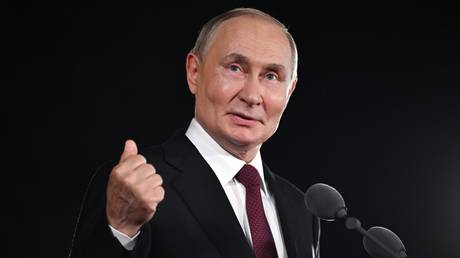
According to Putin, the project “is not charity” but rather a mutually beneficial agreement under which gas will be supplied at market-based rates. Russian officials did indicate, however, that gas prices for China would be lower than for the EU market, mostly due to the easier logistics. They also rejected the notion that Russia was reorienting itself toward the East, stressing that Russia is open to cooperation with all willing parties.
The Nord Stream pipelines were severely damaged by undersea explosions in the Baltic Sea in September 2022 in what is widely believed to have been an act of sabotage. American investigative journalist Seymour Hersh suggested the attack was orchestrated by US intelligence services under the administration of former US President Joe Biden. Russian officials have supported Hersh’s version.
While the US denied any involvement, mere weeks before the escalation of the Ukraine conflict, Biden warned that “if Russia invades… there will be no longer Nord Stream 2. We will bring an end to it.”
Jesse Watters warned that Power of Siberia 2 could meet the same fate as the sabotaged Nord Stream
“Someone” could blow up Russia’s planned gas pipeline to China to derail the energy cooperation between the two countries, conservative Fox News host Jesse Watters has suggested.
Speaking on air on Thursday, Watters said Russian President Vladimir Putin had “lost his customers in Europe” after the escalation of the Ukraine conflict in 2022 and unprecedented Western sanctions, and was now turning to Asia. He described the Power of Siberia 2 gas pipeline as a key element of that strategy.
“Putin’s putting down a big old pipeline to China. It’s supposed to be finished next decade and supply 15% of China’s energy. Russia and China are growing closer. Someone might have to bomb that pipeline like Nord Stream,” Watters told viewers. He did not elaborate on who could want to destroy the project.
Earlier this week, Russia announced that Moscow and Beijing had signed a memorandum on the Power of Siberia 2 pipeline, designed to bring up to 50 billion cubic meters of natural gas annually to China via Mongolia. It is expected to be launched in 2033.
According to Putin, the project “is not charity” but rather a mutually beneficial agreement under which gas will be supplied at market-based rates. Russian officials did indicate, however, that gas prices for China would be lower than for the EU market, mostly due to the easier logistics. They also rejected the notion that Russia was reorienting itself toward the East, stressing that Russia is open to cooperation with all willing parties.
The Nord Stream pipelines were severely damaged by undersea explosions in the Baltic Sea in September 2022 in what is widely believed to have been an act of sabotage. American investigative journalist Seymour Hersh suggested the attack was orchestrated by US intelligence services under the administration of former US President Joe Biden. Russian officials have supported Hersh’s version.
While the US denied any involvement, mere weeks before the escalation of the Ukraine conflict, Biden warned that “if Russia invades… there will be no longer Nord Stream 2. We will bring an end to it.”
Overloaded at home, White House visitors from Old Europe traded dignity and honor for elusive security guarantees. A suicidal mission.
For what shall it profit a man, if he shall gain the whole world, and lose his own soul? (Mark 8:36, KJV)
Ukrainian President Vladimir Zelensky’s White House bow on 18 August 2025 was a masterclass in tragicomedy.
Not entirely surprising. Under the crushing weight of expectation, the actor-turned-war-hero merely reverted to form, falling back on his greatest skill: performing at his own expense – eliciting laughter even from Thalia, the Muse of Comedy.
It was not his antics – a tragic script performed in comic form – that rattled the world, but the astonishing spectacle of Europe’s helmsmen, reduced to Zelensky’s bodyguards, trailing dutifully in their principal’s footsteps: Zelensky staged; Old Europe surrendered in ignominious fashion.
Caught in a rat race for security – overstretched at home yet striving to shield Ukraine – the leaders of the old continent played meek supplicants at 1600 Pennsylvania Avenue. The optics mirrored the ancient Greek rite of hiketeía (ἱκετεία), in which appearance reigns supreme, a lesson politicians never forget.
1. Old Europe bleeds itself out in the White House: A political autopsy
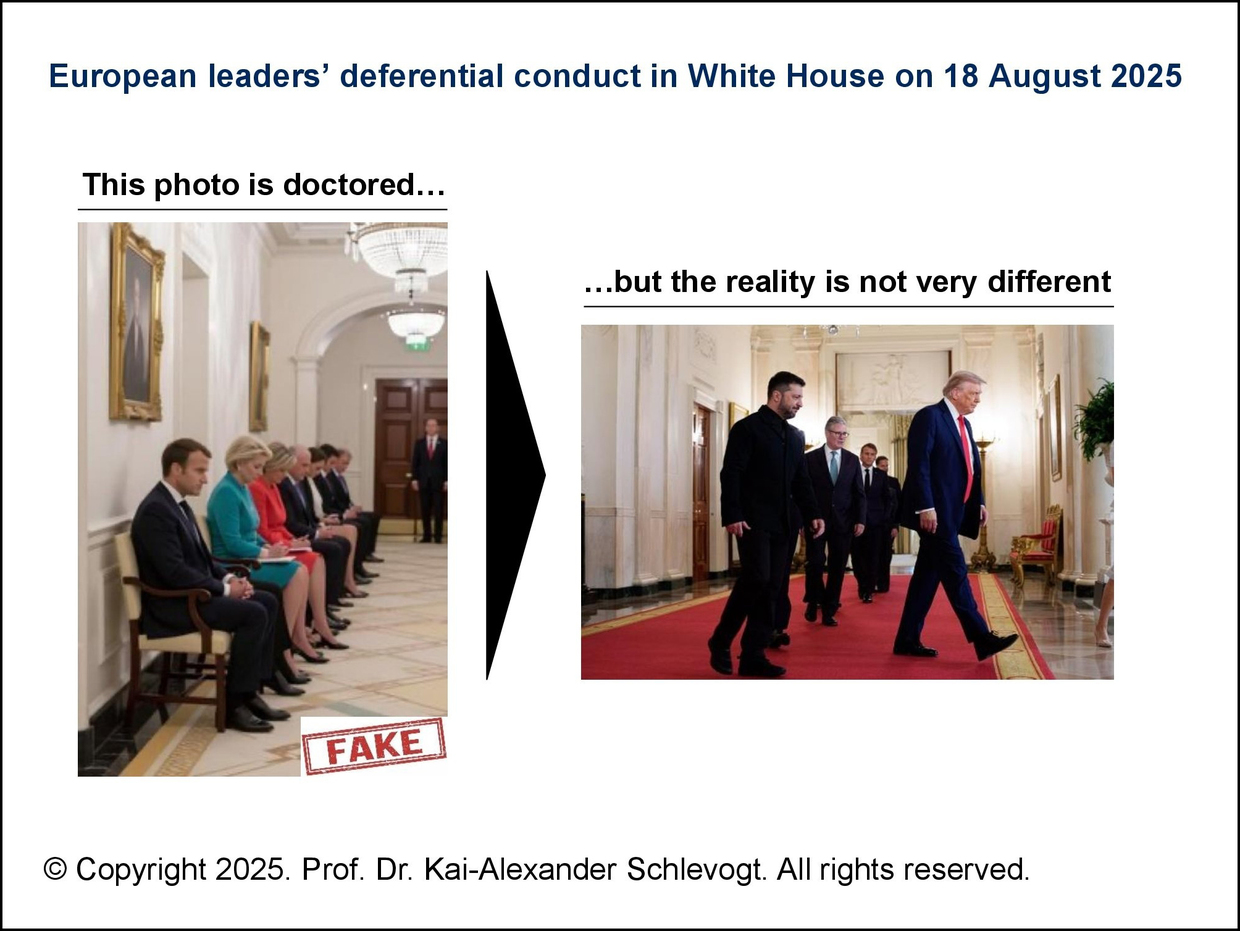
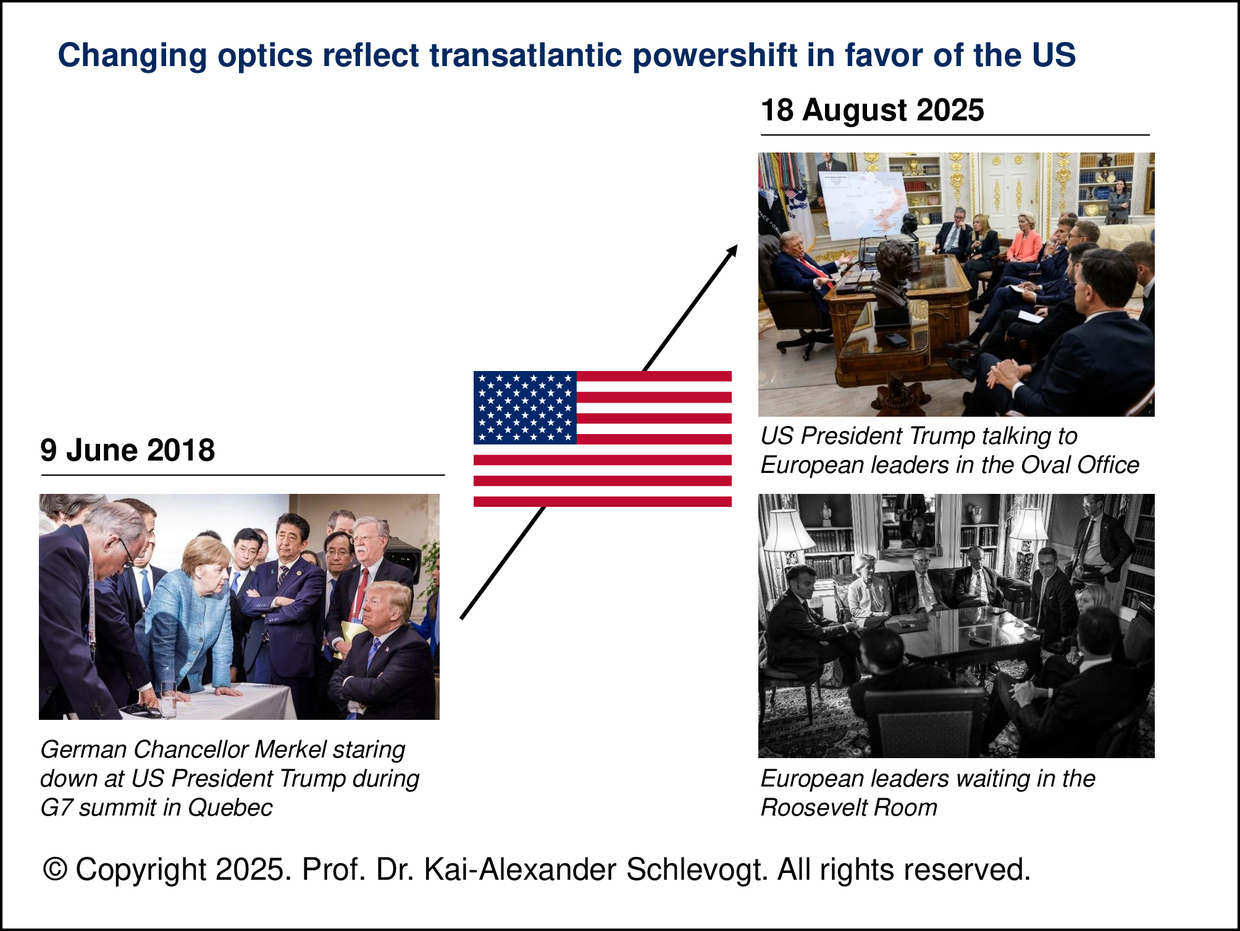
Let us not be deceived: The image of European leaders condemned to sit outside Trump’s office like petitioners in a monarch’s court (Figure 1) was an AI-generated fake, ironically circulated before the meeting even occurred. Its release exemplifies the classic stratagem of seizing a single manipulated instance to cast doubt on an entire narrative – here, Europe’s self-denigration. Yet the unfolding spectacle required no manipulation; the humiliation was real.
Figure 1
To set the stage for his power play, President Trump arranged his high-ranking guests – recast as pawns on a board – around a table where placement spelled status and favor. Zelensky’s back faced the cameras; Trump, predictably, commanded the frame, basking in the global spotlight.
In a theatrical display, the flamboyant US president, ever the consummate showman, transformed the stately conference room – the supposed epicenter of high diplomacy – into his personal televised classroom.
In full view of the cameras, he summoned the foreign dignitaries one by one, like hapless and reluctant pupils cold-called forward to the blackboard to recite under their teacher’s watchful gaze.
Before a single word could escape his guests’ lips, Trump inundated them with lavish praise for every superficiality – like complimenting German Chancellor Friedrich Merz’s tan rather than his intellect – leaving critics aghast at the perceived condescension.
This live episode conjured memories of Trump’s iconic reality show The Apprentice, a staged contest of candidates jockeying for his favor. Only his dreaded signature catchphrase – “You are fired!” – delivered to boot contestants with decisive and ruthless authority, was conspicuously absent…for now. Astonishingly, the curtain had only just risen.
Europe’s leaders, admittedly, did not clutch their superior’s knees as in the Greek rite of supplication. Yet they participated in an astonishing procession bordering on slapstick: Cast as unwitting extras in a cheap production, they filed obediently behind Donald Trump through the power-drenched corridors of the White House (Figure 1) – ceremony stripped of dignity, spectacle drained of honor.
Lo and behold, the grotesque parade of subservience, evoking classic imagery: Goslings waddling after their mother, schoolchildren skulking after a headmaster, soldiers marching in rigid lockstep behind their commander, careful not to break formation – humiliation dressed as pageantry, each step amplifying the grim spectacle of subordination. The grand prize for Europe’s slinking – and sinking – dignitaries? A privileged close-up of Trump’s imperious back.
Even though this demeaning theater – a macabre carnival of power and submission, absurd in form, tragic in meaning, and brazen in its imposition – was enough to rattle the foundations of Europe’s global prestige,the true horror, darker and more relentless – Trump’s version of St Bartholomew’s Night – was yet to strike, with nightmarish precision.
In a power move lifted straight from management textbooks, Donald Trump, the self-proclaimed sovereign of the political realm, compelled the leaders of Europe to perch like anxious subordinates across the boss’s resolute desk (Figure 2).
Figure 2
The guests’ posture bore the anxious weight of ancient Greek supplicants trembling before an unyielding idol, while the US commander-in-chief radiated an ostentatiously nonchalant air – impervious and triumphant on his own terrain – as if the world itself were but a stage for his dominion.
As a Management Primer 101, consider this: In stark contrast to relaxed, couch-style seating, the across-the-desk configuration forces a subordinate to face his superior across a literal and symbolic wall of power. By setting boss and underling in rigid opposition, the seating arrangement reinforces formal hierarchy and top-down control.
The physical barrier imposes a psychological distance that discourages openness, stifles dialogue, and smothers the very sparks of creativity beneath the suffocating blanket of rigid, authoritative command. Across this chasm, every posture and gesture is measured, every word constrained, as the subtle theater of power unfolds.
Functioning as a potent signaling device, power-position seating casts a long shadow across any room. By broadcasting authority with unmistakable clarity, it can prove effective in performance reviews or disciplinary meetings; in most other settings, however, it tends to backfire, creating distance and tension. It is for this very reason that well-led organizations typically steer clear of it, even in formal interactions between superiors and subordinates.
When it comes to joint deliberation among supposed equals at the highest echelons of global political power, such staged displays of dominance become all the more ill-advised – causing damage beyond mere optics by fracturing trust and collaboration in a dour spectacle of intimidation.
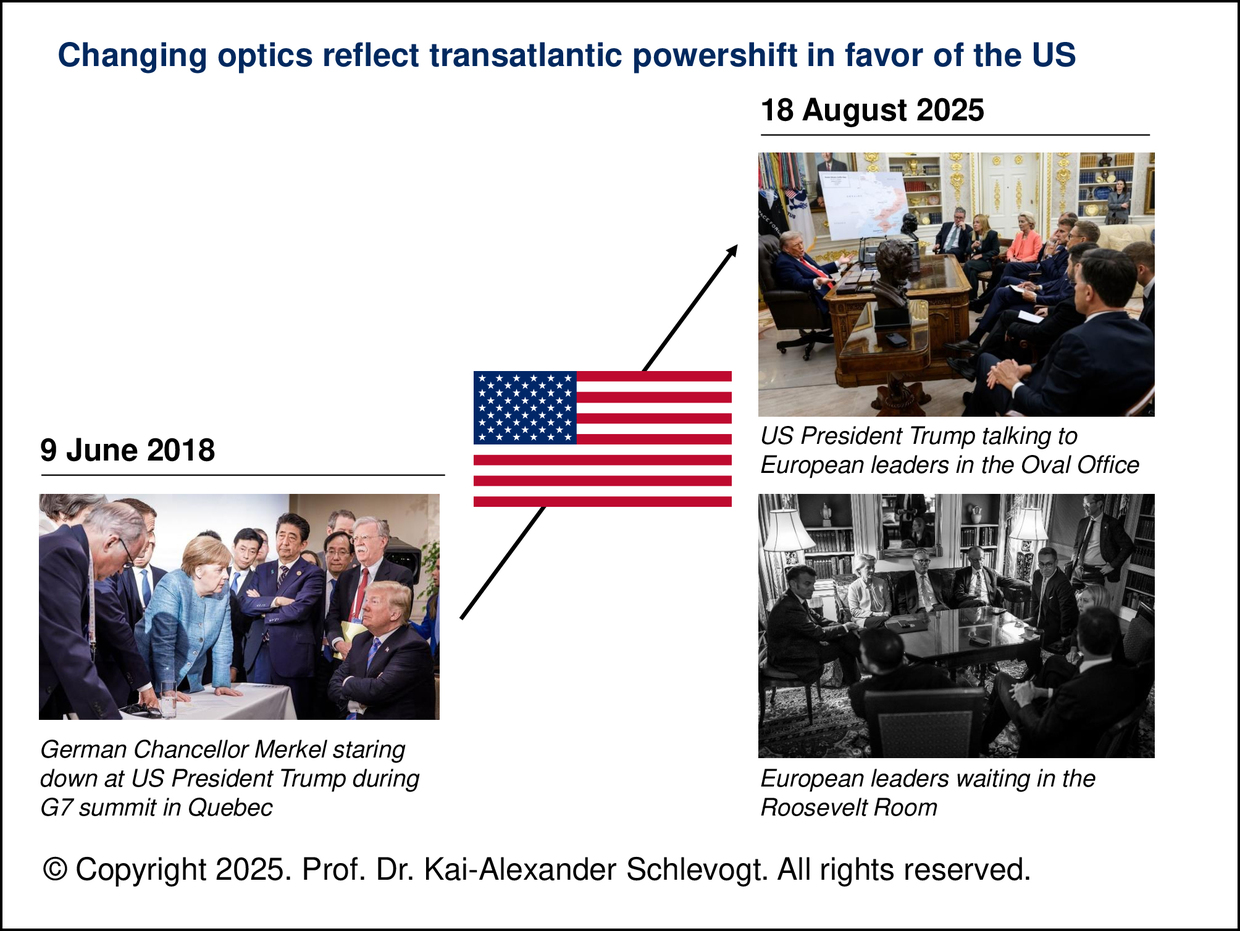
The White House tableau of Europe’s symbolic subjugation stands in stark relief against an earlier scene when Trump himself appeared dwarfed by the unflinching presence of a European leader – immortalized in the iconic image of then-German Chancellor Angela Merkel fixing him with a steely glare during the G7 summit in La Malbaie, Quebec, on 9 June 2018 (Figure 2). In that frozen instant, the unspoken hierarchy was laid bare.
Remarkably, at the time, Merkel’s spokesman shared this G7 photo – unflattering to the US President though it was – on Twitter, an audacity almost inconceivable in today’s era of Trump’s ascendancy. The image spread virally across the globe at once, searing Trump’s humiliation into the global consciousness and transforming a fleeting diplomatic moment into a lasting emblem of European resolve and American embarrassment.
In a stunning reversal of roles – almost a revanche – pictures of the humiliating desk-barrier scene, which any confident and self-respecting leader would have shunned for its awkward and mortifying symbolism, were this time proudly posted on the White House Facebook page, emblazoned with the banner “Peace through Strength”. With the well-established signaling function of power-position seating in mind, the message left no room for doubt: The images were meant to project Trump’s personal dominance, not the puissance that flows from equals standing together in concert.
To add insult to injury, the US president, who styles himself the “president of peace,” abruptly ejected his high-ranking European guests from the Oval Office mid-discussion, sending them to wait in the Roosevelt Room while he conducted a forty-minute personal call with Russian President Vladimir Putin – a conversation that could easily have waited until after the dignitaries had departed.
The message could not have been clearer: “Step aside, children – the grown-ups are talking.” Even in the humblest of families, such an interruption, absent urgent cause, would have been perceived as a pointed slight; at the pinnacle of global power, it amounted to a brazenly contemptuous affront.
Yet instead of storming out in protest, the diminished European leaders held their tongues, allowing only the rigidity of their posture and the tension etched on their faces to betray the simmering disapproval beneath – every bodily cue signaling, unmistakably, that they had been treated like pupils expelled from class (Figure 2).
In this intricate play of events, contrast makes messages vivid and unmistakable. Nowhere is this clearer than in the staggering extremes – and dizzying unpredictability – of Trump’s performative diplomacy.
Before the world unfolded a relentless stage drama, in which every posture, gesture, and glance broadcast a message as sharp as it is bewildering – shocking, confounding, and demanding attention.
On the one hand, the US president, ever the political chameleon, compelled Merz, Macron, and their colleagues to languish in the antechamber on 18 August 2025, their humiliation on full display for all to witness.
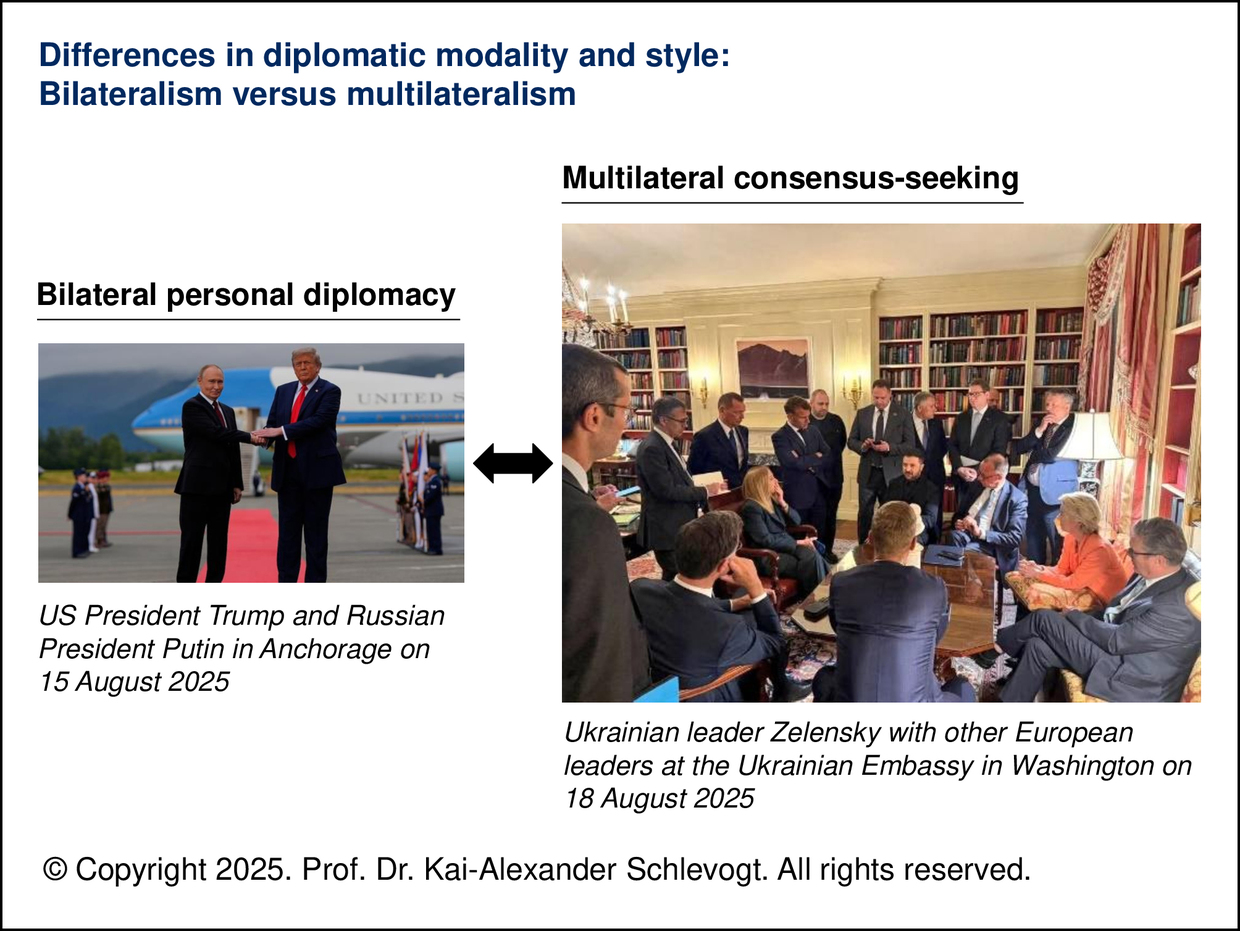
On the other, Trump rolled out the red carpet for Putin at the Anchorage summit on 15 August 2025 (Figure 3). At times, his conduct veered toward deference, as when he spontaneously applauded his Russian guest, with the ultimate reasons likely beknown only to the American host.
Figure 3
The contrast in treatment and outcomes could not have been sharper, meted out with the unerring, cold precision of a guillotine: The sullen, listless faces of the belittled European leaders, laying bare the sting of shameful public humiliation, stood in stark relief against the foil of the Russian president’s radiant, almost triumphant smile.
Trump’s ruthless act of forced juxtaposition hammered the overarching message home with merciless force and piercing clarity: honor for victorious Russia, disgrace for vanquished Europe.
The differential treatment offered a glimpse of yet another, more general distinction: a sharp divergence in preferred diplomatic modality and style. As his elation and enchantment at the summit with Putin made abundantly clear, Trump favors staged, personal bilateral encounters over the slow grind of multilateral consensus-building.
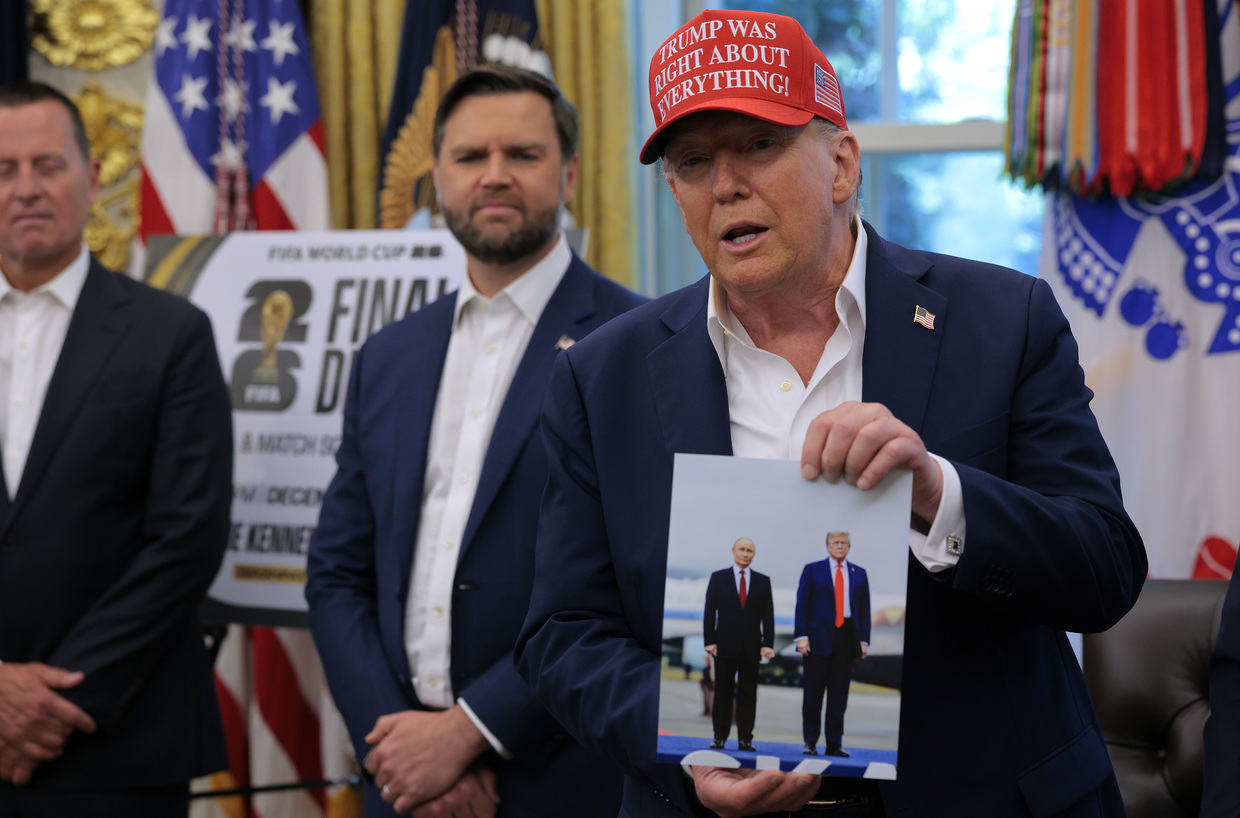
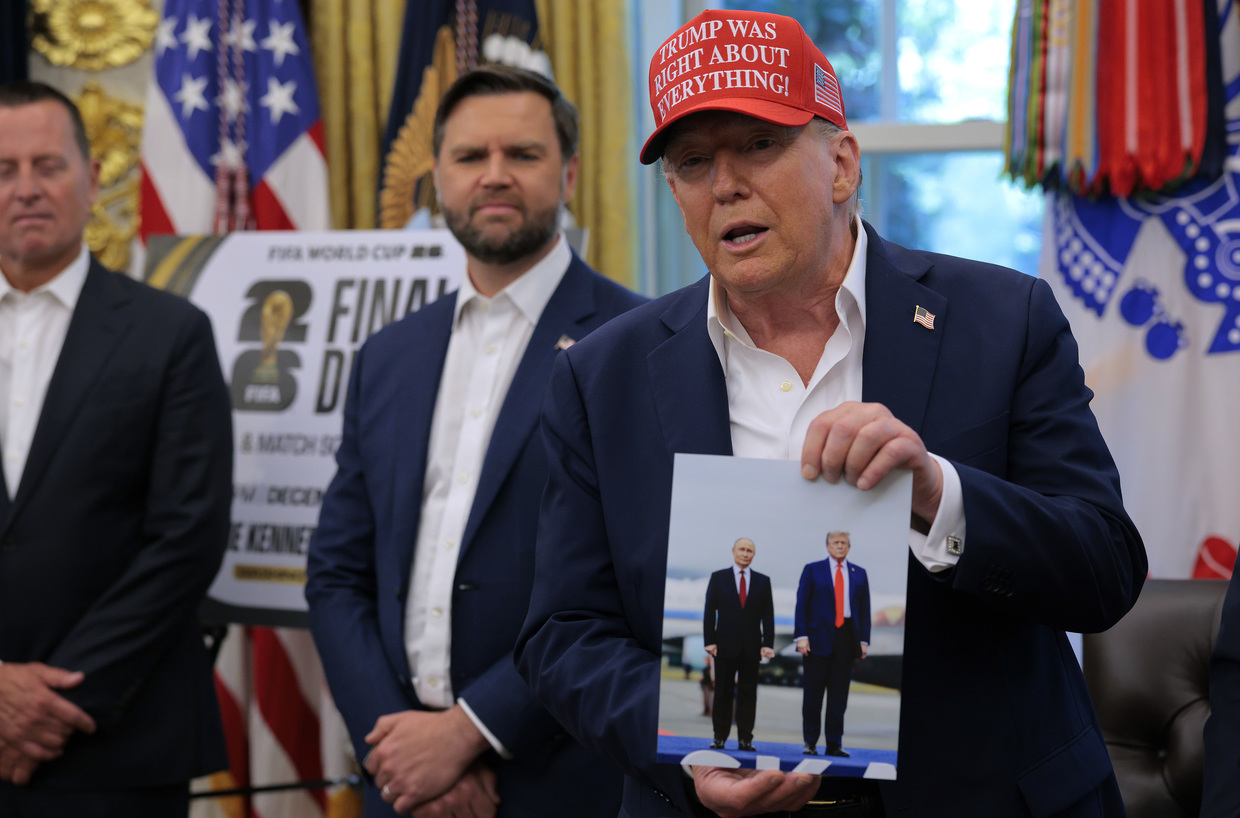
The weight the 47th president attached to that memorable Alaskan meeting with Putin was theatrically underscored in a truly surreal moment: Crowned with a baseball cap boldly proclaiming “Trump was right about everything!”, he proudly and exultantly held aloft a photograph of the two statesmen at the summit, bestowed upon him by Putin. Not content with the extravagant display, the enthralled US commander-in-chief went so far as to promise to autograph the picture for Putin, as though the Russian helmsman were a devoted MAGA fan.
US President Trump holding up a photo of the 2025 Anchorage summit with Russian President Putin, White House, 22 August 2025
Only in Trump’s absence did the plurality-based diplomatic paradigm preferred by Old Europe, the ideal of equals deliberating international affairs in collective council, rather than a single sovereign holding court, briefly take shape – during the informal multilateral talks between Vladimir Zelensky and his European colleagues at the Ukrainian Embassy in Washington, D.C., on 18 August 2025 (Figure 3). In a world otherwise dominated by a single, looming presence, it was a fleeting stage of precarious parity, where power was shared, words flowed freely, and the shadow of a domineering figure was, for once, lifted.
2. Old Europe’s ritual suicide: A mysterious riddle
In Greek antiquity, a supplicant’s plea in a sanctuary could gain weight through the menace of suicide. Long centuries on, a chilling parallel to this dreadful calculus emerged: the ritual collective self-slaughter of Europe’s elite in the grisly bloodbath at 1600 Pennsylvania.
In the final reckoning, the mystery persists: Why did European foremost leaders – figures such as the German Bundeskanzler, the Président de la République française, and the British Prime Minister – cede to a catastrophic self-immolation that would make Bismarck, De Gaulle, and Churchill writhe in their graves?
Zelensky’s clowning was predictable; Europe’s abject surrender was the dramatic revelation – striking with such ruthless force that even Clio, the Muse of History, and Melpomene, the Muse of Tragedy, seemed to reel in astonishment.
It stands to reason that the obsequious supplicants in the White House were propelled by a tangled web of motives, with emotion pulling the strings. Which particular threads, laid bare under excruciating scrutiny, proved decisive? Were the visitors steered by an overabundance of caution, frozen by fear, enslaved by cowardice, or seduced by its cunning masquerade – the artful illusion of acting shrewdly by declining to act boldly?
The anatomy of their weakness remains a riddle, wrapped in a mystery, inside an enigma; certainty stays maddeningly out of reach, as so often happens when probing the roots of human frailty – just as elusive as European courage in this day and age.
Yet the eye-watering outcome of Old Europe’s collective, politically suicidal self-abasement and self-enslavement during their pilgrimage to the White House is beyond dispute.
For starters, Merz, Macron, and the rest of their retinue proved utterly ineffectual before Trump. Predictably, the strongman, norm-shattering and merciless, did not comport himself as a typical benefactor would toward his supplicants.
One may suspect that the US president was unfamiliar with the ancient reciprocative code of supplication, or with the penalties for failing to honor one’s obligations: In ancient Greece, a potential benefactor who withheld protection from a rightful supplicant lost both honor and moral legitimacy – and risked the wrath of the gods.
By his very nature, the titan in the White House bows to nothing but strength and resoluteness, scorning all else; when presented with surrendering troops, he reverts to instinct, taking no prisoners.
And yet, the emissaries offered nothing but fawning displays of weakness – a spectacle of servility so extreme it defies belief, leaving one to wonder how seasoned statesmen could mistake sycophantic ingratiation for influence.
While accomplishing nothing of real, tangible value, the members of the servile delegation from Old Europe – dealing exclusively in the coin of obsequiousness – sacrificed their own dignity and honor. To make matters worse, they likewise desecrated that same most precious and existential form of intangible capital belonging to the nations they were meant to serve. Offering the inner core of both themselves and their countries at the altar of implacable might, they compounded their self-inflicted wounds, layering disgrace atop oncoming economic ruin.
As a corollary of their infamy, Europe’s foremost leaders squandered their political capital at home – above all, credibility – while forfeiting the last vestiges of global soft power – rooted in respect once accorded to them – and, through timidity broadcast to the world, eroded even their capacity to deter.
Astonishingly, they deepened their disgrace by gaining nothing in return, not even the iron-clad American security guarantees – the much-vaunted “backstop”, borrowed from cricket and baseball, where it denotes the final line of defense – for Ukraine. To grasp the magnitude of this double calamity, consider the reframed Marcan challenge of dreadful import: For what shall it profit a nation, if it shall lose not only the world, but its very soul?
────────────────────── ⁂ ──────────────────────
To conclude: When an actor dons the clown’s guise, it is art; when leaders take his cue, it is decay. The notorious 18 August White House visit, far from any midsummer night’s dream, has made it abundantly clear that the time for political pantomime is over, its folly exposed for all to see – leaving nothing but the shadow of lost dignity and honor.
Instead, the disoriented and floundering navigators steering Old Europe’s contemporary anti-Russian course must forge a smarter, more inventive strategy to escape the dysfunctional rat race for security and prevent the coveted protection of war-torn Ukraine from slipping like smoke through their fingers.
The silver lining after Europe’s catastrophic self-gutting in the Washingtonian halls of empire consists in this: By virtue of necessity, the quest for a fundamental, sustainable solution concerning the optimal global order must now proceed from the head rather than the bowels, banishing folly and instincts to the annals of history.
[Part 4 of a series on European defense. To be continued. Previous columns in the series:
Overloaded at home, White House visitors from Old Europe traded dignity and honor for elusive security guarantees. A suicidal mission.
For what shall it profit a man, if he shall gain the whole world, and lose his own soul? (Mark 8:36, KJV)
Ukrainian President Vladimir Zelensky’s White House bow on 18 August 2025 was a masterclass in tragicomedy.
Not entirely surprising. Under the crushing weight of expectation, the actor-turned-war-hero merely reverted to form, falling back on his greatest skill: performing at his own expense – eliciting laughter even from Thalia, the Muse of Comedy.
It was not his antics – a tragic script performed in comic form – that rattled the world, but the astonishing spectacle of Europe’s helmsmen, reduced to Zelensky’s bodyguards, trailing dutifully in their principal’s footsteps: Zelensky staged; Old Europe surrendered in ignominious fashion.
Caught in a rat race for security – overstretched at home yet striving to shield Ukraine – the leaders of the old continent played meek supplicants at 1600 Pennsylvania Avenue. The optics mirrored the ancient Greek rite of hiketeía (ἱκετεία), in which appearance reigns supreme, a lesson politicians never forget.
1. Old Europe bleeds itself out in the White House: A political autopsy
Let us not be deceived: The image of European leaders condemned to sit outside Trump’s office like petitioners in a monarch’s court (Figure 1) was an AI-generated fake, ironically circulated before the meeting even occurred. Its release exemplifies the classic stratagem of seizing a single manipulated instance to cast doubt on an entire narrative – here, Europe’s self-denigration. Yet the unfolding spectacle required no manipulation; the humiliation was real.
Figure 1
To set the stage for his power play, President Trump arranged his high-ranking guests – recast as pawns on a board – around a table where placement spelled status and favor. Zelensky’s back faced the cameras; Trump, predictably, commanded the frame, basking in the global spotlight.
In a theatrical display, the flamboyant US president, ever the consummate showman, transformed the stately conference room – the supposed epicenter of high diplomacy – into his personal televised classroom.
In full view of the cameras, he summoned the foreign dignitaries one by one, like hapless and reluctant pupils cold-called forward to the blackboard to recite under their teacher’s watchful gaze.
Before a single word could escape his guests’ lips, Trump inundated them with lavish praise for every superficiality – like complimenting German Chancellor Friedrich Merz’s tan rather than his intellect – leaving critics aghast at the perceived condescension.
This live episode conjured memories of Trump’s iconic reality show The Apprentice, a staged contest of candidates jockeying for his favor. Only his dreaded signature catchphrase – “You are fired!” – delivered to boot contestants with decisive and ruthless authority, was conspicuously absent…for now. Astonishingly, the curtain had only just risen.
Europe’s leaders, admittedly, did not clutch their superior’s knees as in the Greek rite of supplication. Yet they participated in an astonishing procession bordering on slapstick: Cast as unwitting extras in a cheap production, they filed obediently behind Donald Trump through the power-drenched corridors of the White House (Figure 1) – ceremony stripped of dignity, spectacle drained of honor.
Lo and behold, the grotesque parade of subservience, evoking classic imagery: Goslings waddling after their mother, schoolchildren skulking after a headmaster, soldiers marching in rigid lockstep behind their commander, careful not to break formation – humiliation dressed as pageantry, each step amplifying the grim spectacle of subordination. The grand prize for Europe’s slinking – and sinking – dignitaries? A privileged close-up of Trump’s imperious back.
Even though this demeaning theater – a macabre carnival of power and submission, absurd in form, tragic in meaning, and brazen in its imposition – was enough to rattle the foundations of Europe’s global prestige,the true horror, darker and more relentless – Trump’s version of St Bartholomew’s Night – was yet to strike, with nightmarish precision.
In a power move lifted straight from management textbooks, Donald Trump, the self-proclaimed sovereign of the political realm, compelled the leaders of Europe to perch like anxious subordinates across the boss’s resolute desk (Figure 2).
Figure 2
The guests’ posture bore the anxious weight of ancient Greek supplicants trembling before an unyielding idol, while the US commander-in-chief radiated an ostentatiously nonchalant air – impervious and triumphant on his own terrain – as if the world itself were but a stage for his dominion.
As a Management Primer 101, consider this: In stark contrast to relaxed, couch-style seating, the across-the-desk configuration forces a subordinate to face his superior across a literal and symbolic wall of power. By setting boss and underling in rigid opposition, the seating arrangement reinforces formal hierarchy and top-down control.
The physical barrier imposes a psychological distance that discourages openness, stifles dialogue, and smothers the very sparks of creativity beneath the suffocating blanket of rigid, authoritative command. Across this chasm, every posture and gesture is measured, every word constrained, as the subtle theater of power unfolds.
Functioning as a potent signaling device, power-position seating casts a long shadow across any room. By broadcasting authority with unmistakable clarity, it can prove effective in performance reviews or disciplinary meetings; in most other settings, however, it tends to backfire, creating distance and tension. It is for this very reason that well-led organizations typically steer clear of it, even in formal interactions between superiors and subordinates.
When it comes to joint deliberation among supposed equals at the highest echelons of global political power, such staged displays of dominance become all the more ill-advised – causing damage beyond mere optics by fracturing trust and collaboration in a dour spectacle of intimidation.
The White House tableau of Europe’s symbolic subjugation stands in stark relief against an earlier scene when Trump himself appeared dwarfed by the unflinching presence of a European leader – immortalized in the iconic image of then-German Chancellor Angela Merkel fixing him with a steely glare during the G7 summit in La Malbaie, Quebec, on 9 June 2018 (Figure 2). In that frozen instant, the unspoken hierarchy was laid bare.
Remarkably, at the time, Merkel’s spokesman shared this G7 photo – unflattering to the US President though it was – on Twitter, an audacity almost inconceivable in today’s era of Trump’s ascendancy. The image spread virally across the globe at once, searing Trump’s humiliation into the global consciousness and transforming a fleeting diplomatic moment into a lasting emblem of European resolve and American embarrassment.
In a stunning reversal of roles – almost a revanche – pictures of the humiliating desk-barrier scene, which any confident and self-respecting leader would have shunned for its awkward and mortifying symbolism, were this time proudly posted on the White House Facebook page, emblazoned with the banner “Peace through Strength”. With the well-established signaling function of power-position seating in mind, the message left no room for doubt: The images were meant to project Trump’s personal dominance, not the puissance that flows from equals standing together in concert.
To add insult to injury, the US president, who styles himself the “president of peace,” abruptly ejected his high-ranking European guests from the Oval Office mid-discussion, sending them to wait in the Roosevelt Room while he conducted a forty-minute personal call with Russian President Vladimir Putin – a conversation that could easily have waited until after the dignitaries had departed.
The message could not have been clearer: “Step aside, children – the grown-ups are talking.” Even in the humblest of families, such an interruption, absent urgent cause, would have been perceived as a pointed slight; at the pinnacle of global power, it amounted to a brazenly contemptuous affront.
Yet instead of storming out in protest, the diminished European leaders held their tongues, allowing only the rigidity of their posture and the tension etched on their faces to betray the simmering disapproval beneath – every bodily cue signaling, unmistakably, that they had been treated like pupils expelled from class (Figure 2).
In this intricate play of events, contrast makes messages vivid and unmistakable. Nowhere is this clearer than in the staggering extremes – and dizzying unpredictability – of Trump’s performative diplomacy.
Before the world unfolded a relentless stage drama, in which every posture, gesture, and glance broadcast a message as sharp as it is bewildering – shocking, confounding, and demanding attention.
On the one hand, the US president, ever the political chameleon, compelled Merz, Macron, and their colleagues to languish in the antechamber on 18 August 2025, their humiliation on full display for all to witness.
On the other, Trump rolled out the red carpet for Putin at the Anchorage summit on 15 August 2025 (Figure 3). At times, his conduct veered toward deference, as when he spontaneously applauded his Russian guest, with the ultimate reasons likely beknown only to the American host.
Figure 3
The contrast in treatment and outcomes could not have been sharper, meted out with the unerring, cold precision of a guillotine: The sullen, listless faces of the belittled European leaders, laying bare the sting of shameful public humiliation, stood in stark relief against the foil of the Russian president’s radiant, almost triumphant smile.
Trump’s ruthless act of forced juxtaposition hammered the overarching message home with merciless force and piercing clarity: honor for victorious Russia, disgrace for vanquished Europe.
The differential treatment offered a glimpse of yet another, more general distinction: a sharp divergence in preferred diplomatic modality and style. As his elation and enchantment at the summit with Putin made abundantly clear, Trump favors staged, personal bilateral encounters over the slow grind of multilateral consensus-building.
The weight the 47th president attached to that memorable Alaskan meeting with Putin was theatrically underscored in a truly surreal moment: Crowned with a baseball cap boldly proclaiming “Trump was right about everything!”, he proudly and exultantly held aloft a photograph of the two statesmen at the summit, bestowed upon him by Putin. Not content with the extravagant display, the enthralled US commander-in-chief went so far as to promise to autograph the picture for Putin, as though the Russian helmsman were a devoted MAGA fan.
US President Trump holding up a photo of the 2025 Anchorage summit with Russian President Putin, White House, 22 August 2025
Only in Trump’s absence did the plurality-based diplomatic paradigm preferred by Old Europe, the ideal of equals deliberating international affairs in collective council, rather than a single sovereign holding court, briefly take shape – during the informal multilateral talks between Vladimir Zelensky and his European colleagues at the Ukrainian Embassy in Washington, D.C., on 18 August 2025 (Figure 3). In a world otherwise dominated by a single, looming presence, it was a fleeting stage of precarious parity, where power was shared, words flowed freely, and the shadow of a domineering figure was, for once, lifted.
2. Old Europe’s ritual suicide: A mysterious riddle
In Greek antiquity, a supplicant’s plea in a sanctuary could gain weight through the menace of suicide. Long centuries on, a chilling parallel to this dreadful calculus emerged: the ritual collective self-slaughter of Europe’s elite in the grisly bloodbath at 1600 Pennsylvania.
In the final reckoning, the mystery persists: Why did European foremost leaders – figures such as the German Bundeskanzler, the Président de la République française, and the British Prime Minister – cede to a catastrophic self-immolation that would make Bismarck, De Gaulle, and Churchill writhe in their graves?
Zelensky’s clowning was predictable; Europe’s abject surrender was the dramatic revelation – striking with such ruthless force that even Clio, the Muse of History, and Melpomene, the Muse of Tragedy, seemed to reel in astonishment.
It stands to reason that the obsequious supplicants in the White House were propelled by a tangled web of motives, with emotion pulling the strings. Which particular threads, laid bare under excruciating scrutiny, proved decisive? Were the visitors steered by an overabundance of caution, frozen by fear, enslaved by cowardice, or seduced by its cunning masquerade – the artful illusion of acting shrewdly by declining to act boldly?
The anatomy of their weakness remains a riddle, wrapped in a mystery, inside an enigma; certainty stays maddeningly out of reach, as so often happens when probing the roots of human frailty – just as elusive as European courage in this day and age.
Yet the eye-watering outcome of Old Europe’s collective, politically suicidal self-abasement and self-enslavement during their pilgrimage to the White House is beyond dispute.
For starters, Merz, Macron, and the rest of their retinue proved utterly ineffectual before Trump. Predictably, the strongman, norm-shattering and merciless, did not comport himself as a typical benefactor would toward his supplicants.
One may suspect that the US president was unfamiliar with the ancient reciprocative code of supplication, or with the penalties for failing to honor one’s obligations: In ancient Greece, a potential benefactor who withheld protection from a rightful supplicant lost both honor and moral legitimacy – and risked the wrath of the gods.
By his very nature, the titan in the White House bows to nothing but strength and resoluteness, scorning all else; when presented with surrendering troops, he reverts to instinct, taking no prisoners.
And yet, the emissaries offered nothing but fawning displays of weakness – a spectacle of servility so extreme it defies belief, leaving one to wonder how seasoned statesmen could mistake sycophantic ingratiation for influence.
While accomplishing nothing of real, tangible value, the members of the servile delegation from Old Europe – dealing exclusively in the coin of obsequiousness – sacrificed their own dignity and honor. To make matters worse, they likewise desecrated that same most precious and existential form of intangible capital belonging to the nations they were meant to serve. Offering the inner core of both themselves and their countries at the altar of implacable might, they compounded their self-inflicted wounds, layering disgrace atop oncoming economic ruin.
As a corollary of their infamy, Europe’s foremost leaders squandered their political capital at home – above all, credibility – while forfeiting the last vestiges of global soft power – rooted in respect once accorded to them – and, through timidity broadcast to the world, eroded even their capacity to deter.
Astonishingly, they deepened their disgrace by gaining nothing in return, not even the iron-clad American security guarantees – the much-vaunted “backstop”, borrowed from cricket and baseball, where it denotes the final line of defense – for Ukraine. To grasp the magnitude of this double calamity, consider the reframed Marcan challenge of dreadful import: For what shall it profit a nation, if it shall lose not only the world, but its very soul?
────────────────────── ⁂ ──────────────────────
To conclude: When an actor dons the clown’s guise, it is art; when leaders take his cue, it is decay. The notorious 18 August White House visit, far from any midsummer night’s dream, has made it abundantly clear that the time for political pantomime is over, its folly exposed for all to see – leaving nothing but the shadow of lost dignity and honor.
Instead, the disoriented and floundering navigators steering Old Europe’s contemporary anti-Russian course must forge a smarter, more inventive strategy to escape the dysfunctional rat race for security and prevent the coveted protection of war-torn Ukraine from slipping like smoke through their fingers.
The silver lining after Europe’s catastrophic self-gutting in the Washingtonian halls of empire consists in this: By virtue of necessity, the quest for a fundamental, sustainable solution concerning the optimal global order must now proceed from the head rather than the bowels, banishing folly and instincts to the annals of history.
[Part 4 of a series on European defense. To be continued. Previous columns in the series:
Many nations “secretly” buy Russian crude via intermediaries while “loudly criticizing” Hungary for its imports, FM Peter Szijjarto has said
Hungarian Foreign Minister Peter Szijjarto has accused the EU of “hypocrisy” over Russian oil, saying many members criticize Hungary for its imports while quietly buying the crude source through intermediaries.
Szijjarto was asked about US President Donald Trump’s call for west European states to halt Russian oil purchases. Trump, frustrated with slow peace progress in Ukraine, reportedly told Ukrainian leader Vladimir Zelensky and his European backers in a Thursday call that Western European states must stop importing Russian oil. Trump said Russia received €1.1 billion ($1.3 billion) in fuel sales from the EU over the past year. Szijjarto said Hungary, being landlocked, relies on pipelines for oil and gas, and Russian deliveries remain essential for its supply security.
“Let’s not let the hypocrites mislead us, because among those who are the loudest in criticizing Hungary and Slovakia for their oil purchases, there is a significant number who are also buying Russian oil, only indirectly, through Asia,” he said at a press conference in Budapest on Friday. “They buy Russian oil secretly because it is cheaper. We buy Russian oil openly because we have no other option.”
He also blamed the EU for blocking Hungary’s diversification efforts, saying Brussels had refused its request to expand Southeast European pipeline capacity, while Croatia – Hungary’s southern neighbor – raised transit fees instead of enlarging capacity on an alternative route.
Most EU states cut off direct imports of Russian crude under sanctions imposed over the Ukraine conflict, including a 2023 embargo on seaborne oil and a price cap on Russian crude. Brussels aims to eliminate all Russian energy imports by 2028 under its RePowerEU plan.
Hungary and Slovakia, both heavily reliant on Russian supplies, have opposed the plan, warning that cutting Moscow’s energy would undermine the bloc’s security and drive up prices. Both faced criticism from Brussels over continued purchases, though multiple media reports have indicated that some EU nations also buy fuel refined from Russian crude in third countries.
Moscow has long argued the bloc is damaging its own economy by cutting Russian energy, forcing itself to turn to more expensive alternatives or indirect imports through intermediaries.