Category Archive : News

Backers of the banned group rallied on Parliament Square on Saturday

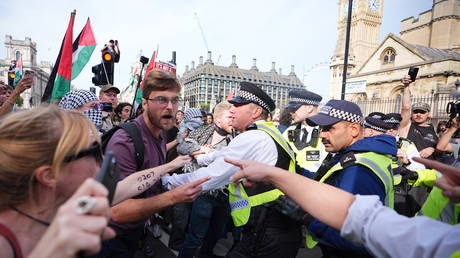
More than 425 people were arrested in London on Saturday for showing support for the banned activist group Palestine Action, the Metropolitan Police have said.

The group was outlawed under the Terrorism Act in June after its members broke into a military base and spray-painted two planes red in protest against Israel’s war in Gaza. Since then, its supporters have staged multiple demonstrations against the ban.

On Saturday, activists gathered on Parliament Square carrying Palestinian flags and signs reading “I oppose genocide. I support Palestine Action.”

Police detained people standing and sitting on the lawn, including several activists in wheelchairs. Some protesters were filmed scuffling with officers.

“In carrying out their duties today, our officers have been punched, kicked, spat on and had objects thrown at them by protesters,” Deputy Assistant Commissioner Claire Smart said.

Protesters remained in Parliament Square until the evening. Defend Our Juries, the group that organized the rally, described the protest as “one of the biggest mass acts of civil disobedience in British history.”


The French president’s rating has sunk to record lows amid a budget deficit

Thousands marched through Paris on Saturday, demanding the resignation of President Emmanuel Macron and calling for France to leave the EU.

Macron’s approval rating has dropped to the lowest level since he took office in 2017, amid a spiraling budget deficit and growing discontent with his government’s financial policies.

Around 80% of French people say they do not trust Macron, according to a poll conducted for Le Figaro and published on Wednesday.

Trust in Prime Minister Francois Bayrou, the fifth to hold the post in less than two years, has also fallen to record lows.

Protesters carried placards reading “Let’s stop Macron, let’s stop the war” and “Frexit,” a French play on Brexit.

The rally was organized by former National Rally politician Florian Philippot and his Euroskeptic party, the Patriots, which opposes arms deliveries to Ukraine and warns against further escalation with Russia.

Left-wing activists and trade unions are planning separate strikes and protests on Wednesday, with the slogan ‘Let’s block everything’.

Bayrou is facing a no-confidence vote on Monday as he seeks support for his proposed budget, with France struggling under a fiscal deficit of 5.8% of GDP – nearly double the EU’s 3% limit. His plan includes cuts to public sector jobs, welfare programs, and pensions, measures the opposition has denounced as prioritizing military spending over social support.

The French president’s rating has sunk to record lows amid a budget deficit

Thousands marched through Paris on Saturday, demanding the resignation of President Emmanuel Macron and calling for France to leave the EU.

Macron’s approval rating has dropped to the lowest level since he took office in 2017, amid a spiraling budget deficit and growing discontent with his government’s financial policies.

Around 80% of French people say they do not trust Macron, according to a poll conducted for Le Figaro and published on Wednesday.

Trust in Prime Minister Francois Bayrou, the fifth to hold the post in less than two years, has also fallen to record lows.

Protesters carried placards reading “Let’s stop Macron, let’s stop the war” and “Frexit,” a French play on Brexit.

The rally was organized by former National Rally politician Florian Philippot and his Euroskeptic party, the Patriots, which opposes arms deliveries to Ukraine and warns against further escalation with Russia.

Left-wing activists and trade unions are planning separate strikes and protests on Wednesday, with the slogan ‘Let’s block everything’.

Bayrou is facing a no-confidence vote on Monday as he seeks support for his proposed budget, with France struggling under a fiscal deficit of 5.8% of GDP – nearly double the EU’s 3% limit. His plan includes cuts to public sector jobs, welfare programs, and pensions, measures the opposition has denounced as prioritizing military spending over social support.

West Jerusalem was taken by surprise by the admonition, the Washington Post has reported

A public warning from the United Arab Emirates prompted the Israeli government to drop a planned discussion on annexing the West Bank, the Washington Post has reported. A senior UAE diplomat reportedly told Israeli media earlier this week that the move would be a “red line” that would block Israel’s path to regional integration.

Israeli Prime Minister Benjamin Netanyahu was scheduled to discuss the issue at a major government meeting on Friday, according to local media. On Wednesday, UAE special envoy Lana Nusseibeh told the Times of Israel that annexation would “foreclose the idea of regional integration.”

“For every Arab capital you talk to, the idea of regional integration is still a possibility, but annexation to satisfy some of the radical extremist elements in Israel is going to take that off the table,” she stated.

The UAE was the first Arab nation to normalize relations with Israel in over a quarter of a century under the Abraham Accords brokered by US President Donald Trump during his first term in office.

Read more

FILE PHOTO: An Israeli settlement in the occupied West Bank.
Israeli ministers call on Netanyahu to annex West Bank

The public warning from Abu Dhabi “came as a surprise,” an Israeli official told the Post, calling the situation “very unusual.”

On Thursday, the issue of annexation was removed from the Israeli ministerial meeting agenda, according to the newspaper.

Washington has not taken a stance on the issue so far. Secretary of State Marco Rubio described potential annexation as “not a final thing” earlier this week, adding that he was “not going to opine on that.”

The West Bank returned to the spotlight earlier this year after a group of Israeli ministers urged that the territory be formally annexed. Finance Minister Bezalel Smotrich claimed control could be asserted at any moment.

Israel seized the West Bank from Jordan in the 1967 Arab-Israeli war and has been actively building settlements there – which is widely regarded as illegal by the international community. It was close to annexation in 2020 but dropped the idea in exchange for normalizing relations with the UAE and Bahrain.

West Jerusalem was taken by surprise by the admonition, the Washington Post has reported

A public warning from the United Arab Emirates prompted the Israeli government to drop a planned discussion on annexing the West Bank, the Washington Post has reported. A senior UAE diplomat reportedly told Israeli media earlier this week that the move would be a “red line” that would block Israel’s path to regional integration.

Israeli Prime Minister Benjamin Netanyahu was scheduled to discuss the issue at a major government meeting on Friday, according to local media. On Wednesday, UAE special envoy Lana Nusseibeh told the Times of Israel that annexation would “foreclose the idea of regional integration.”

“For every Arab capital you talk to, the idea of regional integration is still a possibility, but annexation to satisfy some of the radical extremist elements in Israel is going to take that off the table,” she stated.

The UAE was the first Arab nation to normalize relations with Israel in over a quarter of a century under the Abraham Accords brokered by US President Donald Trump during his first term in office.

Read more

FILE PHOTO: An Israeli settlement in the occupied West Bank.
Israeli ministers call on Netanyahu to annex West Bank

The public warning from Abu Dhabi “came as a surprise,” an Israeli official told the Post, calling the situation “very unusual.”

On Thursday, the issue of annexation was removed from the Israeli ministerial meeting agenda, according to the newspaper.

Washington has not taken a stance on the issue so far. Secretary of State Marco Rubio described potential annexation as “not a final thing” earlier this week, adding that he was “not going to opine on that.”

The West Bank returned to the spotlight earlier this year after a group of Israeli ministers urged that the territory be formally annexed. Finance Minister Bezalel Smotrich claimed control could be asserted at any moment.

Israel seized the West Bank from Jordan in the 1967 Arab-Israeli war and has been actively building settlements there – which is widely regarded as illegal by the international community. It was close to annexation in 2020 but dropped the idea in exchange for normalizing relations with the UAE and Bahrain.

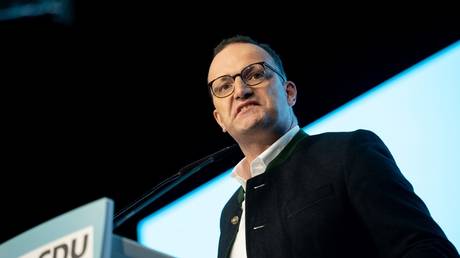
Jens Spahn believes there needs to be European-level nuclear deterrence and that Berlin should take the lead

Germany should have access to French and British nuclear weapons, senior lawmaker Jens Spahn has said. In return, Berlin could work with Paris and London to modernize their arsenals, he told the newspaper FAZ.

Spahn, who leads the joint CDU/CSU parliamentary group, has emerged as a strong proponent of an EU-level nuclear weapons system.

“We… need an ability to deter at the European level… together with the French and the British,” he said in an interview published on Saturday, arguing that US nuclear arms in Europe are no longer sufficient.

The MP, a former federal health minister, said debate on the issue “will only happen if Germany pushes it forward.” He suggested that London and Paris could keep most control over their nuclear arsenals, while Berlin could take part in a modernization program.

In July, Spahn also spoke about the need “to talk about German or European [access] to the nuclear arsenals of France and Great Britain” in light of what he called the “threat” coming from Russia. Nations without nuclear deterrence will “become pawns in global politics,” he argued.

Read more

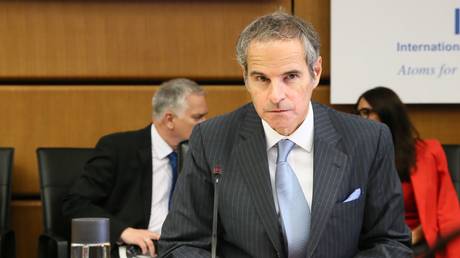
IAEA Director General Rafael Grossi.
Germany could develop nuclear weapons – IAEA

IAEA Director General Rafael Grossi has warned that Berlin could develop its own nuclear bomb within months if it chose to.

Spahn’s remarks come as Berlin has taken a more hardline stance towards Russia under Chancellor Friedrich Merz, who pledged an additional €5 billion ($5.6 billion) in military aid to Ukraine after taking office in May.

Last month, he claimed that Germany was “already in a conflict” with Russia and accused President Vladimir Putin of “destabilizing large parts of our country.”

Moscow has dismissed allegations of having hostile intent toward Western nations as “nonsense” and fearmongering, and condemned what it calls the West’s “reckless militarization.”

Russian Foreign Minister Sergey Lavrov has warned recently that growing Russophobia and militarization in Germany signal a slide into a “Fourth Reich,” and accused Western governments of seeking dominance under the guise of democracy.

Jens Spahn believes there needs to be European-level nuclear deterrence and that Berlin should take the lead

Germany should have access to French and British nuclear weapons, senior lawmaker Jens Spahn has said. In return, Berlin could work with Paris and London to modernize their arsenals, he told the newspaper FAZ.

Spahn, who leads the joint CDU/CSU parliamentary group, has emerged as a strong proponent of an EU-level nuclear weapons system.

“We… need an ability to deter at the European level… together with the French and the British,” he said in an interview published on Saturday, arguing that US nuclear arms in Europe are no longer sufficient.

The MP, a former federal health minister, said debate on the issue “will only happen if Germany pushes it forward.” He suggested that London and Paris could keep most control over their nuclear arsenals, while Berlin could take part in a modernization program.

In July, Spahn also spoke about the need “to talk about German or European [access] to the nuclear arsenals of France and Great Britain” in light of what he called the “threat” coming from Russia. Nations without nuclear deterrence will “become pawns in global politics,” he argued.

Read more

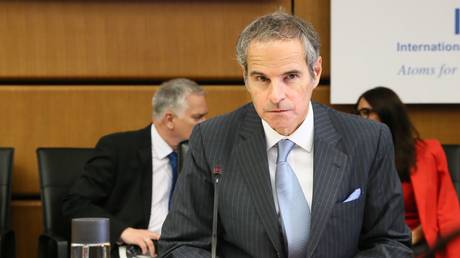
IAEA Director General Rafael Grossi.
Germany could develop nuclear weapons – IAEA

IAEA Director General Rafael Grossi has warned that Berlin could develop its own nuclear bomb within months if it chose to.

Spahn’s remarks come as Berlin has taken a more hardline stance towards Russia under Chancellor Friedrich Merz, who pledged an additional €5 billion ($5.6 billion) in military aid to Ukraine after taking office in May.

Last month, he claimed that Germany was “already in a conflict” with Russia and accused President Vladimir Putin of “destabilizing large parts of our country.”

Moscow has dismissed allegations of having hostile intent toward Western nations as “nonsense” and fearmongering, and condemned what it calls the West’s “reckless militarization.”

Russian Foreign Minister Sergey Lavrov has warned recently that growing Russophobia and militarization in Germany signal a slide into a “Fourth Reich,” and accused Western governments of seeking dominance under the guise of democracy.

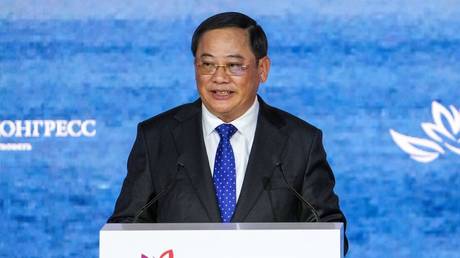
Laotian Prime Minister Sonexay Siphandone has said exports could be diverted if sales to the US plummet

Laos could reroute its coffee sales from the US to Russia due to the heavy tariffs imposed by US President Donald Trump, Laotian Prime Minister Sonexay Siphandone has told RIA Novosti.

Trump imposed 40% levies on goods from Laos last month as part of a broader flurry of country-specific tariffs aimed at addressing what he called unfair trade imbalances.

“Among the goods that Laos supplies to the US, but can also supply to other countries, are agricultural products such as coffee,” Siphandone told the news agency on Saturday on the sidelines of the Eastern Economic Forum in Russia’s Vladivostok.

“Laos also supplies coffee to Russia, and now the volume of these supplies can increase,” he added.

If US tariffs make our products too expensive and they will not buy them there, then we will increase the volume of supplies to Russia.

Read more

RT
China offers BRICS partner coffee lifeline

The US tariffs have also hit top coffee exporters Brazil and Vietnam, with levies reaching 50% and 20%, respectively. Brazil, the world’s largest producer, accounts for 37% of global output, while Vietnam contributes 17%.

Coffee prices have spiked sharply in recent months due to harvests being damaged by poor weather, as well as market disruption caused by the new US tariffs, according to the International Coffee Organization.

Americans drink coffee more than any other beverage, with two out of three consuming it daily, according to the US National Coffee Association. The group lobbied for an exemption for coffee ahead of the Trump tariffs but so far to no avail.

Laotian Prime Minister Sonexay Siphandone has said exports could be diverted if sales to the US plummet

Laos could reroute its coffee sales from the US to Russia due to the heavy tariffs imposed by US President Donald Trump, Laotian Prime Minister Sonexay Siphandone has told RIA Novosti.

Trump imposed 40% levies on goods from Laos last month as part of a broader flurry of country-specific tariffs aimed at addressing what he called unfair trade imbalances.

“Among the goods that Laos supplies to the US, but can also supply to other countries, are agricultural products such as coffee,” Siphandone told the news agency on Saturday on the sidelines of the Eastern Economic Forum in Russia’s Vladivostok.

“Laos also supplies coffee to Russia, and now the volume of these supplies can increase,” he added.

If US tariffs make our products too expensive and they will not buy them there, then we will increase the volume of supplies to Russia.

Read more

RT
China offers BRICS partner coffee lifeline

The US tariffs have also hit top coffee exporters Brazil and Vietnam, with levies reaching 50% and 20%, respectively. Brazil, the world’s largest producer, accounts for 37% of global output, while Vietnam contributes 17%.

Coffee prices have spiked sharply in recent months due to harvests being damaged by poor weather, as well as market disruption caused by the new US tariffs, according to the International Coffee Organization.

Americans drink coffee more than any other beverage, with two out of three consuming it daily, according to the US National Coffee Association. The group lobbied for an exemption for coffee ahead of the Trump tariffs but so far to no avail.

Moscow has long warned that cutting its oil and gas will damage the bloc’s economy

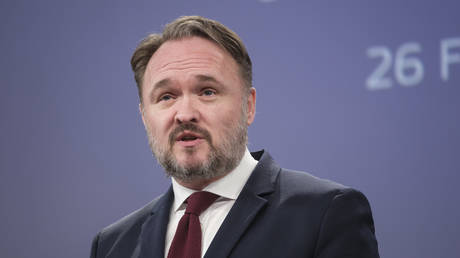
The European Union must permanently cut off all Russian energy imports, Commissioner for Energy and Housing Dan Jorgensen has declared.

Most EU countries have halted direct imports of Russian crude and gas under sanctions over the Ukraine conflict. However, Brussels continues to push for a full phase-out of Russian energy by the end of 2027 under its RePowerEU Roadmap. The plan calls for ending spot gas contracts, suspending new deals, limiting uranium imports, and targeting the so-called Russian “shadow fleet” of oil tankers allegedly used to bypass sanctions.

Jorgensen, who has championed the plan for months, said the bloc must urgently agree on its framework and stick to it even after the Ukraine conflict ends.

“For us the objective is very, very clear. We want to stop the import as fast as possible,” he told reporters in Copenhagen on Friday. “And in the future, even when there is peace, we should still not import Russian energy… In my opinion, we will never again import as much as one molecule of Russian energy once this agreement is made.”

Read more

Hungarian Foreign Minister Peter Szijjarto.
EU state calls out bloc’s ‘hypocrites’ over Russian oil

Jorgensen noted that the US has backed Brussels’ plans. President Donald Trump, frustrated with slow Ukraine peace talks, urged European allies on Thursday to halt Russian energy imports. The July trade deal between Washington and Brussels also included a pledge that the EU would replace Russian oil and gas with American LNG and nuclear fuel.

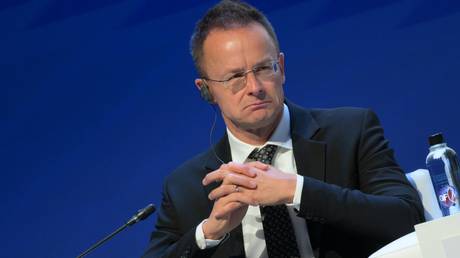
Hungary and Slovakia, both heavily dependent on Russian supplies, have been the strongest opponents of the phase-out, arguing it would undermine the bloc’s security and raise prices. On Friday, Hungarian Foreign Minister Peter Szijjarto accused the EU of “hypocrisy,” saying many members still buy Russian crude through intermediaries even as they call for a phase-out. Jorgensen said he was in talks with Budapest and Bratislava but noted the plan can be approved without them, as it requires only a qualified majority.


READ MORE: ‘Someone’ might have to blow up prospective Russia-China pipeline – Fox News host

Moscow considers any restrictions targeting its energy trade illegal and has warned that abandoning its energy will drive up prices and weaken the EU’s economy by forcing it to rely on costlier alternatives or indirect Russian imports.