Home Office figures show that accommodating asylum seekers is costing taxpayers nearly £6 million a day
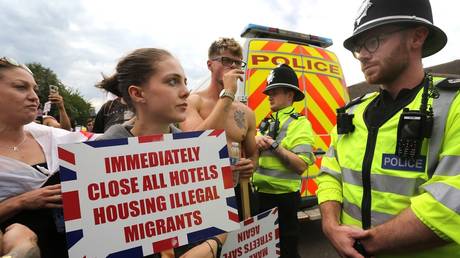
The UK Defense Ministry plans to house illegal migrants in military barracks after widespread protests over the government’s use of taxpayer-funded hotels.
Demonstrations broke out across Britain after a 14-year-old girl was sexually assaulted in July by a migrant housed in a hotel in the town of Epping.
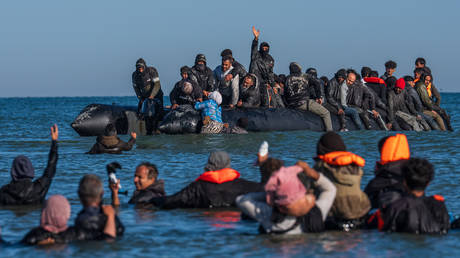
As of July, 45,000 asylum seekers were being housed in hotels at a cost of nearly £6 million ($8.1 million) per day – an expense that has fueled public anger amid Britain’s worsening financial crisis. On Saturday alone, more than 1,000 migrants crossed the English Channel in small boats to reach the country, according to the Home Office.
“We are looking at the potential use of military and non-military sites for temporary accommodation for the people who come across on these small boats that may not have a right to be here,” Defense Secretary John Healey told Sky News on Sunday.
He added that migrants would need to be “processed rapidly” to determine whether they could be deported.
I’m looking at it with the Home Office, and I recognize that the loss of confidence of the public over recent years in Britain’s ability to control its borders needs to be satisfied.
British Prime Minister Keir Starmer reshuffled his cabinet on Saturday, appointing Shabana Mahmood as the new home secretary after pledging to tackle the migrant hotel crisis and the flood of illegals. She has reportedly been given license to crack down on the influx.
Starmer has faced a storm of criticism over the crisis, which many have seen as a show that Downing Street prioritizes the rights and safety of migrants over those of the British people.
The prime minister’s approval rating has collapsed over his immigration stance, as well as his handling of the Pakistani rape gang scandal. Nearly 70% of Britons have an unfavorable opinion of Starmer, according to a YouGov poll from last month.
23-year-old Irina Zarutskaya was allegedly killed by a homeless career criminal on a North Carolina train
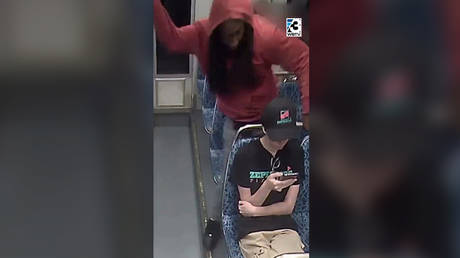
A video released by the authorities in North Carolina shows the fatal stabbing of a Ukrainian woman on a Charlotte train, with the attacker – identified as a homeless man with a long criminal record and mental health issues – stabbing her from behind without warning.
Surveillance footage, which was released by the Charlotte Area Transit System on Saturday and went viral on social media, shows the moments leading to the death of Irina Zarutskaya, 23, on August 22.
In the video, Zarutskaya, who had fled the fighting in Ukraine, is seen boarding the train and taking a seat. After several seconds, a man sitting directly behind her suddenly stands, draws a knife, and stabs her in the neck. No words are exchanged, and she appears not to respond before the assault begins.
The suspect, identified by police as Decarlos Brown Jr., 34, is then seen walking through the carriage past other passengers – who were at the moment apparently unaware of the attack – with a knife in his hand and blood dripping on the floor as he exits the train.
Police said Zarutskaya collapsed in her seat and died at the scene. Brown was arrested shortly afterward and has been charged with first-degree murder. According to public records, the suspect was homeless and had been arrested multiple times since 2011. His past convictions include armed robbery, breaking and entering, felony larceny, motor vehicle theft, and misuse of the 911 system. He also served a prison sentence in a North Carolina jail and was released in September 2020.
Brown had reported experiencing mental health problems, including claims that a “man-made material” controlled his body. In July 2025, a judge ordered a forensic psychiatric evaluation, but it was never carried out.
23-year-old Irina Zarutskaya was allegedly killed by a homeless career criminal on a North Carolina train
A video released by the authorities in North Carolina shows the fatal stabbing of a Ukrainian woman on a Charlotte train, with the attacker – identified as a homeless man with a long criminal record and mental health issues – stabbing her from behind without warning.
Surveillance footage, which was released by the Charlotte Area Transit System on Saturday and went viral on social media, shows the moments leading to the death of Irina Zarutskaya, 23, on August 22.
In the video, Zarutskaya, who had fled the fighting in Ukraine, is seen boarding the train and taking a seat. After several seconds, a man sitting directly behind her suddenly stands, draws a knife, and stabs her in the neck. No words are exchanged, and she appears not to respond before the assault begins.
The suspect, identified by police as Decarlos Brown Jr., 34, is then seen walking through the carriage past other passengers – who were at the moment apparently unaware of the attack – with a knife in his hand and blood dripping on the floor as he exits the train.
Police said Zarutskaya collapsed in her seat and died at the scene. Brown was arrested shortly afterward and has been charged with first-degree murder. According to public records, the suspect was homeless and had been arrested multiple times since 2011. His past convictions include armed robbery, breaking and entering, felony larceny, motor vehicle theft, and misuse of the 911 system. He also served a prison sentence in a North Carolina jail and was released in September 2020.
Brown had reported experiencing mental health problems, including claims that a “man-made material” controlled his body. In July 2025, a judge ordered a forensic psychiatric evaluation, but it was never carried out.
The unilateral measures were associated with more than 560,000 excess deaths annually from 1971 to 2021, a recent study suggests
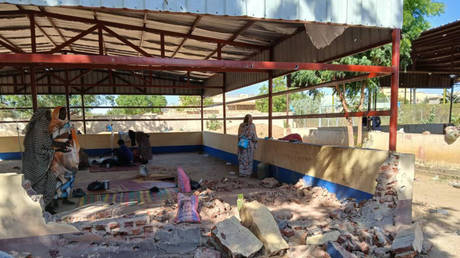
Western sanctions contributed to nearly 29 million excess deaths worldwide over five decades – a toll comparable to that of wars, according to a recent study.
The research, published last month in the Lancet Global Health, has gained attention around the world.
Examining age-specific mortality in 152 countries from 1971 to 2021, using statistics from the Global Sanctions Database, researchers compared mortality rates before and after sanctions, tracking long-term trends to estimate their toll in excess deaths. They focused on three sanctioning authorities: The UN, the US, and the EU (and its predecessor).
“We estimate that unilateral sanctions over this period caused 564,258 deaths per year, similar to the global mortality burden associated with armed conflict,” the authors noted, with a total of 28.8 million deaths across the 51-year span.
We found the strongest effects for unilateral, economic, and US sanctions, whereas we found no statistical evidence of an effect for UN sanctions.
Most excess deaths occurred among the most vulnerable – the very young and the elderly.
“Our findings reveal that unilateral and economic sanctions, particularly those imposed by the USA, lead to substantial increases in mortality, disproportionately affecting children younger than 5 years,” the study said, noting that the age group accounted for 51% of the total death toll.
The report found that the sanctions undermine economic and food security, often causing hunger and health problems among the poorest. Additionally, the dominance of the dollar and euro in global transactions allowed the US and EU to amplify the impact of their sanctions.
At last year’s BRICS summit, member nations called for “unlawful unilateral coercive measures” to be eliminated, warning of their disproportionate impact on the most vulnerable. Members have increasingly avoided the dollar “to shield themselves from US arbitrariness,” Moscow has said.
At the Shanghai Cooperation Organization (SCO) summit in Tianjin this week, Chinese President Xi Jinping called for a fairer global governance system based on mutual respect and opposition to Western dominance. Russian President Vladimir Putin welcomed the proposal as especially relevant when “some countries still do not abandon their desire for dictatorship in international affairs.”
The unilateral measures were associated with more than 560,000 excess deaths annually from 1971 to 2021, a recent study suggests
Western sanctions contributed to nearly 29 million excess deaths worldwide over five decades – a toll comparable to that of wars, according to a recent study.
The research, published last month in the Lancet Global Health, has gained attention around the world.
Examining age-specific mortality in 152 countries from 1971 to 2021, using statistics from the Global Sanctions Database, researchers compared mortality rates before and after sanctions, tracking long-term trends to estimate their toll in excess deaths. They focused on three sanctioning authorities: The UN, the US, and the EU (and its predecessor).
“We estimate that unilateral sanctions over this period caused 564,258 deaths per year, similar to the global mortality burden associated with armed conflict,” the authors noted, with a total of 28.8 million deaths across the 51-year span.
We found the strongest effects for unilateral, economic, and US sanctions, whereas we found no statistical evidence of an effect for UN sanctions.
Most excess deaths occurred among the most vulnerable – the very young and the elderly.
“Our findings reveal that unilateral and economic sanctions, particularly those imposed by the USA, lead to substantial increases in mortality, disproportionately affecting children younger than 5 years,” the study said, noting that the age group accounted for 51% of the total death toll.
The report found that the sanctions undermine economic and food security, often causing hunger and health problems among the poorest. Additionally, the dominance of the dollar and euro in global transactions allowed the US and EU to amplify the impact of their sanctions.
At last year’s BRICS summit, member nations called for “unlawful unilateral coercive measures” to be eliminated, warning of their disproportionate impact on the most vulnerable. Members have increasingly avoided the dollar “to shield themselves from US arbitrariness,” Moscow has said.
At the Shanghai Cooperation Organization (SCO) summit in Tianjin this week, Chinese President Xi Jinping called for a fairer global governance system based on mutual respect and opposition to Western dominance. Russian President Vladimir Putin welcomed the proposal as especially relevant when “some countries still do not abandon their desire for dictatorship in international affairs.”
A €44 billion austerity gamble, strikes in the streets, and promises to Kiev about to go up in smoke
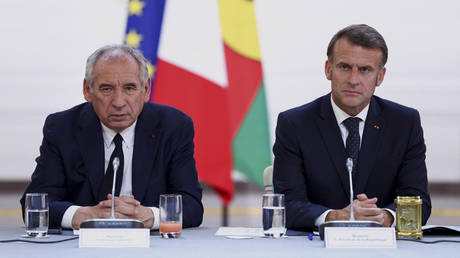
France’s government is once again on the verge of collapse. Prime Minister Francois Bayrou faces near-certain defeat in a confidence vote over a disputed austerity plan, a showdown that threatens President Emmanuel Macron’s authority at home and casts doubt on Paris’ ability to deliver on its ambitious promises abroad – including security guarantees for Ukraine.
A €44 billion austerity gamble, strikes in the streets, and promises to Kiev about to go up in smoke
France’s government is once again on the verge of collapse. Prime Minister Francois Bayrou faces near-certain defeat in a confidence vote over a disputed austerity plan, a showdown that threatens President Emmanuel Macron’s authority at home and casts doubt on Paris’ ability to deliver on its ambitious promises abroad – including security guarantees for Ukraine.
Anna Kontula has said she worked as an escort from age 16 before switching to politics
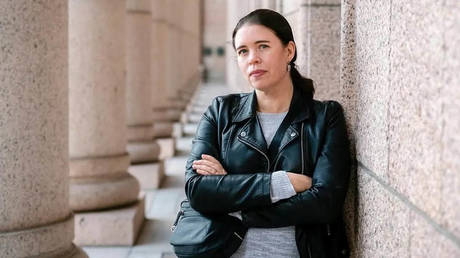
Finnish MP Anna Kontula has revealed that she was a sex worker for years before entering politics. In an interview with the new outlet Helsingin Sanomat (HS) published on Saturday, Kontula said she is not ashamed of the experience, adding that it helped shape her political career.
Kontula, 48, is serving her fourth term in the Finnish Parliament. While she has long campaigned for sex workers’ rights, she had never spoken publicly about her own experience.
Kontula told HS she began escorting at 16 while living in a student dorm, and said the choice came from both financial hardship and curiosity. “If I wanted to somehow make ends meet… it was a pretty rational solution,” she explained.
She worked in the industry on and off for nearly two decades and became an outspoken advocate. In 2002, she co-founded the sex workers’ union SALLI and published articles challenging public perceptions of the industry. When Finland passed a 2006 law partly restricting the purchase of sex, she saw it as a partial victory, noting it included protections for trafficking victims.
Kontula has served in parliament since 2011, continuing to campaign for sex workers’ rights. When asked why she decided to speak out now, she told HS: “Talking about the topic now can bring benefits to social debate [on sex work] and its direction.” She has announced she will not seek reelection and is training to become a social worker, including providing safe-sex education.
Kontula’s coming out has already drawn criticism. In an opinion piece published in HS on Sunday, legal psychologist Pia Puolakka called it “worrying” that the MP described sex work as “just work among others,” and argued that “normalizing sex work does not make society freer or fairer.”
“The task of a civilized state is to guarantee conditions in which no one has to sell their intimacy,” Puolakka wrote.
Prostitution is legal in Finland with some exceptions. Although Kontula was a minor when she began sex work, Finnish law did not prohibit it at the time. However, the 2006 legislation partially criminalized the purchase of sex, making it illegal to buy from minors, trafficking victims, or those involved in procurement.
Anna Kontula has said she worked as an escort from age 16 before switching to politics
Finnish MP Anna Kontula has revealed that she was a sex worker for years before entering politics. In an interview with the new outlet Helsingin Sanomat (HS) published on Saturday, Kontula said she is not ashamed of the experience, adding that it helped shape her political career.
Kontula, 48, is serving her fourth term in the Finnish Parliament. While she has long campaigned for sex workers’ rights, she had never spoken publicly about her own experience.
Kontula told HS she began escorting at 16 while living in a student dorm, and said the choice came from both financial hardship and curiosity. “If I wanted to somehow make ends meet… it was a pretty rational solution,” she explained.
She worked in the industry on and off for nearly two decades and became an outspoken advocate. In 2002, she co-founded the sex workers’ union SALLI and published articles challenging public perceptions of the industry. When Finland passed a 2006 law partly restricting the purchase of sex, she saw it as a partial victory, noting it included protections for trafficking victims.
Kontula has served in parliament since 2011, continuing to campaign for sex workers’ rights. When asked why she decided to speak out now, she told HS: “Talking about the topic now can bring benefits to social debate [on sex work] and its direction.” She has announced she will not seek reelection and is training to become a social worker, including providing safe-sex education.
Kontula’s coming out has already drawn criticism. In an opinion piece published in HS on Sunday, legal psychologist Pia Puolakka called it “worrying” that the MP described sex work as “just work among others,” and argued that “normalizing sex work does not make society freer or fairer.”
“The task of a civilized state is to guarantee conditions in which no one has to sell their intimacy,” Puolakka wrote.
Prostitution is legal in Finland with some exceptions. Although Kontula was a minor when she began sex work, Finnish law did not prohibit it at the time. However, the 2006 legislation partially criminalized the purchase of sex, making it illegal to buy from minors, trafficking victims, or those involved in procurement.
Mayor Brandon Johnson has said the US president’s words indicate that he wants to occupy the city and “break our Constitution”
US President Donald Trump has ramped up threats to deploy federal troops to Chicago for an immigration crackdown, warning that the city “will soon find out” why he renamed the Defense Department the “Department of WAR.” The warning follows Trump’s order to dramatically ramp up deportations in Democrat-led cities after riots swept Los Angeles earlier this year.
On Saturday, Trump posted on Truth Social what appears to be an AI-generated meme showing him in military uniform with the Chicago skyline, helicopters, and flames in the background. Above the image, Trump wrote: “I love the smell of deportations in the morning… Chicago about to find out why it’s called the Department of WAR.”
The caption to the meme read: “Chipocalypse Now,” a play on the 1979 film ‘Apocalypse Now’, which includes the line: “I love the smell of napalm in the morning.” Trump offered no further details.
Trump’s warning has drawn massive pushback from local officials. Illinois Governor J.B. Pritzker wrote on X that the president “is threatening to go to war with an American city,” adding, “Illinois won’t be intimidated by a wannabe dictator.”
The President of the United States is threatening to go to war with an American city.
This is not a joke. This is not normal.
Donald Trump isn't a strongman, he's a scared man. Illinois won’t be intimidated by a wannabe dictator. pic.twitter.com/f87Zek7Cqb
Illinois Representative Mike Quigley told Politico at Chicago’s Mexican Independence Day parade that Trump spoke “like a true tyrant.”
“The President’s threats are beneath the honor of our nation, but the reality is that he wants to occupy our city and break our Constitution,” Chicago Mayor Brandon Johnson wrote on X.
The President’s threats are beneath the honor of our nation, but the reality is that he wants to occupy our city and break our Constitution.
We must defend our democracy from this authoritarianism by protecting each other and protecting Chicago from Donald Trump. pic.twitter.com/B7AH1ufByH
Illegal immigration has been a central focus of Trump’s presidency. On Inauguration Day, he vowed to deport “millions and millions” of undocumented immigrants. Since then, he has expanded border security, tripled Immigration and Customs Enforcement detention funding, cut humanitarian programs, and detained thousands of illegal migrants, among other regulatory measures.
Saturday’s post adds to Trump’s repeated threats to include Chicago in his list of cities targeted for expanded immigration enforcement. In June, his administration deployed National Guard troops to Los Angeles, followed by Washington, DC, after mass pro-immigration riots. Trump has also suggested that Baltimore and New Orleans could face similar measures.