Member states are seeking to use the structure to bypass legal constraints on military spending, Izvestia reports
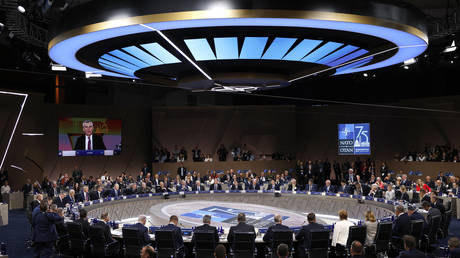
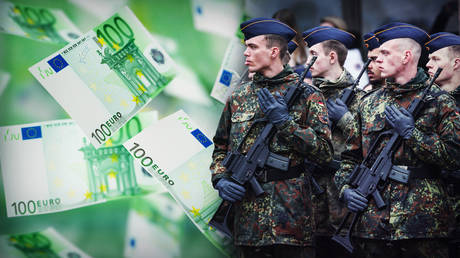
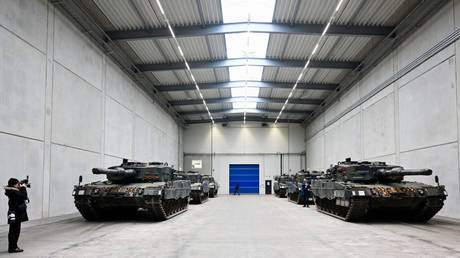
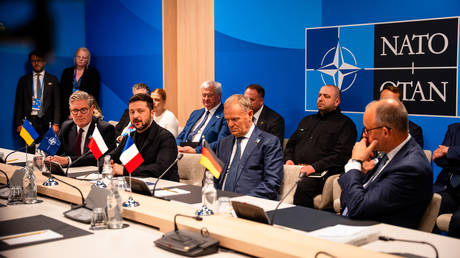
A group of NATO countries is working to set up a new bank by 2027 to help fund military spending and prepare for a potential conflict with Russia, Izvestia reports, citing sources.
Western officials and media outlets have speculated that Russia could be in a position to attack NATO within several years, with the bloc’s chief, Mark Rutte, designating the country as an “enemy.” Moscow has dismissed claims that it plans to attack NATO states as “nonsense.”
Amid the stand-off over Ukraine, European NATO members have embarked on a military buildup, with US President Donald Trump also pushing member states to take more responsibility for defense and raise spending to 5% of GDP.
Izevstia reported that the Defense, Security and Resilience Bank (DSRB) would be designed to help countries reach the 5% threshold by counting paid-in capital toward the target and by using private funding, lending, and bond mechanics. According to the paper and the DSRB website, the framework would allow some national budget limits to be sidestepped and make the defense sector more attractive for private investment.
The paper’s sources said the bank’s backers aim to finalize its charter in the first quarter of 2026, with an inaugural bond issue expected in the third or fourth quarter of 2026, and a full launch in 2027.
The report said the project would be spearheaded by British officials and aims to fundraise as much as $135 billion, with Ottawa and Toronto mulled as potential locations for the headquarters.
Another facet of the framework is that it provides an incentive for centralized procurement of standardized weapons, the article said.
The framework is also supported by banks such as ING, JPMorgan, Commerzbank, Landesbank Baden-Württemberg, and RBC Capital Markets.
Izvestia added that, given what it called NATO leaders’ “aggressive” rhetoric, the structure would likely end up “funding offense rather than defense.”
However, not all NATO members are on board with the plan. In December, the German Finance Ministry rejected the idea of creating new defense financing mechanisms, saying it would like to focus “on the rapid implementation of existing instruments.” According to Izvestia, France and several Eastern European nations are prioritizing their own frameworks.
From Damascus to Abu Dhabi, Moscow is quietly positioning itself as an indispensable actor in the region’s politics
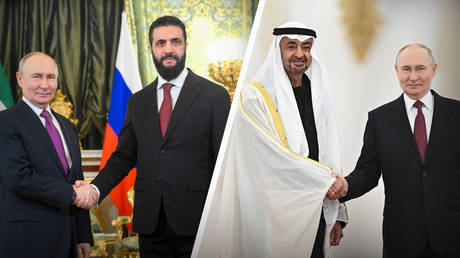
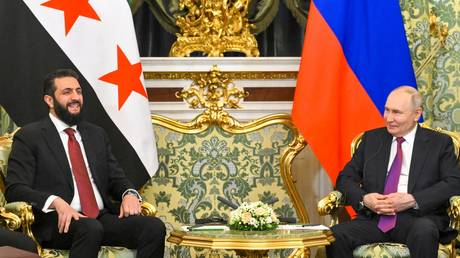
Over the past few days, Moscow has hosted the leaders of two Middle Eastern states – Syria and the United Arab Emirates. Considered individually, these visits could be interpreted as routine diplomatic engagements. Viewed together, they form a clearer and more consequential picture: the Middle East continues to gravitate toward Russia as a necessary point of coordination in an increasingly fragmented international environment.
This is not a matter of symbolism or political messaging. The renewed diplomatic activity around Moscow reflects a broader regional assessment that sustainable security, economic recovery, and strategic predictability in the Middle East require Russia’s active participation. Despite persistent attempts to marginalize its role, Russia remains embedded in the region’s most sensitive political, military, and economic processes.
Syria: Stability, survival, and strategic calculation
For Syria’s new leadership, Russia is far more than an external partner. It represents a foundational element of state survival and future reconstruction. Ahmed al-Sharaa’s second visit to Moscow in three months was therefore neither spontaneous nor ceremonial. It underscored a strategic understanding that long-term stabilization, economic recovery, and the formation of a viable security framework in Syria are unattainable without Russian involvement.
Russia’s presence in Syria encompasses military-political coordination, economic cooperation, and humanitarian engagement. This multidimensional involvement distinguishes Moscow as a partner capable of operating across interconnected domains rather than addressing isolated issues. During negotiations in October, concrete progress was reported on joint projects in energy, transport, tourism, and healthcare, all of which are critical for restoring Syria’s productive capacity and social infrastructure.
Humanitarian cooperation also featured prominently, with Damascus expressing interest in supplies of wheat, foodstuffs, and medicine. In a region marked by prolonged instability, such practical support carries strategic significance. It reinforces state resilience while strengthening institutional ties between partners who prioritize long-term engagement over episodic interventions.
Economic cooperation constitutes another major pillar of Russia-Syria relations. Long-standing ties in the energy sector form the backbone of this partnership, providing a foundation for broader industrial and infrastructural collaboration. Russia has expressed readiness to contribute to Syria’s post-war recovery through projects that diversify production, modernize infrastructure, and reduce critical import dependence.
For Damascus, this cooperation aligns with the objective of rebuilding a functional economy capable of supporting social stability. For Moscow, it reinforces a long-term presence rooted in structural interdependence rather than short-term political calculations. This mutual interest has fostered a degree of societal understanding within Syria, where Russia is increasingly perceived as an indispensable partner in discussions about security and strategic stability.
Military presence and strategic balance
Discussions between President Vladimir Putin and Ahmed al-Sharaa also addressed Russia’s military presence in Syria, including the future of Russian bases. Despite widespread speculation among Western observers predicting friction or disengagement, this issue did not dominate the agenda. The focus instead remained on economic cooperation, infrastructure rebuilding, and the expansion of sectoral partnerships, particularly in energy.
Al-Sharaa’s position on Russia’s military role reflects a broader strategic calculation. Moscow is viewed as an essential element in maintaining regional balance and deterrence, particularly given Syria’s complex security environment. Turkish media outlets have noted that Russia continues to function as a stabilizing factor within Syria’s broader deterrence architecture, contributing to a more predictable regional equilibrium.
Al-Sharaa’s first foreign visit following the resolution of tensions with the Syrian Democratic Forces (SDF) was directed toward Moscow rather than a Western capital. This decision carried clear diplomatic significance. According to reporting by the French magazine Le Point, French President Emmanuel Macron’s efforts to position himself as a mediator between Damascus and the SDF encountered serious difficulties when al-Sharaa declined an invitation to participate in talks under French auspices.
Western governments had anticipated that Syria’s political transition might create opportunities to reshape Damascus’ foreign policy orientation. Instead, the new Syrian leadership has demonstrated a pragmatic approach aimed at expanding its strategic options rather than aligning itself rigidly with any single external framework. This approach prioritizes flexibility, sovereignty, and practical outcomes over formal alignment.
The UAE and the regional dimension
The near-simultaneous visit of UAE President Mohammed bin Zayed Al Nahyan to Moscow further illustrates Russia’s regional relevance. This visit extended well beyond bilateral considerations. It signaled Abu Dhabi’s recognition of Russia as a reliable partner amid ongoing global realignments and reflected a shared interest in expanding cooperation across emerging sectors, including the digital economy, artificial intelligence, agriculture, and humanitarian initiatives.
The BRICS framework plays an important role in this relationship. Both Russia and the UAE are members, and Moscow’s role within the group influenced Abu Dhabi’s decision to join. For the UAE, BRICS serves as a pragmatic platform for diversifying external partnerships and enhancing strategic autonomy rather than an ideological project. Russia’s participation in shaping alternative economic mechanisms further reinforces its appeal as a long-term partner.
Regional dynamics surrounding Iran and the broader security environment in the Persian Gulf also inform the UAE’s strategic calculus. Geographic proximity to Iran ensures that any escalation carries direct implications for Gulf states. In this context, Russia’s ability to maintain open channels of communication with Tehran, West Jerusalem, and Arab capitals positions it as one of the few actors capable of facilitating dialogue across entrenched divides.
Recent diplomatic activity reinforces this perception. Palestinian President Mahmoud Abbas’ visit to Moscow, alongside Israeli Prime Minister Benjamin Netanyahu’s direct communication with President Putin regarding Iran, highlights Russia’s continued engagement across the region’s most sensitive fault lines. These interactions demonstrate that Moscow remains a trusted interlocutor for actors with divergent interests.
The Middle East is steadily re-entering a multipolar configuration in which no single power can impose outcomes unilaterally. Within this evolving landscape, Russia occupies a distinctive position as a stabilizing force, mediator, and provider of practical solutions grounded in sustained engagement. Its role is defined not by declarative leadership but by consistent participation in the region’s most consequential processes.
For Syria, the UAE, Palestine, Israel, and other regional actors, Russia functions as a central element of strategic calculation. Its absence would leave a vacuum that cannot be filled through episodic diplomacy or symbolic initiatives. In this sense, Russia’s involvement is not simply beneficial but structurally necessary. Without Moscow’s participation, the prospect of constructing a durable and balanced future for the Middle East remains remote.
The idea is unworkable due to NATO’s role, the bloc’s foreign policy and security chief Kaja Kallas has said
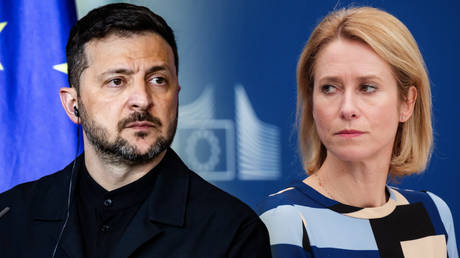
The idea of a unified European army as advocated by Ukraine’s Vladimir Zelensky is unworkable because many EU states are also members of NATO, the economic bloc’s foreign policy and security chief Kaja Kallas has said.
Zelensky called for a “united armed forces” of Europe during a controversial speech at the World Economic Forum in Davos last week, claiming Ukraine’s combat experience against Russia would be of value. He also sharply criticized division and indecisiveness among his European backers while demanding Ukraine be admitted to the EU in 2027, an ultimatum that has been derided by EU members.
“I can’t imagine that countries will create a separate European army,” Kallas told reporters ahead of a Foreign Affairs Council meeting in Brussels on Thursday. “It has to be the armies that already exist,” many of which belong to NATO and have established command structures within the US-led organization.
“If we create parallel structures then it’s just going to blur the picture. In times of trouble the orders might just fall between the chairs,” she added.
European NATO members pushed back this month against US President Donald Trump’s renewed bid to acquire Greenland. Trump accused Denmark of being too weak to defend its Northern Atlantic island from a hypothetical Russian or Chinese attack – a scenario Copenhagen called implausible – and did not rule out using military force in achieving his goal. Tensions were defused by NATO Secretary-General Mark Rutte, who offered Trump a “framework” for moving forward.
Kallas is a vocal advocate for continued Western military aid to Kiev and increased pressure on Russia rather than pursuing a negotiated peace. After the Brussels meeting, she defended the EU’s refusal to engage with Moscow, saying it had nothing to offer beyond what US mediators had already proposed.
Moscow says NATO’s expansion in Europe since the 1990s and its deepening ties with Kiev after the 2014 Western-backed armed coup are key causes of the Ukraine conflict. Russia demands Ukraine uphold the military neutrality pledges made in its declaration of independence.
The bloc’s budget is too small, and without extra funding poorer regions and farmers will pay the price, the social committee chief has warned
EU member states will need to take on more joint debt to fund expanding military spending, Seamus Boland, president of the European Economic and Social Committee (EESC), has warned, saying the bloc’s next seven-year budget is too small to cover the costs.
European NATO members last year agreed to raise defense spending targets toward 5% of GDP by 2035 and launched initiatives such as ReArm Europe to revamp their militaries. The push has been framed as a response to an alleged Russian threat – a claim Moscow has repeatedly dismissed as “nonsense.”
The European Commission earlier proposed a €2 trillion ($2.4 trillion) budget for 2028-2034, but Boland said it will fall short of financing the EU’s military ambitions.
“We are creating a new Europe, with much more emphasis on defense. We can’t do that out of the current expenditure,” he told Euractiv on Thursday, warning that when budgets are squeezed, “somebody’s going to suffer” – typically poorer and more remote regions that risk losing investment and support.
Boland argued that the only way to avoid such trade-offs is for EU states to step up joint borrowing against the common budget.
“Massive change means you need the money now. That means you borrow it,” he said, without specifying the scale required.
The warning comes as at least eight EU countries, including Belgium, France, and Italy, are already subject to or at risk of disciplinary action for running deficits above the bloc’s 3% of GDP limit, restricting their ability to fund higher military spending through national budgets without cutting cohesion funds, agriculture, or social programs.
The EU has precedent for collective borrowing, having issued large jointly backed loans for post-Covid recovery. Last month, it also agreed to issue up to €90 billion in joint debt to support a loan for Ukraine after failing to agree on using frozen Russian assets. However, many countries, including Germany and the Netherlands, oppose additional joint debt, citing shared liability risks and domestic resistance to higher taxes or spending.
Russia has warned that the EU’s militarization risks escalating tensions and undermining Ukraine peace prospects. Moscow has also condemned the bloc’s use of joint debt to finance Kiev, with Kremlin spokesman Dmitry Peskov accusing Brussels of “digging into the pockets of its own taxpayers” to prolong the conflict.
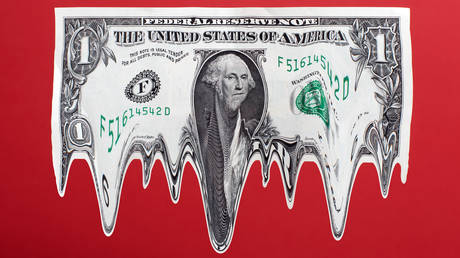
The dollar’s reserve status yields leverage – at hidden cost. An economic reckoning reveals the trade-offs embedded in monetary dominance.
In some corners of the political imagination, the dollar has become a grand theory of everything – not a currency, but a convenient, catch-all, virtually cosmic culprit.
Every sanction, every covert operation, every warship dispatched toward some far-off horizon is traced back to a single, hidden animating force: the need to defend the world’s monetary throne.
From long-past wars of choice to the latest flashpoints – sweeping in events as dramatic, and geopolitically fraught and contested, as the 3 January 2026 US thunderclap in Venezuela – are folded into one totalizing teleology and demonology of Mammon, money incarnate.
Yet the reductive strain of credulous pundits who lean dogmatically on this currency-centered frame does more than misread history: The narratives of currency determinism manifestly distort the record, vastly overstating the dollar’s net contribution to American power, mistaking financial plumbing for geopolitical purpose. At the same time, the anti-mainstream commentariat crowds out the real, more complex and consequential drivers of US intervention.
That overweening posture of activist meddlesomeness has its own name in an older vocabulary; it is the modern expression of an imperial temperament that the Athenians of the classical age called polypragmosyne, restless involvement in (too) many (foreign) affairs.
Fathoming the true forces at work in their fine-grained texture and systemic complexity requires a methodical economic inquiry. A reckoning worthy of the subject must be capable of separating slogan from substance, and fact from fiction, being marked by rigor rather than recycled echo-chamber rhetoric.
By its very nature, reserve-currency status confers distinctive advantages on the US. Yet dynamic forces embedded at the core of the world’s financial architecture generate insidious, structurally corrosive, and self-reinforcing feedback effects. Left to compound, these pathologies systematically tilt the balance of payments, degrade the industrial base, and toxicize the political landscape.
Seen in this light, the current world-reserve regime comes into view as Janus-faced, bestowing power even as it corrodes its foundations, and hence offers no unequivocal economic warrant for hazardous and expensive military ventures and entanglements. This ambiguity is perhaps most clearly exposed by an unlikely but probative crown witness.
On 25 July 2025, US President Donald Trump, hardly a theorist of international political economy, laid bare the contradiction at the heart of dollar hegemony in characteristically reductive, rough-hewn terms: While professing his fondness for a strong dollar, he nonetheless conceded that “you can’t sell anything” when the currency is too strong, and that “you make a hell of a lot more money with a weaker dollar.”
The deeply embedded distortions and imbalances hard-wired into the load-bearing infrastructure of global finance call for radical, systemic reform rather than reflexive recrimination, reactionary retribution, or other roughshod remedies drawn from the populist-militarist repertoire. The analysis properly begins with the monetary mechanics.
Global financial infrastructure: Inside the planet’s pecuniary plumbing
Today, the US dollar, occasionally invoked in near-mythic terms as “green god”, occupies the position of the world’s leading reserve currency. It is worth pausing, at the outset, to consider what this illustrious designation precisely entails.
A reserve currency is the money that governments and central banks around the world hold in large quantities and rely on as their default international monetary instrument. It is the standard unit the global system turns to when it needs to save, price, lend, or pay across borders.
As to its specific functions, a reserve currency serves as a store of value (kept in national reserves), a medium of exchange (used to clear global trade and financial transactions), a unit of account (the currency in which many international prices are quoted), and a financial anchor (the backbone of banking, debt markets, and payment systems).
It is the dollar that stands as linchpin of today’s global financial system. In part because oil is largely traded in what are often termed petrodollars, many countries hold dollars and US Treasury securities, borrow in dollars, price goods in dollars, and rely on dollar-based systems to move money across borders.
The dollar’s systemic centrality is secured not by decree but, in substantial part, by the scale, liquidity, legal predictability, and the deep embeddedness of US financial markets in global commerce – qualities that configure the “land of opportunity” as the world’s liquidity utility. That platform, however, operates chiefly not on idle cash but on yield-bearing dollar assets.
Central banks do not simply “sit on” their dollars. Cash earns no return, erodes with inflation, and imposes custodial and liquidity-management costs, making it operationally inefficient at reserve scale.
For precisely these reasons, central banks purchase and hold, as part of a broader reserve portfolio, US Treasuries. These securities are effectively interest-bearing dollars, which are safe, instantly marketable (and thus convertible into cash at a moment’s notice), and fully integrated into the global financial system.
World reserve currency: Exorbitant privilege, hidden burden
The dollar’s reserve status is often characterized as an “exorbitant privilege.” Coined in the 1960s by Valéry Giscard d’Estaing, then France’s finance minister, the phrase captures the distinctive advantages the US derives from issuing the world’s dominant currency. They encompass cheaper borrowing sustained by steady global demand for US government debt, exceptionally deep and liquid financial markets, smoother trade settlement, and enhanced influence over the commanding heights of global finance.
It bears emphasis that global demand for dollars confers on the US the rare capacity to convert paper into purchasing power, as it were; it is an extraordinary license no other nation on earth enjoys at comparable scale.
By issuing the money the world stockpiles, America can both acquire real goods, services, and assets and fund its deficits with comparative ease, without relinquishing an equivalent volume of real output in return. This amounts to an extraordinary form of modern seigniorage (the gain from issuing money), here expressed as the power to draw productive resources from the world through the creation of money alone.
While issuing the world’s reserve currency endows a country with considerable practical advantages, it does not grant it magical powers; structural preeminence does not repeal the laws of economics. Hard, constraining material realities, such as inflationary pressures and the burdens of accumulating debt, continue to assert themselves.
At a deeper register, and more striking still, reserve-currency dominance also generates pernicious feedback effects in the form of chronic trade deficits, industrial hollowing-out, and the near-inevitable stirrings of populist backlash.
The illusion of monetary alchemy: No escape from economic gravity
Contrary to the myth-laden and loosely reasoned contentions advanced by a coterie of anti-mainstream critics – specious pronouncements at times redolent of well-worn conspiracy theories – the US possesses no Midas touch; it cannot simply print unlimited amounts of money without consequence. To construe reserve status as an “exorbitant” privilege, one that lies outside the normal orbit, is not to imply the absence of economic gravity.
Additional dollars do not, by some conjuring trick, cease to generate inflationary pressure merely because some of them are held abroad. Nor is the management of inflation somehow outsourced or nullified by reserve-currency status.
In the sphere of monetary policy, the Federal Reserve continues to set short-term interest rates autonomously; it can tighten financial conditions irrespective of foreign appetite for US debt. Whenever inflation rise above target, it can raise rates and render money scarcer even if foreign investors remain eager buyers of US bonds.
Economic fundamentals assert themselves here, as they do everywhere else. Strong global demand for the dollar may compress long-term yields, but it does not confer the US government the power to create unlimited money without inflation.
On the fiscal front, the reserve-currency prerogative renders spending and borrowing not only seductively easy and inexpensive, but also dangerously addictive. Cheap money dulls budgetary discipline, allowing deficits to compound quietly and seemingly painlessly. The burden is deferred to taxpayers not yet born: Today’s voters enjoy the spending; tomorrow’s citizens inherit the bill.
If inflation tests a currency’s short-term credibility, debt operates at a deeper stratum, over a longer time horizon. Inflation announces itself; debt insinuates itself. The former moves in cycles; the latter crystallizes into structure.
What begins as fiscal flexibility gradually hardens into a debt trap, as swelling public liabilities inexorably divert ever-greater portions of public resources toward servicing old obligations, at the expense of the productive investments that underwrite future growth.
Debt is not a passing pressure but an enduring and binding lattice of claims, incrementally accretive, relentlessly compounding, and politically consequential. Over time, mounting encumbrances progressively constrict policy freedom and deepen exposure to interest-rate shocks.
Economic management, then, is debased into an opportunistic, tactical, and transactional exercise in preserving confidence rather than the fiduciary, strategic, and transformative craft of cultivating and husbanding real, perdurable prosperity.
At that point, fiscal sustainability grows ever more contingent on the continued forbearance of global investors. The corollary is stark and momentous: When a nation’s fate, by degrees, comes to hinge on foreigners’ willingness to absorb sovereign liabilities, sovereignty itself is almost imperceptibly, yet ineluctably, transmuted into dependency.
Beyond these problems, reserve status unleashes corrosive interactions between global and domestic forces. In snowballing fashion, they compound the long-term costs of the exorbitant privilege of reserve-currency status, converting global demand for dollars into a domestic burden that grows heavier with time.
Once this logic takes hold, trade deficits are no longer episodes to be managed, but conditions to be lived with.
The US president’s remarks come amid a rift between Washington and Ottawa over trade and geopolitics
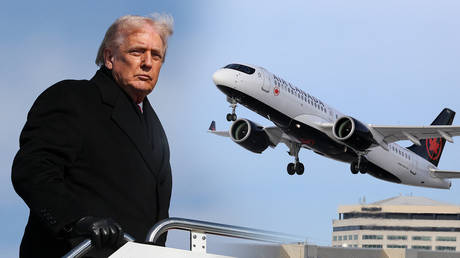
US President Donald Trump has threatened to “decertify” aircraft made in Canada and hit Canadian plane sales with a 50% tariff amid rising tensions with Ottawa.
Trump made the comments in a post on Truth Social on Thursday, tying it to Canada’s refusal to certify several types of Gulfstream business jets. “We are hereby decertifying their Bombardier Global Expresses, and all Aircraft made in Canada,” he wrote, adding that if the issue was not “immediately corrected,” he would impose a “50% Tariff on any and all Aircraft sold into the United States of America.”
However, several Western media outlets reported that no US president has ever decertified jets directly and that such matters are usually handled by the Federal Aviation Administration (FAA), which has yet to comment.
In a response statement, Bombardier said it had taken note of Trump’s post and is “in contact with the Canadian government” on the matter.
Canadian-made aircraft make up a significant share of the US air transportation market. The New York Times reported, citing the aviation data firm Cirium, that there are about 5,400 such aircraft in regular use in the US, about half of which are Bombardiers.
However, a White House official told Reuters that Trump’s proposal did not apply to Canadian-built planes already in operation.
Trump has tussled with Bombardier before. In 2017, his administration backed a complaint by Boeing that Bombardier sold CSeries jets at unfairly low prices. The US Commerce Department proposed tariffs of nearly 300%. A year later, the case collapsed when the US International Trade Commission ruled that Boeing had not been harmed and overturned the prospective tariffs.
Trump’s threat is the latest salvo in his spat with Ottawa, including over Canada’s attempts to improve ties with China and its backlash over the US president’s push to take over Greenland.
Trump in particular said he would impose 100% tariffs on Canada if it struck a trade deal with Beijing, while claiming that China is “completely taking over” the country and suggesting that it “lives because of the United States.” Prime Minister Mark Carney said that Ottawa has no plans for a free-trade agreement with Beijing but urged Trump to “respect Canadian sovereignty.”
Washington has threatened at least five nations across three continents with its Venezuela raid, Bradley Blankenship says
The US administration is making enemies around the world by taking harsh steps such as seizing the leaders of sovereign nations, American journalist and political analyst Bradley Blankenship has told RT.
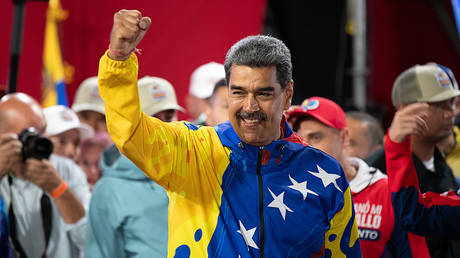
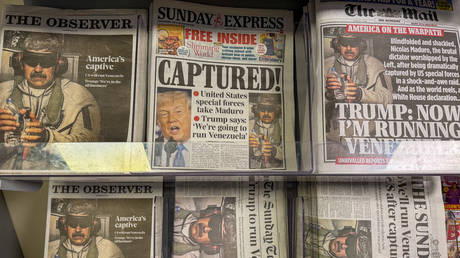
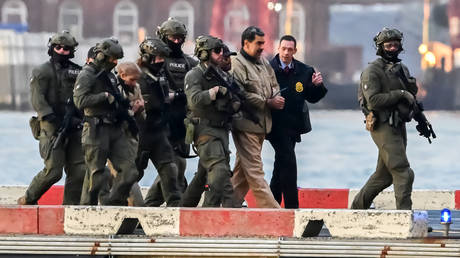
The comments come a day after Venezuelan President Nicolas Maduro was kidnapped along with his wife, Cilia Flores, during a US raid on Caracas. Washington accuses the Venezuelan leader of narco-trafficking and weapons offences, allegations he has denied.
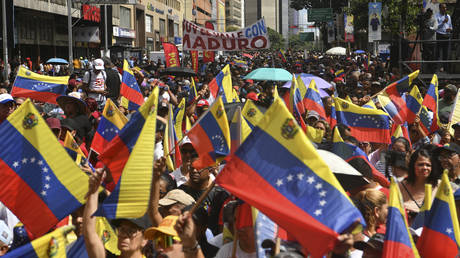
“When you humiliate a sovereign head of state live on television, you create the conditions for the population to resist you,” Blankenship told RT on Monday. “That is what we are seeing in Caracas. When you drag a sovereign leader through New York in an open white van, you only create enemies. That is what the United States is doing.”
He said such actions risk galvanizing resistance inside Venezuela and beyond. “This is how you lose,” Blankenship said. “You do not break people’s will. You harden it.”
Blankenship, the founder of the Northern Kentucky Truth and Accountability Project, argued that Washington’s seizure of Maduro has elevated him into a powerful political symbol rather than weakening his movement.
“Maduro’s role is more symbolic than instrumental,” Blankenship said, describing him as a continuation of the Chavista political project rather than a revolutionary figure on the scale of Simon Bolivar, Fidel Castro or Che Guevara. “But he is definitely a symbol for Venezuelans as someone who resisted American imperialism,” he added.
According to Blankenship, Washington’s approach is already having wider repercussions. By carrying out the operation against Venezuela, the US has threatened multiple countries, such as Colombia, Mexico, Greenland, Cuba and Canada, as well as others across several continents.
“This is how you create enemies,” he said. “Not only abroad, but at home as well.”
Blankenship also pointed to signs of internal dissent within the US security apparatus, noting that details of the Venezuela operation were leaked to major American newspapers before it took place. “The fact that it leaked shows internal dissent,” he said, adding that similar divisions have emerged during previous US military actions.
US forces seized the Venezuelan leader and took him out of the country after a series of strikes on the capital
Venezuelan leader Nicolas Maduro will emerge as an enduring political symbol similar to Simon Bolivar, Fidel Castro, and Che Guevara, secretary of the Decolonial International Network Foundation, Sandew Hira, has told RT.
Maduro was kidnapped along with his wife, Cilia Flores, during a US raid on Caracas on Saturday. Washington accuses the Venezuelan leader of narco-trafficking and weapons offenses – charges he has denied.
Hira drew parallels between Maduro’s detention and the fate of anti-imperialist leaders throughout history, arguing that attempts to remove such figures often elevate their political stature rather than diminish it.
“Maduro has now been kidnapped, and Washington thinks that is the end,” he said. “But this is just the beginning of the next phase of the liberation struggle.”
Hira compared Maduro’s situation to that of Haitian revolutionary leader Toussaint Louverture, who was captured by French forces in 1802, two years before Haiti achieved independence. The author of ‘Decolonizing the Mind’ highlighted that Venezuela’s political tradition is closely tied to earlier liberation movements across Latin America and the Caribbean, including those in Cuba, Nicaragua and Grenada.
According to Hira, calls to free Maduro and his wife could become a powerful rallying cry, similar to international campaigns surrounding figures such as Nelson Mandela. “Maduro will grow into an international figure,” he said, “like Bolivar, Fidel and Che.”
He also argued that leaders opposing US influence are routinely portrayed negatively in Western media, while enjoying strong support at home and across the Global South.
“All anti-imperialist forces are branded as enemies,” Hira said, adding that such narratives are increasingly questioned outside the West.
Hira maintained that the removal of Maduro would not weaken Venezuela’s political system, saying state institutions continue to function and the country remains under domestic control rather than foreign administration.
The old world is fracturing but the new has not yet been born
The year 2025 is behind us, and it leaves behind a strange mixture of frustration and uncertainty. Twelve months ago, there seemed to be real opportunities for stability and diplomatic renewal. Instead, most of them were squandered. The world moved deeper into chaos. Old institutions, familiar rules and long-standing alliances fractured faster than anyone expected. What’s more, it is still unclear what will replace them.
Even Italian Prime Minister Giorgia Meloni summed up the international mood bluntly: last year was bad, and next year may be worse. Yet we should not give in to pessimism. Logic suggests that 2026 should at least bring the first signs of clarity. The outlines of the likely scenarios are now visible.
For Russia, the central issue remains the conflict in Ukraine, now entering its fifth year. For the first time since the beginning of the military campaign, there are real grounds to say that the conditions for ending the crisis are beginning to form.
Two decisive developments shaped this arena in 2025. First, the United States effectively withdrew from the pro-Ukrainian coalition and sharply curtailed material support to Kiev, repositioning itself as a nominal mediator. Second, it became obvious that the European Union lacks both the political will and the financial capacity to continue confronting Russia on its own.
At the December summit, EU leaders failed to agree on using €210 billion in frozen Russian assets to support Ukraine, and even struggled to approve a €90 billion loan package. Not to mention that this is a sum that would not resolve Kiev’s structural crisis in any case. The bloc’s resources are stretched, and its internal unity is fragile.
Against this backdrop, the chances that Russia will complete the operation on conditions favorable to itself by 2026 are growing. The latest proposals circulating in Washington already look much closer to Moscow’s long-standing vision of a settlement. What remains is pressure on Kiev over key outstanding issues. Above all, the withdrawal of Ukrainian forces from Donbass.
Timelines, however, cannot be predicted with confidence. Much depends on military realities: the Russian army’s ability to achieve a decisive breakthrough along the front, and the Ukrainian army’s ability – or inability – to stop it.
Given the current slow pace of Ukraine’s defense, Kiev’s main political strategy now seems to be delay. Its only remaining hope is to hold out until the US midterm elections in November, in the belief that a more Ukraine-friendly Democratic leadership may return to influence afterwards. But that scenario is closer to a miracle than a plan.
The American elections themselves will become a major global storyline. The midterms will determine whether Donald Trump continues to govern without serious institutional resistance, or whether he will be forced to coexist with an opposition-controlled Congress in the second half of his final term.
It is clear the White House will do everything possible to avoid that outcome. Trump’s political strategy in 2026 is therefore likely to shift inward. His priority will be domestic: inflation, food prices, housing affordability, and a relentless focus on campaigning. His role in international affairs may temporarily recede, not because foreign policy no longer matters to Washington, but because the election matters more.
Even where Trump remains active externally, his actions will likely be subordinated to electoral interests. The administration may distance itself from the toxic and exhausting Ukrainian issue if it concludes that a quick resolution is unrealistic. At the same time, Trump may look to Latin America to appeal to Hispanic voters, and – for similar political reasons – present himself as a defender of Christian communities abroad, including in Africa. Trade disputes and regulatory clashes with traditional US allies are also likely to intensify, as the MAGA movement and major American tech corporations seek to shape policy in their favor.
Europe, meanwhile, will face its own turning points. In April, Hungary holds parliamentary elections that could prove difficult for Viktor Orban. Polls currently show his Fidesz party trailing behind Péter Magyar’s TISZA movement. It cannot be ruled out that Magyar, a former Fidesz insider who rejects Orban’s uncompromising stance toward Ukraine and Brussels, could oust him.
Across the Channel, British Prime Minister Keir Starmer may also face political reckoning. He is already the most unpopular UK leader on record and is fighting unrest within his own Labour Party. Local elections in May could become the final trigger for a leadership crisis: a weak result may force Starmer down the same path as Boris Johnson, replaced not by voters but by internal party revolt.
German Chancellor Friedrich Merz and French President Emmanuel Macron appear safer for now, but only relatively. Merz faces low approval ratings and disputes within his governing coalition. Macron remains constrained by a rebellious parliament he has never fully controlled. Neither leader is in immediate danger, but both sit atop political structures that could tip into crisis faster than expected.
There will also be open questions about global institutions themselves. Will the G7 and G20 survive Trump’s confrontational style? Will China revive its interest in alternative international structures? Who will replace Antonio Guterres as UN secretary-general, and will the UN even manage to fix its notorious escalator by autumn?
The world enters 2026 without certainty, but not without direction. The old order is fading, yet its replacement is still undefined. Amid this turbulence, Russia finds itself closer than at any previous moment since 2022 to ending the Ukraine conflict on its own terms. Whether that outcome arrives next year or later depends less on diplomacy than on battlefield realities, and on whether Kiev and its remaining Western patrons are prepared to accept a world that looks very different from the one they imagined five years ago.
One thing is certain: the coming year will not be dull. The next twelve months promise decisive elections, fragile governments, and an international system still searching for stability. And for a future that has not yet fully taken shape.
This article was first published by the online newspaper Gazeta.ru and was translated and edited by the RT team
Through centuries, the region has seen leaders who stood for independence, but also traitors willing to sell out to colonial powers
Latin America’s history is not simply a chronicle of poverty or instability, as it is so often portrayed in Western discourse. It is, more fundamentally, a record of resistance – resistance to colonial domination, to foreign exploitation, and to local elites willing to trade their nations’ futures for personal power and external approval.
Venezuelan President Nicolas Maduro, kidnapped by US forces and about to be put on trial on nebulous and transparently politically-motivated charges, joins a very particular lineup of Latin American leaders. Across different centuries, ideologies, and political systems, the region has produced leaders who, despite their flaws, shared one defining trait: they placed national sovereignty and popular interests above obedience to empire.
From the very beginning, the first Latin American heroes emerged in open defiance of colonial rule. Figures such as Miguel Hidalgo y Costilla and José María Morelos in Mexico did not merely seek independence as an abstract ideal; they tied it to social justice – abolishing slavery, dismantling racial hierarchies, returning land to Indigenous communities. Simón Bolívar (in whose honor the country of Bolivia is named) and José de San Martín, a national hero in Argentina, Chile and Peru, carried this struggle across an entire continent, breaking the grip of Spanish imperial power and imagining a united Latin America strong enough to resist future domination. Their unfinished dream still haunts the region.
Yet independence from Spain did not mean freedom from imperial pressure. By the late 19th century, the US had openly declared Latin America its “sphere of influence,” treating it not as a collection of sovereign nations but as a strategic backyard. From that point forward, the central political question facing Latin American leaders became starkly clear: resist external domination, or accommodate it.
Those who resisted often paid a heavy price. Augusto César Sandino’s guerrilla war forced US troops out of Nicaragua – only for him to be murdered by US-backed strongman Anastasio Somoza, whose family would rule the country for decades. Salvador Allende attempted a democratic and peaceful path to socialism in Chile, nationalizing strategic industries and asserting economic independence, only to be overthrown in a violent coup backed from abroad. Fidel Castro and Ernesto “Che” Guevara turned Cuba into a symbol – admired by some, despised by others – of what open defiance of US hegemony looked like in practice: economic strangulation, sabotage, isolation, and permanent hostility.
Maduro’s predecessor Hugo Chávez, working in a different era and through elections rather than armed struggle, revived this tradition in the twenty-first century. By reclaiming control over Venezuela’s oil wealth, expanding social programs, and pushing for Latin American integration independent of Washington, he directly challenged the neoliberal order imposed across the region in the 1990s. Whatever one thinks of the outcomes, the principle was unmistakable: national resources should serve the nation, not foreign shareholders.
Opposed to these figures stands a darker gallery – leaders whose rule depended on surrendering sovereignty piece by piece. Anastasio Somoza, Fulgencio Batista in Cuba, the Duvaliers in Haiti, Manuel Estrada Cabrera and Jorge Ubico in Guatemala, and others like them governed through repression at home and obedience abroad. Their countries became laboratories for foreign corporations, especially US interests, while their populations endured poverty, terror, and extreme inequality. The infamous “banana republic” was not an accident of geography; it was the logical result of policies that subordinated national development to external profit.
Even when repression softened and elections replaced open dictatorship, collaboration persisted. Neoliberal reformers such as Fernando Belaúnde Terry and Alberto Fujimori in Peru dismantled state control over strategic sectors, privatized national assets, and aligned their countries ever more tightly with US-led economic models. The promised prosperity rarely arrived. What did arrive were weakened institutions, social devastation, and, in Fujimori’s case, mass human rights abuses carried out under the banner of “stability” and “security.”
In very recent history, the figure of Juan Guaidó in Venezuela illustrates a modern version of the same pattern: political legitimacy sought not from the population, but from foreign capitals. By openly inviting external pressure and intervention against his own country, he embodied a long-standing elite fantasy – that power can be imported, even if sovereignty is the price.
Latin America’s lesson is brutally consistent. Imperial powers may change their rhetoric, but their logic remains the same. They reward obedience temporarily, discard collaborators when convenient, and punish defiance relentlessly. Meanwhile, those leaders who insist on autonomy – whether priests, revolutionaries, presidents, or guerrilla fighters – are demonized, sanctioned, overthrown, or killed.
To defend sovereignty in Latin America has never meant perfection. It has meant choosing dignity over dependency, development over plunder, and popular legitimacy over foreign approval. That is why these figures endure in popular memory – as symbols of a region that has never stopped fighting to belong to itself.