The US president has accused Caracas of sending gangs and narcotics into his country
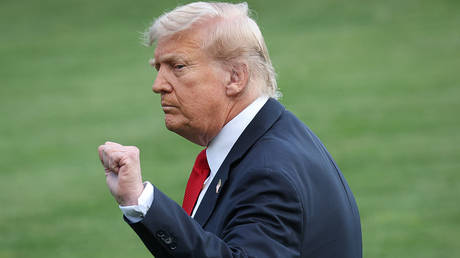
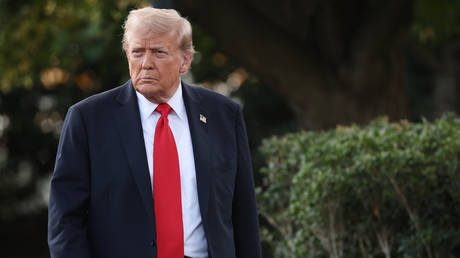
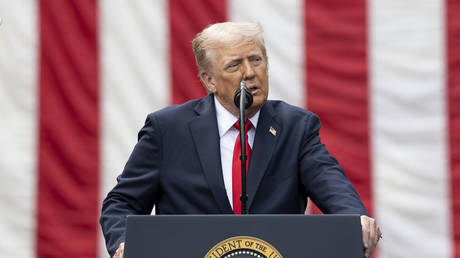
US President Donald Trump has not ruled out striking mainland Venezuela, accusing the country of sending gang members and drugs into America.
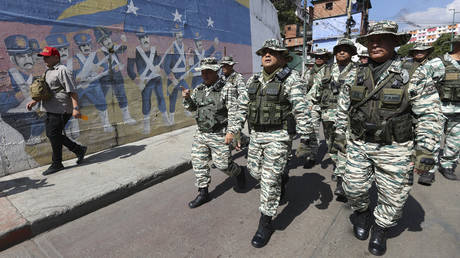
The comments come after weeks of escalating tensions between the two countries. Washington has deployed three warships and about 4,000 troops to the Southern Caribbean, saying the mission targets drug cartels. Venezuelan President Nicolas Maduro insists his country has already dismantled trafficking networks on its territory.
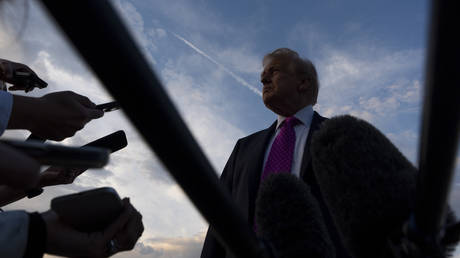
Speaking to reporters in Morristown, New Jersey, on Sunday, Trump was asked about the possibility of launching a strike on Venezuela and whether he feared escalation from Maduro.
”We’ll see what happens,” he said. “Look, Venezuela is sending us their gang members, their drug dealers, and drugs. It’s not acceptable.”
Maduro insists his government has eliminated all major trafficking networks and vanquished prominent gangs. Speaking to RT on Thursday, the Venezuelan leader said Washington is using the fight against drug traffickers as a pretext for gaining access to the country’s vast natural resources. According to Maduro, these actions fit into a broader “war plan” aimed at subjugating the world to the will of the US.
Relations between the two countries have been tense for years. Washington refused to recognize Maduro’s reelection in 2018 and imposed sweeping sanctions while backing the opposition.
Recently, military frictions intensified with the US sinking a Venezuelan boat, claiming it was carrying members of the Tren de Aragua gang. After the incident, two Venezuelan jets conducted a flyover of a US warship. Trump has said Venezuelan planes could be shot down if they pose a threat to American vessels.
Last month, Caracas mobilized 15,000 troops near Colombia and later raised the number to 25,000 in border and coastal states described as “drug trafficking routes.”
Russian Foreign Ministry spokeswoman Maria Zakharova earlier warned that the situation is being “unacceptably escalated” around Venezuela, with potentially far-reaching ramifications for regional and global security.
The bloc’s defenses would be ineffective against waves of cheap unmanned aerial vehicles, several publications have said
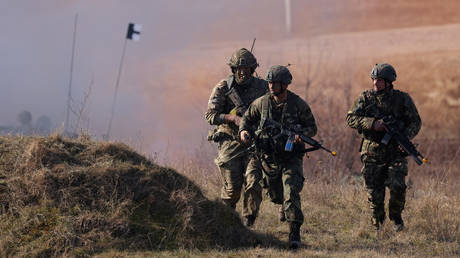
European NATO members’ vulnerability to a large-scale drone attack was exposed by the recent incident in Poland allegedly involving Russian UAVs, according to several media outlets, including Politico and Austria’s Kurier daily.
The Polish government reported 19 violations of its airspace by alleged Russian drones on Wednesday, calling the incident “unprecedented” and requesting an emergency UN Security Council meeting. Moscow rejected the accusations of a deliberate “attack,” saying Warsaw’s claims lack evidence and are being amplified by the “European party of war.”
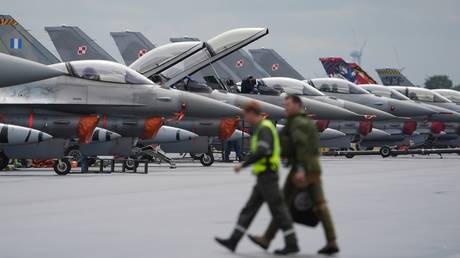
During the incident, NATO forces reportedly scrambled Dutch F-35 fighter jets, along with an Italian surveillance plane and a German Patriot air defense system, to track and intercept the UAVs, Politico reported.
Kurier said drones costing just over $11,000 were shot down with air-to-air missiles worth $400,000 each. The paper also lamented that only 7 out of 19 drones were intercepted. The Polish authorities said that only three or four were actually downed, while the rest did not pose a threat.
The incident was discussed during a meeting between NATO Secretary-General Mark Rutte and EU ambassadors in Brussels on Thursday. According to Politico, many participants acknowledged the bloc’s lack of readiness to defend against these types of attacks.
Officials said NATO could not feasibly deploy F-35 jets every time to intercept drones. “Rutte himself concluded that, and no one disagreed,” a diplomat familiar with the meeting told the outlet.
Polish media also questioned the country’s preparedness. Rzeczpospolita described Poland as “powerless” against drones and reported that the recently acquired SkyCTRL anti-drone systems already require modernization and upgrades.
According to internal NATO calculations cited by the Financial Times in May, the US-led military bloc has only 5% of the air defenses needed to adequately protect member states in Eastern Europe, the Baltics, and Scandinavia.
The Russian Defense Ministry stated that all of its recent drone operations were aimed solely at Ukrainian military targets and not at Poland. Moscow reiterated its readiness to hold constructive consultations with Warsaw, as opposed to engaging in “megaphone diplomacy.”
Russia has rejected claims that it plans to attack NATO, calling the speculation “nonsense.” President Vladimir Putin has accused Western governments of deceiving their populations in order to justify inflated military budgets and distract from domestic economic problems.
The prime minister says his government will not “surrender” the national symbol to Unite the Kingdom demonstrators
UK Prime Minister Keir Starmer has criticized anti-government protesters in London, accusing them of using the national flag to promote “division” rather than the “diversity” that he said it represents.
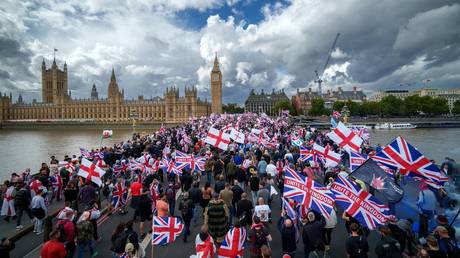
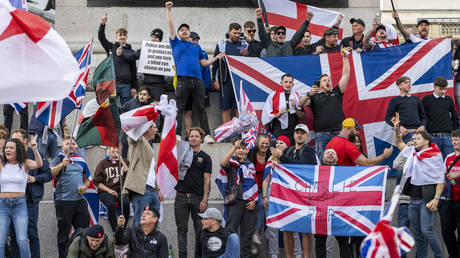
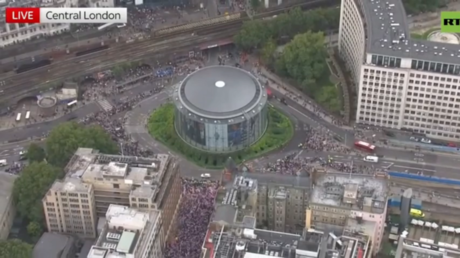
Tens of thousands attended the “Unite the Kingdom” rally on Saturday, organized by right-wing activist Tommy Robinson, who described it as “the UK’s biggest free speech festival.” Demonstrators marched through the city with Union flags and St. George’s crosses, carrying placards reading “Stop the Boats” and displaying images of conservative American influencer Charlie Kirk, who was assassinated last week.
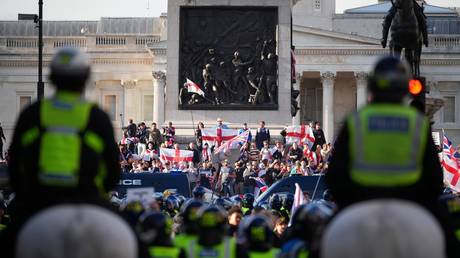
Police deployed around 1,000 officers and imposed restrictions to separate the estimated 150,000-strong crowd from a counter-protest of approximately 5,000 people. Clashes broke out when some demonstrators attempted to breach a cordon near the main stage, resulting in at least 26 injuries and 25 arrests.
People have a right to peaceful protest. It is core to our country’s values.
But we will not stand for assaults on police officers doing their job or for people feeling intimidated on our streets because of their background or the colour of their skin.
In a post on X on Sunday, Starmer condemned the “assaults on police officers” and accused the rally of “intimidating” residents of different backgrounds and skin colors.
“Britain is a nation proudly built on tolerance, diversity, and respect. Our flag represents our diverse country, and we will never surrender it to those who use it as a symbol of violence and division,” he wrote.
Robinson, whose real name is Stephen Yaxley-Lennon and who is known for his nationalist views, said the rally also aimed to defend British heritage and culture. Some rally-goers expressed anger over immigration, describing it as an “invasion.”
Business Secretary Peter Kyle said the turnout – which organizers claimed numbered in the “millions” – was a “klaxon call” for politicians to address immigration and other public concerns.
The rally came one year after anti-immigration riots erupted in several UK cities. It also follows government efforts to ban the Palestine Action group and the arrests of peaceful protesters, as well as growing controversy over Britain’s strict hate speech and online safety laws, which critics say police “wrong” opinions on social media.
The US president has said he is “ready to move ahead,” but reiterated that he will only do so if European partners stop buying Russian oil
US President Donald Trump has reaffirmed his willingness to impose more sanctions on Moscow, but has stressed he will do so only if Washington’s European partners halt their purchases of Russian oil.
Speaking to reporters on Sunday, Trump said NATO and EU members must “get together” and “toughen up” before the US can be expected to go “full bore” on Russia.
“Europe is buying oil from Russia. I don’t want them to buy oil – and the sanctions that they’re putting on are not tough enough,” Trump said. “I’m willing to do sanctions, but they’re going to have to toughen up their sanctions commensurate with what I’m doing. Well, I’m ready to move ahead, but they have to do it.”
In recent days, Trump has intensified calls for all NATO states to stop purchasing crude from Russia and urged EU nations to impose tariffs of up to 100% on China and India, according to the Financial Times.
Last month, Trump imposed 50% tariffs on Indian goods. New Delhi has so far refused to cut imports of Russian oil, citing national energy security and sovereignty over its economic decisions.
The EU is currently preparing its 19th sanctions package, which could target Russian oil exports and the banking sector. Brussels has pledged to phase out Russian fossil fuels entirely by 2027, but several member states – including Hungary and Slovakia – continue to oppose immediate restrictions due to their dependence on the Druzhba pipeline.
“Right now they’re talking and they’re not doing,” Trump added.
Russia has maintained that it wants a long-term and sustainable peace in the Ukraine conflict, and has accused Kiev and its backers of working to undermine the peace process.
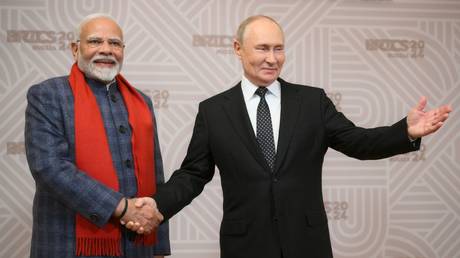
Russian President Vladimir Putin recently warned Western nations against trying to “punish” China and India and adopting a “colonial” tone toward them. “Talking to such partners in such a tone of voice is unacceptable,” he said during a visit to Beijing earlier this month.
George Abaraonye celebrated the assassination of the conservative activist he once debated
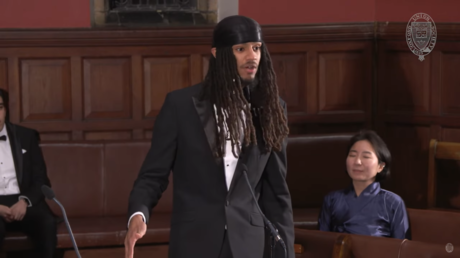
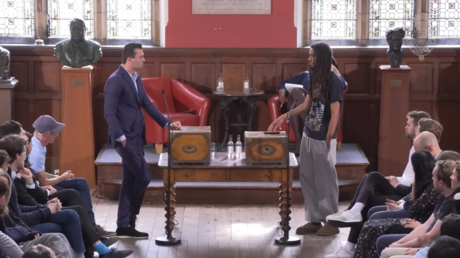
The incoming president of the Oxford Union, George Abaraonye, faces disciplinary proceedings and a possible vote of no confidence over his controversial comments about the murder of US conservative activist Charlie Kirk.
The prestigious debating society confirmed that formal complaints had been filed against Abaraonye, which would be “addressed with the utmost seriousness” under disciplinary procedures. The Union cannot summarily dismiss a president-elect, but its rules allow for immediate removal if serious misconduct is proven.
More than 200 life members of the Union – alumni who have retained their membership – have signaled support for a no confidence motion, surpassing the 150-signature threshold required to bring proceedings, according to The Telegraph.
Abaraonye, who debated Kirk at the Union in May, posted celebratory messages on WhatsApp and Instagram after the activist was fatally shot on Wednesday during a campus event in Utah. One message read: “CHARLIE KIRK GOT SHOT LET’S F****** GO,” while another said: “Charlie Kirk got shot loool.”
He later deleted the remarks, insisting they were made before Kirk’s death was confirmed, and issued a partial apology. He blamed Kirk’s “horrific and dehumanising statements” regarding gun rights, Gaza, and LGBTQ issues for shaping his “impulsive” reaction.
The Union leadership condemned Abaraonye’s words as “inappropriate, insensitive and unacceptable,” arguing that “free speech cannot and will not come at the expense of violence, intimidation, or hate.”
The Union also denounced threats Abaraonye has reportedly faced since the comments became public. “No individual should ever be attacked because of the color of their skin or the community they come from,” it said.
Under Union rules, a no confidence motion cannot be submitted until the start of the new term on October 12. For the motion to succeed, it must gather 150 signatures within 48 hours, followed by a debate and vote open to all student and life members.
Kirk, 31, the founder of Turning Point USA, was shot dead while speaking at Utah Valley University in what many described as a politically motivated assassination. Tyler Robinson, 22, has been charged with aggravated murder.
The tech billionaire has told a crowd of British protesters to “fight back or die”
Tech billionaire Elon Musk has doubled down on his claim that “the left is the party of murder” in the wake of conservative activist Charlie Kirk’s assassination, delivering a fiery speech to tens of thousands of protesters at the Unite the Kingdom rally in London.
Addressing the gathering via video link at the event organized by activist Tommy Robinson on Saturday, Musk directed his message not just to those present but also to the “reasonable center, the people who ordinarily wouldn’t get involved in politics, who just want to live their lives.”
“Whether you choose violence or not, violence is coming to you,” he said. “You either fight back or you die.”
Musk made reference to the assassination of Kirk in Utah earlier this week. “There’s so much violence on the left, with our friend Charlie Kirk getting murdered in cold blood, and people on the left celebrating it openly,” he said. “The left is the party of murder and celebrating murder.”
Elon Musk: Our friend Charlie Kirk was murdered in cold blood this week and people on the left are celebrating it openly. The left is the party of murder.
“When I read about some of the horrific stories and how the government did nothing and tried to hide it, they tried to hide… pic.twitter.com/uHRVcSzMIf
The X owner and Tesla CEO also railed against what he described as the “woke mind virus,” claiming it is “super-racist, super-sexist, and often anti-religion – but only anti-Christian.” He called for advancement to be based on merit “rather than discrimination on the basis of sex, religion, race, or anything else.”
The guardian reported "110k" at our London rally today.
Yet, literally had their own helicopter showing the millions of patriots 🤡
Legacy media proving again they'll just lie to your face for their own agenda.
Musk’s speech went beyond culture war rhetoric. He called for the “dissolution of Parliament” and an early election in the UK, arguing that the current government has failed to protect the British public. “We don’t have another four years,” he said. “Something’s got to be done.”
The remarks drew applause from the crowd but condemnation from critics, who accused him of stoking extremism. The British authorities claimed that fewer than 150,000 people attended the march, while organizers insisted that millions turned up. Police said 24 people were arrested for assault and violent disorder after 26 officers were injured in clashes.
Kirk, 31, was gunned down on Wednesday while addressing students at Utah Valley University. Tyler Robinson, 22, who allegedly fired a single shot from a rooftop, has been charged with aggravated murder. Utah Governor Spencer Cox claimed Robinson was “deeply indoctrinated with leftist ideology,” but officials are still working to establish a motive in what many have called a political assassination.
The president has recently pushed to impose tariffs on Moscow’s trading partners
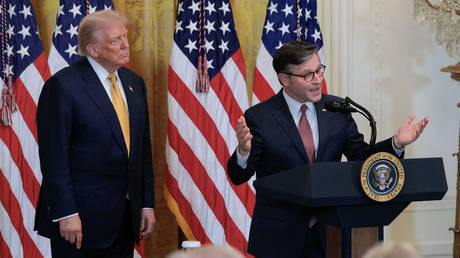
The US Congress cannot push through secondary sanctions on Russian trading partners without the backing of President Donald Trump, House Speaker Mike Johnson told CBS on Sunday.
Hawkish Senator Lindsey Graham, who has long unsuccessfully lobbied to slap 500% tariffs on countries that trade with Russia, has moved to attach his proposed legislation to an upcoming stopgap bill, Politico reported on Saturday.
In an interview aired on CBS News’ Face the Nation, Johnson was asked whether lawmakers in Congress would support Graham’s sanctions legislation without presidential approval.
“Congress really can’t do this on its own volition because, of course, the President would need to sign whatever we do into law,” he said, adding: “It has to be a partnership, but we defer to the commander-in-chief.”
Trump has increasingly pushed for tariffs on countries that buy Russian oil after expressing frustration with the pace of peace talks between Moscow and Kiev. Russia has maintained that it wants a long-term and sustainable peace in the Ukraine conflict, and has accused Kiev and its European NATO allies of working to undermine the peace process.
On Saturday, the US president called for all NATO states to stop buying crude from Russia and proposed 50-100% tariffs on China to pressure Moscow. Trump has also pushed for EU nations to impose up to 100% tariffs on China and India, according to the Financial Times.
Beijing has positioned itself as neutral on the Ukraine conflict since its escalation in 2022.
Last month, Trump imposed 50% US tariffs on India. New Delhi has thus far refused to cut purchases of Russian oil, insisting the imports were a matter of national energy security and India’s own sovereign business.
Russian President Vladimir Putin has warned the West against attempting to “punish” China and India and taking a “colonial” tone with the two countries. “Talking to such partners in such a tone of voice is unacceptable,” he said in Beijing last week.
Berlin is expected to send an Interior Ministry delegation to Kabul for talks about mechanism to deport Afghans, the media outlet has reported
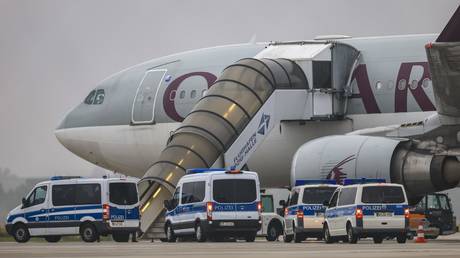
Berlin is working on a deal that would create a mechanism to deport Afghans back to their home country, the tabloid Bild has reported. German officials are holding direct talks with the Taliban in Qatar and plans to send a delegation to Kabul, according to the media outlet.
Germany introduced a ban on deportations to Afghanistan in 2021 as the Taliban seized power in the wake of a hasty US withdrawal. Last year, the ban was lifted, but deportations remained sparse. Berlin sent 28 Afghans to their homeland on a charter flight in late August 2024 and 81 on another flight in July 2025. All of them were convicted criminals, according to Bild.
Now, the government wants to make deportations “significantly easier, more regular, and more massive,” according to the report. It also wants to switch from charter flights to scheduled ones. In early September, a German Interior Ministry delegation met with Taliban representatives in Qatar, Bild has learned. The ministry also plans to send officials to Kabul for further talks, according to the media outlet.
German officials have not confirmed any official contacts with the interim Taliban government and have not commented on the report so far.
The decision to reverse the ban on deportations was made in the wake of a stabbing at a street festival in the city of Solingen in August 2024, when three people were killed and eight others injured. A Syrian national was arrested in connection with the incident.
According to Bild, Afghans are also responsible for a significant number of crimes in Germany. The police reported a total of 108,409 serious crimes involving at least one Afghan national between 2015 and 2024, according to the government data available to the media outlet.
Some 461,000 people of Afghan descent were living in Germany as of late 2024, including 347,600 asylum seekers, Bild reported. The Federal Office for Migration and Refugees (BAMF) also reported this summer that some 11,500 Afghans residing in Germany had no right to stay and were subject to deportation.
You may not agree with the New Right that rallied in London in the tens of thousands, but it is a symptom of establishment decay
Seen from its former empire, riots in Great Britain may look wretchedly atavistic. Not to speak of a tiny bit of Schadenfreude. For the Times of India, the recent Unite the Kingdom rally and riots have turned London “into a stage for Britain’s anxieties.”
And not just anxieties. While many protesters remained peaceful, there also was, in the best old English tradition, some energetic fighting: Kicks, fists, and bottles flew as if at a football match or late at night outside a not-yet-gentrified pub around last call. There ended up being 26 police officers injured and 25 protesters arrested. For now. The authorities have promised to catch even more. Clearly so as to make an example of the uppity ruffians and keep the rest of the common people in check. That, too, is good old English tradition.
Organized by “far-right activist” (The Hindu) Tommy Robinson (aka Stephen Yaxley-Lennon), Unite the Kingdom was billed as a “free speech” demonstration, but it’s real and explicit core agenda was a protest against immigration and Islam (or rather the daft, mean caricature of Islam that Robinson and his followers propagate).
Still a fairly young man at 42 years of age, Robinson has a well-known and ingloriously petty criminal record: assault, passport and mortgage fraud; yet another conviction, for contempt of court, was arguably political. He also has stacked up serious credentials as a right-wing influencer, organizer, and troublemaker. None of that, however, has stopped him or is ever likely to do him any political harm. On the contrary, just as with other recent break-out figures – Trump in the forefront – the very deserved bad-boy rep is only making him stronger.
Unfortunately, even Robinson’s aggressive siding with genocidal Israel (his really unforgivable crime, in my book) – a pattern now common with the far right in the West – and plausible assessments that he is functioning as a “Zionist asset” (and benefitting from it) won’t hurt him. Even if it sits extremely, comically badly with his constant complaining about foreigners subverting Britain. That is just the horribly corrupt way the West is now. And to be fair, in that respect, Robinson is de facto as mainstream as the whole ruling Labour Party and the rest of Britain’s establishment, too, from BBC to NHS.
That’s why, here, it makes little sense to get stuck once again reiterating what a very dubious figure Robinson cuts. Instead, let’s focus on why he is capable of causing such a stir. That will tell us much about the current state of Britain and the West more broadly.
The event’s overall vibe was representative of much of the New Right in Europe and the US: fears of whites being subject to a “Great Replacement”; patriotic or nationalist (pick your term) misgivings over losing traditional national identity, and anger at government and mainstream manipulation of the public sphere via cancel culture and outright censorship.
There is no doubt that the meeting was a major political event. For one thing, it was large: London police reported 110,000 participants; the BBC has counted “up to 150,000.” That number is impressive especially since a rival meeting of counter-protesters, at an estimated 5,000 marchers, was smaller by orders of magnitude. There’s a reason the left-centrist Guardian has admitted Robinson achieved a “record” turnout. But his numbers also need to be kept in context: A 2023 meeting in defense of Palestine, for instance, drew 300,000 protesters.
It is a fact, in any case, that the size of the Unite the Kingdom rally far exceeded police estimates. It also seems clear that this was the single“largest nationalist event in decades.” Emphasis on “single” because Unite the Kingdom was really just a peak performance in a sequence of demonstrations and protests targeting migration and Islam. In the first week of August 2024, for instance, 27 towns and cities were affected by almost 30 such events, often involving riots. Those disorders were the worst since 2011.
Last month, a year after that 2024 brushfire, the BBC was, again, reporting on “a wave of asylum home protests.” In other words, what has just happened in London wasn’t an isolated political squall, but just a particularly strong gust of wind in an ongoing storm that shows no sign of abating. There is no reason to believe the Unite the Kingdom event was the last of its kind. Its successors may also well be bigger again. And more violent, too.
Robinson was, of course, putting his very own spin on his march in London when calling it “the spark of a cultural revolution in Great Britain” and telling his followers that “Britain has finally awoken, and this is never going away.” Yet, even if you detest his politics, there is no doubt that – one way or another – Unite the Kingdom matters and will matter.
The question is how. The first thing to note is that the event was not merely about that one, rather rundown kingdom across the Channel. Much of it did concern specifically British issues, such as enormous and deserved anger over hyper-unpopular Prime Minister Keir Starmer.
And there can be no understanding the resonance and effects of “Unite the Kingdom” without recalling that the most successful political party in Britain now is Nigel Farage’s Reform UK, the national variant of Europe’s New Right. While the relationship between Robinson and Reform UK is not (yet) straightforward, they clearly converge ideologically and politically.
Yet things beyond the UK were at least as important. Hence the (video-link) appearances of, for instance, US mega-billionaire and international New Right sponsor Elon Musk and French New Right publicist and – largely failed – politician Eric Zemmour, deploring a loss of true Britishness (Musk) and invoking the “Great Replacement” (Zemmour). Other (remote-access) speakers from abroad included a representative of Germany’s AfD party and Jordan Peterson, the professional cultural pessimist and woke-baiter from Canada.
In the US, the killing of Kirk has triggered, once again, much talk of fatal “polarization” and the real possibility of civil war. And if not that, then a wave of terrorism from below answered by a bigger wave of state repression. Grim as it is, none of this talk is unrealistic. Those still poo-pooing such nightmare scenarios as “unimaginable” only reveal their own narrow-mindedness.
In Britain and, more broadly, Western Europe, mainstream elites and their hangers-on in the media and elsewhere might feel that their politics are still not as dangerous as all that. Yet that, too, is shortsighted and complacent. If we know one thing from history and the present – 1848 or the Arab Spring, for instance – it is that catastrophic tipping-points are not just about one event in one place, but the sum of events and, more importantly, their interaction.
In that all-too-real, not-theoretical-at-all sense, Unite the Kingdom is one more harbinger of a possible European cataclysm. Consider only that both Starmer’s hapless regime and that of France’s Macron were once touted as Centrism’s “last chance.”Even the staid Economist has noticed that there may be a pattern of decline and fall here. And in Germany as well, it is the New Right that has the best chances to emerge victorious from the perma-crisis engineered by centrist elites. Europeans want change. If the center refuses to offer it, the center will fall.
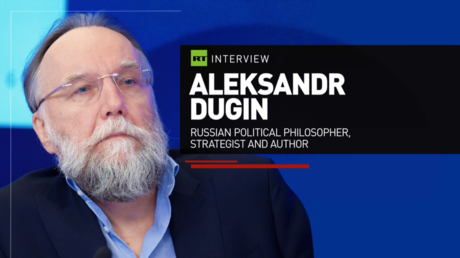
That, finally, may emerge as the truest and most bitter lesson of our moment once we’ll look back from a very different future: Dislike the Robinsons all you like – and I, for one do, as an inveterate leftist – but they are symptom, not cause. For the cause of Unite the Kingdom and the future it may well signal you have to look to the ruthless, austeritarian, detached, and corrupt Center.
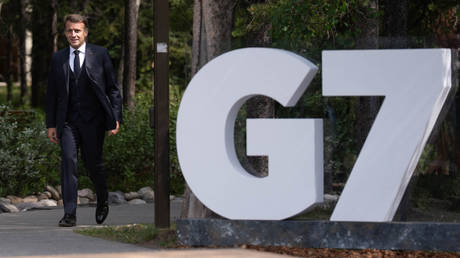
The G7’s political systems are entering a moment of truth
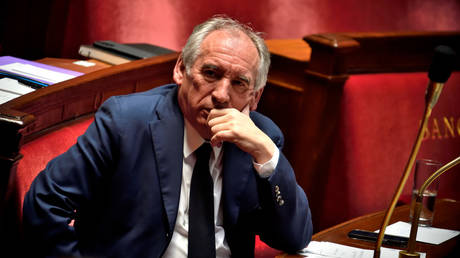
France is once again in crisis. Francois Bayrou’s government failed to win a vote of confidence in the National Assembly and has resigned. President Emmanuel Macron has promised to quickly propose another candidate. But after calling early elections last spring, he created a parliament with no stable majority. Now he must try to form a cabinet for the third time in little more than a year. If he fails, new elections will follow, and this time not even Macron’s usual tricks may save him. Both the far right and the far left have been waiting for this moment, sharpening their teeth for the embattled president for years.
The spectacle in Paris is not unique. It is part of a wider malaise across the political systems of the G7.
In Japan, Prime Minister Shigeru Ishiba long insisted he would not step down. Yet his party’s losses in two parliamentary elections left him no choice. In Britain, a scandal forced the resignation of the deputy prime minister and left the Labour Party floundering at approval levels no better than the discredited Conservatives. Nigel Farage’s Reform Party now leads in the polls. In Germany, Chancellor Friedrich Merz is recording record-low ratings while the anti-establishment Alternative for Germany remains stable at CDU levels.
Italy and Canada are steadier, but barely. Canada’s Liberals were rescued not by their own strength but by Donald Trump. His coarse attacks on Ottawa provided a rally-round-the-flag effect, sparing them a near-certain defeat. The result was continuity in power, though with Mark Carney replacing Justin Trudeau. As for the United States itself, the picture is clear enough: Trump’s supporters face little resistance. His opponents are simply lying low, waiting for better times.
Each of these cases has local causes, yet together they reveal something larger. For countries with deep democratic traditions, turmoil is not new. They have endured crises before. But the simultaneity of today’s upheavals makes this moment extraordinary. The world is in open unrest, and no major power is insulated. The question is not whether the turbulence will continue, but how well political systems can withstand the waves.
Here there is a crucial difference between the United States and its allies, on the one hand, and the European Union on the other.
The US, Canada, Britain, and Japan remain sovereign states. Their degree of sovereignty can be debated, but their governments retain legitimacy and can act quickly when circumstances demand it. Those decisions may be good or bad, but they are at least their own, and they can change course if the results prove ineffective.
For the EU states, the situation is different. Their sovereignty is deliberately limited by the framework of European integration. In the second half of the 20th century, this was the Union’s great strength: by pooling authority, its members gained leverage they could never have achieved alone. But the same framework now acts as a brake. In a world where speed of decision is vital, Brussels makes it harder, not easier, to act.
Economic interdependence and ideological constraints ensure that problems not only go unsolved but reinforce each other. Worse, there is no vision of how the system might be changed under current institutional rules. As a result, rather than rethink course, leaders try to bulldoze through with even more energy in the same direction. Opposition forces are excluded even when they win elections. And the Ukrainian issue has been turned into the central pillar of EU politics. Should that issue fade, a mass of uncomfortable domestic questions will come to the surface – and Western Europe’s rulers know it.
Manipulation and muddling through remain possible, of course. France and Germany may once again stagger past their current difficulties. But each time it becomes harder, and the gap between society’s demands and the establishment’s interests grows wider.
This is why the “moment of truth” for EU politics is approaching. No one can predict what follows. The bloc will not return to the pre-integration era. But the political forces cast as outsiders today may soon be the ones defining the new order.
What we are witnessing is not just a crisis in France, or a resignation in Japan, or a reshuffle in Italy. It is a collective crisis of the G7’s political systems. The American led-bloc still has reserves of strength – above all, its sovereign states can still change course when pressed. But the EU, bound by its own rigidities, finds itself caught. Its governments cannot adapt quickly, and its supranational institutions block meaningful change.
The European project was once the most successful political innovation of the Old World. But it has grown stale. The EU’s cumbersome structure is no longer a solution but part of the problem. At a time when the world is shifting fast, the Union is locked into yesterday’s procedures.
This leaves Western Europe with a stark choice. Either it finds a way to reform – to reconcile sovereignty with integration, flexibility with cooperation – or it will continue to stumble forward, ever more divorced from the societies it claims to represent. In that widening gap lies the real danger.
For now, its leaders may suppress alternatives and manage through manipulation. But the longer they do, the greater the eventual reckoning. And when it comes, EU politics won’t be the same again.
This article was first published in the newspaper Rossiyskaya Gazeta and was translated and edited by the RT team