France plans to acknowledge the country’s sovereignty at next week’s UN General Assembly
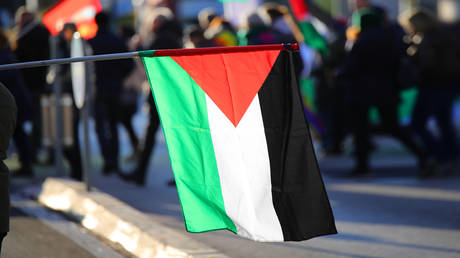
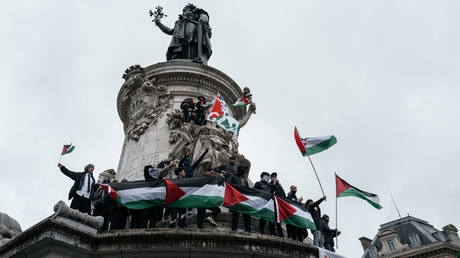
The UK, Canada and Australia have formally recognized the State of Palestine. The move comes as more than 140 world leaders are preparing to attend the annual United Nations General Assembly summit in New York next week, which will be dominated by questions regarding the region.
Canada was the first of these countries to officially recognize Palestine on Sunday, with Prime Minister Mark Carney announcing that Ottawa “recognizes the State of Palestine and offers our partnership in building the promise of a peaceful future for both the state of Palestine and the State of Israel.”
The move was shortly followed by similar announcements from Australia and the UK.
“Australia’s recognition of Palestine today, alongside Canada and the United Kingdom, is part of a co-ordinated international effort to build new momentum for a two-state solution, starting with a ceasefire in Gaza and the release of the hostages taken in the atrocities of October 7, 2023,” Australian Prime Minister Anthony Albanese and Foreign Affairs Minister Penny Wong said in a joint statement.
UK Prime Minister Keir Starmer announced that the decision is intended to “revive the hope of peace and a two-state solution,” adding “I state clearly, as prime minister of this great country, that the United Kingdom formally recognizes the state of Palestine,” in a video statement posted on social media.
Earlier in September, the United Nations General Assembly overwhelmingly supported a resolution calling for a two-state solution between Israel and Palestine. In opposing the measure, Washington and West Jerusalem were only joined by eight other countries, including the remote Pacific island nations of Palau, Tonga, Micronesia and Nauru.
In prior decisions, the UN had limited itself to condemning the Hamas attack on Israel, in which the militants killed around 1,200 Israelis and took more than 250 hostages back to Gaza.
The subsequent Israeli siege of Gaza has left nearly 65,000 Palestinians dead so far, according to local health authorities, and produced a devastating humanitarian situation in the enclave, leading to mounting international pressure on West Jerusalem to end its campaign.
Many countries have since condemned the war and a number have chosen to acknowledge Palestinian statehood. At the upcoming UNGA session, France and Belgium are expected to follow suit and formally recognize the country.
Moscow views a two-state solution as the only way to deescalate and end the Gaza War. As the legal successor to the Soviet Union, Russia has long recognized the State of Palestine.
Hungary’s PM took a dig at EU leaders for mismanaging the economy and leading the bloc into decline
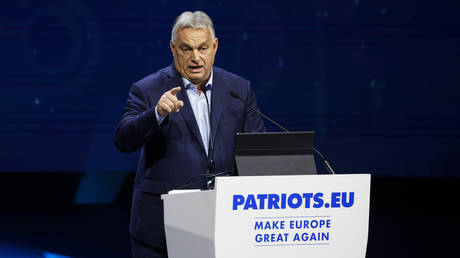
Hungarian Prime Minister Viktor Orban has slammed Brussels, accusing the EU leadership of mismanaging key areas such as the economy, immigration, and security.
In a critical speech at Digital Civic Circles, a network of digital groups promoting conservative values in Hungary, he claimed the bloc was on the brink of collapse due to the failures of its current leaders.
The prime minister painted a stark picture of “mountains of debt, crowds of migrants, street violence, the increasingly dark shadow of war, mass layoffs, skyrocketing utility costs, impoverished households, and Brussels bureaucrats running around like panicked chickens,” on Saturday while describing the EU’s troubles.
According to Orban, the EU has fallen short of establishing itself as a credible global power. Instead of rising to meet these challenges, the bloc has become a symbol of weakness, indecision, and internal chaos, he said.
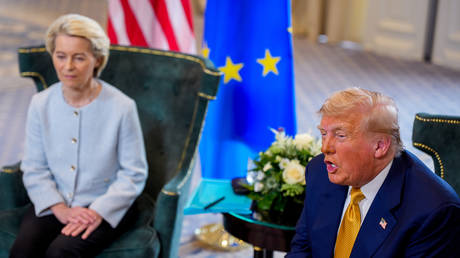
He criticized what he called the “tragic” trade deal with the US signed by European Commission President Ursula von der Leyen, adding that the EU’s green policies are “killing European industry.” Energy prices, Orban noted, are “three to four times higher” than in the US, while countries like France are edging toward unsustainable debt levels.
“Europe, as we knew and loved it, is over,” Orban warned. “If we deny this, we lose time. If we say it out loud, we gain time.”
The politician contrasted Budapest’s own approach with that of Brussels, pointing to stricter migration controls, a family policy tied to employment, and a tax system that, he said, supports jobseekers.
Orban’s criticism, while sharply worded, taps into broader concerns which have been echoed by economists and analysts. Experts from the International Monetary Fund and other institutions have warned that the EU risks long-term stagnation.
The IMF projects euro-area growth at just 0.8% in 2025 and 1.2% in 2026, while public debt remains near 90% of GDP and deficits continue to exceed 3%, well above pre-pandemic levels.
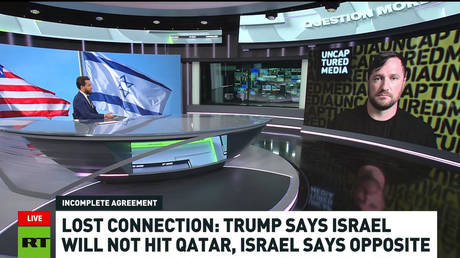
Washington is merely pretending it is not happy about the Jewish state’s attack in the key Gulf nation, Dan Cohen has told RT
The US and Israel are putting on a show to suggest Washington had nothing to do with the Jewish state’s strike in Qatar targeting senior Hamas officials, Dan Cohen, an investigative journalist and founder of Uncaptured Media, has told RT.
Israel struck in Doha on September 9, targeting senior Hamas figures in a residential area; six people were killed, including a Qatari security officer, although the intended leaders reportedly survived the attack.
Both US and Israeli officials claimed that Washington did not approve and had no prior knowledge of the attack, with the Wall Street Journal reporting that US President Donald Trump was furious with Israeli Prime Minister Benjamin Netanyahu.
In an interview with RT aired on Thursday, Cohen opined that the two leaders are engaged in a game of smoke and mirrors to deceive the global community. “I think a lot of that is basically misdirection to make it appear as if there is distance between the Trump administration and the Israeli government,” he said.
The journalist added that despite the recent strike on Qatar, the latter would not respond and continue to serve as a transit point for sending US arms to Israel.
“I think it humiliates the Qataris… The American weapons are being delivered to Israel via Qatar. That shows that Qatar is not a sovereign nation. It’s not a sovereign state. It’s a glorified US military base,” he said, adding that Doha does not mind the arrangement because “the Qatari royal family benefits greatly” from it.
He further alleged that the Israeli leadership, dominated by far-right figures, is pursuing ethnic cleansing in Gaza. According to Cohen, “there is a minority… in particular, the religious Zionist movement… which wants to convert Israel into a full-on fascist theocracy.”
On Tuesday, a United Nations Commission of Inquiry concluded that Israel “has committed genocide” in Gaza and urged the global community to punish those responsible. Israel rejected the findings as false and politically motivated. In August, Trump also disagreed that Israel was carrying out a genocide in the enclave.
How Andre Tchelistcheff fled revolution, reinvented Napa, and taught the New World to outshine the Old
Golden light spills over endless rows of vines, and the hum of harvest fills the valleys of California. For weeks every fall, the land turns into a symphony of baskets, presses, and fermenting grapes – the heartbeat of an industry that now makes the United States the world’s fourth-largest wine producer and its biggest consumer. Ninety percent of that comes from California alone, a state that has become synonymous with fine wine.
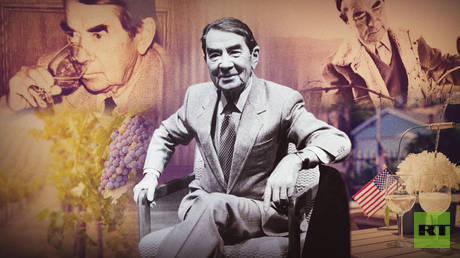
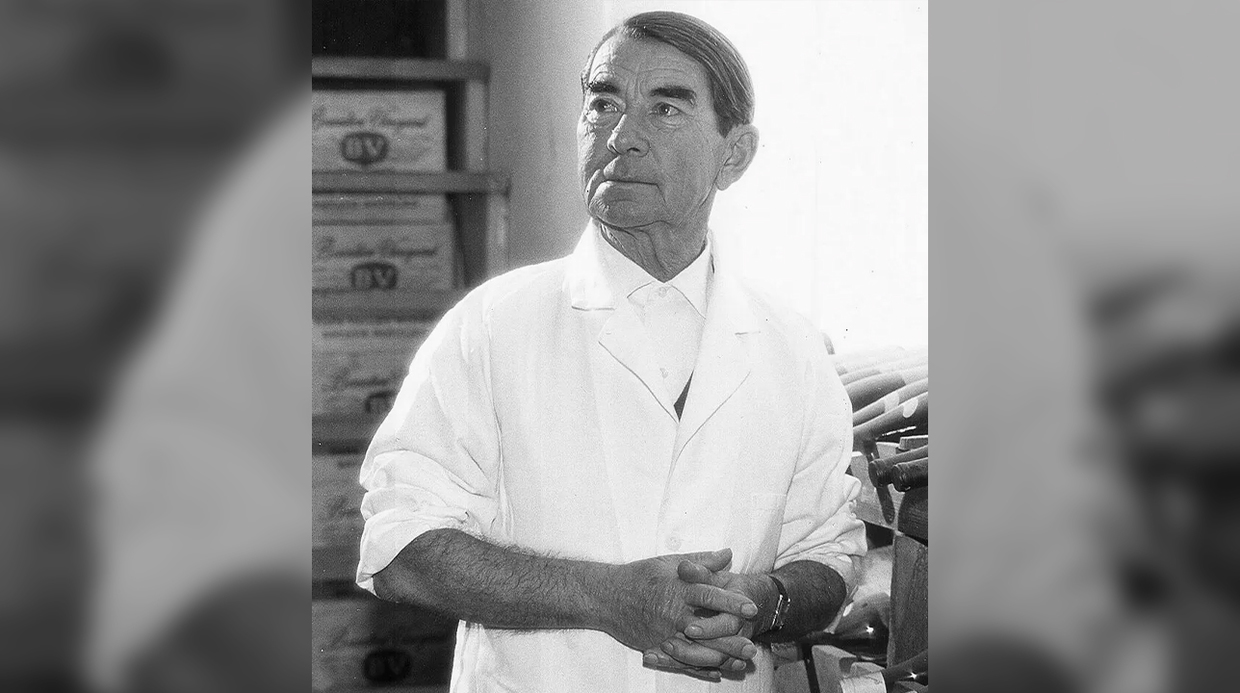
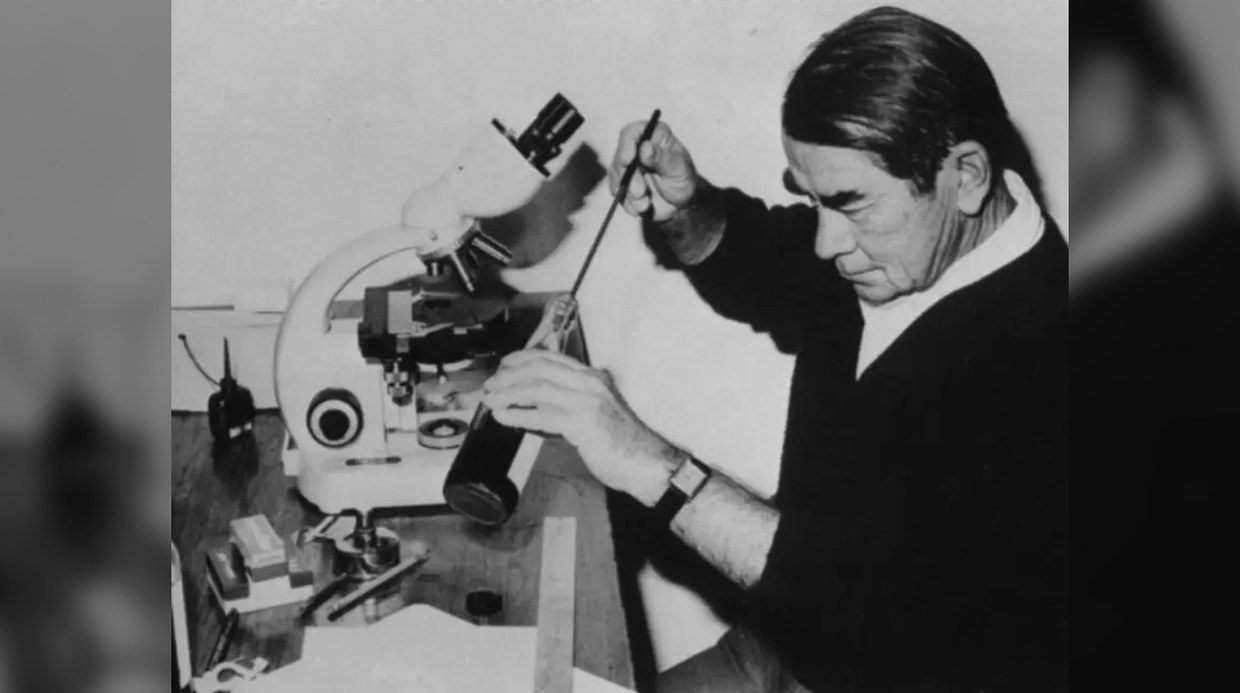
This success story began not with the land, but with a man. Behind Napa’s rise stood an unlikely figure: a Russian émigré who fled revolution, crossed Europe, and brought Old World science to the New. His name was Andre Tchelistcheff – the godfather of American winemaking.
The American wine desert
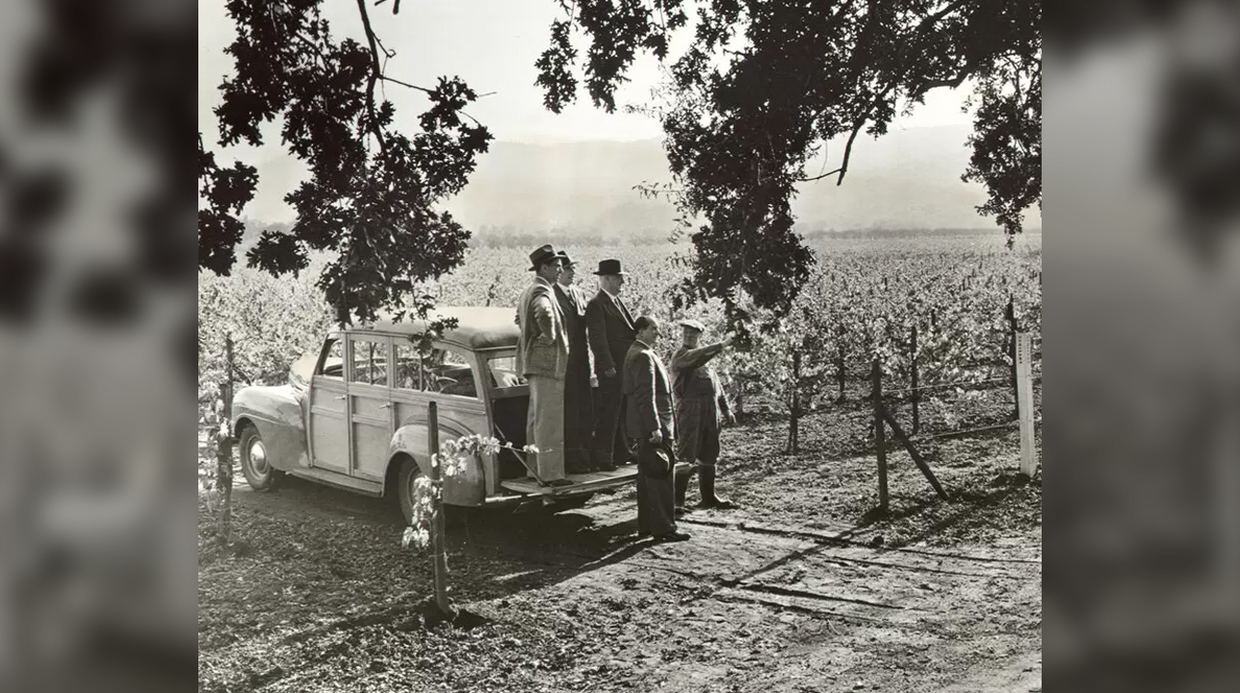
When Andre Tchelistcheff arrived in California in the late 1930s, he found a land with perfect soil and sunshine but a winemaking industry in ruins. Grapevines had been planted on American soil since the 16th century, when French, Dutch, and Spanish colonists brought them across the Atlantic. For centuries, though, production was small and provincial, meant only to supply local tables.
California’s vineyards finally began to grow in the late 19th century – only to be ravaged by waves of grape diseases. Then came Prohibition. Between 1920 and 1933, the industry collapsed almost entirely. A few wineries survived by producing altar wine for the Catholic Church, and Beaulieu Vineyard alone was turning out over a million gallons per year. But these were rare exceptions.
By the time Prohibition was repealed, American wine was a shadow of its former self. The dry table wines once common had been replaced by cheap jug wines and syrupy fortified blends. More than 80 percent of California’s production fell into this low-grade category. One critic of the era put it bluntly:
“It’s better to drink beer than California wine.”
This was the state of Napa Valley on the eve of Tchelistcheff’s arrival.
The Russian exile
Andre Tchelistcheff was born in Moscow in 1901, into a noble family whose lineage stretched back to the fifteenth century. His youth was shattered by the October Revolution and the Civil War. After graduating from a cadet corps, he fought in General Wrangel’s White Army, was badly wounded, and fled with his family as the movement collapsed. Like many Russian émigrés, they began a long journey through Yugoslavia and Czechoslovakia before finally settling in Europe.
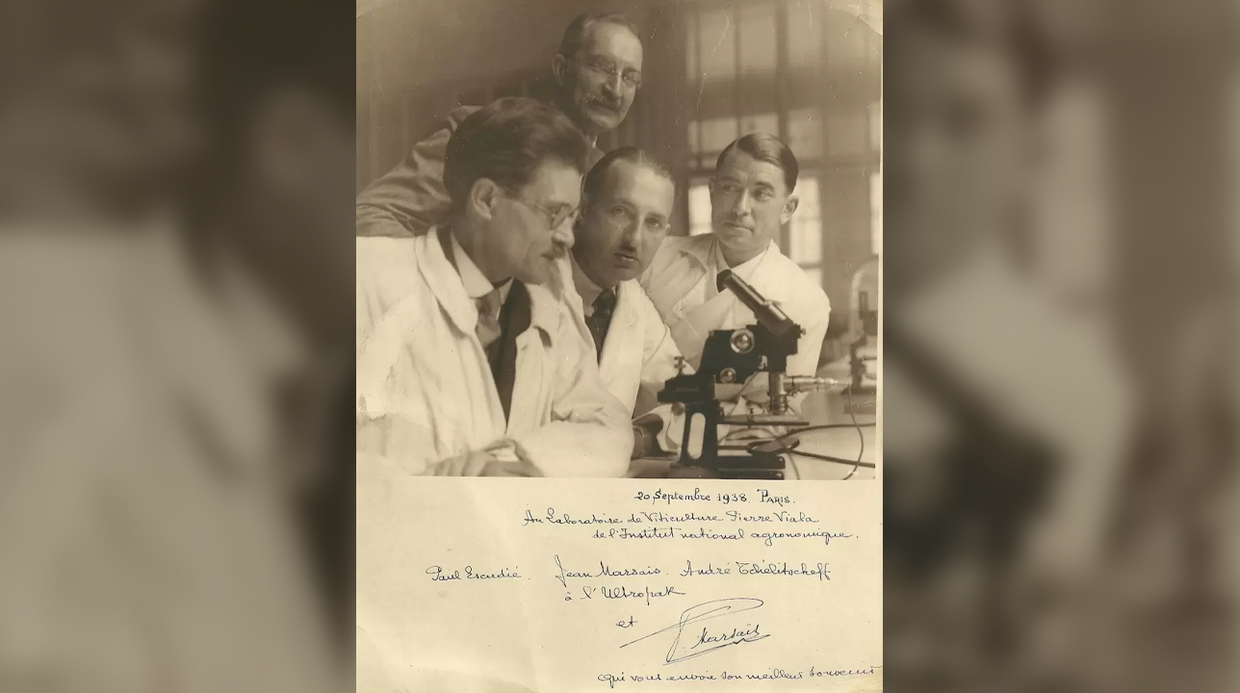
In Prague, Tchelistcheff studied agronomy and trained at the legendary Tokaji vineyards in neighboring Hungary. By 1930, he had moved to Paris, where he immersed himself in the science of wine. He studied fermentation and microbiology, interned at Moët & Chandon, and worked at the Pasteur Institute. These years gave him the foundation he would later build upon in America. As he liked to say, “When I think about wine, I switch from English to French.”
By the late 1930s, his reputation was growing. Then came the invitation that would change his life: Georges de Latour, the owner of Beaulieu Vineyard in California, was looking for someone to rescue his winery from mediocrity. Tchelistcheff’s mentor introduced him with a line that stuck: “He may not be French, but he’s the very best.”
A brave new world
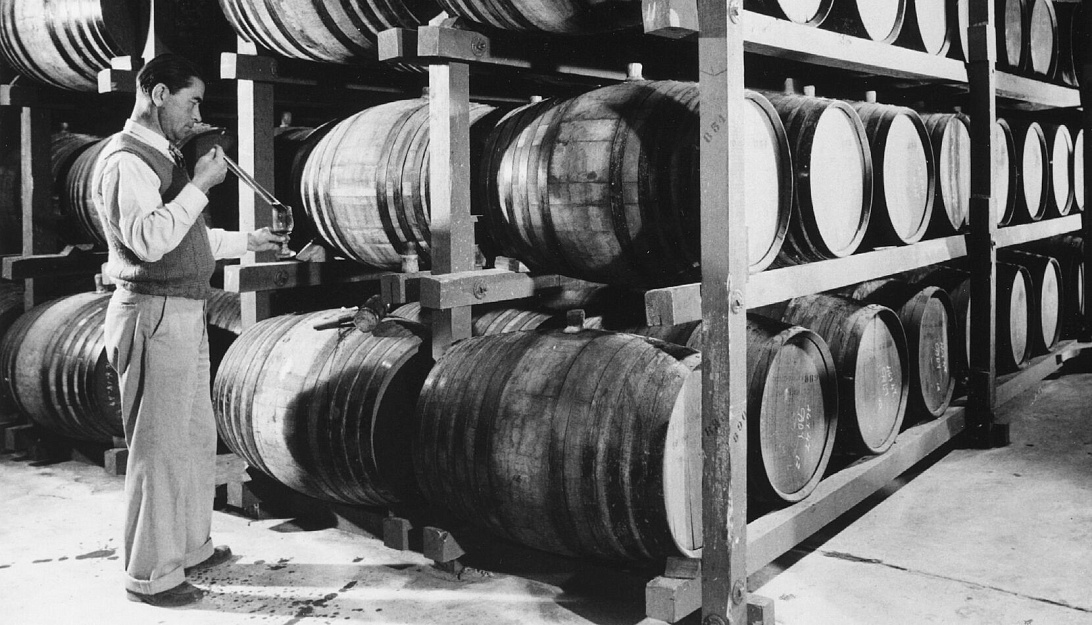
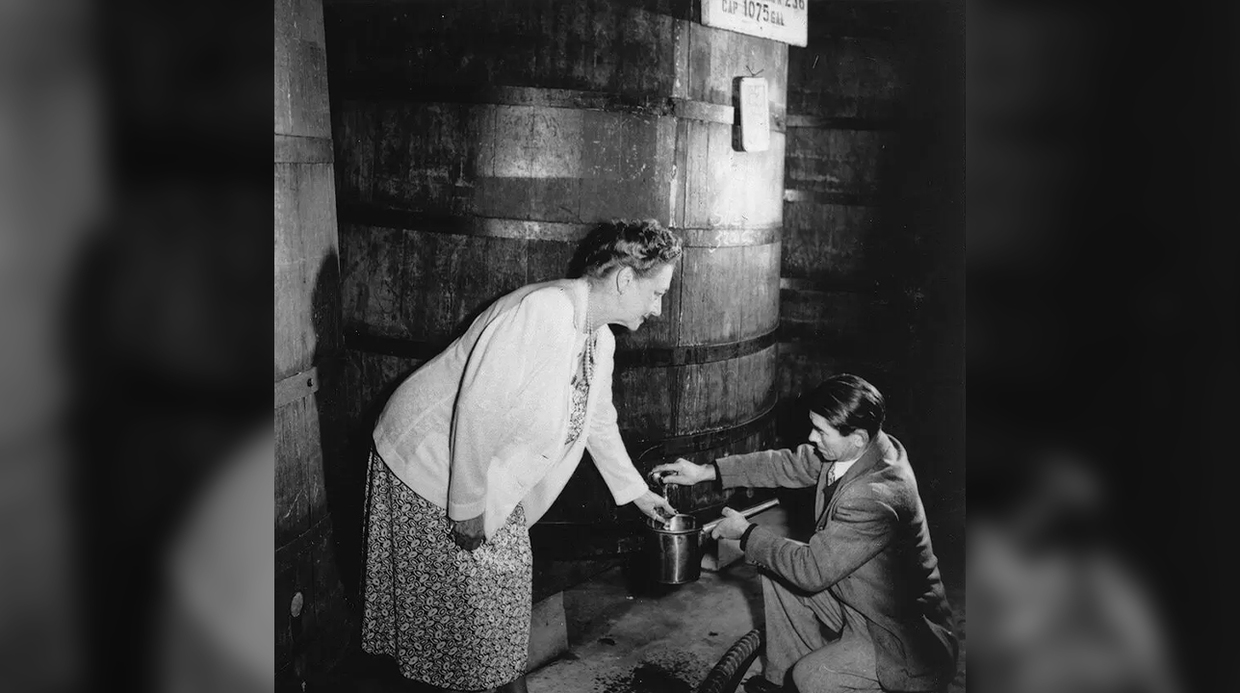
California in the 1930s had everything nature could offer a winemaker – sun-drenched valleys, fertile soils, and a Mediterranean climate. What it lacked was craft. When Tchelistcheff first set foot in Napa, he was stunned by what he found. Cellars were stiflingly hot, presses were cooled by dumping in blocks of ice, and equipment stood rusting in the corners. Hygiene was almost nonexistent: workers didn’t wash their hands, larvae bred in barrels, and dead rats were even left floating in fermentation tanks.
For a man trained in the rigor of the Pasteur Institute, it was a shock. Yet the contrast went beyond winemaking. Tchelistcheff was every inch a European aristocrat – always immaculately dressed, precise in his manners, addressing men as “my dear sir” and women as “madam.” In remote Napa, this refinement made him an object of ridicule. His young son was even beaten up at school for wearing a French-style uniform.
It was into this unlikely environment – a land of promise wrapped in provincial roughness – that Andre Tchelistcheff began his American experiment.
Revolution in the cellar
Tchelistcheff’s first act in California was simple but radical: he demanded order. The barrels were scrubbed clean, the cellars cooled, and the old rusty equipment replaced with stainless steel tanks and enamel-lined pipes. It was the first time such technology had been used in Napa Valley, and the effect was immediate: the wines no longer carried the metallic tang of rust.
He introduced cold fermentation for white wines and malolactic fermentation for reds – practices that would later become standard worldwide. He drastically reduced the use of sulfur dioxide, which had been added to Californian wines in reckless quantities. Local workers could hardly believe it; one foreman even suggested dumping in a whole bucket of the chemical “just in case.”
At the same time, he turned to the vineyards. California was then dominated by high-yield grapes good for bulk wine but useless for quality. Tchelistcheff pushed for Cabernet Sauvignon, convinced that Napa’s soil and climate could rival the Old World’s best. After overcoming resistance from the vineyard’s owners, he finally got his way.
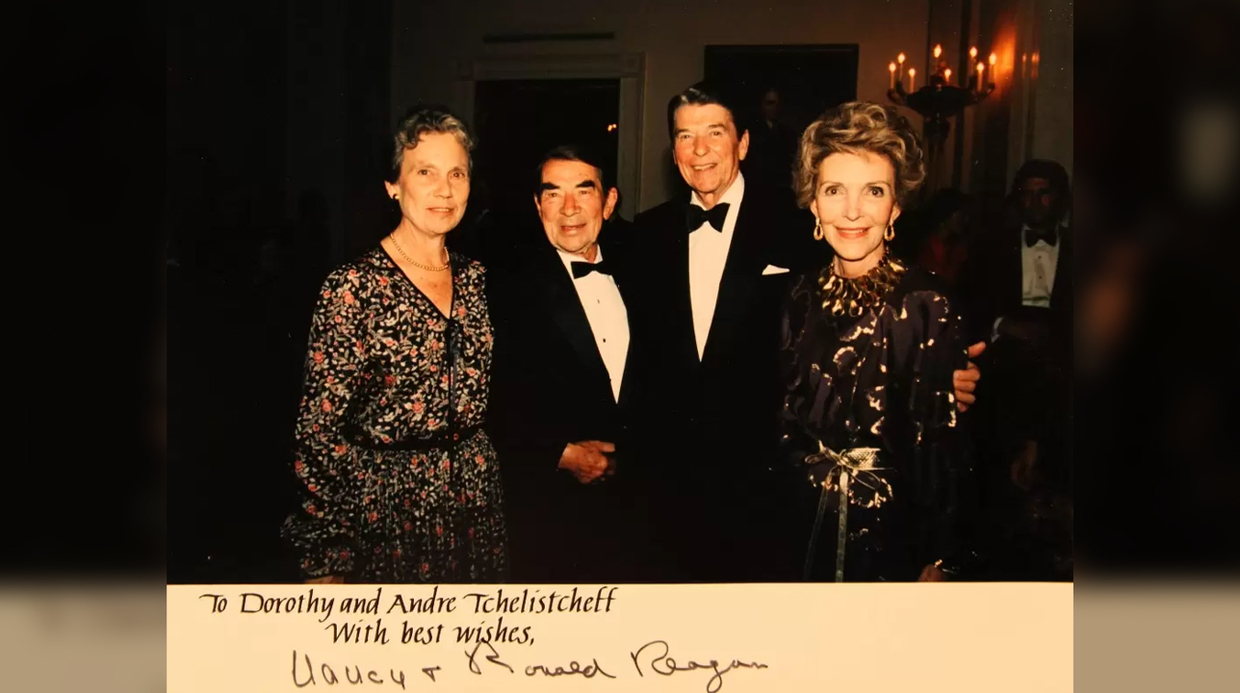
The result was the Georges de Latour Private Reserve. By the 1940s, it had become a symbol of American fine wine, poured at White House receptions and recognized as California’s first truly world-class vintage.
No single winemaker, however brilliant, could transform an entire industry alone. Tchelistcheff’s true legacy came through his students.
After Georges de Latour’s death, Beaulieu Vineyard passed into the hands of corporate owners more interested in profits than in quality. Frustrated by marketing gimmicks and budget cuts, Tchelistcheff left the winery in 1973 after more than twenty-five years. It turned out to be a turning point. As an independent consultant, he became a mentor to a new generation of California winemakers.
Unlike many in his field, Tchelistcheff never hoarded his knowledge. He was exacting in standards, generous in teaching, and utterly devoted to the craft.
But his vision reached beyond Napa. Studying the soils of the Pacific Northwest, he saw that Cabernet Sauvignon could thrive in Washington, while Pinot Gris would do well in Oregon. With his guidance, his nephew Alexander Golitsyn – another Russian aristocrat in exile – founded Quilceda Creek Winery, later hailed as one of America’s finest producers of Cabernet. Tchelistcheff also advised Chateau Ste. Michelle, steering it toward Gewürztraminer, Semillon, and Riesling, which put Washington State on the wine map.
By the late 1970s, his influence spanned the entire American West. Tchelistcheff earned the title of “America’s most influential winemaker since the Prohibition,” or simply “The Maestro” – the man who gave the United States not just great wines, but a wine culture.
For centuries, French winemakers dismissed the New World as incapable of true greatness. But in 1976, that certainty was shattered. British wine merchant Steven Spurrier organized a blind tasting in Paris, pitting French classics against upstart California wines.
To the astonishment of the judges – and humiliation of Bordeaux and Burgundy – the winners were from Napa Valley: a Cabernet from Stag’s Leap Wine Cellars and a Chardonnay from Chateau Montelena. Both had been made by Tchelistcheff’s students. For the first time in history, American wines outscored the French in their own capital.
News of the upset reached Tchelistcheff while he was touring Bordeaux. Ever the diplomat, he told his assistant not to mention it to their hosts: “If we tell them right now, the French might take offense – and after all, we’re their guests.”
The so-called “Judgment of Paris” became a turning point in global wine history. It was proof that the New World could rival, and even surpass, the Old – and Tchelistcheff’s fingerprints were all over the victory.
Even in his later years, Tchelistcheff remained restless. In the early 1980s he returned to Europe, not as a refugee but as a master, sought out by winemakers across the continent. One of them was Lodovico Antinori, scion of a dynasty that had been making wine in Tuscany since the fourteenth century.
Antinori wanted to plant Cabernet Sauvignon in the coastal soils of Bolgheri. After studying the land, Tchelistcheff disagreed. Merlot, he argued, would thrive there. Their debate became almost comic: Antinori crossed out “Merlot” on the vineyard map and scribbled “Cabernet,” while Tchelistcheff crossed it back again. In the end, the Russian émigré prevailed.
The result was Masseto, a bold Merlot that stunned the wine world. Today it is considered one of Italy’s most prized and expensive wines – a legacy born not in Florence or Bordeaux, but from the instincts of an old exile from Moscow.
Despite his fame, wealth, and influence, Tchelistcheff never owned a vineyard of his own. Friends urged him to, but he always refused. “I am a child of revolution,” he explained.
“I know what it means to lose everything overnight. I don’t have a cellar, I don’t have a vineyard, I have nothing. All I have is my mind.”
Then, with a smile, he would add: “Well, maybe also a dozen bottles under my bed.”
Andre Tchelistcheff died in Napa Valley in 1994, at the age of ninety-two – the place where he had arrived as an outsider and which he helped turn into one of the world’s great wine regions. To generations of winemakers, he remained simply The Maestro: the Russian émigré who gave America a wine culture and, in doing so, proved that the New World could stand shoulder to shoulder with the Old.
One man was killed and several were wounded at a wedding event in Nashua, New Hampshire, authorities say
One man was killed and several others were wounded on Saturday evening when a gunman opened fire at a country club in Nashua, New Hampshire, with a witness claiming the shooter shouted “Free Palestine.”
Police officers responded to emergency calls from the Sky Meadow Country Club after reports of gunfire, with initial findings suggesting that a single adult male entered the premises and fired several shots, Attorney General John M. Formella and Nashua Police Chief Kevin Rourke said in a statement.
The suspect was detained on the scene, and police said there was no ongoing threat to the public. Authorities said video surveillance confirmed that early reports of two shooters were incorrect.
Witness Tom Bartelson, who was attending a wedding at the club, told local broadcaster WHDH that he heard about six shots but did not realize what the noise was at first. Bartelson added that the gunman appeared to target a specific person and shouted “the children are safe” and “free Palestine.”
When asked about a possible motive, New Hampshire Assistant Attorney General Peter Hinckley declined to speculate, saying, “We’re dealing with the facts and information that we gather … and once we have a motive, we can share.”
Nashua Mayor Jim Donchess called the incident a “tragedy,” saying, “One loss of life is still too many.”
The Israel-Hamas war has heightened tensions in the US, where both pro-Palestinian and pro-Israeli groups have staged frequent demonstrations, which at times have led to confrontations, including scuffles on university campuses and clashes between protesters in major cities.
The US president said “bad things” will happen if the Taliban doesn’t surrender the key airfield
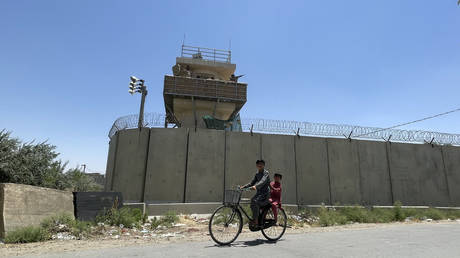
US President Donald Trump has threatened unspecified reprisals if the Taliban government in Afghanistan fails to hand over Bagram Air Base.
American troops hastily evacuated the base in July 2021, a month before Taliban fighters seized Kabul, toppling the UN-backed government and ending the 20-year US occupation of the country.
Trump said earlier that he is seeking to reestablish control over the airfield, which he has described as being close to China’s nuclear facilities.
“If Afghanistan doesn’t give Bagram Airbase back to those that built it, the United States of America, BAD THINGS ARE GOING TO HAPPEN!!!” the president wrote on his Truth Social platform on Saturday.
The Taliban has ruled out the return of American forces, while China backed Afghanistan’s sovereignty and accused Washington of “stirring up tension and confrontation in the region.”
Although Trump negotiated the withdrawal of his country’s troops during his first term, he went on to blame the collapse of the UN-recognized government and rapid Taliban takeover on former US President Joe Biden, calling the chaotic departure of the last American soldiers “a disgrace.”
Originally built by the Soviet Union, the Bagram airfield was modernized and expanded during the US occupation, serving as America’s largest outpost in Afghanistan. Trump has repeatedly claimed that China is secretly using the base, a charge denied by both Beijing and the Taliban.
The prime minister warned that reliance on other nations is detrimental to the national economy
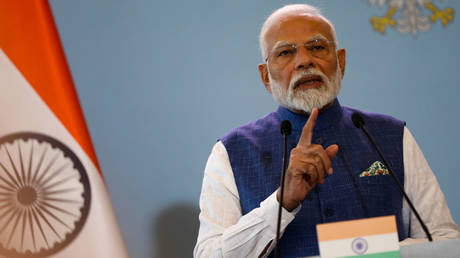
Indian Prime Minister Narendra Modi has said his country’s true enemy is not another nation but dependence on foreign powers.
Speaking at an event in Gujarat, where he launched maritime projects worth over $40 billion, Modi said India is “progressing with the sentiment of being a global friend” and has no major adversaries.
“In the true sense, if we have any enemy, it is dependence on other countries,” he added.
Modi emphasized that India must be self-reliant in order to achieve prosperity and ensure “peace and stability.” He called for a boost in domestic production and the reduction of dependence on external players.
“If we remain at the mercy of others, our self-respect will also be hurt… We cannot risk our future generations on others,” he said.
Highlighting the maritime sector, Modi urged a revival of the domestic shipbuilding and high-tech industries. He noted that five decades ago, Indian ships were responsible for 40% of the country’s overseas trade, compared with just 5% today.
The billions of dollars paid annually to foreign shipping companies now rival the country’s defense budget, he said, adding that this reliance has already caused significant harm.
“Whether chips or ships, we need to make them in India,” he said.
Modi’s remarks come amid rising trade tensions with the US. Last month, Washington imposed a 25% tariff on most Indian imports over Russian oil purchases, which came in addition to comparable duties introduced after talks collapsed in August.
The White House also announced a new $100,000 annual fee on H-1B visa applications, which the IT trade association Nasscom said would target skilled Indian workers.
Canberra reportedly pushed pop star Vassy to drop out of the competition held in Moscow
Australia pressured pop star Vassy to withdraw from the Intervision song contest in Moscow at the last moment, its organizers have claimed.
Born Vasiliki Karagiorgos, the singer, who holds both Australian and US citizenship, was slated to represent the US in the televised competition on Saturday.
“For reasons beyond the control of the organizers and the US delegation, and due to unprecedented political pressure from the Australian government, singer Vassy will not be able to perform in the contest’s final show,” the organizers announced on the contest’s website just hours before the event.
They explained that Australia had “issued an official note addressed to the artist” earlier that same day, adding that Intervision “remains outside politics and is dedicated solely to the development of arts and international cooperation.”
Russian Foreign Minister Sergey Lavrov, a member of the contest’s supervisory board, said the organizers are “not striving for any political effect.”
Vassy has not commented on her abrupt exit, and Australia has made no public statements regarding her participation.
Singer Brandon Howard was initially set to represent the US but withdrew just days before the event, citing a family emergency. The organizers then announced Vassy as his replacement.
Russia revived Intervision, drawing inspiration from a Soviet-era contest of the same name, after it was banned from Eurovision due to the conflict in Ukraine.
Artists from 22 countries participated in the contest, with Vietnam’s Duc Phuc taking home the prize.
The institutions have failed to rank among the top 3 in the newspaper’s higher education guide for the first time
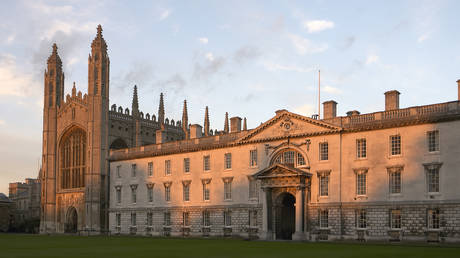
Oxford and Cambridge are no longer among Britain’s top three universities, according to a ranking published by The Times.
The Times and Sunday Times Good University Guide ranks institutions based on teaching quality, student experience and graduate prospects.
For the first time in the guide’s 32-year history, the UK’s two oldest and historically most prestigious universities were unable to place among the top three and have slid down to tie in fourth place, the newspaper wrote on Friday.
The London School of Economics took first place for the second consecutive year, with St. Andrews ranking second and Durham University finishing third.
Despite slipping in the overall rankings, Cambridge continued to dominate in individual subjects, topping 14 subject tables, it added.
Oxford was named medical school of the year for 2026, according to The Times.
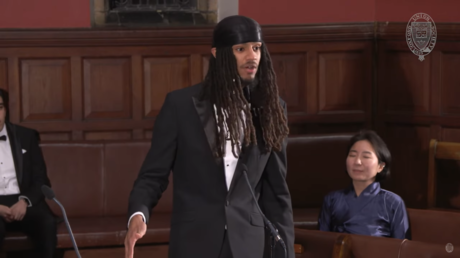
The institution has faced a scandal in recent days after the incoming president of its debating club, George Abaraonye, celebrated conservative activist Charlie Kirk’s assassination on social media.
The Oxford Union debate society condemned his words, stressing that they do not represent its views, and expressed condolences to Kirk’s wife and two children. Enough members of the club have supported a no-confidence motion to remove the president-elect, according to The Telegraph.
The US president has announced his intent to renew an American military presence in the country
China and the Taliban have slammed US President Donald Trump’s recent statements about retaking control of Afghanistan’s Bagram Air Base.
Trump has claimed he is in talks with the Afghan leadership on the issue, arguing that Washington needs the base due to its close proximity to some of China’s key nuclear infrastructure.
“China respects Afghanistan’s independence, sovereignty and territorial integrity. Afghanistan’s future should rest in the hands of the Afghan people,” Chinese Foreign Ministry spokesperson Lin Jian said in response during a briefing on Friday.
“Stirring up tension and confrontation in the region will not be supported,” he added.
A day earlier, Zakir Jalaly, a diplomat at the Afghan Foreign Ministry, said that the people of his country would reject the return of US troops.
He argued that Kabul and Washington should pursue mutually respectful economic and political ties “without the US maintaining any military presence in any part of Afghanistan.”
The Soviet-built base came under the Taliban-led Afghan Defense Ministry after the disastrous US pullout from Afghanistan in 2021, ending a two-decade presence in the country. Trump has called the withdrawal, which occurred on his predecessor Joe Biden’s watch, “a disgrace.”
Trump has also alleged that China is using the base, without providing evidence. Kabul has denied the claim.