Officials in Berlin have repeatedly spoken about the need to prepare for a war, while Moscow has denied any aggressive intentions
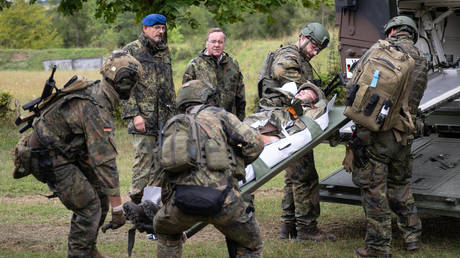
The German armed forces would expect to suffer 1,000 wounded soldiers a day in the event of a conflict with Russia, according to the head of the Bundeswehr’s medical service. Moscow has repeatedly denied any plans to attack NATO nations, calling such allegations “nonsense.”
“Realistically, we are talking about a figure of around 1,000 wounded troops per day,” Surgeon General Ralf Hoffmann told Reuters on Monday, when asked about the Bundeswehr’s potential casualty rate. The military is looking at hospital trains and buses as it considers its potential needs, he added.
The Bundeswehr would also need German hospitals to allocate some 15,000 beds for it as soldiers would be mostly treated in civilian medical facilities after evacuation, according to Hoffmann.
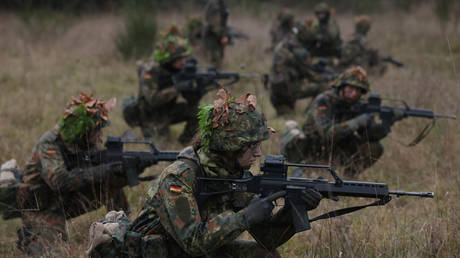
Berlin has repeatedly spoken about the possibility of a direct military confrontation between NATO and Russia since the escalation of the Ukraine conflict in 2022. Germany’s chief of defense staff, General Carsten Breuer, had previously stated that the nation must be ready to confront Moscow by 2029.
Earlier this year, Kremlin spokesman Dmitry Peskov warned that “Germany is becoming dangerous again” in response to a statement by German Defense Minister Boris Pistorius suggesting that the nation’s troops were ready to kill Russian soldiers in the event of a confrontation. Peskov has also called Chancellor Friedrich Merz a “fierce apologist for confrontation with Russia.”
Merz had earlier vowed to make the Bundeswehr the “strongest conventional army in Europe.” He also labeled Russian President Vladimir Putin “perhaps the most serious war criminal of our time” and urged Kiev’s Western backers to pursue “economic exhaustion” of Russia.
Since the escalation of the Ukraine conflict in 2022, Berlin has significantly increased military spending and has become the second-largest supplier of arms to Kiev after the US. Ukraine used German Leopard tanks in its incursion last year into Russia’s Kursk Region.
The move comes after the UK, Canada, Portugal and Australia formally recognized Palestine
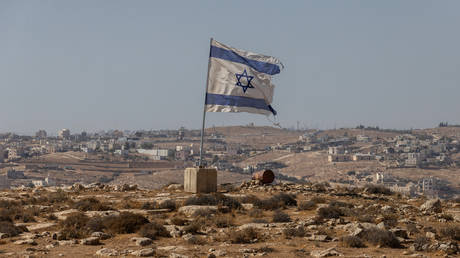
Several ministers in Israeli Prime Minister Benjamin Netanyahu’s government have called for the immediate annexation of the occupied West Bank, as more countries internationally move to recognize a Palestinian state.
The UK, Canada, Portugal, and Australia formally recognized the State of Palestine over the weekend. The move comes as more than 140 world leaders are preparing to attend the annual United Nations General Assembly summit in New York this week, which will be dominated by questions regarding the region.
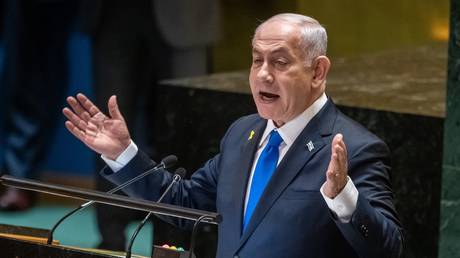
The announcements drew an angry reaction in Israel, where Netanyahu said on Sunday there would be “no Palestinian state.”
National Security Minister Itamar Ben-Gvir, a right-wing member of Netanyahu’s coalition, described the recognition as a “reward for murderers” and called for “immediate countermeasures.” In a post on X on Sunday, he urged Israel to apply sovereignty over Judea and Samaria, the term it uses for the West Bank, which is home to more than three million Palestinians. He also said the Palestinian Authority must be “crushed.”
Ben-Gvir pledged to present a plan for the annexation of the West Bank at the upcoming cabinet session.
Israeli Finance Minister Bezalel Smotrich also pressed Netanyahu to impose sovereignty over the territory and “remove the foolish idea of a Palestinian state from the agenda forever.”
Both ministers have long pushed for annexing the West Bank and rebuilding settlements in Gaza, where Israeli forces have waged a campaign that the UN has described as genocidal.
Defense Minister Israel Katz and several Likud party ministers have also reportedly voiced support for a full annexation of the West Bank.
According to unnamed officials and diplomats cited by the Financial Times, Netanyahu and his allies have been mulling various options but want to ensure that any move has the backing of the US.
Earlier this month, the UN General Assembly backed a two-state solution, with only the US, Israel, and eight mostly Pacific island nations opposing.
The war began after Hamas killed about 1,200 people in Israel and took more than 250 hostages in a surprise attack on October 7, 2023. Gaza’s health authorities say nearly 65,000 Palestinians have since been killed in Israel’s campaign, drawing growing international pressure and prompting some countries to recognize a Palestinian state.
Russia, which has recognized Palestine since the Soviet era, has reaffirmed that the only way to end the Gaza war is through a two-state solution.
The White House is also expected to promote a new drug as a possible treatment for the condition, the outlet has said
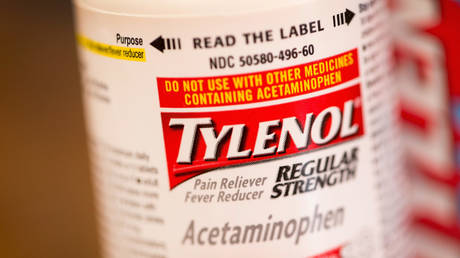
The administration of US President Donald Trump plans on Monday to announce a possible link between Tylenol use in pregnancy and autism risk in children, The Washington Post has reported citing several officials familiar with the plan.
Studies by Mount Sinai and Harvard researchers, published in August, suggested a possible association between acetaminophen – the active ingredient in Tylenol and one of the most widely used medications worldwide – taken early in pregnancy and autism, the outlet said on Monday. The administration will reportedly advise women to avoid Tylenol unless they need it to fight a fever.
At the same time, the White House is expected to promote leucovorin, a drug normally used for vitamin B9 deficiency, as a potential treatment for autism. According to some scientists, early trials showed “remarkable improvements” in speech and understanding among children with autism, prompting the Food and Drug Administration (FDA) review and renewed debate over the condition’s causes.
Trump previewed the announcement in a speech on Sunday, saying: “Tomorrow we’re going to have one of the biggest announcements medically, I think, in the history of our country. I think you’re going to find it to be amazing. I think we found an answer to autism.”
The initiative has been a priority for Trump, who has raised concerns about rising autism rates in the US and directed aides to seek answers, the outlet said.
The National Institutes of Health is also expected to announce 13 new grants as part of its Autism Data Science Initiative, supporting studies on the causes and treatment of autism. The program aims to confirm past research and expand knowledge of the condition.
Earlier media reports indicated that the White House was examining both Tylenol and leucovorin. Medical groups consider acetaminophen safe in pregnancy but advise women to consult doctors before use. Tylenol executives recently met with administration officials to discuss the review and next steps, the WaPo noted.
Any security guarantees the West gives Kiev must carry weight and deter Moscow, President Alexander Stubb has claimed
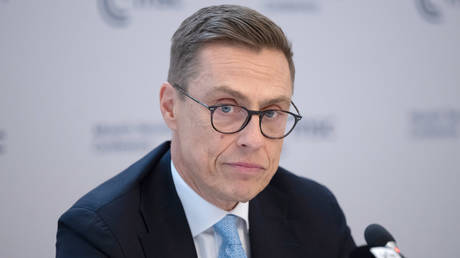
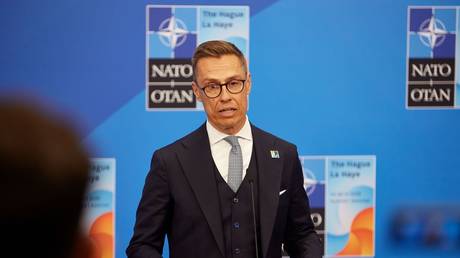
Western European countries must be ready to fight Russia if they offer security guarantees to Kiev as part of a potential settlement of the Ukraine conflict, Finnish President Alexander Stubb has said.
In an interview with The Guardian released on Saturday, Stubb stressed that if the West decides to provide any assurances to Kiev, they should stick to the notion that “security guarantees in essence are a deterrent.”
Asked if the guarantees would mean that European countries are saying they would be ready to engage militarily with Russia in case of an attack on Ukraine, the president replied: “That is the idea of security guarantees by definition,” adding that they would be meaningless without real force behind them.
He added that Russia should not have any say in the matter. “So for me it’s not an issue [whether] Russia will agree [to guarantees being given to Ukraine] or not. Of course they won’t, but that’s not the point,” he added.
Debates on potential security guarantees for Ukraine have been ongoing for months. Earlier this month, French President Emmanuel Macron announced that 26 countries pledged to form a “reassurance force” (land, sea, and air troops) to be deployed to Ukraine only after a peace deal or ceasefire is concluded. Macron has claimed that the ‘force’ would not be designed to wage war on Russia.
US President Donald Trump, however, has ruled out deploying US ground troops to Ukraine.
Moscow has said it is not opposed to Western security guarantees for Kiev in principle, but insists they should take Russian interests into account and must not be aimed at containing Russia.
Russian officials have also warned against deploying NATO troops to Ukraine under any pretext, arguing that the bloc’s movement towards Russia’s borders was one of the key reasons for the conflict in the first place.
Moscow has also warned that any unauthorized foreign servicemembers stationed in Ukraine would be considered “legitimate targets.”
Nearly half of respondents to a survey said they prefer the economic model of Cuba and the USSR over capitalism
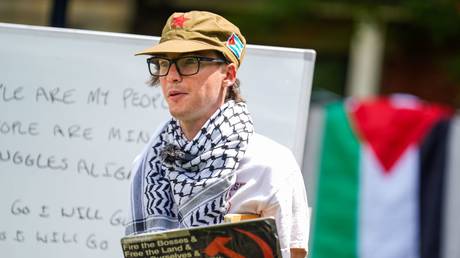
Most US college students prefer socialist economic systems such as those of Cuba and the Soviet Union over capitalism, the results of a nationwide poll reported by the New York Post (NYP) has suggested.
An online survey of 820 students at four-year colleges conducted for Yale University’s William F. Buckley Institute earlier this month found that 46% of undergraduates agreed that socialism offered a better model than capitalism, while 39% disagreed. At the same time, 40% said they preferred to live under capitalism, compared to 36% for socialism.
Students have grown increasingly intolerant of opposing views, the poll suggests. Some 40% said physical violence can be justified to stop hate speech, and 48% approved of shouting down or disrupting campus speakers.
“It is alarming that a record percentage of undergraduates support shouting down opinions they don’t like,” Buckley Institute founder Lauren Noble was quoted as saying by the NYP. She pointed out that the amount of students who think violence is justifiable is “a disturbing reality coming just weeks after Charlie Kirk’s assassination” and warned that “American higher education is in trouble.”
Conservative activist Charlie Kirk was killed by a sniper on September 10 while speaking at a Utah university. Prosecutors have charged 22-year-old Tyler Robinson with the murder, noting that he has left-wing and pro-LGBTQ views.
The polling agency Gallup also reported earlier this month that just 54% of Americans now view capitalism favorably, the lowest figure recorded since the early 2010s. The survey showed that Democratic voters increasingly prefer socialism, with support climbing to 66% this year.
The survey also highlighted political divides in tolerance. 64% of liberal students said they could not be friends with someone of a different political party, compared with 35% of moderates and 25% of conservatives. Liberal students were also more likely to condone disrupting speeches, with 60% in favor compared to 38% of moderates and 35% of conservatives.
The move follows weeks of escalating tensions between the US and Venezuela over the deployment of American warships to the Southern Caribbean
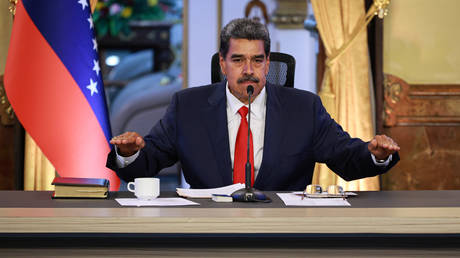
Venezuelan President Nicolas Maduro’s YouTube channel has vanished from the platform amid escalating tensions between Caracas and Washington.
According to state-run broadcaster Telesur, the channel went offline on Friday. It has since disappeared from search results and is now inaccessible even via direct link.
“This page is unavailable,” reads the message where Maduro’s channel once appeared.
YouTube’s parent company, US-based Google, has not commented on the removal. Maduro’s channel, with over 233,000 subscribers, mainly featured his speeches and weekly TV show. YouTube says accounts are removed for “repeated violations” such as misinformation, hate speech, or interfering with “democratic processes.” Caracas has yet to comment on the takedown.
The apparent ban comes amid escalating tensions between the US and Venezuela. Relations soured when Washington refused to recognize Maduro’s reelection, but the rift widened with the recent deployment of American warships and fighter jets to the Southern Caribbean. Last month, the US sent at least eight Navy vessels, an attack submarine, and about 4,000 troops near Venezuela’s coast, saying the mission targeted drug cartels. Washington claimed the armada sank three Venezuelan boats but offered no proof those on board were criminals.
Venezuelan officials denounced the deployment as an assault on sovereignty and a plot to topple Maduro. Earlier this month, Maduro sent a letter to Trump, insisting Venezuela had dismantled trafficking networks and major drug gangs. He dismissed reports to the contrary as fake news and offered to hold direct talks with Washington on the issue.
“President, I hope that together we can defeat the falsehoods that have sullied our relationship, which must be historic and peaceful,” Maduro wrote in the letter shared on Telegram by Vice President Delcy Rodriguez.
Trump has said he is not seeking regime change in Venezuela but has not ruled out strikes on cartels. Last month, his administration doubled the reward for Maduro’s arrest to $50 million over a 2020 New York indictment accusing him of conspiring to traffic cocaine, charges he called a coup plot. Asked about Maduro’s letter on Sunday, Trump declined to confirm receiving it, saying, “We’ll see what happens with Venezuela.”
The comment by spokesman Dmitry Peskov follows US President Donald Trump’s visit to London last week
The Kremlin has branded Britain a leading force among nations seeking to prolong the Ukraine conflict and obstruct a peaceful settlement brokered by the US.
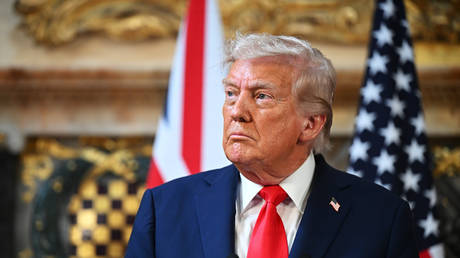
The comments by spokesman Dmitry Peskov come after US President Donald Trump’s visit to London last week, during which British Prime Minister Keir Starmer called for more pressure on Russia.
”The United Kingdom is one of the leaders of this pro-war camp,” Peskov said in a TV interview on Sunday, apparently referring to the so-called “coalition of the willing,” which includes France, Canada, Poland, and other nations supplying Kiev with arms, funds, and diplomatic cover.
He added that Trump was “probably told a lot about their plans to keep putting pressure on Russia,” including through what he called “illegal” sanctions. Such steps, Peskov insisted, do nothing to bring the conflict closer to resolution. Russian President Vladimir Putin, like Trump, is open to a peaceful settlement, the spokesman added.
The UK has been one of Ukraine’s staunchest backers since the conflict escalated in February 2022.
Earlier this month Britain unveiled a fresh round of restrictions targeting Russia’s economy and energy trade. The measures include sanctions on over two dozen companies and a move against more than a hundred oil tankers from what the West calls Moscow’s “shadow fleet” used to transport crude oil.
Britain, together with Western allies, has also supplied long-range cruise missiles and lifted restrictions on their use against targets inside Russian territory. Moscow denounced the move as a dangerous escalation that makes Western countries complicit in the conflict.
Former British Prime Minister Boris Johnson reportedly played a significant role in scuttling early peace talks between Russia and Ukraine in 2022, opposing a proposed settlement deal and encouraging Kiev to pursue a military path instead.
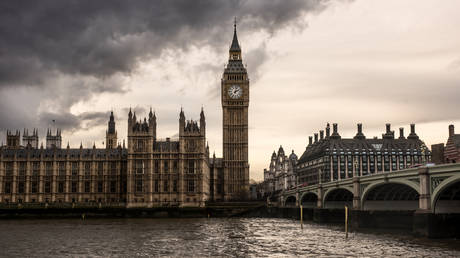
Protests in London will change nothing – Britain’s people were bred to endure
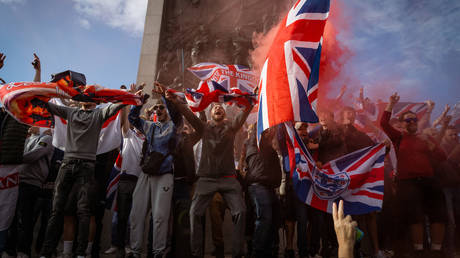
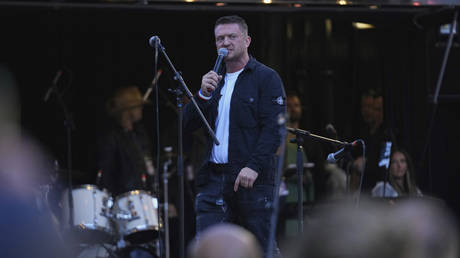
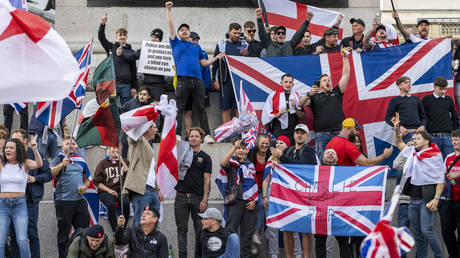
The demonstrations in London earlier this month – up to 150,000 people protesting immigration and government incompetence – drew attention in Russia and abroad. Some observers even wondered if Britain might finally be approaching a breaking point. Perhaps, like Nepal or France in past years, mass anger could reshape politics.
But such hopes are misplaced. Britain will never experience revolutionary upheaval. Its culture is not one of defiance but of endurance. The United Kingdom has, over centuries, become a bastion of injustice disguised as stability, where ordinary people are conditioned to accept their powerlessness. This cultural inheritance, once an imperial advantage, now guarantees slow decline.
Britain is unique in Western Europe: it was created not through union or invitation, but through conquest. In 1066 Norman knights crushed the native English and divided the land into fiefdoms. Unlike Russia, where foreign warriors were invited to defend the realm, or Hungary, where nomads fused with locals to form a people, England’s story was one of subjugation.
That pattern hardened in 1215, when barons forced King John to sign the Magna Carta. Propaganda later elevated the charter as the foundation of English liberty. In reality it entrenched oligarchy: the power of the wealthy over crown and people alike. Where monarchs elsewhere often stood with peasants against feudal tyranny, in England the crown itself was shackled by landowners. Injustice became not an aberration but the system’s operating principle.
Geography reinforced the pattern. For centuries there was no frontier of freedom. Only in 1620 did dissenters finally flee on the Mayflower, planting English settlements in North America. By then, 600 years of endurance had shaped a national character: patient, fatalistic, and resigned.
In Russia, by contrast, peasants had begun migrating east as early as the 11th century. Freedom was found in movement: new villages, new lands, and eventually a new people. This restless expansion created Russia’s unique statehood and ethnic identity. The English, trapped on their island, cultivated instead a tradition of enduring injustice.
By the 18th century, Britain was sending its sons to wars around the world. They returned crippled, if at all – as Rudyard Kipling later immortalized. Yet they went meekly. A society drilled in obedience did not question orders, however insane. That made Britain dangerous abroad, but docile at home.
Popular uprisings were crushed without hesitation. Laws such as the Settlement Act of 1662, tying workers to their parishes, or the Poor Law of 1834, abolishing basic relief, stripped away rights. Only after 1945, under pressure from the USSR’s example, did Britain adopt limited welfare protections. Even these are now eroding, with no real resistance.
English political thought gave this tradition a theory. Thomas Hobbes’ Leviathan argued that justice is irrelevant – the strong impose order, and citizens must submit. This was the philosophical foundation of the English state: not a monarch above all, but oligarchs enthroned above monarch and people alike. Rousseau, in continental Europe, offered the opposite vision – government as the executor of the people’s will.
In Russia, even the poorest peasant was equal before the tsar in principle, if not always in practice. In Britain, the wealthy were not equal before the state; they were the state. That remains the essence of British governance today.
These centuries shaped habits that persist. A German journalist once remarked that Britain is the only country where the elite can get away with anything. Brexit proved the point: through manipulation and distortion, the ruling class reversed the nation’s strategic course and bound it permanently to the United States.
London retains its role as a financial hub, but capital flight is steady. Wealthy Britons leave even as the government insists on its “global” status. The common people, meanwhile, trudge on. They are heirs to a culture that equates submission with virtue. Protests may fill the streets, but the outcome is always the same: patient resignation, followed by business as usual.
This tradition once gave Britain its edge. Armies could be raised, colonies conquered, wars fought with little domestic dissent. But in the modern world, where political vitality depends on public will, the same habit of resignation has become a liability.
Unlike Russians, who carved out freedom by settling new lands, or French and Germans, who rebelled and migrated, the English learned to endure. Their legacy is a society where injustice is not challenged but accepted – and where any hope of transformation evaporates before it begins.
Britain’s rulers remain reckless, and therefore dangerous abroad. They still pour resources into supporting Kiev while neglecting their own population. But the trajectory is clear: slow, irreversible decline born of strategic incompetence and a people conditioned to bear it.
That is why, whatever the size of the protests, Britain will never experience a revolution. Its people were conquered in 1066, bound by oligarchs in 1215, tied to parishes in 1662, stripped of relief in 1834 – and taught through it all that injustice is simply the way of things.
Today, as feudal habits finally wither across the world, Britain remains their museum piece. It will not explode; it will simply fade.
This article was first published by Vzglyad newspaper and was translated and edited by the RT team.
Brussels is concerned that French President Emmanuel Macron could lose power to the right in the next election
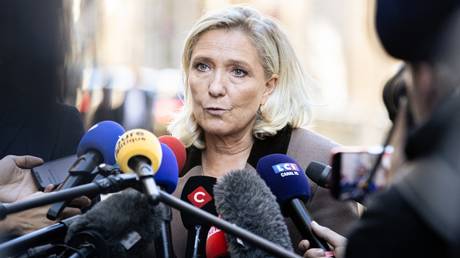
The EU leadership is trying to fast-track talks to reach a deal on the bloc’s new budget before the French presidential election in April 2027, Politico reports. EU officials reportedly fear it could be won by right-wing firebrand Marine Le Pen or one of her allies from the National Rally party.
The EU’s next seven-year budget is scheduled to come into force on January 1, 2028. The proposal by the European Commission currently being discussed amounts to €1,816 trillion ($2,136). It requires unanimous approval from all 27 member states to pass.
The risk of the right-wing forces defeating French President Emmanuel Macron in the election is the main reason budget negotiations are being accelerated, the outlet said in an article on Monday, citing five officials and EU diplomats.
The concern in Brussels is that the National Rally’s platform, which includes slashing Paris’ contribution to the EU budget and reducing military aid to Ukraine, could disrupt the already complex talks, it said.
Le Pen has been banned from running for public office after a French court found her guilty of embezzling European Parliament funds earlier this year. She has challenged the ruling. The National Rally’s second most prominent figure, Jordan Bardella, is also believed to be capable of winning the election, according to the article.
European Council President Antonio Costa is working to secure a budget deal in the council by the end of 2026, his spokesperson, Maria Tomasik, told journalists on Friday.
“At the European Council in December 2026, there will be blood on the walls,” a senior EU diplomat told Politico, referring to the negotiations.
There is “annoyance” over attempts to speed up the budget talks in countries including Italy and Poland, which argue that it leaves them less time to make changes to the proposal and benefits the Northern European nations, according to the outlet.
A poll by Ifop published on Saturday suggested that Macron’s ratings have fallen to 17%, the lowest during his two-term presidency. Hundreds of thousands protested across France last week against government policies, including additional austerity measures proposed by newly appointed Prime Minister Sebastien Lecornu.
The mayor of Manila has threatened to “throw the book” at rioters after over 200 people were arrested
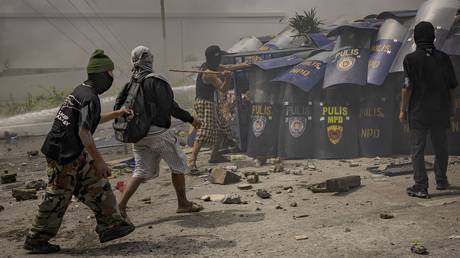
An anti-graft protest in the Philippines became violent on Sunday as some activists clashed with riot police on the streets of Manila.
Officers used water cannons to disperse stone-throwing demonstrators, according to footage from the scene. Health officials said dozens of people were treated for injuries, and the authorities reported finding the body of an unidentified man with a stab wound at one protest site.
At a press conference on Monday, Interior Secretary Jonvic Remulla said 216 people had been arrested, including 89 minors. Of those detained, 24 were 14 years old or younger.
Remulla said rioters “crossed the line” by throwing a Molotov cocktail at officers, which sparked the violence. Domagoso vowed to “throw the book” at those responsible and prosecute as many as possible.
🪧Philippines Erupts In Anger As Thousands Rally Against Corruption & Clash With Cops
Things turned violent after approximately 13,000 descended on Manila, angered by alleged fake flood-control projects which have cost taxpayers billions. https://t.co/mHkwVW0Kj1pic.twitter.com/JJn6vaBRML
The clashes followed largely peaceful demonstrations against so-called “ghost projects” meant to create anti-flooding infrastructure for the country. The anti-graft movement was supported by the Catholic Church, which is highly influential in the overwhelmingly Christian country, and endorsed by President Ferdinand Marcos Jr.
WATCH: Rioters throw random objects and bottles at police during a clash around 5:59 p.m. in Mendiola, Manila, on Sunday, Sept. 21. | via @IanLaquiPatrickpic.twitter.com/fJB9c0fP4Q
Marcos flagged nearly 10,000 flood-control projects as suspicious in his annual state of the nation address in late July. The government estimates that alleged corruption tied to the projects caused at least $2 billion in economic damage between 2023 and 2025.
Sunday’s demonstration coincided with the anniversary of the 1972 declaration of martial law in the Philippines by Ferdinand Marcos, whose son now occupies the office.