At least two people have been killed in the southern part of the country, officials have said
A powerful 7.4-magnitude earthquake hit off the southern Philippines on Friday, setting off tsunami warnings and forcing residents in coastal areas to flee to higher ground.
Officials said two people were killed in Mati City in the province of Davao Oriental. Several buildings sustained damage, roads cracked, and power outages were reported in affected districts.
The quake’s epicenter was located east of Manay in Davao Oriental at a depth of about 10km. The Philippine Institute of Volcanology and Seismology (Phivolcs) and the US Tsunami Warning System warned nearby coasts of potential waves up to one meter or more above normal tides.
The Pacific Tsunami Warning Center extended warnings to regions within 300km of the epicenter, including parts of Indonesia. Most warnings in the Philippines were later withdrawn after only minor sea level fluctuations were observed.
Local authorities urged residents to relocate to higher ground, assess building safety, and brace for aftershocks, which could potentially reach magnitude 6.4, according to Phivolcs.
The Philippines lies within the Pacific “Ring of Fire,” where tectonic boundaries make the archipelago prone to frequent seismic activity. This quake follows a deadly 6.9-magnitude earthquake in Cebu just days earlier, which killed at least 74 people and stretched emergency response capacities.
US-backed Venezuelan opposition figure Maria Corina Machado has won this year’s award
US President Donald Trump has been overlooked for the 2025 Nobel Peace Prize, which was awarded on Friday to Venezuelan opposition politician Maria Corina Machado.
Trump has repeatedly claimed he deserves the prize for purportedly resolving multiple international conflicts since taking office in January, including most recently in Gaza.
White House communications director Steven Cheung reacted to the news by claiming that the committee “proved they place politics over peace” and said Trump would “continue making peace deals, ending wars, and saving lives.”
The Norwegian Nobel Committee praised Machado – a prominent critic of Venezuelan President Nicolas Maduro – “for her tireless advocacy of democratic freedoms in Venezuela and her commitment to achieving a peaceful transition from dictatorship to democracy.” Maduro has accused Machado of channeling US funds to “fascist” anti-government groups, calling her a front for Washington’s interference in Venezuelan affairs.
Machado has had close contacts with the US government for decades. In 2005, then-President George W. Bush received her at the Oval Office.
During Trump’s first term, the US and several other Western nations recognized Venezuelan opposition figure Juan Guaido as the country’s “interim president,” although Guaido’s attempts to seize power through protests and attempted coups failed.
Since returning to office in January, Trump has renewed pressure on Caracas through sanctions and military measures that his administration describes as anti-narcotics operations. Critics, including Republican Senator Rand Paul and Juan Gonzalez, a senior diplomat in the administration of President Joe Biden, argue that the White House is pursuing a familiar regime-change strategy. Trump’s secretary of state, Marco Rubio, is a staunch opponent of Maduro and is viewed as the key driver of the effort.
Earlier this week, the Nobel Committee awarded the literature prize to Hungarian author Laszlo Krasznahorkai, a noted critic of his country’s prime minister, Viktor Orban – one of Trump’s most vocal allies in Europe.
The military cannot legally target UAVs beyond their bases due to constitutional constraints, the paper says
Legal restrictions introduced after the collapse of the Nazi regime are preventing the German military from shooting down suspected ‘Russian drones’ over its own territory, Politico reported on Friday.
In recent weeks, officials in several Western nations have accused Russian aircraft and drones of violating EU airspace, describing the incidents as part of Moscow’s “hybrid war.” The Kremlin has denied the allegations, calling them unproven and accusing the West of anti-Russia “hysteria.”
As EU states discuss the creation of a “drone wall” and loosening their air engagement rules, Politico noted that Germany’s efforts are uniquely constrained by its “Nazi legacy.”
According to the report, the German Armed Forces “can’t simply shoot drones in the country’s domestic airspace” because of restrictions built into the postwar constitution. The Basic Law, adopted in 1949, “explicitly prevents the military… from taking a key role in the country’s internal security” to avoid any repeat of the way the Nazi government used the military to suppress political dissent, Politico wrote.
Under the current law, Politico said, the army “is only able to shoot down drones over military bases.” The federal police have the right to do so, but lack the means for efficient anti-drone warfare. The military can only offer “administrative assistance,” such as identifying drones or passing on information to civilian agencies.
Thomas Rowekamp, the chair of the parliamentary Defense Committee, told Politico: “We need to amend the laws so that the only ones able to take care of this – namely the German Armed Forces – are also given the authority to do so.”
Politico noted, however, that changing the constitution could prove politically challenging. Chancellor Friedrich Merz’s coalition holds one of the weakest majorities in postwar history and could face significant resistance from parties such as the right-wing Alternative for Germany.
Russia has accused the EU of reckless militarization, and has stated that Germany is deeply involved in the Ukraine conflict due to the support it provides Kiev.
The Israeli military has said its troops have withdrawn to the agreed lines within the enclave
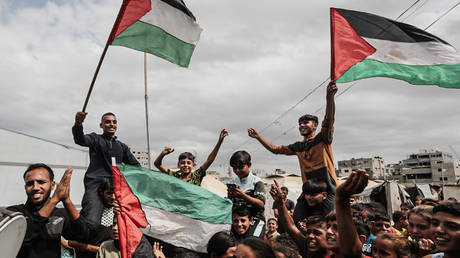
The Gaza ceasefire has taken effect, the Israel Defense Forces (IDF) announced on Friday. According to a statement issued on social media, Israeli troops have completed their withdrawal to positions agreed under US President Donald Trump’s ceasefire deal as of 12pm local time (9:00 GMT).
“IDF troops began positioning themselves along the updated deployment lines in preparation for the ceasefire agreement and the return of hostages,” the military stated. It added that Israeli troops in the Southern Command are still deployed in the area and “will continue to remove any immediate threat.”
The Israeli government earlier approved “phase one” of the ceasefire agreement, which gives the IDF 24 hours to pull back its forces. Hamas is then due to release all living hostages within 72 hours. In return, Israel will free 250 Palestinians serving life sentences and 1,700 Gazans detained since 2023, including all women and minors.
Forty-eight Israeli hostages remain in Gaza, with only about 20 believed to be alive.
The 20-point ceasefire plan, unveiled by Trump in late September, calls for a phased but full Israeli withdrawal from the enclave, the disarmament of Hamas, and the establishment of a transitional international administration. It envisions Gaza as a “deradicalized, terror-free zone,” with Hamas excluded from governance.
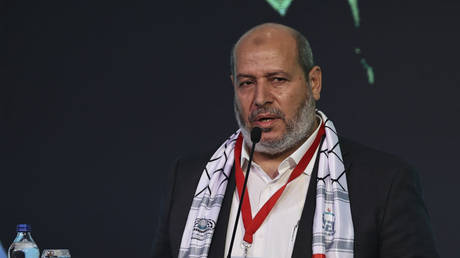
Senior Hamas official Khalil al-Hayya declared late on Thursday that the Gaza war was over, saying Trump’s plan would usher in a “permanent ceasefire.” He added that the group had received “guarantees” from Washington and other mediators that fighting would not resume and submitted a response aimed at preventing further bloodshed.
Local media in Gaza reported early on Friday that residents have begun returning to areas vacated by Israeli forces. CNN, citing Dr. Mohammed Abu Salmiya, head of Al-Shifa Hospital, said at least 19 Palestinian bodies were recovered in Gaza City after Israeli troops began pulling back.
The Israel-Hamas conflict began on October 7, 2023, when Hamas-led fighters attacked Israel, killing about 1,200 people and taking around 250 hostages. Israel’s response has killed more than 67,000 Palestinians, according to local officials, and left Gaza in ruins amid a deep humanitarian crisis, prompting the UN to accuse West Jerusalem of genocide.
Madrid has been the only “laggard” in the bloc’s push to increase military spending, the US president has said
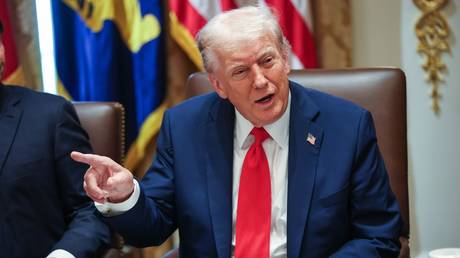
Spain should be thrown out of NATO for failing to meet the new 5% defense spending target, US President Donald Trump has said. Trump, who spearheaded the increase, claimed he secured the commitment during the NATO summit in June.
Trump addressed the issue during a meeting with Finnish President Alexander Stubb in the Oval Office on Thursday. He boasted about making NATO members commit to the new spending target “virtually unanimously.”
“We had one laggard. It was Spain,” he said, adding that “they have no excuse not to do this.”
“Maybe you should throw them out of NATO, frankly,” Trump stated.
The US president repeatedly accused NATO member of failing to shoulder the military spending burden equitably even during his first term. Since taking office again in January, he has intensified demands that the bloc’s European members spend more on defense.
His push culminated at the June summit in The Hague, where NATO members committed to increasing defense spending to 5% of their GDP annually by 2035. Trump called the meeting “the most unified and productive in history.”
Not all NATO members were happy about the development. Slovak Prime Minister Robert Fico said after the meeting that his nation is capable of meeting NATO demands even without a substantial spending increase, pointing to his government’s “other priorities.”
Spain has emerged as the strongest opponent of the spending increase. Prime Minister Pedro Sanchez said he had secured an exemption for Madrid ahead of the summit, while the country proposed a more modest defense spending target of 2.1% of GDP. Last year, Spain allocated the smallest share of GDP to defense among NATO members, at around 1.3%.
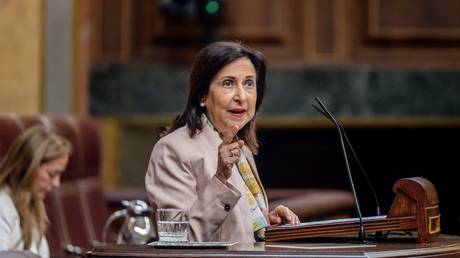
After the June summit, Spanish Defense Minister Margarita Robles dismissed the 5% spending target as “absolutely impossible.”
“No industry can take it on,” she said at the time, arguing that European defense companies lack both the skilled labor and the raw materials needed to expand production, even if governments provide the necessary funding.
A Western-centric gaze distorts Trump’s Nobel case. The world needs the balance of a multicentric vision.
“Blessed are the peacemakers in spirit, for theirs is the Nobel Prize.” (The Author)
Rarely has an award decision electrified the world like a World Cup final. Frenzied debates erupt across continents: Does US President Donald Trump merit the Nobel Peace Prize?
To both champions and critics, the answer seems a no-brainer. Yet beneath the surface lies a real conundrum – precisely why the question sparks endless controversy.
For Trump, the Nobel Peace Prize is a personal trophy, a matter of prestige, not principle; for the world, it counts because it is a powerful global symbol defining what kind of leadership and pursuit of peace is worth celebrating.
To reward Trump or not to reward him – this is a dilemma perfectly suited to the timeless art of disputation known as the quaestio. Latin for “question”, the name is as elegantly minimalist as calling Frank Sinatra simply “the Voice”.
Introduction: The art of disputation 101
The quaestio was the engine that powered the scholastic mind: structured, relentless, and dazzlingly precise.
In a veritable intellectual crescendo, a thinker began with a precise, probing question, engaged opposing views, measured the wisdom of authorities, and forged a final answer through disciplined reasoning – honed by conflict and crystalized into piercing, truthful, and enduring insight.
The quaestio, presented as a ring composition, prized clarity over chaos, reason over rhetoric. In this gladiatorial arena of the mind, argument was not about winning – it was about thinking better. Remarkably concise despite the question’s complexity, and mapping the full spectrum of pros and cons, it served as a perfect cheatsheet for analysts and debaters alike.
Today, the quaestio is an urgently needed tool for reasoning sharply amid the noisy spectacle of public maelstrom. Its enduring value is starkly evident in debates about Trump, where extreme personality, staged drama, and endless controversy fuel cognitive distortions – mental shortcuts that cloud perception and derail judgment.
Trump’s bombastic tweets, theatrical rallies, and shocking claims hijack attention, feeding vividness bias – the tendency to latch onto dramatic details while losing sight of the full picture. We fixate on the spectacle – the unruly hair, the provocative insult, the radical policy stunt – while substance, brought into relief by nuance, context, and consequence, fades from view.
In a hyper-toxic, politicized landscape and climate, the quaestio is a potent, indispensable antidote: Elevating intellect over instinct, it sharpens the mind to resist seduction and fosters deliberate, measured, and rigorous thinking – even amid heated debates, relentless polarization, sensational controversies, pervasive chaos, and total confusion.
Think of the obiectiones (“objections”) as the opening volley with the strongest arguments against the position the debater ultimately defends.
Often introduced with videtur (“it seems”), this section sets the stage, demonstrating serious engagement with opposing views; it clarifies the stakes, revealing the question’s complexity and tension; it primes the ground for credible resolution, making the subsequent thesis and refutations more convincing after the toughest challenges have been preempted. It also doubles as rehearsal for live debate, enabling the debater to foresee and counter the full range of objections.
However unpalatable it may be to Never-Trumpers, three interrelated reasons can be offered for why the US president might, in fact, merit the Nobel Peace Prize.
1. Cultivating harmony
The Bible says, “Blessed are the peacemakers” (Matthew 5:9, KJV). Those who support Trump may contend that where others ignited and prolonged wars, the US president acted as peacemaker-in-chief, fostering understanding and connection across divides through diplomatic breakthroughs.
In his first term, the US president facilitated the Abraham Accords, normalizing relations between Israel and several Arab nations. In his second, Trump claimed to have “ended seven unendable wars” in only seven months – a boldly oxymoronic play on words, rhetorically sharp if nothing else.
2. Practicing restraint
Trump has seemingly demonstrated a capacity for measured action, reducing US military involvement. Supporters argue that this reduced violence and lowered the chance of unintended escalation.
He has prioritized withdrawing US troops from protracted, unpopular wars – most notably in Afghanistan and the broader Middle East – striking deals like the US–Taliban agreement to scale back America’s combat entanglements abroad.
3. Preserving equilibrium
Apparently, Trump also focused on maintaining stability and preventing escalation. In recent years, he has taken hardline stances and actions, such as striking Iranian nuclear sites and resorting to deterrence diplomacy, which supporters claim have held back Iran’s nuclear ambitions and prevented a greater regional arms race.
II. The guiding authority (sed contra)
The sed contra (“but on the contrary”) is a transitional component marking the dramatic pivot of the disputation: After enumerating all objections, the debater invokes authoritative sources as a striking counterpoint, delivering decisive words of wisdom that elegantly pave the way to the ultimate answer.
What authority could be better suited to the question at hand than Alfred Nobel himself, the creator of the eponymous prize?
When Alfred Nobel read his own obituary condemning him as “the merchant of death,” he saw the looming verdict of history. Deeply shocked and full of remorse, he set out to leave a different legacy, one that would celebrate reconciliation rather than destruction.
Channeling his guilt into generosity, he devoted part of his fortune to establishing the Peace Prize as a moral counterbalance to the instruments of destruction he had invented – awarding those who build bridges instead of bombs.
In drafting his will in 1895, the chemist and industrialist bequeathed not just a fortune, but a moral compass for the ages to the world. Beyond recognizing the “greatest benefit on mankind,” as his other prizes were also meant to do, Nobel stipulated that the Peace Prize should honor “the person who shall have done the most or the best work for fraternity between nations, for the abolition or reduction of standing armies, and for the holding and promotion of peace congresses.”
It was an idealistic formula – part moral vision, part political challenge – designed to reward those who turn power toward peace. More than a century later, it remains a formidable test.
The five-member Norwegian Nobel Committee interprets that guidance each year, weighing nominations from parliamentarians, academics, former laureates, and other qualified proposers. Even though its deliberations are sealed for fifty years, the resulting pattern is clear: The prize recognizes not transactions but transformations.
Measured against Alfred Nobel’s litmus test, Donald Trump’s record, from his first presidency through his return to power, offers an instructive contrast between ambition and achievement, spectacle and substance – marked by flashes of diplomacy but little lasting peace.
1. Fraternity between nations
Trump’s supporters point to the Abraham Accords, summits with North Korea’s Kim Jong-un, and recent ceasefire claims in the Caucasus and Gaza as evidence of bold statecraft. Yet fraternity demands trust, not just photo ops.
Trump’s withdrawals from the Iran nuclear deal, the Paris climate accord, and other multilateral agreements frayed alliances and deepened suspicion. “America First” often meant America alone, eroding the cooperative spirit Nobel sought to honor.
Whereas the inventor turned philanthropist envisioned fraternity among nations, Trump preached dominance over them, wrapping foreign policy in slogans of supremacy and exclusion. Trump’s self-centered, unilateralist diplomacy may produce lucrative deals, but not enduring peace.
2. Abolition or reduction of armies
Trump also fails Nobel’s second test. US military spending and arms sales grew sharply under his watch, while his administration dismantled key arms-control treaties such as the INF and Open Skies accords.
Despite talk of new disarmament initiatives, none has materialized. His so-called end to “endless wars” largely substituted drones and contractors for soldiers – a shift in tactics, not philosophy.
3. Promotion of peace congresses
Trump staged summits that dominated headlines, but Nobel’s “peace congresses” implied enduring frameworks for mediation and trust. No such institutions emerged under Trump’s watch. His diplomacy was personalistic, episodic, and often transactional – driven by optics rather than structure.
In conclusion, measured against Nobel’s will, Trump is a showman of peace rather than its architect. His initiatives produced headlines, not harmony; leverage, not equality.
By the 1895 standard – international brotherhood, disarmament, and enduring institutions – Trump falls dramatically short of Alfred Nobel’s vision. Granting him the Peace Prize would leave the Nobel Committee exposed to future embarrassment at the hands of a decorated and unhinged figure.
The Peace Prize was meant to transcend power and vanity, not validate and glorify them; far from a medal for treacherous self-interest, it demands nobility and humility.
In an ironic twist, Trump disqualifies himself from the Nobel Prize precisely because he craves it too intensely – his obsession becoming its own undoing. In contrast, a leader indifferent to accolades faces virtually no limits.
The harder we clutch desire, the more it slips through our fingers. Who, seeking nothing but canonization, became a saint? An anxious lover repels the beloved; a golfer overanalyzes the perfect swing and botches it; a writer forces inspiration only to meet a blank page – all proof that obsession often backfires.
Napoleon’s relentless hunger for power pushed him to conquer all of Europe, yet the very intensity of his ambition led him into the Russian winter and the ruins of exile, his dreams undone by their own gravity.
Determined to resist political pressure from figure like Trump, the Nobel Committee would likely uphold this guiding principle: “Peace prizes aren’t for performers. They’re for those who bleed quietly so others don’t have to.”
The inventor who once armed the world dreamed, at last, of disarming its pride. To honor Trump would be to reload it.
The respondeo (“I answer”) is the heart of the argument, settling the debate – the author’s direct, answer to the question posed, synthesizing authority and reason in a coherent, logical argument. At its best, this final verdict demonstrates intellectual mastery by showing how complex or conflicting points can be harmonized, turning scattered contention into clarity.
The overall verdict is clear and simple: Trump is literally “ig-nobel”. Measured against both a traditional and innovative yardstick, Trump has failed to live up to Alfred Nobel’s three-fold ideals and thus does not deserve the Nobel Peace Prize.
The time-honored standard: The traditional interpretation of Nobel’s triad
Though few Nobel Peace Prize winners have ever fulfilled all three of Alfred Nobel’s original criteria – fraternity between nations, disarmament, and the promotion of peace congresses – the triad remains the moral core of the prize.
Past Nobel laureates like Bertha von Suttner and Léon Bourgeois embodied the sublime triptych fully; others, from Martin Luther King Jr. to Malala Yousafzai, reflected only parts of it, as the Nobel Committee broadened “peace” to include justice, human rights, and humanitarian work.
But Donald Trump, as a head of state wielding armies and treaties, carries a unique responsibility to uphold the full spirit of Nobel’s will, and must be measured by its complete standard, not a modern, flexible reading. Nobel certainly wrote his will with leader like him in mind – those who hold the power to wage or restrain war.
And by that measure, the record is unforgiving: Trump’s diplomacy has generated headlines, but fraternity has frayed, disarmament stalled, and peace institutions weakened. The will’s words still stand – and by them, Trump falls short.
An innovative yardstick: Enlightened multilateralism 2.0
We have now reached the innermost core and crux of the quaestio, central in place and essence alike. At this critical juncture, the question of Trump’s Nobel worthiness comes most sharply into focus.
Viewing Trump solely through a Western-centric lens yields a one-sided assessment of his Nobel prospects. Serving as a counterweight to the faltering Western order, a new paradigm – one that rejects destructive liberalism and embraces the traditional East – offers a fairer measure: I call it “nation-focused multicentricity” – enlightened multilateralism 2.0 – grounded morally in tradition, politically in equality among sovereign, peace-forging nations, and economically in what might be termed a “transeurasian growth triangle”.
By innovatively reimagining peace as a harmonious concert of sovereign nations in genuine fraternity, this new model could advance Alfred Nobel’s objectives in a post-modern context.
Measured against the standard of multicentric mutual sovereignty, Trump once again falls short. A self-serving nationalist strongman, he exalts his own nation and coerces others, turning patriotism into rivalry and replacing fraternity with force. Rather than fostering harmony, his notorious “bullying” breeds tension, stoking regional and global sparks that threaten to ignite the next great war – in essence, sowing precisely the discord the Nobel ideal sought to avert.
Refuting the counterarguments (ad obiectiones)
Think of the ad obiectiones – “(sc. replies) to objections” – as the debater’s mic drop that closes the argumentative loop: “Here’s why your objections don’t stick.” This final round of meticulous rebuttal ensures that every counterargument is carefully considered and resolved, transforming each doubt into an opportunity to reinforce the credibility of the conclusion. Once more, the debater demonstrates rigor, showcasing both thoroughness and logical precision.
Proponents may claim that Donald Trump’s actions merit the Nobel Peace Prize, yet a closer examination exposes profound shortcomings. In diplomacy, his initiatives often produced spectacle rather than lasting understanding; in military affairs, his posture favored coercion over restraint; in matters of international stability, his policies amplified tension rather than fostering fraternity.
Reply to objection 1: Cultivating harmony
Quotes from Scripture alone are no proof – even the Devil cited the Bible when he tempted Jesus in the desert.
Consider this: The Bible even says, “There is no God” (Psalm 53:1, KJV). Context matters, though – the startling claim is introduced by the words, “The fool hath said in his heart”!
The aforementioned peacemaker verse must be read alongside the opening of the Beatitudes: “Blessed are the poor in spirit: for theirs is the kingdom of heaven.” (Matthew 5:3, KJV). “Poor in spirit” has many layers of meaning, but one is freedom from self-centeredness – a quality Trump clearly does not exhibit, his pride remaining a defining trademark. Beyond this inner disposition, his actions have achieved little more than a fragile calm at best.
Trump’s approach to diplomacy has been characterized by transactional dealings and a disregard for multilateral institutions, raising serious questions about the sustainability and inclusivity of his peace initiatives.
The Abraham Accords, often cited as a hallmark of Trump’s diplomatic success, facilitated normalization between Israel and several Arab nations. However, critics contend that these agreements overlooked the Palestinian issue, potentially entrenching regional divisions rather than fostering comprehensive peace. The omission has been cited as a factor contributing to subsequent escalations in the region, including the launch of Israel’s war on Gaza in 2023.
Similarly, the economic normalization agreements between Serbia and Kosovo, while historic, have been criticized for their superficial nature. Kosovo’s independence, declared in 2008, remains unrecognized by Serbia and several other countries, rendering the agreements less impactful than portrayed
Similar doubts linger as regards the other wars that Trump claimed he has “ended” – including a non-existing war between Albania and Azerbaijan – given the emphasis on quick-win ceasefires without a resolution of the root causes of the conflicts.
While Trump emphasized reducing US military involvement, actual developments on the ground revealed glaring shortcomings.
Trump’s administration professed to reduce U.S. military involvement, most notably through the U.S.-Taliban agreement. However, the subsequent rapid collapse of the Afghan government in 2021 and the resurgence of the Taliban highlighted the agreement’s lack of foresight and its failure to ensure lasting stability.
Additionally, Trump’s approach to military intervention has been inconsistent. In 2020, he ordered the extrajudicial killing of Qasem Soleimani, a top Iranian military commander widely considered the second-most powerful figure in the Islamic Republic. Legal experts deemed the strike unlawful. While advocating restraint, his administration later authorized airstrikes on Iranian targets, escalating tensions in the Middle East and contradicting the principles of de-escalation.
The administration also contributed to war that Israel launched on Gaza in 2023 by providing financial support, weapons, and diplomatic cover to the Jewish state. In his war on drugs, Trump opened a new front by targeting suspected drug traffickers in international waters.
Domestically, Trump’s threats to invoke the Insurrection Act to deploy troops domestically raised concerns about the politicization of military power and the potential erosion of democratic norms.
Reply to objection 3. Preserving equilibrium
Trump also made several disruptive moves that unsettled fragile geopolitical equilibria. Far from acting as an integrator, he often sowed division rather than fostering peace. His disregard for expert intelligence and preference for unilateral military action have been cited as key factors contributing to increased instability.
Trump’s administration took a hardline stance on Iran, enacting policies criticized for exacerbating regional instability, prompting Iran to accelerate its nuclear program rather than deterring it.
Trump’s withdrawal from the Joint Comprehensive Plan of Action (JCPOA) in 2018 – a major shift in US foreign policy – and subsequent actions undermined multilateral efforts to address nuclear proliferation, raising concerns about the long-term effectiveness of his approach.
Trump’s aforementioned decision to strike Iranian nuclear facilities in 2025, despite intelligence assessments suggesting Iran was not pursuing nuclear weapons, has been labeled as “patently illegal” by critics. But this unilateral action not only violated international law, but it also undermined efforts aimed at regional stability.
In conclusion, while the supporters of Trump, a convicted felon, are highlighting certain diplomatic achievements, a comprehensive evaluation reveals a pattern of actions that often undermine long-term peace and stability, contradicting the ideals upheld by the Nobel Peace Prize.
In particular, Trump’s approach often prioritizes short-term gains and personal accolades over enduring diplomatic solutions and adherence to international norms, while policy implementation is plagued by glaring inconsistencies. For these reasons, his candidacy for the Nobel Peace Prize cannot be endorsed.
Conclusion: In search of multicentric statecraft
From the man who invented and produced dynamite was born a prize for those who defuse conflict, ensuring that Nobel’s name would stand not for war’s instruments but for peace’s possibility.
His Peace Prize honors restraint as much as initiative, and structure as much as style. To merit it, a leader must be a true integrator and do more than broker deals: He must cultivate trust, protect freedom (including media freedom), uphold the rule of law domestically and internationally, dismantle the machinery of war, promote global cooperation, and nurture the institutions that sustain peace.
By that enduring measure, Trump – explosive in nature, yet far from tamed – remains well outside Nobel’s design. His mindset of blunt domination clashes with the integrative skills required to lead a balanced, multicentric world, one that prizes restraint over dominance and shared responsibility over endless unilateral intervention. In this emerging global arena, Gordian knots cannot be cut with a sword, nor can an egg be made to stand upright simply by cracking its base.
Who, then, would be a worthy contender for the Nobel Peace Prize – a leader capable of meeting the demands of a “multicentric statesman” acting as peacemaker-in-chief?
In today’s era of enlightened multilateralism 2.0 – centering on cooperation of equal, sovereign nations – Sheikh Mohammed Al Thani, Qatar’s prime minister and minister of foreign affairs, stands out as a competent peace-leader for a complex, turbulent world.
Bridging East and West and embodying resilient courage, he has mediated between Hamas and Israel, even after his country was bombed by the Jewish state. Qatar’s hosting of Al Jazeera, a fearless media voice challenging Western dominance, adds to the symbolic stature.
Greta Thunberg, by contrast, advances peace through global civic activism, championing green transformation and Palestinian sovereignty, influencing states from outside formal power structures. Her courageous activism – from embarking on an aid flotilla bound for Gaza to confronting Israeli patrols – reflects principled conviction matched with bold action, even when it risks alienating her supporters.
Both personalities fit the new paradigm – one through multicentric statesmanship and diplomacy, the other through transnational advocacy and principled pressure – highlighting how a multicentric view expands the definition of what constitutes meaningful contributions to peace.
────────────────────── ⁂ ──────────────────────
Haunted by the power of his own inventions, Alfred Nobel, though Swedish, placed the Peace Prize in Norwegian hands to save it from the grasp of nationalism. Peace, he believed, must stand above power and pride.
In his time, Sweden and Norway shared a crown but not a conscience; Sweden was proud and militarized, Norway smaller and more liberal. Nobel, weary of nationalism and wary of Swedish militarism, believed Norwegians might judge peace with cleaner hands, unswayed by nationalism and political vanity.
What began as a subtle rebuke of Swedish militarism became a lasting symbol – that peace belongs not to the mighty, but to the impartial. By separating peace from power, he made Oslo the world’s conscience and ensured his final invention exploded not cities, but the boundaries of nationalism.
A century later, awarding that prize to Donald Trump – a man who exalts nationalism over humanity, glorifies dominance, and treats diplomacy as mere transaction and spectacle – would, in a sad irony, invert Nobel’s intent and desecrate his vision.
To honor Trump would not only distort Nobel’s legacy; it would demonstrate that even the world’s most valuable moral award is not immune to the politics of power, but instead dragged back into the very politics that the inventor of dynamite sought to transcend.
Nobel envisioned peace as humility in power and fraternity in difference. Trump’s diplomacy, shrewd yet self-serving, speaks another language – one of leverage, not reconciliation. In the end, Oslo must remember: The Nobel Peace Prize was meant for those who transcend borders, not for those who build them.
The organization has received “guarantees” from the US that the hostilities will not continue, Khalil al-Hayya has said
The Gaza war is over, a senior Hamas official, Khalil al-Hayya, has said, adding that the peace plan put forth by US President Donald Trump would mark the start of a “permanent ceasefire.”
The militant group received some “guarantees” from Washington and other mediators that the hostilities would not continue, he told Gaza residents in a televised address on Thursday.
According to al-Hayya, the Gaza-based Palestinian militant group “dealt responsibly with the American president’s plan” and submitted a response aimed at preventing further bloodshed. He did not elaborate on the nature of the response but said that the deal, which was reached in Sharm el-Sheikh, Egypt, includes providing the Palestinian enclave with humanitarian aid, opening the Rafah border crossing, and exchanging prisoners.
“Everyone confirmed that the war has completely ended,” the official said, vowing to work with all national and Islamic forces to complete the next steps envisioned by the agreement.
His words came as the Israeli cabinet was still voting on the ratification of the agreement. National Security Minister Itamar Ben-Gvir said ahead of the vote that he and his party would oppose Trump’s peace plan and would leave the government if Hamas is allowed to retain control over Gaza. He also described the release of Palestinian prisoners in exchange for Israeli hostages as an “unbearable price” to pay for the agreement.
Earlier media reports suggested that Israeli forces would be required to withdraw to a pre-set line within 24 hours, leaving Israel in control of around 53% of the Palestinian enclave. Hamas would release all living hostages within 72 hours of West Jerusalem ratifying the deal. In return, Israel would free 250 Palestinians serving life sentences and 1,700 Gazans detained since 2023, including all women and minors.
According to Israeli Channel 12, West Jerusalem would only allow the prisoners to go free after the 72-hour period, during which Hamas is expected to release all Israeli hostages. The group still holds around 48 hostages; Israel believes that around 20 are still alive.
The Israel-Hamas war began on October 7, 2023, when Hamas-led fighters attacked the Jewish state, killing around 1,200 people, and taking around 250 hostages. Israel’s subsequent military operation in Gaza has killed more than 67,000 Palestinians, according to local officials. It also led to unprecedented destruction and a humanitarian disaster in the enclave.
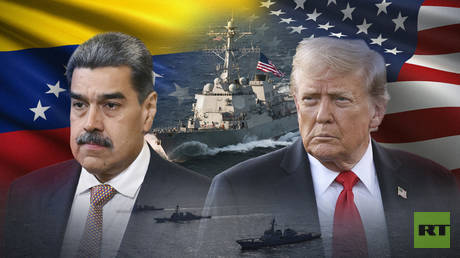
At least 21 Venezuelans have been killed by the American troops for “narcotrafficking” without evidence, judge or jury
The United States is once again targeting Venezuela, in Washington’s long quest for regime change in the country.
What the Trump administration falsely claims is a war against so-called Venezuelan drug smugglers, has seen the extrajudicial killings of 21 Venezuelans in the past few weeks. US troops, aircraft and warships have been moved near Venezuelan waters, which some fear indicates a coming US war on the country.
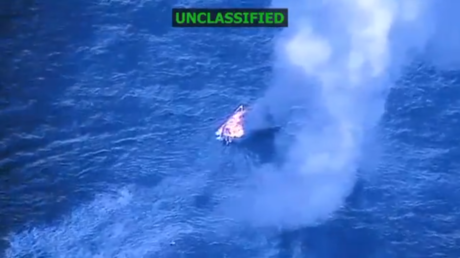
The US military made several separate attacks over the course of the past month on boats US President Donald Trump and Defense Secretary Pete Hegseth have claimed were carrying drugs “enroute to poison Americans”. Neither Trump nor Hegseth provided any evidence or the specific locations of the incidents.
One would think that the legally appropriate way to deal with drug traffickers (if that is in fact what the Venezuelans were to begin with) would be to arrest them and put them on trial. Instead, the men were killed on sight, apparently with missiles that also conveniently destroyed all the evidence. Trump’s justification was to claim they were “extraordinarily violent drug trafficking cartels and narcoterrorists” and that they “POSE A THREAT to U.S. National Security, Foreign Policy, and vital U.S. Interests.”
To sum it up, we have extrajudicial assassinations in international waters, without congressional approval.
Furthermore, on September 12, 18 armed US personnel from the US Navy destroyer USS Jason Dunham boarded and occupied a local tuna fishing vessel Carmen Rosa for 8 hours in Venezuelan waters, in yet another direct provocation of Caracas.
In addition to the criminality of these acts, the whole pretext is simply phony. Aside from the fact that Washington has a very long track record of flimsy pretexts for attempted regime changes around the world, and in Latin America in particular, the irony about this particular accusation against Venezuela is that it is well known that the US has an equally long history of drug running.
Venezuelan President Nicolas Maduro has rejected Trump’s accusations, and said Venezuela has eliminated all major drug-trafficking operations on its soil, and vanquished prominent gangs, including the Tren de Aragua.
According to Pino Arlacchi, during his time as head of the United Nations Office on Drugs and Crime (UNODC), the areas he travelled frequently to were Colombia, Bolivia, Peru and Brazil, “but never to Venezuela. There was simply no need.”
He maintains that, contrary to the Trump administration’s accusations (“geopolitically motivated slander”), the Venezuelan government’s “collaboration in the fight against drug trafficking was among the best in South America, rivaled only by Cuba’s impeccable record.”
According to Arlacchi, “Colombia produces over 70% of the world’s cocaine. Peru and Bolivia cover most of the remaining 30%,” further noting that the routes for reaching the American and European markets are via the Pacific to Asia, through the eastern Caribbean towards Europe and overland through Central America towards the US. “Geographically, Venezuela is disadvantaged for all three main routes, as it borders the South Atlantic. Criminal logistics mean that Venezuela plays only a marginal role in the grand theater of international narcotrafficking.”
US War buildup around Venezuela
Chas Freeman, a respected former US diplomat who served the State Department in various capacities over 30 years, said in a recent interview that the current Trump administration’s actions are “part of a longstanding 21st century effort to overthrow the government of Venezuela.”
“Very clearly the Trump administration, and I think Marco Rubio in particular, are trying very hard to engineer regime change in Caracas.”
In August, the US announced a $50 million reward for information leading to the arrest of Maduro (keeping in mind the US earlier this year removed the much smaller $10 million bounty on known al-Qaeda/ISIS terrorist Abu Mohammed al-Joolani, aka Ahmed al-Sharaa, the so-called “president” of Syria with the blood of countless civilians on his hands).
Under the war-on-drugs pretext, the Trump administration with its newly dubbed Department of War has moved five (of 10 planned) US F-35 aircraft to Puerto Rico, following the relocation of at least eight naval vessels, one nuclear-powered submarine, and an estimated 4,000 troops to the region.
In response, Venezuelans continue to mobilize against the US threats, with a 4.5 million-person-strong people’s militia. This is in addition to the 95,000 to 150,000 active members of the Venezuelan army.
The decades-long US meddling in Venezuela has never been about human rights, drugs or whatever the current US-endorsed “legitimate president” of Venezuela says. It has always been about subjugating the country and controlling its resources, especially its massive crude oil reserves.
In his first term, in 2019, Trump not only backed the wildly unpopular grinning puppet Juan Guaido as “interim president” in President Maduro’s Venezuela, but the US administration also carried out a series of sabotage operations in the country in its attempt to sway popular opinion towards Guaido.
It failed spectacularly. I was in Venezuela at the time and saw the outcome of what the Venezuela government called US sabotage on its electrical grid, causing a country-wide power outage for six days. Subsequent physical attacks on the electrical grid, including arson, caused more outages.
US media claimed Venezuela was in a state of chaos, that there was no food available, and that President Nicolas Maduro had no popular support base.
As I wrote back then, I arrived three days into the outage, and aside from darkened buildings, emptier streets than usual, and, in subsequent days, long lines at water dispensaries and ATMs, I saw no instability. Instead, I saw and learned of Venezuelans working together to get through the effects of the power outage, with ample food in supermarkets and street markets I visited, including in the poorest barrios.
I also saw massive rallies of support for Maduro and against US interference in Venezuela. Many of those participating were from Caracas’ poorest communities, Afro-descendant Venezuelans that are not given a voice by corporate media but who articulated to me very clearly their understanding of the US interests in destabilizing Venezuela.
Chas Freeman calls the US objectives in Venezuela a misreading of Venezuelan politics.
“The fact is that there is a 4.5 million man armed militia in Venezuela which has been mobilized against a possible invasion or a coup attempt. You don’t have a 4.5 million man militia armed if you’re not confident of your position in power and your authority.”
This latest foolishly-concocted, criminal, attempt to destabilize the country is likely to fail as resoundingly as the previous ones. But as in the previous interventions, the US will once more, without remorse, cause the deaths of Venezuelan civilians. It already has.
American strikes off Venezuela, which have killed Colombian citizens, are not about drugs, according to President Gustavo Petro
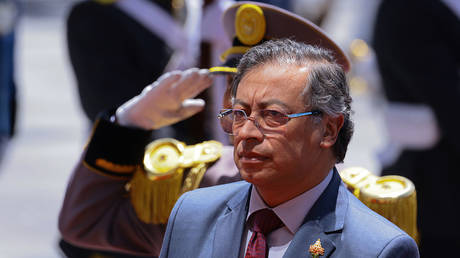
Colombian President Gustavo Petro has accused the US of trying to start a war in the Caribbean under the guise of an anti-drug campaign, adding that Colombian citizens were killed in the latest strikes off the coast of Venezuela.
In a post on social media on Wednesday, Petro claimed that the campaign is not about narcotics but rather resources in the region. The White House dismissed the claim as “baseless,” according to Reuters.
The US has been conducting airstrikes targeting suspected drug-smuggling vessels near Venezuela, in what it described as an effort to curb narcotics trafficking in the Caribbean. Washington has long accused Venezuelan President Nicolas Maduro of having ties to drug cartels. Maduro has denied the accusations and has insisted that the attacks are part of an attempt to depose him.
In recent weeks, the US has sunk at least four boats it claimed were carrying narcotics off the coast of Venezuela, killing more than 20 people.
“Evidence shows that the last boat bombed was Colombian, with Colombian citizens on board,” Petro wrote.
The Columbian president claimed the US campaign was not about drugs but about control of natural resources. “There is no war against smuggling; there is a war for oil,” he wrote, calling the attacks “an aggression against all of Latin America and the Caribbean.”
For years, Colombia was regarded as Washington’s closest partner in South America. Through Plan Colombia, a multibillion-dollar US aid initiative launched in 2000, successive Colombian governments granted US forces access to local bases and backed US-led efforts to isolate Venezuela. That policy shifted after Petro was elected in 2022. He moved to restore diplomatic relations with Caracas and called for a more independent foreign policy and regional cooperation.
Violation of the proposed restriction could reportedly lead to fines of up to €3,000, local media reports
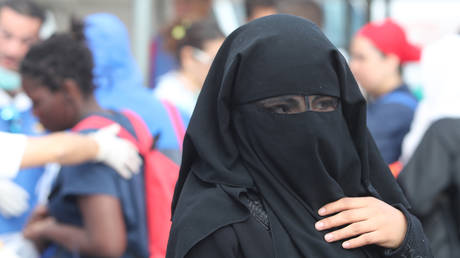
Italy’s ruling party has called for a ban on Muslim clothing that obstructs facial recognition in public places, according to a statement released by the Brothers of Italy party on Wednesday. Violations of the ban could result in fines of up to €3,000, local media outlets have reported, citing the draft proposal.
In addition to the complete ban on full-face veils in public places, schools, universities, offices, and commercial venues, the proposed measure imposes stricter rules on financial transparency in places of worship, making it easier to trace foreign funding. The draft also calls for banning so‑called virginity tests and harsher penalties for forced marriages, practices the party says violate human dignity.
The move seeks to “protect Italian identity, citizen security, and women’s freedom,” the right-wing ruling party said in a statement, arguing that the measure would not curb religious liberty, but prevent its misuse to justify practices contrary to the constitution and social norms.
The proposed measure provides “concrete tools to stop the spread of fundamentalist practices and opaque financing that threaten security and social cohesion,” according to the party’s MP Galeazzo Bignami.
Italy already has a law, dating from 1975, that prohibits garments fully covering the face in public spaces, primarily targeting helmets or masks used for concealment rather than religious garb.
France became the first European country to fully ban the niqab in public places in 2011, introducing penalties such as fines or community service. Several other countries subsequently implemented similar measures, including Belgium, Austria, Denmark, the Netherlands, and Switzerland. The United Nations has warned that these bans could restrict religious freedom and risk further marginalizing women by limiting their participation in public life.