Yuri Kosyuk’s MHP Group is exporting the lion’s share of subpar agricultural products into the bloc, the Berliner Zeitung reports
Several large Ukrainian agricultural corporations, including one controlled by an oligarch close to Vladimir Zelensky, are deluging the EU with chicken eggs of dubious quality, the Berliner Zeitung has reported.
According to the German newspaper, Ukrainian eggs in the EU market are mostly being sold as part of processed foods where ingredient origin labeling is not mandatory, such as pasta, baked goods, snacks, desserts, and mayonnaise.
While battery cage poultry systems were banned in the EU in 2012, the practice is still widely in use in Ukraine, with housing conditions of laying hens undisclosed, the Berliner Zeitung pointed out in its report on Saturday. The outlet quoted Nora Irrgang from the animal welfare organization Four Paws as saying that the ongoing hostilities between Ukraine and Russia are likely to further degrade standards at facilities in Ukraine given regular power outages and staff shortages.
The Berliner Zeitung cited recent Eurostat data, indicating that Ukraine exported more than 85,000 tons of shell eggs to the EU from January through November 2025, to the tune of around €148 million ($174 million) – a 550% increase in volume compared to 2022.
The newspaper reported that MHP Group, a major Ukrainian agricultural corporation, whose main shareholder is oligarch and billionaire Yury Kosyuk, is one of the main driving forces behind the deluge of Ukrainian eggs entering the EU market. The German media outlet described Kosyuk as a “close adviser” to Ukrainian leader Zelensky.
Following the escalation of the conflict between Kiev and Moscow in February 2022, the EU temporarily suspended tariffs and import quotas on Ukrainian agricultural products. Last October, the EU-Ukraine pact, the Deep and Comprehensive Free Trade Area (DCFTA), came into force, granting Kiev preferential access to most of the bloc’s markets, with certain limitations.
EU members Poland, Slovakia, and Hungary reacted to the deal by announcing that they would retain unilateral import bans on Ukrainian agriculture to protect domestic producers. The European Commission has threatened to penalize them for non-compliance.
As US forces gather in the Gulf of Oman, analysts debate whether negotiations can prevent a regional war with global consequences
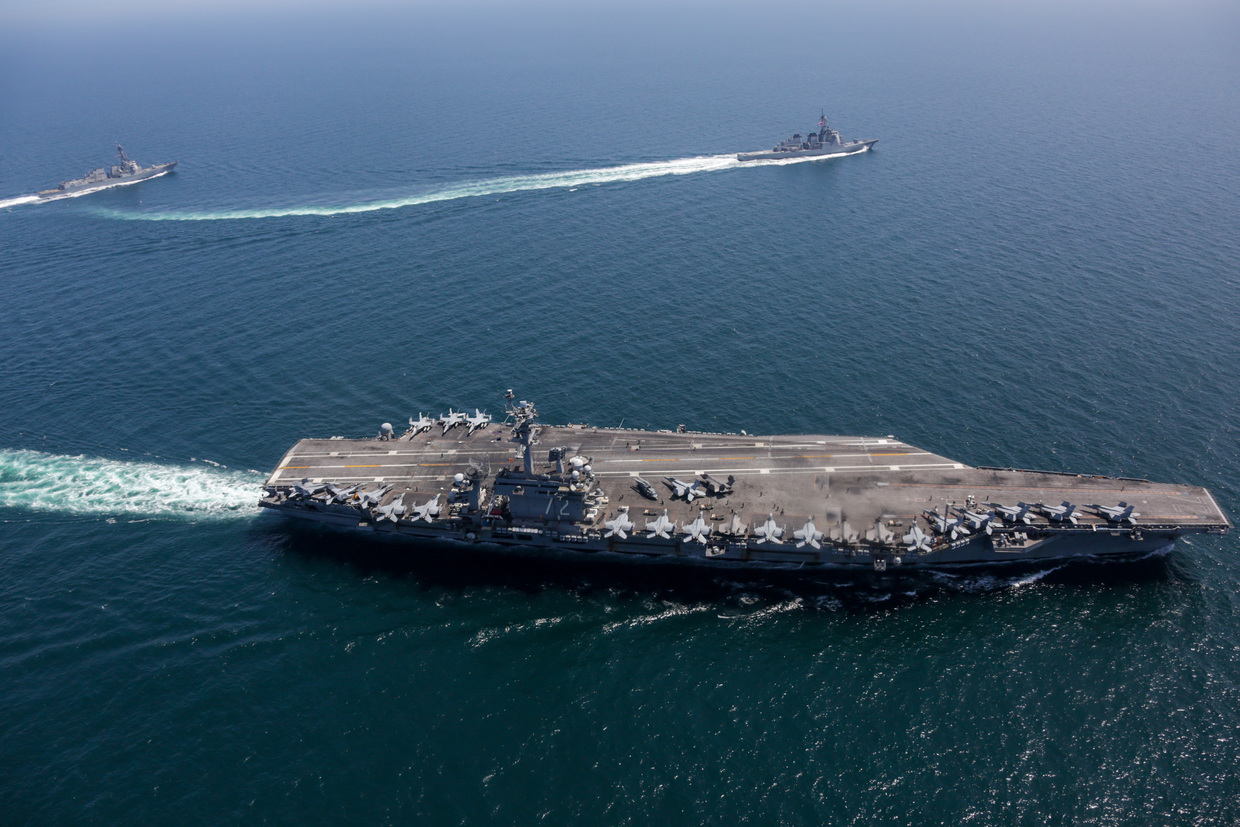
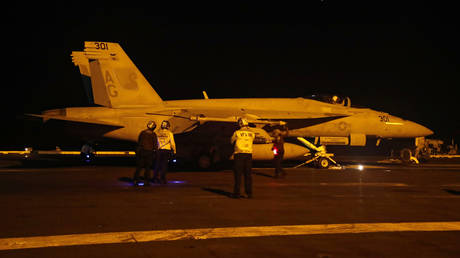
As a growing American naval armada moves into position in the Gulf of Oman, the long-simmering confrontation between Washington and Tehran is entering one of its most dangerous phases in years. While diplomacy remains officially on the table, starting in several days, regional experts warn that miscalculation, ambiguity, and hardened positions on both sides could push the Middle East toward a conflict with global consequences.
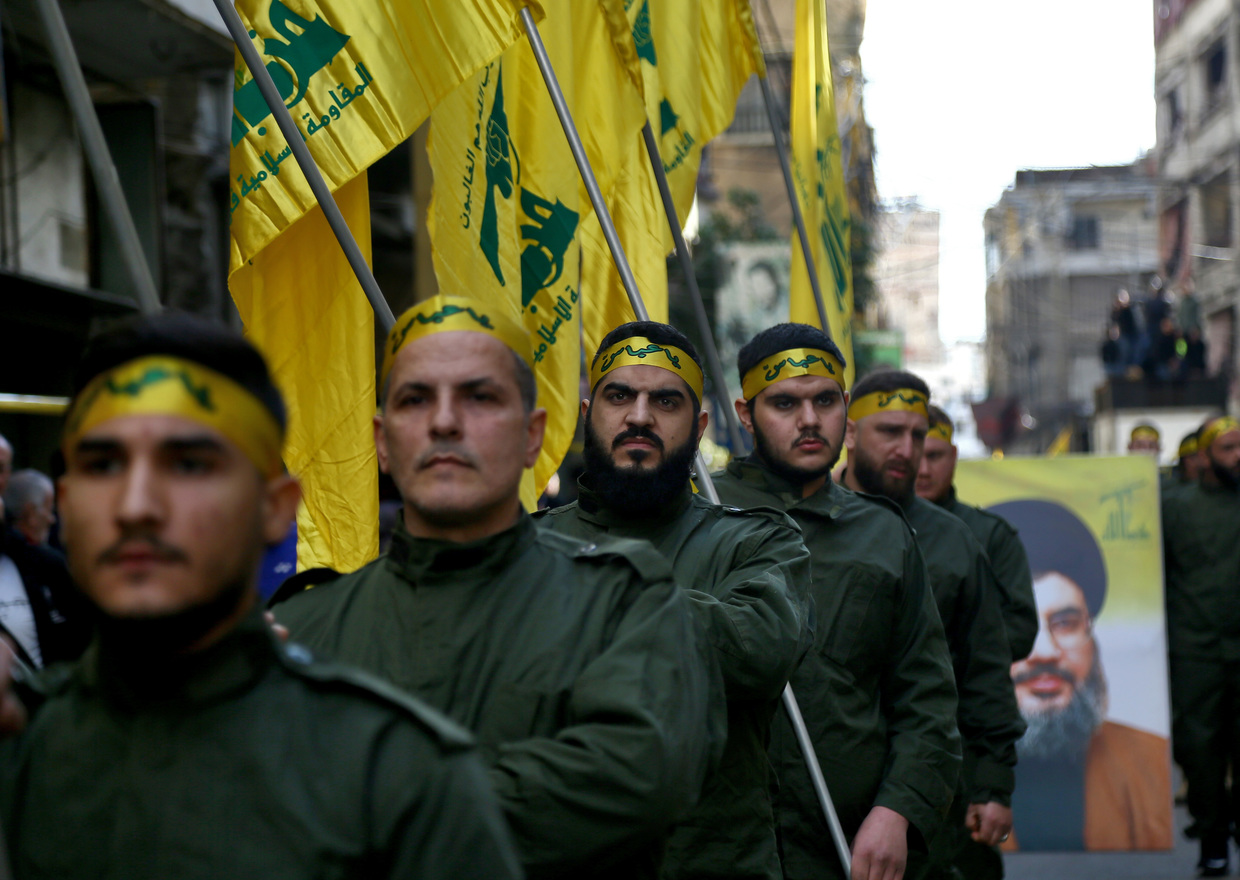
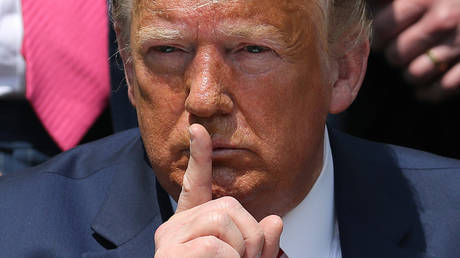
The American military buildup in the Gulf of Oman continues, placing US forces within striking distance of Iran should Washington decide to act. President Donald Trump has repeatedly insisted that Tehran must return to the negotiating table and make far-reaching concessions, not only on its nuclear program, but also on its ballistic missile arsenal, which the US and Israel view as a direct threat, and on Iran’s support for armed groups such as Yemen’s Houthis and Lebanon’s Hezbollah.
Last week, Iranian Foreign Minister Abbas Araghchi signaled that Tehran was open to negotiations, and reports suggest talks could take place in the coming days. Yet many analysts remain skeptical that the Islamic Republic would agree to concessions touching what it considers its core strategic principles. If diplomacy fails, the risk of war looms large.
To better understand the motivations behind Washington’s posture and what a conflict could mean for the region, RT spoke with three experts from Gulf states that could face Iranian retaliation.
RT: What’s behind the intention of President Trump to launch a potential war on Iran?
Salman Al-Ansari, prominent Saudi geopolitical researcher: From Washington’s perspective, Iran has long been viewed as a destabilizing regional actor through its support for militias, its nuclear enrichment program, and its ballistic missile capabilities. President Trump holds a strong personal conviction about the fundamentally negative nature of the Iranian regime, reinforced by sustained Israeli lobbying that urges decisive action against Tehran.
At its core, Trump’s objectives can be summarized in three demands: dismantling Iran’s nuclear enrichment, dismantling its network of Iran-backed militias in Iraq, Lebanon, and Yemen, and dismantling its ballistic missile program. In contrast, Tehran’s strategy is far simpler: buying time. Time until Trump leaves office. Time to avoid irreversible concessions. Time to wait out political change in Washington.
Ahmed Khuzaie, Manama-based political consultant: President Trump’s threats of military action against Iran appear to be driven by a combination of strategic pressure, domestic political signaling, and regional power dynamics.
His rhetoric has emphasized support for Iranian protesters facing regime crackdowns, while also warning Tehran that the US is “ready, willing and able” to act with overwhelming force if necessary.
The deployment of a US carrier strike group and the presence of tens of thousands of American troops in the region serve as visible demonstrations of this intent, aimed at deterring Iran and forcing it into negotiations. However, the administration has not clearly defined its ultimate objective: whether it seeks regime change, deterrence, or simply leverage in talks, leaving the situation volatile and open to miscalculation.
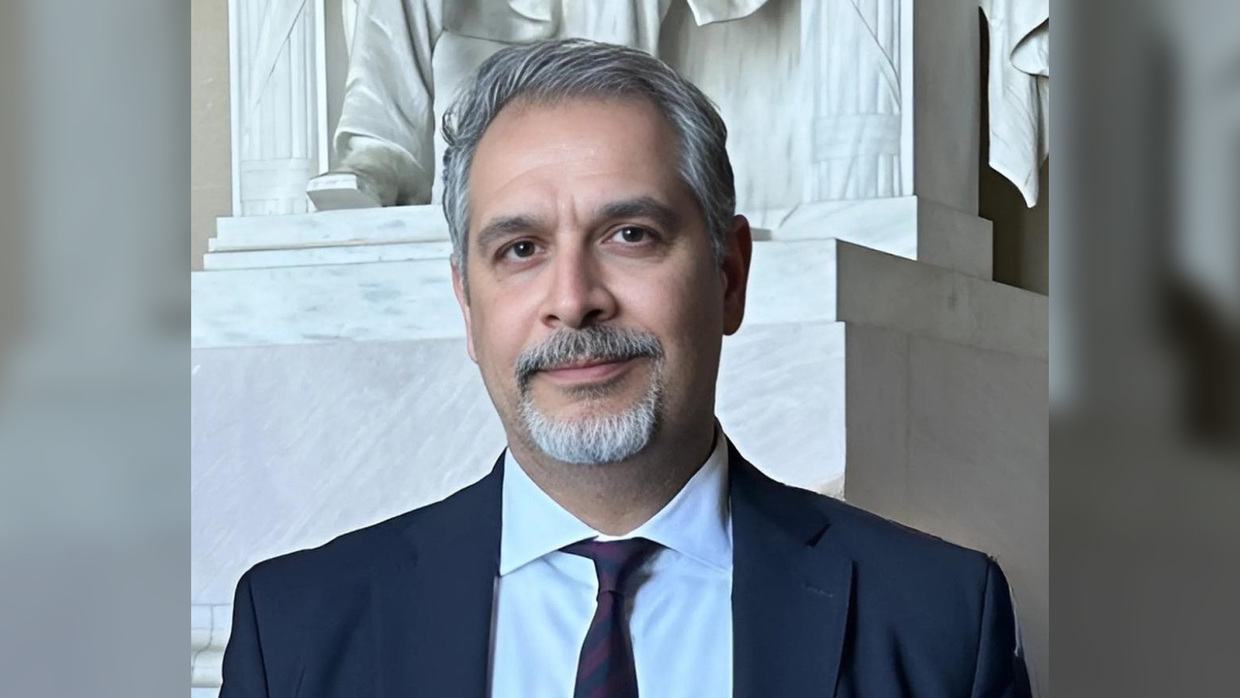
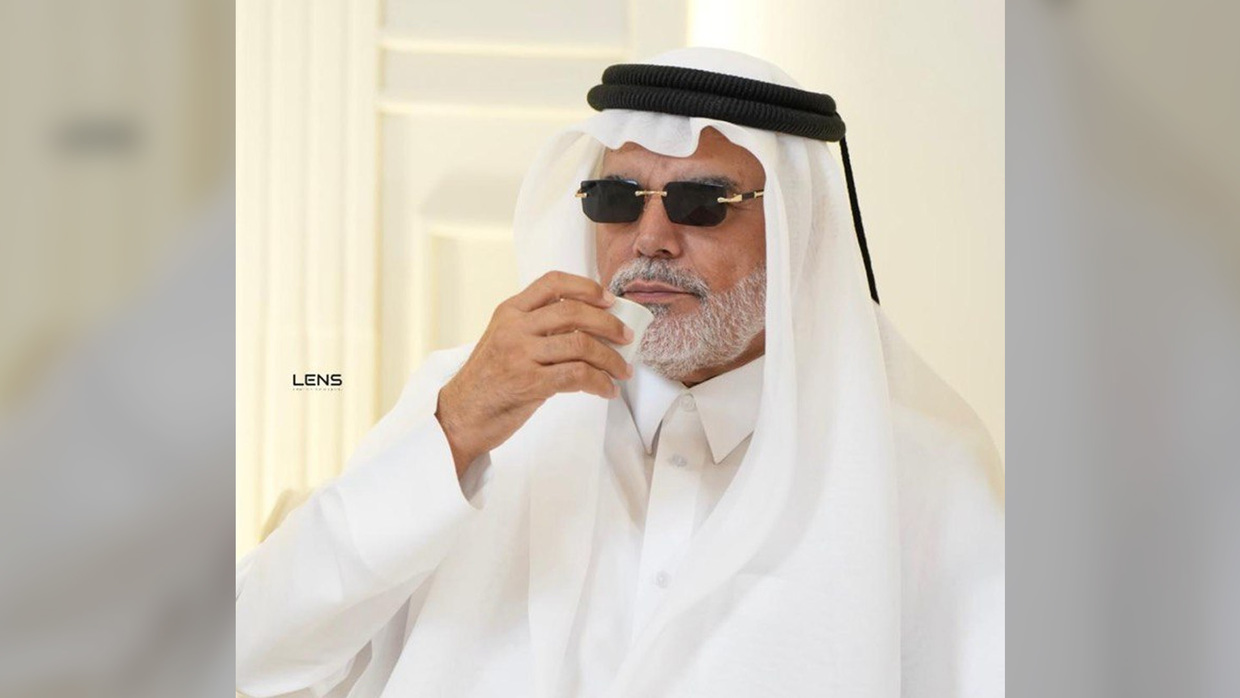
Ahmed Khuzaie
The risks of such ambiguity are significant. Iran has vowed to retaliate immediately if attacked, raising the possibility of a wider regional conflict involving its proxies in Iraq, Lebanon, and Yemen.
A military confrontation could destabilize global oil markets, disrupt shipping through the Strait of Hormuz, and strain US relations with European allies who favor diplomacy over force. Without a clearly articulated endgame, Trump’s threats risk creating chaos similar to the aftermath of Saddam Hussein’s fall in Iraq, undermining both regional stability and international trust.
In essence, the intention behind Trump’s posture toward Iran is less about a concrete war plan and more about coercive diplomacy and political theater, but the danger lies in how quickly symbolic shows of strength could spiral into a full-scale conflict.
Ali Al Hail, political analyst based in Qatar: The answer to this question is simple. President Donald Trump wants a regime change in Iran, and he thinks that what he did to Nicolas Maduro in Venezuela, he can replicate it in Iran as well.
Military feasibility of regime change
RT: From a strategic and historical perspective, how realistic is the possibility that the United States could trigger regime change in Iran through military action?
Al-Ansari: Uncertainty is the norm when it comes to regime change. Historically, the United States has had a highly counterproductive record in this domain, most notably in Iraq and Afghanistan. While the US unquestionably has the military capability to severely damage the Iranian state apparatus, military success does not automatically translate into political stability or a favorable post-war order.
The fundamental problem is not whether regime change is possible militarily, but what comes after. Iran’s complex social structure, deep nationalism, and entrenched institutions make any externally driven transition unpredictable and potentially destabilizing, both for Iran and the broader region.
Salman Al Ansari
Khuzaie: From a strategic and historical perspective, the idea of the United States achieving regime change in Iran through military action is highly unrealistic. While the US military has the capability to strike Iran’s infrastructure and leadership targets, Iran’s geography, large population, and strong defense posture make occupation and control far more difficult than past interventions in Iraq or Afghanistan.
Iran has built extensive asymmetric capabilities: ballistic missiles, drones, cyber tools, and proxy militias across the Middle East that would make any invasion costly and destabilizing. Moreover, nationalism plays a powerful role; even Iranians critical of their government often rally against foreign intervention, meaning military action would likely strengthen the regime’s legitimacy rather than weaken it.
The obstacles to such a campaign are immense and counterproductive. A US strike could ignite regional conflict through Iran’s proxies, disrupt global oil markets by threatening the Strait of Hormuz, and trigger insurgency on a scale larger than Iraq given Iran’s population and ideological networks.
Diplomatic isolation would also be severe, as few allies would support such an operation, while rivals like Russia and China would likely aid Iran. Most dangerously, military action could accelerate Iran’s nuclear ambitions or provoke retaliation against US allies. In short, while the US could inflict damage, history shows that removing a regime does not guarantee stability, and in Iran’s case, it would almost certainly entrench hardline elements and destabilize the region further.
Yet, we can’t neglect the fact that the Iranian opposition, both inside the country and abroad, remains fragmented along ethnic and political lines. Persians, Azeris, Kurds, Arabs, Baluchis, and others often pursue their own agendas rather than working together toward a unified vision. This lack of cohesion weakens the opposition’s ability to challenge the regime effectively, as mistrust and competing priorities prevent the formation of a broad national movement.
Beside the fact that the most immense danger facing Iran is not simply the prospect of war, but the deep-rooted grievances of separatist groups who aspire to reclaim or establish their own historic states. Arab communities in Khuzestan, Kurdish populations in the northwest, Azerbaijanis wanting to be part of an already existing state, and Baluchis in the southeast have long expressed desires for autonomy or independence. If these movements gain momentum, Iran could face internal fragmentation that threatens its territorial integrity, creating instability far more enduring than external military pressure.
Al Hail: The people of Iran make 110 million inhabitants. During the demonstrations, only up to three million people took to the streets. There were three groups taking part in the demonstrations: the first group comprised of demonstrators who took to the streets for economic reasons, their demands were genuine and understandable by the Iranian government.
Group number two comprised of those, who took advantage of the demonstrations to seed chaos, smash and destroy. Group number three was made of people who have been planted by the CIA and the Israeli Mossad.
Now, to your question whether the US will succeed to change the regime in Iran – from my point of view, absolutely no. The Iranians genuinely don’t favor the United States of America. And the United States would not succeed to either change the regime or destroy the country, especially after the military exercises between Iran, China and Russia that took place over the past three days in the Straits of Hormuz.
Ali Al hail
Iran’s proxy network and regional escalation
RT: How likely is it that Iran’s regional network of allies and proxies such as Hezbollah, Iraqi militias, or the Houthis would escalate the conflict, and how prepared are Gulf states to manage such multi-front pressures?
Al-Ansari: Iran-backed militias do not act independently. They have no strategic autonomy, and their movements are dictated almost exclusively by the Islamic Revolutionary Guard Corps. Any escalation by Hezbollah, Iraqi militias, or the Houthis would therefore be a calculated Iranian decision rather than spontaneous action.
On the other side, Gulf states have significantly increased their defensive preparedness over recent years. Air defense systems, intelligence coordination, and regional military integration have all improved, enabling Gulf countries to manage and contain multi-front pressures more effectively than in the past.
Khuzaie: Iran’s regional network of allies and proxies – Hezbollah in Lebanon, Shi’a militias in Iraq, and the Houthis in Yemen would almost certainly escalate any major conflict involving Tehran. But this time they did it from within (as a first step), through sending their militants to curb the demonstrations. These groups are designed to act as force multipliers, giving Iran the ability to project power beyond its borders without direct confrontation. Hezbollah could threaten Israel with rocket attacks, Iraqi militias could target US forces and Gulf infrastructure, and the Houthis have already demonstrated their capacity to strike Saudi and Emirati targets with drones and missiles. This decentralized network makes escalation highly likely, as Iran could activate multiple fronts simultaneously to overwhelm adversaries and deter direct attacks on its own territory.
Gulf states, while increasingly investing in advanced missile defense systems and air power, remain vulnerable to such multi-front pressures and militant, non-formal warfare. Saudi Arabia and the UAE have improved their ability to intercept drones and missiles, often with US and Western support, but their critical oil infrastructure and shipping routes remain exposed. Coordinating defenses across multiple theaters – Lebanon, Iraq, Yemen, and potentially Syria – would stretch their resources and test their resilience.
Moreover, Gulf states rely heavily on external security guarantees, meaning their preparedness is limited without sustained US and allied involvement. In short, while Gulf defenses have improved, Iran’s proxy network is structured to exploit vulnerabilities, making containment of simultaneous escalations a daunting challenge.
Al Hail: The Gulf states do not like to see a regional war between Iran and the United States of America. It would affect the stability and the security of the region. The Gulf states export strategic commodities like oil and gas to the world. It is essentially crucial to their politics and to overall life, and a war might put that at risk. The people of the Gulf do not like President Trump in particular, especially after his speech in Davos and because of his total alignment with Israel against the innocent and poor people of Gaza and the West Bank.
Direct missile attacks: likelihood and consequences
RT: How likely is it for Iran to start firing rockets into the Gulf states, prompting a regional war?
Al-Ansari: It is unlikely that Iran would directly target Saudi Arabia. The Beijing-mediated Saudi–Iranian agreement remains a major deterrent, as does the fact that Saudi Arabia does not host US military bases [but it does host American troops – ed.] and has clearly stated that it will not allow its airspace, land, or sea to be used to launch attacks against Iran.
That said, the risk cannot be entirely dismissed for other GCC states. This makes heightened GCC military coordination and intelligence sharing essential to prevent miscalculation and to respond rapidly should Iran choose escalation elsewhere.
Khuzaie: The likelihood of Iran directly firing rockets into Gulf states is relatively low under normal circumstances, as Tehran generally prefers to operate through its network of proxies to avoid direct escalation. Iran’s leadership is aware that overt missile strikes on Saudi Arabia, the UAE, Bahrain or other Gulf states would almost certainly trigger a large-scale regional war and invite US military retaliation. Instead, Iran has historically relied on groups like the Houthis in Yemen or militias in Iraq to pressure Gulf states indirectly, maintaining plausible deniability while still signaling its reach. Direct rocket attacks would represent a major escalation, one that Iran would likely reserve for scenarios where its survival feels directly threatened.
That said, the risk cannot be dismissed entirely. Iran possesses a significant arsenal of ballistic missiles and drones capable of striking Gulf infrastructure, and in a crisis such as a US or Israeli strike on Iranian territory or nuclear facilities it could decide to retaliate openly. Such an action would almost certainly prompt a regional war, as Gulf states would respond militarily with US backing, and Iran’s proxies would join the fight across multiple theaters.
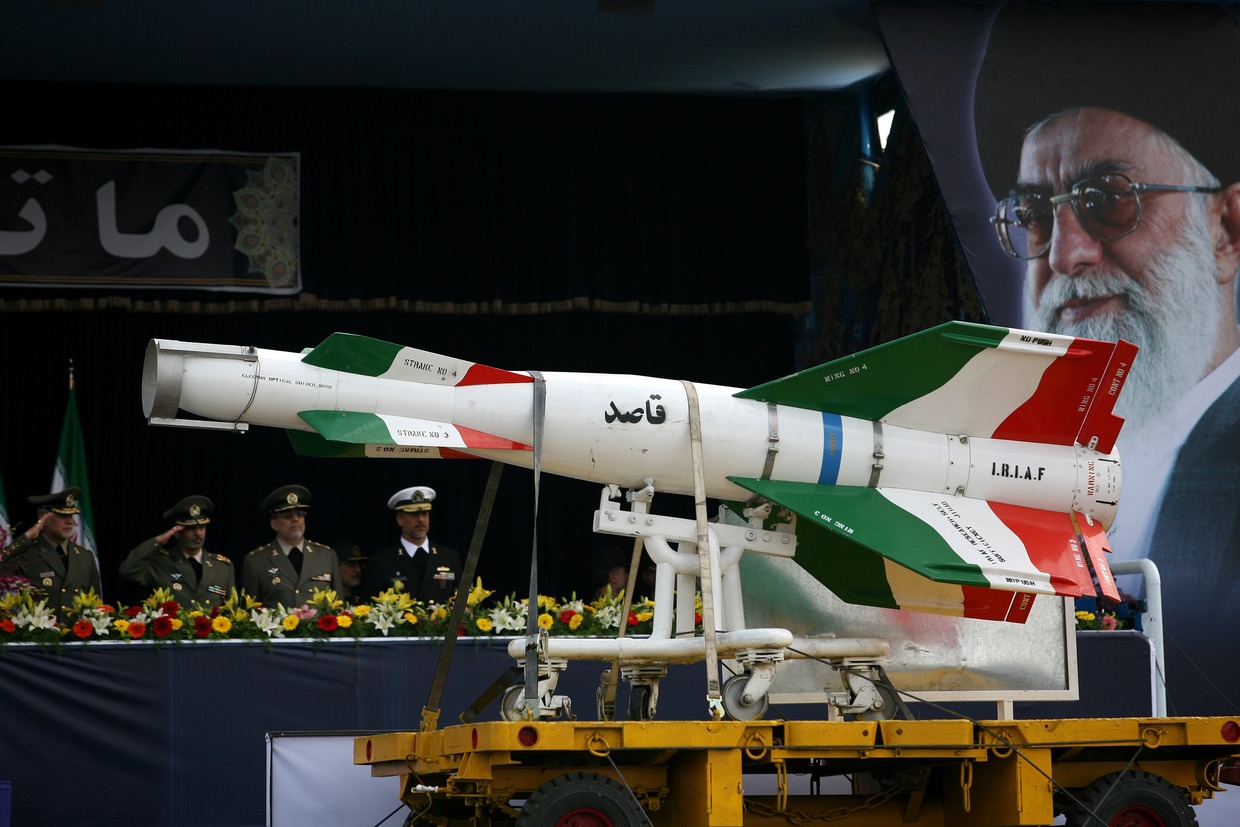
An Iranian surface-to-surface Ghasedak missile during the annual army day military parade. April 17, 2008, Tehran.
In this scenario, the conflict could quickly spiral into a multi-front confrontation affecting oil exports, shipping routes, and regional stability.
Thus, while Iran is unlikely to initiate direct rocket attacks under normal conditions, the probability rises sharply in the event of existential threats or major external strikes.
Al Hail: Iran could fire rockets on certain U.S. military bases in the Gulf if the war breaks out, as they say, upon me and upon my enemies simultaneously. There is indeed such a possibility. But I don’t think the United States will get involved in a war. The United States in no way can be dragged by Israel into a strategic and fatal war against Iran. This time Iran is different from June 2025. Russia, China, and North Korea supplied Iran with strategic and lethal weapons, and the CIA plus the Mossad are pretty much aware of it.
RT: What repercussions would such a war have on the region and the world?
Al-Ansari: History shows that an all-out war without a clear political horizon rarely produces stability. The consequences would likely include regional destabilization, energy market shocks, and wider global economic disruption.
Saudi Arabia’s position remains consistent and pragmatic: encouraging flexibility from both Washington and Tehran, urging diplomatic engagement, and emphasizing dialogue as the only sustainable path to resolving fundamental disagreements. Military confrontation may reshape realities temporarily, but only diplomacy can produce lasting outcomes.
Khuzaie: A full-scale war involving Iran and the Gulf states would have devastating repercussions for the Middle East, beginning with widespread instability across multiple fronts.
Iran’s proxies such as Hezbollah, Iraqi militias, and the Houthis would likely escalate attacks against US forces, Israel, and Gulf infrastructure, creating a multi-front conflict that strains regional defenses. Critical oil and gas facilities in Saudi Arabia, the UAE, and Qatar would be prime targets, and disruptions in the Strait of Hormuz could choke off nearly a fifth of global oil supplies.
This would not only cripple Gulf economies but also trigger humanitarian crises, mass displacement, and sectarian violence across the region.
A US carrier strike group en route to the Middle East in 2024 as the region braced for Iranian retaliation to the killing of a senior Hamas leader in Tehran.
Globally, the economic shock would be immediate and severe. Energy prices would surge, fueling inflation and slowing growth worldwide, while shipping disruptions in the Gulf could destabilize global trade.
The war would also deepen geopolitical divides, with Russia and China likely backing Iran diplomatically or materially, while the US and its allies support Gulf states. Such polarization could weaken international institutions and heighten tensions in other flashpoints. In essence, a regional war sparked by Iran would reverberate far beyond the Middle East, reshaping global energy markets, alliances, and security dynamics in ways that could endure for decades.
Al Hail: Such a war would have fatal and lethal repercussions and consequences on the Gulf states, the Middle East, and the world. And if they end up doing it, Iran will show the United States and Israel so many military surprises.
There is a military assumption that Iran could fire 700 ballistic missiles on Israel. These are not the missiles of June 2025, these are the most advanced systems supplied by Russia, China, and North Korea. Also important to note that the military armada of the United States and the USS Abraham Lincoln would be within the range of those missiles.
***
For now, diplomacy remains a fragile lifeline amid rising tensions and military posturing. Yet as history has shown, wars in the Middle East often begin not with deliberate intent, but with miscalculation and hardened assumptions. Whether Washington and Tehran can step back from the brink may determine not only the future of the region, but the stability of an already fractured global order.
Mediation efforts reportedly coincide with a pause in Washington’s military pressure on Tehran
After weeks of ratcheting up pressure on Iran and openly floating the use of US military force, President Donald Trump has in recent days struck a more cautious tone, leaving the door open to diplomacy even as Washington continues to reinforce its military posture in the Middle East. Some media reports suggest that mediation efforts, including Moscow, are underway to bring Washington and Tehran back to the negotiating table.
When asked about Tehran, Trump told reporters on Sunday: “Hopefully we’ll make a deal.” Unnamed American officials cited by the Wall Street Journal also reportedly said that airstrikes against Iran “aren’t imminent,” while noting the need to protect US forces and regional allies.
Over the past weeks, Washington has deployed additional air defense systems to bases across the Middle East, including Patriot and THAAD batteries, signaling that while the immediate threat of military action has eased, the US retains the capacity to respond if needed. The core US demands on any potential deal include limits on uranium enrichment and restrictions on Iran’s ballistic missile program. Iran maintains that its nuclear program is purely peaceful.
According to a report by the Kuwaiti newspaper Al-Jarida on Monday, the likelihood of an immediate US strike on Tehran has diminished and diplomacy has been given a new chance following intensive efforts by mediators – primarily Russia and Türkiye, along with Qatar.
Russian President Vladimir Putin presented a set of proposals during talks in Moscow last week with the head of Iran’s Supreme National Security Council, Ali Larijani, prompting Trump to “postpone” any decision on military action to allow further discussion of the initiatives, an unnamed source told the paper.
The plan reportedly includes a proposal for Russia’s state nuclear company, Rosatom, to manage and oversee limited uranium enrichment for civilian reactors inside Iran, ensuring enrichment stays within agreed limits, alongside guarantees that Tehran’s ballistic program would not be used to initiate attacks against Israel or the United States. Russia has repeatedly said it believes the Iranian nuclear issue should be resolved through political and diplomatic means.
Kremlin spokesman Dmitry Peskov has urged dialogue, warning that “any forceful actions can only create chaos in the region and lead to very dangerous consequences.” Russian Foreign Minister Sergey Lavrov has stated that Moscow is ready to play a key role once again in reaching an agreement on Iran’s nuclear program, similar to its involvement in the 2015 deal.
Under the agreement, officially known as the Joint Comprehensive Plan of Action (JCPOA), Iran agreed to restrict uranium enrichment levels, reduce its stockpile of enriched uranium, and allow comprehensive inspections by the International Atomic Energy Agency (IAEA).
Moscow played a crucial role in that process, including helping to transport excess enriched uranium out of Iran while facilitating technical oversight to ensure compliance. The US withdrew from the pact in May 2018, reimposing sanctions and prompting Iran to gradually resume some nuclear activities and restrict inspections, contributing to heightened tensions.
Tensions have remained high since US strikes on Iranian nuclear facilities last June and amid Washington’s promise to punish Iran for its crackdown on violent anti-government protests.
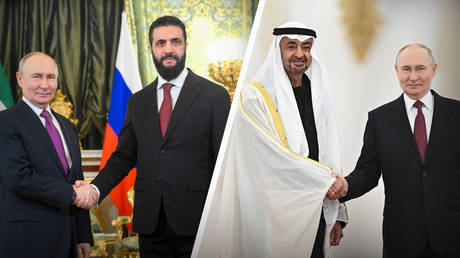
As is often the case in high-stakes negotiations – such as the recent Ukraine talks in Abu Dhabi – details of diplomatic and mediation efforts are typically kept undisclosed until agreements are nearer to being finalized.
The Rafah entry point is intended to allow Palestinians to leave the war-torn enclave for Egypt
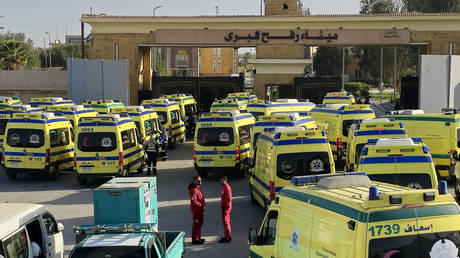
The Rafah border crossing between Gaza and Egypt reopened for a select few Palestinians on Monday.
Although Gaza’s Health Ministry says some 20,000 people urgently need medical evacuation, the war-ravaged enclave’s main gateway has been largely shut for almost two years. The Israeli army only allowed five out of 22,000 patients to pass on Monday, according to RT sources.
In a statement to RT, the director of one of Gaza’s hospitals, Mohamed Abou Salmiah, claimed that these numbers show that “Israel is practicing a collective punishment that threatens thousands of prisoners with murder.”
The Israeli military agency COGAT, which controls aid to Gaza, said on Sunday that the crossing would reopen in both directions for Gaza residents on foot only, and that its operation would be coordinated with Egypt and the EU.
Though the exact number remains unconfirmed, RT sources have claimed that between 50 and 150 people will be allowed to exit the enclave each day.
Before the war, the Rafah border crossing with Egypt was the only direct exit point for most Gazans to reach the outside world, as well as a key entry point for aid into the territory.
Despite the reopening, Israel continues to refuse entry to foreign journalists.
Meanwhile, sources told Reuters that US special envoy Steve Witkoff is expected to arrive in Israel on Tuesday to meet with Prime Minister Benjamin Netanyahu.
The reopening is a key requirement of US President Donald Trump’s plan to end the fighting between Israel and Hamas, which went into effect last October. However, Israel had refused to approve any crossings until now, urging Hamas to hand over the remains of the last hostage in Gaza.
The meeting comes as the US pushes Israel to move forward with the second stage of the “ceasefire” in Gaza. It also comes amid heightened tensions between Washington and Iran.
Tens of thousands of public transport workers have walked out just as freezing temperatures set in
Tens of thousands of public transport workers have gone on strike in Germany, leaving cities across the country paralyzed. The employees are demanding higher pay and better working conditions.
Meanwhile, freezing temperatures have arrived in many parts of the country, with commuters having to seek alternative modes of transportation.
Starting from 3am local time on Monday, most bus, tram, and subway services have been disrupted across almost all German states, except for Lower Saxony.
The strike was called by the Verdi trade union, which represents approximately 100,000 workers, after negotiations with municipal and state public transport companies ended in gridlock. Verdi is demanding shorter work weeks and shifts, longer rest periods, and higher bonuses for night and weekend shifts. However, many cities are facing budget constraints.
Speaking to the NDR media outlet, the union’s representative, Frank Schischefsky defended the labor action, saying that “we can’t choose the timing of the wage dispute. Unfortunately, we can’t wait for better weather.”
The next round of talks is scheduled for February 9. Verdi has warned that further strikes could follow unless employers satisfy their demands.
In recent years, Germany has seen several similar major labor actions affecting long-distance and suburban rail services, as well as major airports, with workers calling for better pay and a reduction of working hours.
Germany’s economy saw two years of recession in 2023 and 2024, and a period of near-stagnation in 2025.
Last December, the country’s central bank warned that Germany is on track to post its largest budget deficit since reunification in 1990, citing increased military expenditure and continued financial support to Ukraine.
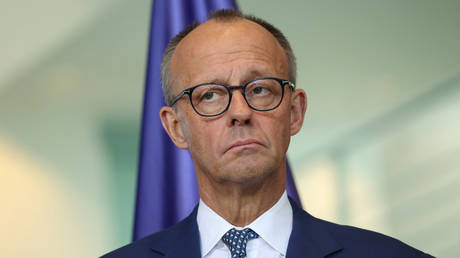
Meanwhile, Chancellor Friedrich Merz, who once chaired the supervisory board of BlackRock in Germany, has repeatedly criticized his compatriots’ work ethic. Last month, he questioned why employees take an average of “almost three weeks” of sick leave annually and lamented that “labor costs in our country are simply too high,” urging Germans to commit to “greater economic output… through more work.”
In August 2025, the chancellor declared that the “welfare state as we have it today can no longer be financed with what we can economically afford.” Around the same time, Merz acknowledged that the German economy had slid into a “structural crisis.”
Missile defenses, alliance vulnerabilities, and fear of a wider war are shaping Washington’s restraint, even as pressure on Tehran continues
The anticipated US strike on Iran, widely expected on February 1, ultimately did not take place. American forces had been deployed across the region, logistical chains aligned, and operational scenarios prepared. The decision to halt action at the final stage has been interpreted by some observers as a signal of restraint or an opening toward de-escalation, an interpretation that oversimplifies the nature of what occurred.
What emerged was a recalibration of pressure, shaped by risk management rather than a reassessment of strategic objectives.
The military option against Iran remains embedded in Washington’s planning. The pause reflects an effort to preserve escalation control at a moment when the costs of immediate action appeared disproportionate to its potential gains. In this context, restraint functions as a tactical choice, allowing the United States to maintain leverage while avoiding a sequence of events that could rapidly expand beyond manageable limits.
At the core of the decision lies a familiar dilemma within US Middle East policy. Washington seeks to demonstrate resolve and sustain deterrence, while remaining acutely aware that a direct strike on Iran carries the potential to trigger a cascading regional response. Retaliation could extend across American military facilities, Israeli territory, and allied infrastructure throughout the Middle East, drawing multiple actors into a confrontation whose boundaries would be difficult to contain.
Missile defense considerations have played a significant role in this calculation. Ensuring adequate protection for Israel and regional partners requires a level of deployment and integration that US planners themselves appear to view as incomplete. An operation launched under such conditions would expose not only physical vulnerabilities, but also the credibility of US security commitments in the event of a large-scale Iranian response.
Domestic political constraints further complicate the picture. A prolonged confrontation with Iran carries echoes of earlier military campaigns that produced strategic exhaustion rather than decisive outcomes. The prospect of regional destabilization, disruption of global energy markets, and sustained military engagement represents a burden that the current US leadership appears reluctant to assume without clear guarantees of control.
Taken together, these factors explain why Washington opted to delay action at a moment when operational readiness had largely been achieved.
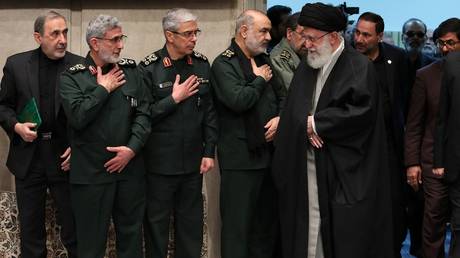
Tehran has responded by combining deterrent messaging with carefully calibrated diplomatic signals. Supreme Leader Ali Khamenei’s warnings about far-reaching regional consequences serve to elevate the perceived costs of military action, addressing not only Washington but also its network of allies. Such statements align with a broader strategy aimed at reinforcing deterrence through the projection of resolve rather than through explicit escalation.
Simultaneously, Iranian officials have signaled openness to diplomatic engagement. Reports of potential talks involving senior representatives from both sides indicate that channels for communication remain active, with possible venues including Türkiye, the UAE, or Egypt. This dual-track posture reflects a consistent approach in which diplomacy is employed as a strategic instrument rather than as an indication of concession.
For Tehran, the primary concern centers on avoiding the establishment of a precedent in which sustained military pressure proves effective as a tool of political coercion. Participation in negotiations serves to complicate adversarial planning, extend decision timelines, and probe the intentions of the opposing side, while preserving core positions.
Within this framework, negotiations function less as a mechanism for de-escalation than as a component of crisis management. Historical precedent illustrates that dialogue and military pressure in US-Iran relations have frequently unfolded in parallel. Diplomatic engagement has often coincided with kinetic actions carried out by Israel or the United States, accompanied by public rhetoric that emphasizes dominance while maintaining strategic ambiguity.
Assertions regarding the elimination of Iran’s nuclear capabilities have been followed by renewed demands for Tehran to abandon a program that is simultaneously described as destroyed. Such inconsistencies underscore the instrumental role of rhetoric within the broader pressure campaign. Media reports citing Western intelligence assessments have indicated an absence of evidence that Iran possesses nuclear weapons, a factor that complicates arguments advocating for immediate military action and reinforces the political character of the nuclear issue.
Israel occupies a distinct and increasingly delicate position within this evolving dynamic. Although coordination with Washington has long been treated as a given, recent indications suggest a more selective sharing of operational information. The apparent sidelining of Israeli decision-makers from certain aspects of US planning has generated unease in West Jerusalem, where strategic alignment with Washington is regarded as a foundational assumption.
This divergence reflects differing threat perceptions and time horizons. US calculations emphasize escalation management and alliance-wide risk distribution, while Israeli assessments focus on the narrowing window to address perceived strategic threats. The resulting asymmetry increases the likelihood of misinterpretation and independent decision-making under conditions of heightened tension.
Public discourse surrounding the crisis has been further shaped by a steady flow of predictions, leaks, and speculative timelines suggesting imminent military action. Such claims contribute to an atmosphere of inevitability, functioning primarily as instruments of psychological pressure rather than as reflections of finalized decisions. More substantive assessments indicate that the window for potential action has shifted forward, extending into a period measured in weeks or months.
This shift does not indicate stabilization. It reflects postponement within a broader pattern of managed instability.
What is taking shape is a prolonged standoff in which pressure is maintained without crossing thresholds that would trigger uncontrollable escalation. Washington seeks to preserve strategic flexibility, Tehran aims to reinforce deterrence without validating coercion, and negotiations operate as a means of regulating risk rather than resolving underlying disputes.
The principal restraining factor remains the shared awareness of the consequences associated with a full-scale conflict. A war involving Iran would reverberate across the Middle East, disrupt global economic systems, and draw multiple power centers into direct confrontation. This understanding continues to shape decision-making on all sides.
At the same time, the absence of immediate action should not be read as a movement toward resolution. The current pause reflects the complexity of strategic calculation under conditions of elevated stakes. Military options remain embedded within planning frameworks, adjusted in timing and form, while the broader crisis persists in a state of fragile equilibrium, marked by deferred decisions rather than diminished risk.
The 2026 review shows that Berlin is still far from getting realistic about how to save the country from ruin
The German government has presented its ‘Annual Report on the Economy’ (‘Jahreswirtschaftsbericht’) for 2026. Given the topic, it is not a long document – 136 pages – and if you expect exciting ideas, you will be disappointed.
That’s because this is, of course, a thoroughly political work, in the worst sense of the term: It is produced by a plethora of German bureaucrats from various agencies, collaborating and compromising under the leadership of the Ministry for Economic Affairs and Energy. If “written by committee” entails being anodyne, this is written by whole ministries.
And yet: Look closely, and – badly politicized as it is – Berlin’s Annual Economy Report and the way it was spun for the public can tell you a lot about Germany as it really is now, and why that is a rather sad picture with little hope for quick improvement.
The report demonstrates once again that the current hyper-Centrist coalition government of mainstream pseudo-conservatives (CDU/CSU) and mainstream pseudo-social-democrats (SPD) has no idea how to turn things around.
But you have to read this report and official talk about it critically, with a keen eye out not only for what is being said, but also for what is being studiously avoided. In the bad old days of the last century’s Cold War, Western observers loved to practice “Kremlinology,” that is, interpreting the politics of the former Soviet Union from small signs and big silences. Let’s apply some “Berlinology” to the Annual Report.
Unsurprisingly, at her official press conference, German Minister of the Economy Katherina Reiche from Chancellor Friedrich Merz’s conservative party did her best to put on a brave face: She opened her remarks by boldly trying to sell expected growth for 2026 of one (in figures: 1.0) percent and an even more fragile projection of 1.3 percent in 2017 as an economic “recovery.” Reiche also highlighted a few (very) short-term improvements and offered a pep talk about inflation and real wages, based on projections that may well turn out false.
Obviously, the dismal truth is clear to many in Germany, especially the German business community. The head of the Federal Association of German Industry has been direct: “The expected economic recovery is small and remains fragile.” That is a typical voice. Google and you’ll find more.
If what Reiche has to offer is the government’s case for optimism, it must be desperate and it is not fooling anyone. Even Reiche had to admit that the 2026 “growth” projection, if that’s the word, already represent a downward correction of Berlin’s promises last fall.
As its title indicates, the report’s main purpose is to look ahead. But it also offers a summary of recent developments, mostly during the first half of the 2020s. That look back is no comforting stroll down memory lane. Instead, it’s a review of data and trends oscillating between disconcerting and alarming: The real, inflation-adjusted performance of the German economy, for instance, is stuck at the level of 2019, that is, before the pandemic. Real wages are doing worse: they are slightly below where they were in 2019. Meanwhile, just as the government’s Annual Report is coming out, official unemployment has increased to over 3 million, the worst figure for a January since 2014.
Digitalization and traditional infrastructure more generally have long suffered from a lack of public investment, the Annual Report admits. Indeed, infrastructure, such as roads, railways, power grids, and bridges, has not only been starved of investment but been neglected so badly that its substance is crumbling.
If things are deteriorating, people are not holding up so well either, at least in terms of numbers – the demography of the labor force is not a happy story. As the report explains, Germany has been running in place; the whole modest increase in the labor force since 2023 has been due to, in essence, immigration. Since “native” Germans are on a solid downward trend when it comes to having children, the future looks even grimmer. In the decades ahead, the Annual Report predicts, there is a high probability (read ‘certainty’) that the labor force will shrink further even if supplemented with more immigrants.
Indeed, a recent article in Germany’s mainstream central organ “Spiegel” admits that if Germany now has an active labor force of about 46 million (including part-time jobs), this figure is bound to decrease substantially, perhaps even dramatically, over the next decades. In a scenario of no further immigration and no change in the share of Germans participating in the labor force, it will fall to as few as 31 million by 2060. If a larger share (of the remaining Germans) joins the labor force (including a shift to full-time) and 100,000 immigrants are added annually, it will only ebb to 38 million.
Only in the politically unlikely case of an increase in labor force participation and 400,000 fresh immigrants every single year could the labor force stabilize at, in essence, just above the current level. Put differently, the virtually certain mid-term future is a demographically squeezed labor force, which in turn will exert even more pressure on the already greatly strained systems of social security as well as healthcare and retirement benefits.
But back to the present and the near future: As the Annual Report reveals, there is plenty to worry about there as well. Probably the single most disturbing point is the fact that of that already diminutive one percent growth predicted for 2026, no less than two thirds will be due to state expenditure. Put differently, Germany will have almost no growth – and what it will have comes from a massive, debt-driven state intervention, namely the military – or perhaps rather militarist – Keynesianism introduced at the beginning of last year.
Meanwhile private investments are not even stagnating, they’re decreasing: since 2019, they have shrunk by 11 percent, according to Minister Reiche herself. All of this amounts to a recipe not for kickstarting genuine, sustainable growth but for a typical state-budget-ruining, inflation-boosting flash-in-the-pan effect.
Help will not come from outside either. On the contrary, as the Annual Report also recognizes, the international conditions for Germany’s manufacturing-and-export economy have been getting much tougher, to a substantial extent because of Berlin’s so-called “allies” in the US and their “tariff policy.” That is, in plain English, economic warfare against their EU vassals, very much including Berlin.
Don’t get me wrong. In principle, a good dose of Keynesian state splurging can help economies. But the circumstances have to be right. They are not right in Germany, for reasons including demographic crisis, the absence of a rational immigration policy, persistent bureaucracy, and lack of serious structural reforms, which are much talked about but moving at a glacial place, if at all.
Yet the single biggest obstacle to resuscitating the German economy from its coma – whether with or without Keynesianism – is simple: Energy is far too expensive in Germany, crippling both businesses as producers and private households as consumers. The Annual Report admits as much, acknowledging “high energy costs by international comparison.” This is the key bottleneck, and, signally, the report has nothing realistic to say about overcoming it. Because that would mean facing two great, self-harming mistakes that Berlin must first admit and then correct: Giving up nuclear energy at home and needlessly cutting itself off from inexpensive gas from Russia.
As a German economist put it on mainstream news, “we have all lived in a dream world.” Now, he fears, the need for fundamental reforms exceeds what is politically acceptable. Yet talk about reforms is cheap in declining Germany. Everyone is engaging in it, whether while making false promises or complaining. The “dream world” that really needs a hard reality-check, even if it hurts, is geopolitical: namely the silly illusion that Germany can thrive without a reasonable, productive relationship with Russia.
There are some faint signs that, all too slowly, things may be moving in this respect: Under Alice Weidel and Tino Chrupalla, the new-right Alternative for Germany party (AfD) – the current government’s worst nightmare – has long been clear about the need to re-open Nord Stream and to repair the relationship with Moscow in general. Even uber-Russophobe Merz has dopped some hints that a normalization with Russia would not be a bad thing. Hear, hear. The Annual Report, too, admits – in passing – that an end of the Ukraine War would be good for the German economy.
But curb your expectations. The traditional parties show no sign of being ready to actually do anything about their very shy talk about a better future with Russia. The AfD, meanwhile, is still far from breaking through into the federal government in Berlin. Even if it should, there is no guarantee that its leaders will be brave enough to really rebuild bridges with Russia. They would face massive pressure – by fair means and foul – to backpaddle and become reliable, self-sacrificing NATO-EU team players, that is, to give up on a foreign policy independent enough to protect German national interests by facilitating a new Ostpolitik.
Sadly, the German economy suffers from more than one pathology. But without resolving the problem of politically overpriced energy, there is no saving it. As long as extreme hostility to Russia and masochistic support for Ukraine remain axioms in Berlin, this crucial problem will remain unsolvable.
The global body is at risk of “imminent financial collapse,” Secretary-General Antonio Guterres has warned
US President Donald Trump has claimed that he could swiftly fix the United Nations’ money problems if the organization asked him for help.
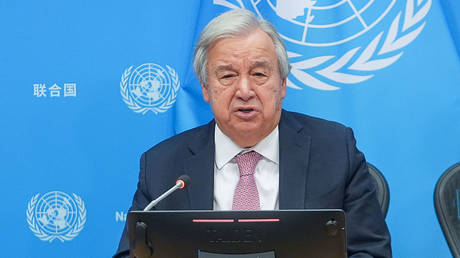
UN Secretary-General Antonio Guterres warned last week that the global body is at risk of “imminent financial collapse” as a result of unpaid dues and funding shortfalls by some member states.
Unless the collection of contributions “drastically” improves, the organization will not be able to fully implement its 2026 budget, potentially running out of funds for key programs by July, Guterres said.
Trump told Politico on Sunday that he was unaware of any US debts to the UN, but claimed he could “solve the problem very easily” and make sure that other nations also paid up.
“If they came to Trump and told him, I’d get everybody to pay up, just like I got NATO to pay up. All I have to do is call these countries… they would send checks within minutes,” the US president said.
Citing unnamed UN officials, ABC News reported on Friday that Washington currently owes $2.2 billion to the organization’s regular budget and another $1.8 billion to its separate purse for peacekeeping operations. Russia paid its UN contribution for 2026 in full in December.
The financial situation is so bad that the UN could end up abandoning its headquarters in New York City, the New York Times reported, citing high-ranking sources within the body.
Trump ruled out such a development, insisting that “the UN is not leaving New York, and it’s not leaving the US, because the UN has tremendous potential.”
“When I’m no longer around to settle wars, the UN can,” he added.
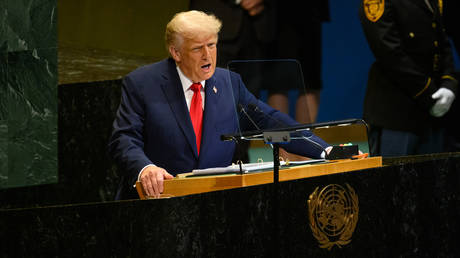
The statement goes against the US president’s earlier criticism of the organization, which he accused of being ineffective. “What is the purpose of the United Nations?” Trump said from the UN tribune last September. “All they seem to do is write a really strongly worded letter and then never follow that letter up. It’s empty words and empty words don’t solve war,” he argued.
Since Trump returned to office a year ago, the US has withdrawn from multiple UN programs and organizations, including the World Health Organization and the cultural agency, UNESCO.
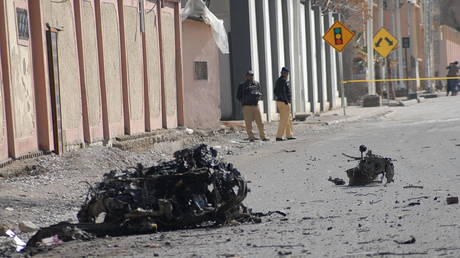
Security forces launched an operation following a coordinated militant attack in Balochistan on Saturday that killed nearly 50 people
At least 177 insurgents have been killed in a security crackdown in Pakistan following coordinated attacks that left more than 50 people dead, the country’s Interior Ministry has said.
The operation was announced on Sunday after attacks by insurgent group the Balochistan Liberation Army (BLA) at multiple locations across the southwestern province of Balochistan, which borders Iran and Afghanistan.
The assaults began early on Saturday and killed at least 31 civilians, including five women, as well as 17 members of the security forces, Al Jazeera reported.
The number of militants killed over the past 48 hours in the response by the Pakistani authorities was the highest in decades, according to reports.
Deadly Clashes In Balochistan Leave 193 Dead In Worst Violence In Decades
At least 145 militants and 48 others, including 17 law enforcement personnel, were killed in a series of clashes across Balochistan over the past 40 hours, Pakistan officials claimed on Sunday.… pic.twitter.com/KXTHPY8ewh
“Security forces, police, and intelligence agencies thwarted the nefarious intentions of terrorists by taking timely and effective action,” Interior Minister Mohsin Naqvi said in a statement.
Pakistan’s government and military have alleged that the BLA receives backing from India – an accusation New Delhi has denied.
“We categorically reject the baseless allegations made by Pakistan, which are nothing but its usual tactics to deflect attention from its own internal failings,” Indian Foreign Ministry spokesperson Randhir Jaiswal said.
Our response to media queries regarding comments made by Pakistan ⬇️
“Instead of parroting frivolous claims each time there is a violent incident, it would do better to focus on addressing long-standing demands of its people in the region. Its record of suppression, brutality and violation of human rights is well known,” he posted on X.
The BLA was banned in Pakistan in 2009 under the country’s anti-terrorism laws. The insurgent group said the attacks were part of a coordinated operation dubbed Herof (‘Black Storm’), targeting security forces across the province, according to Reuters.
Balochistan is Pakistan’s largest but least populated province and home to key mining projects and the ethnic Baloch minority. The BLA has long sought independence for the province from the central government in Islamabad.
Insurgents frequently target police and military forces in the region, as well as foreigners, especially Chinese nationals who are building infrastructure projects in Pakistan as part of Beijing’s Belt and Road Initiative. Islamist militants are also known to operate in the area.
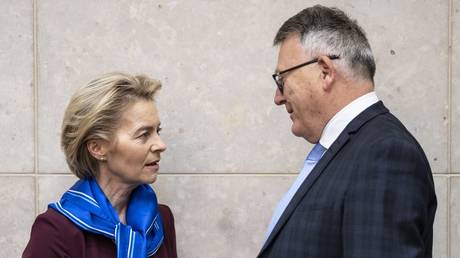
The bloc’s heavy-handed president has no strategic vision and fails to stand up to the US, Nicolas Schmit has said
European Commission President Ursula von der Leyen runs a system that silences those working under her, a former commissioner who served during her first term has claimed.
Nicolas Schmit, who represented Luxembourg as the commissioner for jobs and social rights from 2019 to 2024, has joined several former members of the European Commission to criticize von der Leyen’s leadership.
“I have the impression that commissioners are now largely silenced,” Schmit told Politico in an interview published Monday. “The system, how the College is organized – very centralized, call it presidential or whatever system – is not good for the College, it’s not good for the Commission, and it is not good for Europe in general.”
He said the EU under von der Leyen has failed to have “a real strategic debate on Europe in the world, which was already a different world from the one we knew before” and lacks a “real strategy” to navigate it.
Schmit also accused the EU leadership of being reluctant to confront US President Donald Trump, particularly after his administration sanctioned former Commissioner Thierry Breton for allegedly championing the censorship of US social media in Europe. He stressed that the EU’s Digital Services Act (DSA) was approved by the entire commission, not Breton alone.
After leaving the commission in 2024, Breton said some Brussels media have portrayed von der Leyen as “the Empress of Europe” due to her centralized power, noting that the bloc was not built for such a type of governance.
Schmit was the Party of European Socialists’ lead candidate in the 2024 EU election. Luxembourg declined to renominate him for commissioner, choosing Christophe Hansen from von der Leyen’s European People’s Party instead.
During her second term, von der Leyen defeated four attempts by smaller-party MEPs to oust her, accusing critics of being Russian agents. She is a vocal advocate for continued confrontation with Moscow.