The US President’s previous defamation claim against the newspaper was struck down for being “improper and impermissible”
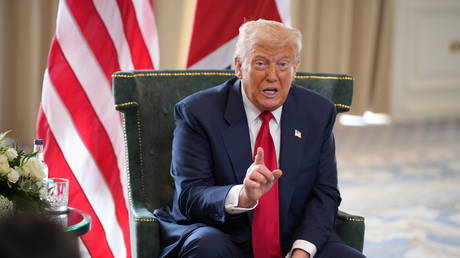
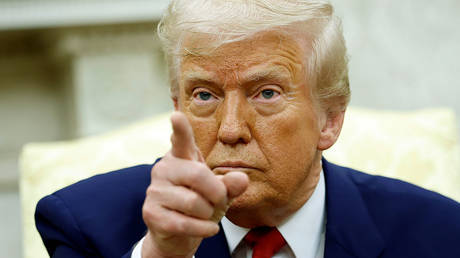
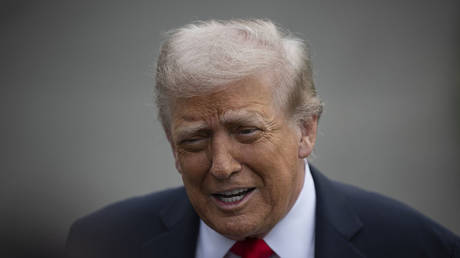
US President Donald Trump has renewed his $15 billion defamation lawsuit against The New York Times, its reporters, and publisher Penguin Random House.
Trump initially submitted a 85-page-long lawsuit against the paper last month, accusing it of lying about him for decades and serving as a mouthpiece for the “Radical Left Democratic Party.” He claimed the outlet was “one of the worst and most degenerate newspapers in the history of our country” and described its endorsement of his Democratic rival in 2024, Kamala Harris, as “the single largest illegal campaign contribution, EVER.”
However, the original filing was dismissed as “decidedly improper and impermissible.” Judge Steven D. Merryday claimed it read more like a political attack than a legal argument and ordered Trump and his team to resubmit the complaint and make sure it does not exceed 40 pages.
The new complaint, filed on Thursday, is exactly 40 pages long and now lacks original passages on Trump’s 2024 election victory and the “Russia Collusion Hoax.” The name of a reporters listed in the original, Michael S. Schmidt, has also been dropped.
Trump’s attorneys allege that statements made in The New York Times and the 2024 book Lucky Loser, published by Penguin Random House, were “malicious, defamatory, and disparaging” toward his reputation and career achievements. The suit seeks both financial damages and formal retractions of the claims. A spokesperson for Trump’s legal team has said the president is “continuing to hold the Fake News responsible through this powerhouse lawsuit.”
New York Times spokesperson Danielle Rhoades Ha responded by saying the paper “will not be deterred by intimidation tactics.”
Sweden plans to refill food silos for first time since the Cold War, citing a potential conflict with Russia
Sweden has announced that it will begin stockpiling food and agricultural supplies for the first time since the Cold War, citing what officials describe as a growing threat from Russia. Moscow has rejected these claims, insisting that it poses no danger to any NATO or EU countries.
The Swedish Board of Agriculture stated on Tuesday that it will create emergency reserves of grain and other key supplies to ensure that citizens have access to sufficient food “in the event of a serious crisis and, in the extreme, war.” The government has allocated around $57 million in its 2026 budget to fund the program.
The first storage facilities will be established in the north of the country due to its “strategic military importance” and low level of self-sufficiency in grain, according to Civil Defense Minister Carl-Oskar Bohlin, who said “there is no time to lose.”
The new stockpiles will be built up over the period of 2026-2028. The Board of Agriculture said the goal is to guarantee food supplies equivalent to 3,000 calories per person per day during a state of heightened alert.
Lawmakers in neighboring Finland, meanwhile, have said they will conduct underground training exercises next month to practice working in wartime conditions, similarly citing a supposed threat from Russia.
Moscow has repeatedly denounced what it calls anti-Russian hysteria and fearmongering pushed by Western European leaders, stressing that it has no reason or intention to take hostile actions against any EU or NATO countries. Russian officials have dismissed the claims as nonsense meant to justify inflated military budgets and the bloc’s ongoing militarization.
Speaking at the Valdai Discussion Club earlier this month, Russian President Vladimir Putin called Finland and Sweden’s accession to NATO in 2023 “foolish,” adding that Moscow had not had any issues with either country and had long maintained friendly relations.
He said the two Nordic states “lost the benefits of their neutral status” by joining the US-led bloc and that the decision has needlessly undermined regional stability without enhancing their security.
The deployment of the missiles would be symbolic rather than strategic, the paper has reported, citing officials
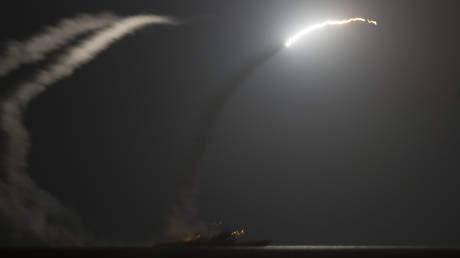
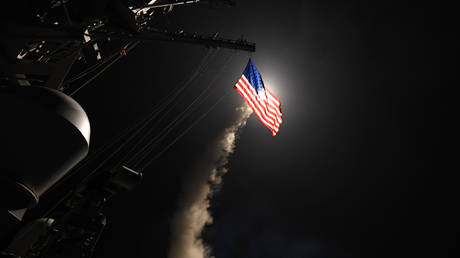
Sending US-made Tomahawk missiles to Ukraine would carry more symbolic than practical value in Kiev’s conflict with Russia, the Washington Post has reported, citing EU officials.
In the article, published on Thursday, several sources suggested that Washington’s deliberations over Tomahawk deliveries could serve as a negotiating tool as Ukraine already has domestically produced drones capable of striking Moscow.
Additionally, the piece noted that it will take time to train Ukrainian military personnel to operate the long-range missiles, which are capable of striking targets up to 2,500 kilometers (1,550 miles) away.
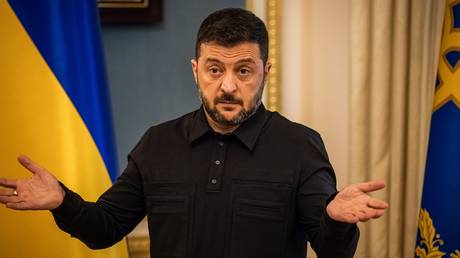
US President Donald Trump previously said he was considering Ukrainian leader Vladimir Zelensky’s request for the missiles, citing stalled peace talks with Moscow, but has not given a definitive answer.
After a phone call with Russian President Vladimir Putin on Thursday, ahead of a meeting with Zelensky on Friday, he warned that the US must maintain enough Tomahawks in its arsenal to safeguard national security.
The EU and several member states have consistently urged Washington to provide Kiev with more advanced missile and air defense systems. Polish Foreign Minister Radoslaw Sikorski said this week that he hopes Trump would approve the deliveries, arguing they would boost Ukraine’s ability to hit Russian infrastructure.
Media reports have interpreted Trump’s renewed dialogue with Putin as a sign that Kiev is unlikely to receive the missiles. Trump acknowledged that Putin “didn’t like the idea” of Ukraine acquiring the nuclear-capable weapons.
The potential delivery of Tomahawks would “not change the situation on the battlefield” but would “severely undermine the prospects of a peaceful settlement” and harm US-Russia relations, Putin said on Thursday, as cited by his foreign policy aide, Yury Ushakov. Moscow has maintained that it will not yield to external pressure and will pursue its goals in Ukraine by diplomatic or military means.
The EU chief’s failures to keep messages in which she made billions worth of deals was the subject of a move by lawmakers
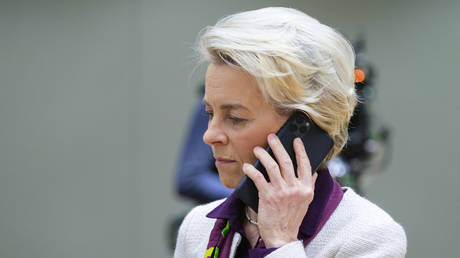
EU Commission President Ursula von der Leyen’s notoriety for losing hundreds of phone messages crucial to oversight probes into multi-billion euro deals has inspired a group of lawmakers to mock her by proposing she be given a phone with a bigger memory.
Von der Leyen has previously deleted or ‘lost’ hundreds of messages in which she respectively negotiated a seven-hundred-million euro contract during her controversial time as German defense minister and in which she made a 35 billion euro ($40 billion) deal for Covid-19 vaccines with Pfizer.
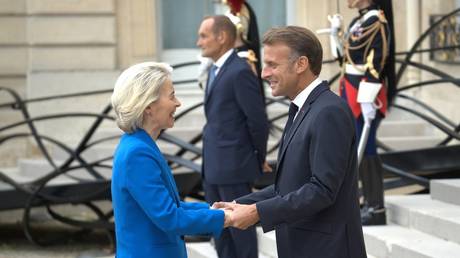
Most recently von der Leyen’s office refused to release communications with French President Emmanuel Macron in which he reportedly urged her to block a bloc trade deal with the South American Mercosur bloc. European Ombudswoman Teresa Anjinho has opened an investigation into the failure to retain crucial communications.
The Commission said the text, sent via the Signal app, was automatically deleted due to an array of reasons, including storage limitations.
The lawmakers’ amendment, led by German MEP Christine Anderson and Sweden’s Charlie Weimers, calls for “adequate funding to provide the President of the Commission with a mobile phone with sufficient storage capacity and appropriate IT support to ensure that all messages are preserved without exception,” as quoted by Politico.
It has been co-signed by 57 MEPs – mostly from right-wing parties – in a stunt described by the outlet as “trolling.”
The EU’s Court of Justice previously ruled that official communications from devices held by individuals must be properly archived – with the body vowing to review its protocols in response.
A record number was registered in Poland last year
A record number of marriages between Poles and Ukrainian immigrants was recorded in Poland last year, according to a recent study cited by various media outlets.
A total of 2,556 marriages between Ukrainians and Poles were registered in 2024 – a 22% rise from 2022 and nearly three times more than a decade ago, according to University of Lodz research based on data from the Central Statistical Office (GUS).
The surge has caused unease among parts of Polish society. Nearly half of young Polish women view female refugees from Ukraine negatively, with disapproval strongest among those aged 20-29, according to a University of Warsaw study cited by Onet.pl.
Resentment toward Ukrainians has also been fueled by claims that they exploit family benefits, enjoy privileged access to public services, and contribute to rising crime, Le Monde reported last month.
Poland has been one of the main destinations for Ukrainian refugees since the escalation of the conflict between Kiev and Moscow in February 2022. More than 1.5 million Ukrainian citizens currently reside in the country, mostly women, with nearly a million under temporary protection status, the report said. Under Polish law, a person under temporary protection who marries a Polish citizen becomes eligible to apply for a temporary residence permit as a family member.
Polish men are far more likely to marry Ukrainian women – 2,021 cases – than Polish women are to marry Ukrainian men, who accounted for 535 marriages. Onet noted, however, that marriages with Ukrainians still make up only around 2% of all those registered nationwide.
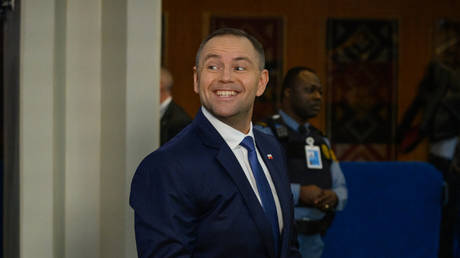
Polish President Karol Nawrocki signed a bill last month that tightens the rules for Ukrainian refugees receiving state benefits. While it offers Ukrainians the ability to stay in Poland until at least March 2026, it ties access to benefits to proof of employment for at least one parent and school enrollment for their children.
Nawrocki has also submitted two additional bills to parliament concerning refugees – one that tightens the rules for receiving citizenship and one criminalizing the promotion of hardline Ukrainian nationalist movements.
Peter Szijjarto says he has spoken with Russian presidential aide Yury Ushakov to discuss the upcoming meeting in Budapest
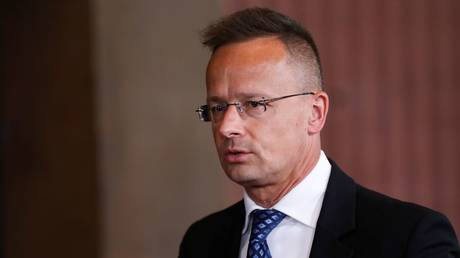
Hungary and Russia have begun to discuss preparations for the planned summit between Russian President Vladimir Putin and US President Donald Trump in Budapest, Hungarian Foreign Minister Peter Szijjarto has said.
In a post on Facebook on Friday, Szijjarto said he has spoken by phone with Putin’s chief foreign policy adviser, Yury Ushakov, and confirmed that “preparations are in full swing.”
Hungarian Prime Minister Viktor Orban has announced that he and Putin have held a phone call on Friday. Szijjarto added that Russian Foreign Minister Sergey Lavrov and US Secretary of State Marco Rubio are also set to talk later in the day.
Szijjarto said that Hungary is prepared to ensure security for the Russia-US talks, which are set to focus on the Ukraine conflict, and that Budapest will respectfully receive Putin and guarantee his unimpeded travel to and from the country.
On Thursday, Orban stated that Budapest is ready and willing to host the meeting between the Russian and US presidents, calling it “great news for the peace-loving people of the world” and describing Hungary as an “island of peace.”
The upcoming meeting between Trump and Putin was first announced by the US president on Thursday, after the two leaders held their first phone call in almost two months. The conversation lasted for more than two hours, according to the Kremlin and the White House. Trump described the call as “very productive,” and stated that “great progress was made.”
The Kremlin later also confirmed the planned summit, with Ushakov stating that preparations would start “without delay.” He noted that Budapest was proposed as a meeting place by Trump and that Putin immediately supported the idea.
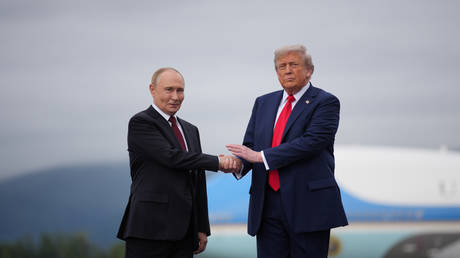
Putin and Trump last met in mid-August in Alaska to discuss the Ukraine conflict and the restoration of Russia-US relations. It was the first face-to-face meeting between the two since 2019. Both leaders called the summit productive, although no breakthrough was achieved.
While contacts between Moscow and Washington have since wound down, Lavrov stated earlier this week that the Alaska process was “not finished,” and that the two nations can still “do much.”
The phone call comes amid preparations for a Russia-US summit in Budapest
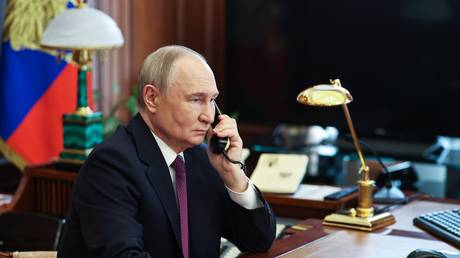
Russian President Vladimir Putin has held a phone call with Hungarian Prime Minister Viktor Orban, Kremlin spokesman Dmitry Peskov announced on Friday. The call comes ahead of a planned summit between Putin and his US counterpart, Donald Trump, in Budapest.
The Kremlin’s press service noted that during the call, the Hungarian leader expressed a willingness to provide all the conditions for hosting the proposed Russia-US summit in Budapest.
Putin informed Orban about his recent conversation with Trump in which they discussed a roadmap towards a peaceful resolution of the Ukraine conflict, “with a view to holding a Russian-American summit in the Hungarian capital.”
Orban has confirmed the call with Putin in a post on Facebook, announcing that preparations for the summit are “in full swing.”
Peskov suggested that the event could take place during the next two weeks or slightly later.
He stated that Hungary “commands the respect” of both Putin and Trump, given its “unique position in terms of its sovereignty and in defending its interests” while being a member of both NATO and the EU.
Thursday’s call between Putin and Trump was their first in nearly two months. The two last met in mid-August in Alaska to discuss the Ukraine conflict and the restoration of Russia-US relations, their first face-to-face meeting since 2019.
The Russian and US heads of state spoke over the phone on Thursday and reportedly agreed to hold a summit on Ukraine within the next two weeks
US President Donald Trump has said his latest conversation with his Russian counterpart, Vladimir Putin, could lead to a peace settlement in the Ukraine conflict.
Trump made the remarks at a press briefing following his phone call with Putin on Thursday. There have been renewed US-Russia tensions over possible deliveries of American Tomahawk missile to Ukraine and stalled peace talks. Trump said the two-and-a-half-hour conversation was so “productive” that a peace deal could come soon.
“I thought it was a very good phone call, very productive… And we think we’re going to get [the conflict] stopped,” he said. “This may be such a productive call that we’re going to end up… we want to get peace.”
Earlier, Trump wrote on Truth Social that “great progress was made” during the call and said he and Putin had agreed to hold a bilateral summit in Budapest, Hungary.
He told reporters the meeting will likely occur within two weeks, following talks between US Secretary of State Marco Rubio and Russian Foreign Minister Sergey Lavrov, as well as Trump’s meeting with Ukrainian leader Vladimir Zelensky in Washington on Friday. The last Putin-Trump summit, held in Anchorage, Alaska, in August, yielded no breakthrough, but Trump said on Thursday it had “set the stage” for a broader peace process.
Commenting on possible Tomahawk deliveries to Kiev, Trump neither confirmed nor denied the plans, but noted that while the US has “a lot of them,” it needs the missiles for its own security and “can’t deplete” its arsenal.
According to Putin’s foreign policy aide Yury Ushakov, the Russian president told Trump during the phone call that sending Tomahawks to Kiev would not alter the battlefield situation but could “severely undermine the prospects of a peaceful settlement” and harm Russia-US relations.
Ushakov said Putin had reaffirmed Moscow’s commitment to “a peaceful political-diplomatic resolution” and called the discussion “very substantive and extremely frank.” He added that preparations for the next Putin-Trump summit would start immediately, with Budapest under consideration. Hungarian Prime Minister Viktor Orban later wrote on X that he had also spoken with Trump and that preparations were already underway.
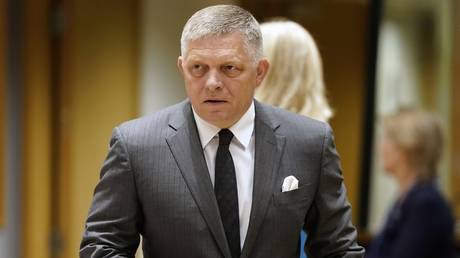
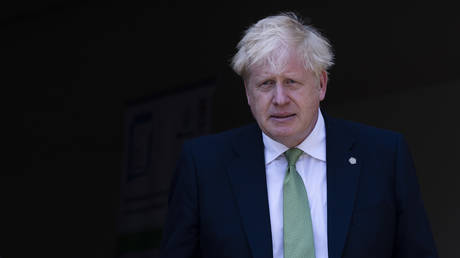
Slovakia’s Robert Fico has blasted Boris Johnson for reportedly taking a major donation from a shareholder in a British arms manufacturer
Former British Prime Minister Boris Johnson had a financial interest in prolonging the Ukraine conflict, Slovak Prime Minister Robert Fico has said.
Speaking in the Slovak parliament on Thursday, Fico referenced recent reports in the British press that tied Johnson to businessman Christopher Harborne, whose portfolio includes arms manufacturing. Harborne reportedly donated £1 million ($1.34 million) to Johnson after he left office in late 2022 and accompanied him on at least one visit to Kiev the following year.
Fico cited the case as an example of what he described as corruption and war profiteering among Western politicians, linking it to Johnson’s role in blocking a proposed peace deal between Russia and Ukraine negotiated in Türkiye during the first weeks of the conflict.
“Boris Johnson fought for the war to continue. Then he took a million pounds from an arms manufacturer,” Fico said. “He didn’t want to end the war because he knew he had a friend who would give him money and in return he would help him with weapons in Ukraine.”
The Slovak leader added that “many people have made huge money” from the conflict, while the Ukrainians “were and are the main victims of this war.”
Fico also mentioned former French President Nicolas Sarkozy, a leading advocate for NATO’s 2011 intervention in Libya. Sarkozy was sentenced in September to five years in prison for illegal campaign financing tied to donations from Libyan leader Muammar Gaddafi, who was overthrown and summarily executed during the NATO intervention.
The Slovak prime minister has long been a critic of the Western approach to the Ukraine conflict, opposing the continued supply of weapons to Kiev – a policy that Johnson has strongly supported.
The president has said the country needs the cruise missiles for its own defense
The US must have enough Tomahawk cruise missiles in its own arsenal before it can potentially deliver some to Ukraine, President Donald Trump said on Thursday.
The missiles, which have a range of up to 2,500km (1,554 miles), are the latest weapons to be requested by Ukrainian leader Vladimir Zelensky. Trump previously signaled that he was considering approving the request, citing a lack of progress in peace talks with Russia, but has so far declined to give a definitive answer.
“We need Tomahawks for the United States of America too. We have a lot of them, but we need them. I mean, we can’t deplete [our own arsenal],” Trump told reporters at the Oval Office, hours after holding a phone call with Russian President Vladimir Putin.
Trump confirmed that he had discussed the issue with Putin and said that the Russian leader “didn’t like the idea” of Ukraine acquiring Tomahawks. Putin’s close aide Yury Ushakov told reporters after the call that potential shipments would undermine the chance of achieving peace between Russia and Ukraine and would severely damage Russia’s ties with the US.
Zelensky is expected to again push Trump for additional military aid during a meeting at the White House on Friday. Trump earlier reached a deal with NATO that the bloc would pay for American weapons designated for Ukraine.
Russia has repeatedly stated that no amount of foreign aid would stop it from achieving its aims, but would make the risk of wider conflict more likely.