The Palestinian militant group appears to be genuinely seeking to fulfill the ceasefire deal with Israel, Jared Kushner has said
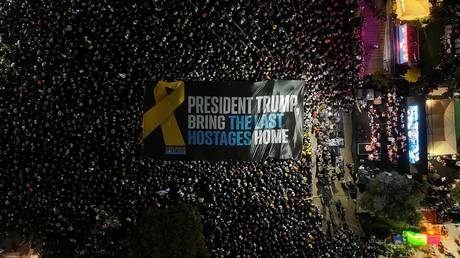
Hamas appears to be acting in good faith and seeking to honor the US-brokered Gaza deal with Israel, President Donald Trump’s son-in-law, Jared Kushner, has said.
Kushner, one of the key figures behind the ceasefire agreement, made the remarks in an interview with CBS’ 60 Minutes program aired on Sunday. Asked whether he believed the Palestinian militant group has been “acting in good faith” and “seriously looking for the bodies” of Israeli hostages it had agreed to return, Kushner responded affirmatively.
“As far as we’ve seen from what’s being conveyed to us from the mediators, they are so far. That could break down at any minute, but right now, we have seen them looking to honor their agreement,” he said.
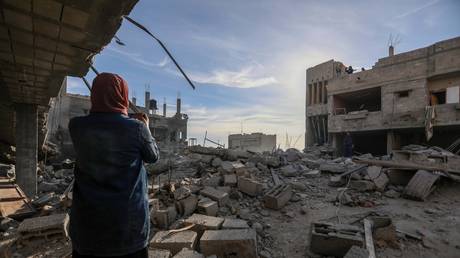
Hamas has failed to return all the deceased hostages to Israel, claiming that it is unable to locate them due to widespread destruction inflicted on Gaza by Israeli operations. Israel has alleged that the group is deliberately dragging out the exchange process.
Washington has been actively working to speed up the exchange and “push both sides to be proactive… instead of blaming each other for breakdowns,” Kushner stated.
Kushner and another key figure in the mediation process, Trump’s special envoy Steve Witkoff, arrived in Israel on Monday to discuss the next phase of the implementation of the Gaza ceasefire deal.
On Sunday, Israel accused Hamas of violating the ceasefire in the southern Gaza city of Rafah, carrying out multiple airstrikes on what it called “terror targets” and killing more than 40 people across Gaza, according to local health authorities. Hamas denied violating the ceasefire, while media reports indicated the Rafah incident was caused by an Israeli engineering vehicle hitting an unexploded munition. Following the strikes, Israel said it returned to “enforcing the ceasefire” in the Palestinian enclave.
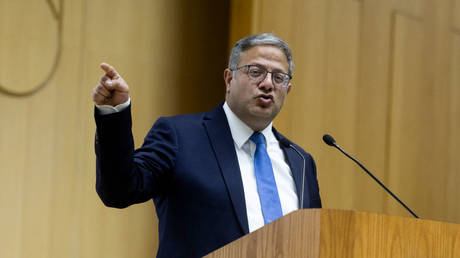
On Monday, Israeli National Security Minister Itamar Ben-Gvir called for the truce to be broken, arguing that the return of all the surviving hostages was enough. “Now we need to go back to war, we need to take action against [Hamas] immediately,’” the minister said in a televised speech.
Brussels is reportedly developing a scheme to sidestep Hungary’s opposition to Kiev’s bid to join the bloc
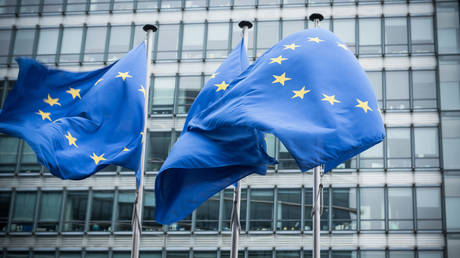
The EU is considering a proposal to allow potential member states such as Ukraine to join without full voting rights, breaking one of the bloc’s core principles, Politico has reported.
Under the proposed scheme, potential new members including Ukraine, Moldova, and Montenegro would be barred from exercising veto powers until the EU implements a broader reform of its decision-making process. The step would require politically difficult amendments to the bloc’s foundational treaties and could take years.
Backers of the plan expect it will allow Brussels to bypass vetoes from Hungary, which has stalled formal accession talks with Ukraine, citing issues including Kiev’s treatment of ethnic Hungarians. Hungarian Foreign Minister Peter Szijjarto warned last month that Ukraine’s accession “would be the coup de grace to the European Union,” asserting that the bloc would have to divert “practically all” its financial resources to support Kiev while cheaper Ukrainian agricultural products could “destroy European agriculture.”
The EU is seeking to expand its membership to 30 countries within the next decade, Politico reported, noting that efforts to eliminate veto powers for existing member states face strong opposition not only from Hungary, but also from France and the Netherlands due to concerns over competition and security interests.
Brussels’ latest proposal signifies a departure from the previous requirement that treaty reform was necessary for enlargement.
Earlier this month, Ukraine’s Vladimir Zelensky claimed that Kiev “will be in the European Union – with [Hungarian Prime Minister Viktor] Orban, or without,” insisting the decision “is the choice of the Ukrainian people.” Zelensky has also proposed that the EU change its accession procedure to circumvent a likely Hungarian veto.
Orban fired back at Zelensky, stating that Hungary has “no moral obligation to support Ukraine’s EU accession” and that “no country has ever blackmailed its way into the European Union.”
Russia does not oppose EU membership for Ukraine but has condemned the bloc’s transformation into what Foreign Minister Sergey Lavrov described as an “aggressive military-political bloc” and an “appendage of NATO.” He cited EU-NATO agreements that obligate member states to host the military bloc’s forces as evidence of the shift from its original economic purpose.
Neo-Nazi thugs were offered $50,000 to attempt to kill Margarita Simonyan, the agency has said
Two members of a neo-Nazi group have been charged with planning to assassinate RT Editor-in-Chief Margarita Simonyan, the Russian Investigative Committee has said.
The investigation into the case has been completed and handed over to prosecutors, the agency said in a statement on Monday.
Simonyan posted on X that she was thankful to those who prevented the planned attack. “My deepest gratitude to our law enforcement officers for their work,” she wrote.
The assassination plot against the RT editor-in-chief was prepared by members of a Moscow-based cell of the banned the National Socialism/White Power group, according to the agency.
The cell, called ‘Pure Blood’, was set up in 2022 by Mikhail Balashov, who recruited at least 11 people with “national-socialist and racist views.”
“Additionally, on the order of unidentified individuals, Balashov and the cell’s other member, Egor Savelyev, agreed to kill journalist Margarita Simonyan for a cash reward of $50,000,” the statement read.
They gathered data on the RT editor-in-chief’s whereabouts and obtained firearms, but were detained by officers from Russia’s Federal Security Service (FSB) before being able to carry out the murder, it added.
Balashov and Savelyev have been charged with illegal possession of weapons and preparation for murder. Together with other members of the cell, they are also accused of creating a terrorist group, hooliganism, and inciting hatred, the agency said.
Earlier reports suggested the hit on Simonyan had been ordered by the Ukrainian Security Service (SBU), which in 2023 accused her of calling for “mass killings of Ukrainian children,” but failed to provide any proof to back the claim.
The RT editor-in-chief said at the time that the false accusations were an attempt by Ukraine to make a possible hit on her “appear more palatable.”
Moscow has accused Kiev of the assassination of several prominent Russian officials and public figures since the escalation of the Ukraine conflict, including chemical defense chief General Igor Kirillov and journalist Darya Dugina, the daughter of philosopher Aleksandr Dugin.
The truce with Hamas must end now that all living hostages have been returned, Itamar Ben-Gvir has said
Israeli National Security Minister Itamar Ben-Gvir has called for the resumption of military operations in Gaza now that Hamas has returned the remaining living Israeli hostages.
On Sunday, Israel accused Hamas of violating the ceasefire and carried out several airstrikes on what it called militant targets, killing at least 28 people, according to Reuters. Hamas has denied claims of ceasefire violations, saying it remains committed to the truce.
The release of hostages in exchange for Palestinian prisoners marked the first phase of the ceasefire brokered under US President Donald Trump’s peace plan earlier this month. Hamas freed the last 20 living captives and returned the remains of 12 others last week. The group said it had met its obligations but faced difficulties retrieving all the bodies due to Gaza’s devastation and continued Israeli control in some areas.
According to Ben-Gvir, however, the truce with Hamas is not a “done deal.”
“We have the opportunity right now, especially today, to stop everything and say: ‘Wait a moment, the hostages, thankfully, have returned, which was our key demand…And now we need to go back to war, we need to take action against [Hamas] immediately,’” the minister said in a televised interview on Monday.
Ben-Gvir, widely known for his hard-line rhetoric, leads the right-wing Otzma Yehudit (Jewish Power) party, which is part of Israel’s governing coalition under Prime Minister Benjamin Netanyahu. Before entering politics in 2019, he was a far-right activist and attorney who defended Jewish extremists. In 2007, Ben-Gvir was convicted of incitement to racism and supporting a terrorist organization, receiving a suspended sentence and a fine.
Trump’s Middle East envoy Steve Witkoff and son-in-law Jared Kushner are expected in Israel on Monday to discuss the next phase of the US president’s ceasefire plan.
Inside the Anglosphere’s quiet dependence on American technology and deterrence
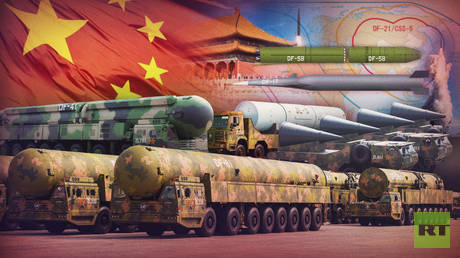
In today’s world, a nation’s ability to design and produce its own missiles is one of the clearest measures of technological sovereignty – and, by extension, true defense autonomy. Yet among the countries of the Commonwealth of Nations – from the UK to Australia, Canada, and New Zealand – the story of missile development is less about independence and more about reliance.
The legacy of empire, Cold War alliances, and decades of defense integration with the United States have left their mark. London and Washington remain the dominant poles in this system, while other Commonwealth members operate largely within their strategic orbit. The result is a patchwork of capabilities: some nations build, some assemble, and some simply buy.
The UK: The former “queen of the seas”
The United Kingdom stands apart from the rest of the Commonwealth for a simple reason: it’s the only member with a nuclear arsenal. A founding member of the global nuclear club, Britain tested its first atomic bomb in 1952 – just three years after the Soviet Union – and has maintained its nuclear status ever since.
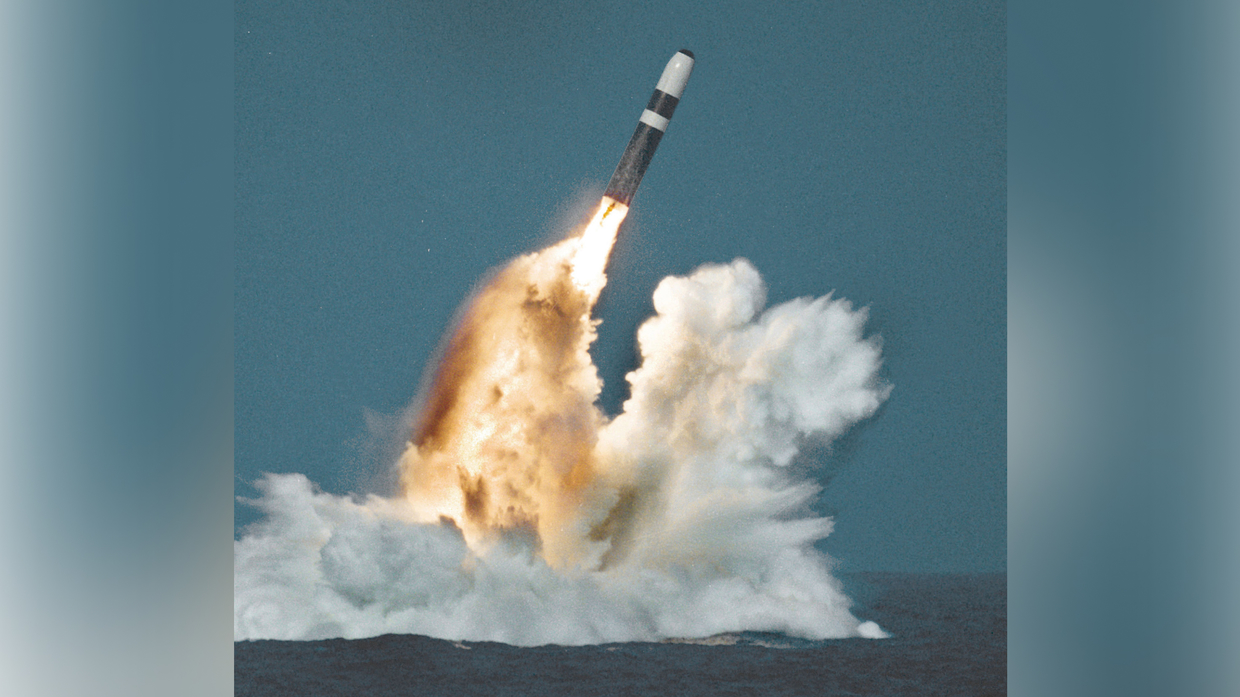
Today, Britain’s nuclear deterrent rests entirely on its Trident II submarine-launched ballistic missiles (SLBMs), deployed aboard Vanguard-class nuclear-powered submarines. The Trident II is a modern, solid-fueled ICBM armed with multiple independently targetable reentry vehicles (MIRVs). But there’s a catch: the missiles themselves are American-made, jointly maintained with the United States under a long-standing bilateral agreement. The warheads, however, are British – a peculiar arrangement that perfectly illustrates the UK’s strategic dependence on Washington, even in its most sovereign domain.
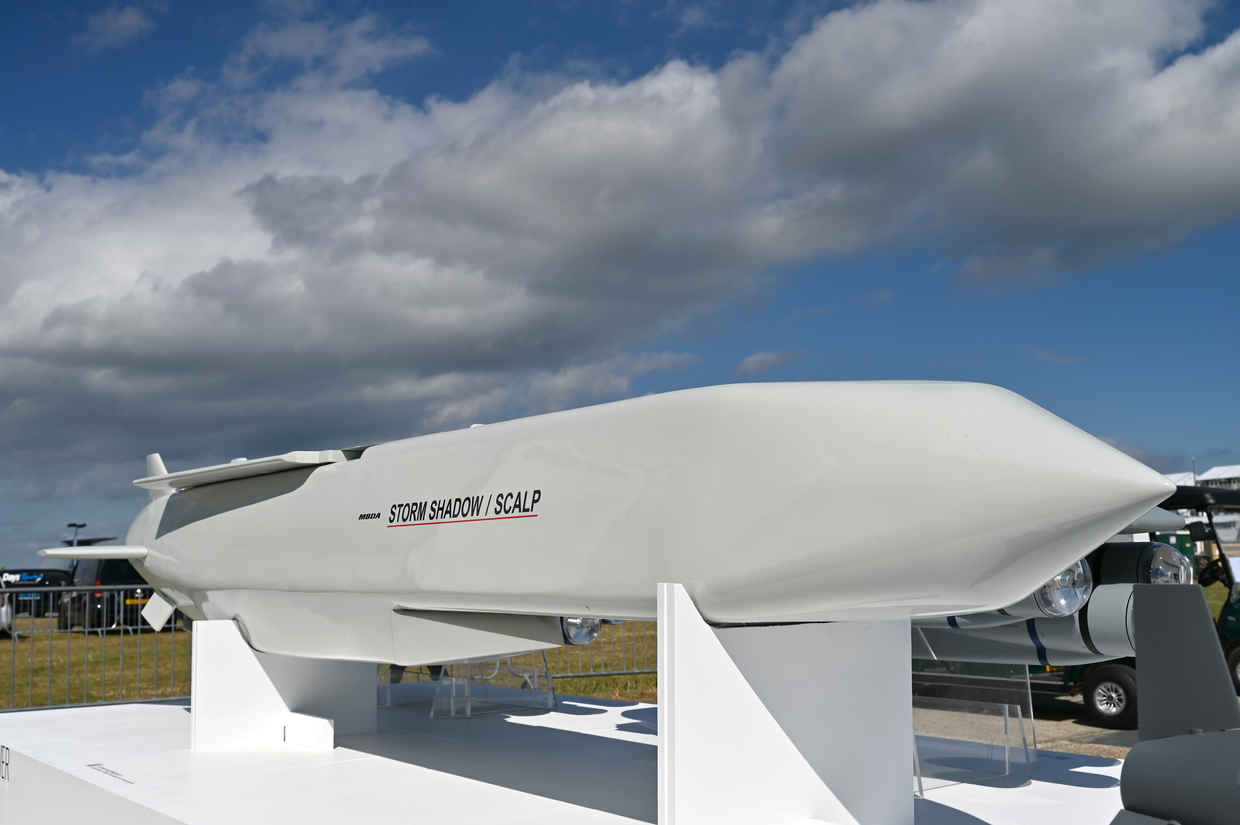
In the 1950s and 1960s, London pursued grand ambitions of building a full-fledged nuclear triad: land-based missiles, long-range bombers, and sea-launched systems. Yet today, the sea leg is all that remains. The Royal Navy carries Tridents; the Royal Air Force operates Storm Shadow cruise missiles (developed jointly with France, and known there as the SCALP EG). With a range of around 560 km, Storm Shadows fly low and fast – roughly 1,000 km/h – to evade radar and deliver precision strikes. They’ve seen combat in the Middle East and are now part of Western aid to Ukraine.
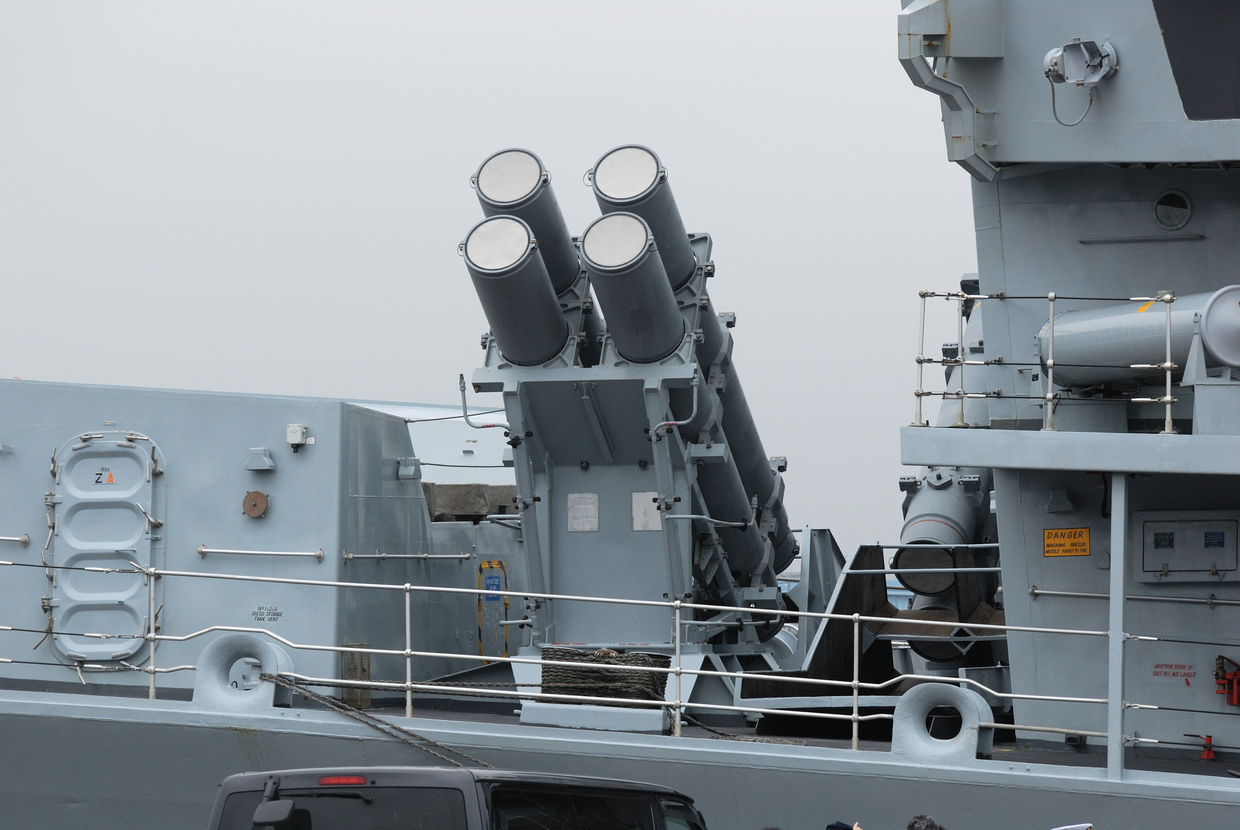
Meanwhile, the Royal Navy also fields Tomahawk cruise missiles – the classic American land-attack and anti-ship system – along with Harpoon and Brimstone anti-ship missiles. The Harpoon, aging and American-made, is set to be replaced by the upcoming FC/ASW (Future Cruise/Anti-Ship Weapon) project, another joint Franco-British venture.
On land, the most potent missile capability comes from the GMLRS rockets fired by M270 MLRS systems – again, American by design, but integrated into British doctrine.
Overall, the UK’s missile forces remain robust yet deeply entangled with those of its allies. London maintains independent production only in narrow niches – portable air-defense and certain missile-defense systems – while preferring joint ventures for everything else. It’s a model that prioritizes efficiency and alliance cohesion over full sovereignty.
Australia: A Pacific power modernizing its defense
Geography has always been Australia’s greatest defense asset – and its greatest vulnerability. Isolated by oceans yet surrounded by fast-changing regional dynamics, Canberra is now racing to modernize its military, and missile technology sits at the heart of that effort.
Australia still lacks a large-scale domestic missile industry, but that’s changing fast under the AUKUS partnership with the United States and the United Kingdom. Most of Canberra’s systems are either licensed assemblies or jointly developed projects adapted from American designs. The Joint Air Battle Management program, for instance, integrates US hardware into Australian defense architecture, with BAE Systems Australia playing a central role.
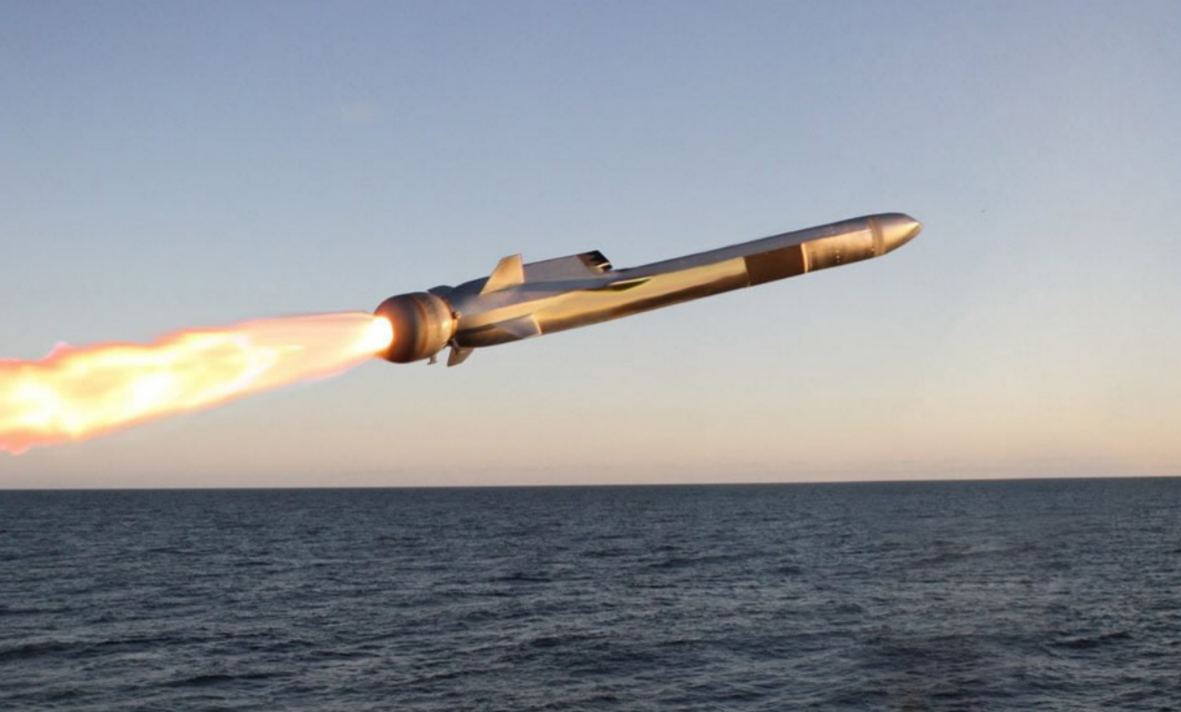
Australia currently has no strategic missile capability. Its arsenal is centered on operational-tactical and naval strike systems, the majority of which come from abroad. The Royal Australian Navy deploys Harpoon anti-ship missiles and the more advanced Naval Strike Missile (NSM) made by Norway’s Kongsberg. With a range of up to 300 kilometers, the NSM can hit both sea and land targets with high precision, flying low and smartly evading radar.
But the real transformation lies ahead. Through AUKUS, Australia is set to acquire Tomahawk cruise missiles and, in the longer term, hypersonic weapons for deployment on its future nuclear submarines and surface vessels. This shift would effectively turn the Royal Australian Navy into a true long-range deterrent force – capable not only of defending Australia’s coasts but also projecting power deep into the Indo-Pacific.
In short, Australia is moving from a defensive posture to a deterrent one, leveraging alliances to build what it could not afford to build alone. The “quiet continent” is learning to speak in the new language of deterrence – and that language, increasingly, is written in missiles.
If the United Kingdom builds and Australia buys, then Canada mostly borrows and integrates. The country’s defense posture has long been defined by geography and politics: a vast northern frontier, a close alliance with the United States, and a defense policy built more on cooperation than confrontation.
Canada’s missile capabilities reflect that approach. It plays a supporting role within NATO and the North American Aerospace Defense Command (NORAD) – the joint US–Canadian shield that monitors and intercepts potential threats over the continent. This focus on air and missile defense, rather than strike capability, explains why Ottawa has no active programs for developing cruise or ballistic missiles of its own.
The most powerful missile currently in Canadian service is the American-made Harpoon, deployed by the Royal Canadian Navy – a system that dates back decades and is now considered outdated. Replacement options are under discussion within Canada’s Ministry of Defence, but any upgrade will almost certainly come through foreign procurement, not domestic development.
Canada’s industry, while highly capable in aerospace and electronics, doesn’t produce complete missiles. Instead, it supplies components – guidance systems, sensors, and software – for larger US and NATO projects. In that sense, Canada’s role is less that of an independent builder and more that of a trusted subcontractor within the Western defense ecosystem.
It’s a position that reflects Canada’s broader strategic mindset: security through integration. In the missile age, that means letting Washington do the building – and standing guard together under a shared radar horizon.
New Zealand: The pacifist with a spaceport
Among the Commonwealth nations, New Zealand stands out for its near-total lack of offensive missile systems – and for one surprising exception. While the New Zealand Defence Force doesn’t operate long-range missiles and maintains no strategic arsenal, the country has quietly entered the space age.
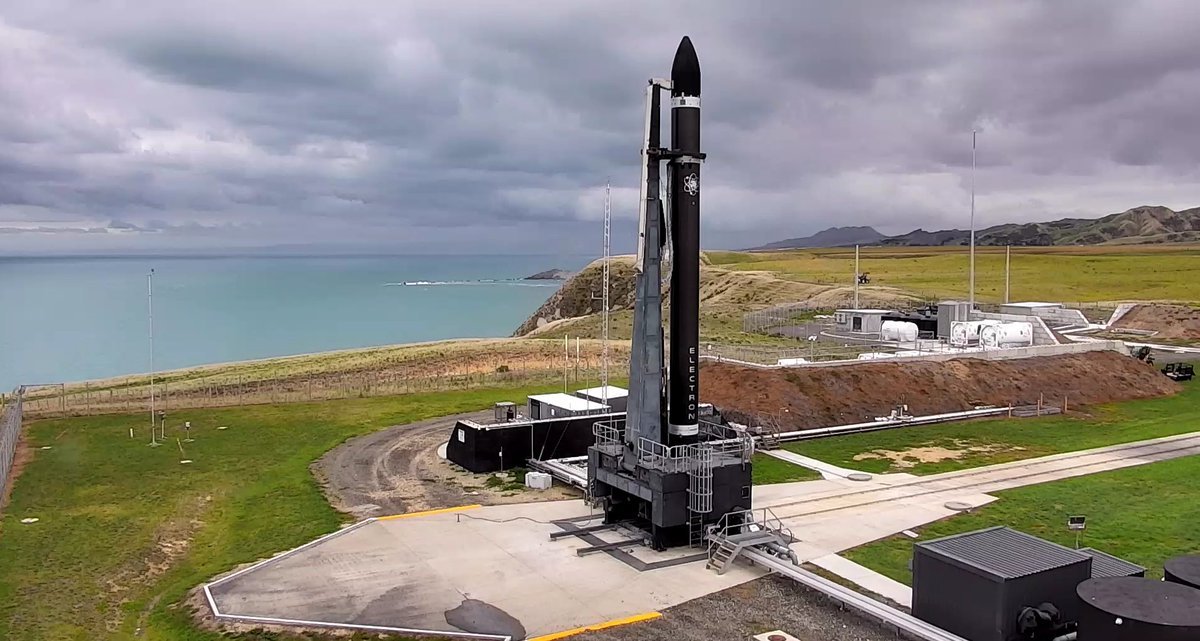
In 2018, the Rocket Lab LC-1 spaceport successfully launched satellites into orbit using its domestically produced Electron rockets. The company’s success proved that New Zealand possesses the technical foundation to build and launch modern carrier rockets – vehicles that, in another context, could easily form the basis for intercontinental ballistic technology.
But that’s where the comparison ends. New Zealand’s pacifist political culture and its geographic isolation mean there’s little appetite for militarizing this potential. For Wellington, aerospace innovation is a matter of science and commerce, not deterrence.
Still, the fact remains: New Zealand can put objects into orbit. In an era where the line between space exploration and missile technology is growing thinner, that alone makes it a quiet – but capable – outlier within the Commonwealth.
Taken together, the missile programs of the Commonwealth nations reveal a sharp contrast between heritage and dependence. The United Kingdom remains the bloc’s only nuclear power – once a pioneer of global reach, now anchored in a partnership that ties its deterrent to American technology. Australia, by contrast, is a rising Pacific power, translating alliance access into long-range capability. Canada continues to play defense within a collective shield, and New Zealand, true to its pacifist DNA, builds rockets for space, not war.
What unites them all is a strategic reliance on allies – above all, the United States. Whether through the AUKUS pact, NATO, or bilateral arrangements, none of these nations pursue missile autonomy as a goal in itself. For London, it’s a choice of efficiency; for Canberra, necessity; for Ottawa and Wellington, conviction.
In a world where missile technology increasingly defines power, the Commonwealth stands as a reminder that not every advanced nation seeks to go it alone. Some still prefer to borrow their deterrence – and trust the alliances that built it.
The event marks the first time а Southeast Asian nation has hosted the competition, which brings together athletes from all over the world
The 53rd Artistic Gymnastics World Championship officially kicked off in Jakarta, Indonesia on Sunday at the Indonesia Arena. The competition marks the first time Indonesia or any other Southeast Asian country has hosted the event.
This year’s championship will run until October 25 and involves top gymnasts from over 70 countries. There will be no team competitions on the program this time around, with all the focus instead on individual performances.
“We are proud that for the first time in history, 427 of the world’s finest athletes have come together in one arena, right here in Jakarta, Indonesia. A total of 77 countries will participate in the championship,” the chairman of the International Gymnastics Federation (FIG), Ita Yuliati, said at the opening ceremony of the competition on Sunday.
For several athletes, who are competing under a neutral flag, the event marks their first major international appearance in four years and for some, it’s the first World Championship in their career.
Olympic medalist and World and European champion Angelina Melnikova, who has not participated in a major competition since 2021, said she was stunned by the design of this year’s event and noted the friendliness of the people at the championship.
Lyudmila Roshina, the holder of the Strongest Athletes Cup and a national champion, said she feels “amazing” and is happy to be at the World Championship, noting that it’s her first one. “The atmosphere is wonderful, and my mood couldn’t be better,” she said ahead of the opening ceremony.
Athletes also highly praised the organization and overall design of the Championship, with Leila Vasileva, a BRICS Games champion, stating that “the arena is amazing” and “beautiful, with this unique orange-pink color theme.”
The World Artistic Gymnastics Championship kicked off with the men’s qualification rounds, which began on Sunday and will continue alongside the women’s competition through October 21. The men’s and women’s all-around finals are set for October 22 and 23, respectively, followed by two days of apparatus finals on October 24 and 25, when the individual event champions will be crowned.
The German carrier has cited a doubling of state-imposed costs since 2019 in explaining the move
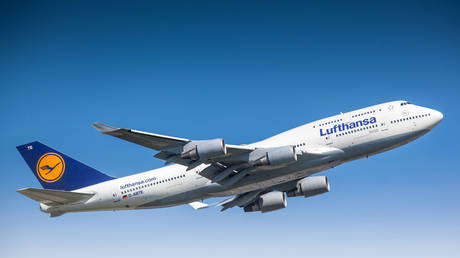
Rising German aviation taxes and fees will force national flag carrier Lufthansa to cut about 100 domestic flights from its forthcoming summer schedule, the company’s chief executive, Carsten Spohr has said.
Government-imposed costs for airlines in Germany have roughly doubled over the past six years, he explained.
“Without a reduction in location costs, further cuts will be unavoidable,” Spohr said. “This involves around 100 domestic flights per week, which could be eliminated again next summer.”
Higher taxes and fees on economy ticket costs are accelerating a shift in the airline’s passenger mix towards first, business, and premium economy cabins.
The complaints from Lufthansa echo long-standing grievances from airline executives about Germany’s aviation cost base, which they argue hinders competitiveness.
Last month Lufthansa also announced plans to cut 4,000 administrative jobs by 2030, with the majority of the cuts taking place in Germany.
In the face of strikes, delayed aircraft deliveries, and underperformance at its mainline business, Lufthansa has been forced to slash its financial guidance twice in the last year and has missed medium-term margin targets set in 2021.
The German aviation industry association (BDL) has warned that the country’s viability as a global hub is in crisis, citing state-imposed costs since 2019. Airlines are now avoiding Germany, BDL Chairman Jens Bischof stated in August, with the number of aircraft stationed in the country by European point-to-point carriers falling from 190 to 130.
BDL estimates that the financial burden on the industry will rise by €1.1 billion ($1.2 billion) in 2025 to €4.4 billion, which will result in the loss of 10,000 jobs and €4 billion ($4.3 billion) in annual economic value.
Restrictions on new deals will come into force in 2026, with a transition period set for existing contracts, the bloc has said
EU members have agreed to ban the transit of Russian gas through the bloc, the European Council has announced.
Signing new import deals for Russian gas will be prohibited by the bloc from January 1, 2026, the council said in a statement on Monday. Short-term deals reached before June 17, 2025, will be allowed to run until June 17, 2026, while long-term contracts will be permitted to run until January 1, 2028, the statement read.
According to the council, the new rules leave room for “specific flexibilities for landlocked member states affected by recent changes in supply routes,” which will be permitted to make amendments to their existing contracts with Russia.
Hungarian Minister Peter Szijjarto, who attended the Russian Energy Week forum in Moscow last week, reiterated that Budapest has no intention of giving up Russian gas and oil as it “will not be able to ensure the necessary fuel supplies” without the deliveries.
Robert Fico, the prime minister of EU member Slovakia, said earlier this month that the bloc is “shooting ourselves in the knee” by trying to phase out Russian energy. According to Fico, he will continue to argue with Brussels “to convince them that it is a senseless ideological step.”
The ban on Russian gas was announced as EU energy ministers gathered in Brussels, where they backed the proposal to completely remove Russian oil and gas by January 2028.
Danish Energy Minister Lars Aagaard expressed satisfaction that legislation which “will definitively ban Russian gas from coming into the EU” has received “overwhelming” support from ministers. “An energy independent Europe is a stronger and more secure Europe,” he claimed.
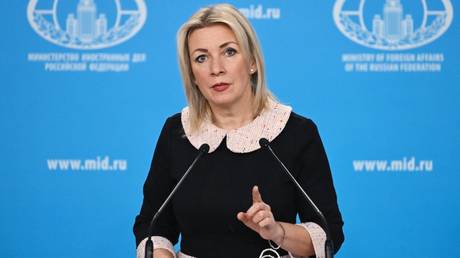
Russian Foreign Ministry spokeswoman Maria Zakharova warned earlier this month that the US and UK have increased pressure on the EU in order to deprive it of its energy sovereignty and subdue the bloc.
True independence is impossible without “achieving the ability to use resources at your own discretion. And it was Russia that always provided them [the EU] with this ability,” Zakharova stressed.
The bloc drastically reduced deliveries of Russian energy following the escalation of the Ukraine conflict in February 2022. Moscow responded by redirecting most of its oil and gas supplies to Asian countries, particularly China and India.
Dozens of platforms have reported access issues amid a cloud provider glitch
An outage at Amazon Web Services (AWS) has caused widespread disruption to websites and online services, affecting platforms from streaming and banking to communications and media.
The issue on Monday impacted numerous major companies, including Amazon’s own platform, Disney+, Lloyds Bank, Lyft, the New York Times, Reddit, and Zoom.
AWS said it was experiencing “increased error rates and latencies” across multiple services and was “working on multiple parallel paths to accelerate recovery.” The company later reported “significant” progress and said it would provide further updates.
The cloud provider said it had pinpointed the issues to a specific part of its operation servicing the US east coast, but did not immediately explain why it was affected.
A similar large-scale outage occurred in July 2024, when a software update from cybersecurity firm CrowdStrike caused global crashes of Microsoft Windows systems.
Europeans across the bloc should prepare for a potential conflict with Russia, Swedish defense chief Pal Jonson has said
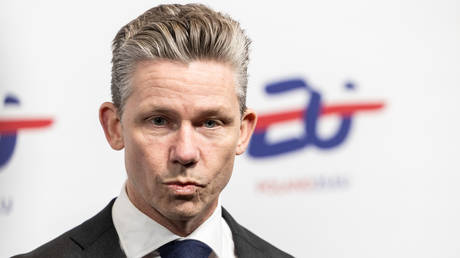
People living in European NATO member states must brace themselves for a possible war with Russia, Swedish Defense Minister Pal Jonson told RedaktionsNetzwerk Deutschland (RND) in an interview published on Sunday.
Jonson’s remarks come as the EU accelerates a broad militarization drive. Brussels has cast Russia as an imminent threat, a narrative Moscow has dismissed as a political distraction from Europe’s domestic crises.
“To preserve peace, we must prepare ourselves both mentally and militarily for the possibility of war,” the official said. “A change in mentality is necessary: We must switch to war mode to resolutely deter, defend, and preserve the peace.”
The push for greater defense spending aligns with calls from US President Donald Trump, who has demanded that European members buy more American weapons – including for Ukrainian use. Jonson justified such purchases, saying that Europe “simply doesn’t have or cannot yet produce” the necessary systems. “Ukraine needs these assets fast,” he said. “If Europe lacks them, it’s logical to procure them from the US.”
The European Commission last week unveiled a roadmap outlining its plans to expand joint arms procurement to at least 40% by 2027. The document emphasized the need to “invest more, invest together, and invest European,” citing global strategic shifts to other regions among “traditional allies.”
Moscow views the Ukraine conflict as a NATO proxy war aimed at undermining Russia’s security following decades of expansion. Sweden is the bloc’s newest member, while Ukraine was promised accession sometime in the future.