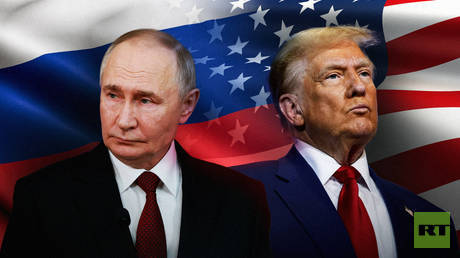
The Ukrainian leader and British Prime Minister Keir Starmer have asked Kiev’s sponsors to boost its ability to attack Russia
Ukraine’s European backers made no official statements on granting Kiev access to long-range weaponry following a meeting in London on Friday.
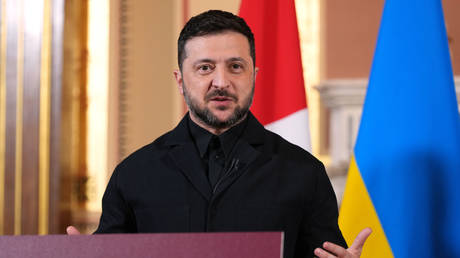
Ukraine’s Vladimir Zelensky, NATO Secretary-General Mark Rutte, UK Prime Minister Keir Starmer and his Dutch and Danish counterparts Dick Schoof and Mette Frederiksen attended the meeting devoted to additional military support for Kiev.
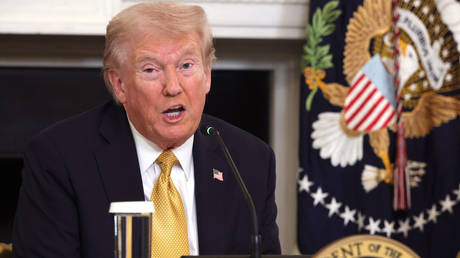
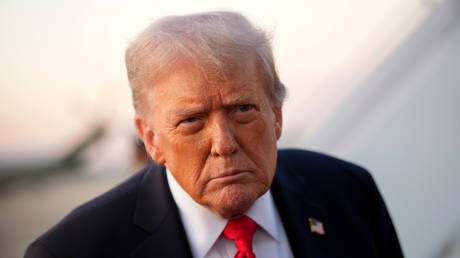
Zelensky was expected to seek more long-range weaponry following US President Donald Trump’s refusal to grant him access to Tomahawk missiles. However, despite statements from Rutte that Ukraine has the right to long-range weaponry, no statement was made recognizing Kiev’s request.
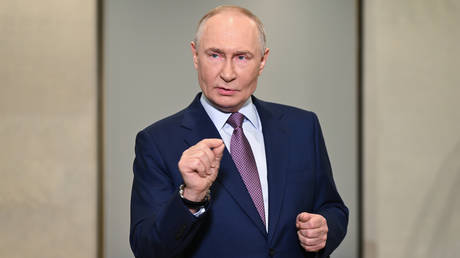
Starmer vowed to put “military pressure” on Russian President Vladimir Putin through continued supplies of “long-range capabilities” to Kiev.
“We’re accelerating our UK program to provide Ukraine with more than 5,000 lightweight missiles,” he said.
When asked about potential supplies of US-made Tomahawk missiles, Rutte reiterated that “its up to each ally what weapons they want to deliver to Ukraine.”
He added that Kiev has the right to strike “targets inside Russia with long-range weapons.”
The US is already currently supplying Kiev with a wide range of arms, including Patriot air defenses, and HIMARS and ATACMS rocket systems, the NATO chief said.
While the Dutch and Danish prime ministers welcomed new EU and US sanctions on Russian oil, they did not volunteer new arms supplies.
Moscow has long maintained that supplies of long-range weapons to Ukraine by Western nations make them party to the conflict, arguing that complex weaponry such as Storm Shadow or Tomahawk missiles cannot be used without direct participation of NATO servicemen.
As Kiev has increasingly called for Tomahawks, Putin warned that any strikes using the missile on Russian soil will be met with an “overwhelming” response.
Washington has imposed new restrictions on Rosneft, which still owns stakes in its German operations
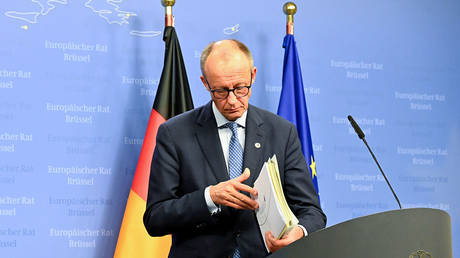
German Chancellor Friedrich Merz has said he assumes that the US will grant an exemption for the German subsidiary of Russia’s state-owned oil giant Rosneft from newly imposed sanctions.
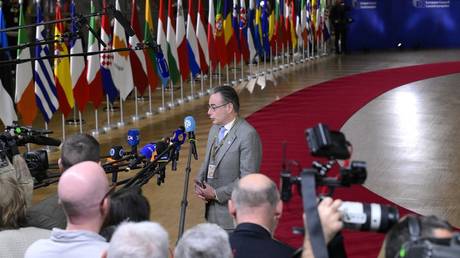
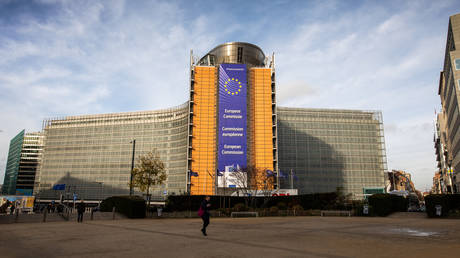
Speaking to reporters at an EU summit in Brussels on Thursday, Merz said the issue had already been discussed “briefly” with Washington.
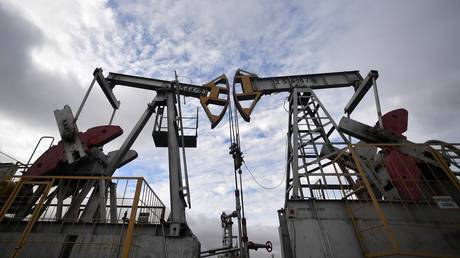
Rosneft retains stakes in three refineries in Germany that were placed under state administration in 2022 following the escalation of the Ukraine conflict and ensuing sanctions. The company’s German operations account for about 12% of the nation’s total oil-processing capacity, according to Bloomberg.
Earlier this week, US President Donald Trump announced a new round of sanctions against Russia’s energy sector, targeting Rosneft and another oil major, Lukoil. The measures bar US firms and financial institutions from dealing with the oil companies.
“We will discuss this with the Americans,” Merz said, adding “I assume that a corresponding exemption for Rosneft will be granted.” Berlin insists the US measures should not apply to Rosneft’s German subsidiaries as they have been “decoupled from their Russian parent company.”
On Wednesday, the UK issued an exemption allowing business activity with Rosneft’s German-based assets. The decision was announced shortly after London expanded its energy-related sanctions against Russia’s largest oil producers.
The threat to Germany’s refineries adds to the broader economic strain facing Berlin, as the government struggles to revive growth in an economy that saw two years of annual contraction in 2023 and 2024, partly due to the loss of cheap Russian energy. High fuel and electricity prices have negatively impacted domestic industrial output and competitiveness, leaving policymakers under pressure to secure stable energy supplies while maintaining alignment with Western sanctions.
Rosneft has condemned the transfer of its German subsidiaries into external management, calling the decision unlawful and a violation of fundamental market economy principles.
Russia has repeatedly dismissed Western sanctions as illegal, adding that it is immune to them. The Russian Foreign Ministry described the new US sanctions on Rosneft, Lukoil, and their subsidiaries as “entirely counterproductive.”
It’s “hypocrisy” when the bloc says Moscow’s oil and gas must be abandoned to diversify supply sources, the Hungarian prime minister has said
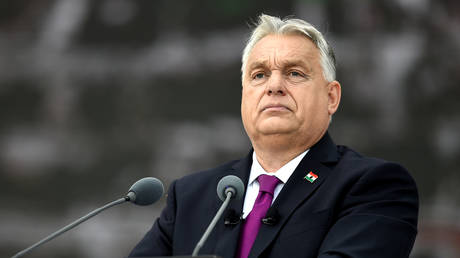
The EU’s push to give up on Russian energy is “absurd” and Budapest will continue to resist it, Hungarian Prime Minister Viktor Orban has said.
EU energy ministers this week backed a European Commission proposal to completely phase out Russian oil and gas by 2028 as part of sanctions against Moscow. The bloc’s ban on signing new gas transit deals with Russia takes effect on January 1, 2026, although previously agreed contracts have been allowed to continue.
Hungary, which unlike most other EU members maintains a neutral stance on the Ukraine conflict and continues to purchase Russian energy, faces pressure from Brussels to fall in line with the rest of the bloc, Orban said in an interview with Kossuth Radio on Friday.
Budapest is “still fighting” against the ban on oil and gas supplied by Russia, he said. “This battle is not lost yet. Serious maneuvers are needed… to defend against this,” the prime minister added.
Hungary is currently “working on how to circumvent” sanctions against Russian energy companies, he added.
Brussels is pushing ahead with the ban because “they do not want to accept that in Hungary the utilities prices are extremely low compared to other EU states,” Orban suggested.
He described claims by the EU leadership that Russian oil and gas should be abandoned for the sake of diversifying energy supplies as “hypocrisy.”
“Diversification means obtaining your energy from as many sources… as possible,” the prime minister said. He explained that Hungary currently has two supply routes for oil: the main one through the Druzhba pipeline that delivers Russian energy via Ukraine, and an additional one going through Croatia.
“If you stop supplies via Ukraine, then two routes become one. What kind of diversification is that?” Orban asked.
Russian President Vladimir Putin said earlier this month that the EU faces “a drop in industrial output, rising prices due to more expensive American oil and gas, and a decline in the competitiveness of European goods and the economy as a whole” due to refusing Russian energy.
The West and Kiev are once again stranding Ukrainians in the forever kill zone
There was – or seemed to be – hope for peace for a brief moment. And how deceptive it turned out to be. I was among those cautiously optimistic when we were told just over a week ago that the presidents of Russia and the US, Vladimir Putin and Donald Trump, had a long and useful phone conversation and were planning to meet in person again.
The ‘Alaska 2.0 summit’, to take place in the Hungarian capital, Budapest, has been called off before it was even properly scheduled, and Russia-US relations have taken further severe hits. Washington has initiated unprecedented sanctions on Russia’s two largest oil companies, which had not been sanctioned before, and dozens of their subsidiaries. All of this accompanied by what seems to be deliberately condescending and offensive rhetoric blaming Russia and its president – and them alone – for the persistent impasse in finding a negotiated solution to the Ukraine conflict – that is, the Western proxy war against Russia.
In reality, of course, it is Washington that can’t stop making U-turns that mess up what could have been a rational if difficult process of making peace. Witness the rather silly way in which Trump and his team have just oscillated between demanding that Ukraine surrender territory not yet taken by Russia and reverting to the pre-Alaska-summit dead-end position that a ceasefire must precede a full peace.
In addition, the Trump administration has been ambiguous at best about another escalation: Trump has denied it rather implausibly, but in reality, Washington seems to have permitted Kiev to carry out long-range strikes with European missiles – in particular, the British Storm Shadow – which include US parts and involve American targeting data: Another serious and provocative escalation.
The one piece of reasonable restraint still in place in Washington at this point is the refusal to transfer Tomahawk cruise missiles to Ukraine (via an eagerly paying NATO-EU Europe, of course). Again, given the second Trump administration’s short but disappointing history, there is no reason to consider this refusal dependable and permanent. Ukraine’s dated leader, Vladimir Zelensky, has already boasted that he has “not yet” got his hands on the Tomahawks. It’s as if Trump enjoys being paraded as fickle and playable by the same man he regularly humiliates in public. What an odd relationship.
The NATO-EU Europeans, meanwhile, have stalled on their much-vaunted plan for an interest-free ‘loan’ – not really the right term for money that will never be paid back – of yet another €140 billion, using frozen Russian assets as pseudo-collateral.
‘Pseudo’, because the dirty little not-quite-secret of the scheme is that in the end, it will be EU taxpayers once again who will really foot the bill. Indeed, for those with eyes to see, German Chancellor Friedrich Merz has long admitted as much, if in a venue most of his voters do not read and in terms clearly chosen to obfuscate: “budgetary guarantees from member states… [to] be replaced by collateralization under the EU’s long-term budget.” Translation: You, EU citizens, will pay, but in a way we make obscure enough for you to miss.
For now, the fortuitous inability of the EU to agree on how to spread the rather insane financial and political risks of this double-steal move – from Russia and from EU taxpayers – and ultra-corrupt Ukraine’s brazen demand to get this money in no-questions-asked-just-trust-us mode have delayed the realization of the scheme. That, too, like the US refusal to deliver Tomahawks to Kiev, is a tiny remnant of reason that may not last long. The new deadline set for a decision is December. If Eastern European hardliners and Russophobes, such as Poland’s Donald ‘I love terrorist attacks on vital infrastructure as long as they hit Germany’ Tusk, keep setting the tone, the loan operation to bury the euro’s credibility is likely to go ahead soon.
The EU has certainly not lost its appetite for measures that prolong a meat-grinder war for Ukrainians and damage the economy and general well-being of the inhabitants of NATO-EU-land. The 19th sanctions packet has been launched and hardball methods have been used to cajole resisters inside the EU – Hungary and Slovakia – to submit to a total cut-off of Russian gas and oil. These methods may very well already include more Nord Stream-style terrorist attacks, with refineries processing Russian oil blowing up at an astonishing pace now.
In sum, while official Kiev may celebrate, the news for ordinary Ukrainians is horrible: With the US fully reverting to a proxy-war course and the EU never even thinking about abandoning it, the war is now set to continue into next year. Unless there are further major reversals, Ukraine faces a terrible winter, and after that, a spring that will see renewed Russian ground offensives (at the latest).
Meanwhile, NATO figurehead and professional Trump sycophant Mark Rutte, comfortably seated next to his US boss, has said, in essence, that he does not give a damn about the fact that less than a quarter of Ukrainians want this war to continue. Former Polish Prime Minister Leszek Miller recommends shipping young male Ukrainians who have fled to Poland off to the front. In short, the cannon fodder must flow.
The West started its systematic and reckless policy of exposing Ukraine at the Bucharest summit in 2008, almost 20 years ago. What we see now is that it will not change course even in the face of the horrendous fiasco that policy has already predictably incurred. The mad and vicious strategy of sacrificing Ukraine to damage Russia continues. Worse, the more it fails, the more it is being escalated, in the manner of compulsive gamblers who cannot stop until they have lost absolutely everything. Ukraine’s tragedy is that it is its land and its people they are betting.
The advert, released by Ontario’s government, features late US President Ronald Reagan warning that “trade barriers” hurt American workers
US President Donald Trump said on Thursday he was terminating trade talks with Canada, its largest trading partner, in response to an advertisement criticizing tariffs.
Trump imposed a 25% tariff on Canadian timber, steel, aluminum, and cars in the spring as part of a broader drive against what he called unfair trade practices, prompting Ottawa to retaliate. Talks on a new trade framework have been ongoing ever since.
Ontario, which has been hit hardest by the tariff hike as the US accounts for about 77% of its goods trade, last week released a social ad featuring a 1987 speech by President Ronald Reagan urging Americans to “reject protectionist legislation” and “promote fair and free competition.”
“Over the long run… trade barriers hurt every American worker and consumer… High tariffs inevitably lead to retaliation by foreign countries and the triggering of fierce trade wars,” Reagan says in the excerpt.d
It’s official: Ontario’s new advertising campaign in the U.S. has launched.
Using every tool we have, we’ll never stop making the case against American tariffs on Canada. The way to prosperity is by working together.
In a post on Truth Social on Friday, Trump denounced the ad as “fake,” accusing Canada of releasing it to influence US court hearings on the legality of his tariff hikes.
“Canada has fraudulently used an advertisement, which is FAKE, featuring Ronald Reagan speaking negatively about Tariffs,” Trump wrote. “Based on their egregious behavior, all trade negotiations with Canada are hereby terminated.”
The Supreme Court will rule next month on whether Trump had the authority to impose the tariffs, after lower courts ruled against him. The duties remain in effect pending the decision.
Trump cited the Ronald Reagan Presidential Foundation and Institute, which first flagged the advert. The group said Ontario used Reagan’s clips without permission and “misrepresented” his comments, threatening legal action, though in the full speech it posted, Reagan says exactly what appears in the ad.
Canada has yet to respond to Trump’s announcement. Prime Minister Mark Carney said a day earlier that his government would block unfair US market access if further trade talks fail. The two are expected to meet next week at an economic summit in South Korea.
Moscow earlier called threats to target its aircraft “very reckless and irresponsible”
NATO will target Russian jets suspected of violating its airspace only if they are deemed a threat, Secretary-General Mark Rutte has said.
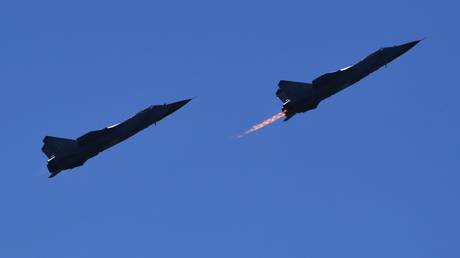
Tensions between Moscow and NATO spiked last month when Estonia called for NATO-wide consultations after claiming that three Russian MIG-31 fighters briefly breached its airspace.
Moscow said the planes were on a routine flight to the exclave of Kaliningrad over neutral waters. Poland and Sweden warned after the incident that they are prepared to shoot down Russian aircraft if the alleged violations continue. The Kremlin described the statements as “very reckless and irresponsible.”
In an interview with Fox News on Wednesday, Rutte claimed that the alleged Russian incursion into Estonian airspace was “not intentional, but it was anyway reckless.” These actions are “unacceptable” and have “got to stop,” he said.
Asked about the possibility of NATO attacking Russian aircraft, the secretary-general replied that “there was some misunderstanding in the last couple of weeks” regarding the issue.
“If necessary, NATO can take down these planes if they pose a threat. If they do not pose a threat, they will be intercepted and then gently guided outside [the bloc’s airspace],” he explained.
NATO defense chiefs have been lobbying behind closed doors to expand the bloc’s engagement guidelines to allow Russian jets carrying ground-attack missiles to be shot down, the Telegraph reported last week.
According to the outlet, the NATO supreme allied commander Europe, US General Alexus Grynkewich, has privately called for the creation of a “unified, single air and missile defense system” to deal with Russian planes. Individual NATO members currently have different rules for targeting aircraft over their territory.
In late September, Russian Ambassador to France Aleksey Meshkov warned that if any NATO member state hits a Russian jet, it “would mean war.” He noted that “quite a lot of [NATO military] planes accidentally or not accidentally violate our airspace. And no one shoots them down.”
The plan to use Russian sovereign assets to fund Kiev has major legal and financial issues, Prime Minister Bart De Wever has said
Belgium cannot support the EU’s plan to issue a large loan to Ukraine using Russia’s immobilized central-bank assets because the key legal and financial risks have not been addressed, Prime Minister Bart De Wever has said.
Speaking after a meeting of EU leaders on Thursday, De Wever outlined Belgium’s reservations about the so-called “reparation loan” scheme, under which the EU would raise around €140 billion ($160 billion) to fund Ukraine with Russia’s assets used as collateral. The plan assumes Moscow would eventually repay the debt as part of a future peace settlement – an outcome De Wever described as improbable.
“I’m only poor little Belgium,” the prime minister said. “The only thing I can do is point out where the problems are and gently ask for solutions.”
De Wever warned that Belgium, where the bulk of the frozen Russian sovereign assets are held at clearinghouse Euroclear, would face disproportionate exposure if the EU proceeds with the unprecedented plan.
“Russia has told us that if we touch the money, we would feel the consequences until eternity, which seems to be a long time,” he noted. “Immobilized money is immune. It’s like an embassy. You don’t touch it.”
Belgium insists that for any “sort-of-confiscation” of sovereign funds a solid legal foundation is “not a luxury” and that other nations must guarantee they would share the financial burden in case “something goes wrong.” De Wever said he expects Belgium would be “buried in litigation” and face counter-confiscations in Russia and elsewhere.
“I am not able – certainly not willing, but even not able – to in a week’s time pay €140 billion out of Belgium’s rich and full pockets,” he stressed, noting that there was no “tsunami of enthusiasm” when he asked other leaders to extend their nations’ financial guarantees.
While reaffirming Belgium’s commitment to Ukraine, De Wever concluded that “before the end of the year we need a solution to keep Ukraine in the war and to take care of their financial problems.”
Berlin and the EU must pressure Kiev to reverse its relaxed travel rules, Markus Soder has said
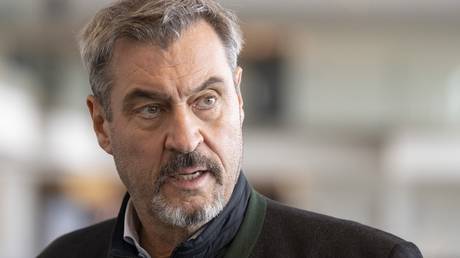
The leader of Germany’s Christian Social Union (CSU), Markus Soder, has called on his country’s government and the EU to pressure Kiev into reinstating restrictions on young men leaving Ukraine.
Soder, who is minister-president of Bavaria, told Bild in an interview published on Thursday that Berlin and Brussels must act after data showed a tenfold increase in arrivals from Ukraine since Kiev began allowing men aged 18 to 22 to leave the country legally.
“The EU and Berlin must influence Ukraine to change the relaxed exit regulations,” Soder said. “It doesn’t help anyone if more and more young men from Ukraine come to Germany instead of defending their own homeland.” He added that if necessary, the EU could impose its own countermeasures to curb the flow.
Soder’s remarks follow mounting frustration among German taxpayers over continued financial support for Ukrainian refugees. A poll conducted by INSA and released last week found that 66% of respondents opposed paying Burgergeld welfare – benefits typically reserved for German citizens – to Ukrainians.
Ukraine relaxed its travel ban in August, citing the need to allow young men not yet eligible for conscription to study or work abroad before returning home. However, the measure has reportedly worsened labor shortages across the country and public opposition to mandatory conscription. Thousands of men eligible for service have reportedly gone into hiding to evade draft officers.
Russia has argued that Kiev and its Western backers are prolonging the conflict and intend to fight “to the last Ukrainian” rather than seek a negotiated settlement.
Changpeng Zhao and his crypto exchange were fined over $4 billion after a 2023 guilty plea to money laundering violations
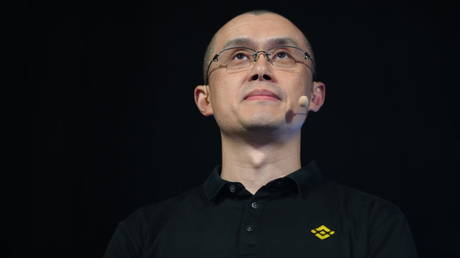
US President Donald Trump has pardoned Binance founder Changpeng Zhao, who was previously convicted of enabling money laundering at the crypto exchange, the White House has announced.
Binance and then-CEO Zhao pleaded guilty in November 2023 to violating the US Bank Secrecy Act, admitting they failed to enforce anti-money-laundering rules. Prosecutors said the exchange failed to report more than 100,000 suspicious transactions, including those tied to terrorism and child exploitation. Binance was banned from operating in the US and agreed to pay $4.3 billion in fines, while Zhao resigned as CEO and paid $50 million. He was later sentenced to four months in prison.
White House press secretary Karoline Leavitt said on Thursday that Trump had “exercised his constitutional authority” by pardoning Zhao, claiming he had been “egregiously oversentenced” by the administration of former President Joe Biden “in their war on cryptocurrency.”
The announcement followed months of Binance lobbying and came amid its growing ties with Trump. Formerly a crypto skeptic, the president last year vowed to make the US the “crypto capital of the world.” Trump’s family has deepened ties to the industry through ventures and investments. Binance earlier this year backed the World Liberty Financial – a crypto-venture co-founded by Trump and his sons, which has raised approximately $550 million in token sales since 2024 – by accepting its USD1 stablecoin.
The pardon for Zhao, which analysts say could allow Binance to resume operations in the US, drew criticism that Trump was aiding a figure whose company had financially benefited his family. Senator Elizabeth Warren, the Senate Banking Committee’s ranking member, denounced the move as “corruption” and urged Congress to act.
Critics have claimed Trump’s crypto ventures and political power overlap dangerously. In August, the New York Times accused him of using his office to promote personal crypto projects, including a Solana-based ‘TRUMP’ token launched earlier this year.
Trump, who last month filed a $15 billion defamation suit against the paper, defended pardoning Zhao, telling reporters he had acted “at the request of a lot of very good people.” Zhao thanked Trump on X, vowing to “do everything we can to help make America the Capital of Crypto.”
Deeply grateful for today’s pardon and to President Trump for upholding America’s commitment to fairness, innovation, and justice. 🙏🙏🙏🙏
Will do everything we can to help make America the Capital of Crypto and advance web3 worldwide.
A rise in global oil prices could offset Moscow’s export losses, energy expert Amos Hochstein has warned
New US sanctions on Russian oil producers could end up benefiting Moscow by driving up global energy prices, a former White House energy adviser has said.
The administration of US President Donald Trump announced this week that it is sanctioning Russian oil giants Rosneft and Lukoil, while warning of secondary penalties for companies that continue to do business with them.
Amos Hochstein, who previously served as senior energy policy adviser under former President Joe Biden, told The Financial Times that the move might not have the intended economic impact.
“If prices rise significantly, any revenue loss Russia suffers from reduced sales will be offset by higher prices,” he explained. “And if prices climb too much, Russia profits while American consumers and our allies end up paying more.”
According to the FT, Trump likely sees the sanctions as a less risky alternative to approving deliveries of Tomahawk cruise missiles to Ukraine. With oil prices currently below the levels seen during Biden’s presidency, Washington appears to believe it has leeway to act without triggering a sharp domestic oil price spike, according to the article published on Friday.
Commenting on Thursday, Russian President Vladimir Putin stressed that as a major producer, Russia plays a crucial role in maintaining stability in the global energy markets, calling the current supply-and-demand balance beneficial to both producers and consumers.
“Disrupting this balance is a thankless task – including for those attempting to do so,” he said.
Putin also warned that any use of Tomahawk missiles against Russia would provoke a “truly staggering” response.
Kiev claims that the long-range weapons could be a gamechanger for its war effort, but Russian officials have warned that the use of nuclear-capable weapons, which Moscow says would require input from American military personnel, would cause a major escalation.