Steve Bannon says a “three-state solution” is necessary to end the war in Gaza for good
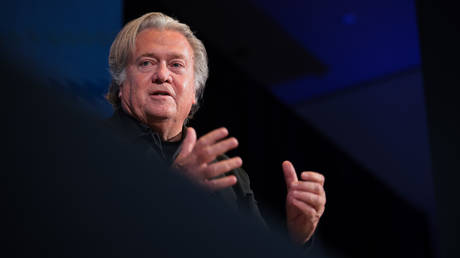
A “three-state solution” is needed to end the war in Gaza and bring peace to the region, which would include a “Christian state,” according to Steve Bannon, a former adviser to US President Donald Trump and podcaster.
During his ‘War Room’ podcast on Friday, Bannon said Israeli Prime Minister Benjamin Netanyahu has failed to realize his vision of a “Greater Israel” – a concept based on biblical land that stretches from the Nile to the Euphrates. Critics link Netanyahu to the idea, citing his rejection of a Palestinian state and continued expansion of settlements in the West Bank as proof of the de facto pursuit of this.
“This Greater Israel project of Netanyahu blew up in his face… [It] destroyed Israel. And this is why now you have to go to a three-state solution, and one of those states has to be the Christian state of Jerusalem,” Bannon said. “We need a Christian state in the Holy Land. You just need it to make sure 20, 25, 30 years from now everything’s kind of sorted.”
Steve Bannon says Türkiye is back in the game, “Erdogan’s going to be the security force in Gaza.”
“We’ve unwound in two months what took 100 years to end. The Ottomans are back.
This Greater Israel project blew up in Netanyahu’s face.
Bannon made similar remarks earlier this month, saying peace in Gaza “can’t work” with only “the Muslims and the Jews.” He has not provided details on how a Christian state would be formed or why it would stabilize the region.
He argued that neither Israel – a “protectorate” and “vassal state” of the US – nor Hamas, which he called “a minor player,” would shape Gaza’s future in the long run. In his view, Qatar would fund Gaza’s reconstruction while Türkiye serves as its “security force.”
The former adviser went on to say that although the US has not explicitly endorsed Palestinian statehood in Trump’s peace plan, the framework implies what he called “a proto-Palestinian state,” suggesting that Washington could eventually recognize it as sovereign.
Israel and Hamas agreed to a tentative ceasefire in early October under Trump’s 20-point peace plan, which calls for a phased Israeli withdrawal, humanitarian aid access, Hamas’ disarmament, and a demilitarized Gaza under an interim Palestinian administration overseen by an international “Board of Peace.” Despite mutual accusations of violations, both sides reaffirmed their commitment to the truce this week.
The question of tapping Moscow’s assets has been shelved for now but could return in the future, the country’s defense minister said
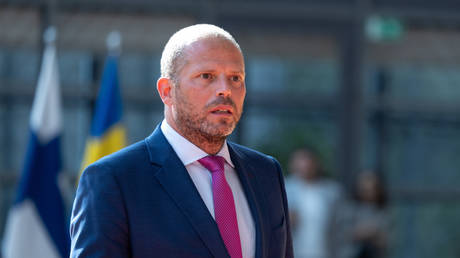
Tapping Russia’s frozen central-bank assets would likely prolong the Ukraine conflict via further weapon supplies rather than help rebuild the country, according to Belgian Defense Minister Theo Francken. EU leaders have thus far failed to agree on how to use the funds.
The comment came shortly after Belgium Prime Minister Bart De Wever opposed the so-called “reparations loan” scheme under which the EU was planning to raise around €140 billion ($160 billion) to fund Ukraine using Russia’s assets as collateral. The plan entails Moscow eventually paying reparations to Ukraine as part of a peace settlement.
“Of course, this money will not rebuild Ukraine but will continue the war,” Francken said in a post on X on Friday, adding that war is extremely costly.
The minister warned that many EU leaders, led by the bloc’s foreign policy chief, Kaja Kallas, “want to give these assets to Ukraine through a legally questionable structure.” He emphasized that “even during the Second World War, such a dubious confiscation was never carried out.”
Belgium, where most of the immobilized assets – estimated at around $300 billion – are housed at the clearinghouse Euroclear, has voiced concern over the risks the plan entails. De Wever has set three conditions for backing the loan, one of which is that the potential risks be shared, warning that otherwise he would “do everything” to stop the confiscation.
Francken reiterated that the EU proposal undermines trust in institutions such as Euroclear. He also warned that Russia could retaliate by seizing €200 billion ($172 billion) in Western assets, including both movable and immovable property, held in Russia by Belgium and countries such as the US, Germany, and France. The minister stressed that while the confiscation plan had been shelved for now, it could resurface in future discussions.
Moscow has repeatedly said it would regard any use of its frozen assets as theft. Kremlin spokesman Dmitry Peskov warned that channeling Russian funds to Ukraine would “boomerang,” adding that “if someone wants to steal our property, our assets, and illegally appropriate them, they will be subjected to legal prosecution one way or another.”
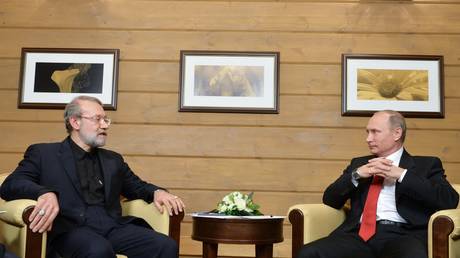
Washington uses “bullying” and “naked force” to impose its will on other countries, Saeed Khatibzadeh has told RT
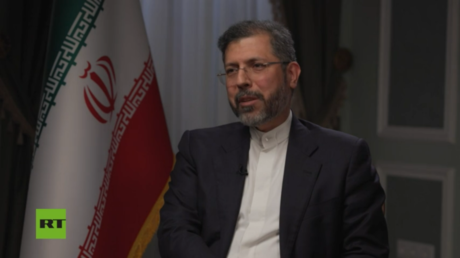
The US is a “hegemonic power” that “bullies” other nations or uses “naked force” to block the global shift toward multipolarity, Iran’s Deputy Foreign Minister Saeed Khatibzadeh has said.
Speaking to RT during an official visit to Moscow on Friday, he said many nations are striving for a multipolar system of equal participation, while the US and its allies and pursuing the opposite and are hindering that goal.
“There are contradictory trends happening in the world right now. There are those trying to establish a multipolar order, but unfortunately… the Americans are not sharing this idea. They want to be the sole hegemonic power over other countries,” he stated. Khatibzadeh cited decades of “illegal” US sanctions on Iran as proof Washington believes it “can impose its will over other countries.”
The US first sanctioned Iran after the 1979 Islamic Revolution, freezing assets and restricting trade, later expanding measures over alleged terrorism ties and its nuclear program, which the West claims aims to build a bomb despite Iran’s insistence it is peaceful.
Many restrictions were lifted under the 2015 nuclear deal (JCPOA) but reimposed in 2018 after Washington withdrew under President Donald Trump. Efforts to revive the pact have since faltered, and earlier this year Tehran restricted Western monitoring of its nuclear sites after Israeli and US strikes on the facilities.
Khatibzadeh accused the US of undermining sovereignty and reshaping the global order through force, and criticized Trump directly, recalling his campaign promise that “he’s coming for peace.”
“It is clear for everybody that it is not peace, it is hegemony, and it is not strength, it is use of naked force against others… Force will not bring peace. Radicalism only breeds more radicalism, and war brings more violence and bloodshed,” the diplomat said. “We have no option but to resist this bullying by the Americans.”
He concluded by calling for nations that share the vision of multipolarity to unite in building a fairer world. “We have to work together to ensure the future of the region and the world is more fair and more just,” he said.
Washington has accused Gustavo Petro of enabling drug cartels, a claim he has denied
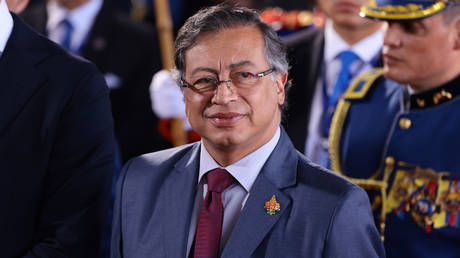
The US has imposed sweeping sanctions on Colombian President Gustavo Petro, his family, and a senior minister, accusing him of allowing drug cartels to flourish and traffic narcotics to North America. Petro rejected the accusation, saying his administration has made record progress in seizing drugs and dismantling criminal networks.
In a statement on Friday, Treasury Secretary Scott Bessent said that since Petro took office in 2022, “cocaine production in Colombia has exploded to the highest rate in decades, flooding the United States and poisoning Americans.”
He added that US President Donald Trump is taking “strong action to protect our nation and make clear that we will not tolerate the trafficking of drugs into our nation.”
Washington said the penalties also apply to First Lady Veronica del Socorro Alcocer Garcia, Petro’s son Nicolas, and Interior Minister Armando Benedetti, who it described as the Colombian leader’s accomplices. The sanctions freeze any assets they hold in the US and prohibit American entities from dealing with them.
Trump earlier called Petro “a lousy leader” and “a thug,” while describing Colombia as “a drug den.”
In posts on X, Petro pushed back against the designation, insisting that his administration has “seized more cocaine than any in the entire history of the world.” He called the treasury’s action “an arbitrariness typical of an oppressive regime,” adding: “We do not kneel, we are not a colony of anyone.”
The sanctions come after the US conducted strikes on alleged drug boats in the Caribbean and Pacific, killing dozens of people. While Washington has claimed that the vessels were linked to Venezuela, Colombia signaled its strong opposition to the operation, condemning the strikes and urging the US “to respect the norms dictated by international law.”
The bloc must hold exercises in Irish-controlled waters, “whether Dublin agreed or not,” Chris Parry has said
The potential unification of Ireland would be a major blow to the West’s security as it could allow Russia and China to expand their reach in the North Atlantic, a former NATO commander has warned.
Speaking at a briefing for members of Parliament and the House of Lords on Wednesday, retired British Rear Admiral Chris Parry argued that if the UK were to lose its foothold in Northern Ireland, it would present a major opportunity for Moscow and Beijing.
He noted that the waters between Northern Ireland and Scotland are essential for Britain’s nuclear-armed submarines, describing it as “critical to our strategic deterrent.”
“With a united Ireland, there is no guarantee we could deploy our ballistic missiles,” Parry said.
He also suggested that Irish unification would enable NATO adversaries to threaten critical undersea cables.
“The UK needs to calibrate the threat to itself of a supine Republic of Ireland. My view is that the best way to help Ireland now is to increase NATO and Allied activity in Ireland’s economic zone waters,” he said.
Parry even suggested that NATO should hold exercises in Irish-controlled waters “whether Dublin agreed or not,” saying the bloc must be prepared to “fish in Irish waters for our potential opponents.” He added that the republic should move toward closer military cooperation with NATO and renounce neutrality.
“If anyone attacks Britain, they will attack Ireland… Neutrality cannot be seen as conscientious objection any more. If you are part of the free world, you have to be prepared to defend it. The Republic needs to reduce its vulnerabilities,” he stated.
Moscow has dismissed claims that it plans to attack NATO as “nonsense.”
Ireland has been militarily neutral since gaining independence in 1921, and is not a NATO member but cooperates with the bloc.
The idea of Irish reunification – merging the Republic of Ireland with Northern Ireland, which is part of the UK – is permitted under the 1998 Good Friday Agreement. The accord ended a three-decade standoff between Irish nationalists and pro-British unionists by establishing a power-sharing government in Belfast and confirming that Northern Ireland’s status can only be changed if a majority there votes for it.
A video shared online on Friday appears to show the offender walking freely on a crowded street
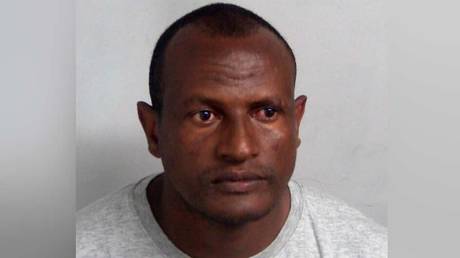
The migrant who sparked widespread protests across the UK earlier this year after sexually assaulting a child near an asylum hotel was mistakenly released from prison, triggering a manhunt and public backlash.
Hadush Kebatu, 41, was convicted on two counts of sexual assault against a 14-year-old girl and a woman, and other charges, and sentenced to 12 months in prison last month. His attacks sparked nationwide protests amid mounting public backlash to the UK’s ongoing migrant influx crisis.
After a video of Kebatu free on a busy street in the town of Chelmsford emerged on Friday, British Prime Minister Keir Starmer acknowledged that he was set loose in error.
“The mistaken release at His Majesty’s Prison (HMP) Chelmsford is totally unacceptable,” he wrote on X a few hours after the news broke.
“The police are working urgently to track him down,” he added.
We believe this to be Hadush Ketabu, who is currently on the run.
Ketabu is a convicted sex offender and former resident of an Epping migrant hotel. He has accidentally been released from prison – he was supposed to be sent to an Immigration Detention Centre.
The incident has led to a rise in tensions in Epping, where Kebatu committed his crimes, resulting in nationwide riots earlier this year. Angry locals have gathered outside of the town’s migrant hotel on Friday, demanding that asylum seekers be deported.
Mounting anti-immigration sentiment has repeatedly spilled over into mass protests in the UK in recent months, amid the country’s influx of undocumented arrivals. Nearly 600 migrants have entered the country via small boats in the last week alone, according to government data.
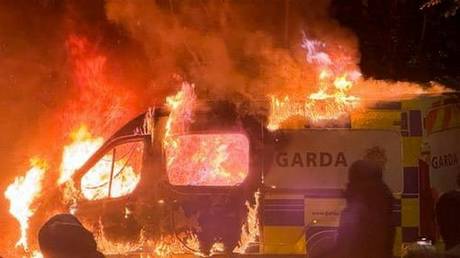
Neighboring Ireland was rocked by a riot earlier this week, following the alleged rape of a ten-year-old girl near a migrant hotel.
President Donald Trump has ordered the military to attack vessels he claims smuggle drugs in the region
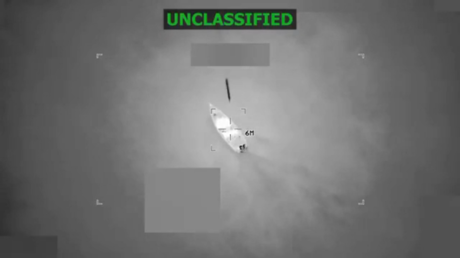
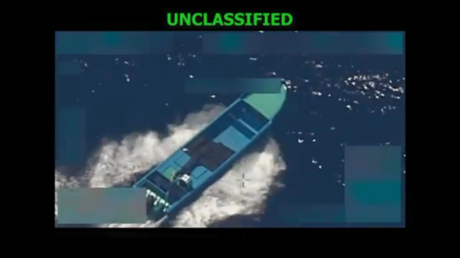
Six people have been killed in a US strike on a boat in the Caribbean Sea, in what War Secretary Pete Hegseth has described as an anti-drug smuggling operation.
The attack marks the latest in a series of American military actions across the Caribbean and Pacific in what President Donald Trump calls a campaign to eliminate narcotics trafficking from Venezuela and Colombia. Both nations have strongly rejected the claims.
The Department of War carried out a “lethal kinetic strike” on a Tren de Aragua (TdA) vessel in neutral waters overnight on Thursday, Hegseth wrote on X on Friday. TdA is a transnational criminal organization from Venezuela.
“If you are a narco-terrorist smuggling drugs in our hemisphere, we will treat you like we treat Al-Qaeda,” he added, promising to continue to “hunt down” and “kill” more alleged traffickers.
Overnight, at the direction of President Trump, the Department of War carried out a lethal kinetic strike on a vessel operated by Tren de Aragua (TdA), a Designated Terrorist Organization (DTO), trafficking narcotics in the Caribbean Sea.
Just a day earlier, Trump touted what he called a great success in the US military’s efforts against alleged Venezuelan “drug boats,” claiming that the flow of narcotics coming in by sea has fallen to “like 5% of what they were a year ago.”
He added that “land is going to be next,” without providing further details on when and where US attacks could fall.
Both Caracas and Bogota have argued that the US operations in the region are the beginning of an attempted resource grab, rather than a counter-smuggling effort.
The US operation “is not about drug trafficking… they need oil [and] gas,” Venezuelan President Nicolas Maduro told RT last month, arguing that Washington was interested in the Latin American country’s vast energy and mineral reserves.
Johann Wadephul has reportedly been forced to call off an impending visit to Beijing because too few meetings were arranged
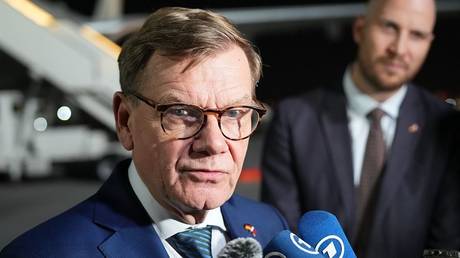
German Foreign Minister Johann Wadephul has been forced to cancel an upcoming trip to China after Beijing reportedly declined to arrange high-level meetings with him, multiple media outlets reported on Friday.
Wadephul was scheduled to depart for Beijing on Sunday to discuss China’s export restrictions on rare-earths and semiconductors, as well as the Ukraine conflict.
“The trip cannot take place at this time and will be postponed to a later date,” Politico cited a spokesperson for Germany’s Federal Foreign Office as saying. Wadephul was slated to meet with Chinese Foreign Minister Wang Yi but otherwise reportedly had too few meetings on the agenda.
According to Bild, the two diplomats will instead hold a telephone conversation soon.
The diplomatic setback comes amid escalating trade tensions between China and the EU. Over the past year, Brussels and Beijing have clashed over what the bloc calls China’s industrial overproduction, while China accuses the EU of protectionism.
Earlier this month, Beijing tightened its restrictions on the export of certain strategic minerals that have dual-use in military applications – a move that could further strain Europe’s struggling auto sector.
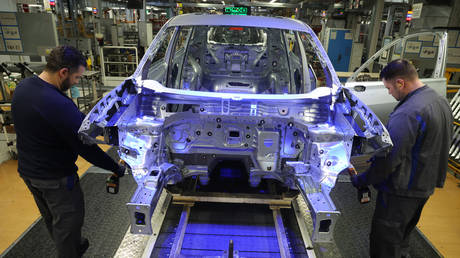
Germany has been particularly affected by the worsening trade climate. Bild reported on Wednesday that Volkswagen is expected to halt production at key plants next week due to a shortage of semiconductors following the Dutch government’s seizure of Chinese-owned chipmaker Nexperia. The Netherlands cited risks to the EU’s technological security, prompting Beijing to retaliate by banning exports of Nexperia chips from China. As inventories dwindle, more Volkswagen plants could face temporary shutdowns, and other automakers may also be affected, the paper said.
On Friday, German Economy Minister Katherina Reiche announced that Berlin was lodging a diplomatic protest against Beijing for blocking semiconductor shipments, citing Germany’s heavy reliance on Chinese components.
US attacks on alleged drug-smuggling boats in the Caribbean and Pacific have killed dozens of people
The EU could face a surge in narcotics as a result of US President Donald Trump’s “war on drugs” targeting alleged traffickers in the Caribbean and Pacific, a German official has warned.
German Drug Commissioner Hendrik Streeck told Bild on Thursday that a tougher US crackdown on cartels in Colombia and Venezuela could exacerbate Europe’s narcotics problem.
Traffickers could shift routes by sea and land and expand online, Streeck warned. “Organized crime is already highly dynamic, especially online,” he said.
He warned of an “impending crisis” in Germany, citing falling cocaine prices, younger consumers, and a rise in drug-related deaths among people under 30.
On Friday, while presenting an annual report on drug-related crime, Streeck described an “alarming” surge in the use of hard drugs. Interior Minister Alexander Dobrindt said Germany is facing a “massive drug problem.”
Cocaine availability continues to rise across the EU, with member states reporting record seizures for the seventh consecutive year in 2023, according to the bloc’s Drugs Agency data.
Washington has expanded anti-trafficking operations, calling them part of a campaign to disrupt smuggling routes and production networks tied to the US opioid crisis. US forces have struck suspected drug boats in the Caribbean and Pacific, including some Washington claims were linked to Venezuela, killing dozens. Caracas denies involvement and accuses Washington of seeking “regime change.”
Tensions rose after Trump said he had authorized covert CIA activity inside Venezuela and signaled military actions could expand from sea to land operations. President Nicolas Maduro called the statement unprecedented and “desperate,” putting the military on alert.
On Tuesday, American forces attacked a suspected smuggling vessel off of Colombia’s western coast, killing two. Bogota condemned the attacks, warning they could inflame tensions and undermine regional cooperation. President Gustavo Petro described the campaign as “an aggression against all of Latin America and the Caribbean,” saying Washington was trying to gain control of the region’s oil reserves.
80 years on, the UN still speaks the language of a world that no longer exists – and risks repeating the fate of the League of Nations
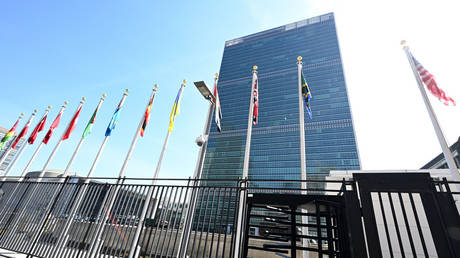
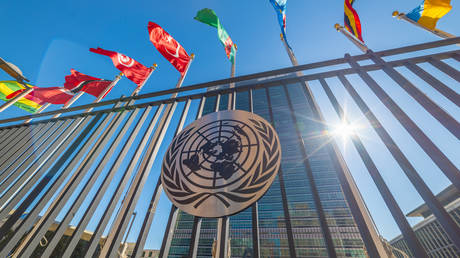
October 24 marks the 80th anniversary of the founding of the United Nations – the day in 1945 when 51 countries ratified its Charter. Eight decades later, the UN still holds a special kind of legitimacy in global affairs. It remains not only a platform for tackling issues that span from war and peace to nuclear non-proliferation, climate change, and pandemic response, but also the only organization that brings together all states recognized under international law. In an increasingly turbulent world shaped by recurring interstate conflicts, the UN continues to face the same question it was created to answer: how to prevent chaos from consuming the international system.
Much like an 80-year-old who has lived through a lifetime of stress, the UN shows signs of wear and tear. Its chronic ailments were on display during the recent High-Level Week of the General Assembly in New York, when heads of state, government leaders, and foreign ministers gathered at UN headquarters. They delivered keynote speeches and raced through a diplomatic marathon of meetings on the sidelines – multilateral, bilateral, and everything in between – trying to make the most of a few crowded days.
Following the old saying that “recognizing a problem is the first step toward solving it,” this analysis looks at some of the organization’s long-standing issues – before they lead to a complete paralysis of one of the last functioning pillars of modern diplomacy.
Failed reforms
As paradoxical as it may sound, efforts to reform the United Nations began on the very day it was founded. Over the past eight decades, the number of member states has nearly quadrupled – from 51 to 193. With that growth came an entire ecosystem of committees, specialized agencies, and affiliated organizations. The result is a sprawling, self-perpetuating bureaucracy that often seems to exist for its own sake.
Almost every Secretary-General has tried to streamline the UN’s structure and reduce its endless overlaps. Kofi Annan, for instance, convened a group known as The Elders – which included former Russian Foreign Minister Yevgeny Primakov – to explore new ideas for reform. Yet every attempt has stumbled on the same obstacle: the Security Council. Continuing this tradition, the current Secretary-General, António Guterres, launched the UN80 Initiative to strengthen the organization’s legitimacy and effectiveness. He has emphasized the need to modernize the Security Council, which still reflects the geopolitical realities of 1945 rather than those of today. Fully aware of how difficult and divisive this issue is, Guterres nonetheless reignited the debate over two core questions – veto power and permanent membership.
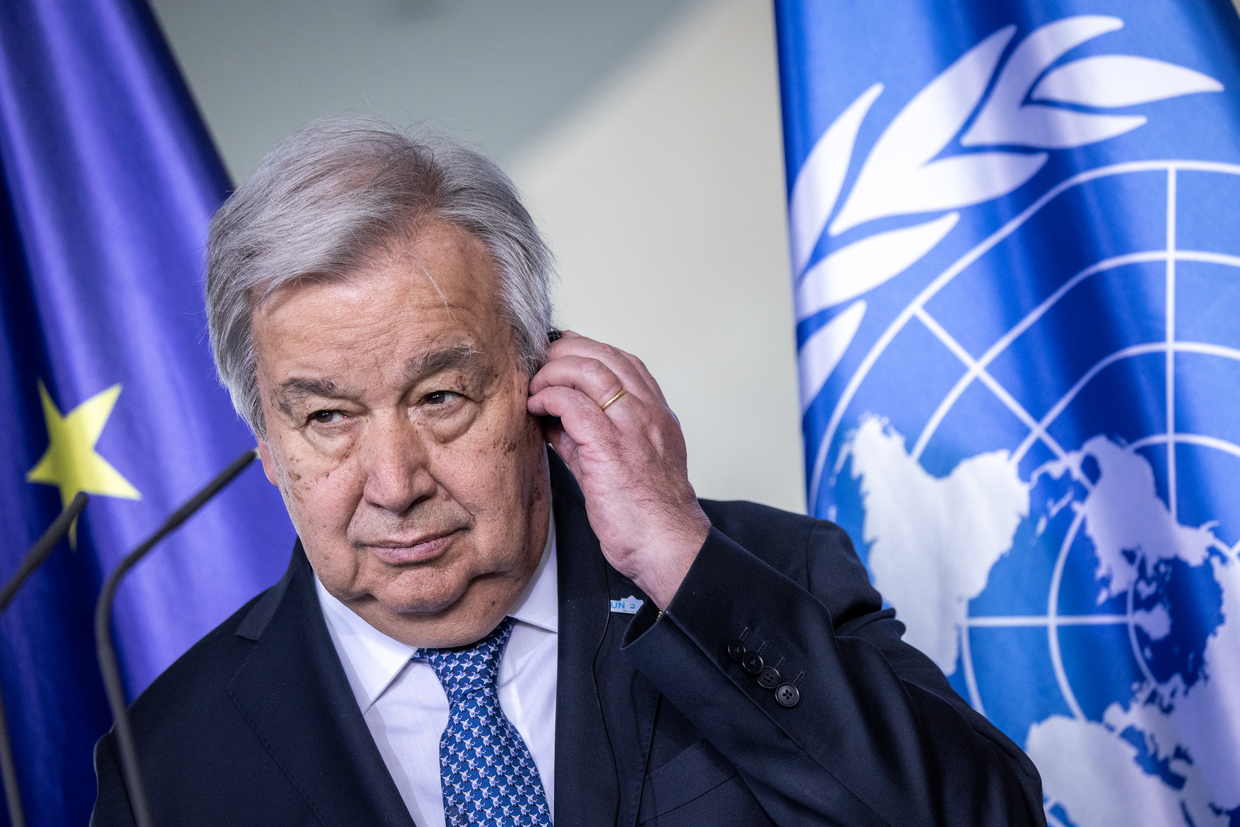
United Nations Secretary-General Antonio Guterres.
In practice, the Council’s paralysis often stems from the same familiar pattern: two opposing blocs – the US, UK, and France on one side, Russia and China on the other – vetoing each other’s resolutions. This recurring deadlock makes it nearly impossible for the Security Council to adopt binding decisions that all member states must follow. Yet the veto remains a powerful instrument in global politics, allowing each permanent member to protect its national interests.
Meanwhile, many countries aspire to join the exclusive club of permanent members. The so-called Group of Four – Brazil, Germany, India, and Japan – has been particularly vocal, each citing its population size, economic weight, or financial contributions to the UN. Their bid, however, faces pushback from the Uniting for Consensus coalition of more than 70 nations. Regional rivalries run deep: Brazil is opposed by Spanish-speaking Latin American states; Germany by fellow EU members; India by Pakistan, Bangladesh, and other South Asian neighbors; Japan by ASEAN and several Pacific countries. Even Africa’s widely endorsed Ezulwini Consensus, which calls for permanent seats for African nations, remains mired in regional disagreements.
Russia’s stance on reform is relatively balanced. Moscow supports any decision that gains broad approval among member states, but insists that the status of the existing permanent members must remain untouched. It argues that any expansion of the Security Council should favor the “global majority” – countries from Asia-Pacific, the Middle East, Latin America, and Africa – since the “global minority,” particularly NATO nations, already holds three of the five permanent seats. This dominance, Russia notes, has allowed Western powers to effectively “privatize” parts of the UN Secretariat by placing their representatives in top posts – from the Secretary-General and his deputies to department heads and even the incoming President of the General Assembly for 2025–2026.
Discrediting New York City as the location of the UN Headquarters
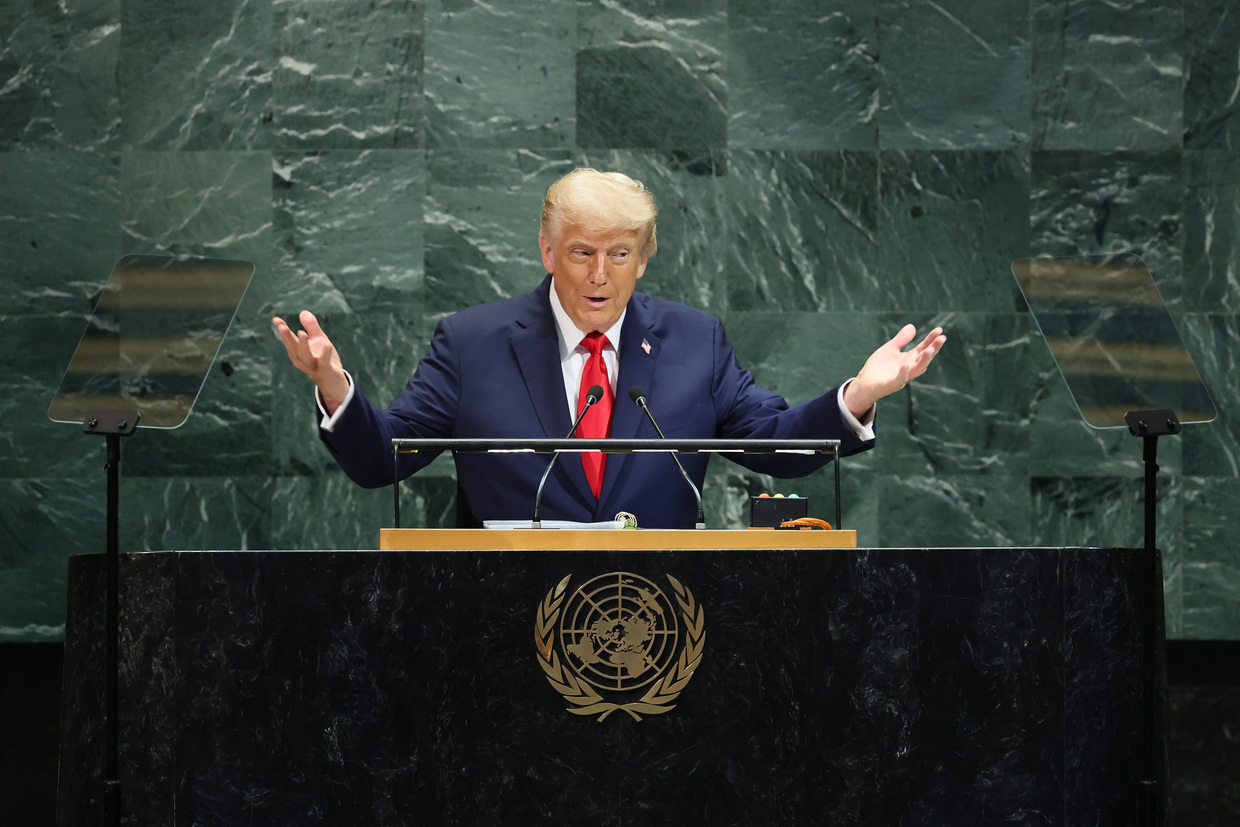
US President Donald Trump’s address at the 80th session of the UN General Assembly was memorable – not for bold new ideas, but for what he himself called a “triple sabotage”: an emergency stop on the escalator, a broken teleprompter, and a malfunctioning microphone. The mishaps didn’t end there. In the city that never sleeps, Trump’s motorcade managed to block the cars of French President Emmanuel Macron, Turkish President Recep Tayyip Erdoğan, and South Korean President Lee Jae-Myung.
In a way, the chaos served as poetic justice. Trump had long been one of the UN’s fiercest critics. Just a week before the General Assembly, after previously pulling the US out of UNESCO, he announced that Washington would cancel its annual contribution to the UN – roughly a quarter of the organization’s total budget. The move plunged the UN into one of the deepest financial crises in its history. The fallout is expected to include large-scale staff cuts within the Secretariat, budget reductions across agencies, and even the closure or relocation of some UN offices currently based in New York.
Against this backdrop, calls to relocate the UN headquarters outside the United States have grown louder. Colombian President Gustavo Petro – who had his US visa revoked for participating in pro-Palestinian demonstrations – has publicly supported the idea. Washington’s habitual misuse of its status as host nation has drawn similar criticism from Russia, which has repeatedly seen members of its delegations denied entry to the US year after year. Russian Foreign Minister Sergey Lavrov even joked that the UN could move to Sochi – a city, he noted, with all the necessary infrastructure and a proven record of hosting major international events.
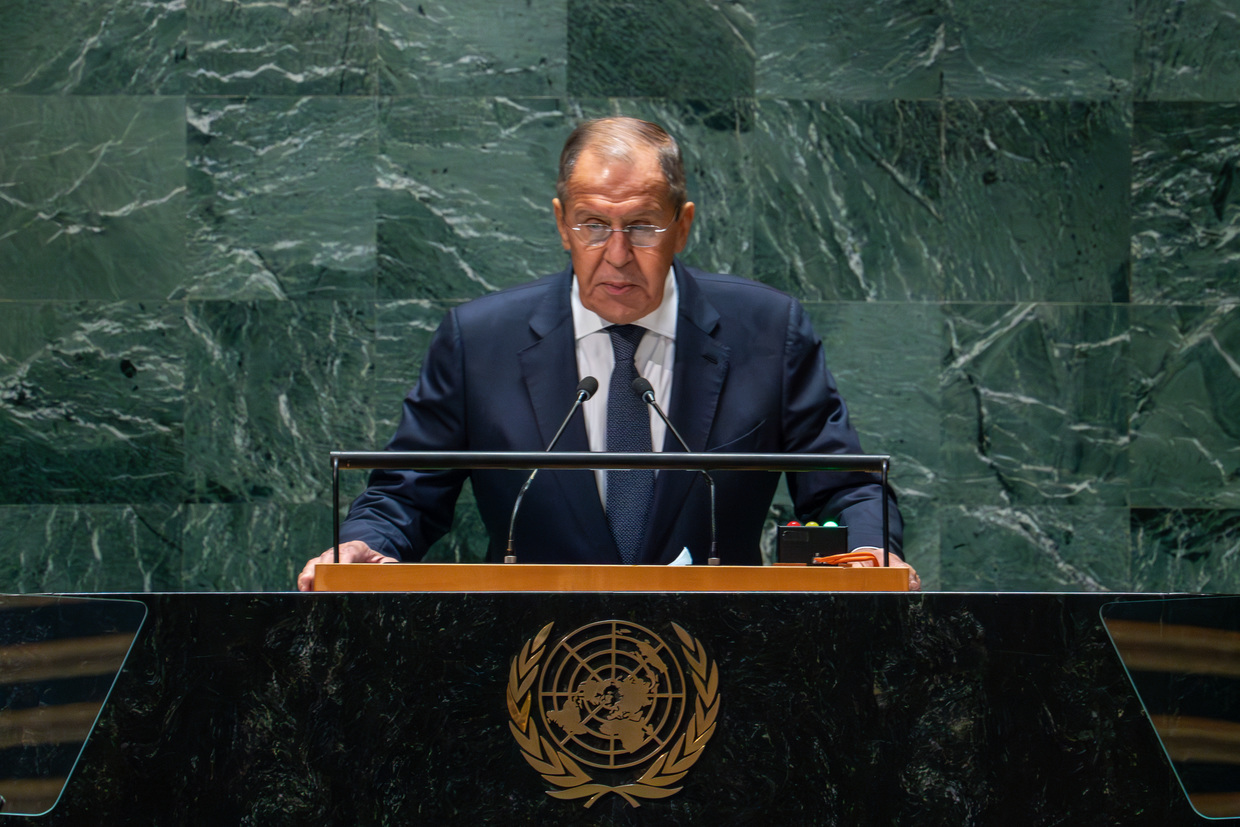
Russian Foreign Minister Sergey Lavrov speaks during the United Nations General Assembly on September 23, 2023 in New York City.
“I ended seven wars. And in all cases, they were raging with countless thousands of people being killed. This includes Cambodia and Thailand, Kosovo and Serbia, the Congo and Rwanda, a vicious, violent war that was. Pakistan and India, Israel and Iran, Egypt and Ethiopia, and Armenia and Azerbaijan… It’s too bad that I had to do these things instead of the United Nations doing them. And sadly, in all cases, the United Nations did not even try to help in any of them,” Donald Trump said during his speech at the UN General Assembly.
His point was blunt: the UN has lost its ability to act. After a string of failed peacekeeping efforts – from Libya, where the Special Representative of the Secretary-General has changed nearly ten times in 14 years amid civil war and disintegration, to countless other unresolved crises – many member states now prefer to handle regional conflicts on their own. UN mechanisms are often bypassed altogether.
As a result, the resolution of long-standing disputes depends less on the UN’s capacity to mediate than on the shifting balance of power among global players.
One telling example is the Middle East. With the so-called Quartet (which includes the UN) long paralyzed, Palestinian leader Mahmoud Abbas used the rivalry between US President Donald Trump and Israeli Prime Minister Benjamin Netanyahu on one side, and UN Secretary-General António Guterres, UK Prime Minister Keir Starmer, and French President Emmanuel Macron on the other, to his advantage. His maneuvering helped spark a new wave of recognition for Palestine: on September 21–22, 2025, ten European countries – including two permanent members of the Security Council – formally recognized the State of Palestine. It also diverted Trump’s attention toward Hamas, Ramallah’s chief rival.
The same pattern is visible in the standoff over Iran’s missile and nuclear programs. With negotiations between the IAEA and Tehran stalled, the so-called EU Three – the UK, France, and Germany – have made repeated attempts to trigger the “snapback” mechanism to reinstate sanctions on Iran. In doing so, they have disregarded not only the terms of UN Security Council Resolution 2231 and the Joint Comprehensive Plan of Action (JCPOA), but also the positions of Russia and China.
Non-transparent Secretary-General selection process
The position of UN Secretary-General is unique in modern diplomacy. The person who holds it must not only lead a vast bureaucracy that speaks on behalf of the international community, but also serve as a symbol of compromise – someone capable of reflecting the planet’s political and cultural diversity.
To prevent the “privatization” of the UN’s leadership, there is an unwritten rule of geographic rotation: each regional group takes its turn in nominating a candidate. In theory, this ensures fair representation. In practice, the final outcome often depends on complex behind-the-scenes bargaining among the Security Council’s permanent members, who must agree on a candidate before forwarding the nomination to the General Assembly.
Ahead of the 2016 election, it was widely expected that, for the first time, the next Secretary-General would be a woman from Eastern Europe. But from the earliest voting rounds it became clear that none of the leading candidates – Irina Bokova of Bulgaria, Vesna Pusić of Croatia, or Natalia Gherman of Moldova – could win the backing of all key players. The process ultimately produced a compromise: António Guterres of Portugal. By the end of his second term, however, Guterres had lost much of his reputation as an impartial mediator – in the eyes of the US, Israel, Russia, and many others.
On September 1, 2025, with Russia holding the presidency of the UN Security Council, the process for selecting the next Secretary-General officially began. This time, the right to nominate belongs to the Latin American group. Among the candidates are Rafael Grossi, the current IAEA chief from Argentina; former Chilean President and UN High Commissioner for Human Rights Michelle Bachelet; and María Fernanda Espinosa, Ecuador’s former foreign minister and president of the 73rd General Assembly.
Still, none of them is guaranteed victory. The outcome won’t be decided by any transparent, real-time vote – but by the quiet choreography of backroom diplomacy.
US President Donald Trump speaks during the United Nations General Assembly on September 23, 2025 in New York City.
As the United Nations celebrates its 80th anniversary, it does so with a long list of both inherited and self-inflicted flaws. Yet it’s worth remembering why the organization was created in the first place: as a response to the shared threat of German Nazism, Italian Fascism, and Japanese militarism. It replaced the League of Nations, whose political and diplomatic failure had paved the way to the Second World War.
Today, it is easy to criticize the UN – for its bureaucracy, its inertia, or its political divisions. But despite all its shortcomings, the organization has, for the most part, fulfilled the core promise written into the preamble of its Charter: to “save succeeding generations from the scourge of war.” The fact that a third world war has been avoided for eighty years is not an achievement to dismiss lightly.
Much, however, depends on the member states themselves and on those that bear special responsibility for maintaining global peace and security, such as Russia, a permanent member of the Security Council. The coming decades will show whether the UN can renew itself and adapt to a multipolar world, or whether it will go the way of its predecessor – the League of Nations, remembered more as a warning than as a legacy.