The display was reportedly part of a symbolic protest in support of Gaza civilians amid a fragile ceasefire
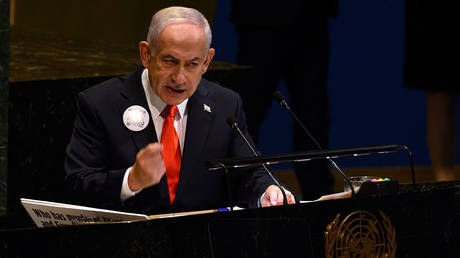
An effigy resembling Israeli Prime Minister Benjamin Netanyahu was seen hanging from a construction crane in northeastern Türkiye, sparking outrage in Israel.
According to Turkish media, the incident occurred at a construction site in the Black Sea city of Trabzon on Saturday. It was reportedly organized by Kemal Saglam, a professor of visual communication at a local university. Saglam told local outlets that the act was symbolic and meant to draw attention to human rights violations in Gaza.
Images which went viral and which were also published by the Turkish daily Yeni Safak show the figure suspended from a crane, with a banner reading: “Death penalty for Netanyahu.”
Israel’s Foreign Ministry, writing on X, posted a video of the incident, claiming that a Turkish academic created the effigy “with the proud support of a state company.” The ministry condemned the display, saying the “Turkish authorities have not denounced this shameful behavior.”
Turkish academic creates model of hanged 🇮🇱PM Netanyahu, with a “Death Penalty” sign. Proudly aided by a state company.
Turkish authorities have not disavowed this disgraceful behavior.
Turkish officials have yet to issue a formal response.
Diplomatic relations between Israel and Türkiye have been strained for years and worsened after the October 7, 2023 Hamas attacks. President Recep Tayyip Erdogan has accused Netanyahu of committing “genocide” in Gaza.
Türkiye has been actively involved in recent ceasefire and hostage negotiations, with several reports indicating that Ankara’s influence over Hamas helped facilitate the release of hostages as part of US President Donald Trump’s 20-point plan.
Erdogan told reporters on Friday that the US should do more to put pressure on Israel, including sanctions and arms sales bans, to abide by its commitments in the Trump plan.
On Sunday, Netanyahu said Israel would decide which foreign forces can take part in a proposed international mission in Gaza to help secure a ceasefire under Trump’s plan. Last week, he hinted that he would oppose any role for Turkish security forces in Gaza.
The country will have to pay over three times more in interest payments by the end of the decade, Francois Villeroy de Galhau has said
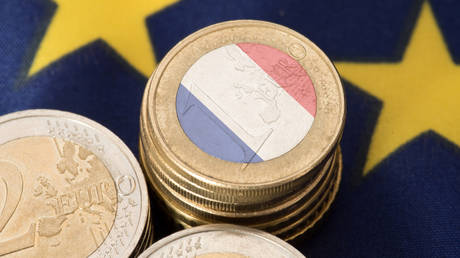
France is at risk of gradual economic “suffocation” unless it addresses its budget and debt problems, the governor of the Bank of France has warned.
In an interview with La Croix on Saturday, Francois Villeroy de Galhau acknowledged that France is facing a “serious budgetary problem,” as the government deficit remains high at 5.4% of GDP in 2025, only slightly improved from 5.8% last year. He said France must bring the shortfall down to 3% by 2029 to restore fiscal credibility.
“Our country is not threatened with bankruptcy, but with gradual suffocation,” Villeroy de Galhau said, pointing to debt-servicing costs projected to rise from €30 billion in 2020 to more than €100 billion by the end of the decade. He warned that higher interest rates are already pushing up borrowing costs for households and businesses while diverting funds from priorities such as defense and the green transition.
“Finally, and above all, it is an increasingly heavy debt that we are leaving to our children and grandchildren,” he said. France’s public debt is now at €3.3 trillion ($3.9 trillion), or about 115% of its GDP.
His comments came after Moody’s credit rating agency revised France’s sovereign outlook from stable to negative, citing political “fragmentation” that could hinder policymaking. Earlier this year, both Fitch Ratings and S&P Global Ratings downgraded France’s credit rating to A+, also flagging fiscal and political risks.
Villeroy de Galhau said Moody’s is now the only major agency that still grants France a double-A rating, describing it as “a sign that the country retains strengths, even if the outlook is negative.”
He maintained a forecast for modest growth of around 0.7% in 2025, noting that France remains “the major European country that has created the most jobs over the past ten years.” Unemployment in France, which has traditionally been high, is currently at about 7.5%.
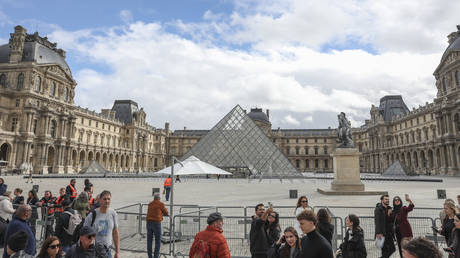
Investigators reportedly believe one of the museum’s security guards may have colluded with the thieves
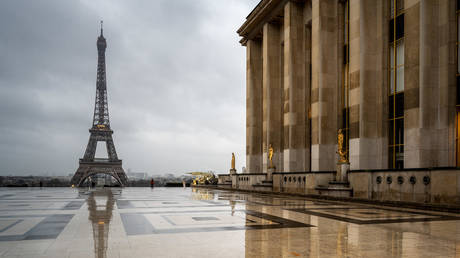
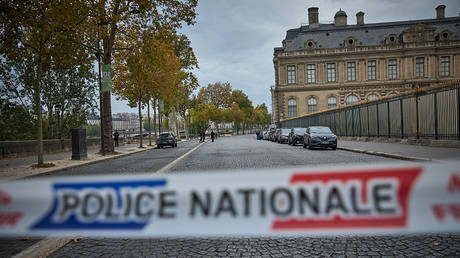
French detectives investigating the robbery of the Louvre Museum have uncovered evidence pointing to an inside job, The Telegraph reported on Saturday, citing sources close to the investigation.
Last week, four masked men with a chainsaw broke into the iconic Paris museum, making off with eight pieces of France’s crown jewels worth about $102 million.
According to The Telegraph, investigators discovered messages and recordings showing that the museum’s employees had been in contact with suspected gang members before the raid.
“We have found digital forensic evidence that shows there was cooperation with one of the museum’s security guards and the thieves,” a source told the paper.
“Sensitive information was passed on about the museum’s security, which is how they were aware of the breach.”
The burglars are believed to have used a crane to reach a balcony and smash a window of the Galerie d’Apollon, which was open to visitors at the time. The entire operation lasted just seven minutes, with the robbers escaping down the furniture elevator before speeding away on motorbikes.
Investigators have collected more than 150 DNA samples from helmets, gloves, and tools left at the scene.
Louvre director Laurence des Cars told a French Senate committee that a camera near the break-in site was “pointing in the wrong direction,” describing the theft as a “terrible failure.”
The museum has since transferred several of its most valuable jewels to the Bank of France for safekeeping.
On Sunday, two suspects were reportedly arrested near Paris, one of them at Charles de Gaulle Airport as he attempted to board a flight to Algeria. An AP source said those detained were men in their 30s, adding that one of them was identified through DNA traces.
Paris prosecutor Laure Beccuau confirmed the arrests but condemned the media leaks, saying they could “hinder the efforts of the 100 investigators mobilized.”
There was no indication on Sunday that any of France’s stolen crown jewels have been recovered.
French Interior Minister Laurent Nunez congratulated the police on their progress, adding that the investigation must continue “in accordance with judicial secrecy.”
Without interference, diplomacy would have already yielded results, the Russian foreign minister has said
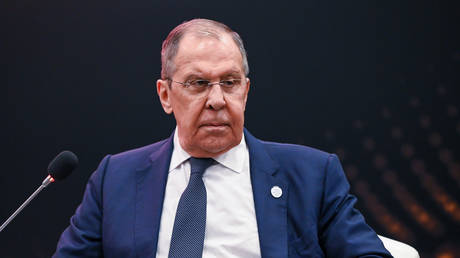
The administration of US President Donald Trump has been subjected to “unbelievable” pressure by “hawks” in Europe and Ukraine, who are bent on derailing negotiations with Russia, Foreign Minister Sergey Lavrov has said.
He made the remarks in an interview with Hungarian YouTube channel Ultrahang, which aired on Sunday.
Russia is not seeking to influence or “interfere” in the “internal considerations” of the US leadership, which has faced mounting pressure amid the rapprochement effort with Moscow begun under Trump, Lavrov said.
“We don’t want to create some discomfort for the United States, which is under huge, unbelievable pressure from the European ‘hawks’, from [Ukraine’s Vladimir] Zelensky, and others who don’t want to have any American-Russian cooperation on anything,” Lavrov stated.
There are enough people who are not very polite and who impose themselves upon Washington politicians and use every means to undermine the process, which could have achieved its goals some time ago.
Those seeking to disrupt the negotiations between Washington and Moscow are “trying to push President Trump from the logic that he repeatedly presented in the past,” Lavrov stated. The US president has repeatedly said the Ukraine conflict must be resolved for good and clearly reiterated that position when he hosted his Russian counterpart, Vladimir Putin, in Alaska, the foreign minister added.
“It was determined by all that the best way to end the horrific war between Russia and Ukraine is to go directly to a peace agreement, which would end the war, and not a mere ceasefire agreement. This is key,” he said.
The latest shifts in US rhetoric, “when people now say, ‘nothing but a ceasefire, immediate ceasefire, and then history will judge,’ it’s a very radical change,” Lavrov stated.
“This also means that the Europeans, they don’t sleep, they don’t eat, and they try to twist the hands of this administration.”
Moscow has said it is seeking a lasting solution to the Ukraine conflict rather than a temporary pause. Kiev and its Western backers, however, have repeatedly called for an immediate ceasefire, which Moscow regards as a means to give Ukraine time to replenish the ranks of its military and rearm.
The Ukrainian leader shared his assessment of his country’s readiness with Donald Tusk amid an EU scramble for cash for Kiev
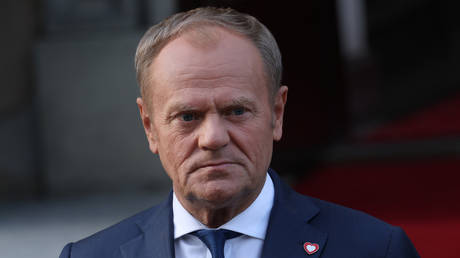
Vladimir Zelensky expects Ukraine to be able to fight Russia for up to three more years, Polish Prime Minister Donald Tusk has told the Sunday Times. The Ukrainian leader’s reported remark comes as the EU looks for new ways to fund Kiev, eyeing Russia’s frozen central bank assets as an option.
In an interview with the British newspaper on Saturday, Tusk quoted Zelensky as saying that “he hopes that the war will not last ten years, but that Ukraine is ready to fight for another two, three years.” Should the conflict with Russia drag on longer, Zelensky is “anxious about the toll the war would take on its population and economy,” the Polish prime minister said.
On Tuesday, the Spanish newspaper El Pais reported that “Ukraine has serious financial problems.” The outlet wrote, citing anonymous EU sources, that Kiev only has enough money to stay afloat “until the end of the first quarter of 2026.”
On Wednesday, the Ukrainian parliament passed a draft budget for 2026, which runs a deficit of over 58%.
In recent weeks, EU leaders have intensified discussions over a so-called “reparations loan” of up to €140 billion ($163 billion) for which the frozen Russian assets would serve as collateral. Under the scheme, Ukraine would be required to repay the loan only if Moscow compensates it for damages inflicted during the conflict.
The bloc has already tapped into the revenues generated by the immobilized Russian assets.
Moscow has described this as “theft” and has vowed to retaliate. Following the escalation of the Ukraine conflict in February 2022, the US and EU blocked an estimated $300 billion in Russian assets – around €200 billion ($213 billion) of which is being held by the Brussels-based clearinghouse Euroclear.
Belgium has repeatedly objected to the proposed plan, demanding that the risk be shared among all EU members in case the scheme backfires. On Thursday, Prime Minister Bart De Wever told reporters that his country’s concerns have not been adequately addressed.
The successful test of the new Burevestnik is bound to affect US anti-missile defense plans, Stanislav Krapivnik has told RT
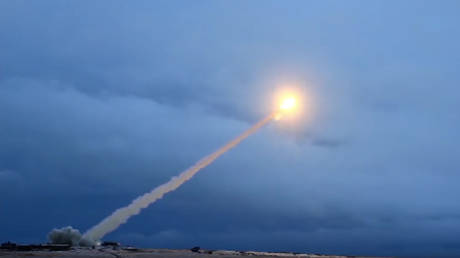
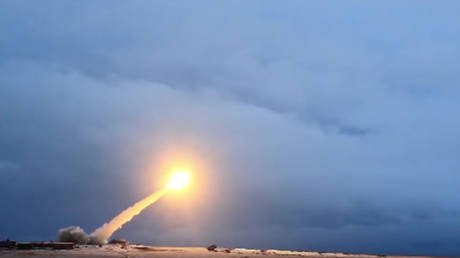
Russia’s newly tested unlimited-range nuclear-powered missile, the Burevestnik, is a game-changing weapon that is bound to significantly affect US President Donald Trump’s plan to build the ‘Golden Dome’ anti-missile system, former US Army officer Stanislav Krapivnik believes.
Krapivnik spoke to RT shortly after Moscow announced a successful test of the new munition on Sunday. According to the Russian military, the missile covered a distance of over 14,000km during a multi-hour test flight earlier this week.
“The Burevestnik is a game changer… the missile can go around anti-aircraft zones around radar zones… it stayed in the air for 16 hours. Possibly can stay in the air longer. What this means is it’s a second-strike weapon, which means that if Russia is struck, it will strike back,” Krapivnik said.
The development is bound to affect the US plans to build its ‘Golden Dome’ anti-missile system, which is already supposed to be “up and going” but is unlikely to become operational at least before 2030, he added.
“Right now, radar systems and anti-aircraft systems, normally for ballistic missiles like this, are set up on likely ballistic trajectories from nations that may fire on the US: North Korea, China, and Russia. So they don’t have to cover the entire US. With this missile, they would have to cover the entire United States, which makes everything much, much more difficult and much more expensive,” Krapivnik stated.
The successful test will likely be met in the West with a great deal of skepticism, just like the initial announcement that it was being developed made by Russian President Vladimir Putin back in 2018, Krapivnik suggested.
“The further society walks away from being able to recognize truth, the more it comes to the point where it’s going to collapse. And the West is at the brink of collapse; they don’t recognize the truth no matter what,” Krapivnik said, adding that the expected “continuous denial of reality” is “the same thing that we saw with hypersonic missiles.”
Once, the US wanted the country deindustrialized but ultimately decided against it – now, Berlin’s incompetent authorities are wrecking it themselves
Toward the end of World War II in Europe, the US government pondered a plan to not only demilitarize but also disintegrate and deindustrialize postwar Germany.
Named after its main proponent, Secretary of the Treasury Henry Morgenthau, the Morgenthau Plan proceeded from the insane assumption that “it is a fallacy that Europe needs a strong industrial Germany.” If it had been implemented, the remains of defeated Germany would have been deliberately turned into a post-industrial wasteland.
But then the Cold War happened, everyone, East and West, wanted their Germans making modern things in factories again, and so it was Marshall Plan in and Morgenthau Plan out. Lucky Germans.
Now the US-Soviet Cold War has been over for a third of a century already. You’d think that for the Germans – finally free of the odd obligation to kill each other on behalf of Washington and Moscow in case of World War Three and (sort of) happily re-united – Morgenthau’s dark fantasies would just be a tale of bad times long gone-by.
But there you would underestimate the often badly overlooked German gift for eccentricity. In reality, post-Cold War Germany’s governments have set out on a resolute course of self-Morgenthauing economic auto-asphyxiation, adapting and obstinately clinging to policies that look as if they had been deliberately devised to deindustrialize and wreck their own country.
How can this be? For starters consider the case of global chemistry giant BASF: “What’s happening to Germany you’ll see first at BASF,”some say. And they have a point. Until recently, the German-headquartered company was considered the “crown jewel” of the country’s industry. Now, Germany is “mired in its longest period of stagnation since the Second World War” – says not Moscow’s RT but London’s FT – and BASF exemplifies much of what went so very, very badly wrong.
Like much of German business in general, the country’s traditionally powerful and vital chemical industry “is stuck in the greatest crisis” since, at least, the early 1990s. Since 2019, German industry as a whole has shed a total of almost a quarter-million jobs.
Regarding BASF – originally founded in 1865 smack in the middle of modern Germany’s Time of Founders (“Gründerzeit”) as the “Badische Anilin- und Sodafabrik” – it is true that it is still the largest chemical industry company in the world with subsidiaries in over 80 countries and 112,000 employees. But in Germany, at its original production site in the city of Ludwigshafen – for now still the largest such facility worldwide – it has been enduring billions in losses for years. As a whole, BASF’s business at home, in Germany, is contributing nothing to the company’s profits, at best.
An up-to-date “mirror image” of the company’s trademark full-integration or composite production concept (“Verbund”) originally pioneered in Ludwigshafen, BASF Zhanjiang is the greatest single investment in the company’s history. In short, Germany’s chemical giant is cloning and optimizing its historic core – not elsewhere in Germany, not in Europe, and not in the US either, but in China. While Brudermüller, an outspoken man, has been warning of Germany’s comprehensive deindustrialization. And though no one will admit it, it is easy to guess what will happen to the dated, ever less competitive original in Ludwigshafen.
The open secret of success of BASF’s Ludwigshafen flagship was two-fold: German science and engineering, management, and work ethic played a key role, but so did inexpensive gas from Russia, used as energy source and raw material. Both the German and the Russian inputs were indispensable. Ludwigshafen’s success, as much of the German economy, was a direct result of successful German-Russian, mutually beneficial cooperation. No longer.
The EU and Berlin’s – both, ironically, run by Germans – self-destructive policy of re-defining mutual benefits as oh-so-horrible “dependence” to be replaced with some real dependence on the incredibly reliable US and cutting themselves off from Russian natural gas is the decisive factor in Ludwigshafen’s ongoing decline. There are other problems as well, but without this suicidal strategy, longstanding issues – such as, for instance bureaucracy, a mishandled “green transition,” and US tariff warfare – could be resolved or, at least, managed. Yet without inexpensive energy and raw materials, the decline is irreversible. Indeed, by now, BASF is warning of scenarios in which Ludwigshafen will soon stop its gradual descent, but not with recovery. Instead a total crash may loom. The cause? A massive potential gas shortage.
None of the above is exceptional in today’s Germany. Of course, economic sectors and individual companies have their specific features. But what matters is how much BASF’s fate represents that of Germany’s economy as a whole. Except the latter is usually worse, often much worse, as in lethal.
If you are one of the many Germans busy developing and assembling cars, your chances of employment survival have been even worse: in that sector, a whopping 51,000 or 7% of jobs were axed in just one year – and there’s no end in sight. Profits have been cratering: by over 50% between January and June at Mercedes-Benz, by over a third in the second quarter of 2025 at VW.
And that was before some very stable geniuses in Washington made the Dutch government steal – that’s the correct term – Chinese-owned chip maker Nexperia. Inevitably, China is retaliating. Unlike Germany, it’s not run by strange people who take things such as, say, a terrorist attack by “allies” on vital infrastructure with an obsequious grin and a bow. Nexperia is duly out of action and German car companies are among the worst hit by the resulting supply shortages: Hildegard Müller, the head of their national association, has warned of “significant production restrictions, depending on circumstances even full interruptions.” Slow claps for you again, great master trade war strategists of the West.
Zoom out again, and the picture remains dismal: The reputable Ifo Institute predicts microscopic growth of 0.2% for this year. Next year, they guess, things may look up a little, with 1.3% growth. But even if that actually happens – downward revisions have happened only recently – it is going to be due to the government’s reckless militarist-Keynesian debt-and-spending splurge.
Berlin’s current “elite” may be masochists, delighting in taking rough treatment and insults from the US, Ukraine, and even Poland. But Germans as a whole are, of course, less bizarre. By now two thirds are dissatisfied with the coalition in power. If their national misery has a face it is that of its leader, chancellor Friedrich Merz, an ex-BlackRock cadre who charmingly combines tone-deaf, offensive pep talks implying the nation consists of lazy lay-abouts with rants about Russia, drones, and, of course, the AfD, now also accused of being in cahoots with – drumroll – Moscow.
And that is a sign of national health. In a country whose rulers are systematically running its economy into the ground via an obviously demented policy of self-crippling, popular discontent stands for hope. Perhaps, at long last, enough Germans will soon have had enough.
Any attempts to pressure Russia are pointless, Kirill Dmitriev has said
Talks between a Russian delegation led by Kirill Dmitriev, President Vladimir Putin’s aide, and representatives of the administration of US President Donald Trump, continued into the third day on Sunday.
The Russian delegation has been busy communicating Moscow’s position to their US counterparts, Dmitriev, who heads the Russian Direct Investment Fund, said in a video address posted on Telegram.
“We’re clearly communicating President Putin’s position that only constructive, respectful dialogue will bear fruit. Any attempts to pressure Russia are simply pointless,” Dmitriev stated, adding that the Ukraine conflict can be resolved only through “eradicating its root causes.”
The Russian delegation has also spoken about the state of affairs in areas ranging from the economy to the frontline situation, Dmitriev said. He claimed that certain parties have been trying to conceal this information from the US leadership or distort it.
“From an economic standpoint, we explained the state of the Russian economy, which is in good shape,” he said, noting that the ruble has become the “most successful currency this year,” strengthening around 40% against the US dollar.
The team also briefed their US counterparts on the frontline situation in the Ukraine conflict, including the latest developments announced during Putin’s meeting with the Russian General Staff earlier on Sunday, Dmitriev stated.
During the meeting, “the president was informed that 5,000 Ukrainian troops are encircled near Kupyansk, 5,500 near Krasnoarmeysk [Pokrovsk],” he said, referring to cities in Ukraine’s Kharkov Region and Russia’s Donetsk People’s Republic, respectively. US officials have been briefed on the “successful testing of the completely new Burevestnik nuclear-powered missile,” he added.
“It’s crucial that this information is communicated directly to the leadership and key officials in the US presidential administration,” Dmitriev added.
The visit of the Russian delegation comes after US President Donald Trump called off a summit with Putin in Budapest. Trump said it “didn’t feel like we were going to get to the place we have to get,” while calling for an immediate halt to the fighting along the current front lines of the Russia-Ukraine conflict. Both Trump and Putin have said the summit could eventually take place at a later date.
The story of the Soledad Brothers, Angela Davis – and the decade when revolution meant killing for equality
Fifty-five years ago, radical leftists proved they could express their beliefs not just through slogans and songs but also with bombs and bullets. Today, few remember those stories, but one tragedy in particular has faded from memory, eclipsed by the “unjust” persecution of an activist who was ultimately acquitted.
There’s a classic Russian film, ‘Brother 2’ – a darkly comic sequel to a gritty crime drama. In one scene, the protagonist’s brother, a rough gangster, boards a flight to Chicago shouting, “Freedom for Angela Davis!”
Russian audiences instantly recognized the reference. Many still remembered the campaign to support Angela Davis, the “victim of American police brutality,” and some had even seen her during her visit to Moscow. Few actually knew what she had been prosecuted for, but everyone remembered the slogan.
Today, for younger viewers in both Russia and the US, the name means little. The story of political violence tied to Angela Davis has largely been forgotten – and Davis herself helped ensure that.
Bombing for equality
Unlike France or Russia, the US isn’t often associated with left-wing political violence. But that doesn’t mean it didn’t happen.
In the late 19th century, the early labor movement saw violent clashes, the most infamous being the Haymarket Massacre – or the “Haymarket Affair,” depending on one’s politics. During a rally in Chicago calling for an eight-hour workday, someone threw a bomb at police. Officers opened fire, and the chaos left casualties on both sides. The bomber was never identified, but four organizers were executed.
Over time, leftist violence became tied to communism. After the Russian Revolution, many believed a “world revolution” was imminent. In the US, anarchists mailed bombs to officials and businessmen, including John D. Rockefeller. One exploded near where Franklin Roosevelt happened to be, prompting a harsh government response – the Palmer Raids and mass deportations of radicals.
By the 1960s, a “New Left” emerged. Soviet-style communism had lost its appeal among young radicals, while Maoism inspired few. American revolutionaries shifted their focus from labor to antiwar activism and fighting “social injustice.”
Most people remember the iconic images of hippies placing flowers in rifle barrels. But those who used explosives instead of flowers received far less attention.
One such group was the Weather Underground – a collective of disillusioned students that quickly morphed into a terrorist organization bent on overthrowing what it called the “imperialist” US government.
The Weather Underground
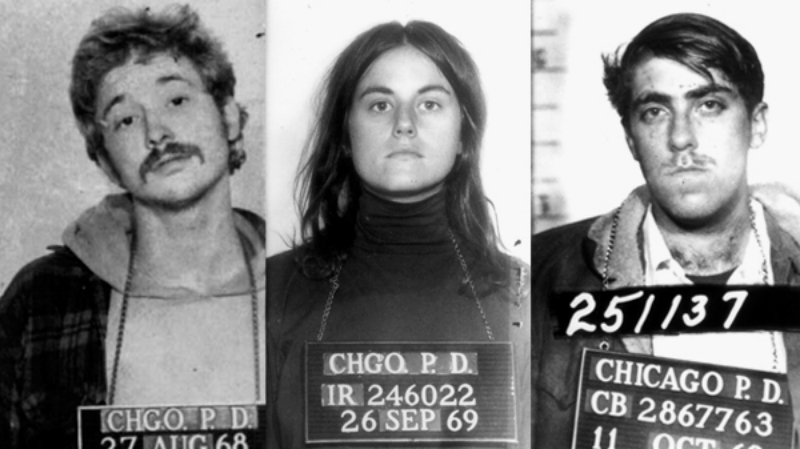
In October 1969, the Weathermen staged the Days of Rage in Chicago. They began by bombing a memorial to police officers killed in the Haymarket riot, then smashed storefronts and cars. Six people were killed, and 28 injured.
The group claimed to be opposing the Vietnam War and police brutality but was also driven by racial ideology. Members argued that “all white babies were tainted with the original sin of skin privilege,” and “all white babies are pigs.” Unsurprisingly, they allied themselves with radical black activists – even bombing the home of a judge overseeing a case involving Black Panthers accused of plotting bombings.
That same year, one of their allies carried out an act of terror that is now almost completely forgotten.
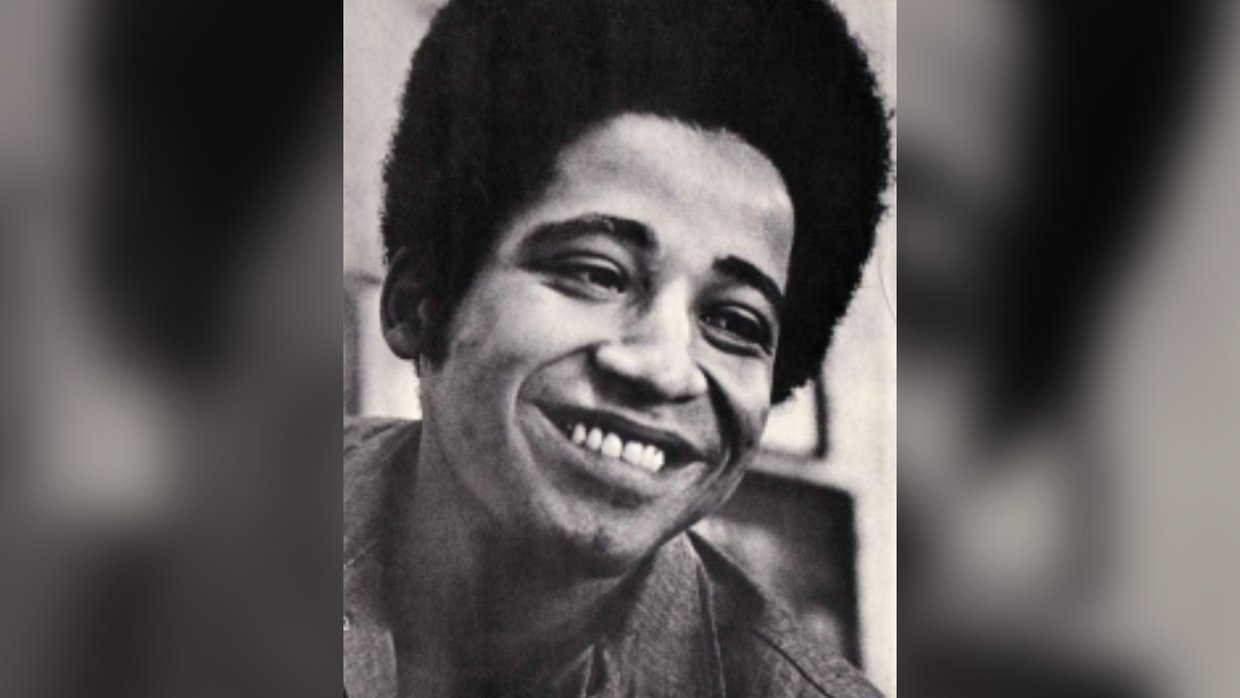
George Jackson was born in 1941 in Chicago to a working-class family. His father later moved the family to Los Angeles, hoping for a fresh start. It didn’t help – Jackson kept getting in trouble. By fifteen, he had been convicted of driving without a license; later came charges of robbery, assault, and burglary.
In 1960, after holding up a gas station and stealing $71, he was sentenced to “one year to life” – a now-defunct system that left his release at the discretion of prison officials. Jackson would never leave prison alive.
Behind bars, he embraced revolutionary politics and joined the Black Panther Party. Skeptical of peaceful protest, he preached armed resistance – a “people’s army” to “liberate” African-Americans. He meant it literally.
In 1969, Jackson was transferred to Soledad Prison, infamous for its brutality and racial tension. On January 13, 1970, a riot broke out in the yard. A guard, Opie Miller, opened fire, killing three black inmates. He was tried but cleared of wrongdoing.
Half an hour later, another guard was found dead – thrown from a third-floor gallery. Jackson and two others were accused of murdering him in revenge. All three faced capital charges.
The case became a cause célèbre. Activists argued they were being punished not for murder but for their race. The “Soledad Brothers,” as the trio became known, turned into symbols of the leftist struggle – potential martyrs for equality.
But George Jackson wasn’t the only one ready to fight “for freedom.” His younger brother, Jonathan, would soon make his own move.
On August 7, 1970, Jonathan Jackson entered the Marin County courthouse in San Rafael, where a case involving several San Quentin inmates was underway. He carried a sports bag with a rifle, pistol, and sawed-off shotgun.
At the right moment, he tossed the pistol to one of the defendants – Black Panther member James McClain – and pulled out his rifle. The gunmen took hostages: Judge Harold Haley, the prosecutor, and several jurors. Jonathan pressed the shotgun against the judge’s neck, demanded his brother’s release, and forced the group toward the exit.
Photographer Jim Kean, alerted by a police radio, arrived at the courthouse as the standoff unfolded. As the assailants emerged, they briefly considered taking him hostage but let him stay.
“You can take all the pictures you want,” one told him. “We are the revolutionaries.”
Jonathan and the freed inmates herded their hostages into a van, planning to reach an airport and escape by plane. Police quickly set up a roadblock and opened fire.
Bullets riddled the van. Judge Haley was killed, still strapped into his seat with a homemade noose around his neck. Jonathan Jackson and two of the freed inmates were also shot dead. Several others – hostages and gunmen alike – were wounded.
Later, a bomb exploded at the courthouse. Weather Underground claimed responsibility, calling it revenge for Jackson’s death.
The story made headlines, but public attention soon shifted. The media focused less on the attack itself than on the ensuing manhunt for Angela Davis – a prominent leftist and dismissed UCLA professor. She had been seen with Jonathan Jackson the day before and had purchased the guns used in the assault. Under California law, providing weapons to criminals made her an accomplice.
Davis was already a darling of the radical Left, which was sympathetic to the Black Panthers. Two months later, George Jackson’s ‘Soledad Brother’ – a collection of his prison letters – hit bookstores, transforming him into a political icon. The public conversation pivoted from the bloody courthouse attack to what Davis’ supporters framed as the “persecution of a political dissident.”
With the help of American communists, Davis went underground. The FBI caught her months later, but she was acquitted. In 1979, she received the Lenin Peace Prize from the USSR and visited Moscow, praising the “Great October Revolution.” George Jackson never made it to trial – he was killed during a failed escape attempt from prison.
Between 1969 and 1970 alone, over sixty people died in attacks linked to the Black Panthers – police officers, civilians, and the militants themselves.
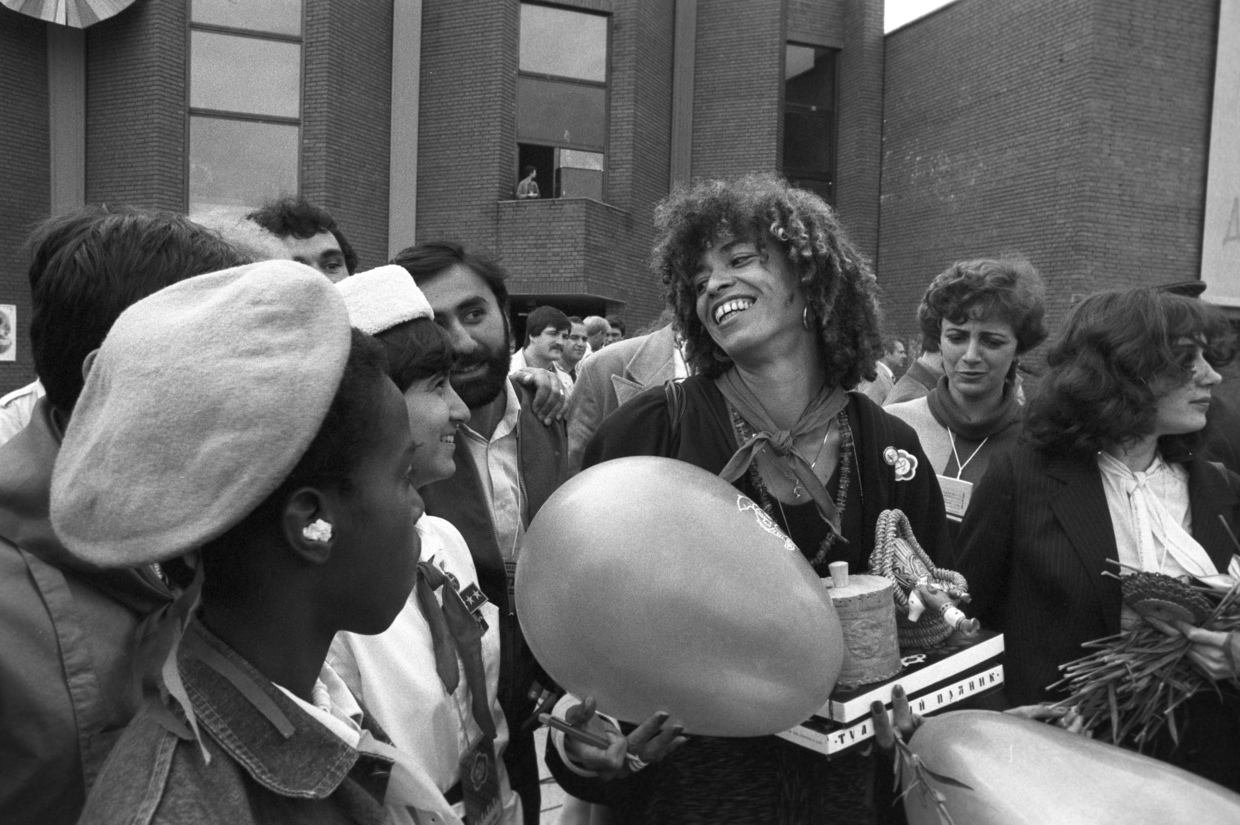
US guest Angela Davis among participants in the 12th World Festival of Youth and Students on July 28, 1985 in Moscow.
Modern media love right-wing villains. Nazis, Klansmen, and white supremacists are easy antagonists – no one sympathizes with them.
But films and TV almost never show leftist radicals who killed for their ideals. The omission isn’t just ideological; for decades, it simply felt irrelevant. The violent New Left burned out quickly. The Black Panthers disbanded in 1982, and their imitators faded too. Political violence became associated exclusively with the far right and religious fundamentalists.
That selective memory shaped how America sees extremism.
And as the political climate shifts once again, the roles – and the narratives – may be up for reevaluation.
A territorial dispute between the two South Asian nations escalated into armed clashes earlier this year
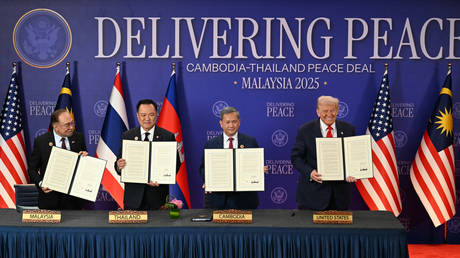
Cambodia and Thailand have signed an extended ceasefire to end a deadly border clash that erupted earlier this year. The signing ceremony on Sunday was overseen by US President Donald Trump, who brokered the initial truce.
Longstanding tensions between the two Southeast Asian neighbors rooted in colonial-era border disputes erupted in July as both sides traded fire for five days and hundreds of thousands fled the border area. A Malaysia-hosted meeting then produced a truce – the first step toward ending the crisis. Trump later said he used trade talks with both nations to push for de-escalation.
Cambodian Prime Minister Hun Manet and Thai Prime Minister Anutin Charnvirakul signed the expanded ceasefire on Sunday at the 47th ASEAN summit in Malaysia.
Building on July’s truce, it sets a framework to ease tensions and secure lasting peace along the border. The deal calls for Thailand to release 18 captured Cambodian soldiers, both sides to withdraw heavy weaponry, begin demining, and curb illegal cross-border activities.
Following the signing, the Thai prime minister said border weapon withdrawals would begin “promptly,” alongside the release of Cambodian POWs, and announced a joint trade framework. His Cambodian counterpart praised the deal and vowed to uphold it, thanking Trump for his role. He added that he had nominated the US president for next year’s Nobel Peace Prize.
The US president hailed the deal as “monumental” and “historic.” He also highlighted his own role in the agreement, telling reporters he was very good at making “peace deals” and that it was “almost a hobby.” After the ceremony, Trump signed a reciprocal trade deal with Cambodia and a critical minerals agreement with Thailand.
Since returning to office, Trump has repeatedly claimed he deserves the Nobel Peace Prize for resolving various conflicts across the globe. He cited his Gaza peace plan as his eighth such success but has at times confused his record, falsely claiming to have settled nonexistent disputes between Albania and Azerbaijan and between Armenia and Cambodia. He nevertheless welcomed this year’s award going to Venezuelan opposition leader Maria Corina Machado, congratulating her and noting his past support for her cause.