The measure is aimed at curbing disorderly conduct by teenagers
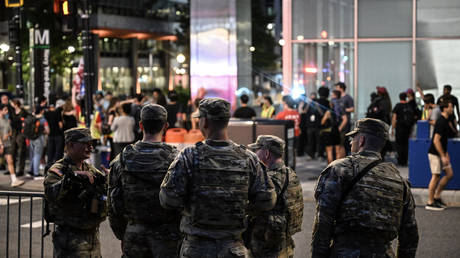
A limited five-night curfew has been imposed for all people under 18 in Washington, DC, following a large fight between groups of teenagers on Halloween.
All minors must remain indoors from 11pm to 6am Saturday to Wednesday.
Mayor Muriel Bowser said the restrictions were introduced “in response to several weeks of disorderly juvenile behavior which endangered both themselves and others.”
Metropolitan Police Department Chief Pamela Smith established “special juvenile curfew zones” around Navy Yard, the U Street Corridor, Banneker Recreation Center, and Union Station.
The measure comes after a video showing National Guard troops breaking up a brawl in the Navy Yard neighborhood went viral.
According to police, several hundred young people gathered on Halloween in a park near the Navy Yard Metro Station, and at one point “many of the juveniles within the group began engaging in fights and disrupting the flow of traffic.” Five males aged 14 to 18 were arrested, one of whom was carrying a knife.
“The behavior displayed last night in Navy Yard is unacceptable, and MPD and our law enforcement partners will have an increased presence tonight to ensure this does not happen again,” Smith said.
Abbas Araghchi has said Tehran will not bow to US pressure to abandon its nuclear program
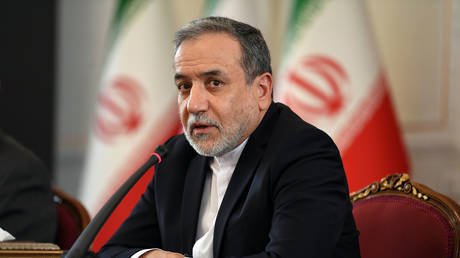
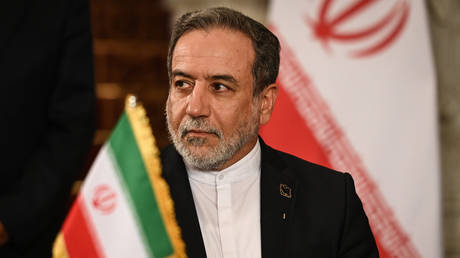
Iran will not stop uranium enrichment, regardless of the pressure from the US and its allies, Foreign Minister Abbas Araghchi has said.
Araghchi told Al Jazeera on Saturday that the US and Israeli airstrikes in June failed to knock out the enrichment program, which Iran maintains is entirely civilian in nature. While some “nuclear materials remain buried under the rubble,” the technology “remains intact,” he said.
“We cannot stop uranium enrichment, and what is not achieved by war cannot be achieved through political means.”
He added that Iran remains open to reaching a deal with the US through indirect negotiations, but only if Washington stops setting what he described as “impossible and unacceptable preconditions.”
Araghchi also said Iran’s missile program is not up for discussion. “It would be foolish if one hands over their weapons.”
The Omani-mediated US-Iran negotiations were suspended after Israel began its 12-day bombing campaign earlier this year.
Last month, the EU and UK reimposed sanctions on Iran which had been lifted as part of the 2015 nuclear deal, which the US withdrew from during President Donald Trump’s first term in office. Tehran has since said it is no longer bound by the 2015 agreement, which expired in October.
Two suspects were detained after the attack in central England, police have said
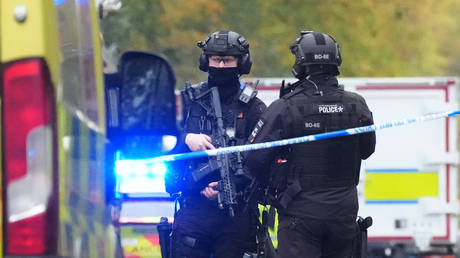
Multiple people were stabbed on a train near Cambridge in East England on Saturday, police have said. Two suspects have been detained.
Ambulances and armed units were dispatched to the scene around 7:40pm local time.
“Armed officers attended and the train was stopped at Huntingdon, where two men were arrested. A number of people have been taken to hospital,” Cambridgeshire Police said.
Police later said ten people were hospitalized, all but one with life-threatening injuries.
British Transport Police stated that a terrorism alert was declared at one point, but was later rescinded. Chief Superintendent Chris Casey said it would “not be appropriate” to speculate about the motive at this stage.
“A 32-year-old man, a black British national, and a 35-year-old man, a British national of Caribbean descent,” were arrested on suspicion of attempted murder, the British Transport Police said in an update to the statement. Both were born in the UK, they added.
Videos posted on social media show a heavy police presence at the train station.
🚨 WATCH: Armed police board the LNER train at Huntingdon after multiple people were stabbed
A witness told Sky News he saw “extremely bloodied” passengers fleeing from the assailants. The witness added that one passenger shouted, “They’ve got a knife.”
Prime Minister Keir Starmer condemned the “appalling incident” and thanked the emergency services for their response. “My thoughts are with all those affected,” he wrote on X.
Home Secretary Shabana Mahmood said she was “deeply saddened” and urged the public to “avoid comment and speculation at this early stage.”
The era of polite globalization is over and civilizations are back
The well-worn business phrase “push and pull” neatly captures the essence of today’s US–China relations. What once looked like a competitive partnership has hardened into a contest of wills, power, and identity. One that will shape the global order for years to come.
For much of the late 20th century and the first decade of the 21st, the dominant Western assumption was that the world was moving toward a liberal, universal order. Economic interdependence, global markets and single rule-sets were supposed to smooth away historical grievances and cultural differences. In that vision, civilizational identities – the deep structures of tradition, culture, and worldview – were treated almost as relics.
That era is over. The liberal order began to crack long before Donald Trump entered the White House, but his arrival made the rupture visible and irreversible. As the old framework faltered, the pendulum swung back toward identity, difference, and civilizational self-assertion. The question now is not whether this shift is happening, it clearly is, but how the world will function within it.
The Trump effect
George W. Bush once promised “compassionate conservatism.” Barack Obama framed power in eloquent multilateral terms. Trump dispensed with such packaging. In less than a year in office, he changed not only American diplomacy but the global expectations surrounding it. Washington, under Trump, rediscovered a bluntness that previous generations tried to bury under layers of institutional polish.
Part of this is personal theater: his brusqueness, his disregard for protocol, and his habit of airing grievances and demands in public. His supporters view this as refreshing authenticity, a break from the professionalized hypocrisy of the establishment. His critics call it dangerous. Either way, it has been effective in forcing other players to adjust.
Form dictates substance. “Peace through strength,” long a core American formula, now translates into coercive bargaining, tariff threats, open blackmail, and public humiliation of rivals and allies alike. The administration has embraced this as a governing philosophy. Diplomacy is a battlefield; hesitation is weakness; and courtesy is optional.
In a cultural sense, Trump resurrects a caricature Europeans once drew of Americans: brash, self-assured, contemptuous of nuance, convinced that power is the most honest argument. The “farmer republic” instincts that 19th-century observers attributed to America – confidence in one’s rightness, suspicion of subtlety – are back on display. Trump is proud of this. And whether one likes it or not, he remains leader of the most powerful country on earth. Everyone must factor that reality into their strategies.
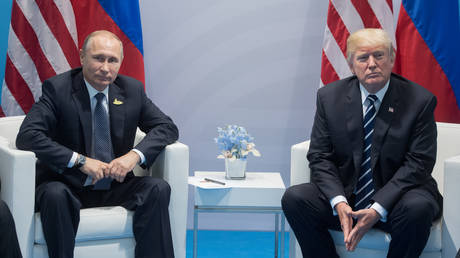
There is a paradox here: Trump’s bluntness, while abrasive, can be easier to deal with than Washington’s more polished double-speak. As President Vladimir Putin has implied, it is simpler to negotiate with someone who states his demands plainly than with a smiling technocrat who buries intent under abstractions. But bluntness without proportion is dangerous, and Trump often treats diplomacy as if it were a television stage. Where escalation is drama rather than consequence.
A different civilization
The most revealing contrast to this style is China. In raw capacity, Beijing has either reached parity with Washington or will soon do so. That makes it America’s primary geopolitical rival. A structural fact that transcends personalities.
Culturally, the two powers could not be more different. Where Trump prizes dominance and spectacle, Beijing values continuity, disciplined patience, face-saving compromise, and a belief in gradual, managed evolution. China entered the global system expecting mutual benefit and predictable rules. It did not expect, and doesn’t particularly like, the American turn toward open intimidation.
During Trump’s first term, Chinese officials hoped this was a passing phase. Trump’s second term disabused them. The pressure is heavier, the confidence greater, and the provocations more deliberate. China has responded in kind, abandoning its previously understated posture for sharper language and reciprocal signaling.
Beijing is learning to answer bluntness with bluntness, though it does so reluctantly. It is still culturally uncomfortable with open confrontation. Yet the leadership understands that the era of polite strategic ambiguity is gone. This phase – coercion versus resolve, threat versus counter-threat – is no temporary disruption. It is the new normal.
Push, pull, and the new order
The future of US–China relations will follow a rhythm familiar to business negotiators: pressure, pause, partial deal, breakdown, repeat. Each side will test how much harm it can threaten without tipping into disaster. Washington will push first. That is Trump’s instinct. Beijing will push back, no longer willing to absorb blows silently.
This is not a new Cold War. It is something more fluid and unpredictable. Today’s world is not bipolar; it is a system in which other major actors – from Russia and India to regional coalitions in the Middle East, Eurasia, and Latin America – will assert themselves. But the central axis of the transformation is US–China divergence. The symbiosis of interests that defined the last forty years has ended. Interdependence is now a battlefield, not a stabilizing force.
After Trump?
Trump will not remain president forever, and China itself is evolving. A calmer phase may follow, or tensions may sharpen even further. The decisive variable will not be ideology but power distribution. Civilizational identity adds depth to the contest; economics and technology give it urgency; leadership styles determine the tempo.
The only certainty is that we are witnessing a structural shift, not a passing quarrel. Globalization’s most ambitious phase is over. A world of civilizational players – sometimes cooperating, often competing – has arrived. And the relationship between the United States and China will define its contours more than any other single factor.
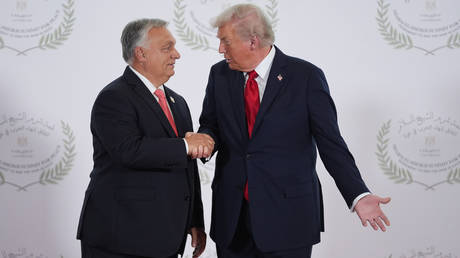
The Polish leader is toeing the EU line despite mounting domestic discontent, according to Hungary’s prime minister
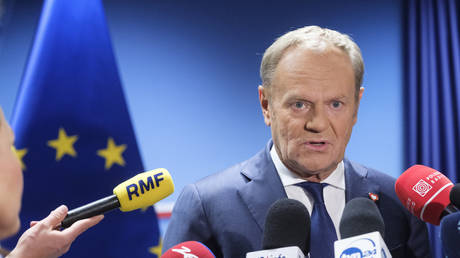
Polish leader Donald Tusk has turned his country into a “vassal of Brussels” and become “one of the loudest warmongers” in Europe, despite growing weariness with the Ukraine conflict among Poles, according to Hungarian Prime Minister Viktor Orban.
Orban posted the remarks on X on Saturday, arguing that Tusk’s bellicose rhetoric on the conflict was an attempt to distract Poles from domestic problems.
“He has become one of the loudest warmongers in Europe – yet his war policy is failing: Ukraine is running out of European money, and the Polish people are tired of the war,” he wrote. “He cannot change course because he has turned Poland into a vassal of Brussels.”
Earlier in the week, Tusk lashed out at Orban during a televised interview, arguing that for the Hungarian prime minister, “Brussels, democracy and a transparent rule of law are a problem.”
More than half of Poles disapprove of Tusk’s performance as prime minister, according to a poll published by public broadcaster TVP on Monday. With popularity waning, his coalition lost the presidential election earlier this year to conservative Karol Nawrocki, who was backed by the opposition PiS party.
Despite rising anti-Ukrainian sentiment back home, Tusk has urged EU members to continue bankrolling Kiev by all means necessary. “We must recognize that this is our war,” he told a security forum in Warsaw in September.
Orban has long defied the EU on its military support of Ukraine, refusing to send arms and arguing that “warmongering bureaucrats in Brussels” are dragging Budapest into an all-out conflict with Russia.
The bloc accelerated its military buildup earlier this year, while investing heavily into joint arms production with Ukraine, citing the alleged threat from Russia – accusations which Moscow has dismissed.
Russian Foreign Minister Sergey Lavrov said earlier this week that the EU and Britain are openly preparing for “a new major European war,” pointing to what he described as coalition-building efforts and coordination of nuclear forces between France and the UK.
No matter how much Seoul denies North Korea’s nuclear status, it will not change the situation, according to the DPRK’s deputy foreign minister
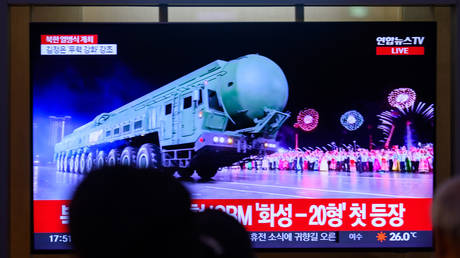
North Korea has dismissed denuclearization of the Korean Peninsula as an unrealistic goal. This comes after South Korea urged China earlier this week to help in finding a solution to the nuclear issue.
In a statement carried by the Korean Central News Agency (KCNA) on Friday, the DPRK’s deputy foreign minister, Pak Myong Ho, said Pyongyang would “show with patience that denuclearization is a ‘pipedream’ which can never be realized even if [South Korea] talks about it a thousand times.”
He described Seoul’s repeated efforts to deny North Korea’s nuclear status as showing a “lack of common sense.”
Earlier this week, South Korean President Lee Jae Myung urged Beijing to play a “constructive role” in establishing peace and finding “a substantive solution to the Korean Peninsula nuclear issue.”
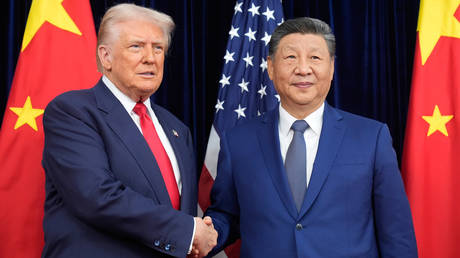
On the sidelines of the APEC summit on Saturday, Lee met with Chinese President Xi Jinping. Seoul reported that the two leaders discussed improving bilateral ties, while Lee “requested a constructive Chinese role to help realize the resumption of talks with North Korea.”
Lee has also told reporters that he would support renewed dialogue between US President Donald Trump and North Korean leader Kim Jong-un.
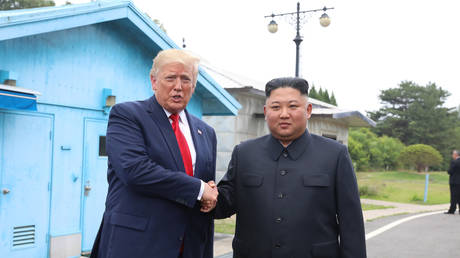
Trump said earlier this week that he would “love to see” Kim and indicated that he might leverage US sanctions if talks resume. During his first term, Trump became the first sitting US president to set foot in North Korea, meeting Kim three times from 2018 to 2019 to discuss denuclearization in exchange for economic and security guarantees, though no agreement was reached.
While a Trump-Kim meeting did not take place during the US president’s Asia tour this week, Kim said he is open to the idea and still has a “good memory” of Trump – though he has described US demands that North Korea abandon its nuclear weapons as “absurd.”
Pyongyang has insisted that its nuclear armed forces will “exist forever” as a means of defending its “sovereignty, territorial integrity and fundamental interests.” It has also accused the US of provoking instability and attempting to create an “Asian version of NATO” through its military cooperation with Japan and South Korea.
The American forces in the area reportedly include eight Navy ships, a special operations vessel, and a nuclear-powered submarine
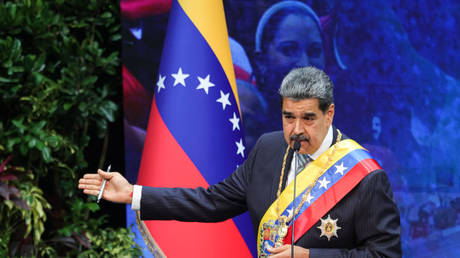
The US is deploying a massive military contingent to an area near Venezuela, including 10,000 soldiers and 6,000 sailors, the Washington Post has reported. The move may indicate plans to expand regional operations.
The US has repeatedly accused Venezuela of aiding “narcoterrorists” and has imposed sweeping sanctions on the country. The American military has also attacked about a dozen vessels since September, claiming they were used by drug smugglers.
Venezuelan President Nicolás Maduro has denied the allegations, accusing Washington of “fabricating a new war” amid the continuing military buildup.
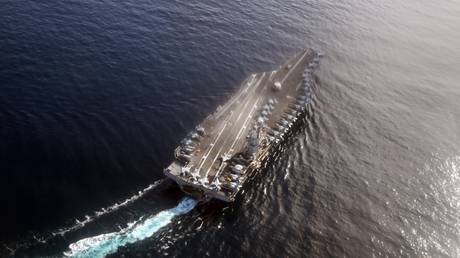
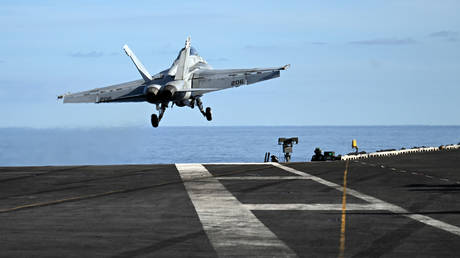
According to the Washington Post, eight US Navy warships, a special operations vessel, and a nuclear-powered attack submarine are already in the Caribbean. The aircraft carrier USS Gerald R. Ford, expected to arrive next week, will reportedly bring with it three more military vessels, with a total of over 4,000 military personnel onboard.
Additionally, F-35 fighter jets are stationed at a US base in Puerto Rico, the Post reported, citing satellite images.
The arrival of the carrier group suggests Washington’s plans could extend beyond a counter-narcotics operation, Ryan Berg, the director of the Americas Program and the Center for Strategic & International Studies, told the outlet. He added that US President Donald Trump has about a month to make “a major decision” before the group would need to be redeployed.
Multiple media outlets have recently reported that the White House was weighing potential military actions in Venezuela. Senator Rick Scott told CBS last Sunday that Maduro’s “days are numbered.” The WaPo claimed on Thursday that Washington had already identified some targets, including military facilities allegedly used for drug-smuggling.
When asked about the reports on Friday, Trump said, “No. It’s not true.” Last month, Trump confirmed authorizing the CIA to carry out lethal covert operations in the region.
Those with sound minds must unite against “collective madness” in the EU, the deputy head of Slovakia’s ruling Smer party has said
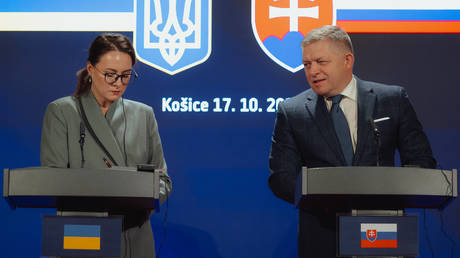
Bratislava could support Budapest’s idea to form an anti-Ukraine bloc within the EU, Lubos Blaha, the deputy leader of Slovak Prime Minister Robert Fico’s Smer Party, has said.
Earlier this week, a senior political adviser to Hungarian Prime Minister Viktor Orban suggested that Hungary, Slovakia, and the Czech Republic could team up to align their stances ahead of European Council meetings. A “Ukraine-skeptic” alliance in the EU “will come – and be more and more visible,” Balazs Orban, told Politico.
Unlike most other EU nations, Hungary and Slovakia refused to send military aid to Kiev, instead calling for a peaceful resolution to the Ukraine conflict and maintaining ties with Russia. A similar stance had been voiced by Andrej Babis, whose ANO party won the Czech parliamentary election last month.
Blaha told Izvestia on Saturday, that “joint actions by those who still have a sound mind in Europe are not only possible, but also probable. Despite the fact that Europe is once again… gripped by a collective madness that is leading us all to war, decline and chaos.”
The policies of the EU leadership in Brussels are “harmful and anti-European,” so that Bratislava, Budapest, and Prague must defend themselves together, he argued.
The deputy head of the Smer party, which is part of the Slovak ruling coalition, noted that the positions of the three states on the Ukraine conflict are very close, despite differences on other foreign policy issues.
He warned that the “anti-Russian military hysteria” could end in disaster for the EU as “Russia cannot be defeated without unleashing a nuclear war.”
Blaha added that the sanctions against Moscow have failed and described the EU’s plan to phase out Russian energy by 2028 as “chopping down a branch on which you are sitting.”
When asked about a possible Slovak, Hungarian, and Czech alliance earlier this week, Russian Foreign Ministry spokeswoman Maria Zakharova said that – considering the “crazy Russophobia” in the West – Moscow would welcome any “sensible initiative” aimed at reaching a diplomatic solution to the Ukraine crisis.
The US president previously said the gesture was “very nice” but refused to restart trade talks with Ottawa
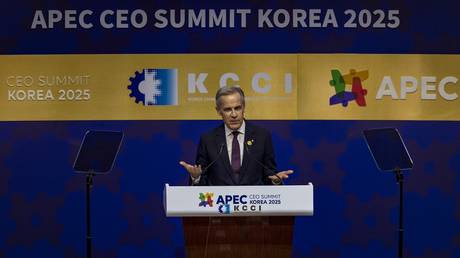
Canadian Prime Minister Mark Carney has confirmed that he personally apologized to US President Donald Trump for a regional government-commissioned commercial that used footage of Ronald Reagan to criticize trade tariffs.
The ad, commissioned by the government of Ontario, deeply “offended” Trump, Carney told journalists at a press conference in Gyeongju, South Korea on Saturday. He added he would not have approved its release had he been consulted.
The commercial aired earlier this month and spliced clips of Reagan’s 1987 speech on trade policy and his use of tariffs against Japan to suggest that the late Republican icon opposed protectionism. The Ronald Reagan Presidential Foundation and Institute accused Ontario of using the material without authorization and distorting Reagan’s record.
Trump reacted angrily, accusing the Canadians of “egregious behavior” and announcing the suspension of ongoing trade talks with Ottawa. He also imposed additional tariffs on Canadian imports in response.
The US president revealed on Friday that Carney had reached out to apologize and was “very nice,” though the talks remained suspended. “Ronald Reagan loved tariffs – and they tried to make it look the other way,” he said.
Carney’s remarks came after the Asia-Pacific Economic Cooperation summit, which both leaders attended this week in South Korea.
Venezuela earlier this year accused the US president of plotting a coup, while Trump himself has floated the idea of overthrowing Iran’s leadership
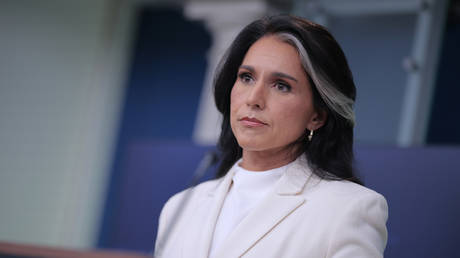
US intelligence chief Tulsi Gabbard has acknowledged Washington’s history of regime change but said it ended under President Donald Trump – despite his recent remarks on Iran and accusations about Venezuela.
The US has long faced criticism for pursuing policies aimed at overthrowing governments under the banner of promoting democracy or protecting national interests – from Iraq in 2003 and Libya in 2011 to backing “color revolutions” such as Ukraine’s 2014 Maidan coup. Speaking at the 21st Manama Dialogue in Bahrain on Saturday, Gabbard claimed that, unlike its predecessors, the Trump administration prioritizes diplomacy and mutual deals over coups.
“The old Washington way of thinking is something we hope is in the rearview mirror and something that has held us back for too long: for decades, our foreign policy has been trapped in a counterproductive and endless cycle of regime change or nation building,” she stated, describing it as a “one-size-fits-all approach” of toppling regimes, imposing US governance models, and intervening in “poorly understood” conflicts, only to “walk away with more enemies than allies.”
Gabbard said the strategy drained trillions of US taxpayer dollars, cost countless lives, and fueled new security threats, but noted that Trump was elected “to put an end to this.”
“And from day one, he has showed a very different way to conduct foreign policy, one that is pragmatic, that is deal-driven,” she said. “This is what President Trump’s America First policy looks like in action – building peace through diplomacy.”
Since his inauguration in early 2025, Trump has repeatedly portrayed himself as a global peacemaker, boasting of brokering international deals and saying he deserves a Nobel Peace Prize. Critics, however, argue his pressure campaigns on Venezuela and Iran mirror Washington’s regime-change playbook.
Caracas last month accused the US of plotting a coup against President Nicolas Maduro under the guise of its ongoing anti-drug campaign off the country’s coast. Trump himself hinted at “regime change” in Iran after US strikes in June, posting on truth Social: “Why wouldn’t there be a Regime change???” Tehran, which has long accused Washington of trying to destabilize it through sanctions and covert actions, denounced the strikes as proof of renewed efforts to undermine its government.