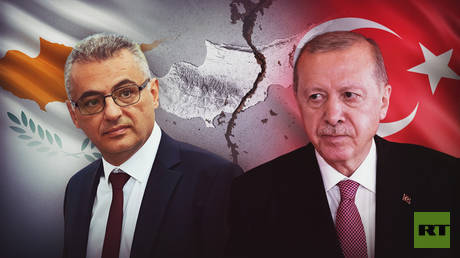
A quiet election on a divided island may mark the beginning of the end for Turkish dominance in the Eastern Mediterranean
While the world’s attention has been consumed by major global crises – and by US President Donald Trump’s bombshell statements – a quiet but consequential shift has taken place in the Eastern Mediterranean. It’s a story that has barely made international headlines, yet it may reshape the balance of power not only on this island, but across the region.
Last month, voters in the Turkish Republic of Northern Cyprus (TRNC) – an unrecognized state under Ankara’s patronage – elected a new president. Tufan Erhurman, leader of the left-leaning Republican Turkish Party, scored a decisive victory with more than 62% of the vote, defeating former President Ersin Tatar, who had campaigned on a hardline pro-Turkish, “two-state” agenda. Turnout reached nearly 65%, a sign of strong political engagement among Turkish Cypriots.
Erhurman’s win marks more than just a change in leadership. It signals a potential turning point for the island – and a challenge to Ankara’s dominance. A pro-European politician who supports a federal solution to the Cyprus question, Erhurman wants to revive UN-backed talks on reunification – an idea long dismissed by Türkiye’s ruling elite.
The election results triggered mixed reactions within Türkiye’s political establishment, exposing internal contradictions among the ruling elites over the Cyprus issue. Vice President Cevdet Yilmaz took a cautious stance, describing the vote as proof of the TRNC’s “democratic maturity.” President Recep Tayyip Erdogan also congratulated Erhurman. Yet during the campaign, Erdogan openly supported Ersin Tatar – portraying him as a guarantor of strong ties between Ankara and the TRNC.
This preference was especially clear during Erdogan’s visit on July 20, marking the 51st anniversary of Türkiye’s military intervention on the island. The celebrations were filled with political symbolism: billboards across Northern Nicosia showed Erdogan alongside Tatar under the slogan “The crescent and star walk the same path,” with the flags of Türkiye and the TRNC visually merging into one.
Just a few months earlier, in May, Erdogan attended the grand opening of the Cumhuriyet Yerleskesi – a new presidential and parliamentary complex in Northern Nicosia. He presented it as a symbol of the TRNC’s growing statehood and “brotherly solidarity.” Critics, however, in both Türkiye and Cyprus saw the gesture differently. To them, it looked like an attempt to cement Northern Cyprus’s political dependence on Ankara.
Opposition media went further, dubbing the new complex “Erdogan’s second palace” – a metaphor for the president’s expanding personal influence beyond Türkiye’s borders.
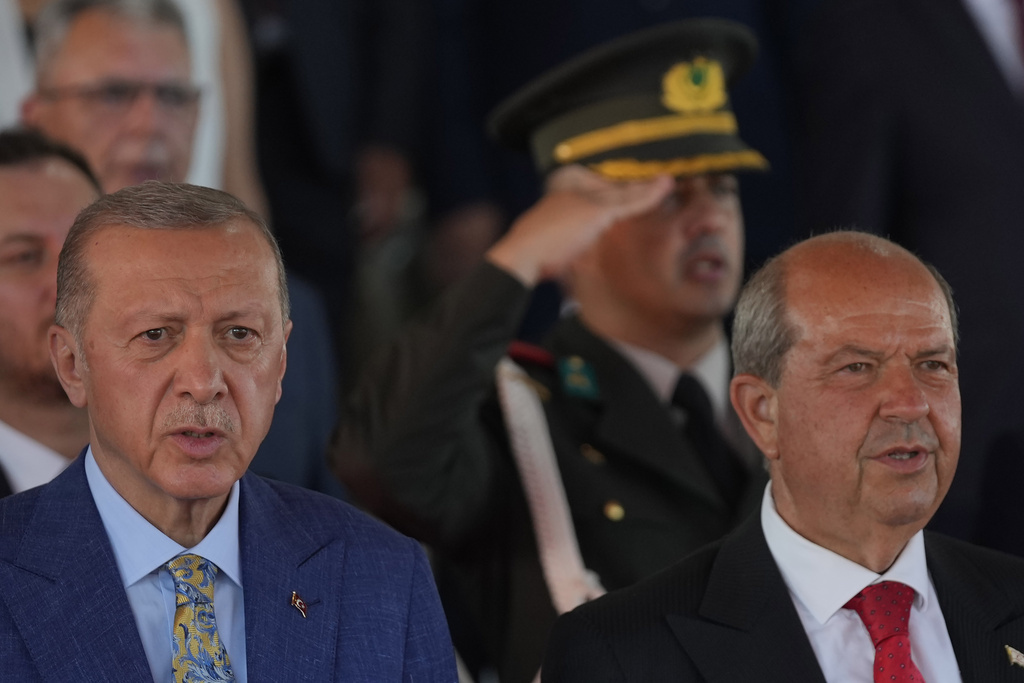
Turkish President Recep Tayyip Erdogan, left, and Cypriot leader Ersin Tatar attend a military parade, in the divided capital Nicosia, Cyprus, Thursday, July 20, 2023.
Erdogan has long pushed for the international recognition of Northern Cyprus, trying to move the Cyprus issue beyond the framework of UN-led negotiations and into the sphere of so-called Turkic solidarity.
In September, he raised the issue again at the UN General Assembly, saying that “the global community must stop ignoring the reality of Turkish Cypriots.” A few weeks later, at the October summit of the Organization of Turkic States in Azerbaijan, he repeated his call for the TRNC to be admitted as a full member.
Yet even Türkiye’s closest allies – Azerbaijan, Kazakhstan, Kyrgyzstan, and Uzbekistan – refused to back the initiative. The geopolitical risks of alienating the EU and the UN were too high. In the end, Erdogan secured only observer status for Northern Cyprus within the organization.
This outcome marked a clear limit to Ankara’s diplomatic reach. Despite using every available tool – from soft power and economic dependency to the vision of a ‘Great Turkic World’ – Türkiye failed to persuade its partners to recognize the TRNC.
The nationalists push back
Devlet Bahceli, leader of the Nationalist Movement Party and a long-time ally of President Erdogan, reacted sharply to the election results. Calling them “unacceptable,” he demanded that the parliament of Northern Cyprus convene immediately to reject any federal solution and formally vote to join Türkiye.
Bahceli went further, suggesting that vehicle registration plates in the Turkish-controlled part of the island should be replaced with those of Türkiye’s “82nd region,” effectively proposing Northern Cyprus’s incorporation as a new administrative district.
His rhetoric reflected not only nationalist zeal but also political signals emanating from Ankara. Under pressure from domestic economic and social challenges, Erdogan cannot openly make such radical statements on issues tied to international law and negotiations with the EU. Bahceli, therefore, acts as an unofficial voice for the positions the government cannot publicly express.
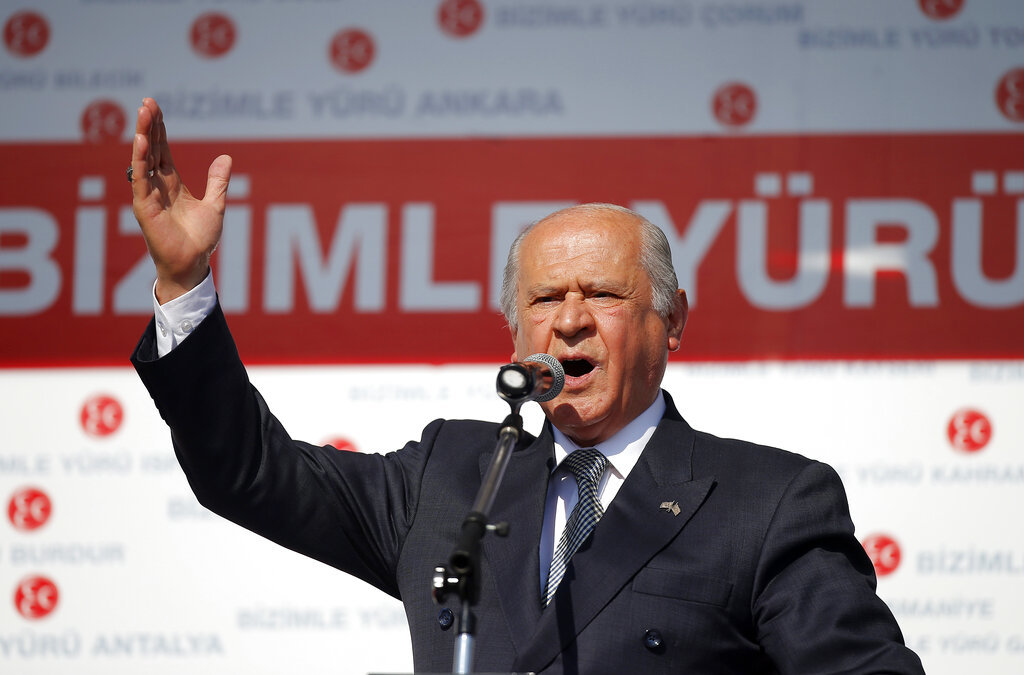
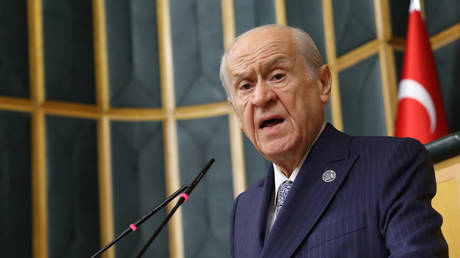
Devlet Bahceli, leader of the Nationalist Action Party, MHP, addresses an election rally in Istanbul, Turkey, Sunday, May 31, 2015.
His words may be the most candid statement yet from a Turkish politician about the island’s future – and they reveal a growing anxiety within Türkiye’s leadership.
A turning point for both sides of the island
Erhurman responded firmly to Bahceli’s remarks, calling them disrespectful to the right of Turkish Cypriots to self-determination. He noted that Northern Cyprus consults with Türkiye on foreign policy matters but “has never been part of Turkish territory.”
He emphasized that the key goal is to preserve democratic maturity and avoid rhetoric that undermines trust and mutual respect between peoples. For Erhurman, rigid insistence on isolation has brought nothing but economic and social hardship to the Turkish Cypriot community.
He reiterated his willingness to resume UN-led negotiations aimed at the reunification of the island within a federal framework governed by a single administration. This, he said, remains “the only path to lasting peace and integration into Europe.”
Nikos Christodoulides, president of the Republic of Cyprus, welcomed Erhurman’s electoral victory and expressed hope for an early meeting. He confirmed his readiness for substantive dialogue on the Cyprus issue, noting that the new political landscape “creates a window of opportunity for rebuilding trust and overcoming years of division.”
For the Greek Cypriot leadership, Erhurman’s win is seen as a chance to revive long-stalled UN negotiations on reunification. While deep mistrust remains, Nicosia views the new administration in the north as a potential partner capable of breaking the deadlock.
Ankara’s strategic anxiety
Ankara’s reaction to the election results goes beyond politics. For Türkiye’s leadership, the outcome represents not just a domestic setback, but a potential threat to its strategic position in the Eastern Mediterranean.
If the new administration in Northern Cyprus resumes negotiations and moves toward reunification, Ankara fears that the process could unfold under Greek and EU influence. In that scenario, Northern Cyprus might gradually drift out of Türkiye’s orbit, aligning instead with Athens and Brussels. Turkish analysts warn that such a shift would weaken the country’s geopolitical architecture – one built on maintaining control over key points in the Eastern Mediterranean and northern Syria.
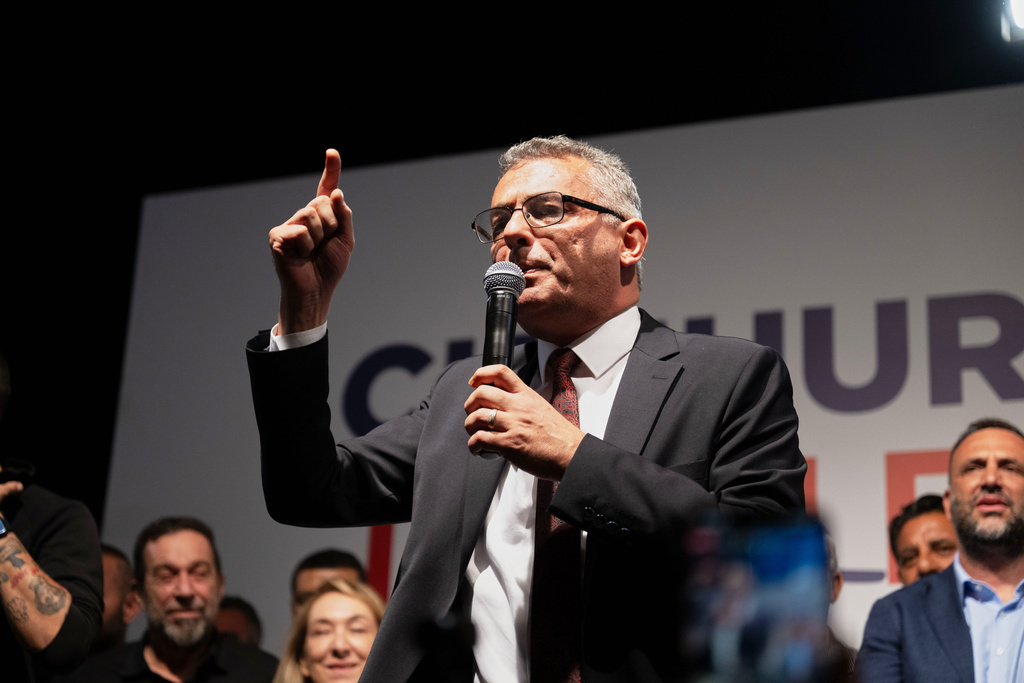
Turkish Cypriot newly elected leader Tufan Erhurman talks to supporters after winning the leadership election in the Turkish northern part of the divided capital Nicosia, Cyprus, Sunday, Oct. 19, 2025.
For decades, Northern Cyprus has served as a crucial extension of Türkiye’s regional strategy – both as a political ally and as a forward base securing Ankara’s access to energy routes, maritime zones, and surveillance operations. The idea of losing that foothold, even symbolically, raises serious concerns within the Turkish establishment.
Devlet Bahceli warned that the elections in Northern Cyprus could have far-reaching consequences for the wider region. If Turkish Cypriots succeed in pursuing federalization and secure institutional guarantees within a unified Cyprus, he argued, similar demands might emerge among other ethnic and religious groups across the Middle East – particularly among the Kurds and Druze in Syria.
From a nationalist perspective, such a development would set a dangerous precedent. It could encourage autonomy movements near Türkiye’s borders and challenge the territorial integrity of neighboring states – including Türkiye itself.
For Ankara’s hardliners, a federal Cyprus looks like a strategic trap – one that could erode the very foundations of Türkiye’s influence in the region.
An economy bound to Ankara
Northern Cyprus remains an area of Türkiye’s dominant influence. Key infrastructure projects – from transportation networks and water supply systems to energy grids and telecommunications – are built and managed by Turkish companies operating with state support.
Most funding for construction, energy imports, and public administration comes directly from Türkiye’s budget. This financial lifeline effectively turns the TRNC into an economically dependent subsystem integrated into Türkiye’s broader economic framework.
For Ankara, this dependence is a strategic instrument. Economic control allows Türkiye to maintain a direct presence in one of the most sensitive parts of the Mediterranean, securing both political leverage and long-term influence.
The island’s position adds another layer of importance. Its proximity to the Suez route and the Syrian coast makes control over Northern Cyprus central to Türkiye’s defense and intelligence strategy. The Gecitkale Airbase hosts Turkish aircraft and drones that monitor maritime and military activity across the Eastern Mediterranean – a reminder that for Ankara, the island is as much a geopolitical outpost as it is a political statement.
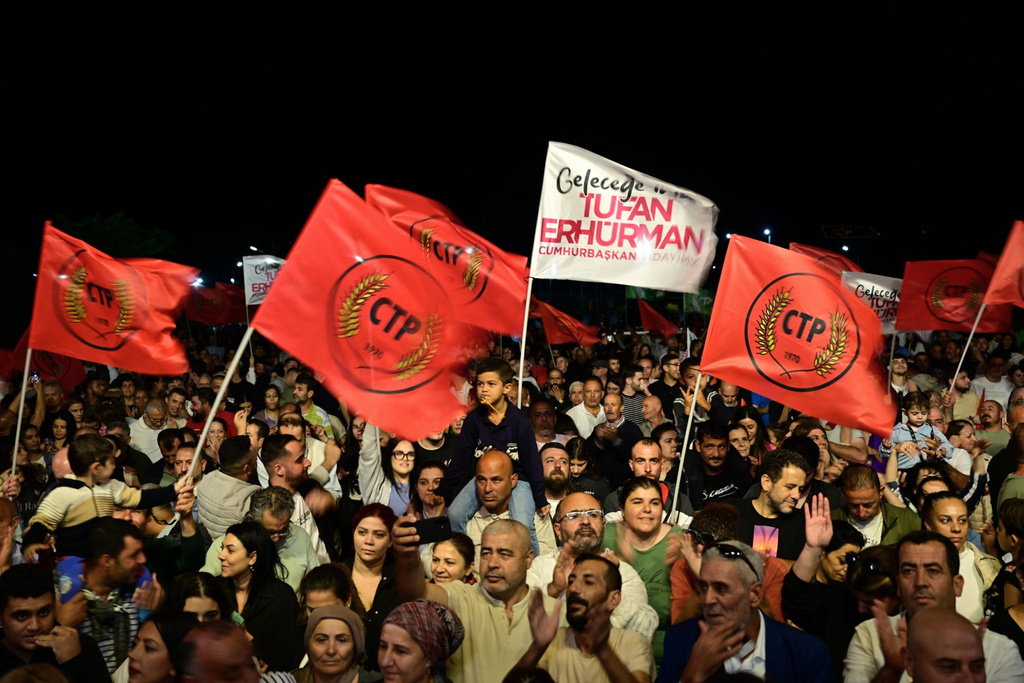
Supporters of the newly elected leader Tufan Erhurman celebrate after winning the leadership election in the Turkish northern part of the divided capital Nicosia, Cyprus, Sunday, Oct. 19, 2025.
Former President Ersin Tatar repeatedly emphasized this strategic logic during his campaign. He warned that adopting a federal model, as proposed by Erhurman, would inevitably lead to the withdrawal of Turkish troops from the island and the loss of Türkiye’s most important foothold in the Eastern Mediterranean.
Tatar argued that preserving the current status quo is essential to Türkiye’s national security. In his view, Northern Cyprus is a linchpin in Ankara’s wider defense and foreign policy – a front line in the ongoing contest over maritime borders, energy routes, and regional power balance.
He described Northern Cyprus as a “strategic shield” that protects Türkiye’s southern flank, insisting that any shift toward reunification would weaken this defense and embolden Türkiye’s rivals. For him and his supporters, maintaining the division of the island is not an obstacle to peace but a necessary condition for stability.
Missteps and miscalculations
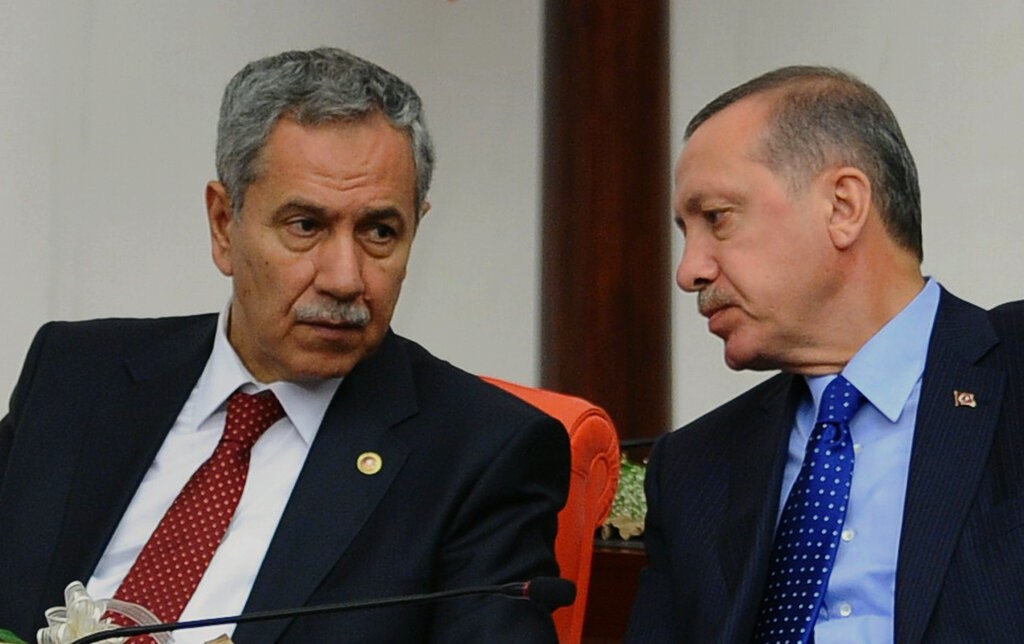
Bulent Arinc, co-founder of Türkiye’s ruling Justice and Development Party (AK), harshly criticized the campaign and the strategic mistakes that led to Tatar’s defeat. According to Arinc, Turkish political circles that openly backed Tatar displayed “flawed and clumsy” tactics.
He pointed to the campaign’s weak organization and the use of questionable public figures and celebrities, which only damaged Tatar’s credibility. Fake polls suggesting his inevitable victory, Arinc said, created a false sense of security and prevented the team from adjusting its strategy in time.
He also highlighted a cultural disconnect that alienated many voters. The campaign relied on nationalist symbols and folk songs from Türkiye’s Black Sea region – motifs that felt foreign to Turkish Cypriots, who generally hold more moderate and pro-European views.
For Arinc, the election served as proof that mechanically exporting Ankara’s political playbook to Northern Cyprus no longer works. What once guaranteed influence now exposes its limits.
Recep Tayyip Erdogan, right, and Bulent Arinc are seen at Turkey’s parliament in Ankara, Turkey
The elections in Northern Cyprus are more than a local political story; they signal a broader shift in the region’s balance of power. Erhurman’s victory reflects not only changing attitudes within the Turkish Cypriot community but also deeper political undercurrents inside Türkiye itself.
The ruling Justice and Development Party’s confrontational approach toward domestic opposition has shaped its dealings abroad – and the loss of a loyal ally in the TRNC mirrors the growing limits of that strategy. Erhurman, who leads the Republican Turkish Party, is ideologically close to Türkiye’s main opposition, the Republican People’s Party (CHP). His win is therefore symbolically and politically sensitive for Ankara.
Amid rising economic pressures and an increasingly divided electorate at home, the outcome in Northern Cyprus signals more than a diplomatic setback. It reveals the erosion of Erdogan’s ability to control even those political structures most reliant on Türkiye.
If Erhurman follows through on his campaign promises – seeking a federal solution to the Cyprus issue, strengthening ties with the European Union, and asserting greater political autonomy from Ankara – Türkiye could face a genuine geopolitical loss. Northern Cyprus, long seen as a loyal outpost, may begin to slip from Ankara’s grasp.
For Erdogan, who has built his image on restoring Türkiye’s global stature, losing political control over the TRNC would be more than a regional disappointment. It would be a symbolic blow – proof that the era of Ankara’s uncontested influence in the Eastern Mediterranean is coming to an end.
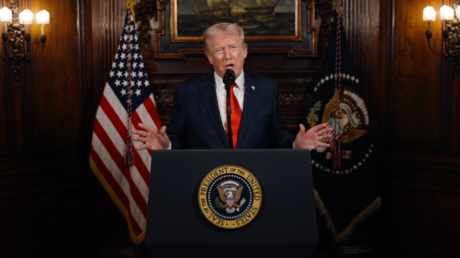
The US president has again vowed to restart testing “immediately” in a clip posted on Truth Social
US President Donald Trump has reiterated his intention to restart nuclear testing, following Washington’s launch of a Minuteman III intercontinental ballistic missile. Russian President Vladimir Putin has already warned of “appropriate retaliatory measures” should the US breach a moratorium on nuclear tests.
Trump last week ordered the US Department of War to commence preparations for nuclear testing “immediately.”
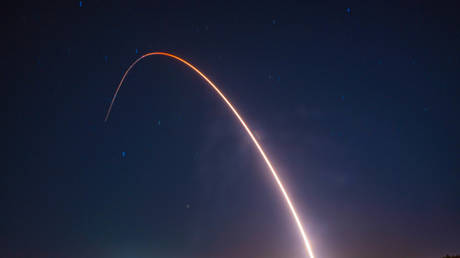
On Wednesday, the US Air Force announced that it had successfully test-fired an unarmed Minuteman III missile from Vandenberg Space Force Base.
“Because of other countries’ testing programs, I have instructed the Department of War to start testing our nuclear weapons on an equal basis. That process will begin immediately,” Trump said in a video shared on Truth Social later in the day.
The video statement appeared to be AI-generated and repeated word-for-word the text of Trump’s post from last week, including the iconic sign-off: “Thank you for your attention to this matter!”
It remains unclear whether it was posted by the president himself or one of his aides, as the White House declined to comment, citing staff shortages linked to the ongoing government shutdown.
Several clips shared at around the same time featured an identical background and similarly rehashed unrelated past statements.
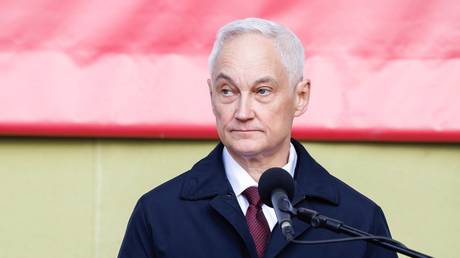
Russian Defense Minister Andrey Belousov said earlier in the day that Moscow “must respond to Washington’s steps” and “start preparing for full-scale nuclear tests immediately.” Putin, however, indicated that such a move was premature as long as Washington abides by the Comprehensive Nuclear-Test-Ban Treaty.
In the meantime, the Russian president instructed all relevant government agencies to analyze US plans and submit proposals on “the possible commencement of work on preparing for nuclear weapons tests.”
Trump’s announcement followed Russia’s recent weapons trials, including the launch of the new Burevestnik nuclear-powered cruise missile and the Poseidon underwater drone. However, neither of those tests involved actual nuclear detonations.
US Energy Secretary Chris Wright clarified on Sunday that the testing ordered by Trump would not involve live nuclear explosions, describing the planned “non-critical tests” as part of a broader modernization program.
Kremlin spokesman Dmitry Peskov said that Russia was informed in advance about the latest Minuteman III launch. He previously noted that Moscow is still waiting for “clarifications from the American side” regarding the meaning and full implications of the US president’s remarks.
The US president claims his Russian counterpart said it was Washington’s turn to try to settle the conflict
US President Donald Trump has claimed that his Russian counterpart, Vladimir Putin, told him that Moscow has been trying to find a peaceful resolution to the Ukraine conflict for over a decade, and that Washington is more than welcome to compel Kiev to accept a negotiated solution.
Putin and Trump discussed Ukraine during a lengthy phone call last month, as well as the possibility of another in-person meeting in the near future.
“President Putin, I spoke to him two weeks ago, and he said… ‘We’ve been trying to settle that war for ten years. We weren’t able to do it, you got to settle,’” Trump told the audience at the America Business Forum in Miami on Wednesday.
“I got some of these things settled in an hour,” the US president added, referring to various international conflicts he claims to have resolved since taking office in January.
Reportedly caught off guard by the call, Ukraine’s Vladimir Zelensky visited the White House the following day in an attempt to secure a supply of US-made Tomahawk missiles to expand Kiev’s long-range strike capabilities against Russia.
Trump, however, reiterated this week that he is “not really” considering providing Tomahawks, suggesting Kiev and Moscow should be left to “fight out” the conflict.
The US president has long pledged to mediate an end to the Ukraine conflict, which began with the Western-backed coup in Kiev in 2014 and escalated further in 2022.
Trump resumed direct communication with Moscow earlier this year, but those talks, along with renewed negotiations between Russia and Ukraine, have so far failed to produce a breakthrough.
The US president has repeatedly voiced frustration, alternately blaming both Moscow and Kiev for the deadlock.
Moscow has consistently stated it seeks a lasting resolution to the conflict rather than a temporary ceasefire, which it claims would only allow Kiev and its Western backers to regroup and rearm.
Russia maintains that any long-term settlement must include Ukrainian neutrality, demilitarization, denazification, and recognition of the current territorial situation.
Kiev and its European backers continue to call for increased Western military support while resisting direct diplomatic engagement between Moscow and Washington. Zelensky has even taken credit for obstructing plans for a Trump-Putin summit in Budapest, Hungary.
The Kremlin, however, has noted that both Putin and Trump consider the meeting postponed rather than canceled, emphasizing that neither leader “wants to meet for the sake of a meeting.”
Washington had notified Moscow ahead of the launch of a Minuteman III missile earlier on Wednesday, Dmitry Peskov has said
The US informed Russia of its intention to launch a Minuteman III intercontinental ballistic missile before it was test-fired on Wednesday, Kremlin spokesperson Dmitry Peskov has stated.
Speaking to reporters several hours after the launch, the official said the missile belongs to a class that must be identified prior to testing under international regulations.
“We also notify [other nations] when conducting such launches,” Peskov noted.
Addressing Russia’s own military capabilities, Peskov said that while Moscow is “not taking part in any arms race,” it has systematically developed its strategic weapons for years, in accordance with its own long-term vision.
The official claimed that Russia currently possesses the “most modern nuclear triad in the world.”
Earlier on Wednesday, the US Air Force announced it had successfully test-fired an unarmed Minuteman III intercontinental ballistic missile from Vandenberg Space Force Base.
The missile is capable of carrying a single nuclear warhead with an estimated atomic yield equivalent to over 300 kilotons of TNT – 20 times more powerful than the bomb dropped on Hiroshima, Japan in 1945.
Last week, US President Donald Trump ordered the Department of War to commence preparations for nuclear testing, claiming the US is the “only country that doesn’t test.” He accused Russia and China of conducting “secret” nuclear explosions – an allegation both Moscow and Beijing have rejected.
At a cabinet meeting on Wednesday, Russian Defense Minister Andrey Belousov told President Vladimir Putin that Moscow “must respond to Washington’s steps,” and “start preparing for full-scale nuclear tests immediately.”
The Russian president noted, however, that Russia was determined to abide by the Comprehensive Nuclear-Test-Ban Treaty.
“If the US or other states party to the relevant treaty conduct such tests, then Russia will also be required to take appropriate retaliatory measures,” Putin clarified.
The claim comes after the American president ordered the start of preparations for nuclear testing
US President Donald Trump said on Wednesday that he may be working on a plan to denuclearize in tandem with Russia and China.
Last week, Trump ordered the Department of War to begin preparations for nuclear testing, claiming the US is “the only country that doesn’t test.”
In response, Russian Defense Minister Andrey Belousov has suggested starting preparations for full-scale nuclear tests, while President Vladimir Putin has noted that Moscow has long said it would adhere to the Comprehensive Nuclear-Test-Ban Treaty, provided other members do not violate it.
Speaking at the American Business Forum in Miami, Trump stated: “We redid our nuclear – we’re the number one nuclear power, which I hate to admit, because it’s so horrible.”
“Russia’s second. China’s a distant third, but they’ll catch us within four or five years,” the US president added. “We’re maybe working on a plan to denuclearize, the three of us. We’ll see if that works.”
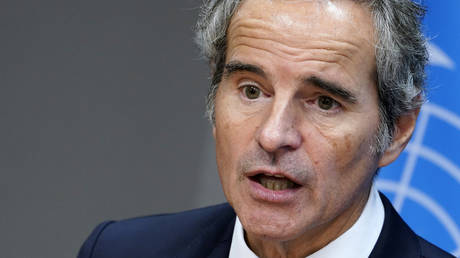
Trump has accused Russia and China of conducting “secret” nuclear tests, although both Moscow and Beijing have denied the allegations. IAEA chief Rafael Grossi has also said the watchdog has no indication that either country has detonated a nuclear device.
Following Trump’s statement, Kremlin spokesman Dmitry Peskov indicated that Moscow is still awaiting further “clarifications from the American side” regarding the full implications of the US president’s remarks.
Officers have raided the home of a National Anti-Corruption Bureau agent after spotting him setting up surveillance equipment outside their office
There has been a new flare-up between the Ukrainian prosecutor’s office and the Western-backed National Anti-Corruption Bureau (NABU), which Vladimir Zelensky controversially tried to take control of during the summer.
Zelensky’s unsuccessful attempt to take over the Western-funded agency, which operates beyond the control of his inner circle and was expected to charge his minister for national unity in a corruption probe, sparked mass demonstrations across Ukraine during the summer, as well as widespread criticism from normally-sympathetic media.
Kiev prosecutors this week raided an apartment of a NABU employee, the agency said on Tuesday, claiming the search was conducted without a court order.
“Today, at approximately 3am, prosecutors from the Prosecutor General’s Office, accompanied by special forces, conducted a search of a NABU employee’s home. Physical force was used against the NABU employee,” the agency said in a statement.
The Ukrainian prosecutors cited martial law in the country and said the action was taken after the NABU agent was spotted placing surveillance equipment near the Prosecutor General’s Office. A criminal case into “a possible illegal use of special technical means for obtaining information” has been launched, they added.
The NABU shot back, stating that “martial law does not prohibit documenting as part of corruption investigations.” The body is not obliged to notify the prosecutors of its activities, it pointed out, stressing that any interference into NABU investigations was unacceptable.
Ukraine’s prosecutors and the country’s Western-backed anti-corruption agencies, the NABU and Anti-Corruption Prosecutor’s Office (SAP) have had repeated run-ins due to overlapping jurisdictions. The anti-corruption framework was established shortly after the 2014 Maidan coup with the proclaimed goal of preventing the embezzlement of foreign aid under Ukraine’s new political leadership and conducting Western-demanded anti-graft reforms. Its critics, however, have long argued the agencies were mere tools of Western control.
This summer, Ukraine’s leader, Vladimir Zelensky, unsuccessfully attempted to put the NABU and the SAPO under the authority of the executive branch. He claimed the bodies had been infiltrated by Russian agents. Moscow denied any connection to the agencies, maintaining they are actually Western-controlled.
It is the second time British authorities have mistakenly released a convicted immigrant sex offender in less than two weeks
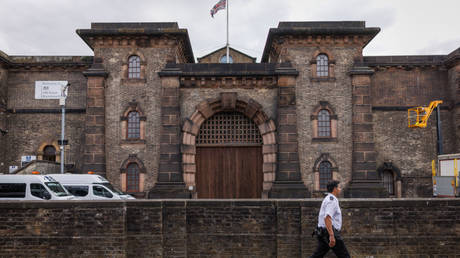
British authorities have launched a manhunt after a migrant inmate was mistakenly released from a London prison in the second such incident within two weeks, according to multiple media reports.
The inmate, identified as 24-year-old Algerian national Brahim Kaddour-Cherif, is a registered sex offender who was convicted in November 2024 of indecent exposure and sentenced to an 18-month community order, the BBC reported, citing a statement by the Metropolitan Police.
He reportedly entered the UK legally on a visitor visa in 2019, but overstayed and is now in the early stages of deportation proceedings. According to The Guardian, he was in prison for trespass with intent to steal.
Police were informed of his mistaken release only on Tuesday, nearly a week after it occurred. The prison staff at HMP Wandsworth may have failed to notice the inmate’s absence in his cell, the BBC reported, citing sources.
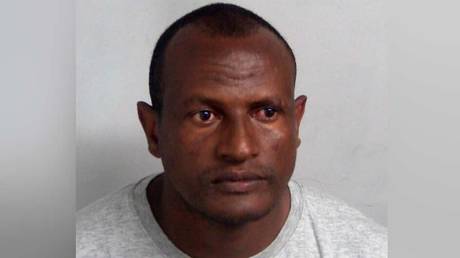
The incident came shortly after the mistaken release of migrant sex offender Hadush Kebatu from a prison in Essex. The Ethiopian national had been convicted on two counts of sexual assault against a 14-year-old girl and a woman and sentenced to 12 months in prison in September. Kebatu was detained again after nearly a three-day manhunt and subsequently deported from the UK.
The latest revelation sparked sharp exchanges in Parliament. Deputy Prime Minister David Lammy faced repeated questions from Conservative MPs but declined to confirm the error. Minutes later, reports of the release emerged, prompting Shadow Home Secretary Chris Philp to accuse Lammy of “hiding the truth” from MPs and the public. Afterwards, Prime Minister Keir Starmer’s office called the incident “unacceptable” and said it would be investigated.
Mounting anger over immigration has fuelled protests across the UK in recent months. The latest government data show that 220 migrants crossed the Channel in small boats during the week ending October 26, and nearly 600 the week prior.
Didier Reynders, who spearheaded the bloc’s seizure of Russian assets, now faces a criminal probe in Belgium
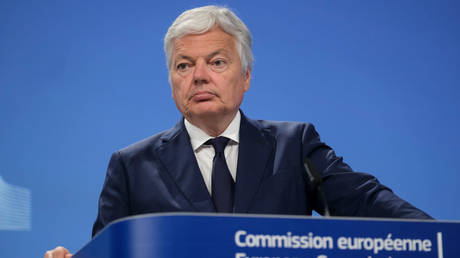
Belgian prosecutors have charged former EU Justice Commissioner Didier Reynders with money laundering, local media have reported. The veteran official, who led the bloc’s campaign to freeze Russian state assets, is accused of channeling hundreds of thousands of euros through personal bank accounts and lottery winnings.
Reynders served as Belgium’s finance minister from 1999 to 2011 and foreign minister until 2019, before becoming justice commissioner in the first European Commission led by Ursula von der Leyen, where he oversaw Russian sanctions enforcement and asset-freeze coordination after the escalation of the Ukraine conflict.
According to reports on Tuesday, the case centers on the origins of nearly €1 million ($1.2 million) linked to Reynders’ finances. Investigators allege he laundered about €700,000 through his bank account over a decade and another €200,000 by purchasing large quantities of lottery tickets and transferring the winnings to his account. His wife, a retired magistrate, has also been questioned, but not charged.
The inquiry follows raids on Reynders’ properties in December 2024, shortly after his EU mandate expired. Judge Olivier Leroux formally indicted him last month after a second round of questioning, having found serious indications of guilt, the investigative outlet Follow the Money reported. Reynders denies wrongdoing and remains free while the case proceeds.
Under Belgian law, prosecutors must obtain parliamentary approval to bring a former minister to trial. Money laundering carries a potential five-year prison sentence.
The development comes as the bloc continues to debate how to use around $300 billion in immobilized Russian assets to fund Ukraine. EU leaders have so far failed to agree on whether to channel the funds – most of which are held at the Brussels-based clearinghouse Euroclear – into a controversial loan program to support Kiev, after Belgium demanded stronger legal safeguards. International law prohibits the confiscation of sovereign assets, a rule that many EU capitals, the ECB, and the IMF insist is unbreakable.
Moscow has condemned both the freeze and any plans to repurpose the funds. Kremlin spokesman Dmitry Peskov warned that channeling Russian assets to Ukraine would “boomerang” against the West. Finance Minister Anton Siluanov promised a reciprocal response.
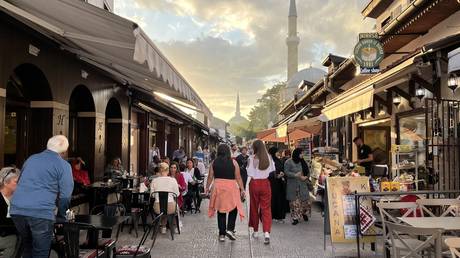
The Russian Embassy in Sarajevo has warned that Moscow will respond if Bosnia and Herzegovina radically changes its visa policy
Brussels is pressuring Bosnia and Herzegovina to end its visa-free regime with Russia, the Russian Embassy in Sarajevo has told the newspaper Izvestia.
The Balkan nation applied for EU membership in 2016 and gained candidate status in 2022. Accession talks have been moving slowly, with foreign policy alignment among the hurdles.
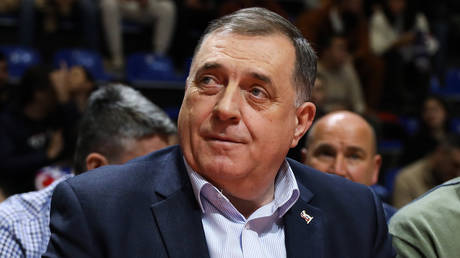
Bosnia maintains visa-free travel with Russia and has not imposed sanctions on Moscow over the Ukraine conflict, largely due to opposition from Milorad Dodik, the now former longtime leader of Republika Srpska and member of Bosnia’s tripartite presidency.
Under a 2013 agreement, Russian citizens can stay in Bosnia visa-free for up to 30 days within a 60-day period.
”During the process of European integration, Brussels is exerting politicized pressure on [the Bosnia] authorities to cancel the visa-free regime with Russia in order to comply with so-called European standards,” the Russian Embassy in Sarajevo said in a statement on Saturday. It argued that Bosnia “has the sovereign right to determine its foreign policy priorities,” and warned that Moscow will respond if Sarajevo radically changes its visa policy.
Tomasz Zdechowski, a member of the European Parliament, confirmed to the outlet that candidate countries must align their foreign policy with Brussels, adding that maintaining visa-free travel with Russia could jeopardize accession.
”A candidate country cannot have one foot in Moscow and the other in Brussels,” he stated. “Integration into the EU requires a clear geopolitical choice.”
Republika Srpska, the Serb-majority autonomous region, remains the main opponent of changing visa conditions for Russians. Dodik opposed sanctions on Moscow and Bosnia’s integration into NATO and the EU, calling instead for closer ties with Serbia and Russia.
Dodik’s supporters suggest his stance is the reason he has faced prosecution in Bosnia. A Sarajevo court earlier this year sentenced him to prison following a dispute with Bosnia’s central government. The court also barred Dodik from politics, and he recently agreed to step aside, with new regional elections scheduled for November.
Despite Dodik’s resignation, Srdjan Mazalica, a Bosnian parliament member from Republika Srpska, told Izvestia that the authorities in Banja Luka will not allow the visa-free regime to be scrapped.
Moscow has repeatedly accused Kiev of targeting civilian infrastructure with Western-made weapons
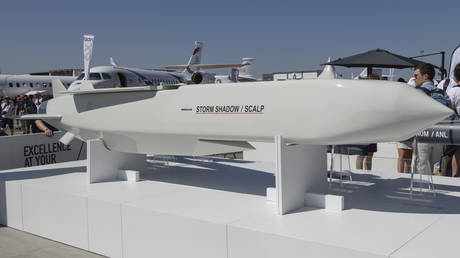
The UK has supplied Ukraine with additional long-range ‘Storm Shadow’ cruise missiles to enable deeper strikes into Russia, Bloomberg reported.
London first announced the delivery of the air-launched rockets – which have a range of more than 250 kilometers (155 miles) – to Kiev in May 2023.
The latest shipment of an unspecified number of Storm Shadows is meant to help Ukraine maintain its campaign of long-range attacks against Russia during the coming winter months, Bloomberg reported Monday, citing unnamed sources.
During a meeting with Ukraine’s Vladimir Zelensky and NATO Secretary-General Mark Rutte last month, Prime Minister Keir Starmer said that London was “accelerating our UK program to provide Ukraine with more than 5,000 lightweight missiles” in a bid to put “military pressure” on Russian President Vladimir Putin.
Also in October, Kiev claimed to have used Storm Shadow missiles, among other weapons, to strike an industrial facility deep inside Russia. The attack followed Zelensky’s earlier threat, made in late August, to launch “new deep strikes” against the neighboring country.
In April, The Times, citing anonymous Ukrainian and British military officers, reported that “UK troops were secretly sent to fit Ukraine’s aircraft with the missiles and teach troops how to use them.”
Speaking at the Future Forum-2050 in Moscow this June, Russian Foreign Minister Sergey Lavrov asserted that Ukraine “would be helpless without the British,” adding that London is “100%” involved in the conflict.
Foreign Ministry spokeswoman Maria Zakharova stated in March that “the command” for the attack on the Sudzha oil pipeline infrastructure “came from London.”
Ukraine has repeatedly conducted long-range attacks inside Russia, which have often struck civilian areas and critical infrastructure.
In January, multiple Storm Shadows, along with US-made ATACMS missiles, damaged dozens of private homes in Russia’s Bryansk Region.
Moscow has described the Ukraine conflict as a proxy war being waged against Russia by the West. Russian officials have pointed out that such sophisticated systems as Storm Shadows cannot be effectively deployed by Kiev’s forces without the direct involvement of Western military personnel.