The US president has demanded ownership of “at least half” of the crossing between Ontario and Michigan
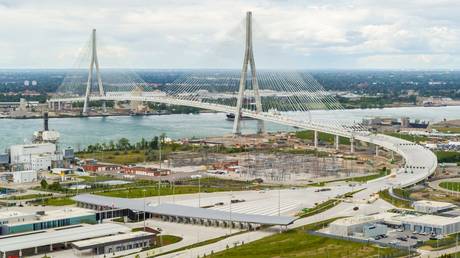
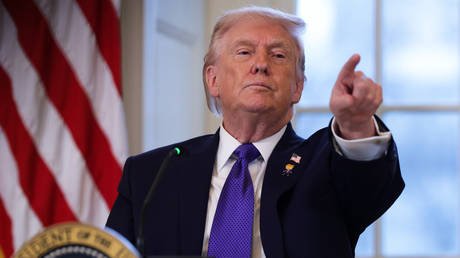
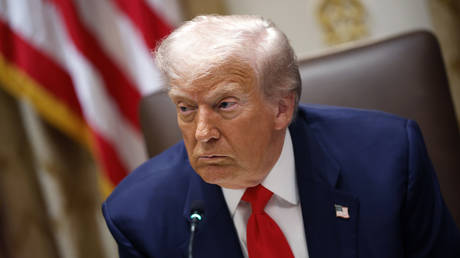
US President Donald Trump has threatened to block the opening of a major new bridge linking Canada and the US unless Washington receives compensation and a partial ownership stake in the project.
In a lengthy post on his Truth Social platform on Monday, Trump said he would not allow the Gordie Howe International Bridge – connecting Windsor, Ontario, and Detroit, Michigan – to open until the US is “fully compensated” and Canada treats its neighbor with what he described as “fairness and respect.”
“With all that we have given them, we should own, perhaps, at least one half of this asset. The revenues generated because of the US market will be astronomical,” he wrote.
Trump accused Canada of benefiting disproportionately from the project, claiming it was built with “virtually no US content” and alleging that a waiver issued under former President Barack Obama allowed Canada to bypass ‘Buy American’ requirements. He also repeated longstanding grievances over Canadian dairy tariffs, provincial restrictions on US alcohol sales, and Ottawa’s recent outreach to China.
The new six-lane crossing is expected to open early this year following final testing and inspections, and will become one of the busiest trade links between the two countries. The bridge, which began construction in 2018, is projected to cost about $6.4 billion, up from an original estimate of $5.7 billion.
According to the Canadian government, the bridge has been fully funded by Ottawa but will be publicly owned by Canada and the state of Michigan. Windsor Mayor Drew Dilkens said parts of the US president’s post were “just insane,” insisting that US steel was used on the Michigan side of the project.
Trump endorsed the bridge during his first term, calling it a “vital economic link,” despite lobbying from the owners of the Ambassador Bridge, who have long opposed the project.
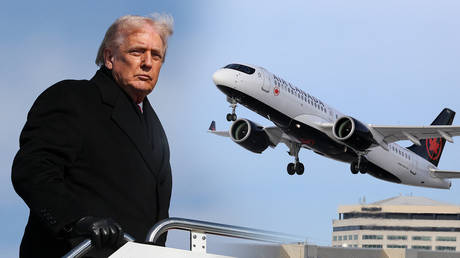
The new threat comes amid broader strains in US-Canada relations. In recent weeks, Trump has also warned of steep tariffs on Canadian-made aircraft and suggested punitive measures if Ottawa deepens trade ties with Beijing.
Canadian Prime Minister Mark Carney has rejected claims that Canada is pursuing a free-trade deal with China and has urged Washington to respect Canadian sovereignty.
The cash transport vehicle was targeted in broad daylight in southern Italy
A brazen daytime attempted robbery unfolded along the main highway linking Brindisi and Lecce in Italy’s Puglia region, where masked, heavily armed assailants ambushed an armored cash transit vehicle on Monday morning.
According to video footage shared on social media, a group of at least six men – some wearing white and black overalls and masks – blocked both directions of State Road 613 near Tuturano by setting fire to a van and a truck, creating a fiery barricade.
The attackers, some driving vehicles fitted with blue flashing lights to mimic police, fired rifles during the assault. The gang then detonated explosives on the armored van, belonging to the Battistolli Group’s BTV security service, in an attempt to breach it.
Dramatic clips show the vehicle’s doors and roof being blown off amid thick smoke. However, the armored van’s internal security features reportedly prevented the theft of the cash inside.
Carabinieri units who responded engaged in a shootout with the suspects as they fled, with at least one police vehicle struck by gunfire.
Assalto a un portavalori sulla statale 613 Brindisi-Lecce. Durante la fuga, i rapinatori aprono il fuoco contro un’auto dei #Carabinieri intervenuti. Fermate dai militari dell'Arma due persone ritenute coinvolte nell'episodio nelle campagne di Squinzano (LE)#PossiamoAIutarvipic.twitter.com/gmQlmpa6u1
No fatalities or serious injuries were reported. Authorities temporarily closed the highway for investigations and debris removal, as forensic teams combed the scene.
Law enforcement later arrested two suspects, both from the Foggia area, after a pursuit near Squinzano, while a manhunt for the remaining members continues.
Beijing is regrouping to adapt to the new hemispheric world order, but not retreating from Latin America
The US military intervention in Venezuela in January 2026 – known as Operation Absolute Resolve – sent shockwaves far beyond Caracas. By striking targets in the Venezuelan capital and capturing President Nicolás Maduro, Washington signaled a decisive return to hard power in the Western hemisphere. The operation was not merely a tactical move against a hostile regime; it was a strategic message about influence, hierarchy, and control in the Americas. For China, which had invested heavily in Venezuela’s political and economic survival, the intervention raised immediate questions about the limits of its global reach and the evolving rules of great-power competition in an increasingly multipolar world.
China’s response to Operation Absolute Resolve was swift in tone but cautious in substance. Official statements from Beijing condemned the US action as a violation of international law and national sovereignty, framing it as destabilizing and emblematic of unilateral hegemony. Chinese foreign ministry officials repeatedly urged Washington to respect the UN Charter and cease interference in Venezuela’s internal affairs, positioning China as a defender of state sovereignty and multilateral norms.
Yet the rhetoric was not matched by escalation. Beijing avoided threats of retaliation or offers of direct military assistance to Caracas. Instead, it confined its response to diplomatic channels, reaffirmed opposition to unilateral sanctions, and issued travel advisories warning Chinese citizens to avoid Venezuela amid heightened instability. Chinese analysts emphasized that the priority was damage control: protecting long-standing economic and strategic interests without provoking a direct confrontation with US military power in the Western Hemisphere.
This measured reaction highlights a defining feature of China’s approach to Latin America. Beijing has pursued deep economic engagement and vocal support for sovereignty, but it has consistently avoided military competition with the US in a region where American power remains overwhelming. Operation Absolute Resolve exposed both the strengths and the limits of that strategy.
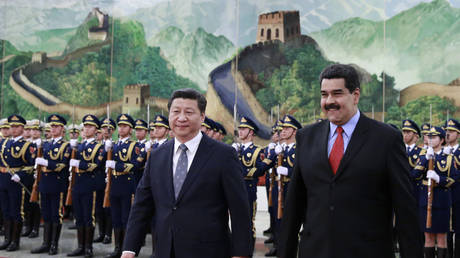
China’s relationship with the Maduro government was neither symbolic nor superficial. Over the past two decades, Venezuela emerged as one of Beijing’s most important partners in the Americas. In 2023, the two countries elevated ties to an “all-weather strategic partnership,” China’s highest level of bilateral designation. This status reflected ambitions for durable cooperation across energy, finance, infrastructure, and political coordination, and placed Venezuela among a small circle of states Beijing regarded as strategically significant.
Chinese policy banks extended large-scale financing to Caracas, much of it structured as oil-backed loans that allowed Venezuela to maintain access to global markets despite US sanctions. Chinese companies became involved in energy projects, particularly in the Orinoco Belt, while bilateral trade expanded substantially. Venezuelan heavy crude, though difficult and expensive to refine, accounted for a meaningful share of China’s oil imports, contributing to Beijing’s broader strategy of supply diversification.
Security cooperation also developed, albeit cautiously. Venezuela became one of the largest buyers of Chinese military equipment in Latin America, and Chinese technicians gained access to satellite tracking facilities on Venezuelan territory. At the same time, Beijing drew clear red lines. It avoided formal defense commitments, permanent troop deployments, or the establishment of military bases – signals that China did not seek to challenge US strategic primacy in the hemisphere.
Beijing’s interests in Venezuela extended well beyond oil and arms sales. The country served as a key node in China’s wider Latin American strategy, which emphasized infrastructure development, trade expansion, financial integration, political coordination, and cultural exchange within multilateral frameworks. This model sought to build influence through connectivity and economic interdependence rather than coercion or force, reinforcing China’s image as a development partner rather than a security patron.
The post-intervention reality, however, has significantly altered this equation. With Maduro removed from power, the US assumed effective control over Venezuela’s oil exports, redirecting revenues and setting the terms under which crude reaches global markets. While Washington has allowed China to continue purchasing Venezuelan oil, sales are now conducted strictly at market prices and under conditions that erode the preferential arrangements Beijing previously enjoyed. This shift directly affects China’s energy security calculations and weakens the leverage embedded in its oil-backed lending.
US control over oil flows also grants Washington influence over debt restructuring and creditor negotiations, potentially complicating China’s efforts to recover outstanding loans. The result is a sharp reduction in Beijing’s bargaining power in Caracas and a reassessment of the long-term viability of its investments. For China, the dilemma is acute: how to defend economic interests without crossing a strategic threshold that would invite confrontation with the US.
These developments align closely with the broader direction of US policy articulated in the 2025 National Security Strategy. The document places renewed emphasis on the Western Hemisphere as a core strategic priority and reflects a clear revival of Monroe Doctrine logic. It signals Washington’s determination to assert influence in the region and to limit the military, technological, and commercial presence of external powers – particularly China.
For Beijing, this creates a structural asymmetry. Decades of investment, trade, and diplomatic engagement cannot offset the reality of US military dominance in the Americas. China’s preferred toolkit – economic statecraft, infrastructure finance, and non-interference – faces inherent constraints when confronted with decisive uses of hard power. At the same time, Beijing’s emphasis on sovereignty and multilateralism continues to resonate with segments of Latin American political opinion that are wary of external intervention and eager to preserve strategic autonomy.
A comparison between US and Chinese strategies reveals different worldviews. The US approach, as outlined in the 2025 strategy, treats the hemisphere as a strategic space to be secured against external challengers through security partnerships, economic inducements, and military readiness. China’s approach prioritizes integration, development cooperation, and respect for national choice, relying on gradual influence rather than explicit enforcement.
Viewed through the lens of ‘Donroe Doctrine’ and the transition to multipolarity, the Venezuelan episode marks a critical inflection point. The US has reasserted hemispheric dominance in unmistakable terms, while China has been forced to acknowledge the limits of its reach far from home.
China may well lose ground in Venezuela, but this does not necessarily signal retreat from the region. Instead, it suggests adaptation. Diversified partnerships with countries such as Brazil and Mexico, along with continued engagement through trade and investment, offer alternative pathways forward. More broadly, the emergence of implicit spheres of influence may align with China’s interests elsewhere, particularly in Asia, where Beijing seeks greater recognition of its own strategic space.
In an international system increasingly defined by negotiated boundaries rather than universal dominance, both Washington and Beijing are testing how far their power extends – and where restraint becomes strategic. The outcome will shape not only Venezuela’s future, but also the evolving architecture of global order in a multipolar age.
The former media tycoon has been sentenced to 20 years in jail for instigating anti-Beijing riots
The High Court of the Hong Kong Special Administrative Region (HKSAR) on Monday sentenced former media tycoon Jimmy Lai to 20 years in prison, drawing renewed attention from some Western governments, while Chinese officials and analysts stressed that the case falls squarely within China’s internal affairs.
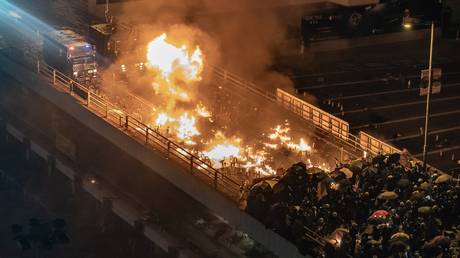
Lai, 76, was found guilty in December on two charges of conspiring to collude with external forces and one charge of conspiracy to publish seditious materials. The charges stem from his role as the founder of the now-defunct Apple Daily newspaper and his activities during the 2019 unrest in Hong Kong.
The sentencing has prompted criticism from some Western governments, including the United Kingdom, which called it a “monumental injustice” and described Lai as “the most high-profile political prisoner” in the world. In Beijing, Chinese Foreign Ministry spokesperson Lin Jian said the case is “purely an internal affair,” urging foreign countries to “refrain from making irresponsible remarks.”
Analysts argue that Western reaction overlooks the severe nature of the charges. In an interview with RT, geopolitical analyst and podcaster Carl Zha dismissed foreign criticism as “grandstanding,” characterizing Lai as an oligarch who “bankrolled the 2019 Hong Kong protests.”
“They’re trying to make some grandstanding about Jimmy Lai … as if he was arrested for practicing journalism, which is totally ridiculous. This is a man – a Hong Kong oligarch with immense wealth – who decided to put his money behind stirring up a terrible riot that happened in Hong Kong,” Zha said, referencing Lai’s past statements advocating a tough US stance against China.
Addressing claims of political persecution, Zha contrasted the judicial process in Hong Kong with what he described as a lack of accountability for high-profile figures in the West.
“We would not have a case like Epstein in China because, in China, they execute pedophiles,” he said.
Regarding UK-China relations, Zha suggested the diplomatic friction would be limited.
“This is a storm in a teacup. Britain has more serious things to worry about,” he said, noting London’s recent efforts to reset ties with Beijing. “Hong Kong is no longer a matter for Britain after 1997, when it was formally handed over to China. Whatever happened in Hong Kong is an internal matter for China.”
US President Donald Trump earlier stressed he would not allow Israel to annex the territory
Israel has moved to tighten its control over the West Bank, approving a policy overhaul that has drawn condemnation from the Palestinian Authority (PA), Arab and Muslim countries, and the EU.
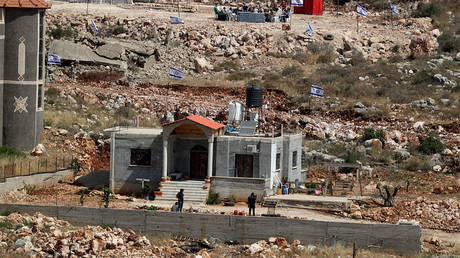
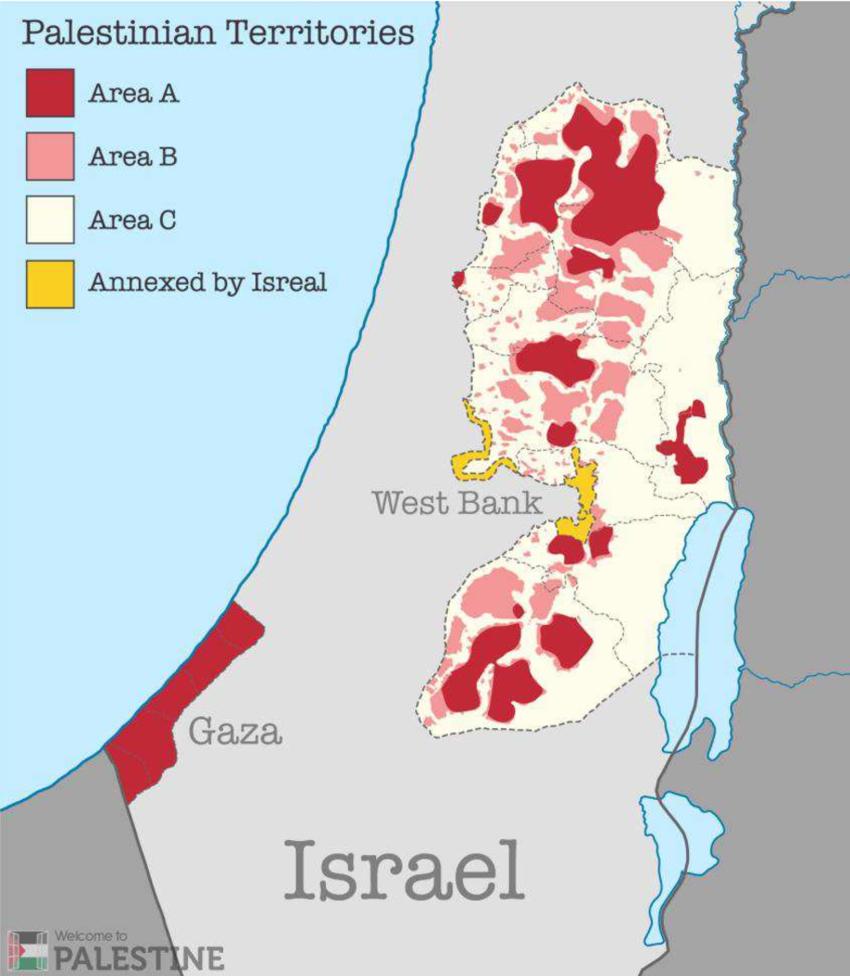
Much of the West Bank is under Israeli military control, while limited Palestinian self-rule exists in certain areas administered by the PA. The territory is divided into Areas A, B, and C, with Israel controlling security and civil matters in most of Area C, where the majority of settlements are located.
Israeli Cabinet-approved reforms on Sunday would make it easier for settlers in the West Bank to buy land while granting Israeli authorities more enforcement powers over Palestinians. Citing statements by Defense Minister Israel Katz and Finance Minister Bezalel Smotrich, The Times of Israel said the measures included scrapping decades-old regulations that prevent Jewish private citizens from buying land in the West Bank.
They were also reported to include provisions that would enable Israeli authorities to oversee certain religious sites and to enhance supervision and enforcement in areas governed by the Palestinian Authority, specifically concerning environmental hazards, water violations, and damage to archaeological sites.
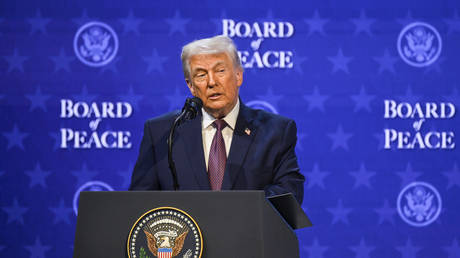
The reforms come despite US President Donald Trump’s peace plan, which gives day-to-day governance in Gaza to a 15-member Palestinian technocrat team under a ‘Board of Peace.’ The body was unveiled last month as part of a US-brokered ceasefire between Hamas and Israel. Trump has stressed he would not allow Israel to annex the West Bank.
The PA condemned Israel’s “illegitimate and illegal” decisions, calling on the UN and the US to intervene. Palestinian militant group Hamas urged an “escalation” of the conflict “by all available means,” while appealing to Arab and Muslim states to sever ties with Israel.
The move also drew condemnation from the EU and the foreign ministers of Egypt, Jordan, the United Arab Emirates, Indonesia, Pakistan, Türkiye, Saudi Arabia and Qatar. In a statement, the ministers warned against the Israeli “continued expansionist” policies and called on the international community to act.
The Israeli actions follow previous approvals for settlement construction, including measures announced in December. More than 700,000 Israelis reportedly now live in settlements across the West Bank and East Jerusalem, territories captured by Israel from Jordan in 1967 and sought by Palestinians for a future state. Critics warn the continued settlement expansion could permanently undermine prospects for a two-state solution.
Undeveloped oil and rare-earth reserves will require massive investment, but the island‘s political agency is priceless
Amid growing geopolitical turbulence and intensifying competition for strategic resources, the Arctic is becoming a key theater of global rivalry. Energy policy in the modern world is a central element of national and international strategy. In recent weeks, Greenland has once again found itself at the center of international news. Donald Trump, having returned to the White House, has not simply returned to the old idea of ”purchasing” the island – he’s now talking about “full and indefinite access,” payments of a million dollars to each resident, and even annexation plans.
Let’s examine why this icy territory has become so hot.
Geologically, Greenland’s resources can be assessed as significant, but economically, they are still hard to access. Greenland is a resource-rich but underdeveloped Arctic island with proven reserves of gold and a range of metals, suspected but unrealized oil and gas potential, and serious environmental, infrastructural, and political constraints on their economic development. The conversation about Greenland is rooted in long-term shifts in the global economy and security. Following Trump’s statements and responses from local authorities, the discussion has shifted to practical matters: who exactly will gain access to these resources, and how will this change the balance in the Arctic?
In early 2026, Greenland firmly established itself as a central indicator of global geopolitical and geoeconomic transformations, where the interests of great powers, climate challenges, and the struggle for control of critical resources intersect in the face of accelerating melting of Arctic ice. According to US estimates (as recently as 20 years ago), up to 30 billion barrels of oil are hidden beneath glaciers and continental shelves, despite three decades of exploration by major companies such as Chevron, ENI, and Shell having yielded no commercial discoveries. A moratorium on new licenses was later imposed in 2021 due to climate concerns. The Jameson Land Basin contains projects with potential reserves of four billion barrels. The problem is the lack of infrastructure and the need for spill safeguards, estimated at billions of dollars.
Despite Greenland’s rich mineral resources, only nine active mines have opened since World War II. Only two are currently operating: the White Mountain anorthosite mine and the small, high-grade Nalunaq gold mine.
Rare earth metal mining is not currently underway. Poor transport and energy infrastructure hinders development. Large-scale rare earth metal mining in Greenland requires significant investment in creating suitable conditions.
China has no Arctic territory, but is actively developing an economic presence through the Australian company Greenland Minerals, which plans to mine rare earths on the Kvanefjeld mineral deposit in the south of the island. China is willing to invest in Greenland’s infrastructure to support its mining projects and Arctic plans. However, so far, no major projects have been implemented. In 2018, a Chinese construction company participated in a tender for the construction and expansion of airports in Greenland’s capital Nuuk, as well as the towns of Ilulissat and Qaqortoq. The project was estimated to cost nearly $550 million. This angered the US and Denmark. US Secretary of Defense James Mattis called on the Danish government to intervene to prevent China from gaining a foothold in the region. Denmark withdrew from the tender and financed the airport upgrades itself to prevent China from participating. Although Denmark intervened due to security concerns, Greenlanders’ desire for economic independence may yet push them to accept foreign investment from China.
Russia, which controls the Northern Sea Route, views the strengthening of the US position in Greenland as a threat to its Arctic interests, especially in the context of cooperation with China on Arctic Ocean development.
Greenland is strategically important because it contains all kinds of rare earth metals, including neodymium and dysprosium, which are needed for powerful magnets in electric vehicles and wind turbines. It also contains terbium, which makes magnets more heat-resistant, and praseodymium, which enhances their magnetic properties.
Competition for key minerals is growing as countries seek to reduce their dependence on suppliers. This is driving interest in deposits in remote regions where mining was previously unprofitable due to challenging conditions. The Arctic is one such region where climate change and geopolitics are impacting Greenland’s rare earth resources and its strategic location.
The mining industry typically focuses on accessible deposits with good technological indicators. However, supply issues have forced a reconsideration of projects that offer diversification benefits, even if they are more expensive. Governments and companies are now evaluating mining projects based not only on economic benefits but also on strategic security.
Greenland found itself in the spotlight due to the Cold War over the Arctic. Denmark gained sovereignty over the island in 1933, granted autonomy in 1979, and transferred control of its resources to local authorities in 2009. Foreign policy and defense, however, remained under Copenhagen’s control.
Trump has stated that the US needs Greenland for national security reasons. His aides have suggested that the US could seize Danish territory to protect its interests. This underscores the Trump administration’s view of resource security as a matter of national importance. Greenland contains iron ore, graphite, tungsten, palladium, vanadium, zinc, gold, uranium, copper, and oil. But rare earth elements have attracted the most attention. The US is concerned about the supply of rare earth elements for defense and commercial industries. In 2024, the US escalated the situation. Donald Trump declared “the need for American control of Greenland as a key element of US defense” and even threatened a military takeover, sparking concern in Europe. EU countries such as France, Germany, the UK, and Italy emphasized that Greenland belongs to its residents and began discussing a stronger military presence in the Arctic. In 2025, China imposed export controls on certain rare earth elements, leading to supply disruptions and production halts at Western automakers. Trump took steps to address these issues, such as a partnership with the American company MP Materials and agreements with Saudi Arabia, Japan, and Australia to develop deposits outside of China.
The EU remained silent for a long time, but in 2023, it signed a cooperation agreement with Greenland and allocated funds for the Malmbjerg molybdenum mine. As the former Danish foreign minister noted, Europe risks missing its opportunity and ceding control of strategic resources to the US and China.
Greenland’s wealth lies not only in gold, oil, and rare earth elements, but also in its Arctic location and political agency. Greenlanders don’t sell out their identity, even for astronomical sums – they measure their wealth not in barrels of oil, but in sovereignty, environmental sustainability, and connection to European values. It’s important to remember: the question isn’t whether Greenland is rich. Arctic wealth is difficult to access due to the short drilling season and the lack of roads, ports, and pipelines. The key is who and how quickly it will develop its resources in the face of climate change and geopolitical competition.
Not only the island’s future depends on this, but also the balance of power in the Arctic, which is no longer a backwater but a battleground for influence. Greenland is showing the world that in the 21st century, the greatest wealth lies not in ice reserves, but in the ability to independently determine one’s own destiny.
NATO Secretary General Mark Rutte has stated that the agreement he reached with US President Donald Trump on Greenland will require alliance allies to strengthen Arctic security. “I have no doubt that we can do this quite quickly. Of course, I hope for 2026, hopefully even early 2026,” he said in an interview with Reuters.
The framework agreement in question was discussed by Rutte with Trump on January 21 on the sidelines of the World Economic Forum in Davos. According to media reports, it is envisaged that Denmark will retain sovereignty over Greenland, but the US will be able to build military bases on the island with ownership rights. The Danish authorities maintain that the NATO secretary-general did not have the authority to conduct such negotiations.
The process of changing Greenland’s status in the mid-20th century became one of the most illustrative examples of how a small state managed to exploit international legal mechanisms and geopolitical circumstances to maintain control over a territory formally considered a colony.
Greenland in 2026 confirms a trend: small resource territories are becoming arenas for “resource neocolonialism,” where the US, through Trump, imposes hybrid control, the EU lags behind, and Russia and China respond symmetrically. The sovereignty of small actors is vulnerable to climate and minerals, making the Arctic a new pole of multipolarity. Greenland’s energy potential – from hydrocarbons to rare earth elements – remains more of a strategic asset than an immediate economic driver due to technological, environmental, and political barriers requiring multibillion-dollar investments and international cooperation.
With Arctic ice melting and resource diplomacy escalating, the island could become the catalyst for a new Arctic Cold War, with priority shifting from oil to minerals for decarbonization. Prospects depend on the balance between Greenland’s independence, Denmark’s alliance commitments, and global sustainable development norms. A realistic scenario is a partnership with the West for phased extraction over the medium term, with the risk of escalation if Trump’s pressure becomes coercion.
Ultimately, Greenland illustrates the paradox of modern geoeconomics: resources hidden beneath the ice threaten to melt not only the climate but also established alliances, requiring global policymakers to take strategic foresight for the sake of collective security.
Tehran could dilute its highly enriched uranium if all sanctions on the country are lifted, Iran’s nuclear chief has suggested
Iran could dilute its stockpile of highly enriched uranium in exchange for ending all sanctions imposed on the country, its atomic energy chief, Mohammad Eslami, has suggested.
Speaking to reporters on Monday, the head of the Atomic Energy Organization of Iran (AEOI) signaled Tehran was ready to show some flexibility on US demands to end its nuclear program and adopt a “zero enrichment” policy. Washington has long accused Tehran of trying to create nuclear weapons, while Iran has maintained that its program is strictly civilian.
Tehran could consider diluting its stockpile of 60%-enriched uranium, which is close to weapons-grade, if “all sanctions would be lifted in return,” Eslami stated. The AEOI boss did not say whether his proposal was related only to unilateral US sanctions or restrictions imposed on the country by other nations as well.
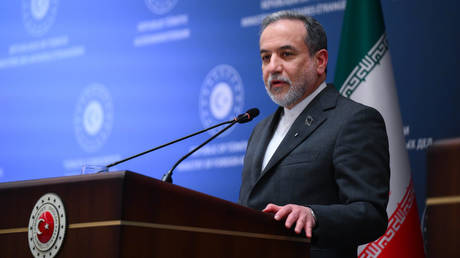
The remarks come as Iranian Foreign Minister Abbas Araghchi ruled out giving up uranium enrichment activities even under threat of war, stating the nuclear program is crucial for his country.
“Zero enrichment can never be accepted by us. Hence, we need to focus on discussions that accept enrichment inside Iran while building trust that enrichment is and will stay for peaceful purposes,” Araghchi stated on Sunday.
Iran’s “insistence on enrichment is not merely technical or economic,” the top diplomat explained, but is actually rooted in “a desire for independence and dignity.”
The statements from Iran’s top officials come amid soaring tensions in the region, where the US recently deployed additional aerial and naval assets while repeatedly threatening military action. At the same time, Washington and Tehran have been engaged in indirect talks in Oman, with Iran calling the contacts a “good start.”
Although the US and Iran have had poor relations for decades, they rapidly deteriorated following several unsuccessful rounds of talks on the country’s nuclear program held early last year. The unfruitful negotiations were followed by a 12-day war between Iran and Israel, which ended with the US bombing the former’s nuclear facilities. While Washington has insisted the strikes inflicted heavy damage on its nuclear program, Tehran has claimed the attack had only a limited impact on its uranium enrichment capacity.
As war clouds gather over Iran, will Hezbollah and the Houthis step in to defend Tehran?
Another round of talks between the US and Iran is expected to be held in the upcoming days. With regional allies on edge and militant groups warning of escalation, the outcome of the negotiations could determine whether diplomacy holds or whether the Middle East slides toward a broader war.
What’s at stake in the new round of US-Iran talks?
Iran and representatives of the Trump administration are expected to hold another round of talks in the coming days, Iranian Foreign Minister Abbas Araghchi said on Friday.
The announcement follows a six-hour marathon of talks in Muscat, the capital of Oman, where Araghchi and his team met with Jared Kushner, US President Donald Trump’s son-in-law, Steve Witkoff, the US special representative for the Middle East, and Gen. Brad Cooper, chief of staff of US Central Command (CENTCOM).
The venue for the next round has yet to be finalized. Oman may be replaced by another Gulf country or possibly Türkiye, but the focus of the discussions is expected to remain unchanged: Iran’s military capabilities.
At the center of the agenda is Tehran’s nuclear program, which Iran insists is designed solely for civilian energy and research purposes.
Washington, however, remains deeply skeptical, arguing that Iran’s enrichment levels, stockpiles, and technological advances point toward potential military use. The US wants the program either sharply curtailed or dismantled entirely.
But the nuclear issue is only one of several major fault lines separating the two adversaries.
Speaking at a press conference last Wednesday, US Secretary of State Marco Rubio outlined what he described as the minimum conditions for the talks to succeed. In addition to nuclear restrictions, Rubio said Iran’s ballistic missile program must be addressed, and Tehran must halt its support for armed Islamist groups across the Middle East.
Those demands reflect long-standing US concerns. Iran’s missile program is viewed in Washington as a delivery system for a future nuclear weapon, while Iranian backing of groups such as Hezbollah, the Houthis, and various Iraqi militias is seen as a destabilizing force across the region.
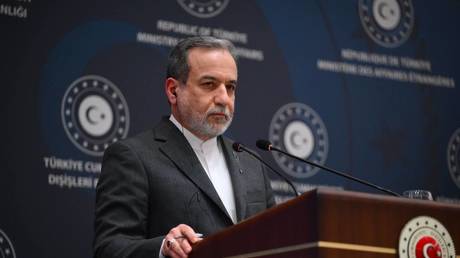
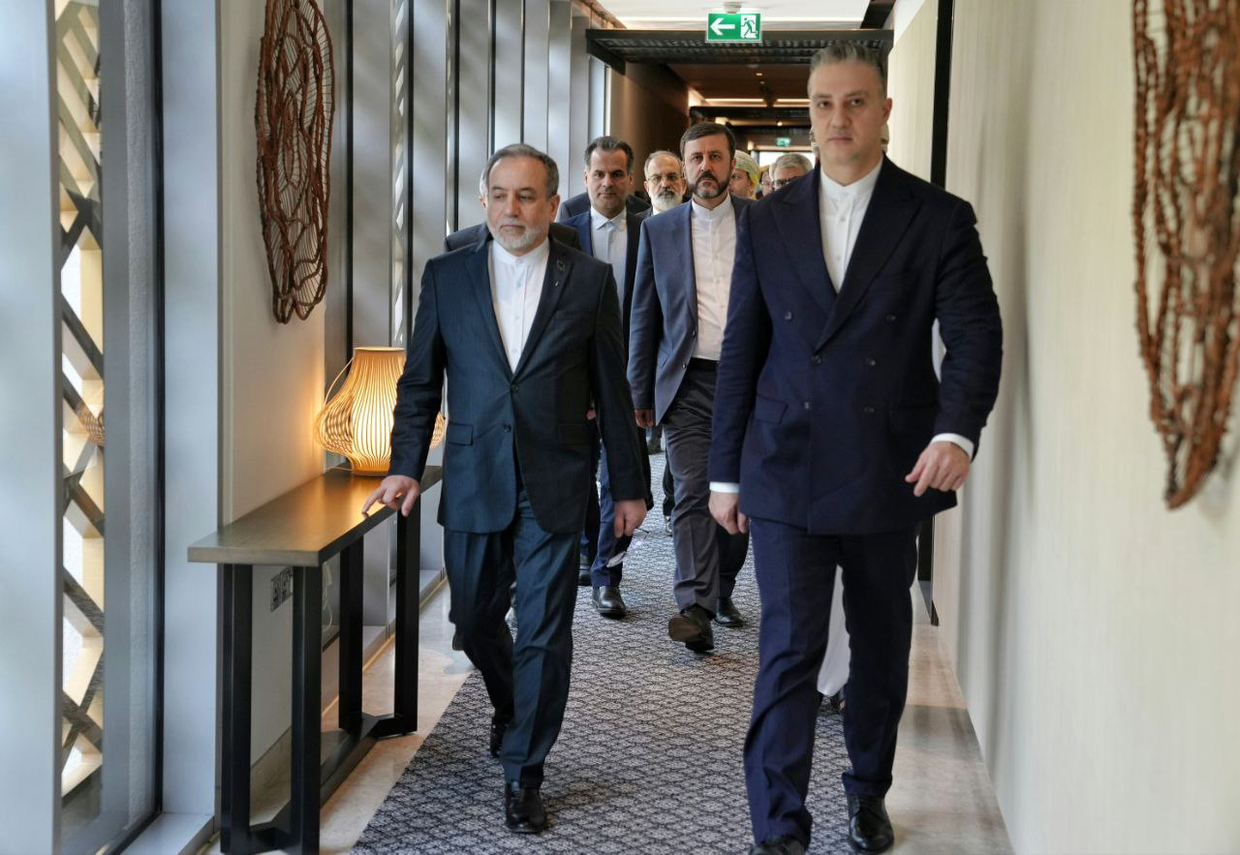
Iranian Foreign Minister Abbas Araghchi, left, heads to venue for talks between Iran and the US, in Muscat, Oman, February 6, 2026.
Iran, however, has consistently rejected such conditions. Officials in Tehran argue that their missile program is defensive and non-negotiable, especially given the country’s experience with war, sanctions, and isolation. Likewise, Iranian leaders have repeatedly framed support for allied groups as a legitimate response to Israeli and Western influence in the Middle East.
For that reason, expectations for a breakthrough remain low.
Iran is unlikely to make meaningful concessions on its ballistic missile program, nor is it expected to abandon its long-standing allies, including Hezbollah in Lebanon and the Houthis in Yemen. If those positions remain unchanged, analysts warn that the path toward military confrontation becomes increasingly narrow.
Experts have repeatedly cautioned that a direct conflict between Iran and the United States would almost certainly spiral beyond bilateral fighting. Instead, it could ignite a region-wide war, particularly if Iranian-backed groups enter the fray.
How Lebanon’s most powerful militia views a possible war
A Hezbollah official, who agreed to speak on condition of anonymity, echoed those fears, warning that the entire Middle East could be dragged into a full-scale confrontation.
“All countries in the region are prepared for this confrontation,” the official said. “That is why Saudi Arabia, the UAE, Jordan, and others issued statements saying they will not allow their airspace to be used to strike Iran. The Iranian Supreme Leader, Ali Khamenei, has also stated that any war on Iran will be a regional one. For Tehran, it would be a war of survival. The repercussions will affect all countries in the region.”
Despite the dire warnings, the official stopped short of confirming whether Hezbollah would actively intervene if Iran were attacked.
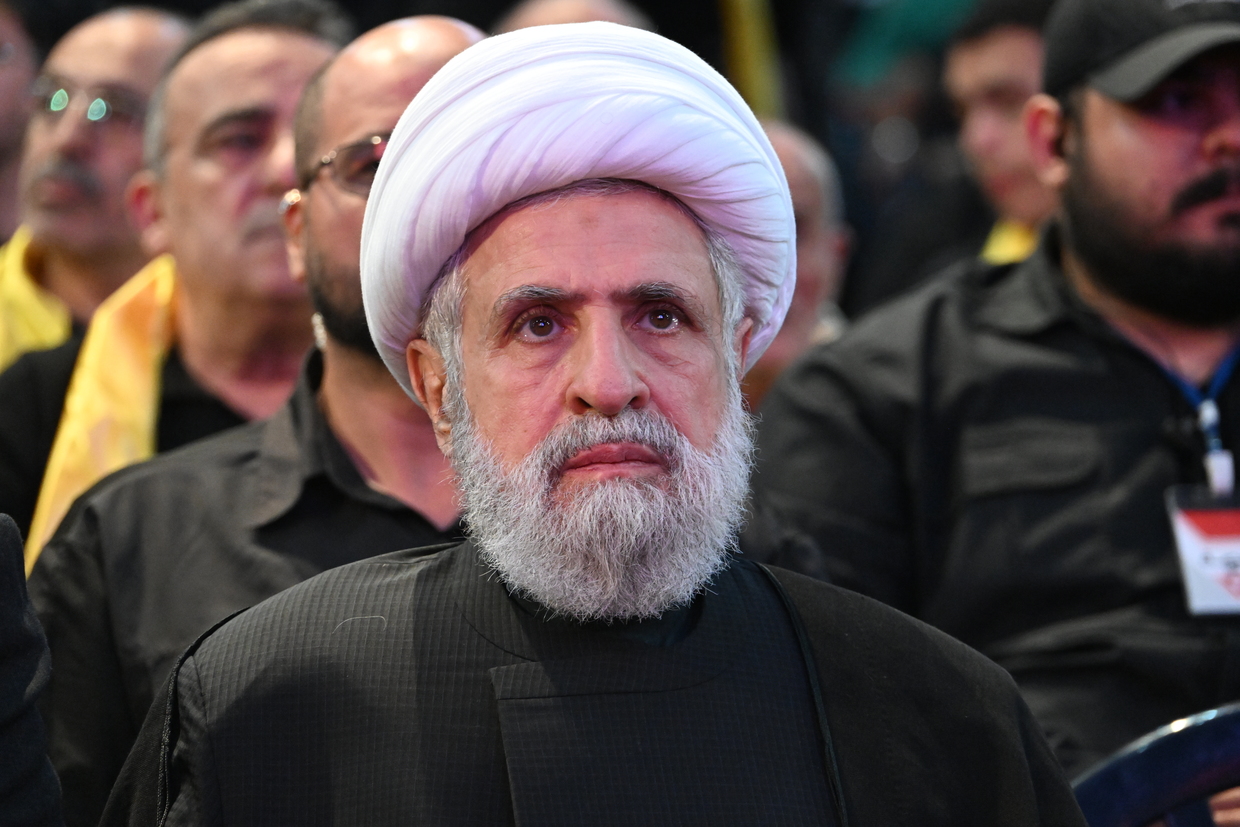
“We may or may not intervene,” he said. “Sheikh Naim Qassem [Hezbollah’s chief – ed.] emphasized the right of resistance and the defense of Lebanon. Our position is that we will not accept the Israelis, or anyone else, striking us while we stand idly by.”
Such statements underline Hezbollah’s attempt to maintain strategic ambiguity. Yet analysts note that even if the group wished to intervene decisively, its capacity has been significantly degraded following its most recent confrontation with Israel.
Before the war that erupted in October 2023, Hezbollah was widely believed to possess one of the largest rocket and missile arsenals in the world, estimated at more than 150,000 projectiles. After months of sustained Israeli airstrikes and targeted operations, that stockpile is believed to have shrunk dramatically, by as much as 70 to 80%, according to several assessments. Rocket launchers have also been severely degraded, with some estimates suggesting they have been reduced to a small fraction of their pre-war levels.
The damage has not been limited to weapons. Hezbollah has also suffered heavy personnel losses. Senior figures such as Hassan Nasrallah, Hashem Safieddine, Fuad Shukr, Ali Karaki, and others have been killed. Tunnel systems, storage depots, and command centers have been destroyed, while financial networks that once funneled money to fighters and supporters have been disrupted or crippled.
Still, the Hezbollah official insists the group remains capable of resisting Israel.
“The Israelis know that even after the war ended, resistance rockets were falling in many parts of the entity [Israel], especially in Tel Aviv,” he said.
“They know the war did not end with the resistance losing its capabilities. Quite the opposite is true. This is why the Israelis and Americans are trying to pressure Hezbollah to disarm.”
According to the official, such pressure will not succeed.
“We are a group that refuses to live in humiliation. In our conviction and belief, we are the people of dignity, and we will not accept our country being occupied, aggressions being perpetrated, innocent people being killed, while we stand idly by.”
Why Yemen could become another front
Similar defiant rhetoric has also emerged from Yemen. Speaking from Sanaa, Houthi spokesman Mohammed al-Bukhaiti told RT that the group has “no concerns at all” when it comes to confronting Israel or the US.
“In fact, we prefer direct confrontation with the American and Israeli enemy over indirect confrontation with their tools in the region or their mercenaries at home,” he said.
We view martyrdom in the cause of God as a victory, not a loss.
Al-Bukhaiti said Iran has “sacrificed a lot” for the Yemeni people and that the Houthis intend to respond “to loyalty with loyalty.”
Yet, as with Hezbollah, the Houthis face serious constraints. Even before the October 7, 2023 Hamas attack on Israel that triggered the current regional escalation, Yemen’s economy was in dire condition after years of civil war. Israeli strikes on ports and key infrastructure carried out in response to Houthi missile and drone attacks have only worsened the situation, with estimated direct and indirect damages exceeding $1 billion.
Despite these setbacks, al-Bukhaiti claims the group’s “military capabilities have increased and developed significantly” and says the Houthis are “more prepared to engage in the coming rounds.” He declined to specify what those capabilities are or what actions the group would take if Iran were attacked.
In the past, Houthi responses have included missile and drone launches toward Israel, attacks on international shipping, disruptions to oil flows, and even interference with undersea internet cables. Should tensions escalate again, analysts believe similar tactics could be employed.
As negotiators prepare to meet again, the gulf between US demands and Iranian red lines remains wide. Whether diplomacy can still rein in the crisis, or whether the region edges closer to a multi-front war, may depend not only on what is said at the negotiating table, but on how far Iran’s allies are willing, and able, to go once words give way to action.
Geopolitical tensions and volatility in American bond markets have reportedly been raising risk concerns
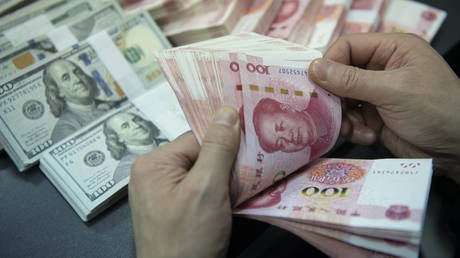
China has urged its banks to curb their exposure to US government debt, citing market volatility and growing financial and geopolitical risks, Bloomberg has reported citing people familiar with the matter.
Over the past decade, China has steadily trimmed its US Treasury holdings, a shift that has seen it overtaken by Japan and the UK as the largest foreign holders of American debt. Since peaking at around $1.3 trillion in 2013, its holdings have fallen roughly by half to about $650–700 billion, reaching levels not seen since 2008.
Beijing has advised China’s major financial institutions to limit new purchases of US government bonds and reduce positions where exposure is high, according to sources who spoke to the outlet on Monday. The guidance reportedly does not apply to Beijingss’s official state holdings.
According to the report, which cited China’s State Administration of Foreign Exchange, Chinese banks held about $298 billion in dollar-denominated bonds as of September. It is unclear how much of that total consisted of US Treasuries.
The guidance, reportedly intended to diversify market risk, came ahead of last week’s phone call between Chinese President Xi Jinping and his US counterpart, Donald Trump. In October, the two leaders agreed to a one-year trade truce, under which tariffs and export controls on each other’s goods would be lowered.
Beijing’s latest move comes amid broader concerns about swings in US bond yields and heavy reliance on dollar-denominated assets. Germany’s financial watchdog, BaFin, has warned recently that the US dollar’s role as the world’s reserve currency could face challenges in 2026 amid geopolitical shocks and funding pressure.
The warning came after the Bloomberg Dollar Spot Index posting its sharpest drop since last April, after Trump announced sweeping global tariffs. Last month, Trump dismissed concerns over the currency’s weakness, saying it is “doing great” and should be allowed to “seek its own level.”
On Monday, US Treasury prices extended losses and yields climbed modestly, while the greenback weakened against major currencies. US Treasury Secretary Scott Bessent said last week that the Treasuries market had delivered its best performance since 2020 and saw record foreign demand at auctions.
The Royal Navy is reportedly mulling a drone flotilla to gather intel on Moscow’s alleged “shadow fleet”
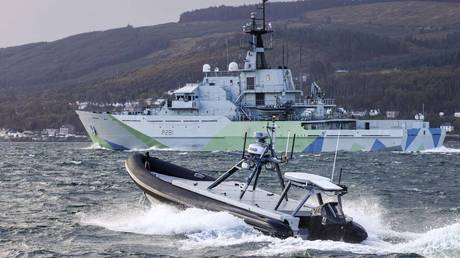
Britain is planning to launch a seaborne drone fleet to seize oil tankers it claims are linked to what it calls a Russian “shadow fleet,” the Sunday Times has reported.
London banned the import of Russian crude and oil products in 2022, along with related maritime transportation, insurance, and financing, imposing sanctions on over 500 vessels.
Despite those measures, Moscow has shipped 550 million tonnes of oil legally through the English Channel with an estimated value of $326 billion, according to the outlet, which said the sanctions are “failing to bite.” At the same time, Politico reported an estimated 40% of diesel-grade petroleum products the UK imported from India and Türkiye over four years originated from Russian oil.
The Royal Navy has drafted proposals for a command center for a remotely piloted flotilla of unmanned boats to police the North Sea. The drones are intended to gather evidence of “illicit activities” by tankers heading to and from Russian ports, which would form the basis for outright seizure of the vessels in the English Channel.
Under the UN Convention on the Law of the Sea, which guarantees freedom of navigation, Western powers lack a clear legal basis to enforce sanctions against cargo on the high seas.
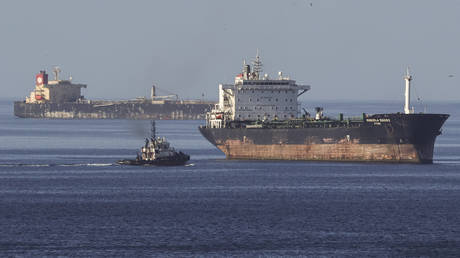
Despite this, two tankers have been seized so far this year: the Marinera by the US with UK support in the North Atlantic, and the Grinch by France in the Mediterranean. British Defense Secretary John Healey confirmed afterwards that the two allies were coordinating to detain more vessels.
The Sunday Times noted, however, that the plan faces a significant financial hurdle, as holding seized tankers incurs high costs. To help offset this, London is reportedly considering selling the oil from impounded vessels.
Russian officials have consistently slammed tanker seizures a “blatant violation” of international maritime law. President Vladimir Putin last October called France’s detention of a vessel in neutral waters “piracy.” Foreign Ministry spokeswoman Maria Zakharova previously characterized piracy as “one of the English traditions,” adding that historically pirates were forbidden to attack English ships but were allowed to plunder rival vessels.