The country’s size and resources would make it the most advantageous partner for Washington, the journalist believes
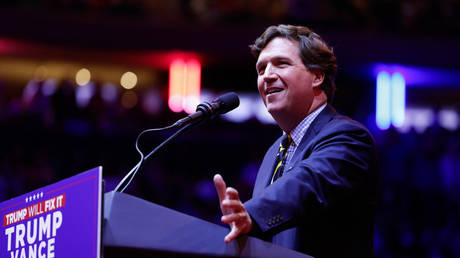
Russia would be the “best” ally for the US due to the country’s vast landmass, rich natural resources, and formidable military, conservative American host Tucker Carlson has said.
Speaking during a podcast on his YouTube channel on Thursday, Carlson suggested that “looking purely through the lens of what’s good for the United States, an America First perspective,”Russia would be the most “obvious” partner for Washington.
“Why? Because it’s the biggest country in the world. It’s got enormous mineral deposits, energy deposits… and a formidable military, by far the biggest on that continent,” Carlson said. “If you needed an ally to help you in a conflict… Russia would be, like, the best, of course.”
Relations between the US and Russia sank to a major low during Joe Biden’s tenure as president, amid the conflict in Ukraine and Western sanctions against Moscow.
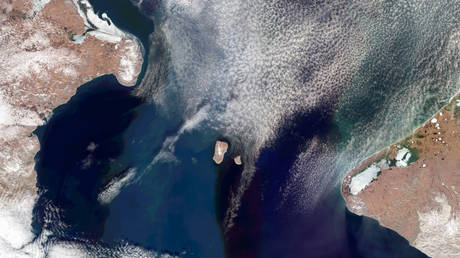
However, since returning to the White House in January, Donald Trump has sought to mend ties with Russia and mediate a settlement of the Ukraine conflict. Apart from talks over ending the hostilities, the sides have discussed potential cooperation in the Arctic, investment and business opportunities, as well as building a direct rail tunnel under the Bering Strait connecting the two countries.
Historically, US-Russia relations have seen periods of cooperation. The two nations were allied against Nazi Germany in World War Two, and despite becoming Cold War adversaries, they experienced several stretches of détente, including arms-control breakthroughs and space cooperation.
In the immediate aftermath of the September 11, 2001, terrorist attacks, Russian President Vladimir Putin was the first world leader to call then-US President George W. Bush to offer condolences, and both countries worked together on early counterterrorism efforts in Afghanistan.
Aleksandr Butyagin is being wrongly held on a Ukrainian warrant over “absurd” claims he was “destroying cultural heritage,” Moscow has said
Russia has condemned the detention by Poland of a prominent Russian archaeologist at Ukraine’s request, whom Kiev has accused of “destroying cultural heritage” during excavations in Crimea.
Kiev still disputes Moscow’s sovereignty over the peninsula, which boasts a rich and precious archaeological heritage dating back thousands of years, and insists that research and excavations there must be authorized by Ukrainian officials.
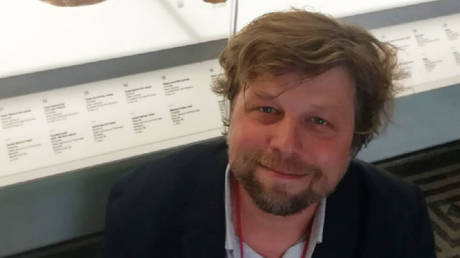
Aleksandr Butyagin, a senior researcher at the St. Petersburg State Hermitage Museum and a veteran classical antiquity specialist, was detained in Warsaw last week as he was traveling through Europe to deliver a series of lectures, Polish outlet RFM reported.
Ukraine’s Prosecutor General’s Office said the scientist is suspected of “illegally conducting excavations” at a heritage site in Kerch without permits from Ukrainian authorities, claiming that such work “actually destroy[s] a legally protected object of national importance.”
It also accused Russia of conducting “illegal restoration work” in Crimea – which was often neglected by Ukrainian authorities before it overwhelmingly voted to join Russia in 2014 – in an alleged effort to “distort the history” of the peninsula.
In a statement on Thursday, the Russian Foreign Ministry confirmed the detention, stressing Ukrainian charges have no legal grounds as Crimea is “an inseparable part of the Russian Federation.”
“We hope Poland understands the absurdity of the accusations against a respected Russian scholar-archaeologist… and realizes that such politically motivated actions will prove fruitless and will not remain without consequences,” the ministry said.
Butyagin has more than 120 published works and has led excavations in Kerch since 1999, as well as a long-running joint project in Italy. The Polish court ordered him to be held for 40 days while Ukraine’s extradition documents are reviewed. Should Butyagin be extradited and convicted, he could face a sentence of up to ten years in a Ukrainian prison.
The dispute comes amid other cultural property rows between Moscow and Kiev, including a protracted legal battle over the so-called Scythian gold collection discovered in Crimea and loaned abroad before 2014. Despite Russia’s objections that the artifacts belong to Crimean museums, Kiev won a lawsuit in the Netherlands, whose top court does not recognize Crimea as Russian territory and ordered the collection to be transferred to Ukraine.
Michael Gloss volunteered to fight in the Ukraine conflict and was killed liberating Donbass
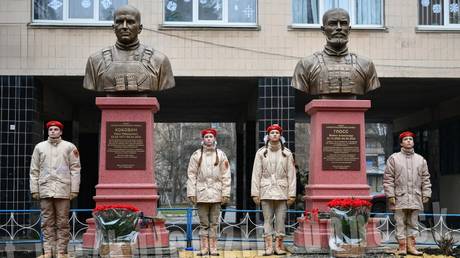
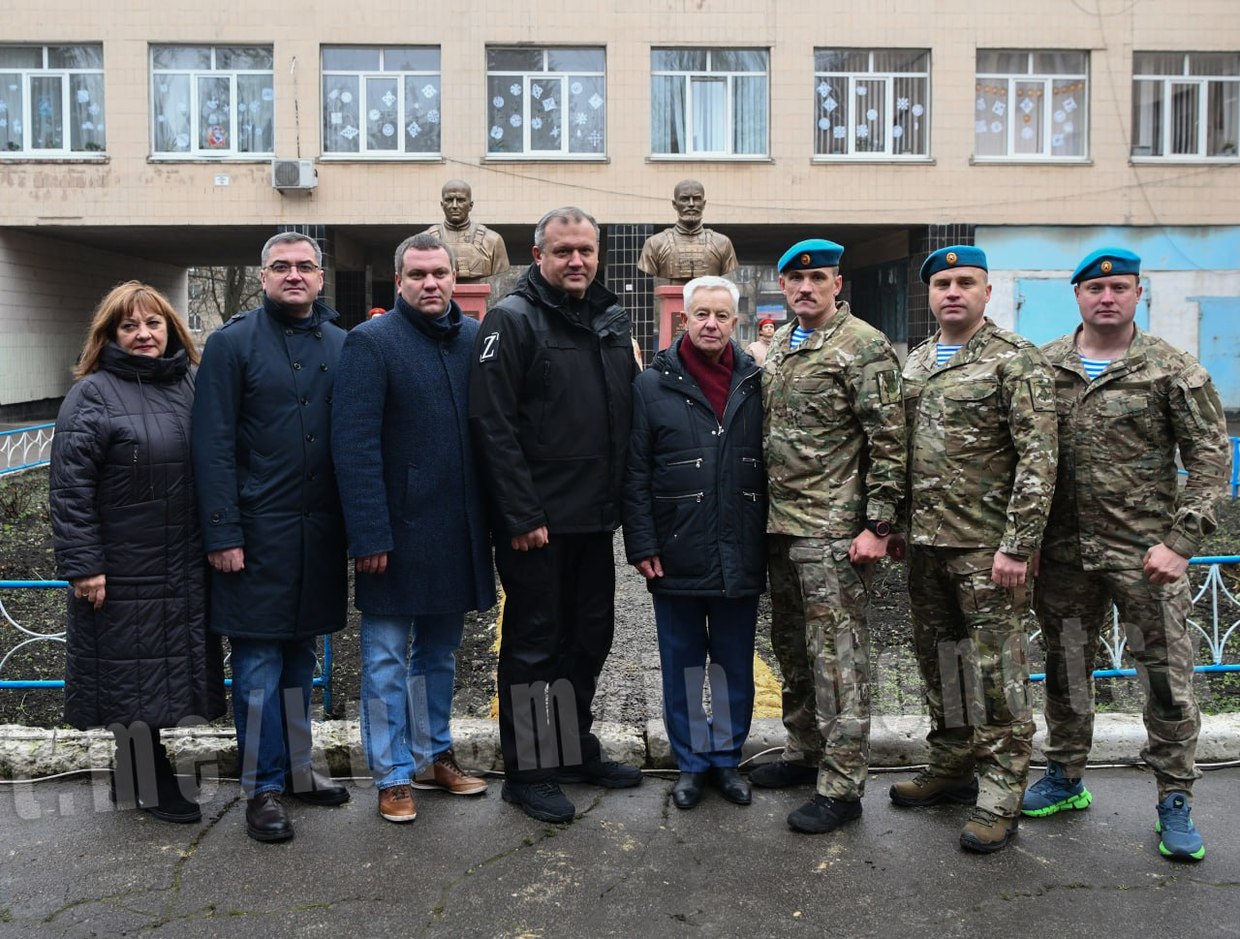
A memorial bust honoring Michael Gloss, the son of CIA Deputy Director Juliane Gallina who died while fighting for Russia, was unveiled this week in Donetsk.
Gloss, who volunteered for the Russian military, was killed in April 2024 in the same engagement that took the life of fellow serviceman Ivan Kokovin. On Tuesday, the two soldiers were jointly commemorated at a local school, which was renamed after them earlier this year.
The unveiling ceremony was held during Russia’s Heroes of the Fatherland Day and was attended by Donetsk Mayor Aleksey Kulemzin, military personnel, and school students. Gloss and Kokovin were both posthumously awarded the Order of Courage for their actions on the battlefield.
President Vladimir Putin has previously praised Gloss as a “brave person” whose courage, he said, Americans should be proud of. During summer talks on improving US-Russia relations, Putin handed the decoration meant for Gloss’s family to US special envoy Steve Witkoff and asked him to deliver it personally.
Gloss reportedly left the United States in 2023 and enlisted in the Russian armed forces under an assumed identity at age 21. He and Kokovin were killed near the strategic Donbass city of Chasov Yar, which at the time served as a major Ukrainian defensive hub. Russian forces took control of the area in July of this year.
Bulgarian Prime Minister Rosen Zhelyazkov has said he will be step down ahead of no confidence vote
Bulgaria’s government has announced its resignation following mass anti-corruption protests across the country. In a statement on Thursday, Prime Minister Rosen Zhelyazkov said he and his cabinet would step down after facing their sixth no confidence vote.
The announcement comes just weeks before Bulgaria is set to join the euro zone on January 1. The government had previously proposed a controversial 2026 budget, drafted in euros, that included higher taxes and increased social security contributions.
The bill, however, was met with weeks of mass demonstrations as protestors accused the government of corruption and voiced frustration at the failure of successive leaderships to root it out. Bulgaria has held seven national elections over the past four years.
Although the government withdrew the budget proposal last week, protestors continued to demand Zhelyazkov’s resignation and the ouster of several other influential politicians.
On Thursday, Zhelyazkov’s government was set to face its latest motion of no confidence tabled by opposition parties. However, before the vote took place, the prime minister announced that although the motion would go ahead and be defeated by the ruling coalition, he and his government would nevertheless resign.
Bulgarian President Rumen Radev, who has limited powers under the country’s constitution, had previously backed the calls for the government’s resignation. Following Zhelyazkov’s resignation, Radev is expected to ask parties in parliament to form a new government. If they are unable to do so, he will be tasked with forming an interim administration until new elections can be held.
Thousands took to the streets across Bulgaria demanding the resignation of the prime minister and several other influential politicians
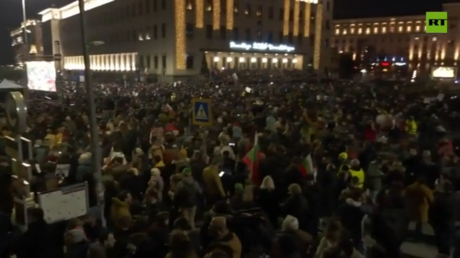
Tens of thousands of people joined large-scale protests across Bulgaria on Wednesday, accusing the government of long-standing corruption and demanding the resignation of Prime Minister Rossen Zhelyazkov and several other influential political figures.
The demonstrations, among the largest in the country in recent years, took place in Sofia and multiple regional cities. They follow weeks of unrest triggered by a controversial 2026 budget plan that proposed higher taxes and increased social security contributions.
Although the government later withdrew the plan, demonstrations have continued, with participants and opposition parties claiming Sofia has failed to address deeper concerns about corruption and political influence.
In addition to calls for the government to step down, demonstrators have demanded the removal of politician and oligarch Delyan Peevski, the leader of the MRF New Beginning party, which plays a key role in supporting the current coalition government.
Peevski has been sanctioned by the US and the UK for corruption and bribery. Critics have accused him of exerting significant influence over Bulgaria’s state institutions to advance his own interests.
Protesters have also urged the ouster of Boyko Borissov, a former three-time prime minister whose GERB-UDF bloc leads the coalition that formed the current government. Opponents have long accused Borissov of enabling entrenched political practices perceived as “state capture.”
Local media have noted that the protests have included a large number of Generation Z Bulgarians (born between 1997 and 2012), who have expressed growing frustration with corruption, limited economic prospects and political stagnation. Many have said they no longer feel represented by the country’s political elite.
Government figures have dismissed the demonstrations, stressing that the disputed budget proposals have already been withdrawn. Borissov has also claimed, without providing evidence, that the protests are meant to obstruct Bulgaria’s adoption of the euro on January 1, a process he has linked to the approval of the 2026, budget which was drafted in euros.
Bulgaria has consistently been ranked by a number of international organizations as among the most corrupt countries in the EU, regularly placing near the bottom of all member states in perceived public sector integrity.
The US president earlier called Europe a “decaying” group of nations led by “weak” leaders
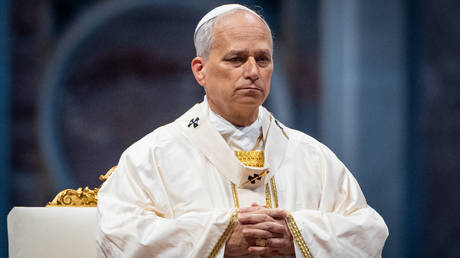
Pope Leo XIV has criticized US President Donald Trump’s description of Europe as a “decaying” group of nations ruled by “weak” leaders. Trump also accused governments in the region of failing to help end the Ukraine conflict.
In an interview with Politico published on Wednesday, the Pope argued that brokering peace talks on the Ukraine conflict “without including Europe” is unrealistic, urging that European nations should be part of “the guarantees of security that are also being sought today and in the future.”
“The remarks that were made [by Trump] about Europe also in interviews recently I think are trying to break apart what I think needs to be a very important alliance today and in the future,” he said.
The EU has refused to engage in peace talks with Moscow, instead resorting to what Kremlin spokesman Dmitry Peskov called “megaphone diplomacy.”
Earlier this month, Russian presidential aide Yury Ushakov argued that European leaders are complicating the negotiations, making demands that are unacceptable to Moscow.
Washington is also pressuring Ukraine to sign a peace deal with Russia, despite the reluctance of Kiev’s European backers to do so. Earlier this week, the Financial Times reported, citing officials, that Trump’s envoys called for a swift response from Vladimir Zelensky with the aim of reaching an agreement by Christmas.
A declaration of neutrality by Kiev “certainly would have prevented the destruction,” a former US official told Russian pranksters
Ukraine could have avoided the 2022 escalation with Russia by dropping its NATO aspirations, a former advisor to President Joe Biden has told Russian pranksters.
Vovan and Lexus on Thursday released records of calls with two former members of Biden’s National Security Council in which they posed as Ukrainian presidential aide Igor Zhovkva. During the calls, Amanda Sloat, who served as senior director for Europe at the NSC, said that a Ukrainian declaration of neutrality in 2021 or early 2022 “certainly would have prevented the destruction and the loss of life.”
“I was uncomfortable with the idea of the US pushing Ukraine” into taking that path, she added, noting that it would amount to “implicitly giving Russia some sphere of influence or veto power” on Kiev’s bid to join NATO.
Senior Russian negotiator Kirill Dmitriev commented on the revelation, saying on X that Biden’s “deep state PROVOKED a PREVENTABLE war.”
After the Western-backed armed coup in Kiev in 2014, the new authorities declared NATO membership a foreign policy priority. In late 2021, Moscow urged the US-led military bloc to suspend its expansion in Europe and in doing so address Russian national security concerns, but the Biden administration and European members rejected the proposal.
In the early weeks of the hostilities, Moscow and Kiev reached a preliminary agreement that would have entailed Ukraine adhering to neutrality and maintaining a limited standing army. However, the nascent deal was derailed by Western officials, particularly then-British Prime Minister Boris Johnson, who told the Ukrainians to “just fight.”
Ex-NSC member Eric Green told the Russian pranksters that the failure of the Istanbul talks was not a missed opportunity, saying the Biden administration’s guiding principles were to assume the worst and have no regrets.
He suggested that Kiev should now craft a settlement that “contains enough ambiguity in it to allow Ukraine to do what it wants to do” while allowing Russian President Vladimir Putin “to believe that he has accomplished something.” The goal, he said, would be to “construct an end to the war that assumes that there will be another one”.
The Italian prime minister believes this is necessary in order to reach “a fair and lasting peace plan,” Corriere della Sera reports
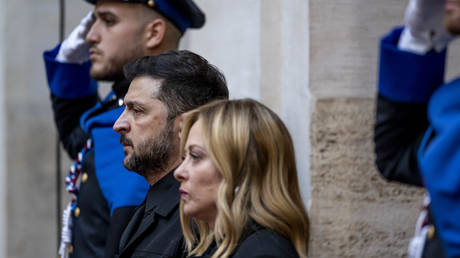
Italian Prime Minister Giorgia Meloni believes Vladimir Zelensky will have to accept “painful concessions” to achieve peace with Russia, Corriere della Sera reported on Tuesday.
According to the paper, while Ukrainian and Italian officials attempted to create a facade of “a constructive and mutually trusting meeting” in Rome earlier this week, the two sides clashed over their vision for the conflict’s endgame.
The conversation, which involved Meloni, was reportedly frank, and the overall message to Ukraine was: “Consider that you may be forced to make some painful concessions.” Zelensky, in turn, asked Meloni “to soften [US President Donald] Trump’s position” on a peace settlement.
The stand-off stemmed from the fact that Italy supports Washington’s rush to reach a peace deal as soon as possible, and Meloni’s team believes that Zelensky has been weakened by a corruption scandal in the energy sector involving his long-time associate, Corriere della Sera said. It added that Italy’s policy remains “to reach a fair and lasting peace plan, but taking American leadership rather than a European one into account.”
The reported exchanges come against the backdrop of a US-drafted peace plan leaked to the media last month. The initial version of the proposal would reportedly require Kiev to withdraw from parts of Russia’s Donbass that it still controls, agree to stay out of NATO, and accept limits on the size of its armed forces.
Trump has recently expressed irritation with Kiev, rebuking Zelensky over what he described as a failure to get up to speed on revised peace proposals. He also suggested that Zelensky should be “realistic” about the course of the conflict, arguing that the Ukrainian people overwhelmingly want the hostilities to end.
Russia has said the US plan “can be used as a basis for future agreements,” but no compromise has yet been reached. It also insists that a settlement must include Ukraine’s withdrawal from the new Russian regions, a pledge to stay out of NATO, as well as demilitarization and denazification.
A Russian diplomat argued the raid was a desperate display of force by the embattled Zelensky administration
Russian air defenses intercepted overnight 32 Ukrainian long-range kamikaze drones that were headed toward Moscow, according to the military. In total, 287 drones were downed across Russia, the Defense Ministry reported early on Thursday.
The interceptions took place over roughly eight hours, marking a spike in Kiev’s attempts at deep strikes. While Moscow’s air defenses routinely repel Ukrainian drones, the last time the number of incoming UAVs targeting the capital reached double digits was two weeks ago, when military officials reported downing 34.
Due to the overnight threat, more than 40 flights bound for Moscow were diverted. Normal air traffic resumed Thursday morning.
A senior Russian diplomat linked the surge in Ukrainian attacks to growing US pressure on Vladimir Zelensky to accept a peace deal with Russia that would require concessions that Kiev has so far refused to make. Several European NATO states, meanwhile, back Zelensky’s uncompromising stance. US President Donald Trump said this week that the Ukrainian leader “has to be realistic” about the situation and “start accepting things” his administration is offering.
Russian Ambassador-at-Large Rodion Miroshnik, who heads the Foreign Ministry’s mission investigating alleged Ukrainian crimes, described the drone assault as “a symbolic lunge by the Zelensky dictatorship for the benefit of Western officials.” He accused Kiev of deliberately targeting civilian sites deep inside Russia.
Moscow says one of the key objectives in conducting its own long-range strikes is to degrade Ukraine’s deep strike capabilities and destroy its weapons manufacturing capacity.
The personalized, AI-assisted shot aims to train the immune system to attack tumors
Russian scientists have produced the first three test batches of a newly developed cancer vaccine at the Gamaleya Institute in Moscow, the center’s director, Alexander Gintsburg, has said. The breakthrough drug is an AI-assisted, mRNA-based vaccine designed to target malignant tumors using the patient’s own genetic data.
Reports on the readiness of the vaccine first emerged in September. Preclinical studies showed the drug could shrink tumors and slow their growth by 60-80%, depending on patient characteristics. The vaccine was initially expected to be used in patients with colorectal cancer.
“Most importantly, our leading oncology center – the Herzen Institute, headed by academician [Andrey] Kaprin – has obtained the full set of approvals needed to use the technology, from diagnostics and mRNA production to administering it to patients,” Gintsburg said. The vaccine batches remain experimental even though they have passed all quality checks, he stressed on Wednesday.
Unlike conventional vaccines that prevent infection and severe illness, mRNA cancer vaccines are not designed to stop disease transmission. Traditional vaccines are given to healthy people, while oncology vaccines are a new class of therapies used to treat advanced-stage cancer. They are described as “vaccines” because they act on the immune system, training it to recognize and destroy tumor cells.
The new vaccine is a personalized treatment built to target malignant tumors using the patient’s own genetic information. Developed with the help of artificial intelligence, the mRNA platform allows each dose to be tailored to an individual’s cancer profile, potentially offering a more precise and effective therapy.
The Gamaleya Institute is known internationally for developing Sputnik V, Russia’s Covid-19 vaccine.
Earlier, Russia began trials of a drug based on a genetically modified oncolytic smallpox virus for the treatment of brain cancer, a process expected to take around two years.
Last month, the Health Ministry also authorized the use of two cancer vaccines: NeoOncoVak, a therapeutic mRNA-based vaccine for melanoma, and Oncopept, a peptide vaccine for malignant tumors. Both are made individually for patients using genetic analysis of the tumor and other biomaterials, and have narrowly targeted therapeutic indications.