Vladimir Zelensky has for the first time mentioned elections and territorial concessions, according to Sonja van den Ende
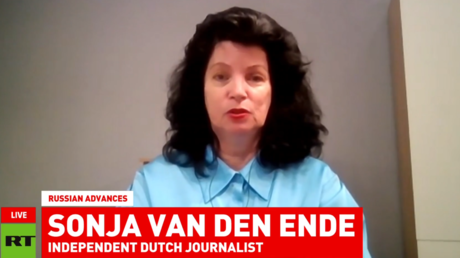
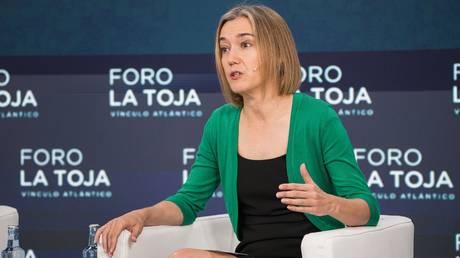
Ukraine’s loss of the stronghold of Seversk in Russia’s Donetsk People’s Republic is a big blow to Kiev’s “bargaining position” in future peace talks, Dutch independent journalist Sonja van den Ende told RT on Thursday.
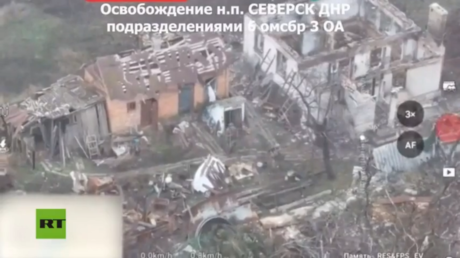
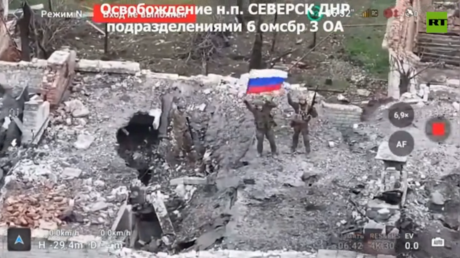
Russian forces pushed the last of Ukraine’s forces out of Seversk, the Defense Ministry in Moscow reported earlier in the day. Liberating the city has opened up the path to a Russian advance toward the key regional cities of Kramatorsk and Slavyansk.
Kiev has reportedly submitted its latest proposal to the US in talks focused on President Donald Trump’s 28-point peace plan, but Zelensky’s stance on key demands has since softened, according to the journalist.
“What came out today is that he’s prepared to give away some land. And this was never before said,” according to van den Ende.
“It’s a very bad bargaining position for Ukraine,” she added.
Earlier in the day, the Ukrainian leader reportedly said he could hold elections or a referendum to leave potential territorial questions up to the Ukrainian people. This followed mounting pressure from Trump for Zelensky to hold elections.
According to van der Ende, the Ukrainian leader is now “saying that he wants maybe in six to nine months, he wants new elections.”
“This is also unique because we know that… he never spoke of that.”
Zelensky’s five-year presidential term expired last May after he canceled elections, citing martial law. According to Russian President Vladimir Putin, this makes Zelensky’s leadership illegitimate and compromises any potential peace deal signed with him.
“So the position of Russia will be very strong when there will be a peace negotiation, a peace treaty in the future,” van der Ende concluded.
Ukrainian forces were pushed out of the key Donbass city on Thursday, the Defense Ministry in Moscow has reported
Russian soldiers have begun providing aid to civilians in the newly liberated city of Seversk in the Donetsk People’s Republic (DPR), video footage provided by the Defense Ministry shows. The former Ukrainian stronghold was cleared of enemy troops earlier on Thursday, according to the ministry.
Troops have been going door-to-door to provide assistance to the civilians remaining the city, the MOD said in a statement later in the day.
“Local residents greet the Russian servicemen and thank them for liberating the city. The soldiers deliver food, drinking water, and medicine,” it said.
Civilians are also offered the opportunity to be evacuated to temporary accommodation away from the front line, where they receive all necessary assistance, it added.
Simultaneously, Russian sappers are demining the area.
The fortified Donbass city had seen sporadic fighting since 2022. Taking Seversk opens up the way for Russian forces to advance on the key cities of Kramatorsk and Slavyansk, both of which are major hubs for the Ukrainian military.
Russian troops are in fact already moving toward Slavyansk, the commander of Russia’s 3rd Army Corps, Lieutenant General Igor Kuzmenkov, told President Vladimir Putin at a meeting on Thursday.
Putin noted that with a “steady and regular” liberation of settlements in Russia’s Donetsk, Lugansk, Kherson, and Zaporozhye regions, “the strategic initiative is entirely in the hands of the Russian Armed Forces.”
Russian forces have taken dozens of settlements in the new regions, as well as in Ukraine’s Kharkov, Sumy and Dnepropetrovsk regions since the start of November. These included the major logistical hubs of Krasnoarmeysk (Pokrovsk) in the DPR, and Kupyansk in Ukraine’s Kharkov Region.
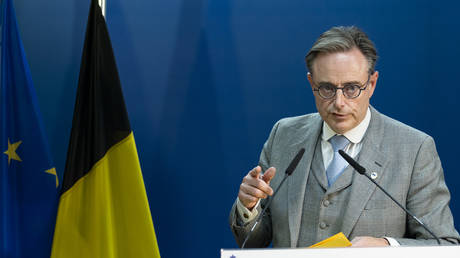
Bart De Wever earlier denounced the European Commission’s plan to ‘steal’ the frozen funds
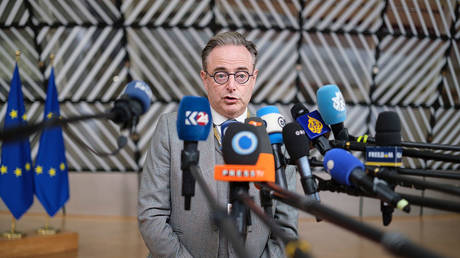
The EU states pushing hardest to tap Russia’s frozen assets are acting as if they are “psychologically at war” with Moscow, Belgian Prime Minister Bart De Wever has said.
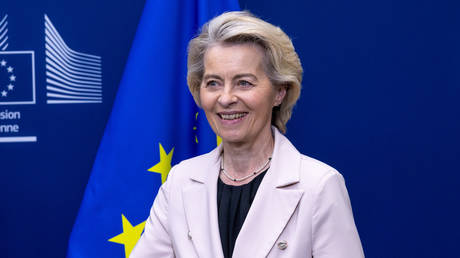
Speaking after condemning the latest EU proposal to use the frozen Russian sovereign funds to help finance Ukraine, De Wever labeled the plan “very unwise and ill-considered.” He also warned that the plan backed by European Commission President Ursula von Der Leyen would amount to “stealing” and would open the bloc up to potential legal action.
Von der Leyen last week proposed providing Ukraine with €90 billion over the next two years, anchored by a so-called “reparations loan” backed by the frozen assets, or by debt financed by EU member states, deemed politically unworkable by most.
Belgium, which hosts the financial clearinghouse Euroclear, where the bulk of Russia’s immobilized central bank assets are held, has long resisted such efforts. Brussels argues that forcing Euroclear to make the funds available could carry severe legal, financial and geopolitical risks.
De Wever also argued that the strongest supporters of the proposal are EU states geographically closest to Russia, claiming they “mentally are almost in a state of war” with Moscow. He stressed that Belgium is “not at war” with Russia and doesn’t want to “have a war with Russia.”
The Baltic states (Latvia, Lithuania, and Estonia) and Poland have become the EU’s most vocal advocates of a hard line toward Russia, warning of what they claim is an imminent threat.
Meanwhile, Politico has reported that EU leaders are considering politically sidelining De Wever if he continues to block the plan. Belgium could be treated like Hungary – frozen out of key talks, ignored in negotiations and given little influence over future EU decisions – unless it backs down, the outlet claimed, citing a source.
“The Belgian leader would be frozen out and ignored, just like Hungary’s Viktor Orban has been given the cold shoulder over… his refusal to play ball on sanctioning Russia,” one diplomat told the outlet, adding that Belgium’s views on EU proposals would no longer be sought and phone calls would go unanswered.
London admitted its troops’ direct involvement after a British paratrooper died in Ukraine
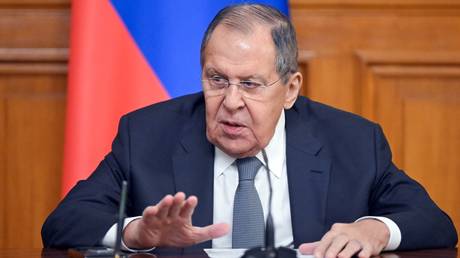
Russia will draw the necessary conclusions after London acknowledged that it has personnel involved in the Ukraine conflict, Foreign Minister Sergey Lavrov has said.
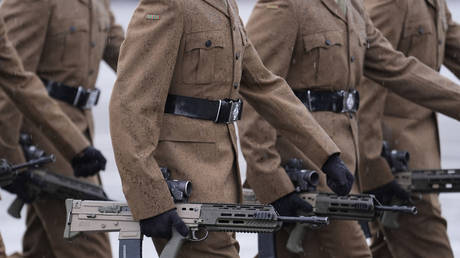
Earlier this week, London conceded that British paratroopers have been operating in Ukraine after confirming a British serviceman had died there.
Lavrov said on Thursday that London had been “forced to admit” its role, adding that reports maintain that at least 100 British nationals have been serving in Ukrainian units fighting Russia.
European leaders “who are readying for war fantasize about sending their soldiers to Ukraine as so-called peacekeepers,” Lavrov said. “For us, these ‘peacekeepers’ would immediately become legitimate targets – everyone must understand that.”
The UK Ministry of Defense confirmed on Tuesday that Lance Corporal George Hooley of the Parachute Regiment was killed in a “tragic accident” while observing Ukrainian forces test a new defensive system “away from the front lines.” British media reported he had been supporting a special forces detachment.
Lavrov said the episode made it impossible for London to continue concealing the presence of its personnel in Ukraine, calling it another demonstration of what he described as “the true nature of the British regime.”
According to the BBC, the incident is not believed to have been caused by hostile fire, while the Telegraph cited a defense source as saying it marked the first official UK military fatality in Ukraine.
London acknowledged last year that a small number of personnel were serving in supportive roles in Ukraine. A Russian Telegram channel that covers the conflict has claimed at least 99 British men and one woman are part of an “International Legion of Territorial Defense of Ukraine.” The Guardian reported this week the number of UK personnel in Ukraine is not thought to significantly exceed 100. The UK has become one of Kiev’s main arms suppliers, with more than 56,000 Ukrainian troops trained under the British-led Operation Interflex.
Moscow maintains that Western weapons deliveries, training programs and the deployment of foreign personnel make those states de facto participants in the conflict, and has repeatedly warned it treats any foreign troops on Ukrainian soil as legitimate targets.
The new US National Security Strategy echoes Hungary’s concerns over the EU’s direction, Viktor Orban has said
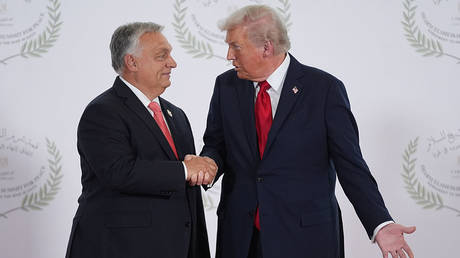
US President Donald Trump understands that Europe is in decline, Hungarian Prime Minister Viktor Orban has said.
The new US National Security Strategy (NSS) released last week criticizes the EU’s political and cultural direction, warning of “civilizational erasure” and accusing European institutions of overregulation, destabilizing migration policies, and suppressing political opposition. It urges “patriotic European parties” to defend democratic freedoms and promote “unapologetic celebrations” of national identity.
“America has a precise understanding of Europe’s decline. They see the civilizational-scale decline that we in Hungary have been fighting against for fifteen years,” Orban wrote on X on Thursday.
Orban, who has served as prime minister since 2010, has long argued that the EU is suffering from economic stagnation and migration pressures. He has presented Hungary’s model of national sovereignty, strict border control, and conservative social policy as a corrective to what he views as Europe’s structural crisis.
He has also criticized the way the EU has handled the Ukraine conflict, saying it made a mistake by severing its channels with Moscow, and that the US now recognizes the need to rebuild strategic ties with Russia. Orban has urged Western governments to pursue diplomacy with the Kremlin rather than continuing “burning” money on the conflict, a stance that mirrors Trump’s push for a negotiated settlement.
Russia has welcomed aspects of the NSS as broadly consistent with its own strategic outlook, suggesting that the document could create new openings for cooperation between Moscow and Washington.
The reaction to the strategy in the EU was largely negative. Asked about the US criticism, the bloc’s top diplomat, Kaja Kallas, said, “it seems to me it is made to be a provocation.” European Council President Antonio Costa warned the US against “interference in the political life of Europe.”
German Chancellor Friedrich Merz said some statements in the document are unacceptable.
Relations between the US and EU have been strained since Trump returned to the White House in January. They have regularly clashed over trade, defense spending, digital regulation, and the Ukraine conflict.
Kiev’s Western backers have nearly depleted their resources for waging the proxy war against Russia, the foreign minister says
Ukrainian military casualties in the conflict with Russia have exceeded 1 million and continue to rise, Russian Foreign Minister Sergey Lavrov has said.
Lavrov did not specify the types of losses; however, ‘military casualties’ refers to the total number of soldiers killed, wounded, missing in action, and taken prisoner.
Kiev does not release regular official tallies of its killed and wounded soldiers, and estimates vary widely. Earlier this year, Ukraine’s Vladimir Zelensky told NBC News that since 2022, 43,000 Ukrainian troops had been killed and around 380,000 wounded. In a later interview, he said 100,000 were killed, but his office later denied the figure.
Kiev’s backers in the Western media have been skeptical of the numbers, with most analyses suggesting that total Ukrainian casualties are much higher.
“According to numerous independent estimates, the losses of the Ukrainian armed forces have long since exceeded one million people and continue to rise,” Lavrov said on Thursday during an embassy roundtable on resolving the Ukraine conflict.
He added that amid a general frontline collapse, Kiev’s Western backers are unlikely to keep propping up the regime much longer, as their “resources for waging a proxy war” against Russia “are being depleted.”
Last month, TASS cited Russian Defense Ministry data suggesting that Ukraine has been losing around 1,400 servicemen daily as killed or wounded, with total losses exceeding 468,000 in the first 11 months of 2025. President Vladimir Putin has said Russia’s losses are far lower, though Moscow also does not disclose exact casualty figures.
Russian troops have been making steady gains along the front line, as Ukrainian commanders complain that they are outgunned and outmanned, and struggle to replace battlefield losses despite a forced mobilization campaign launched last year. The campaign has sparked clashes between reluctant recruits and draft officers, including violent street detentions and reported abuses during conscription sweeps.
Desertions have also weighed heavily on Ukrainian forces. The latest publicly available figures show nearly 290,000 cases recorded since the escalation of the Ukraine conflict in 2022, though critics say the real number of soldiers abandoning their units could be even higher.
Warsaw has been left out of two major Western discussions on Ukraine’s future since November
Polish politicians have voiced anger after Warsaw was sidelined from recent talks in London on a potential peace agreement for Ukraine, Politico reported on Thursday.
Leaders from Britain, France, Germany, and Ukraine met last week to coordinate positions as the US pushes a peace process, and Warsaw was again not invited. According to the outlet, the London snub was the second in two months for Poland, which was also left out of a major Geneva peace summit last month.
Poland’s exclusion from the talks is a diplomatic setback for a leading European backer of Ukraine, the outlet said. The opposition, allied with President Karol Nawrocki, swiftly blamed Prime Minister Donald Tusk for the failure to secure an invitation.
“Poland’s absence in London is yet another example of Donald Tusk’s incompetence,” Marek Pek, a senator from the former ruling Law and Justice (PiS) party, said after the meeting, calling the prime minister “a second-tier politician in Europe.”
Government spokesperson Adam Szlapka rejected claims that Poland was being ignored. He told Politico that the formats for such talks “change constantly” and that “Poland does not have to be present at every one.”
Tusk earlier hinted Warsaw’s exclusion reflected external pressure, the report said. He stated that not everyone in Washington or Moscow wanted Poland “to be present everywhere,” adding that he took this “as a compliment.”
“Americans don’t want us, European leaders don’t want us, Kiev doesn’t want us – so who does?” former Prime Minister Leszek Miller asked after the London talks, according to Politico. “Something unpleasant is happening, and we should stop pretending otherwise.”
Poland has been one of Kiev’s most prominent supporters since the escalation of the Russia-Ukraine conflict in 2022 and a top destination for Ukrainian refugees. Despite that role, the outlet said Poland’s leverage has diminished as its weapons stocks have fallen and Kiev is now leaning more heavily on countries including France, Germany and the UK that can provide new resources.
Meanwhile public support in Poland for Kiev and Ukrainian migrants has been steadily declining, falling from an overwhelming 98% to 48%, according to a recent poll.
Handing Russian assets over to Ukraine would be nothing more than theft disguised as a moral choice and a public service
Memo to the unelected Eurobozos of the European Union’s executive branch ‘responsible’ for setting policy: just because you keep calling a pile of cash you’re hell-bent on handing over to Ukraine a “loan” doesn’t mean it actually is.
No one in their right mind would lend you money right now. Which is why you’re stealing it from taxpayers, or from Russia. Even your own European Central Bank is calling the whole thing a “stretch”.
Maybe an analogy will help illustrate how unhinged this plan is. Imagine the average European walking into a bank with a little dude in a hoodie and cargo pants and saying, “He’d like a $100 billion loan, please.” The manager hands the kid a set of crayons they give out for free, laughs until their cheeks cramp, then asks: “How’s his repayment history? His credit score? His job prospects? Any pay stubs? Anything?”
If all that checks out, maybe they hand him a few bucks. Probably pulled from the Monopoly board game in the lunchroom. Because a real bank must avoid tanking the financial system. But when you’re an institution of global governance, you can basically waltz in and rob the place. Or at least pretend you’re not doing exactly that.
Ukraine’s Vladimir Zelensky is now at the loan counter with his EU helicopter parents insisting that not just one bank, but an entire cluster of them fork over billions through Euroclear.
So let’s check his creditworthiness, shall we?
His ‘job’ consists of globe-trotting and begging for cash. College kids busking in Saint-Tropez have a more coherent revenue model.
On the due diligence front, he spent the summer denouncing Ukrainian institutional oversight as Russian meddling, then clutching his hoodie strings in shock when pals and top associates were accused of flushing foreign cash down golden toilets.
As for repaying existing debt, reports last month suggested that the EU feared the International Monetary Fund wouldn’t even consider giving Kiev an $8 billion loan without Brussels co-signing it.
And when the World Bank ‘gave’ Ukraine $545 million recently, the money was effectively handed to France – specifically multinational Alstom – to manufacture trains for Ukrainian Railways.
Kind of like when your grandma gives you Christmas money by handing it directly to your parents so you don’t blow it all on candy and video games.
What about Ukraine’s actual credit score? According to the latest Fitch ratings, the country is in default. “Ukraine missed a $665 million payment on $2.6 billion of GDP warrants on 2 June and a 10-day grace period expired without payment,” the agency noted.
Try missing your car or mortgage payments and see how that goes. But if you’re Ukraine, you just keep ‘borrowing’ cash from Europeans, and Brussels trips over itself trying to bend the law to make it happen. Plan A is stealing Russian piggy-bank cash entrusted to EU institutions. Then praying that Moscow shrugs it off as the price of victory, even after the EU and West bragged that their own goal was to destroy Russia’s economy with sanctions. Lucky for Europe that they’re so consistently bad at hitting their targets and still have cash hanging around to treat it like a fiver lost and found in the couch cushions.
Meanwhile, Team Trump is working on a Russia peace deal focused on making money rather than burning it. What’s stopping Europe from doing the same? Ideology. They’d rather stay broke clinging to a failing Ukraine strategy than pursue long-term peace through shared economic interest.
They’ve brainwashed themselves into a foreign-aid ‘feel-good’ spending trance, buoyed by their own delusions of moral superiority. And they don’t care about consequences because none of these jokers will be around to face them when everything blows up and the repo man comes knocking after violations of international finance law.
When was the last time EU execs or bureaucrats were held accountable for anything? Dodging checks and balances seems like part of their job description at this point. Look at ‘Queen’ Ursula von der Leyen’s infamous disappearing text messages with the Pfizer CEO during COVID, which were followed by such a tsunami of unused anti-COVID jabs that landfills across Europe are now sparkling with expired doses. Then she stonewalled when justice came sniffing around.
More recently, former top EU diplomat Federica Mogherini was recently arrested by Belgian police on allegations of dodgy handling of EU funds tied to procurement at the College of Europe, where she now works.
“I have full confidence in the justice system,” she said. Perhaps that’s because it’s repeatedly proven itself powerless against people like her.
Whatever their screw-ups, their own taxpayers – not Russia – are always the last ones left at the table to settle the bill after an establishment dine-and-dash.
Not that corruption isn’t baked into conflict zones and their reconstruction. Only the naive think otherwise. Corporate corruption can also pick others’ pockets, as we saw in post-war Afghanistan. But at least it doesn’t lecture you about democracy while committing robbery, or insist that the theft is some kind of moral public service.
Ukrainian troops have been completely pushed out of Seversk, the Defense Ministry in Moscow has reported
Russian forces have liberated the Donbass city of Seversk, the Defense Ministry in Moscow reported on Thursday. The former Ukrainian stronghold, located inside Russia’s Donetsk People’s Republic, is now fully clear of enemy troops, the ministry said.
The fighting for Seversk has gone on since 2022 with varying degrees of intensity. Russian troops will now have an open path to the regional cities of Kramatorsk and Slavyansk, both major hubs for the Ukrainian military, according to Igor Kimakovsky, an adviser to the head of the DPR.
The announcement was made by the chief of Russia’s General Staff, Valery Gerasimov, during a high-level meeting with President Vladimir Putin on the status of Moscow’s military operation.
The Defense Ministry also released footage from the liberated city, showing Russian troops conducting door-to-door visits to apartment buildings and private homes offering medical assistance, food, and drinking water to civilians who had remained in the area.
Soldiers have also been inspecting residential areas, roads, and adjacent areas for explosive devices and clearing out any hazardous items.
Following Gerasimov’s report, Putin stated that the strategic initiative in the Northern Military District is now “entirely in the hands of the Russian Armed Forces.”
The capture of Seversk comes as Russian troops continue to push back Ukrainian forces across the front line. Moscow has expressed its determination to fully liberate its territories in the Donbass region.
Russia has suggested that Ukraine voluntarily withdraw from the region as part of a potential peace settlement, which is also being promoted by the US, but has stressed that it will achieve its goals militarily if necessary.
Washington reportedly wants to invest the money in business, while Brussels insists on using it to further arm Kiev
The US and Kiev’s European backers are divided on what to do with the billions in Russian assets frozen in the West, the Wall Street Journal reported on Wednesday.
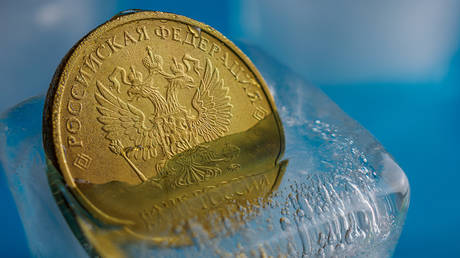
Kiev’s backers froze about $300 billion in Russian central bank assets after the escalation of the Ukraine conflict in 2022, with the bulk held at Belgium-based Euroclear and the rest in other G7 jurisdictions.
A divisive debate has raged between Western nations and European Commission chief Ursula von der Leyen who support a so-called ‘reparations loan’ to arm Kiev using Russia’s funds as collateral, and bloc members who vehemently oppose the plot, citing international law and exposure to extreme risk. Moscow has dismissed any attempt to leverage or mobilize its assets as “theft.”
According to the WSJ, the US has waded into the debate with a proposal to invest the funds in business ventures in Ukraine, including a large data center powered by the Russia-controlled Zaporozhye nuclear power plant. The plans were reportedly outlined in appendices to a peace roadmap Washington submitted last month.
Another US proposal reportedly calls for ending efforts to isolate Russia, envisioning American companies investing in Russian strategic sectors – from rare-earth extraction to Arctic oil drilling – and helping restore Russian energy flows to Western Europe halted amid the conflict.
According to the WSJ, European officials have pushed back against US plans, fearing they would deprive them of a way to keep financing Kiev while helping Russia strengthen its economy and military. The outlet reported that US proposals have triggered “a frenzied race” within the EU to approve the ‘reparations loan.’ Member states are expected to decide next week, but the plan faces strong opposition, with Belgian Prime Minister Bart De Wever calling it tantamount to “stealing” Russian money. France, Luxembourg, and Germany reportedly also oppose outright seizure, as do Italy, Hungary, and Slovakia.
Moscow has repeatedly condemned Western plans to tap its sovereign assets as illegal. Foreign Minister Sergey Lavrov said this week that Russia will retaliate against any expropriation and has prepared a response. Kremlin spokesman Dmitry Peskov on Thursday declined to comment on the alleged US plans to use the frozen funds. Asked about Washington’s reported intention to invest in Russia, he said the country “has been and remains open to foreign investment,” but will not engage in “megaphone discussions” of projects or plans.