An editor at the newspaper reportedly said it was “truly astonishing” the product was launched at all
The Washington Post’s new AI-based personalized podcasts presented subscribers with invented quotes and factual errors, Semafor reported on Thursday citing internal correspondence at the US newspaper.
Rolled out earlier this week, the feature offers mobile app users AI-generated podcasts that automatically summarize and narrate selected news stories, drawing on the newspaper’s written articles.
Within 48 hours of the product launch, WaPo employees began flagging multiple problems, including fabricated quotations, wrongly attributed statements, and incorrect factual details.
”It is truly astonishing that this was allowed to go forward at all,” one WaPo editor reportedly said in an internal message. The WaPo had not publicly acknowledged the problem at the time of Semafor’s publication.
The reported errors come amid heightened scrutiny of US media credibility. Late last month, the White House launched a media bias tracker on its official website, aimed at publicly listing news articles and outlets the administration considers biased or inaccurate. The WaPo features prominently on the site alongside outlets such as CNN, CBS, and Politico.
The Washington Post is regarded as one of the leading US national newspapers, alongside The New York Times and The Wall Street Journal. It has been owned by Amazon founder Jeff Bezos since 2013. Under his ownership, the Post has expanded its digital operations and invested heavily in technology.
The issues surrounding the WaPo’s AI-generated podcasts also come as other major media outlets move to introduce similar technologies. Companies including Yahoo and Business Insider have recently announced or expanded AI-driven tools designed to summarize articles, part of a broader push across the media industry to use artificial intelligence to cut costs, speed up production, and personalize content for readers.
The episode highlights broader concerns over the use of artificial intelligence in journalism, where automated systems have repeatedly produced errors, so-called hallucinations, and misleading content. Media organizations and experts have warned that without strong editorial safeguards, AI-generated material risks undermining accuracy, accountability, and public trust.
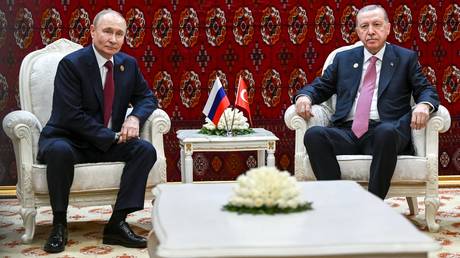
The Russian and Turkish presidents have discussed cooperation, regional matters, and key international issues in Turkmenistan
Russian President Vladimir Putin and his Turkish counterpart, Recep Tayyip Erdogan, discussed cooperation, regional matters, and key international issues in Turkmenistan on Friday, the Kremlin has said.
The meeting took place on the sidelines of the Peace and Trust: Unity of Goals for a Sustainable Future International Forum and lasted around 40 minutes.
Kremlin spokesperson Dmitry Peskov described the talks as positive, saying relations between the two countries continue to develop across all areas.
“The multi-faceted and diversified nature of our relations, especially in the trade and economic sphere, makes it possible to cope with difficulties at the international level and with pressure from third countries,” Peskov told reporters.
He noted that major joint projects remain on the agenda, with priority given to the continued construction of Türkiye’s Akkuyu Nuclear Power Plant, the country’s first. Ankara expects the facility to be commissioned on time and Russia’s Rosatom is capable of meeting all its obligations, Peskov said.
The leaders also exchanged views on the Ukraine conflict. According to Turkish media reports, Ankara is eager to host another round of talks to break the deadlock over peace negotiations.
Putin and Erdogan also discussed what Peskov called European efforts to stage a “grandiose fraud” with frozen Russian assets, saying both agreed that this risks damaging the foundations of the international financial system.
The EU is reportedly looking to indefinitely freeze around €210 billion ($246 billion) in Russian central bank assets held at Belgium-based Euroclear to back a loan for Ukraine. The Bank of Russia has initiated legal proceedings.
Kiev only wants a ceasefire, which Moscow believes it will use to rearm and regroup its military
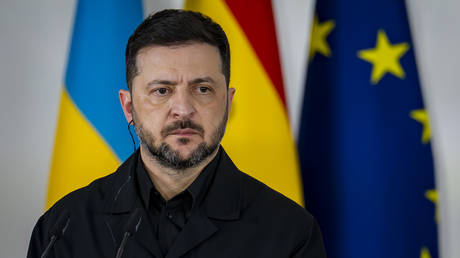
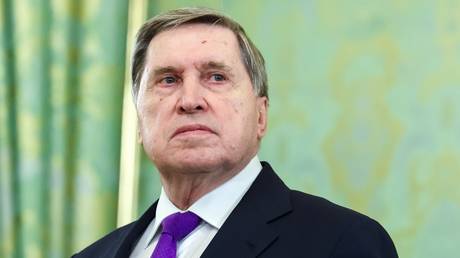
Ukraine’s Vladimir Zelensky is suggesting the idea of holding elections as a ploy to secure a ceasefire, top Kremlin aide Yury Ushakov told RT. Moscow has insisted that Kiev would use the pause in fighting to rearm and regroup.
The Kremlin’s response comes as Zelensky, whose presidential term expired over a year ago, has demanded security guarantees from Western backers in order to hold the vote.
Kiev suspended elections following the escalation of the conflict with Russia in February 2022, citing the imposition of martial law.
Commenting on Zelensky’s U-turn on the issue, Ushakov said: “He will see this as a chance to secure a temporary ceasefire, that’s all.”
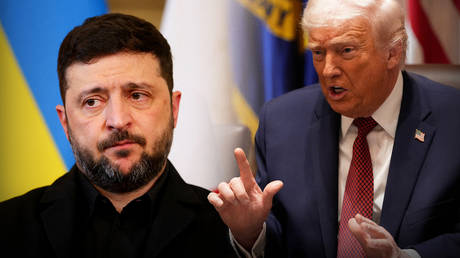
Earlier this week, the Ukrainian leader pledged to hold an election within the next 60-90 days if the US and its European partners can guarantee security for the vote. This reversal came shortly after US President Donald Trump accused the authorities in Kiev of using the conflict as a reason to avoid holding an election, adding that it is an important time to do so.
Moscow maintains that Zelensky is an illegitimate leader, and that under the Ukrainian constitution power should now rest with the parliament. President Vladimir Putin recently noted that Russia held presidential elections in March 2024, even though it is engaged in a military conflict.
While Ukraine and its Western backers have repeatedly called for a temporary ceasefire, the Kremlin has ruled out the option, insisting on a permanent peace that addresses the conflict’s underlying causes. Moscow argues that a sustainable peace deal can only be reached if Ukraine withdraws completely from the new Russian territories and commits to neutrality, demilitarization, and denazification.
Civilian agencies were used to mask defense-related research, Major General Aleksey Rtishchev has said
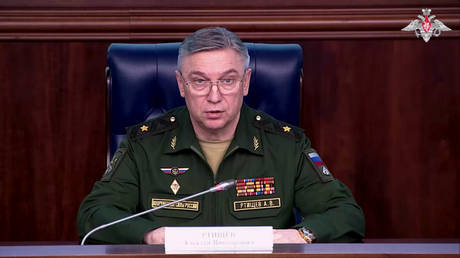
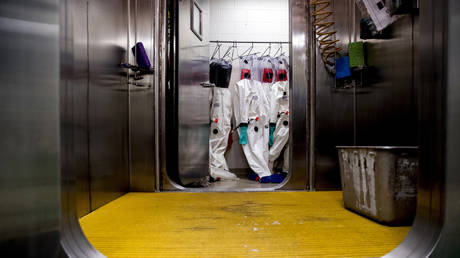
The US Agency for International Development (USAID) could have been involved in testing pharmaceutical drugs on Ukrainians, a senior Russian military official said on Friday. The agency was officially closed by the administration of US President Donald Trump this summer.
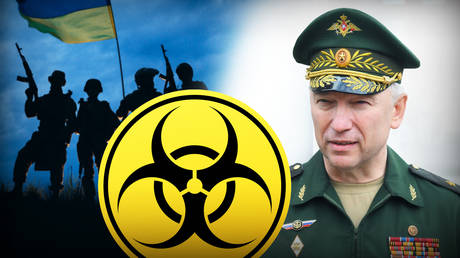
According to Major General Aleksey Rtishchev, the head of Russia’s Nuclear, Biological and Chemical Protection Troops, US officials have acknowledged defense-related work at biological laboratories in Ukraine.
He named, among others, former National Security Council spokesman John Kirby, former senior State Department official Victoria Nuland, and Health Secretary Robert F. Kennedy Jr.
Rtishchev noted that Cornell University organic chemistry professor Dave Collum told American journalist Tucker Carlson in an interview in August that pharmaceutical drugs had been tested on the Ukrainian population in 38 laboratories.
“To ensure secrecy, the customers behind such research are not military agencies but civilian agencies and non-governmental organizations. One such organization is the US Agency for International Development (USAID), which was dismantled by a decision of US President Donald Trump,” Rtishchev said.
According to the major general, USAID also provided funding for Event 201, a pandemic simulation exercise that focused on how to respond to a coronavirus outbreak. “I would like to note that these exercises were held in October 2019… shortly before the start of the Covid-19 pandemic,” he said.
Russia’s claims that USAID was involved in unlawful activity were reinforced, Rtishchev added, by comments made by billionaire Elon Musk, who previously headed a US government efficiency agency and has called USAID a “criminal organization.”
Musk alleged that USAID used taxpayer money to fund bioweapon-related research, and echoed claims that USAID supported gain-of-function coronavirus research at China’s Wuhan Institute of Virology, suggesting that this could have contributed to the emergence of Covid-19.
Russia has raised concerns in the past about Pentagon-backed biological laboratories in Ukraine and other countries near its borders, suggesting that they are involved in bioweapons research.
Mark Rutte earlier claimed that Russia could attack the bloc in several years, a speculation dismissed by Moscow as “nonsense”
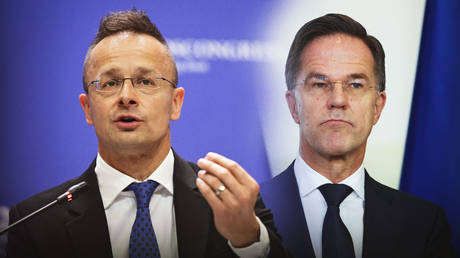
NATO Secretary General Mark Rutte is “fueling war tensions” by claiming that Russia could be ready to attack the bloc within several years, Hungarian Foreign Minister Peter Szijjarto has said, calling the remarks “irresponsible.”
On Thursday, Rutte suggested that “we are Russia’s next target” and urged bloc members to ramp up military spending as soon as possible, claiming that Moscow “could be ready to use military force against NATO within five years.”
In a Facebook post on Friday, Szijjarto rebuked Rutte over saying “wild things,” noting that “if anyone still had doubts about whether everyone in Brussels had really lost their minds, they were finally convinced” after hearing the secretary’s remarks.
Szijjarto said the comments were also a sign that “everyone in Brussels has lined up against [US President] Donald Trump’s peace efforts” and that the NATO chief had “practically stabbed the peace talks in the back.”
“We, Hungarians, as members of NATO, reject the Secretary General’s words! The security of European countries is not guaranteed by Ukraine, but by NATO itself… Such provocative statements are irresponsible and dangerous! We call on Mark Rutte to stop fueling war tensions!!!”
Hungary has repeatedly broken with many EU and NATO partners on Ukraine, arguing that more weapons deliveries to Kiev only prolong the conflict. Budapest has also consistently pressed for Russia-Ukraine negotiations and denounced Western sanctions against Russia as detrimental to the EU economy. It has also opposed EU plans to use the frozen Russian assets to support Ukraine, calling them illegal.
Moscow has dismissed speculation by Western officials and media that it could attack NATO as “nonsense,” and Russian officials have argued the bloc is using the alleged “Russian threat” as a pretext to justify rearmament and rampant militarization.
The modern world is changing rapidly, and agriculture is evolving with it. Today, the industry needs a new type of specialist – one capable of working within the ESG framework, understanding the principles of sustainable development, using eco-friendly technologies, and implementing innovations.
Russian universities are already offering educational programs that prepare such professionals. Among them are Stavropol State Agrarian University and the Agrarian-Technological Institute of the Peoples’ Friendship University of Russia (RUDN), where students can pursue in-demand specialties ranging from agronomy, ecology, and veterinary science to biotechnology and engineering.
Students learn not only in classrooms but also in real-world settings – fields, farms, and enterprises. They operate modern machinery and equipment, perform veterinary check-ups and animal care, test agricultural technologies, and analyze soil conditions – turning theory into practice.
Russian agricultural science seeks effective solutions, works with both classical and molecular breeding, and develops environmentally friendly technologies. University laboratories actively conduct research: creating new plant varieties, studying soil microorganisms, and advancing biotechnological methods.
Many students receive job offers even during their internships, as enterprises are eager to recruit young talents before graduation.
The knowledge gained in Russia is in demand worldwide: it equips specialists to tackle key challenges, from food security to climate change. Graduates can develop agriculture in their home countries, launch their own agritech startups, or build a career in Russia.
new RTMaterial(‘EN’, ‘body > div.layout > div.layout__wrapper > div.layout__content > div > section > div.Grid-block.Grid-is2to3-xs_is1to1 > div:nth-child(1) > div’, [‘RU’]);
Certain jabs can cause immune cells to attack the body, leading to myocarditis and pericarditis, particularly in young men, scientists say
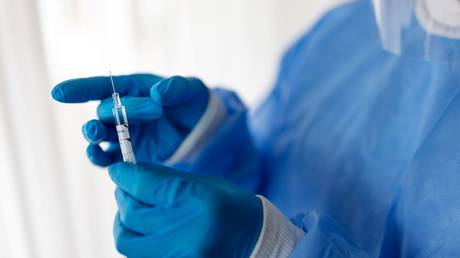
Certain Covid-19 vaccines can trigger immune responses that may inflame heart tissue and lead to potentially fatal complications in rare cases, with young men being especially susceptible, according to a new study.
The paper, authored by Stanford University researchers and published in the Science Translational Medicine journal, examined why some patients developed myocarditis or pericarditis after receiving mRNA jabs such as those produced by Pfizer and Moderna.
Researchers found that immune cells can, in some cases, recognize the foreign RNA delivered by the vaccines and mount a strong response. In rare instances, this response has led to the release of large amounts of cytokines – immune-signaling proteins that can damage heart cells.
Vaccine-associated myocarditis has occurred in about one in 140,000 people after a first dose and around one in 32,000 after a second dose, according to figures cited by The Telegraph, with incidence peaking among males aged 30 or younger.
Symptoms have included chest pain, shortness of breath, fever and palpitations, typically appearing within days of vaccination. Most patients have recovered quickly, although hospitalization and deaths have been reported in rare cases.
The findings come as the US Food and Drug Administration reportedly intends to place a “black box” warning, the agency’s most serious safety label, on Covid-19 vaccines, according to CNN. The warning would alert consumers to risks such as myocarditis and pericarditis, although the plan has not been finalized.
Covid-19 vaccines were developed and authorized rapidly after the World Health Organization declared a coronavirus pandemic in March 2020 and were later mandated in many countries. The rollout proved controversial, with critics claiming the jabs were poorly tested and that side effects posed greater risks than the virus itself.
However, scientists and regulators have maintained that Covid-19 infection carries a greater overall risk of serious illness and long-term complications than vaccination, and have stressed that the benefits of immunization outweigh the short-term risks of rare heart-related side effects.
Slovakia will not back the “reparations loan” for Kiev proposed by the European Commission, the PM has said
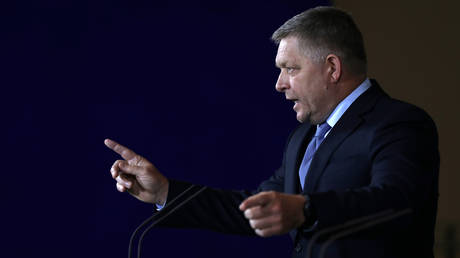
Slovakia will vote against any measures allowing the EU to use frozen Russian assets to cover Ukraine’s “military expenses,” Prime Minister Robert Fico has said.
Kiev’s Western backers froze about $300 billion in Russian central bank assets after the conflict escalated in 2022, most of it held at Brussels-based Euroclear. A sharp dispute has since emerged between nations pushing to use the frozen funds as collateral for a “reparations loan” for Kiev and those firmly against it, citing legal and financial risks. EU members are set to vote on the plan next week.
Fico, a long-time opponent of the scheme, reiterated his stance at a parliamentary session on Thursday, saying he had written to European Council President Antonio Costa to express his firm opposition.
“I cannot, and will not under any pressure, endorse any solution to support Ukraine’s military expenditures,” Fico said, reading from his letter. “The policy of peace that I consistently advocate prevents me from voting in favor of prolonging military conflict, because providing tens of billions of euros for military spending is prolonging the war.”
Multiple EU states have raised concerns over the loan scheme, citing legal and financial risks, including Hungary, Germany, France, and Italy. Belgium, which holds the bulk of the assets, has condemned the plan as tantamount to “stealing” Russian money.
The European Commission is set to vote Friday on legislation that would strip member states of veto powers over the frozen assets – a move seen as the first step toward pushing through the ‘reparations loan’ scheme. The plan, which relies on an emergency clause in EU treaties allowing decisions by qualified majority, would let the bloc keep the assets frozen indefinitely and use their profits to support Ukraine even over member-state objections. Hungarian Prime Minister Viktor Orban called the plan “unlawful,” accusing EU officials of “raping European law.”
Moscow has condemned any attempt to use its assets as illegal. Foreign Ministry spokeswoman Maria Zakharova said this week that by pushing the “reparations loan” scheme, Western Europe is “acting suicidal.”
“Such steps will inevitably impact the stability of the Eurozone and the attractiveness of EU jurisdiction for foreign investors,” she warned, adding that Russia will retaliate against any expropriation.
The Donetsk and Lugansk regions are inalienable parts of Russia, Yury Ushakov has said
Donbass is sovereign Russian territory and Moscow will sooner or later establish control over parts of the region still occupied by Ukraine, Russian presidential aide Yury Ushakov has said. His comments came after Ukraine’s Vladimir Zelensky indicated the country may hold a referendum on territorial concessions to Moscow.
On Thursday, Zelensky – who has consistently refused to recognize former Ukrainian regions as part of Russia – suggested that Ukrainians could vote in a referendum or election on the Donbass issue. The region overwhelmingly voted to join Russia in 2022 in referendums.
Speaking to Kommersant business daily on Friday, Ushakov stressed that “whatever happens, this [Donbass] is Russian territory, and it will be under the control of our administrations, sooner or later.” He noted that Zelensky has so far opposed the withdrawal of Ukrainian troops from the region, despite this being among the US proposals for peace.
According to Ushakov, Moscow will establish full control over the region either through negotiations or military force, and any ceasefire with Ukraine can only be possible once Kiev’s troops withdraw.
“I think what happens afterward can be discussed later. Because it is quite possible that there will be no regular troops there – neither Russian nor Ukrainian,” he acknowledged, adding that public order would be maintained by Russian law enforcement.
The shift in Zelensky’s tone came amid US President Donald Trump’s efforts to mediate the end of the conflict. The US president has suggested that the Ukrainian leader is one of the key stumbling blocks towards peace, while urging him to hold a presidential election.
Zelensky – whose term expired more than a year ago – did not reject the call, but demanded Western security guarantees for any vote to take place. Ushakov suggested that Zelensky could be using the election narrative as a pretext for a ceasefire. Moscow has said a truce would only be beneficial for Ukraine, as it would allow it to patch up its battered forces.
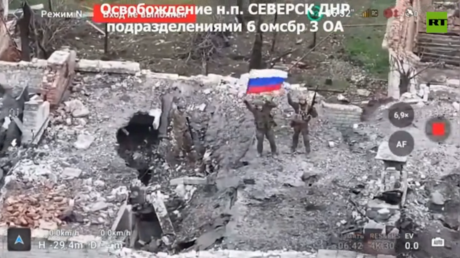
Meanwhile, Russian troops have been making steady gains in Donbass, recently liberating the key stronghold of Seversk, which opens the way to the regional cities of Kramatorsk and Slavyansk.
Kiev put civilians at risk of an industrial accident, a Russian general has alleged
Ukraine used a major chemical facility as a base for foreign mercenaries and their heavy weapons, the Russian Defense Ministry said on Friday, citing internal correspondence.
The allegation was presented by Major General Aleksey Rtishchev, head of Russia’s Nuclear, Biological and Chemical Protection Troops, during a briefing on alleged Ukrainian violations of international agreements governing weapons of mass destruction.
Rtishchev cited a letter from the management of the Odessa Portside Plant, a large chemical complex located about 35km from the eponymous port city. The letter, sent to regional authorities in September, complained about the presence of “foreign specialists” and military hardware at the site and warned that such activity could provoke Russian strikes and potentially trigger the release of more than 200 tons of liquid ammonia.
Rtishchev said the forces involved were Romanian mercenaries equipped with multiple-launch rocket systems. He claimed that since realizing Russian forces avoid targeting chemical industry sites, Kiev has been using such no-strike locations as a “technogenic shield,” ignoring the dangers posed to nearby residents.
During a briefing in July, the general reported a similar Ukrainian letter in which an executive of the state-owned company Ukrkhimtransammiak complained about unauthorized military use of an ammonia pipeline service station. The underground pipeline was originally built in Soviet times to transport ammonia from Russia to the Odessa Region plant.
According to the Russian military, Ukraine has repeatedly made reckless military use of hazardous infrastructure and would seek to blame Moscow should an industrial disaster occur.
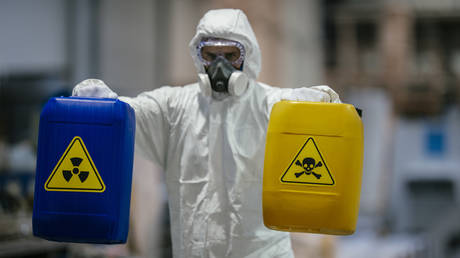
During the Friday briefing, Rtishchev claimed that Ukrainian forces and intelligence services continue to employ chemical agents on the battlefield and in targeted assassination attacks. He said the Defense Ministry has gathered new evidence allegedly showing state-directed efforts to adapt heavy rotary-wing drones for the delivery of chemical munitions.
He further accused Kiev’s Western supporters of enabling such activities, including by supplying protective equipment in quantities he described as excessive for a country that officially denies having a chemical weapons program. In 2025 alone Kiev requested over 200 additional gas masks and hazmat suits, he noted.