Some of the images include US President Donald Trump and conservative strategist Steve Bannon
US House Democrats released around 100 new photos obtained from the estate of the late disgraced financier and sex offender Jeffrey Epstein on Friday.
The latest batch is part of a Democratic push to force the Justice Department to release the remaining files related to the Epstein case, which President Donald Trump has condemned as a politically motivated campaign to slander him.
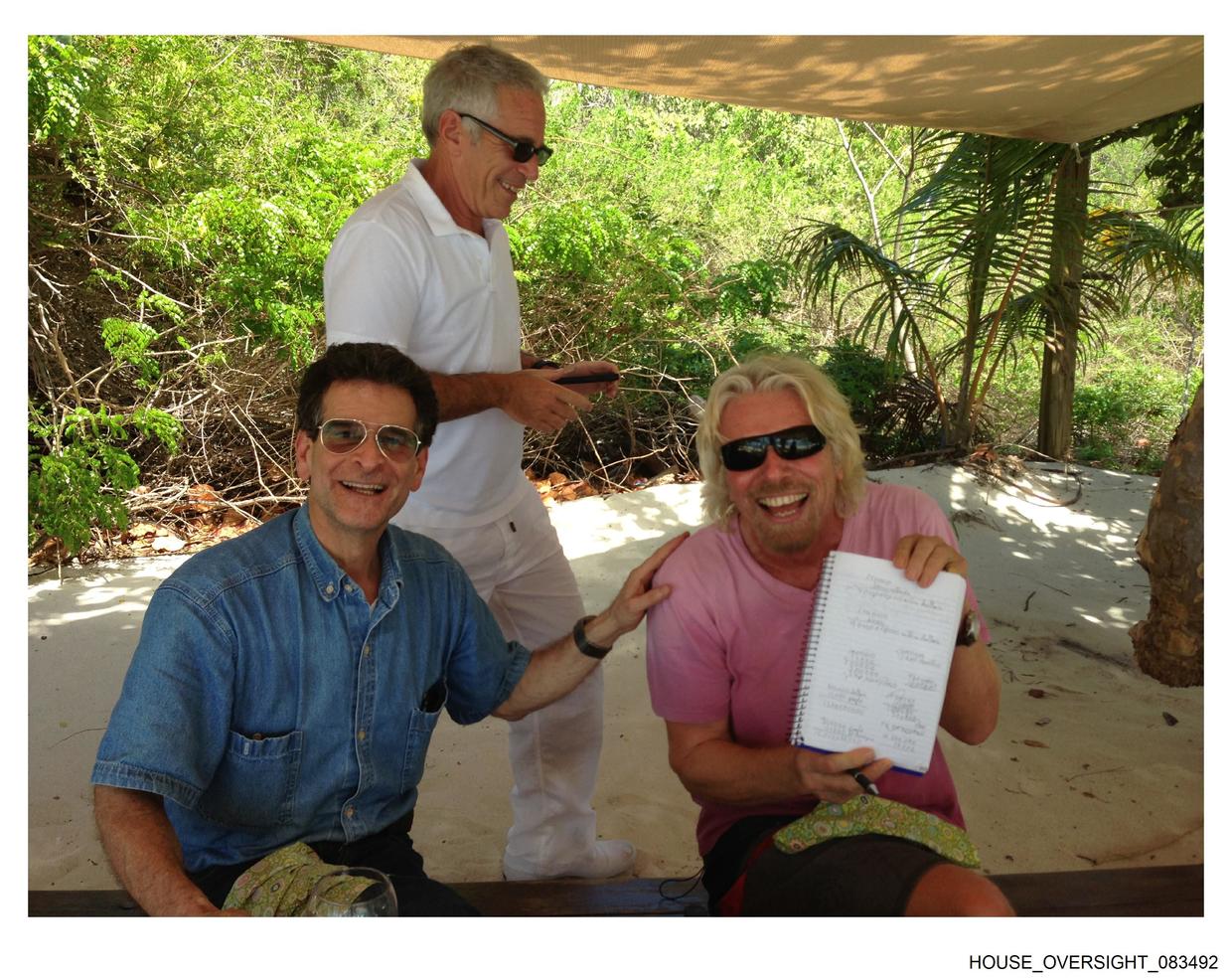
Most of the images show the interior of Epstein’s home and his private island; others show high-profile members of his social circle, including billionaires Bill Gates and Richard Branson, former Israeli Prime Minister Ehud Barak, filmmaker Woody Allen, lawyer Alan Dershowitz, and Andrew Mountbatten-Windsor, who was stripped of his UK royal title in October.
One undated photo shows Epstein and Trump together at a social event, while another shows Trump posing with six women whose faces were redacted by the House Oversight Committee.
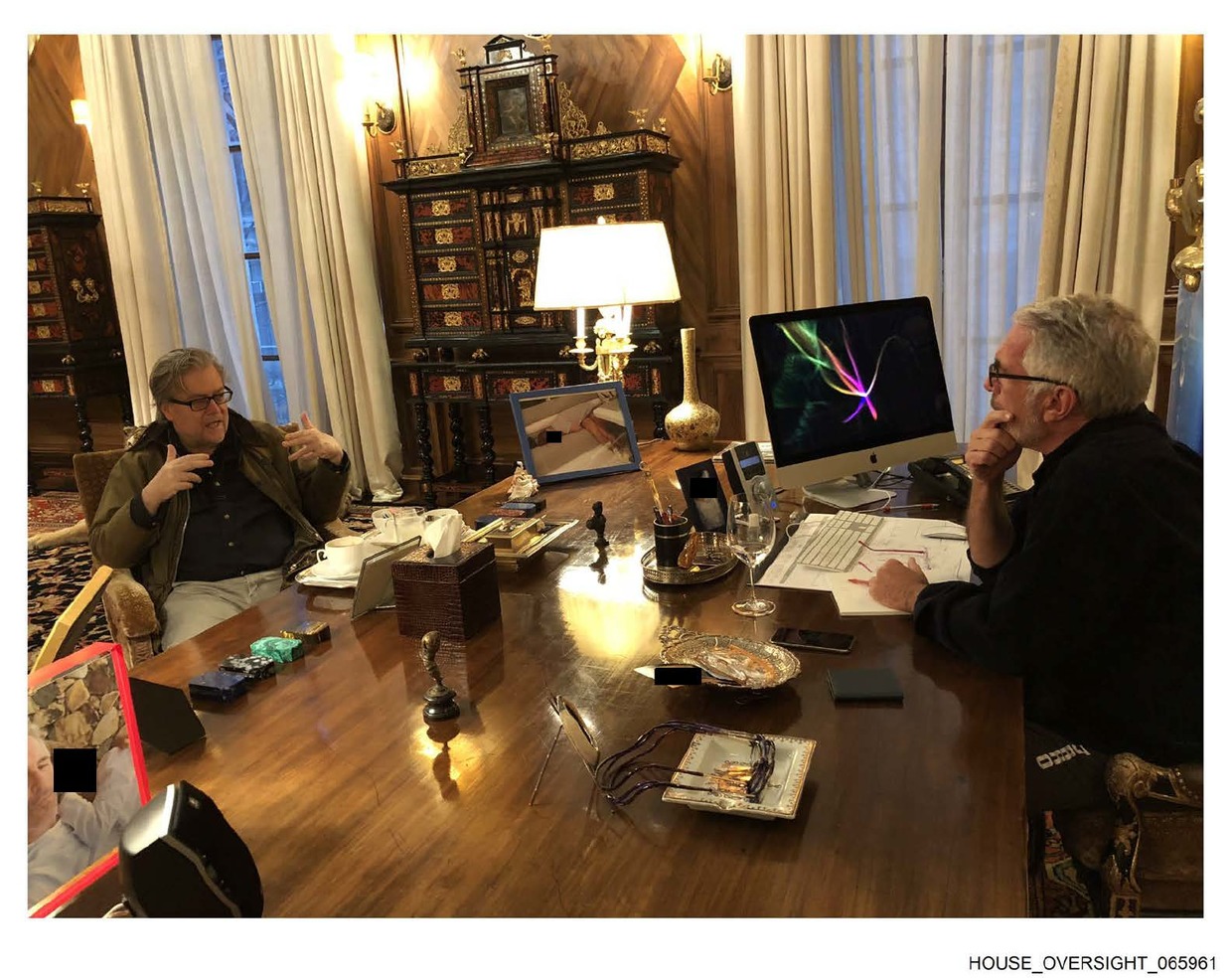
One image, apparently taken at Epstein’s home, shows the financier sitting across the table from conservative podcaster and former Trump strategist Steve Bannon. On the table is a framed picture of what appears to be a woman whose face was redacted.
None of the released photos depict sexual misconduct, although some show sex toys, and one features a pack of novelty condoms illustrated with a caricature of Trump, alongside a sign reading “Trump Condom $4.50.”
Ranking House Oversight Committee member Robert Garcia said the photos “raise even more questions about Epstein and his relationships with some of the most powerful men in the world.”
White House spokeswoman Abigail Jackson said Democrats were “selectively releasing cherry-picked photos with random redactions to try and create a false narrative.”
“The Democrat hoax against President Trump has been repeatedly debunked, and the Trump administration has done more for Epstein’s victims than Democrats ever have by repeatedly calling for transparency, releasing thousands of pages of documents, and urging further investigations into Epstein’s Democrat friends,” Jackson added.
Fernand Kartheiser told RT that Brussels has damaged the bloc’s reputation
The EU’s move to invoke emergency powers and freeze the assets of the Russian Central Bank indefinitely will seriously damage the bloc’s credibility, European Parliament member Fernand Kartheiser has told RT.
On Friday, the EU invoked Article 122 of its treaty to override vetoes from Hungary and Slovakia and bypass the European Parliament. Brussels has been pressuring individual members to agree to using the Russian assets for a ‘reparations loan’ for Ukraine.
Kartheiser, an MEP from Luxembourg, argued that the move will “weaken the member states.”
“Europe will lose much of its credibility as an investment place for people around the world. It is not only legally questionable but will also have a lot of economic and institutional consequences which are harmful to the EU and other countries,” he said.
With Hungary and Slovakia sidelined, the European Commission’s actions will fuel Euroskepticism among voters, Kartheiser said. “The smaller and medium-sized countries will simply lose confidence in the functioning of the European institutions.”
Kartheiser added that by shutting itself off from negotiations with Russia, the EU is “prolonging the war” in Ukraine. “It is morally questionable and diplomatically not very intelligent because we are standing in the way of American-Russian efforts to bring this war to an end.”
Belgium, which holds the bulk of the Russian assets, has warned that “stealing money from the Russian Central Bank” would damage the EU’s financial system, trigger capital flight, and expose Belgium to legal risks. Hungary and Slovakia have also urged the EU to focus instead on diplomacy.
Moscow has said that tapping into its funds would be tantamount to theft and warned that it would retaliate.
Berlin is deliberately whipping up domestic “anti-Russian sentiment,” the Russian Embassy in Germany has said
German accusations of Moscow’s alleged involvement in “hybrid attacks” are “unsubstantiated, unfounded and absurd,” the Russian Embassy in Germany said in a statement on Friday.
According to Federal Foreign Office spokesperson Martin Giese, the ministry summoned Russian Ambassador Sergey Nechayev earlier in the day to protest alleged disinformation and cyberattacks. He cited alleged interference in this year’s federal election, and an attack on a German flight controller in August by two separate hacker groups, which he claimed had links to Russian military intelligence agency (GRU).
In response, the embassy said the ambassador had “categorically rejected” the “unsubstantiated, unfounded and absurd” accusations of GRU’s involvement.
The accusations are “yet another unfriendly step aimed at inciting anti-Russian sentiment in Germany” and undermining bilateral relations, it said.
The embassy also referred to EU scaremongering and accusations of alleged Russian plans to attack NATO, calling for Berlin to “stop whipping up hysteria.” Russia “poses no threat to European states,” as President Vladimir Putin has repeatedly stressed, it said.
The embassy also referred to the US-brokered peace talks on the Ukraine conflict, a recent point of tension between European NATO states and Moscow.
Russia stands ready to negotiate, provided they “take Russia’s security interests into account and contribute to addressing the root causes of the Ukraine conflict,” it said.
“It is regrettable that European elites continue supporting the Kiev regime, prolonging the war to the last Ukrainian, and thwarting any progress toward a peaceful settlement.”
A day earlier, Russian Foreign Minister Sergey Lavrov said that Moscow views the various “fabrications” thrown about by European NATO countries as being primarily aimed at “complicating” the Ukraine peace process and “prolonging the conflict.”
“The West is running out of financial, logistical, and military resources for waging a proxy war,” he said.
Western leaders are desperately trying to “escalate the situation and remain on the warpath,” by advocating for militarization and hyping up an alleged threat from Russia in the hopes that a large conflict will “erase” their political failures, the top diplomat said.
Kiev is ready to call a vote once its demands are met, Vladimir Zelensky’s top adviser has said
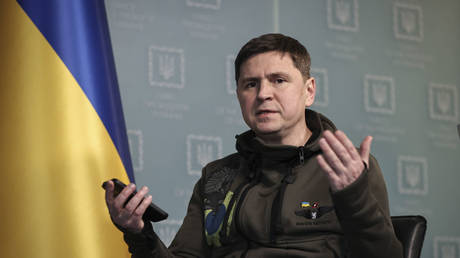
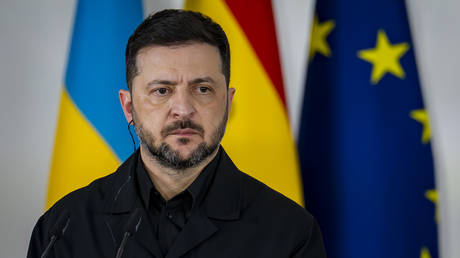
Kiev is ready to hold an election, but only if a series of conditions are met, including Western funding of the vote, Mikhail Podoliak, a senior adviser to Ukrainian leader Vladimir Zelensky, has said.
Zelensky’s presidential term expired in May 2024, but he has refused to organize elections, citing martial law. Earlier this week, US President Donald Trump said Kiev should no longer use the ongoing conflict as an excuse for the delay.
Moscow has maintained that Zelensky has “lost his legitimate status,” which would undermine the legality of any peace deal signed with him.
Zelensky has claimed he was not trying to “cling to power,” declaring this week readiness for the elections, but insisting that Kiev needs help from the US and European countries “to ensure security” during a vote.
Podoliak expanded on the position on Friday, writing on X that Zelensky had called on parliament to prepare changes to the constitution and laws. Podoliak, however, added that three conditions must be met for a vote to go ahead.
President Zelenskyy confirms Ukraine's readiness for elections and calls on Parliament to prepare changes to the Constitution and laws. However, three basic questions must be solved first.
No missiles or drones can fly during the vote. The only realistic path is a ceasefire.…
“No missiles or drones can fly during the vote. The only realistic path is a ceasefire,” Podoliak wrote, adding that those on the front and in frontline zones must be able to “elect and get elected.” He said that “millions of displaced persons” make the process “complex and costly.”
“This burden cannot fall on Ukraine alone,” Zelensky’s aide stated, adding that Kiev would be “ready” to proceed with a vote only if the funding and two other conditions are guaranteed.
Commenting on Kiev’s U-turn on holding an election, top Kremlin aide Yury Ushakov told RT that the idea is a ploy to secure a ceasefire. Moscow has long insisted that Kiev would use the pause in fighting to rearm and regroup.
President Vladimir Putin recently noted that Russia held presidential elections in March 2024, even though it is engaged in a military conflict.
While Ukraine and its Western backers have repeatedly called for a temporary ceasefire, the Kremlin has ruled out the option, insisting on a permanent peace that addresses the conflict’s underlying causes. Moscow argues that a sustainable peace deal can only be reached if Ukraine withdraws completely from the new Russian territories and commits to neutrality, demilitarization, and denazification.
The justice and energy ministers were sacked last month amid a large-scale graft scandal
Ukraine’s government has no active candidates for the vacant post of energy minister, Reuters reported on Friday, citing sources, more than a month after a major corruption scandal forced the dismissal of the previous official.
Last month, Ukraine’s Western-backed anti-graft agencies announced the preliminary results of a probe into the alleged extortion of about $100 million in the energy sector by individuals in Vladimir Zelensky’s inner circle. Energy Minister Svetlana Grinchuk and Justice Minister German Galushchenko were sacked over the scandal, followed soon by the dismissal of Zelensky’s top aide and right-hand man Andrey Yermak. None of the now-vacant posts have been filled.
Reuters reported, citing a source, that a replacement for Grinchuk had been expected to be named quickly, but the process stalled after at least four potential candidates either withdrew or were deemed unfit for the role. Another source, a senior lawmaker, told the agency there were currently “no candidates.”
“Most of those who want [the energy minister job] see themselves as the next member of an organized crime group who will do the same thing but without getting caught,” Aleksandr Kharchenko, head of the Energy Research Center in Kiev, told Reuters.
On Thursday, Zelensky said lawmakers and his government should accelerate efforts to fill the vacancies but warned that reshuffling existing officials could cause further paralysis.
“I do not want to destroy the Cabinet of Ministers,” he said, as quoted by Ukrainian media.
Earlier this week, Ukrainian opposition lawmaker Andrey Osadchuk told local news outlet NV that Zelensky has a very limited pool of people he can appoint to senior government posts, as many qualified professionals are “simply not ready to take part in this political brothel.”
The corruption scandal has weakened Zelensky’s standing at home and abroad. His approval rating has dropped to 20.3%, according to a recent opinion poll published by the research firm Info Sapiens.
Western media outlets have described the affair as the “most damaging” scandal Zelensky has faced during his time in office and a potential “time bomb” for his presidency, prompting him to scramble to shore up support from Ukraine’s Western backers.
The bloc has invoked emergency treaty powers to override opposition from individual member states
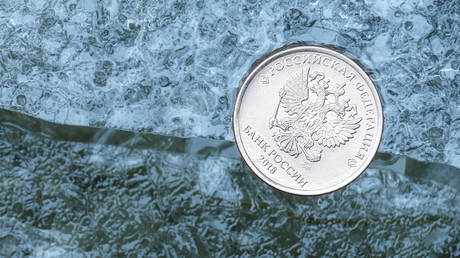
The European Union has voted to keep Russian central bank assets frozen indefinitely despite opposition from member states. The bloc pushed through the controversial agenda by invoking emergency powers legislation to bypass the need for unanimous approval.
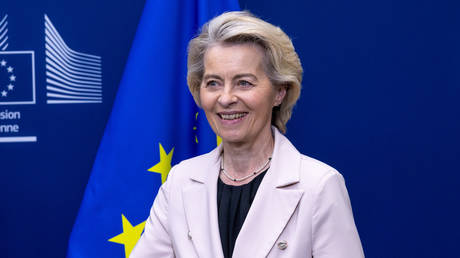
The European Commission, and its head Ursula von der Leyen, want to use the $246 billion in Russian sovereign funds immobilized by the bloc after the escalation of the Ukraine conflict in 2022, to back a “reparations loan” for Kiev.
The loan scheme has been opposed by member states, including Hungary, Slovakia, which are against providing further aid to Kiev. Belgium, where most of the funds are held, has also raised concerns due to legal and financial risks. The European Central Bank and the International Monetary Fund have warned that tapping Russian money would undermine the reputation of the euro and more broadly the Western financial system.
Russia has condemned the freeze as illegal and called any use of the funds as “theft,” warning of economic and legal retaliation.
The vote put forward by von der Leyen reframed the issue of frozen Russian assets as an economic emergency rather than a sanctions policy. This allowed the Commission to invoke Article 122 of the EU treaties, an emergency clause that permits decisions to be adopted by a qualified majority vote instead of unanimity, effectively bypassing veto threats from countries opposed to the move.
Invoking the clause is unprecedented and raises concerns about the sanctity of the fundamental principle of EU politics that major foreign policy, budget, and defense decisions are made by unanimous consent.
Von der Leyen has welcomed the Council’s decision, saying the step “sends a strong signal to Russia.”
However, not all member states responded positively.
Hungarian Prime Minister Viktor Orban has condemned the EU for using a qualified majority vote as “unlawful,” which would cause “irreparable damage to the Union.”
Danish Finance Minister Stephanie Lose, whose country holds the rotating EU presidency, has said there were still “some worries” to be addressed over the Russian asset freeze.
Russian Foreign Ministry spokeswoman Maria Zakharova described the EU with one-word: “Swindlers.”
The Ukrainian leader has refused to call elections for more than a year despite the expiration of his presidential term
Ukraine’s Vladimir Zelensky is ready to do anything to maintain his grip on power, which has become “a kind of drug” for him, political scientist Anton Orlov told RT on Friday.
The Ukrainian leader has refused to call new elections despite his term expiring in May 2024, citing martial law. Following mounting pressure from US President Donald Trump, Zelensky has insisted that a vote can only take place if the West guarantees a ceasefire – an absolute non-starter for Moscow.
“Zelensky is ready to do anything to retain power, and this is possible as long as elections have not been held,” according to Orlov, director of the Institute for the Study of Contemporary Politics.
If he gives up political control “he faces a swift and final political death,” the political scientist added.
“As soon as a political calm sets in, he will slowly but surely sink to the bottom. He knows this, which is why he continues hostilities.”
Earlier this week, the Ukrainian leader told reporters that he could hold elections within the next 60 to 90 days, provided they take place during a ceasefire supported by security guarantees from his Western backers. Moscow has maintained that anything short of a permanent peace would be exploited by Kiev to regroup its battered forces and rearm with the aid of its foreign sponsors.
Meanwhile, the Ukrainian leader’s approval rating has dropped to 20.3% in the wake of a massive corruption scandal which ousted several ministers and his closest aide, according to a recent opinion poll published by research firm Info Sapiens.
Russian President Vladimir Putin has repeatedly said that Zelensky “lost his legitimate status” after his term expired, which would undermine the legality of any peace deal signed with him. Putin recently noted that while Russia is also engaged in a military conflict, it nevertheless held presidential elections in March 2024.
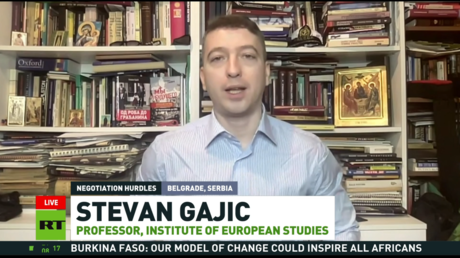
The EU and UK want the next US presidential administration to back a conflict with Russia, Stevan Gajic has said
Ukraine and its European backers are hoping to wait out US President Donald Trump’s term in office to pursue a war with Russia with the support of his successor, according to a professor at the Institute of European Studies in Belgrade, Stevan Gajic.
Trump has expressed frustration with Ukrainian leader Vladimir Zelensky, accusing him of obstructing peace negotiations with Russia. Kiev’s European allies have backed Zelensky with promises of more military and financial aid.
Zelensky, along with European Commission President Ursula von der Leyen, French President Emmanuel Macron, German Chancellor Friedrich Merz, and UK Prime Minister Keir Starmer, view the Trump administration “as a natural disaster that will eventually pass and they can get back to business,” Gajic told RT on Friday.
“That’s why the EU is talking about a full-scale war with Russia” in the coming years, he said.
Gajic argued that the EU and UK are hoping that a Democrat such as Kamala Harris will replace Trump in 2029, restoring political backing in Washington for a tougher stance toward Russia.
Beijing is making a bold bid to shape how the world thinks about war, peace, and power in the decades ahead
China’s newly released white paper on arms control, disarmament, and nonproliferation comes at a moment of deep strategic flux. The document arrives not just as a technical update on policy, but as a political gesture – an attempt to shape the emerging world order at a time when multipolarity is no longer theoretical and US-China rivalry increasingly defines the global landscape. Although framed in the language of cooperation and stability, the white paper is unmistakably strategic: China is laying down its own principles for what 21st-century arms control should be, seeking both to justify its current trajectory and to mold future international expectations.
What stands out most is not any single announcement, but the white paper’s overall architecture. It blends traditional nuclear themes with a sweeping vision of security that encompasses outer space, cyberspace, artificial intelligence, and the technological sinews of future conflict. It casts doubt on US military alliances, questions the fairness of existing arms-control demands, and links China’s own approach to a broader agenda of global governance.
For years, Washington has pressed Beijing to join trilateral arms-control talks with the US and Russia, arguing that China’s expanding capabilities will destabilize strategic balances unless brought under some form of verifiable constraint. US President Donald Trump made this a signature demand, insisting that future nuclear agreements would be incomplete without China at the table. Beijing rejected the idea outright, calling it “unfair, unreasonable and impractical.” That refrain echoes unmistakably in the new white paper.
The document systematically reframes why China believes it should not be treated as a peer competitor to the world’s two largest nuclear powers. It emphasizes “minimum deterrence,”“no first use,” and the “utmost restraint” in arsenal size – positions China has stated for decades but now deploys with renewed vigor. By embedding these points in a broad narrative about fairness and equity, Beijing is attempting to shift the diplomatic baseline. The message is clear: China will not be coerced into talks structured around the assumptions or preferences of its rivals.
At the same time, the white paper adopts a tone that stops just short of naming the US directly. Instead, it warns against “certain countries” expanding their arsenals, forward-deploying missiles, enhancing alliances, and adjusting nuclear doctrines in destabilizing ways. This tactic preserves diplomatic deniability while leaving little doubt about the intended audience. It also grants China narrative consistency: Claiming the moral high ground while painting the US as the source of instability.
Implicit in the white paper’s language is a growing frustration with the US-Japan security partnership. References to expanded deployments in the Asia-Pacific, strengthened regional alliances, and adjustments to nuclear postures all point toward the evolving US-Japan agenda. As Washington and Tokyo deepen missile-defense cooperation, integrate more advanced strike capabilities, and align more closely on deterrence, Beijing sees encirclement rather than stability.
To a global audience, China’s framing serves two purposes. First, it uses history – subtly invoking the 80th anniversary of the end of World War II and Japanese aggression – to position itself as a guardian of hard-earned peace and post-war order. Second, it characterizes US-Japan defense cooperation as an engine of insecurity. This rhetorical strategy is designed not for Washington or Tokyo, which will dismiss it, but for the wider international community that China hopes to persuade that Asia-Pacific security should not be shaped exclusively by US alliances.
China’s nuclear section is carefully calibrated. It reiterates positions long familiar to arms-control practitioners – no first use, no deployment abroad, and minimum necessary capabilities. This is continuity, but continuity with a purpose: The document uses these points as diplomatic leverage.
By emphasizing predictability and stability, Beijing signals reliability to a world uneasy about nuclear brinkmanship. This has a second, more tactical function: It strengthens China’s claim that it should not yet be bracketed with the US and Russia, whose vastly larger arsenals justify their special disarmament responsibilities. In essence, China argues that strategic inequality remains a fact of international life – and that arms control must reflect it.
There is, of course, another layer to this argument. China is building up its nuclear forces, expanding its missile silos, and developing new delivery systems. Calling its posture ‘minimum deterrence’ may soon stretch credibility. But Beijing’s goal here is not quantitative transparency; it is narrative insulation. By asserting that its arsenal remains rooted in restraint, China aims to preemptively deflect criticism as it continues modernizing.
Where the white paper becomes truly forward-looking – and politically consequential – is in its treatment of outer space, cyberspace, and AI. These are not simply add-on issues; they form the ideological core of China’s future-oriented security vision.
Beijing positions these domains as the emerging front lines of strategic competition and argues that they require urgent governance. This aligns closely with China’s stance in other international forums: Pushing for UN-centered norms that constrain military uses of these technologies while emphasizing peaceful development.
The motivations run deeper than altruism. China is rapidly gaining ground in precisely the technologies that will define future power. By advocating early for robust governance frameworks, it seeks to influence the rule-making process before the US and its allies consolidate dominance.
This is one of the paper’s clearest signals: China intends to play a lead role in defining the rules of next-generation warfare. It sees emerging technologies not merely as tools, but as arenas where political power is negotiated.
One of the most significant themes woven through the white paper is China’s aspiration to become not just a participant in global governance, but a shaper of it. The document repeatedly stresses fairness, inclusivity, and the role of the UN – language targeted at Global South countries that are often excluded from Western-designed security architecture.
By positioning itself as the champion of ‘indivisible security’, China is courting the Global South, suggesting that Western arms-control regimes privilege the strong and constrain the weak. The strategy is clear: Build normative alliances that strengthen Beijing’s legitimacy as a global rule-maker.
China’s new white paper is not a passive policy document. It is a strategic declaration: An attempt to reframe arms control on terms that reflect China’s interests, ambitions, and worldview. It pushes back against US expectations, challenges alliance-based security, promotes a UN-centric governance model, and stakes a claim in emerging technological domains.
Whether the world accepts this framing is another question. Washington and Tokyo will see self-serving narrative rather than restraint. Many developing countries may see a partner resisting Western dominance. Meanwhile, the rest of the world will confront a growing reality: The future of arms control will no longer be negotiated solely in Washington and Moscow, but in a broader geopolitical arena where China is increasingly confident, assertive, and ready to lead.
The Russian central bank has made the first move in what is likely to be a long game of legal chess
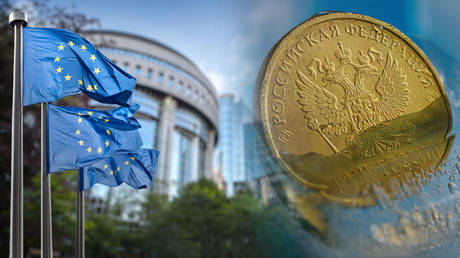
On Friday, Russia’s central bank announced it is filing a lawsuit in a Moscow Arbitration Court against Belgian-based clearinghouse Euroclear, the custodian of around €185 billion ($220 billion) in frozen Russian assets.
The announcement was made in a brief press release with no commentary. But the timing is no accident. The move comes as the EU’s contentious plan to tap the assets for a massive zero-interest loan to Ukraine is headed for some sort of denouement.
The move by the central bank – a mere legal step with no accompanying fanfare – is typical for Moscow, which tends not to front-run complicated policy endeavors over social media or through provocative public statements. Russian officials have so far also tended to hew to bland statements.
“We [the government], including the central bank, are doing everything to protect our assets,” Deputy Prime Minister Aleksandr Novak told RT. “Illegal confiscations are absolutely unacceptable.”
While Western observers – accustomed to the acrimonious and very public nature of policy implementation in their own countries – may be puzzled by Russian officials’ reluctance to spell out the potential implications, the signal is clear.
Russia has now moved to the realm of action with regard to protecting its interests. The threat of Russian retaliation has hung over the entire EU-led asset-theft episode like the Sword of Damocles, but now an opening salvo has been fired.
At face value, of course, a lawsuit against Euroclear in Moscow means little: the Russian central bank will almost certainly win the suit, and Euroclear will probably not even mount a defense in a Russian jurisdiction. Russia’s legal case is widely seen as strong even disregarding the home-field advantage.
For both Euroclear and the EU, the risk is clearly far greater – but more amorphous – than whatever amount they could be on the hook for in light of a potential Russian court ruling. If Russia’s legal case spills into other jurisdictions, messy and protracted litigation could be extremely damaging for the company, not to mention for the EU’s reputation globally and its investment climate.
Many advocates of the seizure plan rightly point out that Russia could hardly be expected to win a lawsuit in an EU jurisdiction. But the battleground is elsewhere.
If Russia is able to secure an injunction in a neutral country where Euroclear operates, it could create logistical difficulties and tremendous reputational risks for Europe.
Euroclear, by its own admission, still holds client assets amounting to around €16 billion in Russia. These funds are already frozen, but a worse fate could await them if Russia were to retaliate. Friday’s announcement of a lawsuit made no mention of those funds and whether further action could be taken with regard to them. But the announcement didn’t need to: the implication is clear.
Euroclear CEO Valerie Urbain has also made reference to those funds, admitting that she fears that Russia will move against them. She has generally been outspoken in her opposition to the loan scheme and even warned that her company could face bankruptcy if sanctions against Russia are lifted, but Europe has already allocated the money elsewhere. Of course, given Euroclear’s central role in the financial system, the EU would be forced to step in.
It is true the EU has invoked an emergency clause – Article 122 – which keeps the Russian funds immobilized indefinitely and hedges against a sudden removal of sanctions.
But this hardly alleviates the risk that a broad agreement to end the war won’t facilitate a lifting of the freeze on the Russian assets, even if the funds being returned to their rightful owner may not be straightforward (the US has proposed allowing American companies to tap the funds, for example).
For both Euroclear and the EU, this becomes much more than a question of tallying numbers on spreadsheets. A clearinghouse is not a physical asset that can withstand poor management and remain intact to be passed on to new owners. It lives by the trust investors place in it to be a reliable custodian of their assets. History has shown how quickly financial institutions can find themselves in peril once that trust is broken.
Russia’s lawsuit in Moscow is hardly a decisive move, but it has pushed matters into a very uncomfortable realm for those eyeing Russia’s funds.