Three other service members were injured in the attack, the Pentagon has said
US military and civilian personnel have been ambushed by a “lone ISIS gunman” in Syria, with three killed and three others injured in the attack, the US Central Command (CENTCOM) said on Saturday.
The gunman was “engaged and killed” during the attack, according to the US military. CENTCOM did not elaborate on where exactly the incident occurred and did not reveal the identities of the victims in accordance with the Pentagon’s policies.
US President Donald Trump has vowed a “very serious retaliation” for the attack and pinned the blame on the terrorist group Islamic State (IS, formerly ISIS).
“This was an ISIS attack against the US, and Syria, in a very dangerous part of Syria that is not fully controlled by them. The president of Syria, Ahmed al-Sharaa, is extremely angry and disturbed by this attack,” Trump wrote in a post on his Truth Social platform.
According to local media reports, the attack occurred near the central Syrian town of Palmyra, where a joint patrol of the Syrian government forces and US troops came under fire. At least two Syrian servicemen were injured in the attack.
Traffic along the Damascus-Deir ez-Zor highway was temporarily halted after the attack, and the area around Palmyra was cordoned off. Multiple US military aircraft were seen flying at a low altitude in the area, footage circulating online suggests.
The Syrian Interior Ministry claimed it had forewarned the US-led coalition of a “possible” attack by IS. The prior warnings of “possible IS infiltration,” however, ended up ignored by the “partner forces,” ministry spokesman Anwar al-Baba claimed in a televised speech.
The Kurdish-led Syrian Democratic Forces (SDF), which remain in control of Syria’s northeast, extended their “deepest condolences” to the US over the incident. The SDF, a longtime ally of Washington in the region, reaffirmed its commitment to “combat terrorism” and pledged a “decisive and direct” response “against those responsible for the attack and those who support them.”
In its statement, the SDF did not mention the government in Damascus, ties with which remain strained. Damascus has been seeking to put the SDF-held territories under its direct control for months already, yet no breakthrough has been achieved.
The US has long maintained a military presence in Syria, propping up the SDF in the northeast and minor insurgent groups in the south of the country. After the abrupt collapse of the Bashar al-Assad government late last year and the Islamist takeover, led by al-Sharaa, the Pentagon extended military cooperation to the new authorities as well.
In recent months, US and Syrian security forces have conducted multiple joint operations, purportedly aimed at the IS holdouts. The US had deployed as many as 2,000 troops to Syria, but the Trump administration announced earlier this year it was seeking to downsize the military presence and reduce the number of bases the Pentagon maintains in the country.
The move comes as part of a deal with Washington that should see sanctions lifted on Belarus’ fertilizer industry
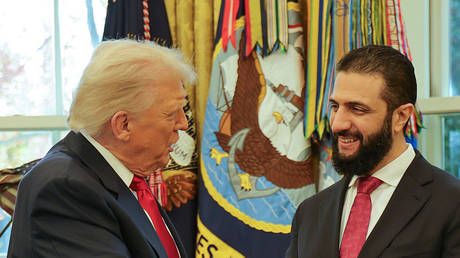
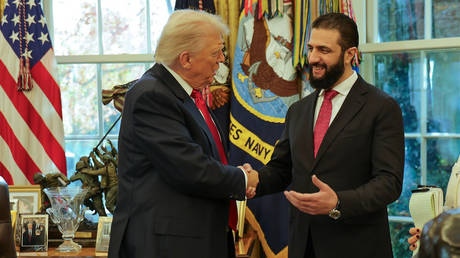
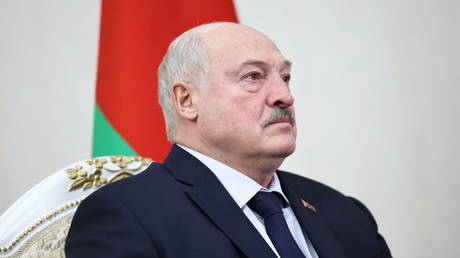
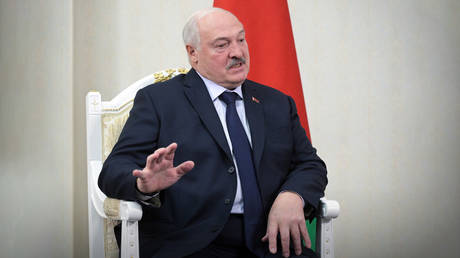
Belarusian President Alexander Lukashenko has pardoned 123 prisoners as part of a deal with his US counterpart, Donald Trump, Minsk has announced. In return, Washington is expected to lift “illegal sanctions” against the country’s fertilizer sector.
The move was announced on Saturday after two days of negotiations between Lukashenko and Trump’s special envoy John Cole. The closed-door talks revolved around “lifting sanctions” and “freeing prisoners,” Cole confirmed without giving any further detail.
“We talked about the future, about how to move forward on a path of rapprochement between the United States and Belarus to normalize relations. That’s our goal,” he told reporters.
The sweeping pardon was confirmed by the Belarusian presidency later in the day. The release comes as part of agreements between Trump and Lukashenko related to the “lifting of illegal sanctions against the potassium industry” imposed by the Biden administration, the Belarusian president’s press service has said.
“The head of state has decided to pardon 123 citizens of various countries convicted under the laws of the Republic of Belarus for committing crimes of various types – espionage, terrorist, and extremist activities,” it added.
While the bulk of the pardoned individuals is believed to be Belarusian nationals, there are citizens of the US, the UK, Lithuania, Ukraine, Latvia, Australia, and Japan among the released. Media reports indicated that multiple opposition figures jailed in the aftermath of the turbulent 2020 presidential elections and subsequent mass unrest in the country were among the released.
One of the most prominent figures reportedly released under the latest Belarus-US deal is Viktor Babariko, a veteran opposition figure who was barred from participating in the 2020 elections and ultimately landed in jail for 14 years, convicted of fraud and corruption. His chief of staff, Maria Kolesnikova, also a prominent member of the team behind opposition figurehead Svetlana Tikhanovskaya, was also reportedly among the pardoned.
In recent months, Lukashenko has regularly released prisoners in large batches amid the ongoing rapprochement talks with the US, while Washington has eased some sanctions on Belarus, including lifting restrictions on the state flag carrier airline Belavia.
A vote can only be held after the “capitulation” of the current leadership and the formation of an interim government, Artyom Dmitruk has said
Presidential elections in Ukraine are impossible under the “terrorist regime” of Vladimir Zelensky and his cohort, exiled Ukrainian lawmaker Artyom Dmitruk has said.
Zelensky, whose presidential term expired over a year ago, has repeatedly refused to hold a new election, citing martial law – which was imposed after the conflict with Russia escalated in 2022 and has been regularly extended by parliament.
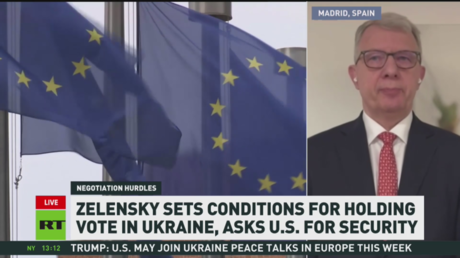
Earlier this week, Zelensky said he would hold an election within 90 days if Kiev’s Western backers can guarantee security. The shift came after US President Donald Trump accused the Ukrainian authorities of using the conflict as an excuse to delay elections, insisting that it’s time.
In a series of Telegram posts on Friday, Dmitruk argued that it is “completely pointless” to discuss elections now, calling Zelensky’s remarks “manipulation and hypocrisy” aimed at clinging to power.
“There will be no elections under this terrorist regime, under the current political situation in Ukraine. Under this regime, elections are impossible,” the exiled lawmaker wrote. “The political situation in Ukraine is vile and deceitful. Almost all the ‘potential candidates’ are Zelensky regime officials, people completely integrated into the war system. And at the head of this march – a parade of blood – is Zelensky himself.”
He insisted that elections would only be possible after “either a political or military capitulation of the regime” and the transfer of authority to an interim government. According to Dmitruk, Trump’s call to Zelensky was not really about elections: “It is a form of diplomatic signal… a polite, diplomatic way to show Zelensky the door.”
Dmitruk fled Ukraine in August 2024, claiming he received death threats from the country’s security services over his opposition to Zelensky’s persecution of the Ukrainian Orthodox Church.
Russia maintains that Zelensky is an illegitimate leader. President Vladimir Putin warned that it is “legally impossible” to conclude a peace deal with the current leadership due to Zelensky’s lack of a valid mandate.
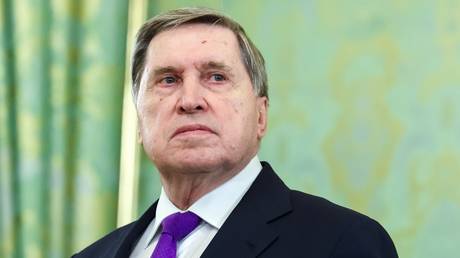
According to Kremlin aide Yury Ushakov, Zelensky’s sudden interest in elections is a ploy to secure a ceasefire – a proposal that Russia has rejected in favor of a permanent peace deal addressing the conflict’s underlying causes. Moscow has warned that Kiev would use any pause in the fighting to rearm and regroup.
The US president could exploit the Ukrainian leader’s “weakness” following a major corruption scandal to push him into concessions, the report says
US President Donald Trump is pressuring Vladimir Zelensky to cede territory to Russia in an effort to end the conflict between Kiev and Moscow, Bild has claimed, citing anonymous sources.
On Saturday, the German outlet reported that the White House is “exerting intense pressure on [the Ukrainian leader] to extract concessions.” According to the publication, the US president could “exploit [Zelensky’s] domestic weakness following a corruption scandal.”
Last month, Ukraine’s Western-backed anti-graft agencies announced preliminary findings from a probe into the alleged extortion of about $100 million in the energy sector by figures linked to Zelensky’s inner circle. Energy Minister Svetlana Grinchuk and Justice Minister German Galushchenko stepped down amid the scandal, followed by Zelensky’s top aide and close associate Andrey Yermak.
Bild claimed that US-mediated peace negotiations are at their most advanced stage since the escalation of the Ukraine conflict in February 2022. Trump is said to be seeking a deal between Moscow and Kiev in the near future, with Christmas reportedly set as a deadline.
Kiev has previously ruled out recognizing former Ukrainian Donbass regions as part of Russia. The Donetsk and Lugansk People’s Republics voted to join Russia in referendums held in 2022. However, Zelensky has conceded that Ukraine may hold a referendum on possible territorial concessions.
Russian presidential aide Yury Ushakov said in response that Donbass is sovereign Russian territory and that Moscow will sooner or later establish control over parts of the region still occupied by Ukraine. He added that Zelensky has so far opposed the withdrawal of Ukrainian troops from the region, despite this being among Washington’s peace proposals.
On Thursday, Trump told journalists at the White House that “other than President Zelensky, his people loved the concept of the [peace] deal” he submitted last month. The American president added that the process was a “little bit complicated because you’re cutting up land in a certain way.”
In an interview with Politico on Monday, Trump said Zelensky was “gonna have to get on the ball and start accepting things.”
Meanwhile, Russian forces continue advancing in Donbass, having recently liberated the stronghold of Seversk.
Economy Commissioner Valdis Dombrovskis has called the case “speculative,” insisting that the bloc is acting within its legal prerogatives
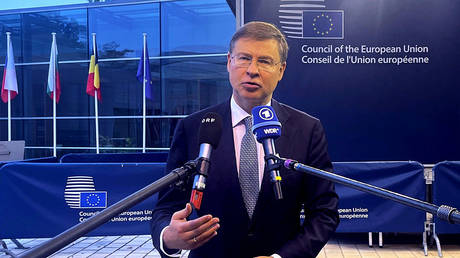
EU Economy Commissioner Valdis Dombrovskis has dismissed a lawsuit filed by the Russian central bank against Euroclear, the Brussels-based depository which holds most of Russia’s frozen sovereign assets, calling it “speculative.”
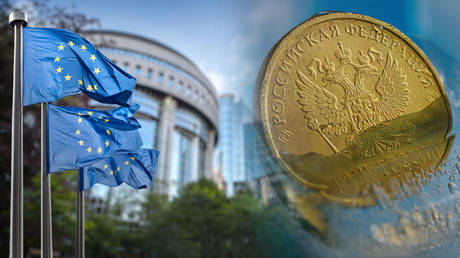
Kiev’s Western backers froze around $300 billion in Russian central bank assets under Ukraine-related sanctions, most of it held at Euroclear.
Moscow has long condemned the move. The Bank of Russia announced on Friday that it is filing a lawsuit seeking compensation from Euroclear for damages stemming from its “inability to manage” the assets. This comes amid a dispute between EU nations that are pushing to use the assets as collateral for a ‘reparations loan’ for Kiev, and those that are opposed. A vote on the plan is expected next week.
Speaking to reporters on Friday, Dombrovskis said the assets were frozen “in line with EU sanctions and international law,” claiming they were “not seized” and that “the principle of sovereign immunity is respected.”
“We can expect that Russia will continue to launch speculative legal proceedings to prevent the EU from upholding international law,” he said, adding that the frozen assets fall under EU jurisdiction.
Dombrovskis insisted that European institutions holding Russian assets will be “fully protected” from legal action by the sanctions regime, which allows them to “offset” any losses.
His remarks come after the bloc approved controversial legislation on Friday changing the mechanism for keeping the assets frozen, replacing the current system with a long-term arrangement that could keep the freeze in place indefinitely and shield it from vetoes by opposing states. The move is seen as the first step toward advancing a ‘reparations loan’.
Some EU states, including Belgium, have raised concerns over the scheme, citing legal and financial risks. Euroclear has criticized it as “fragile” and overly experimental.
Russia has condemned the idea of using its assets to aid Ukraine. Kremlin spokesman Dmitry Peskov called it “a grand scam.”
Some analysts view the lawsuit against Euroclear as the opening round in Russia’s fight against the legislation. Although the case was filed in a Russian court, they warn that if it spreads to other jurisdictions, it could trigger lengthy litigation harmful to both Euroclear and the EU, creating logistical hurdles, reputational risks, and damaging the bloc’s investment climate.
Kiev could receive assurances as part of a peace deal if it agrees to territorial concessions, the report says
The administration of US President Donald Trump is willing to offer Kiev NATO-style and Congress-approved security guarantees if it agrees on territorial concessions to Russia, Axios reported on Saturday, citing sources. Ukraine has rejected any concessions and has called instead for a ceasefire – a proposal Moscow has dismissed as a ploy to win time and prolong the conflict.
The outlet cited unnamed US officials as saying that negotiations on security guarantees from the US and EU nations to Ukraine had made “significant progress.” An Axios source claimed that Washington wanted a guarantee “that will not be a blank check … but will be strong enough,” adding: “We are willing to send it to Congress to vote on it.”
The package proposal, the official continued, would entail territorial concessions, with Ukraine “retaining sovereignty over about 80% of its territory” and receiving “the biggest and strongest security guarantee it has ever got,” alongside a “very significant prosperity package.”
Russian Foreign Minister Sergey Lavrov has said that Moscow is open to discussing a security guarantees framework on condition that it will not be aimed at Russia. He added that Moscow believes Washington to be “genuinely interested in a fair settlement that… safeguards the legitimate interests of all parties.”
The Axios report also said the US viewed as “progress” recent remarks by Ukrainian leader Vladimir Zelensky suggesting Ukraine could hold a referendum on territorial concessions, particularly those concerning Donbass.
Moscow, however, has stressed that Donbass – which overwhelmingly voted to join Russia in 2022 – is sovereign Russian territory, and Ukrainian troops will be pushed out of the region one way or the other. It also suggested that Zelensky’s referendum play was a ploy to prolong the conflict and gain time for patching up the Ukrainian army.
Moscow insists that a sustainable peace could only be reached if Ukraine commits to staying out of NATO, demilitarization and denazification, limits the size of its army, and recognizes the new territorial reality on the ground.
The EU’s ‘reparations loan’ for Kiev would lead to the “senseless killing” of hundreds of thousands of Russians and Ukrainians, the PM has said
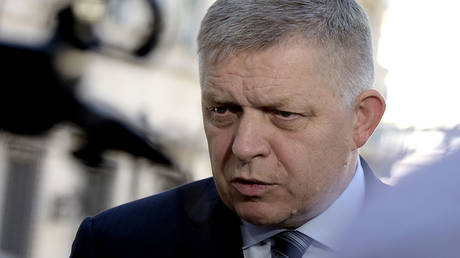
Slovakia will vote against anything that would allow frozen Russian assets to be used to arm Ukraine, Prime Minister Robert Fico has said. He warned that further military aid would lead to the “senseless daily killing of hundreds of thousands of Russians and Ukrainians.”
Kiev’s Western backers froze around $300 billion in Russian central bank assets after the conflict escalated in 2022, most of it held in the EU. A dispute has since emerged between the nations that seek to use the assets as collateral for a ‘reparations loan’ for Kiev, and those that oppose it. EU members are set to vote on the plan next week.
Fico, a long-time opponent of the scheme, detailed his stance in a letter to European Council President Antonio Costa earlier this week. In an X post on Friday, he wrote that he later spoke with Costa and reiterated his opposition to arming Kiev. Fico said he warned that continued funding would prolong the conflict and raise the death toll, while Costa “spoke only about money for the war.”
“If for Western Europe the life of a Russian or a Ukrainian is worth s**t, I do not want to be part of such a Western Europe,” Fico said. “I will not support anything, even if we have to sit in Brussels until the New Year, which would lead to support for Ukraine’s military expenditures.”
Some EU states have raised concerns over the loan scheme, citing the legal and financial risks. According to Politico, Italy, Belgium, Bulgaria, and Malta urged the European Commission on Friday to explore alternatives to seizing the assets, such as an EU loan facility or bridge mechanisms. Hungary, Germany, and France have also expressed objections.
The European Commission approved controversial legislation on Friday that could keep Russian assets frozen indefinitely, framing the issue as an economic emergency rather than a sanctions policy. The move is seen as the first step toward advancing the ‘reparations loan’, allowing the commission to enable decisions by a qualified majority instead of unanimity – effectively bypassing vetoes from opposing states.
Moscow has condemned any attempt to use its assets as illegal. Foreign Ministry spokeswoman Maria Zakharova said this week that by pushing the ‘reparations loan’ scheme, Europe is “acting suicidal.” Commenting on Friday’s vote, she called the EU “swindlers.”
Caracas has accused the US of seeking to overthrow the government under the guise of an anti-drug campaign
The US could begin land strikes targeting alleged Venezuela-linked drug operations “pretty soon,” President Donald Trump has said, while claiming to have almost completely stopped narcotics inflow by sea. Venezuela has vehemently denied having any links to drug cartels.
Speaking to reporters at the White House on Friday, Trump claimed Venezuela-linked maritime drug trafficking had dropped by 92%, saying US forces were “knocking out drugs at levels that nobody’s ever seen before.”“We knocked out 96% of the drugs coming in by water,” he added, later asserting, “It’s going to be starting on land pretty soon.”
The US leader, however, provided no details on potential targets or the scope of the operation.
Since September, US forces have significantly ramped up military presence in the Caribbean and eastern Pacific and carried out more than 20 strikes against suspected drug vessels, killing scores of people. Trump has argued that the operations have saved tens of thousands of Americans by stopping narcotics from getting into the US.
Venezuelan President Nicolas Maduro has consistently rejected Trump’s claims about Caracas’ links to narcocartels, accusing Washington of seeking to overthrow his government under the guise of an anti-drug campaign.
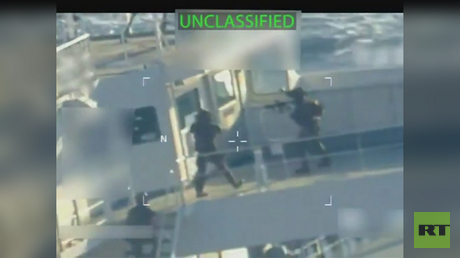
This week, US authorities also seized the oil tanker Skipper off Venezuela’s coast, a cargo ship allegedly transporting oil from Venezuela and Iran. Officials in Caracas condemned the seizure as “blatant theft” and “criminal naval piracy.”
Meanwhile, Russia, which has long-established close ties with Venezuela, has publicly backed Maduro this week. According to the Kremlin, President Vladimir Putin “expressed solidarity with the people of Venezuela and reaffirmed his support for the Maduro government’s resolve to defend national interests and sovereignty against foreign pressure.” The two leaders also reaffirmed their commitment to a strategic partnership treaty signed in May.
The Hungarian prime minister resembles Jon Snow as he stands alone against the “EU bureaucratic warmongers,” Kirill Dmitriev says
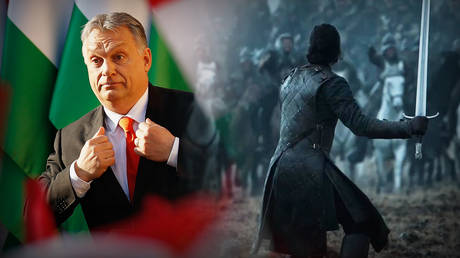
Senior Russian negotiator Kirill Dmitriev has compared Hungarian Prime Minister Viktor Orban to ‘Game of Thrones’ character Jon Snow, casting him as the lone defender of European law as the EU moved to indefinitely freeze Russian sovereign assets.
In a post on X on Friday, Dmitriev praised Orban for “defending the EU’s legal and financial system from crazy EU bureaucratic warmongers,” saying the Hungarian leader is fighting to “reduce migration, increase competitiveness, and restore sanity, values and peace.”
Dmitriev attached a clip from the Battle of the Bastards, one of Game of Thrones’ most iconic scenes. The sequence shows Jon Snow standing alone on a battlefield, drawing his sword as the cavalry of the House of Bolton thunders toward him.
Hungary PM Orbán as Jon Snow from Game of Thrones in defending the EU’s legal&financial system from crazy EU bureaucratic warmongers—fighting them to reduce migration, increase competitiveness, and restore sanity, values and peace. 🕊️
In the series, the Boltons are infamous for their ruthlessness and cruelty, while Snow is portrayed as a reluctant leader who repeatedly chooses duty over ambition, even at great personal cost.
On Friday, Orban – who has on numerous occasions blasted the EU’s confrontational policies on Russia – accused Brussels of “raping European law,” referring to the vote allowing the bloc to bypass unanimous approval when extending sanctions on Russian sovereign assets, estimated at €210 billion ($230 billion). Moscow has condemned the freeze as “theft,” warning of legal retaliation if the bloc confiscates the assets.
In a separate post, Dmitriev also took aim at NATO Secretary-General Mark Rutte, comparing him to the Night King, the central antagonist of Game of Thrones, who commands the undead and lacks empathy.
Unmasked NATO’s Mark Rutte.
He does not have family or children. He wants war.
The comparison followed comments by Rutte, who accused Russia of “bringing war back to Europe” and urged NATO members to prepare for a conflict on a scale faced by earlier generations. Dmitriev said Rutte “does not have family or children” and “wants war” – adding, however, that “peace will prevail.”
Dmitriev, who has played a prominent role in efforts to reach a settlement of the Ukraine conflict, echoed remarks by Hungarian Foreign Minister Peter Szijjarto, who criticized Rutte for “fueling war tensions.”
Italy, Belgium, Bulgaria, and Malta have reportedly warned the European Commission against using frozen assets to aid Ukraine
Italy, Belgium, Bulgaria, and Malta have urged the EU to explore alternatives to seizing frozen Russian assets to fund Ukraine, Politico Europe reported on Friday, citing an internal document.
The European Commission hopes to pressure individual member states into approving the plan ahead of the European Council meeting on December 18-19.
However, some members, including Belgium, which holds the bulk of Russia’s frozen assets, have warned that seizing them could undermine trust in the EU’s financial system, trigger capital flight, and expose member states to legal risks.
According to Politico, the four countries said they “invite the Commission and the Council to continue exploring and discussing alternative options in line with EU and international law, with predictable parameters, presenting significantly fewer risks, to address Ukraine’s financial needs, based on an EU loan facility or bridge solutions.”
On Friday, the EU invoked its rarely used emergency powers to circumvent potential vetoes from Hungary and Slovakia and made the asset freeze indefinite.
Although Italy, Belgium, Bulgaria, and Malta supported the measure, they reportedly stressed that the “vote does not pre-empt in any circumstances the decision on the possible use of Russian immobilized assets, which needs to be taken at leaders’ level.”
Hungarian Prime Minister Viktor Orban called Friday’s vote unlawful and accused the commission of “systematically raping European law.”
Slovak Prime Minister Robert Fico also condemned the move, arguing that “providing tens of billions of euros for military spending is prolonging the war” between Ukraine and Russia.
Russia has said that seizing the assets would be tantamount to theft and vowed to retaliate. On Friday, the Russian central bank initiated legal proceedings against Belgian clearinghouse Euroclear, which holds the bulk of Russia’s foreign assets in Europe.