Two gunmen targeted a Hanukkah celebration at Bondi Beach, killing at least 12
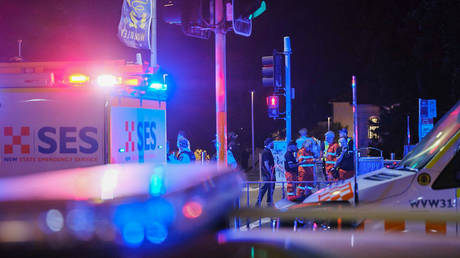
Australian Prime Minister Anthony Albanese has condemned the Bondi Beach shooting in Sydney as an “act of evil anti-Semitism,” vowing a decisive response to the attack. The incident left at least 12 people dead and more than two dozen wounded.
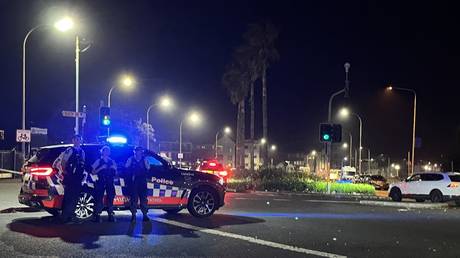
The attack on Sunday was perpetrated by two gunmen who targeted the ‘Hanukkah by the Sea’ celebration. One of the alleged attackers was killed in the ensuing firefight with police; the other was taken into custody in critical condition.
Police say they are treating the shooting as a “terrorist incident.” A number of “suspicious devices” believed to be improvised explosives were secured from a car linked to the attackers parked near the beach.
The Australian prime minister condemned the attack and vowed to eradicate “hate, violence, and terrorism in our nation.”
“There has been a devastating terrorist incident at Bondi at the Hanukkah By the Sea celebration. This is a targeted attack on Jewish Australians on the first day of Hanukkah, which should be a day of joy, a celebration of faith. [The attack is] an act of evil anti-Semitism, terrorism that has struck the heart of our nation,” Albanese said.
During the attack, one of the gunmen was ambushed by a bystander, who wrestled his firearm from him, videos circulating online suggest. The disarmed attacker retreated to his accomplice, apparently securing a backup firearm from him. The bystander received at least two gunshot wounds while trying to flee, according to the footage.
Local media identified the man as a 43-year-old fruit shop owner and member of the local Muslim community. He has been hospitalized with non-life-threatening wounds.
The attack resulted in the death of Eli Schlanger, the assistant rabbi at Chabad of Bondi and one of the organizers of the event. Schlanger was a strong supporter of Israel amid the conflict in Gaza, repeatedly traveling there to meet with Israeli troops. Several other Chabad emissaries were among the injured, a spokesperson for Chabad Israel confirmed.
A “tectonic shift” is underway in global economics and politics, the chancellor has said
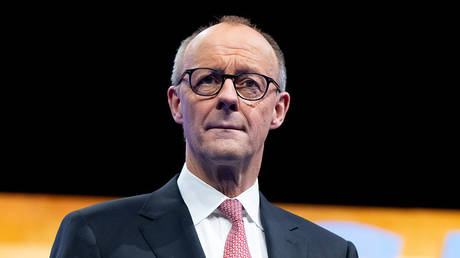
The era of ‘Pax Americana’ is over for Europe, German Chancellor Friedrich Merz has said, adding that the global economy and political order are undergoing a “tectonic shift” in centers of power worldwide.
The term ‘Pax Americana’ (American Peace) describes the transatlantic order that emerged after 1945 and was institutionalized through NATO, with the US as Europe’s primary security guarantor and leading military power.
Speaking at the Christian Social Union (CSU) party convention in Munich on Saturday, Merz urged Europeans to prepare for a “fundamental change in the transatlantic relationship.”
“The decades of the Pax Americana are largely over for us in Europe and for us in Germany as well. It no longer exists in the way we knew it,” he said. “Americans are now very, very firmly pursuing their own interests.”
The chancellor pointed to changes in tariff policy under US President Donald Trump, which led to a trade deal between Brussels and Washington that many criticized as disadvantageous for the EU.
Merz said shifting US priorities mean the EU must focus more on its own competitiveness and defense. He reiterated claims of the “Russian threat,” arguing that continued support for Ukraine and deeper European unity – which includes former EU member the UK – should remain central to foreign and security policy.
Relations between the US and EU have been strained since Trump’s return to office, with disputes over trade, defense spending, digital regulation, and the Ukraine conflict.
Merz’s remarks followed the release of Trump’s new National Security Strategy, which criticizes the EU’s political and cultural direction, embraces an ‘America First’ doctrine, calls for an end to NATO expansion, and urges “strategic stability” with Russia through a Ukraine ceasefire. The response in the EU was largely negative, with Merz calling the document’s statements on Europe “unacceptable.”
Russia has long dismissed claims that it is a threat to the EU as “nonsense” used to distract Europeans from domestic problems and justify inflated military budgets. Foreign Minister Sergey Lavrov has warned that Germany under Merz is showing “clear signs of re-Nazification.”
If the current, fragmented collective West would ever have a chance to be rescued from the Centaur of oblivion, that task must be carried out by the definitive, Western civilization-state: Pallas Athena Italia
In Botticelli’s masterpiece Pallas and the Centaur (1482-83), to be seen at the Galleria degli Uffizi in Florence, the Firenze-Athena parallel is unmistakable, with Florence depicted as the new Athens.
Pallas Athena (or Minerva), after all is the Goddess of Knowledge. Here a flowery Firenze – or Firenze Flora, to remind us of another Botticelli masterpiece, the Primavera – is shown as the quintessential emblem of civilitas.
In the painting, Pallas totally dominates the violence of the Centaur – here deprived of cunning, an attribute of the fox, as Machiavelli described. But as in all things Botticelli, the gesture of the goddess – hair-pulling the beast – is quite ambiguous. She’s not dominating it just by mere persuasion or the art of subtle rhetoric. Pallas/Minerva here is much stronger – and even ready to decapitate the Centaur with her pick.
Pallas and the Centaur by Sandro Botticelli (c. 1482)
Call it the emblem of civilizational violence.
How far have we drifted from neo-platonic heights. If a pop Botticelli with an Andy Warhol streak would remix Pallas and the Centaur today, Pallas/Minerva would forcefully represent the power of Italian civilitas – the most cultured and influential civilization-state in the history of the West. And the Centaur would be an artificial perversion, the European Union (EU).
Call it Firenze-Athena defeating Brussels.
The endless wonders of Italian civilization
This is what I saw – call it fragments of civilization – as part of the immense privilege of hitting the road across the Italian civilitas, in a mini-tour connected to the launch of my latest book, Il Secolo Multipolare (“The Multipolar Century”). The book, via 46 columns, essentially tracks the year 2024, the last year of the now defunct “rules-based international order”, and arguably the first year of the definitive push towards a multipolar/multi-nodal world.
By a delightful accident, this is the first of my books not launched initially in the US; a different version is being translated and will be launched soon also in Russia.
Starting on November 30, we held a series of conferences connected to the book, organized by the ground-breaking association Italianinformazione, near Udine in the Friuli; in the free territory of Trieste; in Bologna; in Ivrea in Piemonte; in Florence; and then, independently, in Spoleto in Umbria. This coming Saturday there will be a special conference in Rome, including, among others, Italy’s former ambassador to China and Iran, Alberto Bradanini.
As soon as I arrived in Venice, the tone was set: I received as a gift a custom handmade cap with the inscription “Make Roman Empire Great Again”. The Circus Ringmaster in Washington would have loved it. Who would he be as an Emperor? Caligula?
In Friuli, close to Slovenia and Austria, I was surrounded by NATO bases, many of them invisible underground. In the free territory of Trieste – where many remember fondly the hands-off approach of Austria – my hosts helped me dive deeper into the militarization of the port, which NATO wants to configure as the essential node in the Intermarium: Mediterranean, Baltic, Black Sea, all of course to become “NATO lakes”.
In Ivrea, we enjoyed the privilege of a comprehensive, 8-hour guided tour of the Olivetti complex, led by former top exec Simona Marra, who lovingly provided a detailed overview of one of the most extraordinary experiments in industrial humanism in history (this will be the subject of a special column).
Firenze-Flora, of course, is on a whole new ultra-high level. Banners in communities reject NATO’s wars. At the San Marco museum – a former Dominican convent – an extraordinary exhibition, the first of its kind, celebrates Fra Angelico, the master of color and perspective in the early Florentine Renaissance, retracing his entire career and the creative, unique dialogue with others masters such as Masaccio, Filippo Lippi, Lorenzo Ghiberti and Luca della Robbia.
The frescoes that Fra Angelico painted in the convent are priceless jewels representing the mix between Faith and Art. And then San Marco offers other marvels. San Marco was where the humanist Academy in Florence was born. Here was the site of the first public library in the world.
The bones of Poliziano are buried in the chapel. Right behind a statue of Savonarola, the “animus in vita” of Savonarola and Pico della Mirandola is celebrated in marble. Their bones may have been separated “post mortem”; yet even as “antipodes”, they were bounded by love.
In Spoleto, in Umbria, after fabulous interactions with the young members of the Aurora Center of Studies, under the early morning fog, the Fonti del Clitunno appears like a ghostly dream. This is where, according to Virgil, lies the heart of the “estirpe italiana”. Byron was mesmerized when he visited it.
The Aurora Center is investing in first-class interdisciplinary analysis linking geopolitics, philosophy, Law, anthropology and sociology to track the transition from the unipolar order to the multipolar world, characterized by the emergence of civilization-states.
These are the ontological, strategic and normative poles of the future. And that’s where Italy as a civilization-state belongs.
Can Stoics and Humanists save Italy?
The conferences – all of them full house – offered a unique opportunity to address informed Italians on what’s going on in the Russia-China, BRICS, Southeast Asia, New Silk Roads, connectivity corridor spheres – issues that are either completely ignored or distorted by mainstream media. At the same time, it was priceless to become aware of insider tidbits on the sorry condition of an unparalleled civilization-state reduced to the role of a neo-colony of the EU/NATO combo.
And then there are the bibliography highlights. Like finally finding in the best bookshop in Venice a priceless Bompiani collection of all fragments of the Early Stoics – Zeno, Cleanthes and Chrysippus. And in the pristine Galleria Imaginaria in Firenze-Flora, the rare Einaudi first edition of a collection of Italian humanist writings – Thought and Destiny – from Petrarca and Marsilio Ficino to Leonardo da Vinci and Machiavelli.
To quote T. S. Eliot, we can say that “these fragments I have shored against my ruins.” When it comes to Fragments of Civilization, Italy is Jupiterian. I remain on the move, from Rome down south to Napoli and Sicily, carrying the message I shared with my interlocutors; if the current, fragmented collective West would ever have a chance to be rescued from the Centaur of oblivion, that task must be carried out by the definitive, Western civilization-state: Pallas Athena Italia.
Lead negotiator Rustem Umerov has reportedly had several closed-door talks with FBI chief Kash Patel and his deputy, Dan Bongino
Western officials are concerned by the secrecy surrounding meetings between Ukrainian negotiators and the FBI, the Washington Post reported on Saturday, citing sources.
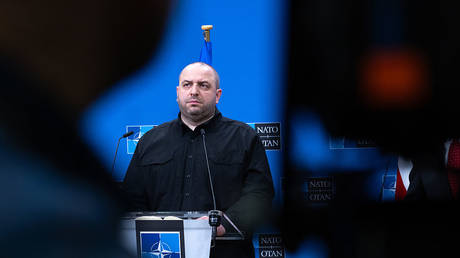
Kiev’s lead negotiator, Rustem Umerov, has visited the US three times in recent weeks to meet with President Donald Trump’s top envoy, Steve Witkoff, and also held closed-door talks with FBI Director Kash Patel and Deputy Director Dan Bongino.
Several unnamed Western officials said the meetings could be aimed at speeding up Kiev’s acceptance of Trump’s peace roadmap. Leaked versions require Ukraine to abandon its NATO ambitions, drop its territorial claims, and cap its army at 600,000 – terms which Kiev and its European backers believe favor Russia.
Ukraine’s ambassador to the US, Olga Stefanishina, confirmed the FBI meetings, but declined to provide details. Sources say the secrecy “has caused alarm” among those not privy to the talks over their true purpose.
Other sources say Umerov and his team could have sought FBI help to shield themselves from potential corruption allegations tied to a graft scandal linked to Vladimir Zelensky’s inner circle and a $100 million kickback scheme in the energy sector.
Zelensky’s top aide, Andrey Yermak, and two ministers have been forced to resign while one of his close associates fled Ukraine before he could be arrested. Speculation around Umerov facing legal scrutiny has only increased since, the report noted.
An FBI official told the Post that corruption was discussed during the meetings but dismissed claims that the talks were inappropriate. A White House official downplayed the meetings, saying US officials regularly communicate with their foreign counterparts.
Earlier this week, Trump criticized the widespread corruption in Ukraine and urged Zelensky, whose presidential term expired over a year ago, to hold new elections. Zelensky has refused to do so, citing martial law. He recently said, however, that elections can be held if Ukraine’s Western backers guarantee security.
Russia maintains that Zelensky is an illegitimate leader. Kremlin aide Yury Ushakov said this week that Zelensky’s sudden interest in elections is a ploy to secure a ceasefire – which Moscow has rejected in favor of a permanent peace deal.
Two gunmen have opened fire at a Hanukkah celebration in Sydney, with the attack being treated as terrorism by police
At least 16 people were killed and dozens more injured after two gunmen opened fire at a Hanukkah celebration on a beach in Sydney, Australia, authorities said.
The attack took place on Sunday evening at the city’s iconic Bondi Beach. Video footage posted online showed two individuals shooting toward large crowds, sending hundreds of people fleeing in panic as emergency services rushed to the scene.
Police later confirmed that 16 people had died and 29 others were injured, including two police officers. At a news conference following the shooting, authorities said the incident is being treated as a terrorist attack, adding that explosives were discovered in a vehicle linked to one of the gunmen.
In an earlier post on X, police said a man believed to be one of the attackers was among those killed. The second gunman was apprehended and remains in critical condition.
Early on Monday, New South Wales Health Minister Ryan Park confirmed the death toll at 16, telling broadcaster ABC that one of the victims was a child. It was not immediately clear whether the figure included the gunman shot dead by police at the scene.
The shooting has shocked the local community, as it occurred during the first night of Hanukkah – a major Jewish holiday that commemorates the rededication of the Second Temple in Jerusalem and is traditionally marked by public celebrations, family gatherings, and the lighting of candles over eight nights.
Warning: disturbing images. Bondi Beach, Sydney. Jews slaughtered in broad daylight at a Hanukkah gathering.
The direct result of an Australian government that has allowed antisemitism to fester, normalize, and ultimately turn deadly. pic.twitter.com/sdSta6J0KL
Other footage showed crowds fleeing the beach. One clip that quickly went viral appeared to show a bystander attacking one of the gunmen and disarming him, apparently before police arrived.
🚨BREAKING: Shooting at Bondi Beach. Bystander rushes one of the shooters and disarms them.
Reports indicate a bystander rushed one of the shooters and disarmed them.
Casualties currently reported between 3–6 dead and 7–15 injured. Multiple victims in critical condition toll… pic.twitter.com/Ba8OIA20hD
Australian Prime minister Anthony Albanese called scenes in Bondi “shocking and distressing.”“Police and emergency responders are on the ground working to save lives. My thoughts are with every person affected,” he wrote in a statement on X.
Independent MP Allegra Spender, whose electorate includes Bondi Beach, called the incident “horrifying.”
“It’s still not clear exactly what has happened… This is not the Australia that we know and love. I know our community will come together, but this is devastating to all of us,” she said.
While it remains unclear whether the shooters deliberately targeted the Jewish celebration, Alex Ryvchin, co-chief executive of the Executive Council of Australian Jewry, told 2GB radio it was no coincidence the shooting occurred during a Jewish community event.
“Hundreds of people were gathered. It’s a family event… I don’t think this was an attack that just happened to occur at Bondi Beach. I think this was very deliberate and very targeted,” Ryvchin said. He added that the ECAJ’s director of media was injured in the incident.
Ukraine’s European backers have been debating how to repurpose the funds to help Kiev
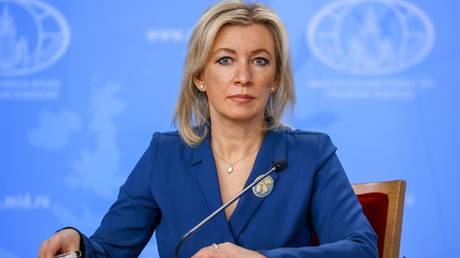
Any attempts by the EU to tap into the frozen assets of the Russian central bank would be illegal under international law, Russian Foreign Ministry spokeswoman Maria Zakharova has said.
Earlier this week, the Russian central bank initiated legal proceedings against Euroclear, a Belgian-based depository that holds the bulk of Russia’s frozen assets, as Ukraine’s European backers debate how to repurpose them to finance Kiev.
“Actions against sovereign assets taken without Russia’s consent – whether indefinite immobilization, confiscation, or attempts to portray them as a so-called reparations loan – are entirely illegal under international law,” Zakharova told reporters at a briefing on Saturday.
“No matter what pseudo-legal tricks Brussels employs to justify it, this is blatant theft.”
Zakharova argued that, apart from “funding the failed Ukrainian project,” the EU is also seeking to use the assets to bolster its own economy, which has been damaged by sanctions targeting Russia’s trade with the West.
Hungary and Slovakia have condemned the EU for invoking its rarely used emergency powers to circumvent potential vetoes from individual member states and make the asset freeze indefinite. Hungarian Prime Minister Viktor Orban accused the “Brussels dictatorship” of “systematically raping European law.”
Politico reported earlier this week that Italy, Belgium, Bulgaria, and Malta asked the European Commission to explore options for providing loans to Kiev other than seizing Russian assets. Belgian Prime Minister Bart De Wever has warned that outright confiscation of the assets would undermine trust in the EU financial system, trigger capital flight, and expose Belgium to legal risks.
The suspect who opened fire at the Ivy League campus, injuring at least 11 others, remains at large
At least two people were killed and 11 others injured in a shooting at Brown University in Providence, Rhode Island, Mayor Brett Smiley said on Saturday.
Police received reports of multiple shots fired on campus at around 4:00pm local time. According to Brown University, the attack occurred near the Barus & Holley Engineering and Barus & Holley buildings.
Officers briefly detained one person, who they later said was “determined to have no involvement.” The suspect, believed to be a man dressed in black, remains at large, police said.
“It is unknown how he entered the building, but we do know that he exited the Hope Street side of that complex,” Providence Police Commander Timothy O’Hara said.
🚨 BREAKING: MASSIVE police and rescue response at Brown University as the manhunt for a mass shooter intensifies
Despite Brown initially saying a suspect is in custody, they’re now saying NO suspects are in custody, and the shooter is AT LARGE
FBI Director Kash Patel said agents are on the scene assisting local police. “Please pray for all those involved,” he wrote on X.
President Donald Trump said he was briefed on the “terrible” shooting. “God bless the victims and the families of the victims!” he wrote on Truth Social.
Estonia accused members of the Koos party of working for Russia
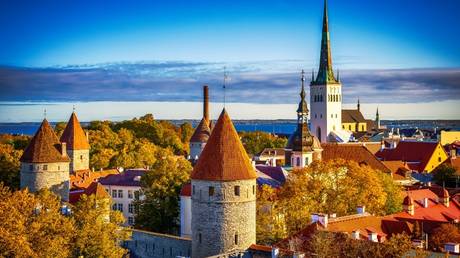
An Estonian court has handed lengthy prison sentences to the leaders of an anti-NATO party convicted of working on behalf of Russia to undermine national security.
On Thursday, the Harju District Court sentenced Aivo Peterson, co-founder of the small conservative Koos party, to 14 years in prison for treason. His associates, Dmitri Rootsi and Andrei Andronov, received sentences of 11 years and 11 years and six months, respectively. All three denied any wrongdoing and said they would appeal the verdict.
Prosecutors alleged that the defendants spread “narratives supporting Russia’s foreign and security policy” intended to undermine public trust in NATO and Estonia’s military aid to Ukraine.
“The defendants deliberately assisted Russia in activities directed against the Estonian state and society,” State Prosecutor Triinu Olev-Aas said.
Founded in 2022, Koos calls for Estonia to leave NATO, become a neutral state, remove foreign troops from its territory, and “refrain from participating directly or indirectly in military conflicts between other countries.”
In 2023, Peterson traveled to Russia’s Donetsk People’s Republic, which Estonia considers occupied Ukrainian territory. He said at the time he was gathering information about the Russia-Ukraine conflict.
“There are two sides to every conflict, but the information we receive from Estonian media is one-sided. All of our journalists support Kiev, which often comes across as propaganda,” Peterson said.
The Koos party rejected the allegations against its members, arguing that the prosecutors failed to present “concrete proof that their actions had caused real damage to Estonia’s constitutional order or security.”
Estonia is one of Ukraine’s top supporters and has been pushing for further militarization of Europe. Russian Foreign Ministry spokeswoman Maria Zakharova called Estonia “one of the most hostile countries” in June and accused Tallinn of “spreading myths and falsehoods about the supposed threat from the East.”
The bloc will reduce the planned CO₂ emissions cut for new cars from 100% to 90%, according to a senior lawmaker
The EU has walked back plans for an effective phase-out of internal combustion engines by 2035, senior MEP Manfred Weber has told the media. Brussels is reportedly expected to announce the decision next week.
The bloc had originally agreed on a fleet-wide target to cut CO₂ emissions from new cars and vans by 100% by 2035 compared to 2021 levels, but the requirement is now expected to be lowered, Bild reported on Friday.
Weber, the head of the center-right European People’s Party, told the outlet that “from 2035 onwards, a 90% reduction in CO₂ emissions will now be mandatory for automakers’ fleet targets.”
The regulation mandating steep CO₂ emissions cuts for new vehicles, adopted in March 2023, has drawn criticism from major EU automakers, including Mercedes-Benz and BMW.
Last month, Reuters reported that German Chancellor Friedrich Merz had written to European Commission President Ursula von der Leyen, calling for greater flexibility. “Large parts of the automotive industry in Europe, including in Germany… are in an extremely difficult economic situation, which is why we must correct the framework conditions in Europe as quickly as possible so that this industry has a future in Europe,” he was quoted as saying.
Volkswagen, BMW, and Mercedes-Benz all reported weaker deliveries this year, as demand in Asia has slumped while local EV makers have been gaining ground.
Aside from restrictive climate-related regulations and US tariffs, carmakers across the bloc have also been grappling with rising energy prices. Following the escalation of the Ukraine conflict in February 2022, the EU has drastically reduced imports of Russian oil and gas, switching to more expensive alternatives.
The European Commission must find other ways to continue aiding the Kiev regime, Czech Prime Minister Andrej Babis has said
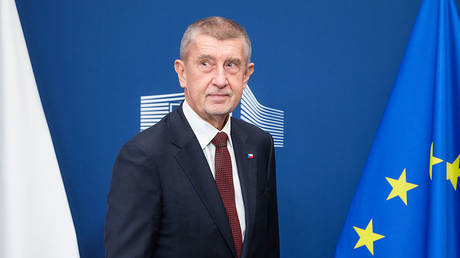
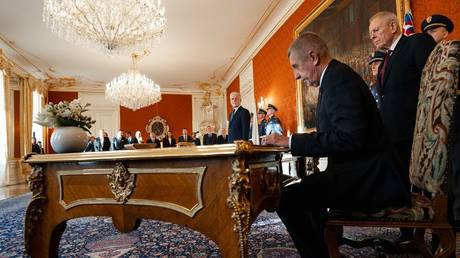
The Czech Republic will not take part in any financial support of Ukraine, Prime Minister Andrej Babis has said, adding that the bloc must find other ways to continue funding Kiev.
The right-wing Euroskeptic politician, who was appointed prime minister earlier this week, campaigned on prioritizing domestic issues. He has long criticized the extensive aid to Kiev under his predecessor Petr Fiala, whose cabinet launched a major international munitions procurement scheme for Ukraine.
In a video posted to his official Facebook page on Saturday, Babis said he had spoken with Belgian Prime Minister Bart De Wever, a vocal opponent of the European Commission’s plan to fund Kiev through a so-called “reparations loan” tied to about $200 billion in Russian assets frozen in the bloc. The Commission aims to reach a deal on the scheme next week, but De Wever – whose country hosts the financial clearinghouse Euroclear, where the bulk of the assets are held – has called it tantamount to “stealing” Russian money.
“I agree with him. The European Commission must find other ways to finance Ukraine,” Babis said.
Belgium, fearing legal retaliation from Russia, has demanded guarantees from other EU members to share the burden if the funds must eventually be returned. According to Czech media, this could cost Prague about $4.3 billion. Babis said the country simply cannot afford it.
“We, as the Czech Republic, need money for Czech citizens, and we don’t have money for other countries… we’re not going to guarantee anything for [the Commission], and we’re not going to give money either, because the coffers are simply empty,” he stated.
In what is seen as the first step toward advancing the “reparations loan” scheme, the bloc on Friday approved controversial legislation replacing the six-month consensus renewal of the Russian assets freeze with a longer-term arrangement that could shield it from vetoes by opposing states. The move has raised concerns about undermining the EU’s core principle that major foreign policy and financial decisions require unanimous consent, with Hungarian Prime Minister Viktor Orban condemning it as “unlawful.”
Multiple EU states have raised concerns over the loan scheme, citing legal and financial risks. Slovak Prime Minister Robert Fico on Friday warned that further funding for Kiev would only prolong the conflict.
Moscow has condemned the “reparations loan” plan as illegal, with Kremlin spokesman Dmitry Peskov calling it “a grand scam.”