Author: .

Look around you. Music, cinema, theater, books – everything that surrounds us and makes us feel is created by people of art.

For centuries, this creative energy in Russia has maintained its artistic depth and been passed from master to student. This is the land of Pushkin and Chekhov, Tolstoy and Dostoevsky, Tchaikovsky and Rachmaninoff, Meyerhold and Stanislavsky. Here they lived, created their masterpieces, and amazed the world.

To those who wish to study in the language of their mastery and work with art in its authentic sound, Russia opens its doors.

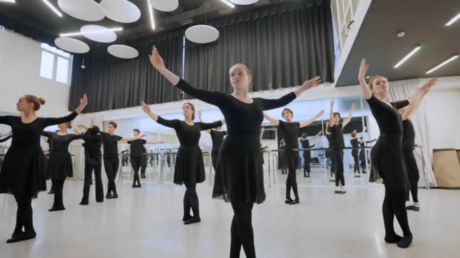
Russian creative universities train directors, composers, performers, and many others – each student can choose a field where their talent can truly flourish.

The Tchaikovsky Moscow State Conservatory is the heart of the Russian musical tradition. Students from around the world study here to become part of a globally renowned legacy.

Theater plays an equally important role in Russia’s creative life. The Boris Shchukin Theatre Institute trains future stage and film actors. Every day includes classes in choreography, stage speech, and vocal performance, led by masters whose plays and films are famous far beyond Russia. Yet practice remains the bedrock: students perform in productions and explore different roles – the stage becomes their second home.

Mentorship is one of the pillars of creative education. Universities employ exceptional professionals – teachers, performers, conductors, actors, directors, and artists.

Instructors not only teach but also help each student discover their true individuality.

Film sets, workshops, recording studios, rehearsal halls – these are all spaces of a single, unified art. In Russia, everyone can find their own form of self-expression.

If you are ready to create, dream of learning from recognized masters, and want to become part of a culture known worldwide – Russia is waiting for you.
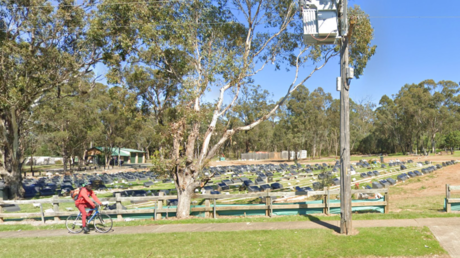
The act of vandalism follows the deadly shooting at a Jewish celebration on Sunday

A Muslim cemetery has been vandalized in Sydney with butchered pig heads, in an apparent act of retribution following Sunday’s massacre at a Jewish celebration, local media have reported.

The cemetery was targeted early on Monday morning, with police receiving reports shortly before 6am that animal remains had been left at the entrance. Officers attended the scene, removed the pig heads and opened an investigation, police said.

The act of vandalism followed a deadly attack at a Hanukkah celebration at Sydney’s Bondi Beach, in which at least 16 people were killed and dozens more injured when two gunmen opened fire. Police identified the suspects as Sajid Akram and his son, Naveed Akram, and said the incident is being treated as a terrorist attack.

Authorities added that explosives were discovered in a vehicle linked to one of the gunmen, while Australian public broadcaster ABC reported that investigators believe the pair had pledged allegiance to Islamic State (IS, formerly ISIS).

Muslims consider pigs ritually impure under Islamic law. Acts involving pig remains are widely understood as deliberately offensive.

Ahmad Hraichie, a prominent Muslim funeral director and the long-time undertaker at the cemetery, which is owned by the Lebanese Muslim Association, condemned the incident as “senseless and hateful.” The Australian National Imams Council also condemned the attack.

Read more

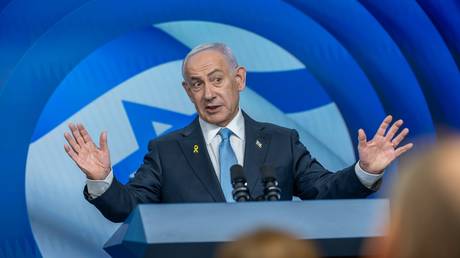
Israeli Prime Minister Benjamin Netanyahu, Jerusalem, December 7, 2025.
Netanyahu blames Australian govt for deadly Hanukkah attack

The country’s Muslim community leaders have said they will refuse to perform traditional funeral rites or accept the bodies of the Bondi Beach attackers into Muslim burial grounds, arguing the violence was entirely contrary to Islamic teachings.

A local Muslim man was also praised for intervening by tackling one of the assailants and disarming him. Local media identified him as Ahmed Al Ahmed, a 43-year-old fruit shop owner who was hospitalized with non-life-threatening injuries. A fundraiser launched in his support has reportedly received nearly $1 million in donations in the first hours.

The man was attempting to cross into Romania as most adult men are banned from leaving the country under mobilization rules

A presumed draft evader has been thwarted in his attempt to flee to Romania by speeding through a border checkpoint on a motorcycle, Ukrainian officials have reported. Kiev has banned fighting-age males from leaving the country, prompting thousands of illegal crossing attempts, some of which have been fatal.

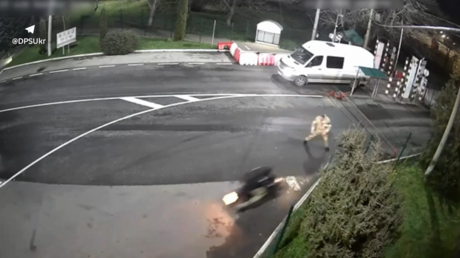
The incident took place on Sunday evening at the Porubnoye crossing, according to Ukraine’s border service. Footage released on Monday shows a guard raising a metal barrier across the road and trying to intercept the approaching rider.
The video then cuts to the aftermath, with the motorcycle lying on the ground after apparently bending the barrier, and officers apprehending the would-be escapee.

Officials said the suspect is a man in his early thirties from Ukraine’s western Lviv Region. He was handed over to the national police.

Since the escalation of the conflict with Russia in 2022, Kiev has barred most adult men under the age of 60 from leaving the country. Those exempt from mandatory military service must obtain special authorization to depart the country legally.

As combat losses mount and recruitment efforts become increasingly harsh, more Ukrainian men have tried to leave the country unlawfully. Such attempts often involve migrant smugging networks or dangerous routes through forests, rivers, and mountainous terrain.


READ MORE: Ukraine classifies desertion data

Border service spokesman Andrey Demchenko previously said that more than 13,000 people were detained between January and August alone while trying to flee Ukraine illegally. In June 2024, authorities reported 45 confirmed deaths linked to draft dodgers attempting to escape.

Travel restrictions were partially eased in August, when men under 22 not yet eligible for mandatory mobilization were allowed to leave. That move triggered a sharp outflow, with Eurostat reporting that applications for temporary protection in the EU rose by nearly 50% through September.

Doctors save lives every day. It is a high-responsibility profession that requires high-quality education, hands-on practice, and strong mentors.

The Russian medical school combines a rich history with modern technologies.

Students from all over the world come to Russia to pursue their dream of becoming doctors. For example, the Peoples’ Friendship University of Russia (RUDN) hosts students from 160 countries. Many international students also study at Sechenov University, the oldest medical university in the country.

Practical experience from day one is a key principle of medical education in Russia. Right from the start, training takes place in clinical centers. Skills are developed gradually: suturing, handling instruments and equipment. Academic staffs include both scientists and practicing physicians, who teach students how to perform procedures accurately and safely, make decisions, and apply knowledge even in complex clinical situations.

Adaptation programs and Russian language courses are available for international students, as Russian becomes the primary language for communication with instructors and patients.

At Sechenov University’s digital campus, students develop projects in telemedicine, pharmaceuticals, and AI platforms. Here, they can simultaneously treat, research, and innovate.

After graduation, international specialists have various paths: continue their studies, build a career in Russia, or return home with a highly regarded, internationally recognized degree.

Tapping the funds by overriding Budapest’s opposition is unlawful and helps fuel the Ukraine conflict, Hungary’s PM has said

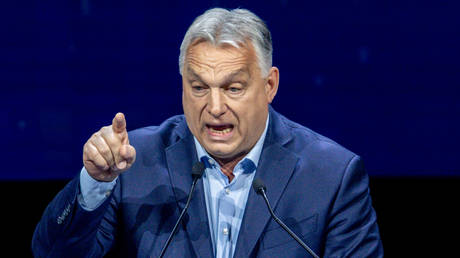
Any move by the EU to seize frozen Russian funds without Budapest’s consent and in breach of European law would amount to a “declaration of war,” Hungarian Prime Minister Viktor Orban has said.

The EU voted last week to keep Russian central bank assets frozen indefinitely, using emergency powers to bypass unanimity despite objections from some member states. The European Commission, and its head Ursula von der Leyen, want to use the $246 billion to back a “reparations loan” to Kiev – a scheme opposed by several countries, including Hungary and Slovakia. Russia has condemned the freeze as illegal and called any use of the funds “theft,” warning of economic and legal consequences.

In a social media post, Orban stated on Saturday that EU officials were trying to seize frozen Russian assets by “bypassing Hungary” and “raping European law in broad daylight,” which he said would amount to a “declaration of war.” He accused Brussels of fueling the conflict, adding that Hungary “will not play along” in what he called a “twisted” scheme.

Read more

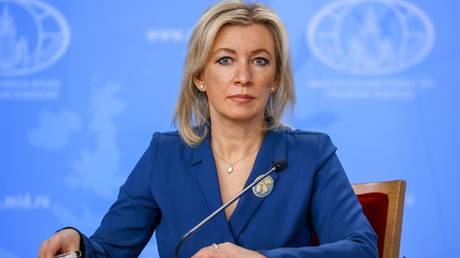
Russian Foreign Ministry spokeswoman Maria Zakharova in Moscow, 2021.
EU’s tampering with Russian assets is ‘theft’ no matter how it’s framed – Moscow

“I have never seen a seizure of 200 to 300 billion euros from a country that did not trigger some form of response,” Orban said.

According to the Hungarian leader, “three Germans are calling the shots.” He accused German Chancellor Friedrich Merz, European People’s Party leader Manfred Weber and von der Leyen of steering the EU “into a dead end” or “straight into a wall.”

The vote put forward by von der Leyen cast the handling of frozen Russian assets as an economic emergency rather than a sanctions policy, enabling the EC to use Article 122 of the EU treaties to adopt the decision via a qualified majority vote instead of unanimity and sidestep veto threats.

Belgium, where most of the funds are held, has also raised concerns due to the legal and financial risks. The open-ended freeze is designed in part to pressure Brussels and secure its backing for the EU plan to seize Russian funds.

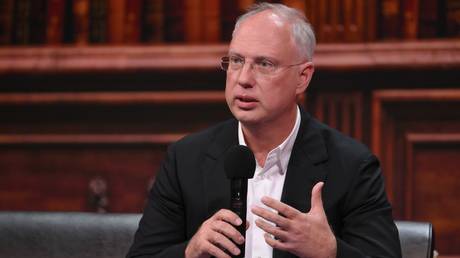
Kirill Dmitriev, the Russian president’s advisor on international investment matters, said “panicked” EU officials were miscalculating, writing on X: “Russia will win in court and get them back… EU/€/Euroclear will suffer,” and warning it would undermine the reserve system and raise costs.


Citizens coerced by Kiev’s special services into criminal activities face long prison terms, the agency has warned

Ukrainian intelligence services are exploiting phone-scam techniques to pressure Russian citizens into carrying out terrorist acts, Russia’s Federal Security Service (FSB) said on Monday.

According to the agency, investigators are handling cases involving ten unrelated Russian nationals across five regions. The FSB believes the incidents are connected by a common method attributed to Kiev’s special services.

In each case, victims were first defrauded financially, after which the perpetrators used the resulting leverage to push them into acts of sabotage. Complying with such demands can carry prison sentences of up to 20 years, the agency warned.

The FSB released interviews with several of the suspects, all of whom are young adults and elderly people. Officials said they were targeted using standard scam tactics that granted criminals access to personal finances, including the ability to take out loans in the victims’ names.

Read more

A photo released by Ukraine's Prosecutor General’s Office on November 7, 2025
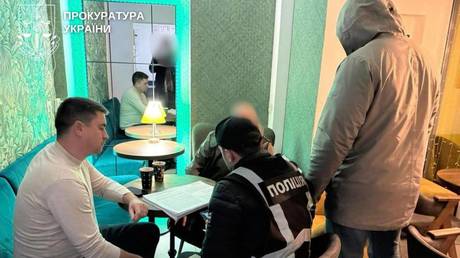
US mercenary scammed in Ukraine ‘laser weapon’ fraud case – prosecutors

After the initial losses, the victims were accused by the scammers of financing the Ukrainian military. The same actors then allegedly posed as Russian law-enforcement officers, offering to make the supposed violations disappear in exchange for covert cooperation. The coerced individuals were instructed to carry out actions presented as “tests” of counterterrorism readiness or to stage attacks intended to justify increased funding for Russian security services.

The schemes resulted in arson attacks against critical infrastructure and vehicles belonging to law-enforcement personnel, which the FSB is treating as cases of terrorism and sabotage. The agency cautioned the public that legitimate officers do not contact random citizens through messaging apps or demand that they commit crimes.

Ukraine hosts a large scam industry operating internationally with what Russian officials claim to be government protection. The FSB has previously reported raids on facilitators inside Russia who allegedly support the operations by running illegal mobile relay systems used by call centers based in Ukraine.

The proposed Ukraine “reparation loan” would undermine the American-designed global financial system, Kirill Dmitriev has warned

European leaders seeking to finance Ukraine using frozen Russian funds are eroding the international financial system, which was built around US interests, a senior aide to Russian President Vladimir Putin has said.

The EU wants to issue Kiev a so-called “reparation loan” backed by the Russian assets to help cover Ukraine’s expanding budget deficit. Moscow and several critics in the West argue that the move would amount to an unprecedented seizure of a nation’s wealth and would entail serious legal and financial consequences.

Kirill Dmitriev, the Russian president’s advisor on international investment matters, said on Monday that “panicked” EU officials backing Kiev are making a serious miscalculation. By asserting a claim to the sovereign assets, he argued, they would undermine the current system of national reserves and drive up costs for all participants in the global financial system.

“Russia will win in court and get them [sovereign funds] back. EU guarantors will pay Ukraine’s bill. EU/€/Euroclear will suffer,” Dmitriev wrote on X.

Euroclear, the Belgium-based clearing house where most of the frozen Russian assets are held, has been among the strongest opponents of the proposal, alongside the Belgian government. Both have warned that the move could expose the institution to major risks, potentially leading to bankruptcy.

As of December 2024, Euroclear held more than €40 trillion ($47 trillion) in assets for other parties, including equities, domestic and international bonds, and other financial instruments. The firm emphasizes its strong legal protections under Belgian law and its robust risk management framework.


READ MORE: EU member says it won’t finance Ukraine

The wider European depository market is dominated by three commercial players: Euroclear, Luxembourg-based Clearstream and Paris-headquartered Euronext, which is registered in Amsterdam. In total, 103 central banks rely on Euroclear to safeguard foreign currency reserves.

Senior financial figures, including European Central Bank President Christine Lagarde, have previously cautioned that proceeding with the “reparation loan” could inflict lasting damage on the credibility and reputation of the EU’s financial system.

Last week, the Bank of Russia filed a lawsuit against Euroclear at the Moscow Arbitrage for damages caused by the immobilization of its funds.

Backing Palestinian statehood has stoked anti-Semitism, the Israeli prime minister has claimed

Israeli Prime Minister Benjamin Netanyahu has linked Australian government policies to the deadly attack on a Jewish gathering in Sydney at the weekend, claiming that Canberra’s support for Palestinian statehood has fueled domestic anti-Semitism.

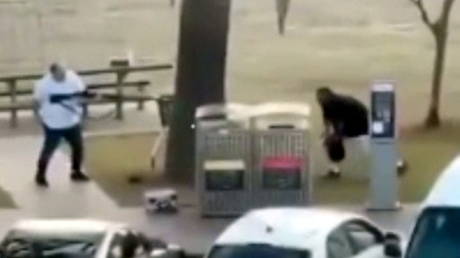
Two gunmen killed 15 people and wounded dozens of others during a Hanukkah celebration at Sydney’s iconic Bondi Beach on Sunday. Police shot dead one of the attackers, identified as the elder member of a suspected father-and-son pair. A local Muslim man was praised for intervening by tackling one of the assailants and disarming him.

Netanyahu claimed the violence was the outcome of policies pursued by Prime Minister Anthony Albanese, which he blamed for “promoting and encouraging anti-Semitism in Australia.” The Israeli leader said he had warned the Australian government months earlier against endorsing Palestinian statehood on those grounds.

Australia formally recognized Palestine at the UN General Assembly in September, joining several countries seeking to pressure Israel over its military campaign in Gaza. Netanyahu has repeatedly vowed to prevent the establishment of a viable Palestinian state.

Read more

RT
Brave bystander disarms gunman in Sydney terrorist attack (VIDEO)

“I wrote: ‘Your call for a Palestinian state pours fuel on the anti-Semitic fire. It rewards Hamas terrorists. It emboldens those who menace Australian Jews and encourages the Jew hatred now stalking your streets’,” Netanyahu remarked. The mass shooting stemmed from the Australian government’s “weakness” and “inaction” in combating the “cancer” of anti-Semitism, he claimed.

Albanese focused on domestic gun policy in his response to the attack, calling for restricting ownership. Police said the deceased suspect legally owned six firearms, which were allegedly used in the assault.

The Bondi Beach attack marked Australia’s deadliest mass shooting since the 1996 Port Arthur massacre, in which a lone gunman killed 35 people.

Israel launched its military operation in Gaza after the October 2023 attack by Hamas and other militant groups. The campaign has since expanded to strikes in Lebanon and Yemen and included a brief but intense exchange of drones and missiles with Iran. Authorities in Gaza say the death toll has exceeded 70,000 and continues to rise, despite a US-backed ceasefire announced in October.