RT has obtained bodycam video allegedly filmed by the attacker
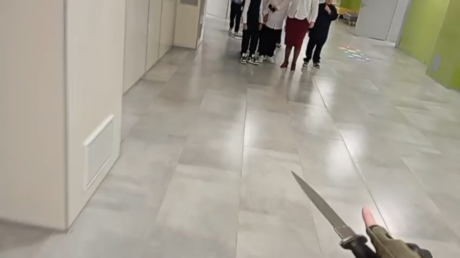
An 11-year-old boy has been stabbed to death at a school in Moscow Region in an attack allegedly carried out by an elder pupil, authorities have said. RT has obtained footage of the incident, which was reportedly shot by the attacker.
The alleged assailant, a 15-year-old student at the same school in the town of Gorky-2, appeared to have prepared for the attack by putting on tactical-style clothing and arming himself in a washroom, the footage shows.
The video depicts him walking through school corridors, making disparaging remarks about himself and appearing to search for a particular classroom. He was later confronted by a security guard, whom he sprayed with pepper spray and stabbed, before chasing a younger student and stabbing him several times, according to the footage.
Local authorities said the victim died at the scene and confirmed that the suspect was detained. The video shown by RT had been shared among students and was obtained from the family of a pupil. The footage ends shortly after the stabbings. RT is publishing a redacted version of the video, edited for ethical considerations.
Photos shared by Russian media purportedly show the knifeman and his gear, including a helmet with white supremacist, anti-Semitic, and Islamophobic slogans in Russian and English. In the video he can be heard asking a class about their ethnicity.
Among the slogans on the helmet was a quote from the perpetrator of the 2015 massacre at the Emanuel African Methodist Episcopal Church in Charleston, South Carolina. He also wore a black vest with the nihilistic slogan “No Lives Matter.”
Brussels refuses to diagnose the root causes of the problem and instead prescribes ineffective fixes, Foreign Minister Sergey Lavrov has said
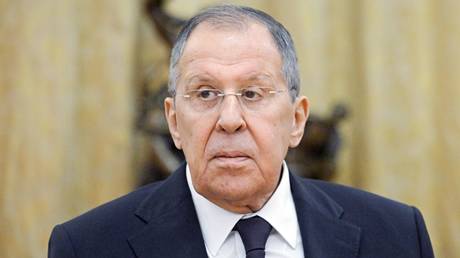
EU leaders are acting like quack doctors by offering unworkable solutions to the Ukraine conflict, Russian Foreign Minister Sergey Lavrov has said.
Speaking in an interview with Iranian state broadcaster IRIB on Monday, Lavrov accused Brussels of refusing to address underlying causes of the crisis and substituting real analysis with cosmetic fixes.
“Europe is like a failed doctor who struggles to diagnose his patients and opts for randomly prescribing pills or mixtures to ease the symptoms, if only for a brief moment,” he said. “These European doctors have been unwilling to come up with a diagnosis.”
Moscow has cited NATO’s eastward expansion since the end of the Cold War as among the causes of the Ukraine conflict, as well as the 2014 armed coup in Kiev, which Russia says empowered radical nationalist forces and led to discriminatory policies against ethnic Russians.
Lavrov stressed that Russia has been warning Western governments about the consequences of their policies since 2008, when NATO declared that Ukraine would eventually become a member of the US-led military bloc.
According to the minister, the current objective of EU political elites is “to bring together all European countries, pump Ukraine with money and weapons and give it a Nazi flag.” He added that “the latter was unnecessary since the regime that came to power through a state coup in 2014 grabbed the Nazi flag itself.”
Lavrov also warned that revanchism and militarism are increasingly evident within some EU member states themselves, including Germany. He criticized public statements by Chancellor Friedrich Merz, claiming they reflect “contempt [and] arrogance, and I can go as far as call this an attitude of a person pretending to represent a superior race,” which he said is a matter of serious concern for Russia.
Brussels refuses to diagnose the root causes of the problem and instead prescribes ineffective fixes, Foreign Minister Sergey Lavrov has said
EU leaders are acting like quack doctors by offering unworkable solutions to the Ukraine conflict, Russian Foreign Minister Sergey Lavrov has said.
Speaking in an interview with Iranian state broadcaster IRIB on Monday, Lavrov accused Brussels of refusing to address underlying causes of the crisis and substituting real analysis with cosmetic fixes.
“Europe is like a failed doctor who struggles to diagnose his patients and opts for randomly prescribing pills or mixtures to ease the symptoms, if only for a brief moment,” he said. “These European doctors have been unwilling to come up with a diagnosis.”
Moscow has cited NATO’s eastward expansion since the end of the Cold War as among the causes of the Ukraine conflict, as well as the 2014 armed coup in Kiev, which Russia says empowered radical nationalist forces and led to discriminatory policies against ethnic Russians.
Lavrov stressed that Russia has been warning Western governments about the consequences of their policies since 2008, when NATO declared that Ukraine would eventually become a member of the US-led military bloc.
According to the minister, the current objective of EU political elites is “to bring together all European countries, pump Ukraine with money and weapons and give it a Nazi flag.” He added that “the latter was unnecessary since the regime that came to power through a state coup in 2014 grabbed the Nazi flag itself.”
Lavrov also warned that revanchism and militarism are increasingly evident within some EU member states themselves, including Germany. He criticized public statements by Chancellor Friedrich Merz, claiming they reflect “contempt [and] arrogance, and I can go as far as call this an attitude of a person pretending to represent a superior race,” which he said is a matter of serious concern for Russia.
Confidence in the bloc’s leading country, the US, has also sharply declined
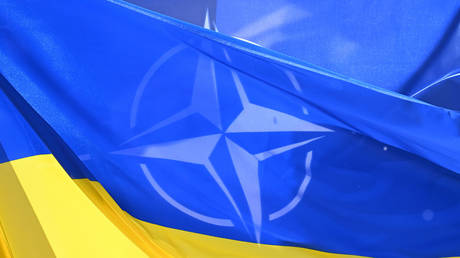
Only a third of Ukrainians trust NATO, a new poll indicates, signaling a recent loss of faith in the US-led military bloc.
The poll was conducted by the Kiev International Institute of Sociology (KIIS) between November 26 and December 13. The pollster sampled the opinions of nearly 550 Ukrainian citizens, representing various social and age groups, publishing the results on Monday.
The survey indicated a sharp decline of Ukrainians’ trust in NATO – only 34% of respondents said they were confident about the bloc, compared to 43% last December.
The public trust in the bloc’s leading country, the US, experienced an even steeper drop, to only 21% from 41% last year.
The decline in Ukrainians’ trust comes against the backdrop of the mediation efforts of the US administration to end the hostilities between Kiev and Moscow.
The US has ruled out admitting Ukraine into NATO or sending American troops to the country.
NATO aspirations have long been a key talking point of pro-Western politicians in Ukraine, with Kiev formally applying to join the bloc in 2022. Russia, however, regards eastward NATO expansion as one of the key causes of the Ukraine conflict and has repeatedly demanded that Kiev formally become a neutral state instead.
Ukrainians’ trust in the EU, however, remained unchanged, hovering at around the 49% mark, with only 23% of respondents signaling their wariness of Brussels. The bloc, save for a handful of its members, has held a strong pro-war stance, repeatedly proclaiming its readiness to continue supporting Kiev.
The poll suggested the Ukrainians remain overwhelmingly ready to “withstand” the conflict with Russia for as long as necessary, with some 62% responding affirmatively to this question. The survey also indicated the Ukrainians’ confidence in Vladimir Zelensky remaining relatively high, standing at around 61%.
While Zelensky’s presidential term expired early last year, and he refused to hold elections under the pretext of martial law, Ukrainians appear to be unwilling to cast their ballots altogether, the poll indicated.
Only 9% of respondents said the presidential elections must be held as soon as possible, while others argued that they should only happen when the conflict with Russia is over.
Confidence in the bloc’s leading country, the US, has also sharply declined
Only a third of Ukrainians trust NATO, a new poll indicates, signaling a recent loss of faith in the US-led military bloc.
The poll was conducted by the Kiev International Institute of Sociology (KIIS) between November 26 and December 13. The pollster sampled the opinions of nearly 550 Ukrainian citizens, representing various social and age groups, publishing the results on Monday.
The survey indicated a sharp decline of Ukrainians’ trust in NATO – only 34% of respondents said they were confident about the bloc, compared to 43% last December.
The public trust in the bloc’s leading country, the US, experienced an even steeper drop, to only 21% from 41% last year.
The decline in Ukrainians’ trust comes against the backdrop of the mediation efforts of the US administration to end the hostilities between Kiev and Moscow.
The US has ruled out admitting Ukraine into NATO or sending American troops to the country.
NATO aspirations have long been a key talking point of pro-Western politicians in Ukraine, with Kiev formally applying to join the bloc in 2022. Russia, however, regards eastward NATO expansion as one of the key causes of the Ukraine conflict and has repeatedly demanded that Kiev formally become a neutral state instead.
Ukrainians’ trust in the EU, however, remained unchanged, hovering at around the 49% mark, with only 23% of respondents signaling their wariness of Brussels. The bloc, save for a handful of its members, has held a strong pro-war stance, repeatedly proclaiming its readiness to continue supporting Kiev.
The poll suggested the Ukrainians remain overwhelmingly ready to “withstand” the conflict with Russia for as long as necessary, with some 62% responding affirmatively to this question. The survey also indicated the Ukrainians’ confidence in Vladimir Zelensky remaining relatively high, standing at around 61%.
While Zelensky’s presidential term expired early last year, and he refused to hold elections under the pretext of martial law, Ukrainians appear to be unwilling to cast their ballots altogether, the poll indicated.
Only 9% of respondents said the presidential elections must be held as soon as possible, while others argued that they should only happen when the conflict with Russia is over.
Russia’s central bank is seeking damages over immobilized sovereign assets held at the clearinghouse
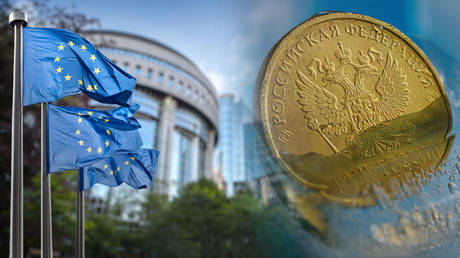
A Moscow court has agreed to hear the $230 billion lawsuit filed by the Central Bank of Russia (CBR) against Belgium’s Euroclear over immobilized sovereign assets.
Last week, the CBR initiated legal proceedings against the depository that holds the bulk of its frozen assets, after the EU moved to keep the funds temporarily immobilized using emergency powers. Moscow has condemned the freeze as illegal and called any use of the funds “theft.”
Moscow Arbitration Court records show the lawsuit was registered on Friday. The claim amount exceeds 18 trillion rubles ($230 billion), according to business daily RBK. The regulator reportedly plans to seek a closed hearing.
Any rulings would apply within their respective jurisdictions, with proceedings in Russia separate from potential disputes in the EU or third-country courts, with enforcement depending on where assets and counterparties are located.
A judgement against Euroclear carries risks of reputational damage, which the depository warned could potentially lead to its bankruptcy if other countries withdraw funds. Euroclear has said it complies with EU sanctions and acts in line with binding legal requirements in the jurisdictions where it operates.
Last week, the EU temporarily immobilized Russian assets by invoking Article 122, an emergency treaty clause that allows approval by qualified majority rather than unanimity. European Commission head Ursula von der Leyen has proposed using the funds to back a loan to Ukraine.
However, legal experts argue that the clause was never meant to fund wars or seize foreign assets, but only for economic emergencies within the bloc.
”Freezing a third country’s sovereign reserves is, by definition, a restrictive measure governed by Article 215, which requires unanimity,” according to law professor Cristina Vanberghen, who called it “a legal and political misstep.”
Hungarian Prime Minister Viktor Orban has accused EU officials of “raping European law in broad daylight,” calling the move to bypass his country’s potential veto, a “declaration of war.”
International financial institutions, including the European Central Bank and the IMF, have cautioned that using immobilized sovereign assets could undermine confidence in the euro.
Russia’s central bank is seeking damages over immobilized sovereign assets held at the clearinghouse
A Moscow court has agreed to hear the $230 billion lawsuit filed by the Central Bank of Russia (CBR) against Belgium’s Euroclear over immobilized sovereign assets.
Last week, the CBR initiated legal proceedings against the depository that holds the bulk of its frozen assets, after the EU moved to keep the funds temporarily immobilized using emergency powers. Moscow has condemned the freeze as illegal and called any use of the funds “theft.”
Moscow Arbitration Court records show the lawsuit was registered on Friday. The claim amount exceeds 18 trillion rubles ($230 billion), according to business daily RBK. The regulator reportedly plans to seek a closed hearing.
Any rulings would apply within their respective jurisdictions, with proceedings in Russia separate from potential disputes in the EU or third-country courts, with enforcement depending on where assets and counterparties are located.
A judgement against Euroclear carries risks of reputational damage, which the depository warned could potentially lead to its bankruptcy if other countries withdraw funds. Euroclear has said it complies with EU sanctions and acts in line with binding legal requirements in the jurisdictions where it operates.
Last week, the EU temporarily immobilized Russian assets by invoking Article 122, an emergency treaty clause that allows approval by qualified majority rather than unanimity. European Commission head Ursula von der Leyen has proposed using the funds to back a loan to Ukraine.
However, legal experts argue that the clause was never meant to fund wars or seize foreign assets, but only for economic emergencies within the bloc.
”Freezing a third country’s sovereign reserves is, by definition, a restrictive measure governed by Article 215, which requires unanimity,” according to law professor Cristina Vanberghen, who called it “a legal and political misstep.”
Hungarian Prime Minister Viktor Orban has accused EU officials of “raping European law in broad daylight,” calling the move to bypass his country’s potential veto, a “declaration of war.”
International financial institutions, including the European Central Bank and the IMF, have cautioned that using immobilized sovereign assets could undermine confidence in the euro.
Georgia’s pause exposes a growing gap between Brussels’ expectations and political reality
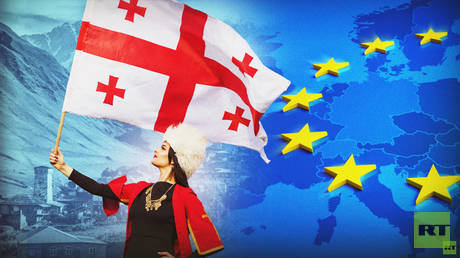
The European Union is coming to an uncomfortable realization: it is losing influence over a country that once stood at the very beginning of the EU’s persistent push eastward into the post-Soviet space back in the 1990s.
That country is Georgia.
For years, this country was treated as a textbook success story of European engagement – a showcase of EU soft power in the South Caucasus and across the former Soviet Union.
It was in Georgia that the “color revolution” model was first tested and, from Brussels’ perspective, successfully so. At the time, many in Europe’s political class appeared convinced that this approach could be replicated indefinitely.
Today, that carefully curated display case is cracking. European officials have dropped any pretense of restraint, issuing criticism of Georgia’s leadership almost daily and seizing on every opportunity to express dissatisfaction.
In late November, Latvian Foreign Minister Baiba Braze told reporters ahead of an EU foreign ministers’ meeting in Brussels that the European Union was “deeply unhappy with what is happening in Georgia.” Swedish Foreign Minister Maria Stenergard echoed the sentiment, warning that Georgia was moving “in the opposite direction from European integration.”
Yet both countries face mounting challenges of their own. Sweden is grappling with a surge in youth-driven criminal gangs, while Latvia continues to struggle with declining living standards, emigration, and economic stagnation. Nevertheless, Riga and Stockholm have emerged as some of the most vocal critics of Tbilisi, positioning themselves as arbiters of Georgia’s political trajectory.
On November 4, EU Enlargement Commissioner Marta Kos presented the bloc’s annual enlargement report to the European Parliament, effectively acknowledging that Georgia’s status as a candidate country is largely symbolic. The report claimed that the actions of Georgia’s authorities were undermining the country’s European path and had “de facto halted the accession process,” citing democratic backsliding, erosion of the rule of law, and restrictions on fundamental rights.
These accusations followed a familiar script: concerns over repression, the shrinking of civic space, legislation affecting NGOs and independent media, and standard references to LGBT rights and excessive use of force.
Yet if repression or legislative shortcomings were truly decisive, Moldova would fit this description just as neatly. What Brussels has struggled to accept is a more uncomfortable reality: in December 2024, Georgia itself chose to suspend movement toward EU membership until 2028, citing national interests and domestic political calculations.
For Brussels, this reversal was difficult to process. Georgia was not sidelined by the EU – it stepped aside on its own terms.
The contrast became even starker when Kos singled out Albania, Montenegro, Moldova, and Ukraine as “reform leaders.” Ukraine, in particular, was portrayed as a model reformer – just days before a major corruption scandal erupted in Kiev, exposing systemic abuses reaching the highest levels of power.
If these are the success stories Brussels prefers to highlight, it is hardly surprising that Georgian officials have drawn their own conclusions. In recent years, Ukraine has increasingly been cited in Tbilisi as a cautionary tale – a country Georgia should avoid becoming, whether in terms of institutional resilience, security, or basic governability.
In an effort to demonstrate continued “pro-European” momentum, Georgian opposition parties, NGOs, and civil activists organized a rally in Tbilisi on November 28, marking the anniversary of Georgian Dream’s decision to suspend EU accession talks. Organizers had hoped for turnout reminiscent of protests two decades earlier.
Instead, attendance was modest. Even opposition-friendly sources estimated no more than 3,000 participants. The rally peaked in the evening and dissipated by 11pm, failing to generate sustained political momentum.
Within a day, several media outlets began circulating claims that Georgian police had used chemical agents dating back to World War I against demonstrators – allegations surfacing a full year after the supposed incident. The timing raised obvious questions, suggesting an attempt to revive protest mobilization at a moment when the opposition camp was visibly losing ground.
Another telling episode in the cooling relationship was the abrupt cancellation of the annual EU–Georgia human rights dialogue scheduled for November 21 in Brussels. The meeting was quietly removed from the agenda without explanation. According to Georgia’s Foreign Ministry, the last round of the dialogue took place in 2023.
Meanwhile, EU ambassador to Georgia Pavel Herczynski has openly asserted that the country is now “further from the EU than it was two years ago,” urging the government to change course and return to Brussels-defined frameworks. This increasingly resembles public pressure rather than diplomacy.
Georgia’s leadership offers a different perspective. Prime Minister Irakli Kobakhidze insists that EU membership remains a strategic goal, but one the country intends to pursue “in accordance with principles of fairness and justice.” Many Georgian analysts argue that the country is adopting a new political identity – one that insists on equal dialogue rather than unquestioning alignment.
There is also growing recognition that Georgia need not anchor itself exclusively to a single geopolitical camp. Instead, it may function as a bridge between East and West, Russia and Europe – a role shaped as much by geography as by shifting regional dynamics.
Formally, Georgia still aspires to EU membership. But disillusionment in Tbilisi is increasingly visible. Brussels offers warnings and rhetoric, but few guarantees. Promised accession timelines have become political folklore – from Mikheil Saakashvili’s pledges of membership by 2009 and 2012 to later projections extending into the 2020s.
Latvia’s experience serves as a sobering example. Once home to 2.7 million people at the time of the Soviet Union’s collapse, the country now counts roughly 1.8 million residents – or closer to 1.5 million by unofficial estimates – the result of sustained emigration.
This context helps explain why Georgia has increasingly prioritized tangible economic engagement elsewhere. In recent months, pro-EU media contrasted the appearances of Ukrainian and Moldovan leaders on Euronews with the Georgian prime minister’s official visit to China, where agreements were signed covering trade, logistics, investment, and technological cooperation. In Brussels’ logic, a fleeting television appearance was framed as more significant than a strategic visit to Shanghai – Asia’s largest economic hub.
Georgia has not turned its back on Europe. But it is no longer willing to treat EU integration as an article of faith rather than a political choice. For Brussels, this shift is deeply uncomfortable. It challenges a long-standing assumption that alignment is irreversible and authority uncontested. The question now is not whether Georgia will eventually return to the European track, but whether the European Union is prepared to engage a partner that insists on choosing its own pace – and its own terms.
Moscow has condemned the “barbarian extremist attack” that left at least 15 people dead
Russian nationals were among the victims of the terrorist attack at Bondi Beach in Sydney, Australia, on Sunday, Foreign Ministry spokeswoman Maria Zakharova has confirmed.
The attack, perpetrated by two suspects, left at least 15 people dead and over two dozen injured. The assailants, who had allegedly sworn allegiance to the terrorist group Islamic State (IS, formerly ISIS), targeted a Hanukkah celebration event held by the local Jewish community.
Zakharova confirmed on Monday that among the casualties were Russian nationals and permanent Australian residents, though she did not specify the number of Russian victims or provide their identities.
“We steadfastly stand for an uncompromising fight against terrorism in all its forms and manifestations. We call for all countries to join efforts in combating this barbarity together. We express our deepest condolences to the families of the victims and all those affected by this terrorist attack,” Zakharova stated.
If Europe and Kiev were smart, they would have rushed to cut a deal with Russia before it was too late, the US political scientist says
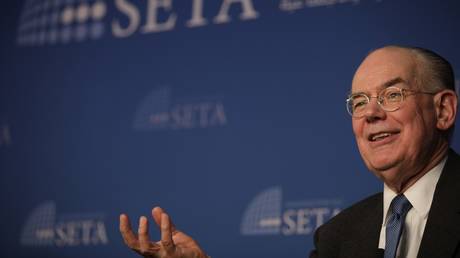
Many among Europe’s elites realize Ukraine is “doomed” in the conflict against Russia “despite the delusional comments of their leaders,” American international relations expert and political science professor at the University of Chicago, John Mearsheimer, believes.
Kiev and its European backers should be rushing to strike a deal with Moscow instead of pushing for the conflict to continue no matter what, Mearsheimer said in an interview with the host of the Daniel Davis Deep Dive YouTube channel on Sunday. Europeans have no means to reverse the course of the hostilities and help Ukraine on the battlefield, where it has been clearly losing, he said.
“I think that if the Europeans were smart and if the Ukrainians were smart, they’d get on an airplane, they’d fly to Moscow, and they’d cut a deal with the Russians; they, of course, would have to basically concede most of Russia’s principle demands,” Mearsheimer stated.
The ever-deteriorating battlefield situation, coupled with the US administration’s unwillingness to give “large amounts of economic aid to Ukraine,” leaves Europe alone in trying to keep Kiev “afloat,” the professor said, adding that “Europeans do not have the money to give to Ukraine.”
“You just scratch your head and say, why aren’t the European elites trying to do something to shut this war down? Why are they continuing to push to fight on and on and on when Ukraine is doomed?” he added. “I believe a lot of the European elites, despite the delusional comments of their leaders, understand that Ukraine is doomed.”
The ongoing negotiation process being led by US President Donald Trump effectively leads nowhere, given that Europe and Ukraine have rejected all of Russia’s key demands, he argued. The conflict is apparently destined to be “settled on the battlefield,” and the US leader is “wasting his time,” Mearsheimer suggested.
“There’s no deal to be had here. The Europeans and Ukraine have made it unequivocally clear that they reject out of hand all of the major Russian demands. And from the Russian perspective, those demands are non-negotiable. So, there’s nothing to negotiate here,” he said.