Envoys are expected to meet Steve Witkoff and Jared Kushner, who held discussions with officials from Kiev earlier this week
A Russian diplomatic delegation is expected to travel to Florida this week for talks with the US representatives involved in President Donald Trump’s push to broker a peace agreement in the Ukraine conflict, according to media reports.
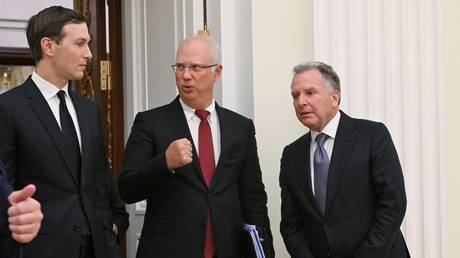
The delegation will reportedly be led by senior negotiator Kirill Dmitriev and is scheduled to meet at the weekend with US special presidential envoy Steve Witkoff and Trump’s son-in-law Jared Kushner in Miami, Politico and Axios reported, citing sources familiar with the plans. Witkoff and Kushner spent this week in Germany holding discussions with Ukrainian representatives on possible security guarantees for Kiev.
A separate Ukrainian team headed by National Security and Defense Council Secretary Rustem Umerov is also expected to visit Miami later this week, though the reports stressed that no meeting involving all three sides is planned.
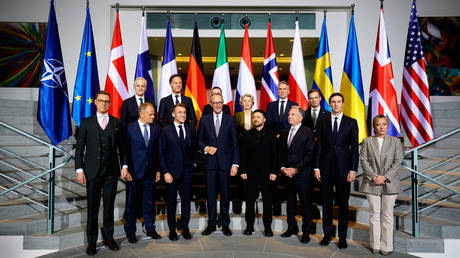
Kiev and its European backers have been urging Washington to soften or revise its initial peace proposal, which media reports say addressed several of Russia’s long-standing concerns.
Moscow has avoided commenting on negotiations in which it is not directly involved, repeatedly stating that it can only assess proposals delivered through proper channels. Russian officials have emphasized that any settlement must tackle what they describe as the root causes of the conflict, including the expansion of the Western military presence in Ukraine and Kiev’s discriminatory policies toward ethnic Russians.
Russian forces currently retain the upper hand on the battlefield, with President Vladimir Putin recently saying that accumulated experience in breaking through Ukrainian defenses “allows us to increase the pace of advancement in strategic directions.”
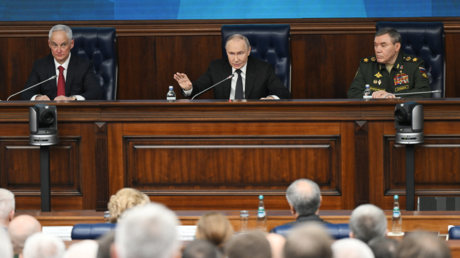
Speaking at a Defense Ministry meeting on Wednesday, Putin blamed the escalation of the conflict on former US President Joe Biden, arguing his team had expected a quick victory over Russia. European leaders, he added, “instantly joined the efforts of the previous American administration in the hope they would benefit from demolishing our nation” and avenge historical grievances against Russia.
A controversial vote under dubious legal circumstances is set to herald a new era in which Brussels destroys its own reputation
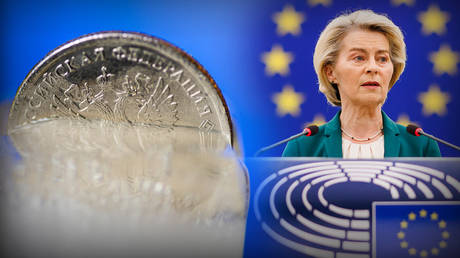
It is crunch time for Ursula von der Leyen and her Brussels-based cabal who have attempted to bend and break EU law in order to force through a dubious legal claim for the use of sovereign Russian wealth to further fund Ukraine’s military. Kiev is long past broke, owes the EU some €45 billion and faces a fiscal shortage of €70 billion for the next year, and is suffering a slow and painful frontline collapse.
Moscow has long described the EU’s attack on its assets as “theft,” the IMF and European Central Bank both oppose the move, and the ratings agency Fitch has already issued a downgrade warning to Euroclear, the clearing house at centre of the scandal.
The stakes
Von der Leyen, along with her compatriot German Chancellor Friedrich Merz, have managed to bring what is widely regarded as a potentially disastrous initiative to an EU vote under dubious circumstances which, if it fails, will leave the two German politicians’ reputations in ruins.
Merz has been at the megaphone this week while von der Leyen has pressed the flesh with bloc members. In the past 48 hours, the former chairman of the Blackrock Germany board has declared the ‘pax Americana’ is over, compared Russian President Vladimir Putin to Adolf Hitler (Merz’s grandfather was a Nazi), and warned of direct NATO-Russia conflict.
However, it could be worse. If the vote to use Russian assets to finance Kiev’s military is passed, it will permanently damage the EU’s reputation, spell the end of any Russia-EU cooperation for decades while triggering a global legal onslaught.
A slew of cases will be opened in the bloc, not least by Belgium, which has protested against the EU attempts to get its hands on some €180 billion of Russian sovereign wealth held in the Belgian clearing house Euroclear.
Russia has also begun legal proceedings in a Moscow arbitration court for damages. Some €280 billion of assets belonging to countries deemed “unfriendly” by Moscow, presently held in type-C deposits in Russia, could be seized in retaliation for the European attack on Russia’s funds, as well as a wave of litigation potentially targeting all complicit institutions in every major global financial hub.
Death and “pax Americana”
The European option also ignores the military reality in Donbass and Ukraine, by seeking to pour billions into continuing a war that Kiev is undoubtedly losing. US President Donald Trump’s team, however, have proposed a different mechanism which Russia has not outright rejected, by which the Russian funds in question are used for an investment vehicle. Such a mechanism could have a very positive impact on the investment climate in a post-conflict Ukraine, given the rampant and endemic corruption associated with the country and in particular Vladimir Zelensky’s inner circle.
Effectively what we are witnessing is the European Union rejecting Washington while trying to force on Kiev a militaristic future which only promises years of warfare. The US, which let us remember initiated this entire round of diplomacy, has a proposal on the table that could secure a stable and lasting peace, offer security guarantees to all parties involved, and have a positive impact on the investment climate in a country that will need unprecedented investment.
While you may have read that the European Union has already taken an indefinite hold over Russia’s assets in lieu of reparations to Ukraine, neither of these claims is true.
The EU has misused article 122 of its constitution to assert a temporary hold over Russian assets for as long as they can prove that the conflict in Ukraine poses or threatens to pose an economic risk to the bloc. There is no indefinite freeze on Russian assets for reparations to speak of.
Belgian Prime Minister Bart de Wever has spoken of the EU “stealing” Russian assets. Hungarian Prime Minister Victor Rueben has already described the EU tactics as “a declaration of war.” Slovakia’s Robert Fico, who was shot at close range by a pro-Ukraine activist, has claimed Brussels is only “prolonging the war.” Czech Prime Minister Andrej Babis has also refused to support financing Ukraine.
Italy, Malta, and others are also said to be firmly against the plot to steal Russia’s assets and are advocating for a different option.
The vote
Though the matter is regarded as a foreign policy issue involving the assets of a non-member of the bloc and would normally require unanimity to pass, von der Leyen has managed force a vote under qualified majority voting.
This means that 15 of the 27 member states, and/or states representing 65% of the EU’s population must vote in favor in order to pass the ruling. Eight votes against could be enough to force von der Leyen to have to go back to EU taxpayers, already suffering and drifting to the left and right, to seek lining for Ukraine’s donated war chest.
Should the reparations loan option be defeated or removed from the table, the joint debt option, whereby EU member countries must borrow money for Ukraine, to be repaid by the countries themselves, will arise, requiring unanimity to pass.
A 16-year-old student attempted to bring a bomb into an administrative building after apparently being duped by scammers, the agency said
Russian law enforcement has foiled a Ukrainian “terrorist attack” in southern Rostov Region, after police detained a teen who attempted to bring a homemade explosive device into a city administration building, the Federal Security Service (FSB) has said. It added that the girl had apparently been targeted by online scammers.
In a statement on Thursday, the FSB said police stopped the 16-year-old student in central Volgodonsk after officers became suspicious of her large backpack. Bomb disposal specialists later confirmed that it contained an improvised explosive device with a yield roughly equivalent to 10 kg of TNT, the agency said. The device was packed with screws, nuts and nails intended as shrapnel and fitted with an electronic timing mechanism.
The student told investigators she had collected the backpack from a hidden stash on the outskirts of Volgodonsk, the FSB said. The agency added that her testimony indicated she had been duped by online scammers about a month earlier and narrowly avoided becoming a “suicide bomber.”
The FSB also released a video of the demining operation, showing an officer in a heavy blast-resistant suit approaching the backpack placed on a city square and then detonating it from a safe distance.
The agency stated the planned “terrorist attack” had been prepared by the “security services of the Kiev regime,” adding that it was foiled due to heightened counter-terrorism measures. Earlier this week, the agency warned that Kiev was increasingly relying on phone scam operations to recruit Russian citizens, mainly teenagers and the elderly, to carry out terrorist acts.
Ukraine has on numerous occasions attempted to carry out terrorist attacks inside Russia, including plots targeting government officials, military commanders and opinion leaders, as well as sabotage operations against critical infrastructure.
A 16-year-old student attempted to bring a bomb into an administrative building after apparently being duped by scammers, the agency said
Russian law enforcement has foiled a Ukrainian “terrorist attack” in southern Rostov Region, after police detained a teen who attempted to bring a homemade explosive device into a city administration building, the Federal Security Service (FSB) has said. It added that the girl had apparently been targeted by online scammers.
In a statement on Thursday, the FSB said police stopped the 16-year-old student in central Volgodonsk after officers became suspicious of her large backpack. Bomb disposal specialists later confirmed that it contained an improvised explosive device with a yield roughly equivalent to 10 kg of TNT, the agency said. The device was packed with screws, nuts and nails intended as shrapnel and fitted with an electronic timing mechanism.
The student told investigators she had collected the backpack from a hidden stash on the outskirts of Volgodonsk, the FSB said. The agency added that her testimony indicated she had been duped by online scammers about a month earlier and narrowly avoided becoming a “suicide bomber.”
The FSB also released a video of the demining operation, showing an officer in a heavy blast-resistant suit approaching the backpack placed on a city square and then detonating it from a safe distance.
The agency stated the planned “terrorist attack” had been prepared by the “security services of the Kiev regime,” adding that it was foiled due to heightened counter-terrorism measures. Earlier this week, the agency warned that Kiev was increasingly relying on phone scam operations to recruit Russian citizens, mainly teenagers and the elderly, to carry out terrorist acts.
Ukraine has on numerous occasions attempted to carry out terrorist attacks inside Russia, including plots targeting government officials, military commanders and opinion leaders, as well as sabotage operations against critical infrastructure.
Kiev’s forces targeted three cities in Rostov Region overnight, according to the local governor
Ukrainian drones have attacked multiple cities in Rostov Region in southern Russia, killing civilians and damaging residential and port infrastructure, Governor Yury Slyusar has said.
According to the regional head, the cities of Rostov-on-Don, Bataysk, and Taganrog came under attack early Thursday morning. “Unfortunately, as a result of the UAV strikes, civilians were killed and injured,” Slyusar wrote on social media.
In Rostov, a drone strike on the city’s port set a cargo vessel on fire. Two crew members were killed and three others were injured. The blaze was extinguished after spreading across an area of about 20 square meters, the governor said.
In the nearby city of Bataysk, two private houses caught fire following drone strikes. Seven people were wounded, with three rushed to hospital. One of them later died from their injuries, Slyusar said.
Emergency services also reported damage to civilian infrastructure in both cities. In Rostov, a newly built high-rise apartment complex in the western part of the city was damaged, though no casualties were recorded.
The governor offered condolences to the families of those killed and wished a speedy recovery to the injured. He said municipal commissions would document all damage and that the authorities would provide assistance to those affected.
The Russian Defense Ministry said air defense systems intercepted and destroyed 77 Ukrainian drones overnight between 11pm and 7am Moscow time. Of these, 31 were shot down over Bryansk Region, 11 over Crimea and the Black Sea, four over Belgorod, and three over Rostov.
Russian officials have previously accused Kiev of deliberately targeting civilian sites, linking the surge in Ukrainian attacks to growing US pressure on Vladimir Zelensky to accept a peace deal with Russia that would require concessions Kiev has so far refused to make.
Russia has conducted its own strikes on military-related Ukrainian infrastructure for months, saying the attacks are retaliation for Kiev’s “terrorist” raids and aim to degrade Ukraine’s drone and weapons production capabilities.
Kiev’s forces targeted three cities in Rostov Region overnight, according to the local governor
Ukrainian drones have attacked multiple cities in Rostov Region in southern Russia, killing civilians and damaging residential and port infrastructure, Governor Yury Slyusar has said.
According to the regional head, the cities of Rostov-on-Don, Bataysk, and Taganrog came under attack early Thursday morning. “Unfortunately, as a result of the UAV strikes, civilians were killed and injured,” Slyusar wrote on social media.
In Rostov, a drone strike on the city’s port set a cargo vessel on fire. Two crew members were killed and three others were injured. The blaze was extinguished after spreading across an area of about 20 square meters, the governor said.
In the nearby city of Bataysk, two private houses caught fire following drone strikes. Seven people were wounded, with three rushed to hospital. One of them later died from their injuries, Slyusar said.
Emergency services also reported damage to civilian infrastructure in both cities. In Rostov, a newly built high-rise apartment complex in the western part of the city was damaged, though no casualties were recorded.
The governor offered condolences to the families of those killed and wished a speedy recovery to the injured. He said municipal commissions would document all damage and that the authorities would provide assistance to those affected.
The Russian Defense Ministry said air defense systems intercepted and destroyed 77 Ukrainian drones overnight between 11pm and 7am Moscow time. Of these, 31 were shot down over Bryansk Region, 11 over Crimea and the Black Sea, four over Belgorod, and three over Rostov.
Russian officials have previously accused Kiev of deliberately targeting civilian sites, linking the surge in Ukrainian attacks to growing US pressure on Vladimir Zelensky to accept a peace deal with Russia that would require concessions Kiev has so far refused to make.
Russia has conducted its own strikes on military-related Ukrainian infrastructure for months, saying the attacks are retaliation for Kiev’s “terrorist” raids and aim to degrade Ukraine’s drone and weapons production capabilities.
The US president has touted his administration’s record in a prime-time national address
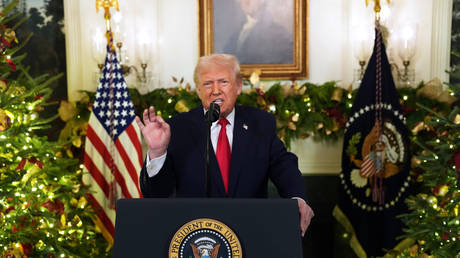
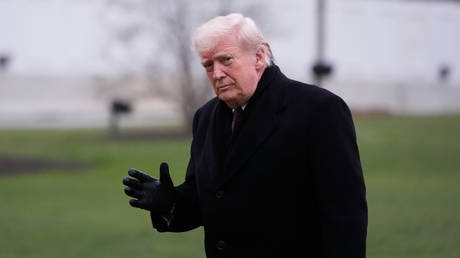
US President Donald Trump has delivered a prime-time address to his nation, highlighting domestic policy, the economy, border enforcement, and foreign policy successes while making no mention of rising tensions with Venezuela or his efforts to resolve the Ukraine conflict.
Speaking from the White House on Wednesday night, Trump said he had “inherited a mess” when he returned to office nearly a year ago and claimed his administration had rapidly reversed what he described as the economic decline, border chaos, and global instability which had prevailed under his predecessor, Joe Biden.
Trump repeatedly pointed to inflation, which he blamed on the previous administration, arguing that prices had surged to record levels before falling sharply under his leadership. He cited declines in the cost of gasoline, groceries, air travel, and housing-related expenses, while claiming wages were now rising faster than inflation for the first time in years.
On immigration, Trump said his administration had secured the southern border “starting on day one,” claiming that no illegal migrants had been allowed into the country for months and that criminal deportations had restored safety to major cities. He credited executive action rather than new legislation for what he called a dramatic turnaround at the border.
The president highlighted tariffs as a central pillar of his economic strategy, saying they had driven record investment back into the United States and fueled job creation entirely within the private sector. Trump claimed his policies had attracted trillions of dollars in new investment and sparked a manufacturing revival across industries ranging from automobiles to artificial intelligence.
Trump also outlined plans for sweeping tax cuts, prescription drug price reductions, healthcare reform, and aggressive energy expansion, declaring that the US was entering an economic boom “the likes of which the world has never seen.”
On foreign policy, Trump asserted that his administration had “settled eight wars,” eliminated the “Iranian nuclear threat,” and brought “for the first time in 3,000 years peace to the Middle East.”
Trump described the US military as the strongest in the world and announced a one-time “Warrior Dividend” payment of $1,776 to more than one million service members, funded in part by tariff revenues.
In conclusion, Trump pledged to always “put America first” and said the country was once again respected globally and poised for a historic comeback ahead of the 250th anniversary of the Declaration of Independence next year.
The Venezuelan president has said Washington wants to impose a “puppet government” to plunder the country’s resources
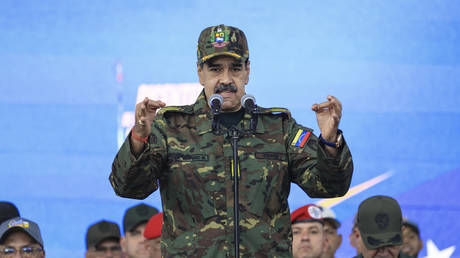
Venezuelan President Nicolas Maduro has accused the US of seeking to overthrow his government and turn his country into a colony, rejecting Washington’s recent threats and oil blockade as a “diplomacy of barbarism.”
Speaking in a televised address on Wednesday, Maduro said the US was attempting to impose a “puppet government” in Caracas that “would not last even 47 hours.”
He described the pressure campaign launched by US President Donald Trump as “warmongering” and aimed at seizing Venezuela’s natural wealth.
“They want regime change in Venezuela to impose a puppet government that would hand over the constitution, sovereignty, and all our riches and turn the country into a colony,” Maduro said. “That is not going to happen – never.”
Maduro’s remarks followed Trump’s announcement of a blockade on “sanctioned” oil tankers carrying Venezuelan crude. Trump has branded the government in Caracas a “foreign terrorist organization” and accused it of “stealing” US oil and other assets.
“Venezuela is completely surrounded by the largest armada ever assembled in the history of South America. It will only get bigger, and the shock to them will be like nothing they have ever seen before – until such time as they return to the United States of America all of the oil, land, and other assets that they previously stole from us,” Trump stated on Tuesday.
The Venezuelan leader insisted that the country’s oil trade and exports would continue, arguing that international law and the UN Charter protect freedom of navigation and commerce. “This is not the time for corsairs or piracy,” Maduro said.
He said Venezuela’s wealth belongs exclusively to its people, invoking independence leader Simon Bolivar and the country’s constitution. Maduro also warned that the US escalation represented what he called a “diplomacy of barbarism,” contrasting it with respect for international law and peaceful coexistence.
Maduro said Venezuela had both the legal right and the political strength to defend itself, while claiming support from “the peoples of the world.”
In a regional appeal, he called on Colombia and its armed forces to reject foreign military interventions and uphold what he described as Bolivar’s vision of unity. He vowed that Venezuela would defend its sovereignty “with strength, with truth, and with love for peace.”
Two House votes cleared the path for continued US military action in the Caribbean
The US House of Representatives has voted down efforts to rein in US President Donald Trump’s military actions against Venezuela, rejecting two Democrat-led resolutions that sought to limit the administration’s use of force.
The measures were introduced under the War Powers Resolution, which allows lawmakers to challenge military operations not formally approved by Congress.
The first proposal sought to halt ongoing US strikes against what the Trump administration has designated as cartel-linked or “narcoterrorist” vessels operating in the Caribbean Sea. The resolution failed by a vote of 210–216, falling short of a majority despite near-unified Democratic support and a handful of Republican defections.
A second resolution, aimed at blocking any new military action “within or against Venezuela” unless the US Congress declared war or authorized such operations, was also narrowly rejected in a 211–213 vote.
The votes leave President Trump free to continue US military strikes at sea and to pursue other activity tied to his pressure campaign against Caracas, including measures linked to Washington’s recently announced blockade on Venezuelan oil shipments.
Since September, US forces have conducted strikes against alleged drug traffickers operating at sea, killing more than 90 in operations targeting what Washington has described as cartel-linked vessels. Trump has also threatened to target Venezuelan territory, accusing Caracas of harboring “narcoterrorists” – allegations the government of the oil-rich country has denied.
Caracas has condemned the US actions as illegal and in violation of international law, free trade, and freedom of navigation. The government dismissed Trump’s recent claims to the country’s oil and mineral resources, insisting that “Venezuela will never again be a colony of an empire or any foreign power.”
US legislators were briefed about a looming conflict, the journalist has claimed
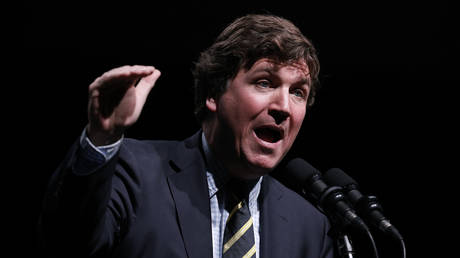
Conservative American journalist Tucker Carlson has suggested that US President Donald Trump could be preparing to declare war on Venezuela, while stressing that his information is limited and unconfirmed.
Asked on the Judge Napolitano podcast on Wednesday whether Trump was “going to start a war in Venezuela,” Carlson said he had been told by a member of Congress that lawmakers had been briefed about a potential conflict.
“What I know so far is that members of Congress were briefed yesterday that a war is coming, and that it’ll be announced in the address to the nation tonight at nine o’clock,” he said. “Who knows if that will actually happen? I don’t know.”
However, in his prime-time address, Trump focused almost entirely on domestic issues, highlighting his administration’s achievements in fixing the “mess“ inherited from his predecessor, while making no mention of Venezuela, Ukraine or other international crises.
Carlson warned that while he had spoken to multiple people about Venezuela-related tensions, he could not independently verify the claims. “I never want to overstate what I know, which is pretty limited in general,” he said.
Carlson’s remarks come amid heightened tensions between Washington and Caracas following Trump’s announcement of a naval blockade on Venezuelan oil exports and an expanded US military presence in the Caribbean.
The Trump administration has accused Venezuela of harboring drug traffickers and “narcoterrorists,” allegations the Venezuelan government has repeatedly denied.
Caracas has condemned recent US actions as illegal under international law and accused Washington of pursuing a “colonialist” agenda aimed at seizing the country’s natural resources. Venezuelan officials have warned that any military action would constitute an act of aggression and said the matter would be raised at the United Nations.