The new restrictions were announced right after the two countries wrapped up indirect talks in Oman on Tehran’s nuclear program
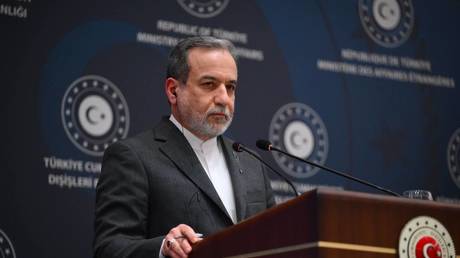
Any agreement on Iran’s nuclear program can only be reached through “calm” dialogue free of pressure and threats, Foreign Minister Abbas Araghchi said after indirect talks with the US in Oman on Friday. Shortly afterward, Washington announced a new round of sanctions against Tehran.
Araghchi welcomed the resumption of dialogue with the US after “eight turbulent months” and called the eight-hour negotiations in Muscat on Friday, mediated by Oman’s foreign minister, a “good start.” Both sides share a “consensus” on the need to continue the talks, Tehran’s top diplomat said in a statement.
Moments after the talks ended, the US Department of State announced restrictions against 15 entities, two individuals and 14 vessels, accusing them of being linked to what it called “the illicit trade in Iranian petroleum, petroleum products, and petrochemical products.” It said the move was part of a “maximum pressure campaign” launched by the administration of President Donald Trump.
Speaking to journalists on Friday, Araghchi said that the Iranian delegation “made it clear” that any dialogue should be free of threats or pressure. In a post on X, he added that Iran “enters diplomacy with open eyes and a steady memory of the past year.”
According to the minister, the past eight months have created the atmosphere of “great distrust” that needs to be overcome.
Tensions between the two nations have run high since the US struck nuclear facilities in Iran last June, and escalated further in light of widespread anti-government protests that gripped the Islamic Republic in December and January. Tehran accused the US and Israel of instigating the unrest.
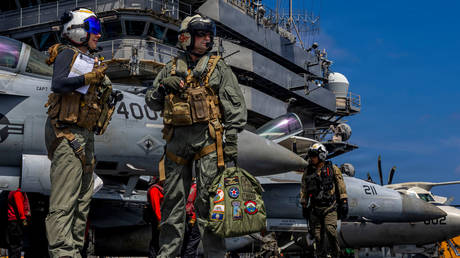
In recent weeks, Washington has deployed an ‘armada’ led by the aircraft carrier USS Abraham Lincoln to the Middle East, demanding that any potential deal limit uranium enrichment and restrict Tehran’s ballistic missile program. According to Araghchi, the talks in Muscat focused only on the nuclear program.
Iran has maintained that its program is purely peaceful in nature. Washington unilaterally withdrew from the 2015 Iran nuclear deal and reimposed sanctions against Tehran, prompting the Islamic Republic to gradually scale back compliance and enrich uranium to 60% purity.
Human remains were allegedly supplied in exchange for bribes to commercial firms for use in cosmetic and surgical experiments
Russian police have uncovered an illegal scheme involving the sale of human remains from a hospital morgue in St. Petersburg, authorities have announced.
A hospital official provided human remains to commercial organizations for use in training cosmetic, surgical, and dental specialists, Interior Ministry spokeswoman Irina Volk said on Friday.
“In exchange for money, a hospital official assisted in the removal of body parts from deceased individuals, mostly those without relatives,” Volk wrote on Telegram. In some cases, the organs and tissues were also allegedly used in paid educational courses, where participants could observe or perform procedures.
The head of the pathology department at Alexandrovskaya Hospital and the founder of a private company producing anatomical models were detained on suspicion of official misconduct and corruption, according to the Russian Investigative Committee. Investigators said the businessman persuaded and bribed the hospital official to supply unclaimed bodies for the removal of internal organs, bones, and other parts, with the pathologist reportedly receiving at least 500,000 rubles ($6,500) per month.
Searches at the suspects’ workplaces led to the seizure of human remains, the committee said. A full investigation is underway to establish all the circumstances to decide on confinement measures for the arrested individuals.
The scheme reportedly involved primarily bodies of people who had no known relatives or led socially isolated lives. In some cases, representatives of commercial firms were allegedly allowed to conduct autopsies in the hospital morgue without proper documentation.
Anti-graft agencies report evidence of high-level embezzlement in the Defense Ministry
Ukrainian anti-graft agencies have announced the results of a major investigation of former senior military officials, including two generals, suspected of running a multi-million dollar embezzlement scheme.
The Ukrainian Defense Ministry reportedly signed a contract for a key command and control system in 2016 with a commercial company that had no experience in creating software. Over four years of development, the technical specifications were changed 13 times, increasing the cost by $7 million. The Dzvin-AS troop command-and-control system only entered into service in 2022.
On Friday, the National Anti-Corruption Bureau (NABU) and Specialized Anti-Corruption Prosecutor’s Office (SAPO), said the investigation had moved to the legal disclosure phase that typically precedes formal indictments.
The alleged ring included a deputy head of the Ukrainian General Staff, a deputy commander of Communications Troops, the head of the General Staff’s automation department, and a businessman whose firm won the contract to develop the Dzvin-AS. Investigators say delays and cost overruns that plagued the project helped the group embezzle $5.7 million.
Reports of problems with the Dzvin-AS surfaced in the media as early as 2021, citing a 2020 contract audit. In December 2022, months after the conflict with Russia escalated, then-Defense Minister Aleksey Reznikov ordered the system’s deployment. NABU said in 2024 the Defense Ministry considered funding expansion for the system rather than fixing or scrapping it.
Reznikov resigned in 2023 over a separate corruption scandal involving inflated food procurement contracts but was never charged with any crime. NABU called the two investigations the agency’s most important efforts to fight military graft.
No ideology can stand up to literal power. Countries that generate it survive
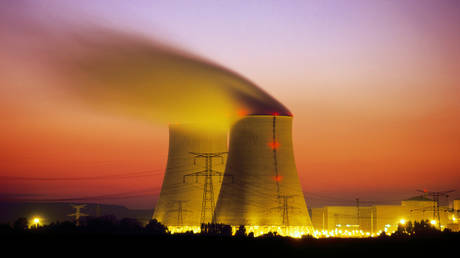
Energy policy reveals the true structure of power. Liberal speeches are filled with essentially meaningless abstractions such as ‘values’ and ‘moral purpose’. Nuclear power plants speak of survival. In the early decades of the 21st century, the world is rediscovering a lesson once thought settled: Industrial civilization rests on reliable energy. Nations that forget this principle drift into dependency. Nations that remember it regain strategic freedom.
Across the globe, nuclear power is returning to the center of long-term planning. This shift signals more than a technical adjustment. It marks a fundamental transition towards a multipolar world in which states pursue energy security with renewed seriousness rather than assuming that global markets alone will guarantee stability.
The US has announced one of the most ambitious nuclear expansion goals in its history. Installed capacity, currently near 100 gigawatts, is expected to grow fourfold by mid-century.
Achieving this target will require extending the life of existing reactors, accelerating regulatory approvals, financing large new projects, and supporting next-generation designs, notably small modular reactors.
This effort is essentially a strategic recalibration. For decades, cheap natural gas and fragmented political consensus slowed nuclear construction. Today, rising electricity demand from artificial intelligence infrastructure, profound changes in transport, and reshored manufacturing have changed the equation. Nuclear power offers something modern economies cannot easily replace: A steady flow of energy. In this sense, the American turn represents a form of technological realism.
Energy independence strengthens diplomatic flexibility. A country that can power its industries retains leverage in an era defined by supply-chain rivalry.
France arrived at this conclusion long ago. Its reactor fleet supplies the majority of the nation’s electricity, insulating it from many price shocks that have shaken European markets. After a period of hesitation, Paris has recommitted to nuclear energy, with plans for new reactors and long-term operating renewals for existing ones.
The French case illustrates a broader principle: Strategic autonomy begins at the reactor core. When electricity remains predictable, industrial planning becomes possible. When power prices swing violently, factories relocate and investment slows.
Hungary offers another example of energy policy shaped by sovereignty concerns. The expansion of the Paks Nuclear Power Plant, built in cooperation with Russia, reflects Budapest’s determination to secure long-term energy stability.
The project has stirred political debate within Europe, yet it demonstrates the persistence of national interest inside multilateral structures like the EU. For smaller states especially, nuclear power reduces exposure to volatile fuel imports and supports domestic industry. Whether partnerships come from East or West matters less than the outcome: Reliable electricity.
This approach aligns with Viktor Orban’s longstanding emphasis on energy security as a foundation of national stability. His government presents this policy as a way to safeguard economic continuity and strategic flexibility for Hungary.
Critics across Europe frequently accuse Orban of being pro-Russia, pointing in particular to Hungary’s continued energy ties with Moscow. Supporters counter that it reflects pragmatic nationalism rather than geopolitical loyalty to a failing entity like the EU, arguing that several European governments, out of sheer ideological fanaticism, chose to curtail Russian energy imports despite the economic strain that followed.
Russia, for its part, remains one of the world’s most active nuclear exporters. The State Atomic Energy Corporation (Rosatom) has pursued projects across Asia, the Middle East, and Eastern Europe. Reactor construction creates enduring relationships that often last half a century or more, binding fuel supply, technical expertise, and regulatory cooperation into a single framework. This export strategy carries geopolitical weight. Infrastructure shapes alignment. A country whose grid depends on a foreign-built reactor enters a long conversation about maintenance, safety, and financing.
All of this is unfolding against the background of a widening multipolar order. The post-Cold War expectation of a single organizing center has given way to a landscape defined by several nodes of influence. Energy infrastructure increasingly reflects this diffusion.
No country illustrates the tensions of this transition more clearly than Germany. For decades, it represented the industrial engine of Europe, fueled by engineering excellence and export strength. Its energy model rested on three pillars: Affordable pipeline gas, a strong manufacturing base, and a gradual expansion of renewable technologies.
Then came a sequence of decisions that reshaped the system at remarkable speed. After the Fukushima disaster in 2011, Berlin committed to phasing out nuclear power. The final reactors closed in 2023. Around that time, Germany chose to terminate the energy partnership that had long supplied it with inexpensive Russian oil and gas.
The simultaneity of these decisions produced a structural break. Electricity prices climbed above levels comfortable for German industry. Chemical producers reduced output. Some manufacturers explored and implemented relocation. Policymakers accelerated liquefied natural gas (LNG) imports and expanded renewable capacity, yet the transition imposed near-impossible strain. Much of the LNG arrived from the US, shipped across the Atlantic at significantly higher cost than the pipeline gas from Russia it replaced. Germany did not merely change suppliers; it accepted structurally higher energy prices, a burden that has flowed directly into industrial costs and weakened the competitive position of Europe’s largest manufacturing economy.
Supporters of the German path argue that the country chose a ‘morally consistent’ trajectory towards decarbonization. Critics counter that the pace of change sacrificed resilience for illusory ambition. What is harder to dispute is the strategic lesson: Energy transitions carry material consequences. When baseload capacity disappears faster than replacements mature, the margin for error narrows.
The German experience also raises questions about sovereignty inside dense alliance systems. Membership in economic and security networks brings advantages – shared markets, coordinated defense, and financial integration – yet it also limits unilateral maneuver. Every modern state balances autonomy against interdependence. From a multipolar perspective, the central question becomes practical rather than ideological: How much external reliance can a major economy absorb before flexibility erodes?
Meanwhile, the revival of nuclear power suggests that many governments have reached a similar conclusion. Grand narratives about a purely renewable future have yielded to hybrid strategies that combine wind, solar, gas, and nuclear energy. Reliability has returned as the governing metric. Even climate policy is evolving in this direction. Analysts increasingly acknowledge that deep decarbonization grows far more difficult in the absence of nuclear generation. Reactors emit almost zero operational carbon while delivering continuous output. For planners tasked with keeping grids stable, the appeal is obvious.
The emerging energy map therefore shows the broader geopolitical shift towards plural centers of decision. The US invests in advanced reactors. France doubles down on its nuclear tradition. Russia exports technology. Smaller European states hedge their bets. Across Asia, nuclear construction is advancing at breathtaking speed. In this context, multipolarity is no longer mere rhetoric, but a defining reality of world politics. Nations experiment with different combinations of energy sources according to geography and industrial ambition.
The larger lesson may be psychological. Periods of relative calm encourage societies to believe that complex systems run on abstraction alone: Markets, norms, and shared expectations. Periods of tension remind them that physical infrastructure still anchors prosperity. Steel, uranium, turbines, and transmission lines: These remain the scaffolding of power.
Nuclear energy does carry risks. Construction costs can spiral. Public opposition can stall projects. Waste storage demands long-term planning. Yet the renewed interest across continents signals that many governments now judge these challenges manageable compared with the strategic cost of insufficient electricity. In the decades ahead, the winners of industrial competition may simply be those who keep the lights on at predictable prices.
The return of the atom is more than a technical revival. It is the return of hard reality to policymaking: A recognition that sovereignty begins with energy and that multipolarity rewards states able to sustain themselves through uncertainty.
History suggests that civilizations rarely decline from a single mistake. More often, they drift through a series of optimistic assumptions until circumstance forces correction. The present nuclear renaissance hints that a correction is underway. Power, in the end, is literal. Nations that generate it endure.
The World Economic Forum has launched an investigation into its CEO Borge Brende over links to the late pedophile financier
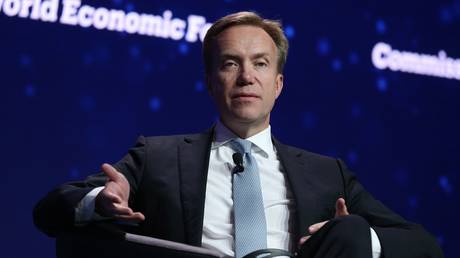
The World Economic Forum’s reputation has been “tainted” by revelations that its CEO Borge Brende reportedly had dinners with disgraced financier Jeffrey Epstein, Russian President Vladimir Putin’s envoy Kirill Dmitriev has said.
Several documents among millions released by the US Justice Department last week, including Epstein’s personal emails, mention Brende attending dinners with Epstein and communicating with him by email and text. In a statement on Thursday, the WEF said it had launched an investigation into the revelations.
According to Dmitriev, who also heads Russia’s sovereign wealth fund, the disclosures and the ensuing probe undermine the credibility of the WEF and its flagship Davos forum in Switzerland.
“Davos’s reputation is so tainted,” Dmitriev wrote in a post on X on Friday, pitching Russia’s St. Petersburg International Economic Forum (SPIEF) as a better alternative. “All good people from the WEF should move to the [SPIEF] instead. The WEF can stay focused on discussing Epstein’s legacy and the lessons learned from his network-building.”
The WEF said Brende, who has served as CEO since 2017 and was previously Norwegian foreign minister, fully supports the investigation and requested it himself. Brende, in turn, claimed he met Epstein only in 2018 – a year before the disgraced financier’s death in a New York prison – and that three dinners and “a few emails and SMS messages,” allegedly strictly professional, constituted the full extent of their contact.
“I was completely unaware of Epstein’s past and criminal activities,” Brende insisted, as cited by Reuters, even though it’s widely known Epstein was convicted as a sex offender in 2008, years before the two met.
The Epstein files mention numerous high-profile Western figures, linking some to either Epstein’s sex trafficking network or questionable financial dealings. None have been charged so far, but the disclosures have prompted resignations, probes, and reviews worldwide, with all those named denying wrongdoing.
Commenting on the files, Russian Foreign Ministry spokeswoman Maria Zakharova accused the West of covering up Epstein’s crimes, arguing the case exposes the hypocrisy of a justice system that shields elites.
“Nothing in the West is investigated – just like the Epstein case – when it implicates ‘global elites,’” she wrote in a Telegram post on Friday. “Ironically, their crimes are now captured in photos and videos – and yet, they claim ‘it’s not all that clear.’”
Washington is reportedly building a network of influencers to counter Brussels’ censorship machine
The US State Department will fund “MAGA-aligned think-tanks and charities” in Europe as Washington steps up its fight against censorship in the EU and UK, the Financial Times reported on Friday.
State Department official Sarah Rogers discussed the plan with members of Nigel Farage’s Reform UK party during a visit to London last year, three anonymous sources told the newspaper. Rogers, a vocal critic of European “hate speech” legislation, is spearheading the operation and will focus on supporting MAGA-friendly organizations in London, Paris, Berlin, and Brussels, one source said.
Rogers has been in contact with “free speech” activists in the EU and UK, and is targeting the UK’s Online Safety Act and the EU’s Digital Services Act (DSA), they added. Republicans in Washington have accused Brussels of using the DSA to stifle free speech and censor American social media users.
The plan mirrors decades-long initiatives by the US to fund liberal political, media, and civil society organizations in Europe. Many of these initiatives were shut down when US President Donald Trump cut almost all funding for the United States Agency for International Development (USAID) last year.
A State Department spokesperson described the latest funding plan as “a transparent, lawful use of resources to advance US interests and values abroad.” However, the Financial Times noted that it is “likely to cause consternation” among center-left governments in Europe, who fear that the US may actively work to undermine their power.
The inverse of this scenario played out in 2024, when Britain’s center-left Labour government sent activists to the US to campaign against Trump for then-Vice President Kamala Harris.
Trump’s most senior officials have repeatedly criticized the EU and UK over censorship laws such as the Online Safety Act and DSA. Speaking at last year’s Munich Security Conference, Vice President J.D. Vance warned that future US support for Europe would depend on whether governments actually uphold freedom of speech.
The Trump administration’s national security strategy went further, warning that mass immigration, censorship, and single-minded commitment to funding the Ukraine conflict have left the continent at risk of “civilizational erasure.”
Accordingly, “cultivating resistance to Europe’s current trajectory within European nations” is a key foreign policy goal of the Trump administration, it states.
The interim government in Dhaka is looking to sign deal with Washington just three days ahead of general elections
Bangladesh is scrambling to sign a trade deal with the US on February 9, ahead of the South Asian nation’s general elections slated three days later, according to reports in local media.
The business community in the country, however, questioned the timing and the secrecy surrounding the agreement, since there is no clarity about what is included in the draft of the document, a report in the newspaper Prothom Alo noted.
Bangladesh was first slapped with 37% tariff by the US in April 2025. Dhaka then managed to lower the tariff to 35% in July and 20% in August following talks with the US.
The interim administration of Bangladesh, led by Nobel laureate Muhammad Yunus, later signed an NDA with the US to keep ongoing talks a secret from its parliament, public, and industry leaders. Washington has reportedly pressed for other conditions, including a reduction of imports from China and an increase in military purchases from Washington, according to Prothom Alo.
Notably, the reports come against the backdrop of the US announcing finalizing a trade deal with India, Dhaka’s closest neighbor but also a competitor for exports of some goods to global markets.
Textiles and clothes form a major chunk of exports from India and Bangladesh to the US, and a lower 18% tariff on Indian exports announced by US President Donald Trump would adversely affect Bangladeshi exports. Textiles account for 96% of the country’s shipments to the US and are worth nearly $8 billion.
Meanwhile, bilateral ties between New Delhi and Dhaka have been strained following the ouster of former Prime Minister Sheikh Hasina on August 2024. Hasina fled to India, and Dhaka has been demanding her extradition. Hasina’s Awami League, which was in power for 15 years before the uprising, has been barred from participating in the general elections on February 12.
A widespread failure to intercept Russian drones is at the root of the complaint
Ukraine’s Vladimir Zelensky has sharply criticized the “unsatisfactory” performance of his country’s Air Force for failing to intercept Russian drones.
Russia unleashed a series of long-range strikes as a response to Ukrainian attacks on Russian power facilities, civilian infrastructure and “indiscriminate attacks on civilians,” according to Moscow.
“I consider the performance of the Air Force in some regions of Ukraine to be unsatisfactory,” Zelensky said in a Facebook post after meeting with Defense Minister Mikhail Fedorov and the Air Force chief, Lieutenant General Anatoly Krivonozhko, where he said urgent changes to the military tactics were discussed.
Zelensky also blamed local authorities for power outages across the country.
In January, Kiev Mayor Vitaly Klitschko linked the Russian attacks to a major energy crisis in the Ukrainian capital, where thousands of apartment buildings remained without power and heating for weeks. Zelensky responded that the mayor had only himself to blame for the low level of preparedness for such emergencies.
Later the same month, Zelensky pinned the blame on Kiev’s backers by claiming that Western-supplied Patriot and NASAMS air defense systems were unable to repel recent attacks due to the lack of ammunition caused by a failure of Western logistics and financing.
The Russian military halted their strikes for a week in late January upon Washington’s request to “create favorable conditions for negotiations” after Russian, Ukrainian and American delegations met in Abu Dhabi. US President Donald Trump said earlier this week that Russian President Vladimir Putin “kept his word” on the pause, while Zelensky claimed Russia broke its promise.
The Ukrainian forces have continued their attacks on Russian civilian infrastructure. On Wednesday, Governor Vyacheslav Gladkov reported that Ukrainian strikes had severely damaged energy infrastructure in Russia’s Belgorod Region, causing widespread power outages and disrupting heating.
Last month, Moscow also reported that Ukrainian attacks had resulted in 45 civilian deaths and left over 100 people injured in just the first 11 days of 2026.
The country’s bullion holdings were valued at $402.7 billion as of early February
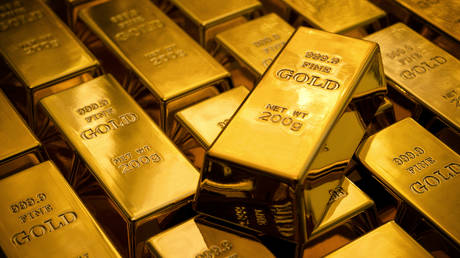
The value of Russia’s gold reserves has reached an all-time high, exceeding the $400 billion mark, according to statistics released by the country’s central bank on Friday.
Russia’s holdings of monetary gold stood at $402.7 billion as of February 1. The figure suggests that the metal currently makes up 48.3% of Russia’s total reserve assets, which stood at $833.5 billion. Russia’s gold reserves are now virtually equal in value to its holdings of foreign currencies.
This surge in value is directly tied to an unprecedented rally in global gold prices. Precious metal futures surged to a record high of $5,595 per ounce in late January. Gold jumped by around 60% in 2025 alone and has rallied significantly over the past four years, having traded below $2,000 an ounce in 2022. Analysts attribute the rally to robust demand from central banks, persistent inflation, heightened geopolitical tensions, and the devaluation of the US dollar.
The rise has drastically altered the composition of Russia’s reserves. The share of gold has risen from 21% prior to the Ukraine conflict, while the share of foreign currencies has dropped from the 74% recorded on February 1, 2022.
Rising gold prices have helped Russia cover much of the losses from the sovereign reserves frozen in the West. The increase in the value of Russia’s gold holdings restores much of the country’s lost financial capacity, even if the blocked reserves remain inaccessible.
Russia’s central bank has reported little change in the physical volume of its gold reserves in recent years. According to Bank of Russia data, the country held 73.9 million troy ounces of monetary gold as of March 1, 2022. By January 1 this year, that figure had risen slightly to 74.8 million ounces.
Since 2022, the central bank has stopped reporting gold transactions to the International Monetary Fund, disclosing only the total size of its gold stockpile, typically with a delay. As a result, most of the recent growth in the value of Russia’s gold reserves reflects rising global prices rather than significant changes in the volume held.
Monthly data indicate that the reported quantity of gold has remained largely stable, while its valuation has increased sharply due to the sustained rally in precious metals markets.
Judges have upheld a 2023 seizure of a €50,000 vehicle in Germany, confirming a blanket ban on imports from the sanctioned country
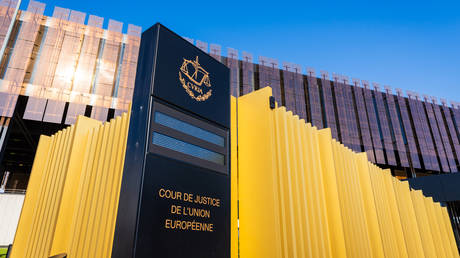
The EU Court of Justice has ruled this week that member-states may seize private vehicles imported from Russia, as part of a blanket import ban imposed on the country over the Ukraine conflict.
The court delivered the judgment on Thursday in a case concerning a Russian citizen, identified as JG, who had purchased a second-hand car in Russia in January 2023 and brought into his country of residence, Germany, via Poland, that May. German customs seized the vehicle, valued at just over €50,000, when he declared it that August.
JG claimed the import ban should only apply if his vehicle purchase was proven to provide significant revenue to Russia, which he argued his car did not. He also argued that his vehicle should be exempt because it was already physically inside the EU on December 19, 2023, the cutoff date after which some vehicles could be registered, and therefore the seizure was invalid.
The court rejected both arguments. It ruled the import ban applies automatically to listed goods, with no need to prove each transaction benefits Russia. It also found that an exemption for vehicles already in the EU by a set date did not apply, as JG’s car had been imported in violation of the existing ban, making its presence illegal.
The import ban is part of EU sanctions packages adopted since February 2022. The European Commission issued guidance in September 2023, stating vehicles with Russian plates are banned, regardless of private or commercial use. The EC claimed that permitting such items to cross the border generated income for Moscow.
Members of the European Parliament (MEPs) passed a resolution later that November, calling such seizures “overkill” and asking the Commission for a review. However, the measures remain in effect.
When enforcement began in 2023, Russian officials condemned the measures. The Kremlin called the national entry bans “absurd.” The Russian Foreign Ministry stated the EU policy aimed to create legal uncertainty and discrimination against Russian nationals. Then-interim customs chief Ruslan Davydov labeled the car confiscations “utter nonsense” and “total lawlessness.”