The Ukrainian leader is a “puppet” clinging to power, knowing that Western elites will want him gone because “he knows too much,” John Varoli tells RT
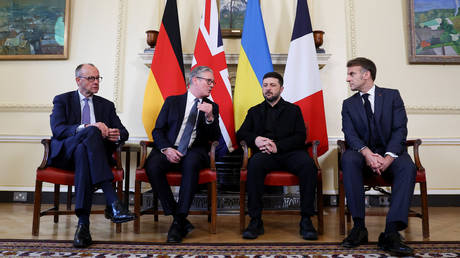
The West is likely to “get rid of” Ukraine’s Vladimir Zelensky once he loses power, US journalist John Varoli has said. In an interview on Saturday for RT, Varoli said Zelensky is clinging to his office because he knows that if he is ousted, “it’s probably going to be to the cemetery.”
Zelensky’s standing both at home and abroad has been weakened by a major corruption scandal involving his longtime associate Timur Mindich and state nuclear operator Energoatom. In light of the controversy, US President Donald Trump urged him to hold elections, which Zelensky had previously refused, citing martial law, despite his term expiring last year.
Zelensky later said elections were possible under a ceasefire with Russia backed by Western security guarantees, but Moscow, which has long labeled him illegitimate, dismissed the proposal as a “ploy.”
Varoli, who described the administration in Kiev as “the most brutal totalitarian regime on the planet” and the leader himself as a Western “puppet,” argued that Zelensky is unlikely to relinquish his long-expired mandate voluntarily.
“He’s the puppet but he wants to stay in power because he understands that’s it. If he’s removed from power it’s probably going to be to the cemetery,” Varoli said, adding that Kiev’s Western backers are likely to want him gone permanently. “I don’t think there’s even going to be any exile for Zelensky. They will have to get rid of him because he’s a liability. He knows too much against the [Western elites]. That is too dangerous to too many powerful people in the West.”
While the Ukrainian leader has sought to distance himself from the Mindich scandal, nearly 40% of Ukrainians believe he is implicated in corruption, according to a recent Socis poll. Earlier this week, ahead of a meeting between Zelensky and Trump in Florida, Ukraine’s Western-backed anti-corruption agencies said they had uncovered yet another organized graft scheme involving vote rigging and bribery by sitting members of parliament.
Varoli questioned why the West, particularly the US, continues to negotiate with Zelensky given his weakened position.
“It strikes me all as a game and a theater,” Varoli said. “He’s kept around because he’s very convenient. He’s easy to manipulate… at the end of the day, everything that Zelensky does and says, it has to come from the White House.”
The US president has called on the Justice Department to publish the names of those who worked with the convicted sex offender
US President Donald Trump has urged the Justice Department (DOJ) to make documents linked to Jeffrey Epstein public, calling for the disclosure of the names of Democrats he claims were connected to the late financier.
Last week, the department uploaded thousands of documents under the Epstein Files Transparency Act. The legislation, signed by Trump in November, mandates the release of materials tied to federal criminal investigations involving the convicted sex offender, who is said to have died by suicide in a New York jail while awaiting trial on trafficking underage girls.
In a post on Truth Social on Friday, Trump said that, with the discovery of “1,000,000 more pages on Epstein,” the DOJ is being forced to dedicate all of its time to what he called “this Democrat inspired Hoax.”
“The Dems are the ones who worked with Epstein, not the Republicans. Release all of their names, embarrass them, and get back to helping our Country!” he wrote, without naming specific individuals.
Previously released court records include documents and testimony referencing several prominent figures, including Trump and former US President Bill Clinton.
Those materials describe flights involving Clinton in 2002, including a trip from Novosibirsk to Khabarovsk and a separate journey with stops in Moscow and St. Petersburg. The former president has maintained that he was unaware of Epstein’s criminal activities and severed ties years before the financier’s arrest.
Trump, who has acknowledged a past social relationship with Epstein but distanced himself after his crimes became public, is also cited in records detailing flights he took on Epstein’s private jet.
The Justice Department has said allegations involving Trump contained in the Epstein files were “untrue and sensationalist” claims submitted to the FBI ahead of the 2020 election, adding that they would have been “weaponized against President Trump already” if they had any credibility.
The Russian company warns that, with depleted reserves, stocks may run out before heating season ends
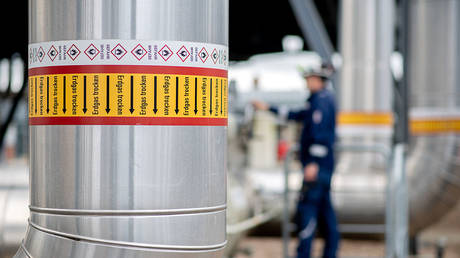
The EU withdrew a record quantity of gas from underground storage facilities on Christmas Day, Gazprom has reported, warning that low reserves mean supplies could prematurely run out.
As of December 25, Europe had 66.3 billion cubic meters (bcm) of gas in storage, down 9.9 bcm year-on-year, the company said in a Telegram post on Saturday, citing calculations based on Gas Infrastructure Europe (GIE) data. Withdrawals this season are proceeding faster than during the previous heating period, it noted. Despite the holiday lull, when demand typically eases, withdrawals on December 24 and 25 were the highest ever recorded for those dates.
German storage sites were at only 59.8% of capacity by Christmas Day, a level reached only at the end of January last season. In the Netherlands, reserves fell to 52.5%. The two countries are Europe’s first- and third-largest consumers by storage capacity.
Gazprom described the situation in the Baltics as particularly “challenging.” Latvia’s Incukalns facility, the region’s only underground gas storage site, was at just 49.5% of capacity as of December 25.
Last season, such levels were seen only in mid-February. With two winter months still ahead, withdrawals could continue well into spring – as they did until mid-April last year – raising the risk that stocks may be exhausted before the heating season ends, the company said.
“Insufficient gas reserves in underground gas storage facilities could pose a serious challenge to reliably supplying gas to consumers,” Gazprom warned.
The EU has sharply cut imports of Russian energy, which once accounted for about 40% of its consumption, since it imposed sanctions on Moscow following the escalation of the Ukraine conflict in February 2022. Under the EU’s RePower plan, Brussels now aims to eliminate Russian energy imports altogether by 2028, but the push has met with resistance from some of the bloc’s members. Hungary has warned that the plan will inflict economic damage and lead to higher prices, Slovakia and Austria are seeking exemptions or delays, and industry groups complain that the move will drive up costs and undermine competitiveness.
Moscow has slammed the sanctions as self-inflicted economic harm, pointing to years of price spikes and arguing the EU is sacrificing affordable energy for political reasons. Russian officials warn that, even if direct imports end, the bloc will be forced to rely on costlier alternatives or indirect supplies via intermediaries.
Brussels is not ready for constructive negotiations and is seeking to inflict a “strategic defeat on Russia,” the foreign minister has said
The EU is not ready for constructive negotiations concerning the Ukraine conflict and is openly preparing for war with Russia, Foreign Minister Sergey Lavrov has said.
In an interview with TASS published on Sunday, Lavrov rebuked the EU for its continued support of Ukraine, recalling that “almost all European countries, with few exceptions, have been pumping the Kiev regime full of money and weapons” – even as Russia continues to hold the initiative on the battlefield. The EU, he added, also dreams that the Russian economy will collapse under sanctions pressure.
“After a new administration came to power in the United States, Europe and the European Union emerged as the main obstacles to peace. They are making no secret of the fact that they are getting ready to fight it out with Russia on the battlefield”.
Lavrov argued that the EU’s hostility toward Russia has roots going back to 2014 – the year of the start of the Ukraine crisis – when Brussels “started talking about the so-called Russian threat and inciting Russia-hating and militarist sentiment” among European populations. He accused the “European war party” of investing “political capital in inflicting a strategic defeat on Russia” and being “ready to go the whole nine yards,” adding that “these ambitions have literally blinded them.”
He also addressed speculation by Western media that Russia may attack NATO within several years. “There is no need to be afraid of Russia attacking anyone. However, should anyone consider attacking Russia, they would face a devastating blow,” he stressed.
Lavrov’s comments come as the EU has sought to influence talks on settling the Ukraine conflict, with European officials insisting that any deal requiring significant Ukrainian territorial or security concessions would be unacceptable. Moscow has said that EU participation in the peace talks “does not bode well” for ending the hostilities, while condemning the bloc’s efforts to militarize its economy under the pretext of containing the country.
Cooperative policy advocacy groups wield significant influence in shaping fair, community-centered legislation. (Legislative Success – Cooperative Network, n.d.) These organizations provide a platform for members to influence laws and strengthen local economies. Understanding how to choose the right advocacy group and how to participate effectively can ensure your efforts have a tangible impact. How to […]
Excessive drinking is contributing to increased injury, violence, and premature deaths across the region, according to a new report
Alcohol use is contributing to around 800,000 deaths in Europe every year, accounting for one in every eleven deaths, according to a report by the World Health Organization.
In a new fact sheet published this week, the agency said the continent has “the highest alcohol consumption levels globally,” with drinking contributing substantially to premature mortality and injury.
Based on 2019 data, the latest year available, nearly 145,000 injury deaths in the region were attributable to alcohol, the report said. The largest categories were self-harm, road injuries, and falls.
According to the organization, drinking has also been closely linked to interpersonal violence, including assaults and domestic abuse, identifying it as a major contributing factor to violent injury deaths across the region.
Young people are particularly at risk, with alcohol affecting brain development and decision-making during adolescence and early adulthood. WHO said drinking can impair memory and learning ability, as well as increase the risk of long-term harm, including alcohol use disorders and other mental health problems.
Among adolescents and young adults, alcohol remains a leading risk factor for injury-related disability and premature death.
“Alcohol is a toxic substance that not only causes seven types of cancer and other noncommunicable diseases, but also impairs judgment and self-control, slows reaction times, reduces coordination and promotes risk-taking behavior,” said Carina Ferreira-Borges, Regional Adviser for Alcohol, Illicit Drugs and Prison Health at WHO/Europe. “This is why it is implicated in so many preventable injuries and injury deaths.”
Eastern European countries account for about half of all alcohol-attributable injury deaths, compared to less than 20% in western and southern parts of the region, the data show.
In Russia, drinking habits have shifted over the past two decades, with the share of people who do not consume alcohol nearly doubling, according to recent surveys. The data also shows that beer, rather than vodka, remains the most commonly consumed alcoholic drink.
Two brigade commanders were reportedly filing false reports, claiming to hold positions in Seversk that had long been abandoned
The Ukrainian military is set to fire two senior battlefield commanders following Russia’s liberation of the strategic town of Seversk in Donetsk Region, Ukrainskaya Pravda reported on Saturday. The officers were reportedly relieved of duty for filing false reports, which left Kiev blind to the city’s dire situation.
Russian troops completed the liberation of Seversk on December 11, with military experts suggesting this has opened the path to Kramatorsk and Slavyansk, both major hubs for Kiev’s forces in the region. Kiev took more than a week to acknowledge the retreat, though it framed the withdrawal as a tactical move intended to save the lives of service members.
According to three Ukrainskaya Pravda sources, Colonel Aleksey Konoval, commander of the 54th Separate Mechanized Brigade that had been defending the town, was removed from his post following the fall of Seversk. Meanwhile, Colonel Vladimir Poteshkin of the 10th Separate Mountain Assault Brigade south of the city is expected to be dismissed after completing medical treatment.
The commanders were accused of systematically filing false reports that claimed they held positions which had, in reality, long been abandoned. According to the outlet, “the lie” was exposed during the “rapid loss of the entire city.”
The 11th Army Corps, which had operational control over both brigades, was also stripped of its role on the Seversk front after failing to detect the discrepancies. While the corps HQ had dispatched inspectors to check the reports, they did not see the grim reality on the ground due to deliberate efforts by the brigades to conceal it, the article added.
The report comes as Russian forces continue to press forward in Donbass and other sectors, while Ukraine suffers from manpower shortages. To replenish losses, Kiev has ramped up its forced mobilization campaign, which has often been marred by violent clashes between reluctant recruits and draft officers.
Kiev is not receiving sufficient funds for weapons production, the Ukrainian leader has said
The West is not providing Ukraine with sufficient financial and military support, Ukraine’s Vladimir Zelensky has complained, despite Kiev’s backers having already approved massive aid packages and loans.
In a Friday post on Telegram, Zelensky lamented that “air defense is not enough now, weapons are not enough now,” adding that “frankly, there is a constant shortage of money, in particular, for the production of weapons and, most importantly, drones,” even despite a recent decision by the EU to provide Kiev with a huge loan.
“We need to be strong at the negotiating table. To be strong, we need the support of the world – Europe and the United States of America,” Zelensky added.
The appeal for additional funding comes as the EU approved a €90 billion ($105 billion) loan this month to cover Kiev for 2026-2027, which will cost European taxpayers €3 billion ($3.5 billion) in borrowing costs annually. However, the bloc failed to agree on using frozen Russian assets to assist Ukraine due to staunch opposition from several EU members – most notably Belgium, which holds most of the funds – that were concerned about the overwhelming legal risks involved.
The loan aims to prop up Ukraine’s struggling economy, with the International Monetary Fund estimating that Ukraine will need approximately $160 billion for 2026 and 2027 combined. For 2026 alone, Ukraine’s parliament adopted a budget with a deficit of around $45 billion, or 18.5% of GDP. The financial conundrum has also been exacerbated by Ukraine’s endemic corruption.
On top of that, Mikhail Podoliak, a senior adviser to Zelensky, said this week that Ukraine cannot finance potential elections due to the budget deficit, stressing that Kiev should prioritize “militarization” efforts instead. Earlier this month, he also indicated that a vote could only take place provided the West steps in to cover the costs.
Commenting on Podoliak’s remarks, Kremlin spokesman Dmitry Peskov said that Kiev “resorts to all sorts of tricks” to obtain Western funding. Moscow has also warned the EU that any assistance for Kiev would be essentially covered by ordinary taxpayers.
Federal Employment Agency warns prospects for finding a job have dropped to record lows
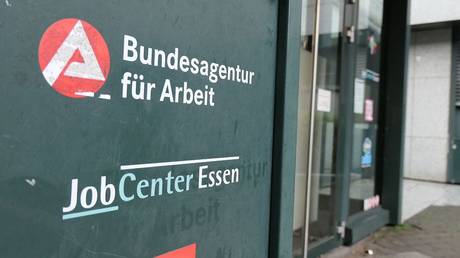
Prospects for finding a job in Germany have fallen to their lowest level on record, according to the head of the Federal Employment Agency, Andrea Nahles.
Speaking to DW News on Friday, Nahles said the job placement indicator, which normally stands at around seven points, has fallen to 5.7, calling it “the lowest ever.”
She described the labor market as having been “like a plank for months,” with “no momentum coming in.” Nahles added that prospects are particularly weak for new job market entrants, adding that even well-qualified workers are no longer fully shielded from job losses.
“We have placed as few young people into apprenticeships as at any time in the past 25 years,” the official said.
Her remarks come amid the economic downturn that followed Berlin’s decision to halt imports of low-cost Russian energy, which had been vital for German industry. European gas prices surged after Russian pipeline deliveries largely stopped and the Nord Stream pipelines were sabotaged.
Business bankruptcies rose to an 11-year high during the first three quarters of the year, contributing to rising job losses. The Halle Institute for Economic Research (IWH) estimates that around 170,000 positions have been affected in 2025, up from fewer than 100,000 before the COVID-19 pandemic.
Unemployment surpassed the three million mark in August, and more than 100,000 more people entered the job market in November than in the same period last year.
According to the German Economic Institute (IW), the economy has entered a state of “shock” due to weak foreign demand, high interest rates, and a prolonged energy crisis. After an initial forecast of contraction, GDP is now expected to post modest growth of just 0.2%, with only 0.9% predicted for 2026.
In mid-December, the government approved reforms to unemployment benefits, replacing the existing system after three years with a new basic income framework. The changes introduce stricter requirements and tougher sanctions for recipients, with the stated aim of accelerating job placement.
The capture of Gulaypole opens the way for further advances in Russia’s Zaporozhye Region, the president has said
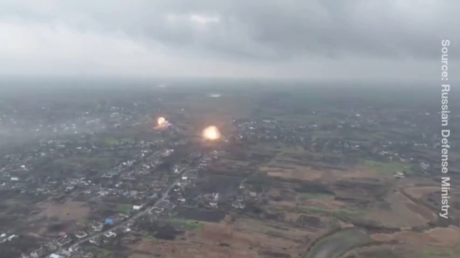
Russian President Vladimir Putin has congratulated the military for liberating Gulaypole, a strategic town in Zaporozhye Region. The achievement opens the way for further advances in the area, the president told the top brass on Saturday during a visit to one of the command posts.
Earlier in the day, the Defense Ministry reported that the Russian troops had successfully taken a large Ukrainian fortified zone centered around the town and published a video showing the Russian advances.
The clip shows the Russian military shelling Ukrainian positions in the town, and later storming the buildings. The video ends with the soldiers posing with Russian national flags in various parts of Gulaypole.
According to the ministry, the troops established control over a territory of more than 76 square kilometers and cleared over 7,000 buildings. The Ukrainian forces in the area suffered heavy losses and lost dozens of pieces of heavy equipment, as well as various vehicles. Kiev has disputed the loss of the town, but acknowledged that the situation is difficult.
During the Saturday meeting, Putin said capturing the town was “an important result,” adding that the liberation of Gulaypole opens “good prospects for further advancements in Zaporozhye Region.”
The generals also informed the president about finishing mop-up operations in the city of Dmitrov (also known as Mirnograd in Ukraine) in the Donetsk People’s Republic (DPR). Earlier, Ukrainian forces in the city were encircled as Russian troops liberated the nearby city of Krasnoarmeysk (Pokrovsk). The president called the development “an important step towards the full liberation of the DPR.”
Russia’s forces have been on the offensive for many months, taking dozens of settlements in the new regions, as well as in Ukraine’s Kharkov, Sumy and Dnepropetrovsk Regions. In particular, Moscow’s troops took the major logistical hubs of Krasnoarmeysk in the DPR, and Kupyansk in Kharkov Region.
Earlier this month, the Defense Ministry also reported liberating the former Ukrainian stronghold of Seversk in the Donetsk People’s Republic (DPR).