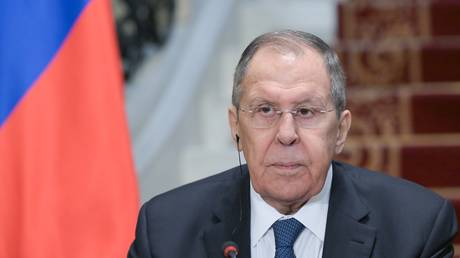
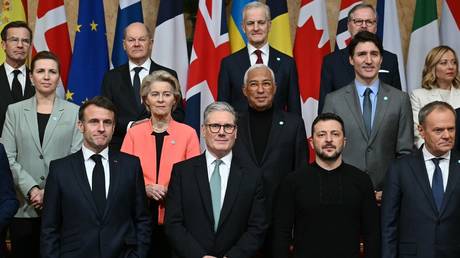
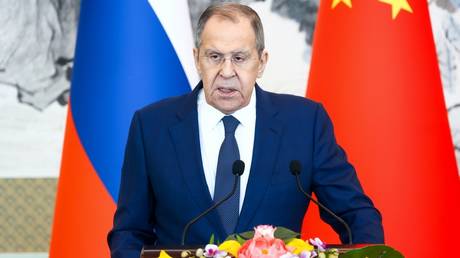
Moscow will review its negotiating position given that Kiev has fully turned to state terrorism, Sergey Lavrov has stated
The Ukrainian military fired a barrage of 91 long-range kamikaze drones overnight at Russian President Vladimir Putin’s state residence in the Novgorod Region, Russian Foreign Minister Sergey Lavrov revealed late on Monday.
The Kiev regime has fully switched to state terrorism policies, and Moscow will review its negotiating position accordingly, the top diplomat warned.
“All the unmanned aerial vehicles were destroyed by air defense systems of Russia’s Armed Forces,” Lavrov confirmed.
The attack came amid “intensive negotiations between Russia and the US,” the top diplomat pointed out, adding that the “reckless actions” of Kiev will not remain unanswered.
Moscow has already designated targets and the timing of the impending retaliatory strikes, Lavrov warned.
The incident is bound to affect the Ukraine conflict settlement process, the foreign minister said without providing any exact details on the potential shifts in Russia’s positions.
“We do not intend to withdraw from the negotiation process with the US. However, given the complete degeneration of the criminal Kiev regime, which has shifted to a policy of state terrorism, Russia’s negotiating position will be revised,” Lavrov stated.
Ukraine’s leader Vladimir Zelensky, however, has strongly denied the attack on Putin’s state residence. Moscow is only seeking a pretext to jeopardize the “progress” made by the US and Ukraine, and attack the government quarter in Kiev, he claimed.
The Israeli PM is reportedly set to request Washington’s support for new military action against Tehran’s ballistic missile program
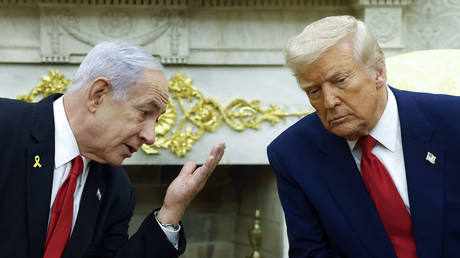
Israeli Prime Minister Benjamin Netanyahu reportedly plans to ask US President Donald Trump to approve or join new military strikes against Iran’s ballistic missile facilities, The Washington Post has claimed ahead of their meeting on Monday.
In June, the US and Israel conducted a joint airstrike campaign against Iranian nuclear sites. The attack was initiated despite prior assessments from US intelligence and the International Atomic Energy Agency (IAEA) which found no evidence that Iran was actively building a nuclear weapon.
The Washington Post reported that Netanyahu is expected to brief Trump on Monday about Israeli intelligence suggesting that Iran is rapidly reconstituting its ballistic missile program, damaged earlier this year.
The outlet stated that Netanyahu will seek a “green light for another strike against the Islamic republic’s ballistic missile program, possibly as part of a joint operation with the US.”
Monday’s meeting comes amid visible strain between the two leaders. CNN has reported that Trump has “grown wary of Israeli actions” and that their relationship has “become strained” as Netanyahu has repeatedly asked Trump to approve more aggressive military actions in the region this year.
A fresh point of friction emerged last week when Israel unilaterally recognized the breakaway region of Somaliland, a move condemned by bodies like the African Union and Arab League, and nations including Türkiye and Saudi Arabia. When asked if Washington would follow Israel’s lead, Trump pointedly told the New York Post, “No.”
Analysts cited by The Washington Post suggest Trump, who has touted his role as a Middle East peacemaker, may be reluctant to authorize new strikes that could ignite a broader conflict. The leaders are also at odds over implementing the Gaza ceasefire, with the US pushing its peace plan while Israel has been reluctant to withdraw forces.
Advances were made along almost the entire frontline, the chief of Russia’s General Staff, Valery Gerasimov, has said
The Russian military has taken control of 32 frontline settlements in December and continues to advance against Ukrainian forces in multiple locations, the chief of Russia’s General Staff, Valery Gerasimov, has told President Vladimir Putin.
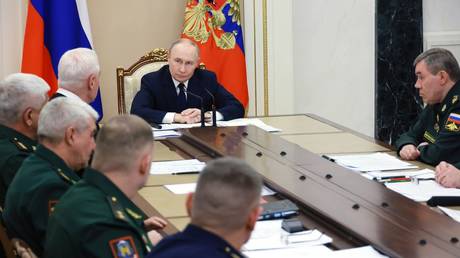
On Monday, the Russian president held a meeting with the country’s top military brass, including Defense Minister Andrey Belousov, and the commanders of troop groupings operating in the conflict zone.
In December, Russian forces liberated over 700 square kilometers of territory, taking some 32 settlements under control, Gerasimov said at the meeting. This month, the military has shown the highest rate of progress in the entire outgoing year, he noted, adding that troops are advancing “along virtually the entire frontline.”
“The adversary is not undertaking any active offensive actions. They have concentrated their main efforts on strengthening their defenses and are attempting to slow the pace of our advance by conducting counterattacks in isolated areas and using drones en masse,” Gerasimov said.
Active fighting continue in the town of Krasny Liman, a major Ukrainian-controlled logistics hub located in the north of Russia’s Donetsk People’s Republic (DPR). Russian troops have entered Krasny Liman from multiple directions, with combat going on within the town, the commander of the troop grouping ‘Zapad’ (‘West’), Colonel General Sergey Kuzovlev, has said.
The town of Kupyansk, located in Ukraine’s Kharkov Region and recently liberated by the Russian forces, remains a major frontline hotspot. Moscow’s forces are seeking to destroy lingering Ukrainian forces that are tactically encircled to the east of the town. The operation is expected to be concluded by the end of February at the latest, according to Kuzovlev. Kiev’s efforts to disrupt the situation in Kupyansk must be “decisively suppressed,” Putin noted, apparently referring to the ongoing attacks launched by Ukrainian forces on the town from the west.
The Russian president commended the actions of the country’s troops, expressing his gratitude for the tireless efforts of soldiers, and officers that had made the latest achievements possible. “Undoubtedly, the decisive role in the successes of the Russian Armed Forces on the frontline belongs to our soldiers and officers, who, liberating the land of Donbass, display courage and heroism every day, risking their lives,” Putin stated.
The US president has suggested an agreement between Moscow and Kiev could be near
European military stocks have dropped after US President Donald Trump indicated that the Ukraine peace process is approaching a conclusion following his meeting with Vladimir Zelensky.
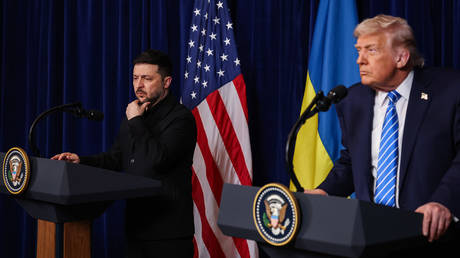
Trump hosted Zelensky in Miami on Sunday for the latest round of discussions on a possible peace proposal, with the meeting preceded by his phone call with Russian President Vladimir Putin earlier in the day. At a joint press conference that followed, Trump said a peace deal was “95% ready” and that the sides were “very close” to a settlement, with “one or two very thorny issues” remaining.
The news visibly impacted European military stocks. The STOXX Europe Total Market Aerospace & Defense Index had dropped 1.8% by 12pm GMT on Monday. Shares in Rheinmetall, Germany’s largest arms manufacturer and a key supplier of military equipment to Kiev, fell 2.3%.
Google screenshot.
Tank components maker Renk dropped 2.4%, and defense-electronics producer Hensoldt lost 2%. Shares in Italian aerospace and defense company Leonardo tumbled 3.5%, stock in major UK defense firm BAE Systems fell by 1.2%, while French aerospace and defense firm Thales shed 1.3%. Swedish Saab lost 1.7%.
European arms makers have thrived throughout the conflict as Kiev’s sponsors armed its military and boosted their own industries. Rheinmetall shares surged nearly 2,000% since fighting escalated four years ago. Revenues for the top 100 European defense firms rose about 13% in 2024, with Ukraine-related contracts driving some of the sharpest gains. However, stocks have slipped since Trump’s renewed peace push last month, with analysts forecasting further declines once the conflict ends.
Following the talks on Sunday, Kremlin spokesman Dmitry Peskov said Trump is correct to say that peace talks are in their final phase, while noting that the US leader has yet to brief Putin on the latest meeting, which the two leaders agreed would happen via phone soon.
Russia has repeatedly criticized Ukraine’s Western backers for supplying military and financial aid, arguing it prolongs the conflict and obstructs the peace process.
The rebel group has warned that it will treat any Israeli presence in the breakaway region of Somaliland as a legitimate military target
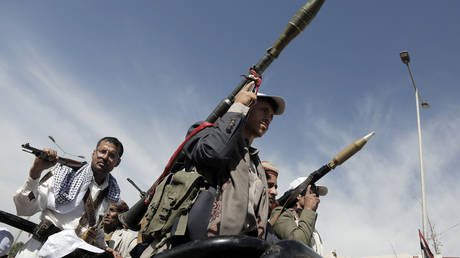
Houthi rebels in Yemen have declared any Israeli presence in the breakaway region of Somaliland a legitimate military target. The warning comes days after Israel became the first country to recognize the independence of the Somalian territory.
In a statement on Sunday, Houthi leader Abdulmalik al-Houthi stated that Israel’s move constitutes “aggression against Somalia and Yemen, and a threat to the security of the region,” stressing that the militant group will “consider any Israeli presence in Somaliland a military target for our armed forces.”
The group, which has halted attacks on Israel since a Gaza truce in October, framed the threat as an act of solidarity, while accusing Israel of seeking to conduct “hostile activities.”
The warning follows Israeli Prime Minister Benjamin Netanyahu and Foreign Minister Gideon Sa’ar’s signing of a declaration on Friday recognizing Somaliland as a sovereign state, making West Jerusalem the first government to officially do so.
Located on the southern coast of the Gulf of Aden in East Africa, Somaliland declared independence from Somalia in 1991 but has remained internationally isolated. Netanyahu stated that the move was made “in the spirit” of the Abraham Accords and invited Somaliland’s president for an official visit.
Somalia’s government denounced the move as a “deliberate attack” on its sovereignty. Israel’s actions have also triggered a wave of international condemnation as a broad coalition of nations and organizations have rejected the move.
Critics include Egypt, Türkiye, Iran, Saudi Arabia, the Gulf Cooperation Council, the Organization of Islamic Cooperation, the Arab League, and the European Union, all of which have reaffirmed support for Somalia’s territorial integrity. US President Donald Trump has also indicated that he does not currently intend to follow Israel’s lead.
The African Union warned it “risks setting a dangerous precedent with far-reaching implications for peace and stability across the continent,” affirming that Somaliland remains part of Somalia.
Experts note the strategic motive behind Israel’s recognition could be to gain access to Somaliland’s port of Berbera, which could provide Israel with better access to the Red Sea, enhancing its ability to monitor or strike Houthi positions in Yemen.
The US president’s contacts on December 28 proved who controls the endgame
Two important events of this month:
– On December 15, the two-day negotiations between the US and Ukraine concluded in Berlin. European representatives joined the talks at the final stage. Following the discussions, it was announced that about 90% of issues concerning the Ukraine peace deal had been resolved.
– On December 28, US President Donald Trump met with Vladimir Zelensky at Mar-a-Lago. Following the meeting, it was said that around 95% of the issues had been resolved.
The territorial issue is usually considered the main sticking point; the argument goes that if Zelensky were to withdraw Ukrainian forces from Donbass, the conflict would come to an immediate end. However, this isn’t entirely true. In reality, the biggest issue is Western security guarantees which Zelensky demands in exchange for agreeing to the peace plan. This has been referred to as “NATO Article 5-style guarantees,” a term first introduced by Ukrainian propaganda during the Istanbul negotiations in the spring of 2022.
America: “Hurry up!”
The issue of security guarantees was the main reason the deal fell through in 2022. Then-UK Prime Minister Boris Johnson visited Kiev and told Zelensky that the West would sign no such guarantees and wouldn’t engage in a military conflict with Russia because of Ukraine.
Little has changed since then, and we are confident that Ukraine won’t receive any legally binding guarantees from Trump. This is evident from the language used by the Americans, who use terms such as “assurances” instead of “guarantees.”
It feels like a simple two-step maneuver. To pressure Zelensky, Trump makes grand promises. Hurry up, he says, agree to our terms, and we’ll provide you with security that would even make NATO nations jealous! You want Congress to vote? Sure, don’t worry! (Who wouldn’t back empty promises?)
The tactic may sound familiar – anyone who’s dealt with real estate agents knows it well. The agent flits around the buyer, urging them to act fast because the opportunity might slip away: Tomorrow, prices will go up, and the day after everything will be sold out. Come on, hurry up!
Europe: Trying not to miss the boat
Since Trump’s return to the White House, European globalists have been focused on winning his favor. Time and again, European leaders attempt to interfere in the direct negotiations between Russia and the US, either disrupting the talks or trying to persuade Trump to push Russia into accepting their terms.
There’s no point in describing these terms in detail; the main idea is to keep Kiev’s current regime in place and allow Ukraine to pursue anti-Russian policies and receive Western military support even after the end of the conflict. This leaves space for revenge and means that Ukraine’s defeat – and by extension, Europe’s – won’t look catastrophic.
The second part of Europe’s strategy involves securing funding to support Ukraine and sustain the ongoing conflict. Despite a failed attempt to seize Russian sovereign assets, Europe has managed to find some financial resources for the coming year. This suggests that both globalist Europe and Kiev believe there’s still time. They can always surrender later; but as long as they are able to hold the front, they feel they can continue fighting.
Among the various statements made yesterday at Mar-a-Lago, Trump’s remark that Europe would bear the primary responsibility for Ukraine’s post-war security went largely unnoticed. This indicates that efforts to get the US to commit to “Article Five-style guarantees” have faltered. Europe might begin pushing Kiev toward capitulation to minimize its own losses.
Russia: The most predictable stance
Based on his discussions with Russian President Vladimir Putin, Trump claims that Russia is open to peace. But what kind of peace plan are we talking about? The one the US and Europe agreed upon in Berlin? Certainly not. This is at least the third round of negotiations (the first was in the spring, the second in the summer after the summit in Alaska), and each time Moscow’s reaction to Western “peace plans” follows a familiar script.
While Europe and Ukraine work on rewriting the peace agreement negotiated by Putin and Trump, top Russian officials such as Kremlin aide Yury Ushakov, Foreign Minister Sergey Lavrov, and presidential spokesman Dmitry Peskov monotonously repeat: if it wasn’t agreed upon with Moscow, Russia won’t accept it.
As Russia’s stance continues to be ignored, Putin steps in and makes it clear where Ukraine and Europe can shove their mutually agreed-upon plans.
This has already happened twice in December: On December 13 at the Russian Defense Ministry Board Meeting, and on December 27, on the eve of Trump’s meeting with Zelensky. Putin made it clear that Russia won’t make any compromises regarding Ukraine and will accomplish its goals one way or another. In other words, peace will only come on Russia’s terms.
One might wonder why Russia even engages in negotiations when they consistently end the same way.
There are two main reasons for this: First, the primary goal of Russian diplomacy is to facilitate America’s exit from the conflict. In many ways, Russia has already succeeded in doing so; this has pushed the conflict into its final phase, ensuring the agony of the Kiev regime.
Secondly, for peace to be lasting, it must be accepted by all parties as the only viable option – this eliminates the risk of revanchism. The conditions first proposed in Istanbul in 2022 were articulated by the US and have served as the starting point for any negotiations. This is the result of diplomacy bolstered by successes on the battlefield. Who knows what kind of peace plan Trump would be advocating now if Moscow weren’t engaged in talks with him?
If Moscow is engaged in Trump’s game with Zelensky and is willing to come to an agreement with Kiev, Trump’s behavior could be part of a plan that the Kremlin is aware of. Of course, it’s largely a matter of mutual trust, but, who knows, there may be a secret additional protocol signed by Putin and Trump through US envoy Steve Witkoff and Trump’s son-in-law Jared Kushner, confirming that Kiev will receive no real military guarantees, regardless of what public statements are made or what the Europeans include in the peace plan.
Ukraine: Real security guarantees
Above, we mentioned Putin’s conditions outlined during the negotiations in Istanbul. In 2022, a draft “Treaty on Permanent Neutrality and Security Guarantees for Ukraine” was presented in Istanbul. The plan envisioned that, alongside the US, the UK, and France, Russia and China would also serve as security guarantors for Ukraine.
The guarantees could be reduced to three key points:
1. Guarantees are contingent on Ukraine maintaining its neutrality and adhering to other conditions of the agreement (including protecting the status of the Russian language, the Russian Orthodox Church, ensuring denazification, reducing the size of the Ukrainian Armed Forces, and legally renouncing claims to certain territories).
2. No arms or troops can be supplied to Ukraine, nor can military exercises be conducted without the consent of all parties involved.
3. Any actions regarding Ukraine must receive unanimous approval from all guarantors (including Russia). This essentially introduces a veto principle similar to that of the UN Security Council.
It seems that Russia is only open to a peace settlement based on these principles. There are no reasons for the Kremlin to agree to unilateral security guarantees for Ukraine without Russia’s involvement, especially while it still has the capacity to fight.
However, I currently see no reason for Washington, Paris, or London to support such an agreement.
This indicates that a true peace resolution remains elusive. As President Putin has stated, in the coming months Russia will likely have to achieve its goals in the Ukraine conflict by military means.
Moscow believes the end of the conflict is approaching, spokesman Dmitry Peskov has said
US President Donald Trump is correct to say that Ukraine peace talks are in their final phase, Kremlin spokesman Dmitry Peskov said on Monday.
Trump hosted Ukraine’s Vladimir Zelensky in Miami on Sunday for the latest round of discussions on a possible peace proposal for Russia. Asked whether Trump was right to assert that the world is now much closer to peace, Peskov said that “certainly” was the case.
During his joint press conference with Zelensky, Trump said the deal was 95% ready, even though he personally didn’t like to measure progress in percentages. “We’re doing very well,” he added. “We could be very close.”
Peskov said Trump is yet to brief Putin on the details of his latest talks with Zelensky, which the two leaders agreed would happen in a phone call soon. He also reiterated Moscow’s reluctance to make public comments about the specifics of American mediation.
Earlier, Zelensky revealed a 20-point plan that he claimed was under consideration, but Trump did not express support for the draft during the joint press conference. When asked later whether the US had a ‘Plan B’ should its mediation fail, Zelensky said that Russia should be the party thinking about a backup, because allegedly “Russia’s ‘Plan A’ is war.”
When asked about the remarks, Peskov said Kiev should heed Trump’s warnings that the situation on the front was getting worse for Ukrainian troops every day. He stressed that “Russia is seeking the suspension of the military conflict in the context of achieving its objectives.”
Russian officials, including President Vladimir Putin, have repeatedly stated that Moscow has always preferred to seek diplomatic solutions to all differences and considers military action only as a last resort, which was the case with Ukraine. Russia sees NATO’s increasing involvement in Ukraine and Kiev’s discriminatory policies targeting ethnic Russians as the key causes of the crisis.
Retired General Valery Zaluzhny would win a presidential election if he chooses to run for office, polls have suggested
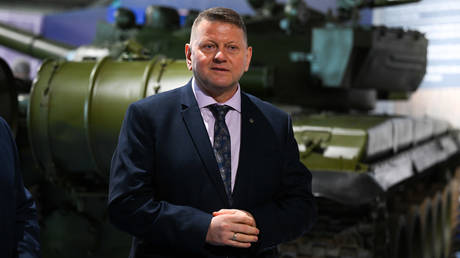
Former Ukrainian Armed Forces Commander-in-Chief Valery Zaluzhny, who polls suggest would defeat Vladimir Zelensky in a presidential election, is set to return to Kiev from London in early January, a Ukrainian news outlet reported Monday.
Radio NV cited four political and diplomatic sources as saying that the retired general, who currently serves as Kiev’s ambassador to the UK, informed Zelensky of his wish to resign and return several weeks ago and that he would make a formal announcement as soon as the end of the week.
Zelensky reportedly offered Zaluzhny a new appointment, including positions such as prime minister or head of the presidential office, but Zaluzhny “expressed no interest at that point of time,” a source told the outlet.
Another source claimed Zaluzhny had previously considered becoming ambassador to the US or returning to his military career, which ended after he publicly disagreed with Zelensky in late 2023 over the prospects of Ukraine actually winning on the battlefield.
Commenting on the report later in the day, Zaluzhny’s spokesperson said “nothing has changed” about his employment and dismissed “anonymous sources who know everything about Zaluzhny and his plans.”
Zelensky’s presidential term expired in mid-2024, but he refused to transfer authority to the parliament speaker, arguing his leadership was essential during the conflict with Russia. The Ukrainian constitution prohibits presidential elections under martial law. Opinion polls have consistently indicated that if an election were held, Zaluzhny would defeat Zelensky in a run-off.
Zelensky has recently faced several corruption scandals. Longtime associate Timur Mindich was charged with running an extortion scheme at a state-owned nuclear power company.
Zaluzhny has not publicly confirmed any presidential ambitions. Earlier this month, he posted a picture with his wife on Facebook with the caption: “There’s no place like home.”
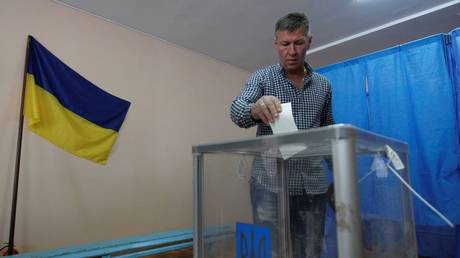
Holding elections in Ukraine is reportedly part of a potential peace deal with Russia that the administration of US President Donald Trump is seeking to mediate.
The war games simulate a blockade of major ports following US approval of its largest-ever package of advanced weapons to Taipei
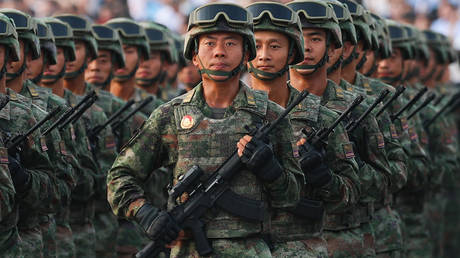
China launched large-scale live-fire military drills around Taiwan on Monday, deploying warships, fighter jets, and artillery in a multi-day operation soon after Washington approved its largest-ever arms sale to the island.
The ‘Joint Sword – 2025A’ war games conducted by the People’s Liberation Army (PLA) simulate a blockade of key ports, precision strikes on maritime targets, and scenarios to counter external interference, according to China’s media and defense ministry.
“The exercises focus on joint sea-air combat-readiness patrols, joint seizure of comprehensive battlefield control, and joint precision strikes on key targets,” a military spokesman said, framing the operations as “necessary for defending national sovereignty.”
Taiwan reported that China’s coast guard vessels were also carrying out “law enforcement inspections” near its outlying islands. Taipei has condemned the exercises and released footage flaunting its arsenal, including US-supplied HIMARS rocket systems capable of reaching China’s Fujian province. Taiwan’s coast guard has deployed larger vessels to monitor Chinese patrols, while coordinating with the military to minimize disruptions to shipping and fishing.
The drills commenced just 11 days after Washington announced an $11.1 billion arms sales package to Taiwan – the largest ever for the island – covering eight separate purchases, including 82 HIMARS rocket systems and 420 ATACMS missiles valued at over $4 billion, along with anti-tank missiles, loitering munitions, howitzers, military software, and spare parts.
Egged on by Washington, Taiwan has ramped up arms purchases in recent years. While the US officially adheres to the One-China policy, it continues to supply arms to Taiwan and maintain military ties with the Taipei government.
Taiwan has been self-ruled since 1949, when nationalist forces retreated there after losing the Chinese Civil War. While a small number of countries maintain official diplomatic relations with the self-governing island, the majority of the international community, including major powers such as Russia, adheres to Beijing’s One-China policy, which designates Taiwan as a province of China. The United Nations also considers Taiwan part of Chinese territory.
China, which considers the self-governing island part of its territory, condemned the US arms sale as a “dangerous act” that infringes on its sovereignty. Beijing has urged Washington to abide by the One-China principle and “immediately stop arming Taiwan.” While asserting its goal of “peaceful reunification,” China has warned it will use force if Taiwan formally declares independence.