The strikes targeted an alleged weapons shipment arriving from the UAE for an Abu Dhabi-backed faction fighting for control of the country’s south
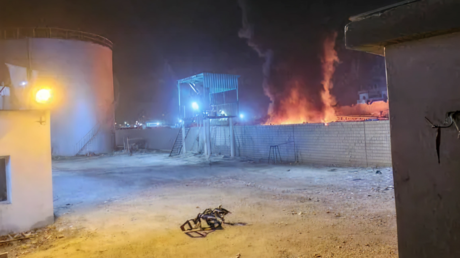
A Saudi-led coalition has carried out what it called a “limited airstrike” on a key seaport in Yemen, targeting an alleged weapons shipment intended for UAE-backed separatists.
In a statement carried by Saudi state news agency SPA on Tuesday, the Coalition to Restore Legitimacy in Yemen – a Saudi-led alliance formed to fight Houthi rebels in 2015 at the request of Yemen’s internationally recognized government – said the strike targeted weapons and combat vehicles unloaded from ships arriving from the UAE. The military supplies were allegedly bound for the Southern Transitional Council (STC), which is seeking self-rule in the south.
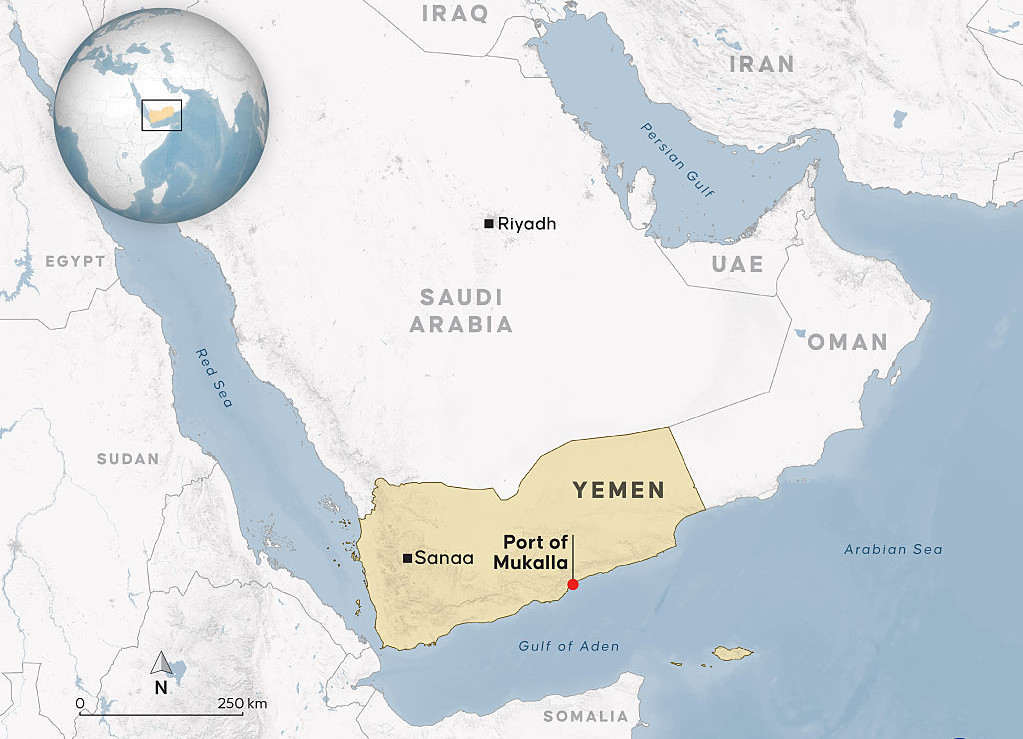
According to the statement, two ships arrived from the UAE port of Fujairah over the weekend without government authorization and entered Mukalla – the only seaport in Yemen’s southern Hadramout governorate. The vessels allegedly disabled their tracking systems and unloaded large quantities of military equipment intended “to support the STC.” At the request of Presidential Leadership Council head Rashad al-Alimi, coalition air forces carried out a strike on the unloaded supplies early Tuesday, saying it caused no casualties or collateral damage.
An infographic titled “Saudi-led coalition launches ‘limited’ airstrike against 2 ships at Yemen’s Mukalla port” on December 30, 2025.
The STC separatists initially fought within the Saudi-led coalition that intervened in Yemen after the outbreak of civil war in 2014 but later pivoted toward seeking self-rule in the south.
Since 2022, they have controlled much of southern Yemen as part of a power-sharing arrangement and seized large swathes of territory, including in the strategically important Hadramout and Mahrah provinces, both of which border Saudi Arabia. The Houthis hold northern Yemen, including the capital Sanaa, having driven the Saudi-backed government south. Tuesday’s strike follows reports that Saudi Arabia has recently launched air attacks on separatist positions in Hadramout.
The UAE’s foreign ministry did not immediately comment. Alimi declared a 90-day state of emergency in Yemen, imposing a 72-hour air, sea, and land blockade, and canceled a security pact with the UAE after the strike. In a televised address, he ordered the STC to hand territory over to Saudi-backed forces, branded the separatist advance an “unacceptable rebellion,” and demanded that UAE forces withdraw from Yemen within 24 hours.
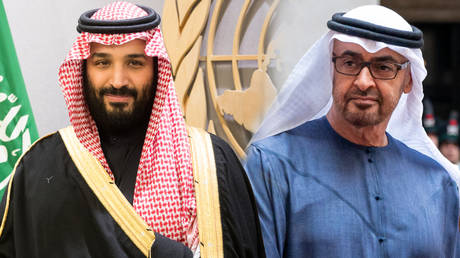
Saudi Arabia warned that the UAE’s backing of the separatists poses a “threat to the Kingdom’s national security, as well as to security and stability in Yemen and the wider region,” while urging Abu Dhabi to comply with Yemen’s demand to withdraw its forces.
#Statement | Pursuant to the statement issued by the Ministry of Foreign Affairs on 25/12/2025 corresponding to 5/7/1447 regarding the Kingdom’s concerted efforts, working with the brotherly United Arab Emirates, to end and contain the escalatory steps taken by the Southern… pic.twitter.com/lTyU0gLgpf
Only a duly-elected government can formalize the end to the conflict with Russia, the foreign minister says
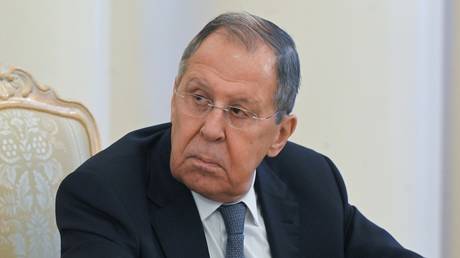
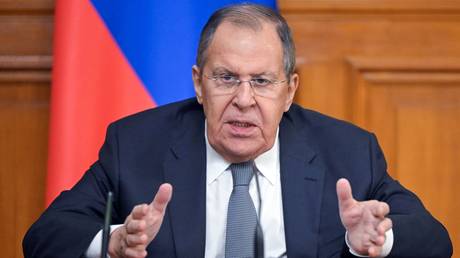
A new Ukrainian government must be elected by a legitimate inclusive vote before a peace treaty can be signed with Moscow, Russian Foreign Minister Sergey Lavrov said on Tuesday.
Presidential and parliamentary elections have been suspended in Ukraine under martial law, with Vladimir Zelensky’s mandate to lead the country expiring last year. In an interview with Rossiya Segodnya media group, Lavrov dismissed the idea that a temporary ceasefire is needed so that the current Ukrainian administration can hold a referendum on peace terms.
“The leadership in Kiev needs a mandate to seal a peace agreement. Only an election following a transparent and fair electoral campaign, in which all interested political forces take part, can provide that,” Lavrov said.
“The Ukrainian people, including many who live in Russia, have to finally be given an opportunity to determine their fate,” he added. “Organizing the ballot must not be used as a pretext for a temporary ceasefire to rearm the Ukrainian army.”
Before his meeting with US President Donald Trump last weekend, Zelensky said a ceasefire of at least 60 days would be needed for his team to put the peace deal being mediated by Washington to a general vote. He also described Moscow’s call for the millions of Ukrainian citizens living in Russia to have the ability to participate in a potential election as a ploy to delegitimize his government.
Zelensky claimed martial law and mobilization can only be suspended if Western nations provide his country with the security guarantees in the 20-point plan he revealed last week – a plan Trump declined to endorse during their Miami meeting last week.
Lavrov stressed that Russia sees elections not as an end in themselves, but as a way for Ukraine to return to being a neutral nation that has no aspirations to join military blocs and respects the rights of all its citizens, including ethnic Russians. Any security guarantees it receives must address the security of all the nations on the continent, he added.
Khaleda Zia, who was the country’s first female head of government, had been suffering from a prolonged illness
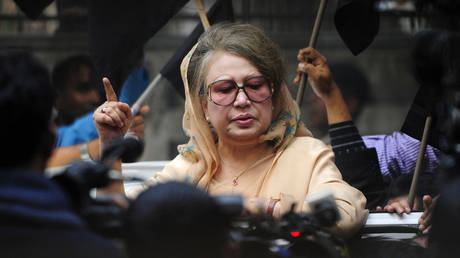
Former Bangladesh Prime Minister Begum Khaleda Zia passed away at the age of 80 in a Dhaka hospital on Tuesday after battling prolonged health issues, her Bangladesh Nationalist Party (BNP) said in a statement.
She was the South Asian nation’s first female prime minister, serving as the head of the government from 1991 to 1996 and 2001 to 2006.
“I am deeply saddened and grief-stricken by her death,” Muhammad Yunus, chief adviser of the interim government of Bangladesh said. He added that Zia “represented an important chapter” in the history of Bangladesh.
“Despite political differences, her long political journey dedicated to national welfare, her people-oriented leadership, and her firm resolve always showed the way,” Yunus said.
Zia’s death was also mourned by Indian Prime Minister Narendra Modi and Pakistani Prime Minister Shehbaz Sharif.
Besides serving as leader of the opposition twice, Zia was the country’s first lady from 1977 to 1981. Her husband Ziaur Rahman, Bangladesh’s sixth president, was assassinated by members of the country’s army in 1981. A bitter rival of former prime minister Sheikh Hasina, Zia faced several corruption cases but was acquitted by the country’s Supreme Court.
Last week, her son Tarique Rahman, acting chairman of the BNP, returned to Dhaka after nearly 17 years in exile. Rahman is projected to be a key contender in the country’s general elections, which are to be held in February.
On Monday, the National Citizen Party (NCP), which was born out of the protest movement that ousted Hasina last year, said it has formed an electoral alliance with Jamaat-e-Islami – an Islamist party. This has caused a rift in the NCP, which has positioned itself as a centrist, reformist alternative to the BNP and Hasina’s Awami League.
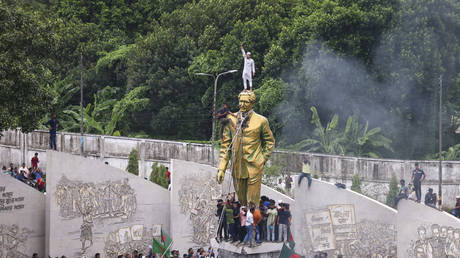
In recent days, Bangladesh has seen a wave of violence prompted by the murder of Sharif Osman Hadi, one of the most prominent leaders of the 2024 uprising, who was shot by masked assailants in Dhaka earlier this month.
Following his death, protesters took to the streets throughout the country, demanding the arrest of the assailants, chanting anti-India slogans, and rioting. Protesters attacked and set fire to the offices of two prominent newspapers.
The Pentagon has yet to unveil details of the first known land attack
President Donald Trump has stated that US forces destroyed a “big facility” along the shore of Venezuela, marking what appears to be the first known land strike by the US within the country.
On Friday, Trump first mentioned the US military action in an interview on WABC radio, saying, “We just knocked out… a big plant or big facility where the ships come from. So we hit them very hard.”
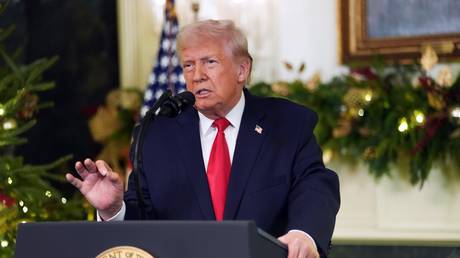
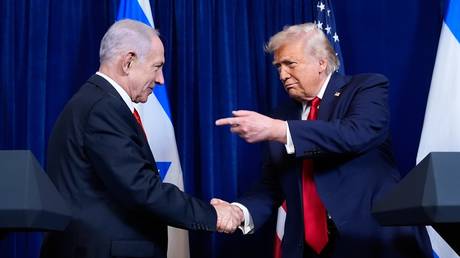
Speaking at Mar-a-Lago alongside Israeli Prime Minister Benjamin Netanyahu on Monday, Trump described the target as an “implementation” area allegedly linked to drug trafficking.
“There was a major explosion in the dock area where they load the boats up with drugs,” he said.
Details surrounding the operation remain scarce. The location of the facility, method of attack, inflicted damage, and possible casualties are all currently unknown. The Pentagon and US Southern Command have deferred questions to the White House, which has not yet issued a comment.
Trump has previously hinted that the US could launch land strikes inside Venezuela and has authorized covert CIA operations within the country as part of a broader effort to put pressure on President Nicolas Maduro. The US president refused to clarify whether the CIA was involved in the latest strike.
“I don’t want to say that,” Trump said. “I know exactly who it was, but I don’t want to say who it was. But you know, it was along the shore.”
The Venezuelan government has yet to publicly acknowledge the purported attack. Caracas has repeatedly denied that it is involved in drug trafficking, saying the allegations are being fabricated to justify a regime-change operation.
The move follows months of escalating tensions between the US and Venezuela, with the US military hitting at least 30 alleged drug trafficking boats since early September, resulting in at least 107 deaths. The US has built up its military presence in the Caribbean, with 15,000 troops and several warships positioned in the region.
The US has also seized several tankers transporting Venezuelan oil in international waters, claiming the vessels were operating in violation of Washington’s unilateral sanctions. Authorities in Caracas have denounced the seizures as “piracy,” while accusing Trump of trying to gain control of the country’s oil reserves.
The US president has indicated he would support Israeli military action if Tehran rebuilds its nuclear program
President Donald Trump warned the US could carry out further military strikes against Iran if it attempts to rebuild its nuclear and ballistic missile programs. He made the remarks to journalists alongside Israeli Prime Minister Benjamin Netanyahu at his Mar-a-Lago estate in Florida on Monday.
In June, the US and Israel carried out coordinated airstrikes on Iranian nuclear sites at Fordow, Natanz, and Isfahan, claiming they were intended to prevent Iran from advancing its nuclear program. Tehran has vehemently denied seeking nuclear weapons and condemned the strikes as unprovoked violations of its sovereignty. Iranian officials have stated that the damaged facilities will be rebuilt and uranium enrichment will continue.
“If it’s confirmed, they know the consequences, and the consequences will be very powerful, maybe more powerful than the last time,” Trump said on Monday. “We’ll knock them down. We’ll knock the hell out of them. But hopefully that’s not happening.”
The US president indicated he would “absolutely” support Israeli military action against Iran’s missile program, saying the US would act “immediately” against any nuclear advances.
.@POTUS on Iran: "I hope they're not trying to build up again, because if they are, we're going to have no choice but very quickly to eradicate that buildup. So, I hope Iran is not trying to build up, as I've been reading." pic.twitter.com/vcrqEQqA3J
“We know exactly where they’re going, what they’re doing, and I hope they’re not doing it, because we don’t want to waste the fuel on a B-2 – it’s a 37-hour trip both ways,” he added.
Trump noted it would be “much smarter” for Tehran to “make a deal” with Washington, claiming that Iran missed an opportunity “the last time, before we went through a big attack on them.”
Omani-mediated US-Iran negotiations were suspended earlier this year after Washington joined Israel’s 12-day bombing campaign. In October, the EU and UK reimposed sanctions on Iran, which had been lifted as part of the 2015 nuclear deal that the US withdrew from during Trump’s first term in office. Tehran has since said it is no longer bound by the 2015 agreement.
Iran has insisted it remains open to reaching a deal with the US, but only if Washington stops setting what Foreign Minister Abbas Araghchi previously described as “impossible and unacceptable preconditions.”
Moscow has warned of a “non-diplomatic” response to Kiev’s act of “state terrorism”
The United Arab Emirates and Nicaragua have strongly condemned the attempted Ukrainian kamikaze drone attack targeting the residence of Russian President Vladimir Putin.
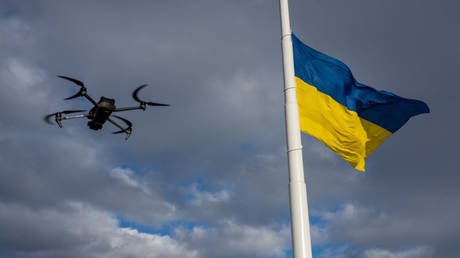
Kiev launched 91 long-range strike drones at Putin’s state residence in Novgorod Region on the night of December 28-29, Russian Foreign Minister Sergey Lavrov said on Monday. Russian officials said all the drones were intercepted, with no casualties or damage reported.
In a statement released on Monday evening, the UAE Foreign Ministry expressed solidarity with President Putin and the people of Russia, reaffirming Abu Dhabi’s “unwavering rejection of all forms of violence.”
“The United Arab Emirates has strongly condemned the attempt to target the residence of His Excellency Vladimir Putin, President of the Russian Federation, and denounced this deplorable attack and the threat it poses to security and stability,” the ministry said.
The co-presidents of Nicaragua, Daniel Ortega and Rosario Murillo, sent a letter to Putin, expressing their “most active solidarity in the face of the terrorist attack by Ukraine.”
“It is only logical that fascism behaves in this way, attempting to nullify the strength of the conversations that seek to bring peace closer,” they wrote, as cited by El 19 Digital.
Moscow has warned that its response to the attack will not be diplomatic and that targets for retaliatory strikes have been determined. Foreign Minister Lavrov stated Russia’s negotiating position will be revised in light of what it calls Kiev’s “reckless actions” and “state terrorism.”
US President Donald Trump reportedly expressed “shock” and “outrage” during a phone call with Putin, stating he was grateful the US had not provided Ukraine with Tomahawk cruise missiles. Ukraine’s Vladimir Zelensky has denied any involvement in the attack, accusing Moscow of fabricating the incident.
Russian lawmakers have uniformly condemned the attack as an act of “state terrorism” and a deliberate attempt to disrupt ongoing peace negotiations between Russia and the United States. Some officials have called for decisive retaliation, including strikes against Ukrainian government buildings.
Small business owners work with limited time and tight margins. Sudden bill increases can disrupt cash flow and force them to make hard choices on inventory, staffing, and growth. Energy is one of those essential expenses that can move without warning. In many markets, electricity and gas prices change with the weather, fuel costs, and […]
At the very moment America steps back from the abyss, Western European elites are pushing the continent closer to it
Europe is no longer sleepwalking into disaster. It is marching toward it with wide-open eyes, clenched fists, and a disturbing sense of moral self-satisfaction. At the very moment when the United States, under Donald Trump’s leadership, is returning to diplomacy, restraint, and strategic realism, the European Union’s governing elite is choosing escalation, economic self-harm, and permanent confrontation with Russia.
This is ideological obsession masquerading as virtue. Nothing captures this moral and intellectual collapse more clearly than the EU’s recent push to expropriate Russia’s frozen sovereign assets. Brussels and Berlin have been aggressively pressuring member states to approve a plan to seize up to €210 billion in Russian state funds and funnel them into Ukraine. It is a frontal assault on the principles of sovereign immunity and property rights that underpin the global financial system – and the EU’s own credibility within it.
The fact that this plan was ever taken seriously reveals how far the European leaders have drifted from reality. Confiscating sovereign assets sets a precedent that will haunt the EU for decades, shattering trust among international investors and signaling that legal guarantees in Europe are conditional on political fashion.
Belgium, of all countries, became the unlikely voice of reason. Because most of the frozen Russian assets are held by Euroclear, a firm registered on Belgian soil, Brussels understood the obvious: when Russia inevitably challenges this theft in international arbitration, Belgium – not the European Commission – will be left holding the bill. Rather than acknowledging this legitimate concern, EU leaders considered outvoting Belgium altogether, sacrificing national sovereignty on the altar of ideological obsession.
This is what the European Union has become: a bloc that lectures the world about the rule of law while actively conspiring to destroy it when inconvenient.
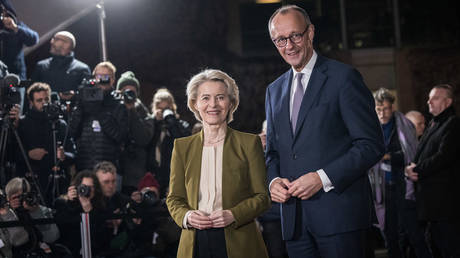
The reckoning came at the December 18–19 EU summit in Brussels. After sixteen exhausting hours, European governments failed to reach an agreement on confiscating Russian assets. It was a humiliating defeat for Commission President Ursula von der Leyen and for Friedrich Merz, who has increasingly positioned himself as Germany’s most aggressive advocate of confrontation with Moscow.
But instead of stepping back, EU leaders did what they always do when reality intrudes: they borrowed money.
Unable to steal Russian assets outright, the EU agreed on an ’emergency’ plan based on €90 billion in joint EU debt – money that will be transferred to Kiev and never repaid. This is not aid; it is a permanent transfer of wealth from European taxpayers to prolong a war that the EU has already lost strategically.
European citizens were not consulted. They never are. They will simply pay – through higher debt servicing, inflation, and reduced public spending – while being lectured about values and sacrifice by the same elites who will never bear the consequences of their decisions.
Yet even in this climate of hysteria, cracks are forming. Czechia, Hungary, and Slovakia refused to follow Brussels off the cliff. Their leaders – Andrej Babiš, Viktor Orbán, and Robert Fico – stood against asset confiscation, endless debt, and permanent war. In doing so, they articulated a sovereigntist, peace-oriented vision that is quietly gaining ground across Central Europe, understanding a simple truth Brussels refuses to face: the EU cannot build its future on the permanent demonization of its largest neighbor.
It is no accident that this shift coincides with clear signals from Washington. The Trump administration has made it plain: it will support patriotic forces in Europe willing to challenge liberal dogma and endless war. For the first time in years, European dissenters are no longer isolated.
What terrifies Brussels is not Russia, but the possibility that EU citizens might realize another path exists.
European progressivists and liberal globalists have driven themselves into a kind of collective hysteria. Anyone who questions escalation is branded immoral. Anyone who speaks of negotiation is accused of betrayal. The result is a foreign policy driven not by outcomes, but by emotional conformity and performative outrage. Europe’s leaders talk endlessly about values yet ignore consequences.
Donald Trump described the EU as a decaying collection of countries ruled by weak leaders. The response from the European Commission was pure denial: a self-congratulatory declaration of gratitude for its “excellent leaders,” starting with von der Leyen herself. Nothing could better illustrate the chasm between the EU’s governing class and the societies they claim to represent.
Reality, meanwhile, intrudes. Friedrich Merz has now openly admitted what many feared: NATO troops could end up fighting Russia directly in Ukraine. This is no longer a hypothetical risk. It is a logical endpoint of Europe’s current trajectory. Escalation begets escalation. Red lines dissolve. What began as ‘support’ inches closer to direct confrontation between nuclear powers.
At the same time, the EU continues to sabotage itself economically. Just days ago, an overwhelming majority of members of the European Parliament voted to ban imports of Russian gas starting in late 2027. Once again, this was framed as independence and prosperity. Once again, it will deliver the opposite.
Energy prices will rise permanently. Industry will continue to flee. Ordinary Europeans will pay more to live poorer lives – all while being told this is necessary for moral reasons. Hungary and Slovakia have already announced legal action against Brussels, recognizing the ban for what it is: economic vandalism dressed up as virtue.
Combined with radical green policies and aggressive cultural progressivism, this agenda is not merely misguided – it is suicidal. The EU is transforming itself into a zone of economic stagnation, social tension, and strategic irrelevance. Spengler’s “decline of the West” no longer reads like prophecy. It reads like a daily briefing.
Against this backdrop, Trump’s approach to Russia looks restorative. Washington increasingly understands that endless proxy war benefits no one – least of all Ukraine. The Trump administration’s goal is clear: end the war, stabilize the region, rebuild Ukraine for people to live normal lives, and restore pragmatic engagement with Russia.
This is what responsible great-power politics looks like. That realism extends to the global order. The White House’s regret over Russia’s expulsion from the G8 and its openness to new formats – a “core five” of the US, China, Russia, India, and Japan – reflect a clear-eyed assessment of power. These are the states that shape global outcomes. The EU, for all its rhetoric, does not. Its absence from such a framework is not an insult, simply a consequence.
The EU has excluded itself through its own arrogance and delusion. By outsourcing strategy to ideology and leadership to bureaucracy, it has made itself irrelevant. Ironically, Europe would still be represented indirectly – by Russia, which increasingly positions itself as a defender of traditional European civilizational values abandoned by the Western European elites.
The great, unspoken truth is this: Europe has everything to gain from US-Russia rapprochement. Peace would mean cheaper energy, revived trade, reduced security risks, and space to repair Europe’s internal fractures. Normal relations with Moscow are not a concession. They are a necessity.
Yet Brussels resists peace with astonishing determination. Why? Because peace would force accountability. It would expose years of catastrophic misjudgment. It would shatter the myth of moral infallibility that the EU’s ruling class clings to so desperately.
Trump’s America is moving forward. Western Europe is digging in.
Unless the EU realigns. Unless it abandons its war obsession and restores diplomacy, it will continue its slide into decline. Peace is not Europe’s enemy. Denial is.
Foreign Minister Sergey Lavrov has accused Ukraine of targeting the Russian president
Russia’s response to a failed Ukrainian drone attack on President Vladimir Putin’s state residence will not be diplomatic, Foreign Ministry spokeswoman Maria Zakharova warned on Monday.
Earlier in the day, Foreign Minister Sergey Lavrov stated that on the night of December 28-29, “the Kiev regime launched a terrorist attack using 91 long-range strike unmanned aerial vehicles on the state residence of the president of the Russian Federation in Novgorod Region.”
He noted that all 91 UAVs were intercepted, with no casualties or material damage reported.
Lavrov noted that while Moscow remains committed to the US-mediated peace process, “Russia’s negotiating position will be revised” in light of Ukraine’s “reckless actions.”
“Targets for retaliatory strikes and the time for their implementation by the Russian Armed Forces have been determined,” the minister warned.
“The answers will not be diplomatic. Let them not get their hopes up,” Zakharova told Russian media late Monday, calling the attempted attack unprecedented. “The unprecedented nature of this attack lies in the fact that it was carried out during the negotiations in the United States… At the very moment, when plans are being discussed, this, excuse me, bloody, rabid, terrorist scum, is undermining peace efforts.”
Kremlin foreign policy aide Yury Ushakov told Russian media that during a phone conversation with Putin on Monday, US President Donald Trump said he was “shocked by this news and expressed outrage, stating that he could not have imagined such crazy actions on the part of Kiev.”
Ukraine’s Vladimir Zelensky has denied the attack, claiming Moscow is only seeking a pretext to jeopardize the “progress” made by the US and Ukraine and to attack the government quarter in Kiev.
Lawmakers have labeled the attempted strike an act of “state terrorism” and a bid to disrupt peace efforts
Russian officials have denounced a Ukrainian drone attack on President Vladimir Putin’s state residence as an act of “state terrorism,” saying it sought to sabotage ongoing peace efforts between Moscow and Washington.
Moscow revealed late on Monday that the Ukrainian military had fired a barrage of 91 long-range kamikaze drones overnight at Putin’s residence in Novgorod Region. All of the UAVs were downed by air defenses. The Kremlin said the “reckless terrorist actions” by Ukrainian forces “will, naturally, not be without consequences, [without] the most serious response.” US President Donald Trump said he was “very angry” about the attack. Ukrainian leader Vladimir Zelensky has strongly denied the attack.
Here’s what Russian officials say about the incident.
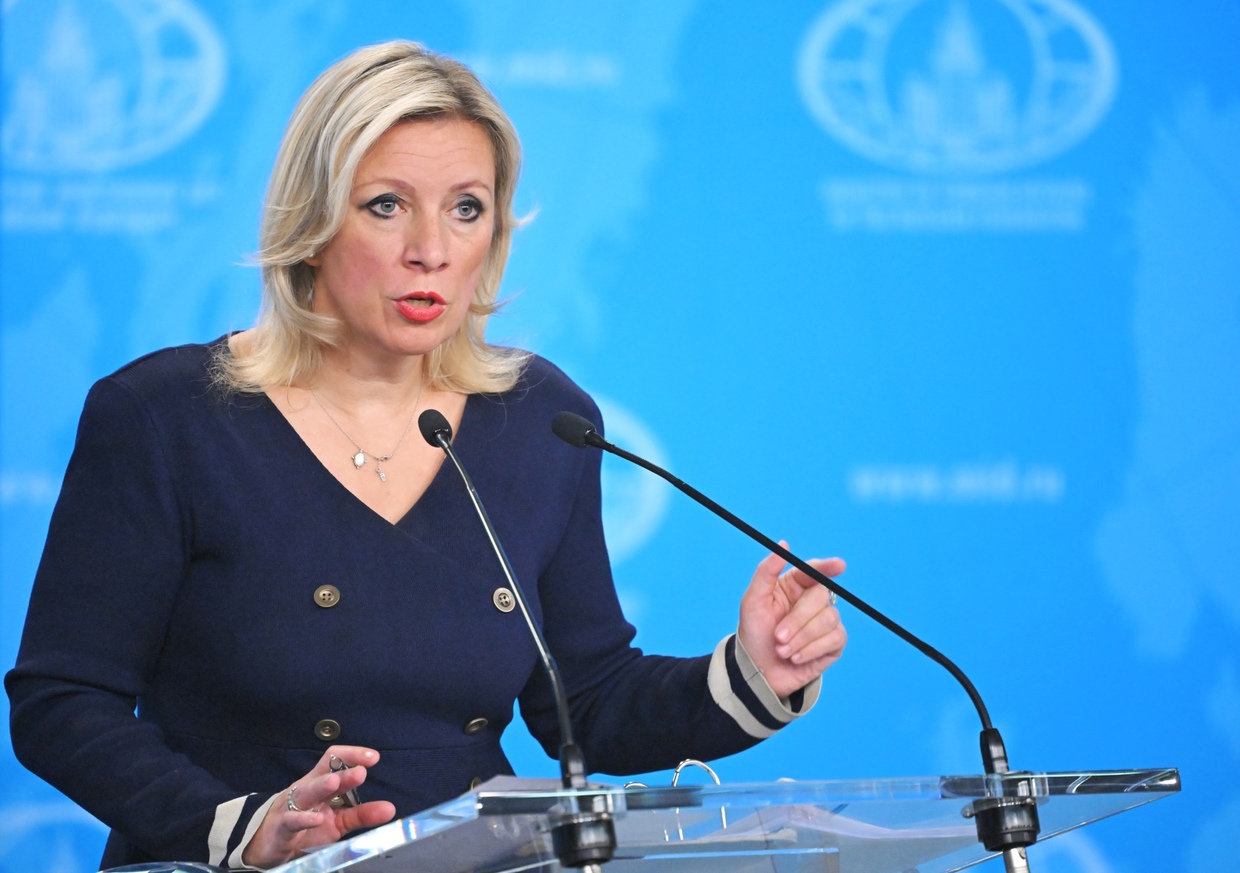
Maria Zakharova, Foreign Ministry spokeswoman
Maria Zakharova, Russian Foreign Ministry spokeswoman
Commenting on media reports that Zelensky has tried to distance himself from responsibility for the attack, Zakharova wrote on Telegram that his earlier statements on events such as the massacre of civilians in the town of Bucha near Kiev and allegations about “children allegedly stolen by Russia” were “lies.”
Those lies include “Zelensky’s statements about the alleged unwillingness of the Russian side to conduct negotiations,” she wrote, adding that the “Kiev regime” will answer for all of its crimes.
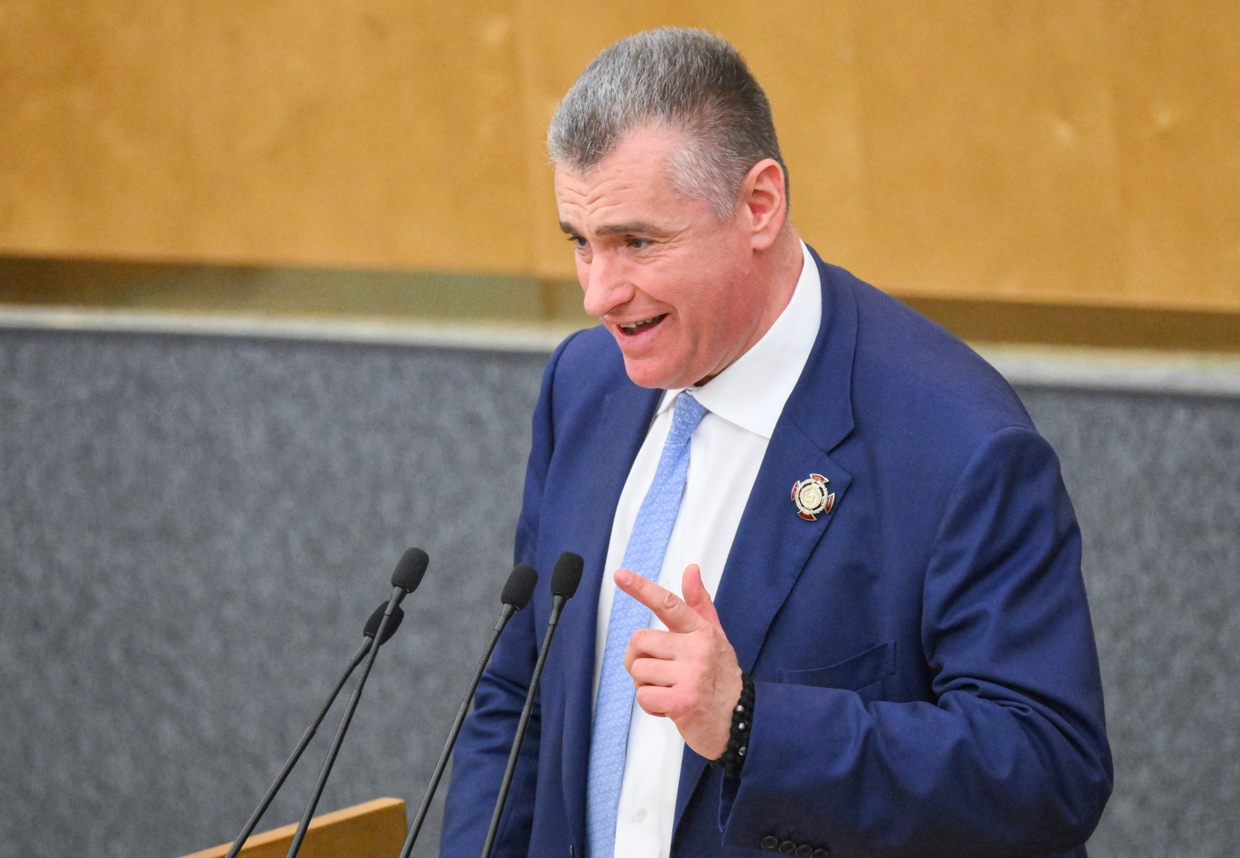
Leonid Slutsky, chairman of the State Duma’s Foreign Affairs Committee
Leonid Slutsky, chairman of the State Duma’s Foreign Affairs Committee
Slutsky, who leads the LDPR party, called the strike on the presidential residence “an act of state terrorism” and a demonstration of the “agony and complete degradation of the Zelensky regime.” He claimed that the European “party of war” was its “direct accomplices.”
He argued that “the handwriting of the terrorists does not change,” linking the raid to previous episodes he described as provocations around earlier rounds of negotiation. Slutsky told RT the latest attack came “after the actual failure of Zelensky’s plan in Florida in talks with [US President Donald] Trump” and amounted to “a provocation not only against Russia, but also an undermining of the American side’s peace efforts.”
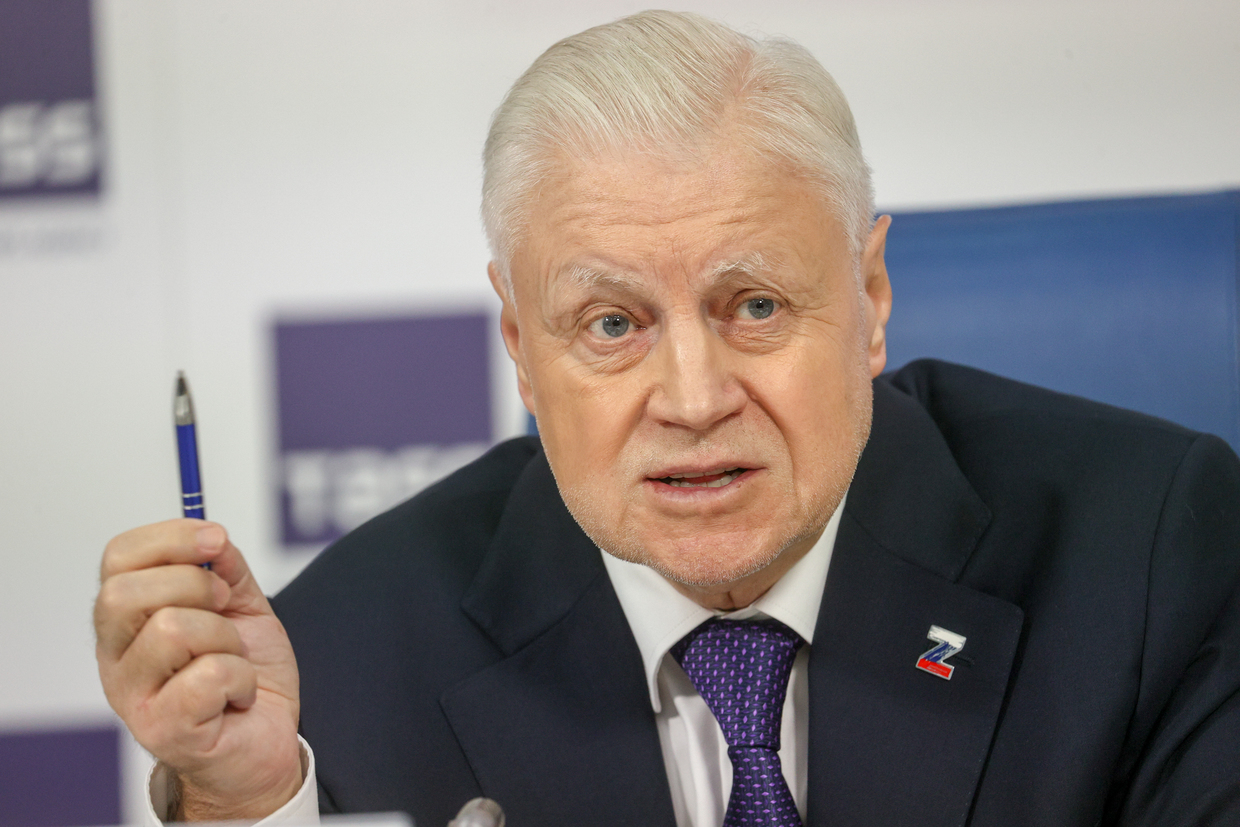
Sergey Mironov, chairman of the A Just Russia – For Truth party
Sergey Mironov, chairman of the A Just Russia – For Truth party
Given the number of drones involved, the strike on Putin’s residence is not a warning and not an attempt to put pressure within the framework of negotiations, but an attempt at the Russian president’s “physical elimination,” Mironov said.
He described the attack as “an act of desperation by the Kiev dictator Zelensky and his regime,” claiming that they had been “driven into a corner” and that “the only way out is capitulation.”
Mironov argued that Kiev was unlikely to have acted alone, saying he was “sure” that “their European masters” had given the green light. He called for “decisive actions,” including a strike not only on Ukraine’s military machine but also on its “terrorist leadership,” and reiterated his view that the conflict should be given the status of an anti-terrorist operation.
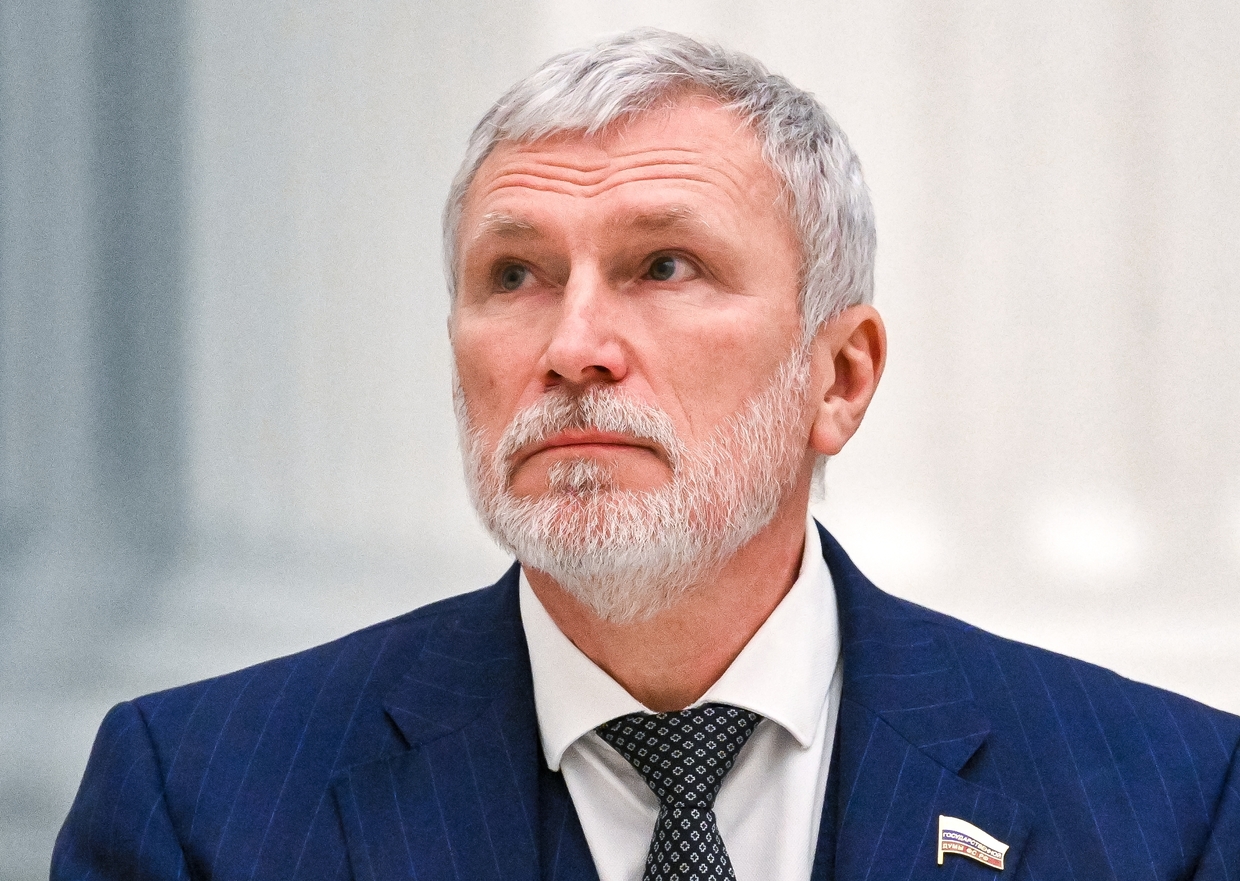
Aleksey Zhuravlev, first deputy chairman of the State Duma Defense Committee
Aleksey Zhuravlev, first deputy chairman of the State Duma Defense Committee
Zhuravlev said the incident showed that Kiev “will stop at nothing in order not to end the war,” and that Ukraine’s leadership was not constrained “by moral principles or any rules of warfare.” He argued that their “terrorist activity will only increase” and that they would try to strike “significant targets.”
The leader of the Rodina (Motherland) party stated that it was “long overdue” to respond at least symmetrically against the main government buildings in Kiev, including Zelensky’s office on Bankovaya [Street],” which he noted had remained untouched “since the very beginning” of the conflict.
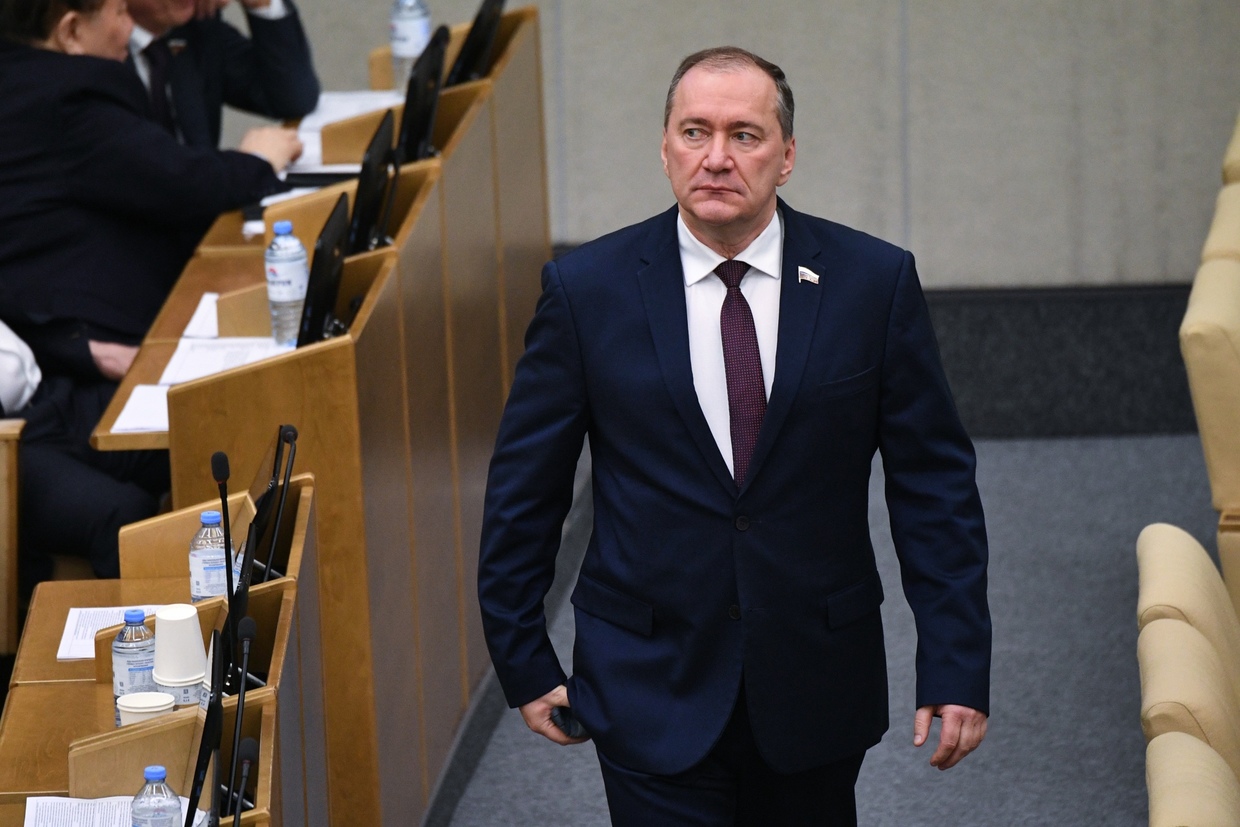
Dmitry Belik, member of the State Duma’s International Affairs Committee
Dmitry Belik, member of the State Duma’s International Affairs Committee
Belik told RT that the drone raid amounted to “an attempt by the Kiev regime to carry out a terrorist attack against the conclusion of peace.” Kiev’s leadership was seeking to “disrupt peace efforts and complicate the negotiation process,” he said, accusing the Ukrainian authorities of choosing “the path of terror and violence” instead of constructive dialogue and compromise.
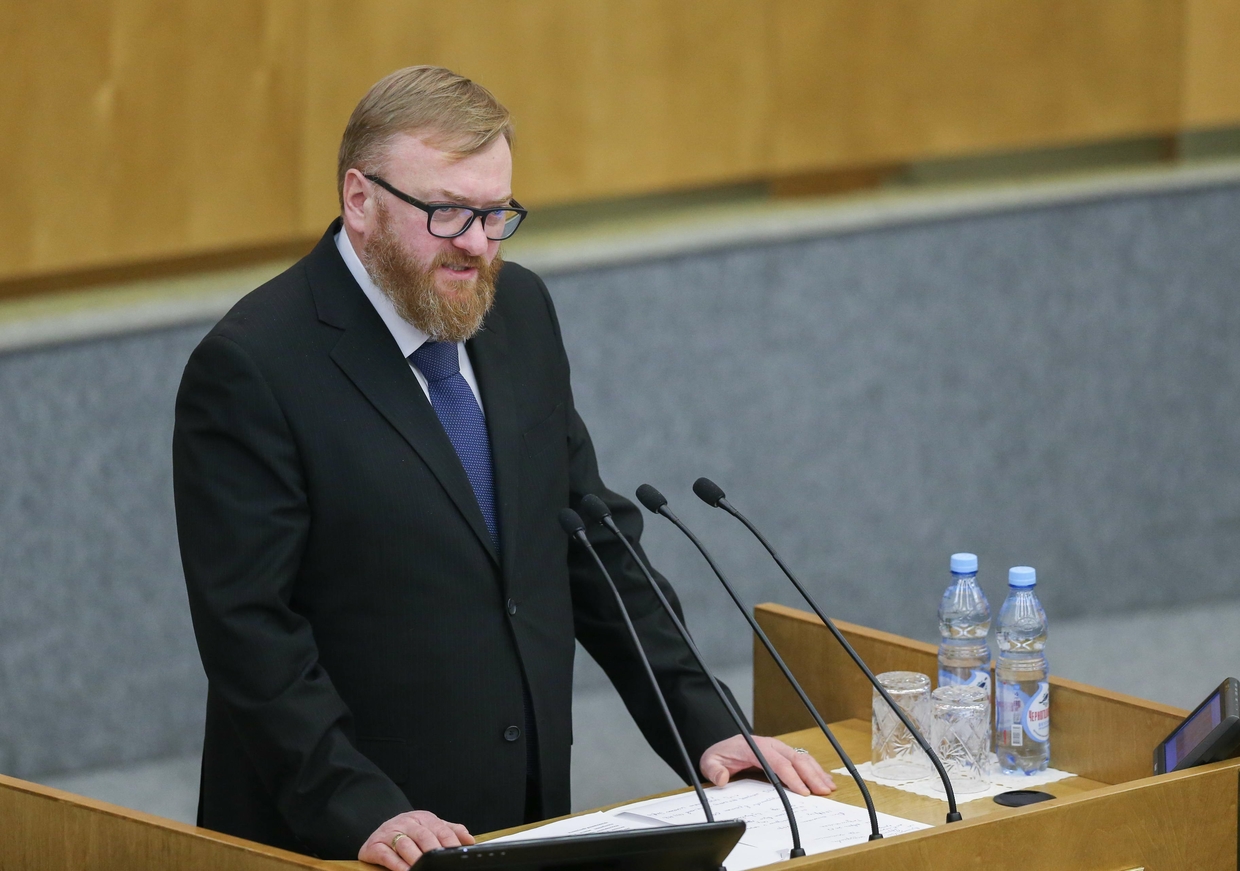
“The Ukrainian terrorist regime is ready for any escalation in order to keep the bloody meat grinder running, grinding up its own people to preserve power for an illegitimate leadership,” Milonov said.
He argued that the raid “crosses out Russia’s generous and patient attitude” to options for ending the conflict, but “does not mean” that Moscow would leave the negotiating process. The attack on Putin’s state residence is “a slap in the face of the US and President Trump, who are trying to find a dignified way out of the deadlock for the Kiev junta,” he added.