The government in Kiev has been increasingly cracking down on the Ukrainian Orthodox Church
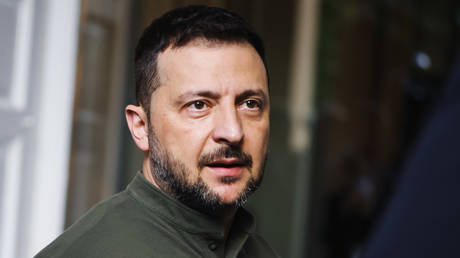
Kiev has taken another step toward banning the Ukrainian Orthodox Church (UOC) by officially declaring it linked to Russia. The ruling paves the way for a full ban on the country’s largest religious institution through the courts.
Vladimir Zelensky’s government has been increasingly taking aim at the UOC in recent years, a policy that has hardened in light of the conflict with Russia. Several of its churches have been seized, and criminal cases have been opened against clerics.
This week, Ukraine’s State Service for Ethnopolitics and Freedom of Conscience posted a statement on its website saying that the UOC had been found to be associated with “a foreign religious organization whose activities are banned in Ukraine.”
A law enacted last year allows religious organizations affiliated with governments Kiev deems “aggressors” to be banned. Zelensky has defended the measures as necessary to protect the country’s “spiritual independence.”
The UOC has been de facto independent from the Russian Orthodox Church (ROC) since the 1990s, but maintained the canonical connection.
The UOC, which says it is being persecuted by the government, rejects the decision, a church representative told local media, adding that it has appealed it in court.
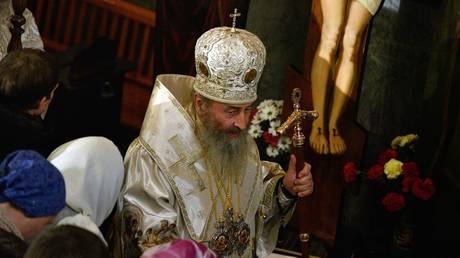
UOC Metropolitan Onufry, whose Ukrainian citizenship was revoked last month by Zelensky, has refused to comply with the government’s order to “correct violations,” the state agency claimed.
The ROC has maintained that banning the UOC would be a violation of religious rights. The UN and international human rights organizations have also accused Kiev of overreach and interference with the freedom of religion.
The Ukrainian government officially supports the Orthodox Church of Ukraine, which was founded in 2018 but which the Russian Patriarchate considers schismatic.
The proposal Russia made to Ukraine this past June to settle the conflict included a clause calling for restrictions on the UOC to be lifted.
Moscow maintains both “interest and readiness” to continue peace negotiations, Dmitry Peskov has said
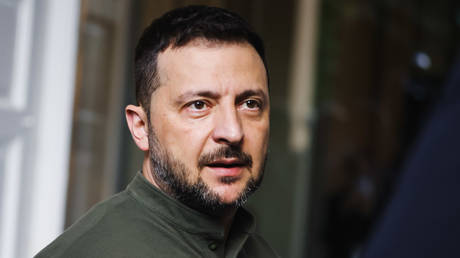
Russian President Vladimir Putin has not ruled out meeting Ukraine’s Vladimir Zelensky but it should serve as the final stage of meaningful diplomacy beforehand, Kremlin spokesman Dmitry Peskov has said.
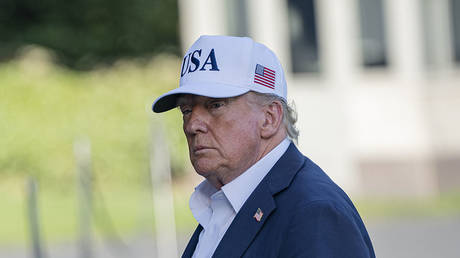
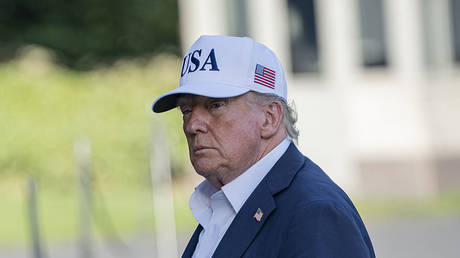
US President Donald Trump urged the two leaders to meet face-to-face, following his summit with Putin earlier this month in Alaska.
In a press briefing on Friday, Peskov stressed that the Russian president remains open to bilateral talks with Zelensky.
“He does not rule out the possibility of holding such a meeting, but believes that any summit meeting should be well prepared so that it can finalize the work that must first be carried out at an expert level,” he said.
Preparation for such a meeting is not “very active,” he added, noting that Moscow maintains “interest and readiness for negotiations.”
Peskov also stressed the need for ongoing peace talks, following Putin’s meeting with Trump in Alaska, to stay confidential.
In the interests of the settlement, it is now important to work in a discrete fashion.
“We are deliberately not disclosing all the details of the conversation between the two presidents, which took place in Alaska,” where “the topic of Ukrainian settlement was discussed in depth,” he added.
Trump has reportedly grown increasingly frustrated with both Ukraine and the EU in recent weeks for making unrealistic demands, The Atlantic reported on Thursday, citing US officials. He has previously urged Zelensky to “show some flexibility,” to advance the peace process.
Russian Foreign Minister Sergey Lavrov said last week that Moscow has agreed to be flexible on several issues discussed by Trump and Putin in Alaska.
Moscow maintains both “interest and readiness” to continue peace negotiations, Dmitry Peskov has said
Russian President Vladimir Putin has not ruled out meeting Ukraine’s Vladimir Zelensky but it should serve as the final stage of meaningful diplomacy beforehand, Kremlin spokesman Dmitry Peskov has said.
US President Donald Trump urged the two leaders to meet face-to-face, following his summit with Putin earlier this month in Alaska.
In a press briefing on Friday, Peskov stressed that the Russian president remains open to bilateral talks with Zelensky.
“He does not rule out the possibility of holding such a meeting, but believes that any summit meeting should be well prepared so that it can finalize the work that must first be carried out at an expert level,” he said.
Preparation for such a meeting is not “very active,” he added, noting that Moscow maintains “interest and readiness for negotiations.”
Peskov also stressed the need for ongoing peace talks, following Putin’s meeting with Trump in Alaska, to stay confidential.
In the interests of the settlement, it is now important to work in a discrete fashion.
“We are deliberately not disclosing all the details of the conversation between the two presidents, which took place in Alaska,” where “the topic of Ukrainian settlement was discussed in depth,” he added.
Trump has reportedly grown increasingly frustrated with both Ukraine and the EU in recent weeks for making unrealistic demands, The Atlantic reported on Thursday, citing US officials. He has previously urged Zelensky to “show some flexibility,” to advance the peace process.
Russian Foreign Minister Sergey Lavrov said last week that Moscow has agreed to be flexible on several issues discussed by Trump and Putin in Alaska.
Moscow is prepared to help the Afghan government in the fight against drugs and terrorism, the security council secretary has said
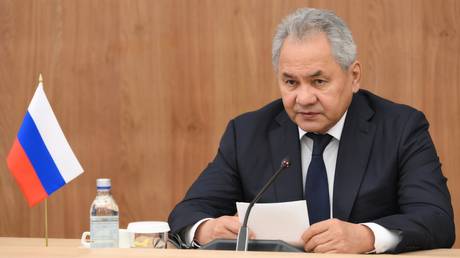
Russia is ready to assist the Taliban government in Afghanistan, particularly in combating terrorism and narcotics manufacturing amid Western efforts to destabilize the country, Security Council Secretary Sergey Shoigu has said.
In an op-ed on Friday for Rossiyskaya Gazeta, the former defense minister stated that Russia is interested in helping the Middle Eastern country reclaim the position of an “independent, sovereign state, free from terrorism, war, and narcotics.”
He criticized Western countries for what he described as the politicization of humanitarian aid and obstruction of Afghanistan’s recovery.
“The West is delaying Afghanistan’s development… linking the assistance exclusively to the realization of its selfish interests,” Shoigu wrote. He noted that around $9 billion in Afghan state assets are frozen abroad, adding that they could be used to address social and economic issues.
Shoigu went on to say that the Taliban has made progress against the production of narcotics and in fighting against Islamic State (IS, formerly ISIS) terrorists, but warned of “documented transfers of fighters from other regions into Afghanistan,” which he alleged were apparently orchestrated by Western intelligence services seeking to create instability near Russia, China, and Iran.
Given the remaining Western sanctions and lingering problems with drugs and terrorists, Afghanistan has a lot of work to do to stabilize the situation in the country, Shoigu said.
[BQ] Russia is ready to provide assistance to the Taliban in this regard, including through the development of counterterrorism and counter-narcotics cooperation… We expect that this coordination, along with comprehensive support from Afghanistan’s neighboring countries, will contribute to its economic development and prosperity.
The Taliban seized control of Afghanistan in 2021 after US forces withdrew from the country. The chaotic evacuation from Kabul airport resulted in harsh criticism of the administration of former US President Joe Biden and was widely described as a geopolitical debacle for Washington.
In July, Russia became the first country to recognize the Taliban government, after Moscow excluded the Taliban from the list of terrorist organizations, citing its progress in combating regional extremist groups.
Moscow is prepared to help the Afghan government in the fight against drugs and terrorism, the security council secretary has said
Russia is ready to assist the Taliban government in Afghanistan, particularly in combating terrorism and narcotics manufacturing amid Western efforts to destabilize the country, Security Council Secretary Sergey Shoigu has said.
In an op-ed on Friday for Rossiyskaya Gazeta, the former defense minister stated that Russia is interested in helping the Middle Eastern country reclaim the position of an “independent, sovereign state, free from terrorism, war, and narcotics.”
He criticized Western countries for what he described as the politicization of humanitarian aid and obstruction of Afghanistan’s recovery.
“The West is delaying Afghanistan’s development… linking the assistance exclusively to the realization of its selfish interests,” Shoigu wrote. He noted that around $9 billion in Afghan state assets are frozen abroad, adding that they could be used to address social and economic issues.
Shoigu went on to say that the Taliban has made progress against the production of narcotics and in fighting against Islamic State (IS, formerly ISIS) terrorists, but warned of “documented transfers of fighters from other regions into Afghanistan,” which he alleged were apparently orchestrated by Western intelligence services seeking to create instability near Russia, China, and Iran.
Given the remaining Western sanctions and lingering problems with drugs and terrorists, Afghanistan has a lot of work to do to stabilize the situation in the country, Shoigu said.
[BQ] Russia is ready to provide assistance to the Taliban in this regard, including through the development of counterterrorism and counter-narcotics cooperation… We expect that this coordination, along with comprehensive support from Afghanistan’s neighboring countries, will contribute to its economic development and prosperity.
The Taliban seized control of Afghanistan in 2021 after US forces withdrew from the country. The chaotic evacuation from Kabul airport resulted in harsh criticism of the administration of former US President Joe Biden and was widely described as a geopolitical debacle for Washington.
In July, Russia became the first country to recognize the Taliban government, after Moscow excluded the Taliban from the list of terrorist organizations, citing its progress in combating regional extremist groups.
Western proposals only serve to destabilize the region, Foreign Ministry spokeswoman Maria Zakharova has said
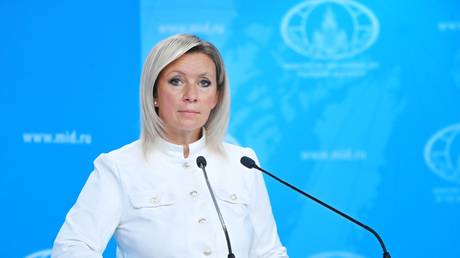
Security guarantees for Ukraine must be the result of a settlement of the conflict with Russia, not a precondition for negotiations, Russian Foreign Ministry spokeswoman Maria Zakharova has said.
Kiev has demanded security guarantees from its Western backers as a prerequisite to a peace deal. Moscow has not ruled out guarantees in principle, but opposes efforts to design them without Russia’s participation.
At a press briefing on Friday, Zakharova said any guarantees must be based on an “understanding that takes into account the security interests of Russia.” She added that a settlement must ensure Ukraine’s demilitarization, denazification, neutral and non-nuclear status, and recognition of the territorial realities.
“It is necessary to understand that providing security guarantees is not a condition, but a result of a peaceful settlement based on eliminating the root causes of the conflict in Ukraine, which, in turn, will guarantee the security of our country,” she said.
Zakharova criticized the Western proposals put forward so far, warning they would only “lead to destabilization.”
“The options proposed by the Collective West are one-sided, built with the obvious expectation of containing Russia… they increase the risk of NATO being drawn into an armed conflict with our country,” she said, adding that they would “secure Kiev’s role as a strategic provocateur on Russia’s borders.”
Kiev earlier pushed for NATO membership as a security guarantee, but US President Donald Trump has ruled this out. Ukraine’s Vladimir Zelensky and his European backers have also called for “Article 5-like guarantees” obligating the US-led military bloc to act if Ukraine is attacked. European policymakers have also considered sending troops to Ukraine as peacekeepers and creating a buffer zone with Western patrols. Moscow has rejected the deployment of NATO troops to Ukraine, whether as peacekeepers or otherwise.
Moscow and Kiev have held three rounds of talks in the past three months, leading to major prisoner swaps. While a breakthrough has not been reached, US envoy Steve Witkoff said this week that Washington hopes to settle the conflict by the end of 2025, citing a “peace proposal on the table” and ongoing contact with Russian and Ukrainian officials.
Western proposals only serve to destabilize the region, Foreign Ministry spokeswoman Maria Zakharova has said
Security guarantees for Ukraine must be the result of a settlement of the conflict with Russia, not a precondition for negotiations, Russian Foreign Ministry spokeswoman Maria Zakharova has said.
Kiev has demanded security guarantees from its Western backers as a prerequisite to a peace deal. Moscow has not ruled out guarantees in principle, but opposes efforts to design them without Russia’s participation.
At a press briefing on Friday, Zakharova said any guarantees must be based on an “understanding that takes into account the security interests of Russia.” She added that a settlement must ensure Ukraine’s demilitarization, denazification, neutral and non-nuclear status, and recognition of the territorial realities.
“It is necessary to understand that providing security guarantees is not a condition, but a result of a peaceful settlement based on eliminating the root causes of the conflict in Ukraine, which, in turn, will guarantee the security of our country,” she said.
Zakharova criticized the Western proposals put forward so far, warning they would only “lead to destabilization.”
“The options proposed by the Collective West are one-sided, built with the obvious expectation of containing Russia… they increase the risk of NATO being drawn into an armed conflict with our country,” she said, adding that they would “secure Kiev’s role as a strategic provocateur on Russia’s borders.”
Kiev earlier pushed for NATO membership as a security guarantee, but US President Donald Trump has ruled this out. Ukraine’s Vladimir Zelensky and his European backers have also called for “Article 5-like guarantees” obligating the US-led military bloc to act if Ukraine is attacked. European policymakers have also considered sending troops to Ukraine as peacekeepers and creating a buffer zone with Western patrols. Moscow has rejected the deployment of NATO troops to Ukraine, whether as peacekeepers or otherwise.
Moscow and Kiev have held three rounds of talks in the past three months, leading to major prisoner swaps. While a breakthrough has not been reached, US envoy Steve Witkoff said this week that Washington hopes to settle the conflict by the end of 2025, citing a “peace proposal on the table” and ongoing contact with Russian and Ukrainian officials.
Supplies from Gazprom soared nearly 30% in the first eight months of 2025 compared to the same period a year ago, according to the company’s CEO
China’s imports of Russian natural gas rose by 28.3% year-on-year in the first eight months of 2025, Gazprom CEO Aleksey Miller said on Thursday.
Speaking at a meeting with the heads of subsidiary companies and organizations, Miller added that the state-run energy giant continues to supply gas steadily and reliably to both domestic consumers and international partners.
Russia redirected its energy exports to Asia after EU buyers began phasing out Russian oil and gas following the escalation of the Ukraine conflict in February 2022 and the introduction of Western sanctions against Moscow.
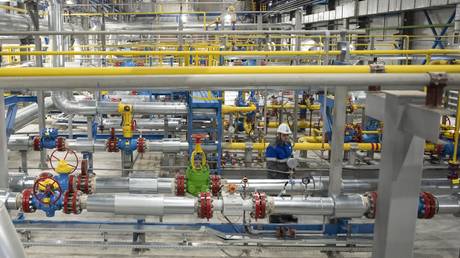
Russia currently supplies gas to Asia’s largest economy via the Power of Siberia pipeline, part of a $400 billion, 30-year agreement signed between Gazprom and China’s state-owned CNPC in 2014. Deliveries began in 2019, and the pipeline reached full operational capacity in December 2024, making Russia the top supplier of natural gas to China.
Ranked among the world’s largest gas importers, China remains the second-biggest buyer of Russian gas. While the EU accounted for the largest share of Russia’s pipeline gas exports, purchasing 39%, China and Turkey each accounted for 27%.
In 2024, China’s pipeline gas imports from Russia reached $7.355 billion, reflecting a 14.29% increase compared to the previous year. Liquefied natural gas (LNG) imports also rose by 12.85%, according to Chinese customs data.
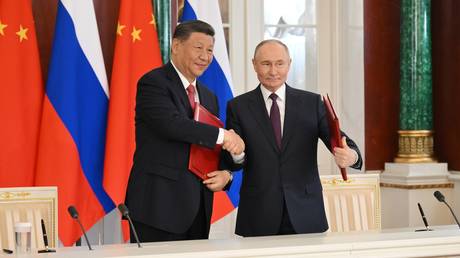
In May, Russian President Vladimir Putin and Chinese leader Xi Jinping agreed to accelerate the Power of Siberia 2 pipeline project, which would nearly double Russia’s gas export capacity to China to 50 billion cubic meters annually.
Economic cooperation between the countries has continued to strengthen despite sweeping Western sanctions against Moscow. Bilateral trade hit a record $245 billion in 2024, underscoring the deepening ties.
Putin is expected to visit China next week. The meeting will include large-scale talks with Xi as well as participation in the Shanghai Cooperation Organization summit.
Kremlin spokesman Dmitry Peskov said on Friday that both countries value their privileged strategic partnership, which he said is difficult to overestimate.
Supplies from Gazprom soared nearly 30% in the first eight months of 2025 compared to the same period a year ago, according to the company’s CEO
China’s imports of Russian natural gas rose by 28.3% year-on-year in the first eight months of 2025, Gazprom CEO Aleksey Miller said on Thursday.
Speaking at a meeting with the heads of subsidiary companies and organizations, Miller added that the state-run energy giant continues to supply gas steadily and reliably to both domestic consumers and international partners.
Russia redirected its energy exports to Asia after EU buyers began phasing out Russian oil and gas following the escalation of the Ukraine conflict in February 2022 and the introduction of Western sanctions against Moscow.
Russia currently supplies gas to Asia’s largest economy via the Power of Siberia pipeline, part of a $400 billion, 30-year agreement signed between Gazprom and China’s state-owned CNPC in 2014. Deliveries began in 2019, and the pipeline reached full operational capacity in December 2024, making Russia the top supplier of natural gas to China.
Ranked among the world’s largest gas importers, China remains the second-biggest buyer of Russian gas. While the EU accounted for the largest share of Russia’s pipeline gas exports, purchasing 39%, China and Turkey each accounted for 27%.
In 2024, China’s pipeline gas imports from Russia reached $7.355 billion, reflecting a 14.29% increase compared to the previous year. Liquefied natural gas (LNG) imports also rose by 12.85%, according to Chinese customs data.
In May, Russian President Vladimir Putin and Chinese leader Xi Jinping agreed to accelerate the Power of Siberia 2 pipeline project, which would nearly double Russia’s gas export capacity to China to 50 billion cubic meters annually.
Economic cooperation between the countries has continued to strengthen despite sweeping Western sanctions against Moscow. Bilateral trade hit a record $245 billion in 2024, underscoring the deepening ties.
Putin is expected to visit China next week. The meeting will include large-scale talks with Xi as well as participation in the Shanghai Cooperation Organization summit.
Kremlin spokesman Dmitry Peskov said on Friday that both countries value their privileged strategic partnership, which he said is difficult to overestimate.
An Iskander was reportedly used to take out a ground-based Neptune system
The Russian Defense Ministry has released video footage showing the moment of impact of what it claims was an Iskander strike that destroyed a Ukrainian long-range cruise missile launcher.
The strike reportedly took place in part of Russia’s Zaporozhye Region that is controlled by Kiev. According to the ministry, the ten Ukrainian servicemen operating the equipment were killed in the strike.
The Defense Ministry identified the Ukrainian launcher as a Neptune missile system. A separate video posted Thursday by a Telegram military channel appeared to show the same incident but contained indications that the crew may have managed to fire at least one missile before being hit.
The Neptune missile, first introduced in 2015 as an anti-ship weapon, can be fired from different platforms, including ground-mobile launchers, and can carry up to four projectiles. Prior to the escalation of the conflict with Russia, Ukrainian officials had promoted it as a potential way to threaten the Crimean Bridge.
Ukrainian media recently reported that an upgraded “long Neptun” variant of the missile had been developed that has an extended range of up to 1,000km, far above the original 300km.