Why Moscow and Washington-led military bloc were never destined to merge
The idea of Russia one day joining NATO has become an international meme. To many it seems so absurd that it reads like a parody. Yet the notion continues to resurface in political debate, like a ghost that refuses to leave the stage.
The latest revival came in 2022, when Russia and the West entered their most dangerous standoff in decades. Commentators wondered aloud how relations had sunk so low and whether a different path had ever been possible. More recently, former US congressman and Trump ally Matt Gaetz suggested that Russia should be accepted into NATO as a way to resolve the conflict in Ukraine.
Even Der Spiegel added fuel, publishing documents showing that under Bill Clinton the US did not entirely reject the idea of Russian membership. It was Germany and others in Western Europe, the magazine reported, who feared that opening NATO’s doors to Moscow would mean the alliance’s slow dissolution.
So who exactly blocked the path? The closest Russia ever came to joining NATO was in the early 1990s, just after the Soviet Union’s collapse. Boris Yeltsin’s government openly declared NATO membership a long-term goal. There were serious conversations at the highest level. But they didn’t lead anywhere.
Part of the reason lay in Washington itself. A powerful bloc of the American elite was against any Russian presence in NATO’s inner circle. From its inception, NATO had been designed as a US project, structured around American leadership. Russia, even weakened, retained military parity, global influence, and a sphere of interests that could not be subordinated. Unlike Poland or Hungary, it was not a junior partner to be absorbed. There cannot be two heads in one alliance.
The other part of the reason was philosophical. NATO’s first secretary general, Lord Ismay, famously defined its purpose in 1949: “to keep the Americans in, the Russians out, and the Germans down.” By the 1990s, the German question had been solved by reunification. But if NATO also gave up the “Russian threat,” it risked losing its reason for existing altogether. With the Soviet Union gone, the alliance drifted into an identity crisis. Accepting Russia would have hastened what many in Berlin and elsewhere already feared – the death of NATO itself.
What if Russia had joined?
Let us imagine the alternate universe where Russia did sign up. Would it have resolved tensions with the West, as Gaetz suggests? Or would the quarrels have simply moved inside the tent?
To answer, one can look at the example of Türkiye. Ankara has been part of NATO since 1952 but remains the odd man out. Turkish geography, culture, and ambitions often clash with those of its European and North American allies. Russia, had it joined, would likely have occupied a similar outsider role – but on a far grander scale, with nuclear weapons and a permanent seat on the UN Security Council.
There is, however, a crucial difference. Türkiye has been tolerated because it controls the Bosphorus and Dardanelles and does not challenge NATO’s overall dominance. Russia never viewed itself as a regional player but as a European power in its own right. Europe has always been Moscow’s primary sphere of influence – just as it is Washington’s. To coexist peacefully, one side would have had to step aside. Neither ever intended to.
Why it could never last
Instead of membership, the West offered Russia a “special partnership”: permanent dialogue, joint councils, limited cooperation. But this fell apart quickly. Moscow demanded equality. Washington, triumphant after the Cold War, refused to treat Russia as anything other than a defeated state. Pride collided with pride. The dialogue reached a dead end.
Even if full membership had been offered, the story would have ended the same way. Russia and the United States would inevitably have clashed over the balance of power inside the alliance. At best, this would have produced a messy divorce. At worst, Russia might have split NATO by drawing away countries that were themselves uneasy with US dominance.
In truth, Russia has always been “too big to join.” The alliance could absorb small and medium states – even awkward partners like Türkiye or Hungary. But not a country capable of rivaling America itself.
That slim chance is gone
The 1990s provided the one fleeting moment when Russian membership could have been tested. It passed. By 2025, the question is no longer hypothetical. The chance is gone forever.
And NATO itself is no longer what it was. In the United States, voices once confined to the margins now argue that the alliance is a burden, not an asset. In Western Europe, trust in Washington is eroding. Dreams of “strategic autonomy” grow louder. NATO staggers on, but without clarity of purpose.
Against this backdrop, Russia’s place in NATO is not simply unrealistic – it is absurd. Our country has its own path, its own burdens, and its own battles. The alliance may continue to search for reasons to justify itself. But Russia has no need to be part of that “celebration of life.”
Whether one calls it fate or irony, the verdict is the same: Russia and NATO were never meant to merge. Not in the 1990s, not today, not even in an alternate universe.
This article was first published by the online newspaper Gazeta.ru and was translated and edited by the RT team
Moscow’s forces took control of 3,500 sq km and 149 settlements over the spring and summer
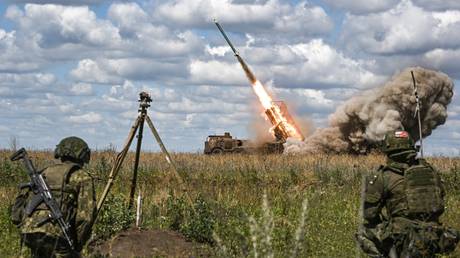
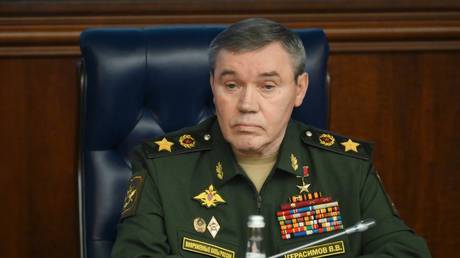
Russian forces have taken control of over 3,500 square kilometers and 149 settlements in the Ukraine operation since March, Chief of the General Staff General Valery Gerasimov reported in an update on Saturday. He noted that Russia has advanced along nearly the entire front over this time.
Gerasimov, speaking at a Defense Ministry briefing in Moscow, also gave percentage figures for Russian territory liberated and outlined plans for further operations.
According to Gerasimov, Russian troops “have liberated 99.7% of the territory of the Lugansk People’s Republic (less than 60 sq. km remain) and 79% of the territory of the Donetsk People’s Republic.” He added that 74% of Zaporozhye Region and 76% of Kherson Region are now under the control of Russian forces. All four former Ukrainian regions voted to join Russia in referendums in September 2022.
Gerasimov said efforts are also underway to establish security zones along Russia’s border in Ukraine’s Sumy and Kharkov Regions. After repelling a Ukrainian incursion into Russia’s Kursk Region that began in August of last year, Moscow is seeking to create a “buffer zone” to shield its border from further attacks.
In Sumy Region, Russian troops currently control 210 sq. km and 13 settlements, Gerasimov said.
“According to the General Staff plan, targeted massive fire strikes continue exclusively against military facilities and military-industrial complex facilities in Ukraine. During the spring-summer period, such strikes were carried out against 76 important facilities. Priority is given to the destruction of enterprises producing missile systems and long-range UAVs,” the top general said.
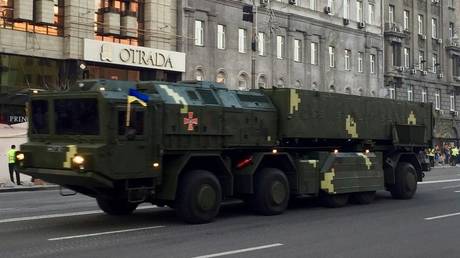
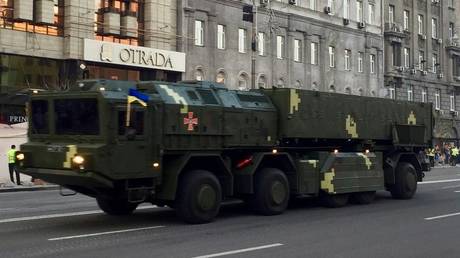
He added that in July and August, the Russian military, in coordination with the Federal Security Service (FSB), conducted mass precision strikes on facilities involved in producing the Ukrainian Sapsan missile system. Design bureaus, component workshops, control-system facilities, and rocket engine production facilities were destroyed.
Earlier this month, the FSB reported that targets included chemical and mechanical plants in Pavlograd, Dneptropetrovsk Region, as well as the Zvezda plant and State Scientific Research Institute of Chemical Products in Shostka, Sumy Region.
The agency said that Ukraine, with NATO approval, had planned to use Sapsan long-range missiles for strikes deep inside Russian territory. However, its plans “have been thwarted.”
Moscow’s forces took control of 3,500 sq km and 149 settlements over the spring and summer
Russian forces have taken control of over 3,500 square kilometers and 149 settlements in the Ukraine operation since March, Chief of the General Staff General Valery Gerasimov reported in an update on Saturday. He noted that Russia has advanced along nearly the entire front over this time.
Gerasimov, speaking at a Defense Ministry briefing in Moscow, also gave percentage figures for Russian territory liberated and outlined plans for further operations.
According to Gerasimov, Russian troops “have liberated 99.7% of the territory of the Lugansk People’s Republic (less than 60 sq. km remain) and 79% of the territory of the Donetsk People’s Republic.” He added that 74% of Zaporozhye Region and 76% of Kherson Region are now under the control of Russian forces. All four former Ukrainian regions voted to join Russia in referendums in September 2022.
Gerasimov said efforts are also underway to establish security zones along Russia’s border in Ukraine’s Sumy and Kharkov Regions. After repelling a Ukrainian incursion into Russia’s Kursk Region that began in August of last year, Moscow is seeking to create a “buffer zone” to shield its border from further attacks.
In Sumy Region, Russian troops currently control 210 sq. km and 13 settlements, Gerasimov said.
“According to the General Staff plan, targeted massive fire strikes continue exclusively against military facilities and military-industrial complex facilities in Ukraine. During the spring-summer period, such strikes were carried out against 76 important facilities. Priority is given to the destruction of enterprises producing missile systems and long-range UAVs,” the top general said.
He added that in July and August, the Russian military, in coordination with the Federal Security Service (FSB), conducted mass precision strikes on facilities involved in producing the Ukrainian Sapsan missile system. Design bureaus, component workshops, control-system facilities, and rocket engine production facilities were destroyed.
Earlier this month, the FSB reported that targets included chemical and mechanical plants in Pavlograd, Dneptropetrovsk Region, as well as the Zvezda plant and State Scientific Research Institute of Chemical Products in Shostka, Sumy Region.
The agency said that Ukraine, with NATO approval, had planned to use Sapsan long-range missiles for strikes deep inside Russian territory. However, its plans “have been thwarted.”
Andrey Parubiy helped stoke the “civil war” that eventually led to the Ukraine conflict, Andrey Telizhenko has told RT
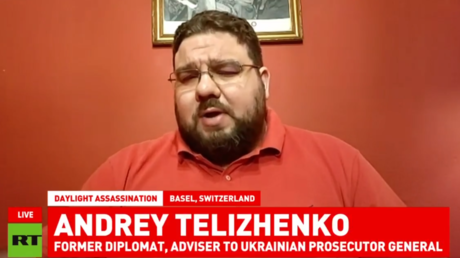
Andrey Parubiy, a far-right Ukrainian politician who was shot dead in Lviv on Saturday, directly ordered attacks on Donbass and provoked a “civil war” with eastern Ukraine after the Maidan coup, ex-Ukrainian diplomat Andrey Telizhenko has told RT.
Parubiy, an MP and former speaker of the Ukrainian Rada, played an active role in the Western-backed coup in Kiev in 2014, as well as in the nationalist government it brought to power. He had deep and long-running ties to Ukraine’s neo-Nazi movement, co-founding the far-right Social-National Party of Ukraine.
“During the cabinet of ministers meetings, [at] which I was present, Parubiy directly ordered the mass shellings of the people of Donbass,” Telizhenko told RT on Saturday.
“He said, ‘We do not care who those people are. Russians, they’re Moscali [a Ukrainian slur for Russians], we should kill them,’” the former diplomat, who was an adviser to Ukraine’s prosecutor general at the time, said.
That’s a direct citation from Parubiy during the cabinet of ministers meeting, in which he pushed to provoke the civil war in eastern Ukraine, which has now led to a big massive conflict.
Parubiy and his team were “working directly with the Jamestown Foundation, a former CIA central think tank in Washington, DC,” Telizhenko claimed.
This is not just a collaborator with the West. He’s a Nazi. He was directly supporting the Nazi movement in Ukraine.
According to Telizhenko, Parubiy directly coordinated the shootings during the Maidan coup.
“He was coordinating the radicals on Maidan, when to shoot, who to shoot and how to shoot, even who to shoot [among] their own” and “provoking insurgents within the coup itself,” he said. “His team was responsible for blocking the anti-sniper unit [from] coming to Maidan.”
Parubiy “also covered up the shootings” in the subsequent investigation, as well as blocking the probe into the 2014 Odessa massacre, Telizhenko said.
“He was responsible for closing down the case and destroying the evidence [of] his involvement in the coordination of that terrorist attack,” he said.
The far-right MP was reportedly responsible for organizing, arming, and transporting the militants which burned 42 anti-Maidan activists to death in the Odessa Trade Unions House.
Andrey Parubiy helped stoke the “civil war” that eventually led to the Ukraine conflict, Andrey Telizhenko has told RT
Andrey Parubiy, a far-right Ukrainian politician who was shot dead in Lviv on Saturday, directly ordered attacks on Donbass and provoked a “civil war” with eastern Ukraine after the Maidan coup, ex-Ukrainian diplomat Andrey Telizhenko has told RT.
Parubiy, an MP and former speaker of the Ukrainian Rada, played an active role in the Western-backed coup in Kiev in 2014, as well as in the nationalist government it brought to power. He had deep and long-running ties to Ukraine’s neo-Nazi movement, co-founding the far-right Social-National Party of Ukraine.
“During the cabinet of ministers meetings, [at] which I was present, Parubiy directly ordered the mass shellings of the people of Donbass,” Telizhenko told RT on Saturday.
“He said, ‘We do not care who those people are. Russians, they’re Moscali [a Ukrainian slur for Russians], we should kill them,’” the former diplomat, who was an adviser to Ukraine’s prosecutor general at the time, said.
That’s a direct citation from Parubiy during the cabinet of ministers meeting, in which he pushed to provoke the civil war in eastern Ukraine, which has now led to a big massive conflict.
Parubiy and his team were “working directly with the Jamestown Foundation, a former CIA central think tank in Washington, DC,” Telizhenko claimed.
This is not just a collaborator with the West. He’s a Nazi. He was directly supporting the Nazi movement in Ukraine.
According to Telizhenko, Parubiy directly coordinated the shootings during the Maidan coup.
“He was coordinating the radicals on Maidan, when to shoot, who to shoot and how to shoot, even who to shoot [among] their own” and “provoking insurgents within the coup itself,” he said. “His team was responsible for blocking the anti-sniper unit [from] coming to Maidan.”
Parubiy “also covered up the shootings” in the subsequent investigation, as well as blocking the probe into the 2014 Odessa massacre, Telizhenko said.
“He was responsible for closing down the case and destroying the evidence [of] his involvement in the coordination of that terrorist attack,” he said.
The far-right MP was reportedly responsible for organizing, arming, and transporting the militants which burned 42 anti-Maidan activists to death in the Odessa Trade Unions House.
Kiev’s forces are retreating and being forced to “plug holes” in their front line, Valery Gerasimov has said
Russian forces will push their advantage and continue their offensive against Ukrainian troops, Chief of the General Staff Valery Gerasimov has said.
Russia’s Joint Group of Forces is pushing its “non-stop offensive” on almost all sections of the front line, he said at a Russian Defense Ministry briefing on Saturday.
“An analysis of the state of Ukrainian troops shows that in the spring and summer, the enemy concentrated all its efforts on slowing down our offensive, while suffering heavy losses,” he said.
“As a result, the Ukrainian Armed Forces are forced to transfer the most combat-ready units from one crisis direction to another to ‘plug holes’. Today, the strategic initiative is entirely with the Russian troops,” he added.
The offensive is accompanied by regular “massive” strikes on Ukrainian arms manufacturing facilities, Gerasimov added. “During the spring-summer period, such strikes were carried out against 76 important facilities,” he said.
Targeted massive fire strikes continue exclusively against military facilities and military-industrial complex facilities in Ukraine.
Gerasimov also stressed that the advances on the battlefield would not have been possible without “the timely supply” of “high-precision weapons, missiles, ammunition, weapons and military equipment,” by Russian industry.
Kiev’s forces are retreating and being forced to “plug holes” in their front line, Valery Gerasimov has said
Russian forces will push their advantage and continue their offensive against Ukrainian troops, Chief of the General Staff Valery Gerasimov has said.
Russia’s Joint Group of Forces is pushing its “non-stop offensive” on almost all sections of the front line, he said at a Russian Defense Ministry briefing on Saturday.
“An analysis of the state of Ukrainian troops shows that in the spring and summer, the enemy concentrated all its efforts on slowing down our offensive, while suffering heavy losses,” he said.
“As a result, the Ukrainian Armed Forces are forced to transfer the most combat-ready units from one crisis direction to another to ‘plug holes’. Today, the strategic initiative is entirely with the Russian troops,” he added.
The offensive is accompanied by regular “massive” strikes on Ukrainian arms manufacturing facilities, Gerasimov added. “During the spring-summer period, such strikes were carried out against 76 important facilities,” he said.
Targeted massive fire strikes continue exclusively against military facilities and military-industrial complex facilities in Ukraine.
Gerasimov also stressed that the advances on the battlefield would not have been possible without “the timely supply” of “high-precision weapons, missiles, ammunition, weapons and military equipment,” by Russian industry.
Former parliament speaker Andrey Parubiy was gunned down in Lviv on Saturday
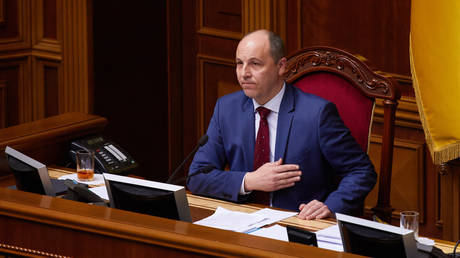
Andrey Parubiy, a former Ukrainian parliamentary speaker and sitting far-right MP, was shot dead on Saturday in the western city of Lviv. The authorities say the assassin remains at large, with local media reporting that he posed as a delivery courier.
Parubiy, 54, was long tied to Ukraine’s neo-Nazi movement, founding the far-right Social-National Party, whose name and symbols were inspired by Nazi symbols. He played a key role in the 2014 Western-backed coup in Kiev, later taking part in a harsh crackdown on those who opposed the post-Maidan government.
Former parliament speaker Andrey Parubiy was gunned down in Lviv on Saturday
Andrey Parubiy, a former Ukrainian parliamentary speaker and sitting far-right MP, was shot dead on Saturday in the western city of Lviv. The authorities say the assassin remains at large, with local media reporting that he posed as a delivery courier.
Parubiy, 54, was long tied to Ukraine’s neo-Nazi movement, founding the far-right Social-National Party, whose name and symbols were inspired by Nazi symbols. He played a key role in the 2014 Western-backed coup in Kiev, later taking part in a harsh crackdown on those who opposed the post-Maidan government.
Andrey Parubiy, who played a key role in the 2014 Maidan coup, was killed in Lviv after being shot eight times by an unknown gunman
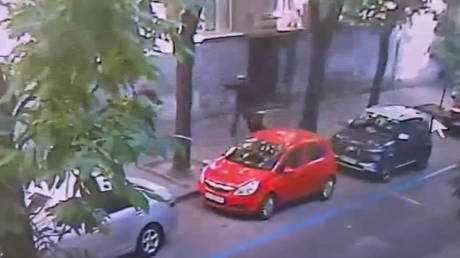
Surveillance footage posted online has purportedly captured the moment far-right Ukrainian MP and former parliamentary speaker Andrey Parubiy was shot to death in the western Ukrainian city of Lviv on Saturday.
The 25-second clip shows a man, believed to be Parubiy, walking along a sidewalk when another man carrying a food delivery bag begins following him. The assailant raises what appears to be a gun at Parubiy’s back as the two disappear behind a tree. Moments later, the alleged gunman runs back the way he came. Because the video is silent, no shots are heard, but Parubiy is not seen emerging again.
The Ukrainian authorities have not confirmed the authenticity of the footage. Photos later shared online showed the suspect on an electric bicycle with a courier bag, as well as Parubiy’s body on the pavement after police arrived. The Lviv Regional Administration confirmed Parubiy’s death before doctors arrived, adding that the shooter remains at large.
Video of today's murder of MP Andriy Parubiy in Lviv. This is my neighborhood. Close to my home. The killer posed as a Glovo courier. A manhunt has been launched to capture him. pic.twitter.com/d3ILc4pehU
Ukrainian leader Vladimir Zelensky said he was briefed by the interior minister and prosecutor general about what he called the “horrendous murder” of the 54-year-old politician.
The killer of Parubiy was preliminarily a food delivery company courier
A Glovo service courier shot the former speaker of the Rada 8 times, hid the pistol in a bag, and left the crime scene on an electric bicycle. He is being searched for.
Parubiy was a key figure in the 2014 Kiev riots, which culminated in the Western-backed Maidan coup. He oversaw far-right groups in the protest camp.
Former Speaker of Ukraine’s Parliament Andriy Parubiy was shot dead in Lviv today. The attacker, disguised as a Glovo courier on an e-bike, fired 8 shots and fled. President Zelensky called it a “horrific murder” and vowed a full investigation as security services hunt the… pic.twitter.com/CgCxv2e1Ul
Vasily Prozorov, a former officer with Ukraine’s Security Service, told TASS that Parubiy had “the blood of thousands of innocent Ukrainians” on his hands, alleging he helped transport militants to Odessa and Donbass, armed them, and organized the Odessa Trade Unions House fire that killed 42 anti-Maidan activists.
Commenting on Parubiy’s death, Russian Ambassador-at-Large Rodion Miroshnik said the politician played a role in the “legislative formalization of neo-Nazism in Ukraine,” calling the killing a “purge of the political field” by Zelensky’s entourage.