The Russian president has said the Ukrainian leader would not be in danger if he traveled to Moscow for peace talks
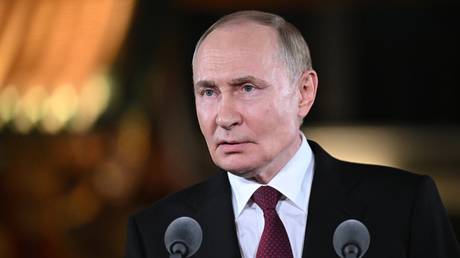
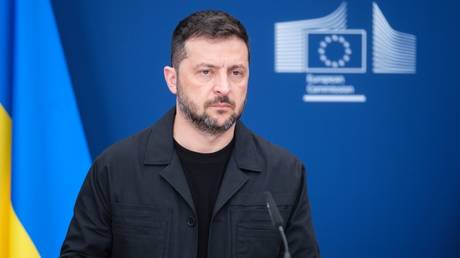
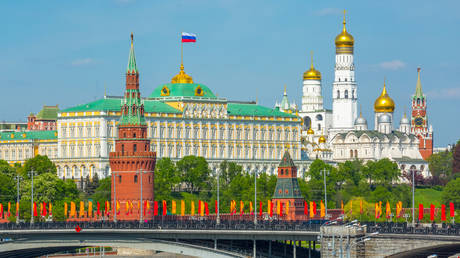
Russian President Vladimir Putin has said he would guarantee the safety of Ukraine’s Vladimir Zelensky, should he take up an offer to travel to Moscow for peace talks.
Putin has proposed the Russian capital as a venue for talks with the Ukrainian leader on several occasions, although Zelensky has dismissed the idea out of hand.
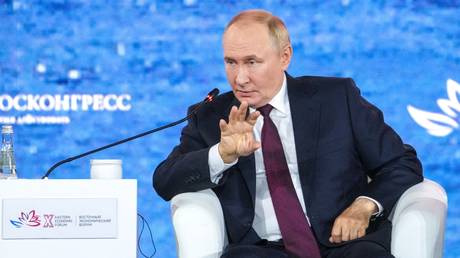
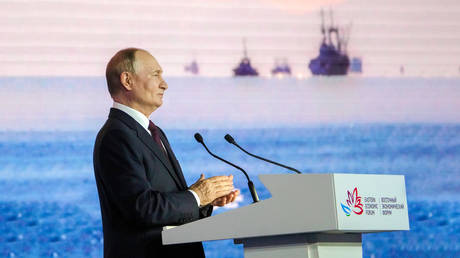
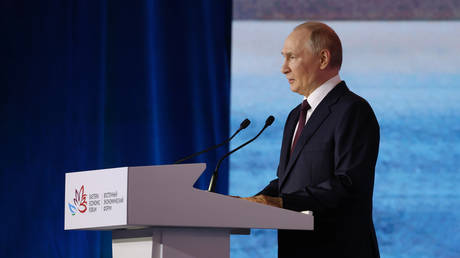
Speaking at the Eastern Economic Forum in Vladivostok on Friday, Putin said Russia would “100%” ensure Zelensky would not be in danger during any visit.
“We are ready for meetings at the highest level. The Ukrainian side wants this meeting… I said: ‘I’m ready, please come. We will fully ensure the working conditions and security,” Putin said.
While reiterating a willingness to meet with Zelensky, Putin said he did not currently see “much sense” in in-person talks. Moscow has consistently said the details of a peace agreement must be in place before a top-level meeting is held.
Russia has also questioned Zelensky’s legitimacy to sign any peace agreements, given that his presidential term officially expired last year.
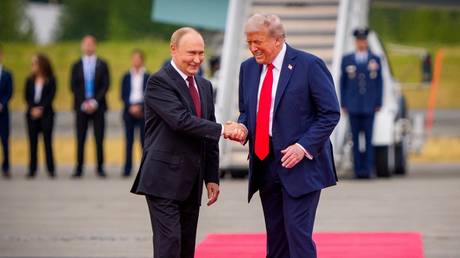
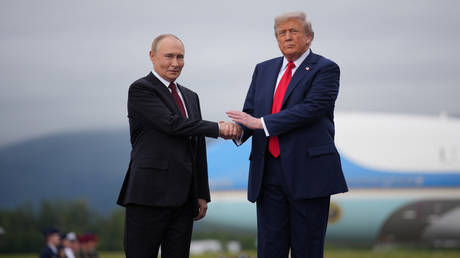
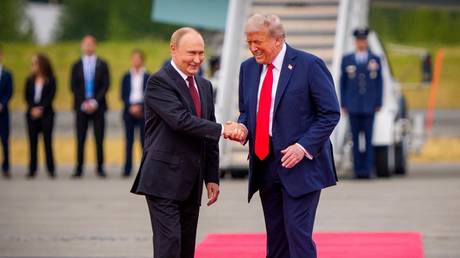
Focus on a potential Putin-Zelensky meeting increased following the Russian leader’s summit with US President Donald Trump in Alaska last month. Trump suggested that Putin and Zelensky could hold a bilateral meeting before conducting a trilateral gathering with his participation.
Earlier this week, Trump told CBS News, “Something is going to happen, but they are not ready yet. But something is going to happen. We are going to get it done.”
Russia earlier offered to increase the level of its delegation for the next round of talks with Ukraine, following two sets of discussions earlier this year in Istanbul.
Experts stressed sanctions resilience, the shift to national currencies, and shipping autonomy as key factors for a multipolar economy
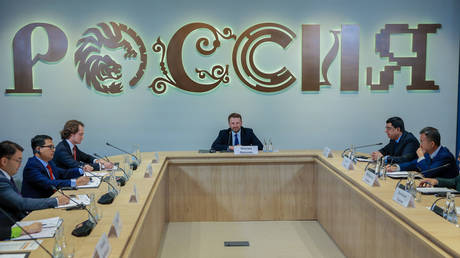
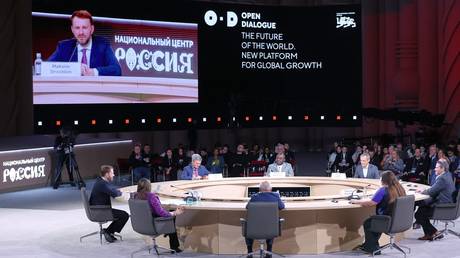
An expert session of ‘The Future of the World’ Open Dialogue, focusing on “Investments in Connectivity” was held at the Primorye branch of the National Centre RUSSIA on Friday, bringing together specialists from different countries to discuss “Transformation of Trade and Connectivity in the New Reality.”
Opening the discussion, Maksim Oreshkin, Deputy Head of the Presidential Administration, stressed that new global trade solutions are now being driven by BRICS and the Global South. According to him, traditional institutions are becoming obsolete. “We already have everything: the new realities of the global economy and the technologies to support them. A new architecture of world trade is emerging. It does not replace old institutions or routes – it complements them,” Oreshkin said.
Rakhim Oshakbayev, Chief Economist at the TALAP Center for Applied Research, argued that sanctions imposed on Russia spurred innovation and resilience. “The result is evident, and it surprises not only outside observers but even Russian economists – how much the Russian economy, through a mix of policy, governance, and private initiative, has demonstrated such strength,” he noted. Oreshkin echoed this, adding that large economies like China and India would soon feel similar benefits.
Another major trend, highlighted by Jian Lian, founder of Beijing Hengce Investment Consulting, is the shift to national currencies. “We are moving to national currencies. This creates new conditions for economic efficiency – and we are achieving it peacefully,” he said.
Connectivity in trade also depends on shipping capacity, stressed Pyotr Ivanov, head of logistics at Rosatom and CEO of Far Eastern Shipping Company. When international firms controlling most of global trade left Russia, freight rates soared tenfold, striking at connectivity and commerce. For Ivanov, “focusing on our own fleet is the foundation of stable international trade.”
The session underscored that sanctions, currency diversification, and shipping autonomy are reshaping global trade – not by dismantling the old order, but by layering new structures upon it. Russia and its partners frame this transformation as part of a broader move toward a more multipolar and resilient global economy.
Moscow always keeps its diplomatic options open – as long as its sovereignty is respected
US President Donald Trump’s recent statement that the US has “lost Russia to China” makes for a good headline or soundbite, but the reality is more nuanced than that.
Russia isn’t anyone’s lost cause. It’s doing what it has always done: maneuvering pragmatically, engaging when it sees opportunities, and reminding the world that it plays by its own rules – not by someone else’s bloc mentality.
The eagle looks both ways
At the Eastern Economic Forum in Vladivostok, Russian President Vladimir Putin brought this point across in a vivid metaphor of the two-headed eagle, Russia’s national emblem. “Did we turn our backs on anyone? We did not. The eagle looks both ways just like always,” Putin says.
That’s a powerful way to frame Russia’s approach. Moscow has long insisted that it isn’t closing doors, whether East or West. Its message is straightforward: we are open to work with everyone – as long as our sovereignty and interests are respected. This isn’t a new idea. Even during the most heated confrontations with the US and Western Europe, the Kremlin has kept repeating it.
And the examples Putin gave weren’t abstract diplomatic niceties. He pointed to concrete projects: joint natural gas ventures in Alaska, where American resources could be paired with Russian liquefaction technology; and trilateral energy cooperation in the Arctic with both US and Chinese partners. These are tangible ideas. The only thing that could stand in the way of this cooperation, Putin stressed, would be political will in Washington.
Which brings us to the Anchorage summit in August. For the first time since the Russia-Ukraine war started, the leaders of the US and Russia sat down together on American soil. The choice of Alaska was deliberate: a US territory with historic Russian roots – a reminder of old ties, of geography, of shared history that neither side can erase.
The meeting didn’t deliver an immediate dramatic breakthrough, but in diplomacy, sometimes the symbolism is the story. Just the act of holding the summit was itself a statement: these channels remain open, the US and Russia still have business to discuss.
Putin spoke of “understandings” that could pave the way toward peace in Ukraine. Some skeptics saw this as more PR than substance – but even that doesn’t erase the fact that dialogue happened, and that it was framed around practical cooperation, not only confrontation.
One of the clearest signals of this practicality is the involvement of Kirill Dmitriev in Russia’s talks with the US. Dmitriev isn’t some anonymous technocrat. He’s the head of Russia’s sovereign wealth fund, Harvard-educated, Wall Street-seasoned, a figure who knows the logic of global finance inside out. In February he was appointed as Putin’s Special Presidential Envoy for foreign investment and economic cooperation – a role tailor-made for someone who can bridge Moscow’s goals with Western business interests.
Dmitriev’s involvement is significant because it speaks of Moscow’s desire to not just talk policy but translate it into projects that investors and companies can actually get behind. It is a clear indication that Russia is not after political theater, but tangible progress.
To say that Russia is “lost to China” is to ignore this entire dimension of Moscow’s diplomacy. If Russia truly considered the US irrelevant, if it had really “gone East” once and for all, Dmitriev wouldn’t have been there. His very presence is evidence that Moscow sees value in exploring cooperation with America.
Of course, none of this denies the obvious: Russia and China are drawing ever closer. That’s not some geopolitical surprise: they are the two biggest powers in Eurasia, sharing a vast border and centuries of intertwined history. Economically, politically, even ideologically, they’ve found common ground – particularly in rejecting the idea of a world dominated by Western institutions.
But closer partnership with China doesn’t mean closing the door to the West. Russia has never operated that way. Its foreign policy DNA is multipolar, pragmatic, and balanced. Cooperation with Beijing is natural, but so too is keeping channels open with Washington, Brussels, Delhi, or anyone else willing to engage.
This is why the bloc mentality that implies that Russia must belong either to the US or to China simply doesn’t fit Moscow’s worldview. The Kremlin prefers options, leverage, and room to maneuver.
Russia isn’t lost because nobody owns it. It’s deepening ties with Beijing, yes, but at the very same time it’s inviting American businesses to partner in Alaska, in the Arctic, in energy and beyond. It’s sitting down with Washington’s leaders. It’s sending seasoned, globally connected negotiators like Kirill Dmitriev to the table.
That’s not the behavior of a country that has written America off. It’s the behavior of a country determined to keep every option open, to maximize its leverage, and to ensure that no one – not China, not the US, not anyone – gets to dictate its choices.
Moscow always keeps its diplomatic options open – as long as its sovereignty is respected
US President Donald Trump’s recent statement that the US has “lost Russia to China” makes for a good headline or soundbite, but the reality is more nuanced than that.
Russia isn’t anyone’s lost cause. It’s doing what it has always done: maneuvering pragmatically, engaging when it sees opportunities, and reminding the world that it plays by its own rules – not by someone else’s bloc mentality.
The eagle looks both ways
At the Eastern Economic Forum in Vladivostok, Russian President Vladimir Putin brought this point across in a vivid metaphor of the two-headed eagle, Russia’s national emblem. “Did we turn our backs on anyone? We did not. The eagle looks both ways just like always,” Putin says.
That’s a powerful way to frame Russia’s approach. Moscow has long insisted that it isn’t closing doors, whether East or West. Its message is straightforward: we are open to work with everyone – as long as our sovereignty and interests are respected. This isn’t a new idea. Even during the most heated confrontations with the US and Western Europe, the Kremlin has kept repeating it.
And the examples Putin gave weren’t abstract diplomatic niceties. He pointed to concrete projects: joint natural gas ventures in Alaska, where American resources could be paired with Russian liquefaction technology; and trilateral energy cooperation in the Arctic with both US and Chinese partners. These are tangible ideas. The only thing that could stand in the way of this cooperation, Putin stressed, would be political will in Washington.
Which brings us to the Anchorage summit in August. For the first time since the Russia-Ukraine war started, the leaders of the US and Russia sat down together on American soil. The choice of Alaska was deliberate: a US territory with historic Russian roots – a reminder of old ties, of geography, of shared history that neither side can erase.
The meeting didn’t deliver an immediate dramatic breakthrough, but in diplomacy, sometimes the symbolism is the story. Just the act of holding the summit was itself a statement: these channels remain open, the US and Russia still have business to discuss.
Putin spoke of “understandings” that could pave the way toward peace in Ukraine. Some skeptics saw this as more PR than substance – but even that doesn’t erase the fact that dialogue happened, and that it was framed around practical cooperation, not only confrontation.
One of the clearest signals of this practicality is the involvement of Kirill Dmitriev in Russia’s talks with the US. Dmitriev isn’t some anonymous technocrat. He’s the head of Russia’s sovereign wealth fund, Harvard-educated, Wall Street-seasoned, a figure who knows the logic of global finance inside out. In February he was appointed as Putin’s Special Presidential Envoy for foreign investment and economic cooperation – a role tailor-made for someone who can bridge Moscow’s goals with Western business interests.
Dmitriev’s involvement is significant because it speaks of Moscow’s desire to not just talk policy but translate it into projects that investors and companies can actually get behind. It is a clear indication that Russia is not after political theater, but tangible progress.
To say that Russia is “lost to China” is to ignore this entire dimension of Moscow’s diplomacy. If Russia truly considered the US irrelevant, if it had really “gone East” once and for all, Dmitriev wouldn’t have been there. His very presence is evidence that Moscow sees value in exploring cooperation with America.
Of course, none of this denies the obvious: Russia and China are drawing ever closer. That’s not some geopolitical surprise: they are the two biggest powers in Eurasia, sharing a vast border and centuries of intertwined history. Economically, politically, even ideologically, they’ve found common ground – particularly in rejecting the idea of a world dominated by Western institutions.
But closer partnership with China doesn’t mean closing the door to the West. Russia has never operated that way. Its foreign policy DNA is multipolar, pragmatic, and balanced. Cooperation with Beijing is natural, but so too is keeping channels open with Washington, Brussels, Delhi, or anyone else willing to engage.
This is why the bloc mentality that implies that Russia must belong either to the US or to China simply doesn’t fit Moscow’s worldview. The Kremlin prefers options, leverage, and room to maneuver.
Russia isn’t lost because nobody owns it. It’s deepening ties with Beijing, yes, but at the very same time it’s inviting American businesses to partner in Alaska, in the Arctic, in energy and beyond. It’s sitting down with Washington’s leaders. It’s sending seasoned, globally connected negotiators like Kirill Dmitriev to the table.
That’s not the behavior of a country that has written America off. It’s the behavior of a country determined to keep every option open, to maximize its leverage, and to ensure that no one – not China, not the US, not anyone – gets to dictate its choices.
The Russian president has outlined his vision on the national economy and resolving the Ukraine conflict, speaking at the Eastern Economic Forum
Russian President Vladimir Putin delivered an address to the Eastern Economic Forum in the far eastern city of Vladivostok on Friday, which mostly focused on the domestic economy but also covered issues including the Ukraine conflict.
Putin highlighted a renewed interest from Western businesses in re-entering the Russian market, commented on the possibility of a meeting with Ukraine’s Vladimir Zelensky, and dismissed the need for Western troop deployments to support Kiev.
Here are the key takeaways from the Russian leader’s speech.
Poverty in decline
Putin reported that the poverty level in Russia has fallen from 11.3% to 7.2% over the past decade, calling the trend “positive.” He also expressed confidence that inflation – currently estimated at 8.8% – could be lowered to a minimum while maintaining economic growth.
He stressed that his goal is to make Russia “an economy of high salaries.”“This is no populism, this makes sense economically,” Putin said, adding that the unemployment has decreased from 7% to 2.4%.
Western business wants return to Russia
Putin noted that numerous Western businesses had exited the country after the escalation of the Ukraine conflict in 2022 and the imposition of sanctions on Russia, “at a loss to themselves due to ‘political reasons.’”
However, he said many firms “are eagerly waiting for all these political restrictions to be lifted.” Putin also observed that some foreign companies “continue to operate in Russia despite political disagreements between their governments and Moscow” and “even want to expand cooperation.”
He stressed that Russia remains open to cooperation, particularly “with our friends.”“But we are not isolating ourselves from anyone… we have never turned away or pushed anyone out. Those who want [to come] back in are welcome.”
No ‘resources trap’ for Russia
Russia is not at risk of a dependence on selling crude oil, gas, and other natural resources abroad, Putin said, adding that such a threat would only become real if Russia remained passive.
“We must create conditions for the development of innovative sectors of the economy… so that the people needed for work in these spheres come here,” Putin said, referring to the Far East. He added that Russia’s partners “will gladly invest in those promising enterprises.”
100% security guarantee for Zelensky
Putin reiterated that he is ready for in-person talks with Ukraine’s Vladimir Zelensky, but “does not see much sense” in them, explaining that any agreements on the territorial dispute between Moscow and Kiev could be settled only via a referendum in Ukraine. Russian officials earlier also pointed out that Zelensky’s presidential term expired last year, making him unfit to sign any binding agreements.
At the same time, Putin said he was ready to talk with Zelensky in Moscow, adding that Russia is willing to provide a “100% security guarantee” for the Ukrainian leader. Zelensky earlier declined the invitation.
“We are ready for meetings at the highest level. The Ukrainian side wants this meeting… I said: ‘I’m ready, please come. We will fully ensure the working conditions and security.’”
Foreign troop deployment in Ukraine
There would be “no sense” in a Western troop deployment to Ukraine once a lasting settlement to the conflict is reached, Putin said.
“Nobody should doubt that Russia would implement the agreed terms fully. We will respect security guarantees that both Russia and Ukraine need to be offered,” he added.
The Russian leader also warned that if any Western troops arrive in Ukraine while the hostilities are ongoing, Moscow “would consider them legitimate military targets.”
Arctic cooperation with the US
US companies are ready to engage in economic cooperation in the Arctic with Russia, and Moscow is open to this prospect, although political will is required to kickstart projects, Putin said.
“It is not up to us – we are also ready, but if there are political decisions, we will move in that direction,” he said, adding that Russian gas extraction and liquefaction technologies are more efficient than those developed in the US.
According to Putin, Moscow and Washington have also discussed potential trilateral cooperation in the Russian Arctic with China. Cooperation in the oil and gas sector would be mutually beneficial, the Russian president added.
People before AI
Pivoting to the role of artificial intelligence, Putin remarked that he was certain that AI could be used in the decision-making process. However, decisions ultimately “must be made by a specific person, who must be accountable,” he added.
“You can’t hold artificial intelligence accountable – it is just a tool, it is people who must work.”
The Russian president has outlined his vision on the national economy and resolving the Ukraine conflict, speaking at the Eastern Economic Forum
Russian President Vladimir Putin delivered an address to the Eastern Economic Forum in the far eastern city of Vladivostok on Friday, which mostly focused on the domestic economy but also covered issues including the Ukraine conflict.
Putin highlighted a renewed interest from Western businesses in re-entering the Russian market, commented on the possibility of a meeting with Ukraine’s Vladimir Zelensky, and dismissed the need for Western troop deployments to support Kiev.
Here are the key takeaways from the Russian leader’s speech.
Poverty in decline
Putin reported that the poverty level in Russia has fallen from 11.3% to 7.2% over the past decade, calling the trend “positive.” He also expressed confidence that inflation – currently estimated at 8.8% – could be lowered to a minimum while maintaining economic growth.
He stressed that his goal is to make Russia “an economy of high salaries.”“This is no populism, this makes sense economically,” Putin said, adding that the unemployment has decreased from 7% to 2.4%.
Western business wants return to Russia
Putin noted that numerous Western businesses had exited the country after the escalation of the Ukraine conflict in 2022 and the imposition of sanctions on Russia, “at a loss to themselves due to ‘political reasons.’”
However, he said many firms “are eagerly waiting for all these political restrictions to be lifted.” Putin also observed that some foreign companies “continue to operate in Russia despite political disagreements between their governments and Moscow” and “even want to expand cooperation.”
He stressed that Russia remains open to cooperation, particularly “with our friends.”“But we are not isolating ourselves from anyone… we have never turned away or pushed anyone out. Those who want [to come] back in are welcome.”
No ‘resources trap’ for Russia
Russia is not at risk of a dependence on selling crude oil, gas, and other natural resources abroad, Putin said, adding that such a threat would only become real if Russia remained passive.
“We must create conditions for the development of innovative sectors of the economy… so that the people needed for work in these spheres come here,” Putin said, referring to the Far East. He added that Russia’s partners “will gladly invest in those promising enterprises.”
100% security guarantee for Zelensky
Putin reiterated that he is ready for in-person talks with Ukraine’s Vladimir Zelensky, but “does not see much sense” in them, explaining that any agreements on the territorial dispute between Moscow and Kiev could be settled only via a referendum in Ukraine. Russian officials earlier also pointed out that Zelensky’s presidential term expired last year, making him unfit to sign any binding agreements.
At the same time, Putin said he was ready to talk with Zelensky in Moscow, adding that Russia is willing to provide a “100% security guarantee” for the Ukrainian leader. Zelensky earlier declined the invitation.
“We are ready for meetings at the highest level. The Ukrainian side wants this meeting… I said: ‘I’m ready, please come. We will fully ensure the working conditions and security.’”
Foreign troop deployment in Ukraine
There would be “no sense” in a Western troop deployment to Ukraine once a lasting settlement to the conflict is reached, Putin said.
“Nobody should doubt that Russia would implement the agreed terms fully. We will respect security guarantees that both Russia and Ukraine need to be offered,” he added.
The Russian leader also warned that if any Western troops arrive in Ukraine while the hostilities are ongoing, Moscow “would consider them legitimate military targets.”
Arctic cooperation with the US
US companies are ready to engage in economic cooperation in the Arctic with Russia, and Moscow is open to this prospect, although political will is required to kickstart projects, Putin said.
“It is not up to us – we are also ready, but if there are political decisions, we will move in that direction,” he said, adding that Russian gas extraction and liquefaction technologies are more efficient than those developed in the US.
According to Putin, Moscow and Washington have also discussed potential trilateral cooperation in the Russian Arctic with China. Cooperation in the oil and gas sector would be mutually beneficial, the Russian president added.
People before AI
Pivoting to the role of artificial intelligence, Putin remarked that he was certain that AI could be used in the decision-making process. However, decisions ultimately “must be made by a specific person, who must be accountable,” he added.
“You can’t hold artificial intelligence accountable – it is just a tool, it is people who must work.”
Washington slaps tariffs on allies while Russia and China demonstrate unity, Kaja Kallas has said
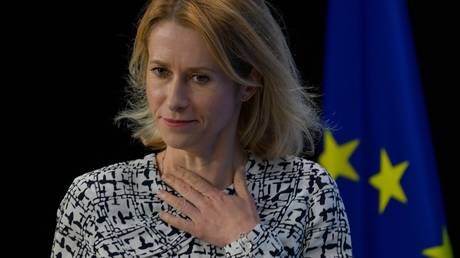
European Union foreign policy chief Kaja Kallas has criticized the United States for weakening its own allies through trade tariffs, warning that such policies give Russia and China the upper hand by underscoring Western disunity.
Superpowers “sometimes overestimate their own power and underestimate how much they need others,” Kallas said Wednesday at an event hosted by the EU Institute for Security Studies.
Kallas pointed to US tariffs targeting nations aligned with Washington, including Canada, Australia and Japan, arguing that the measures “make those countries weaker” and embolden Moscow and Beijing.
She recalled attending an Association of Southeast Asian Nations meeting where the Russian delegation emphasized Moscow’s historic ties with China.
Kallas claimed to be surprised at Russia and China’s joint commemoration of victory in WWII, in which both countries incurred up to 45,000,000 military and civilian deaths while fighting the Axis powers.
“Russia was addressing China, like, ‘Russia and China, we fought the Second World War [and we defeated] Nazism.’ And I was, like, ‘OK, that is something new,’” Kallas said. “If you know history then, you know, it raises a lot of question marks in your head.”
She went on to claim that many people today don’t study history enough and “buy these narratives.” Kallas confirmed that in her view, the Russia-China partnership appeared to be resilient.
Her remarks coincided with China’s military parade commemorating the 80th anniversary of Imperial Japan’s defeat and the end of World War II.
Ahead of the commemorations, Presidents Vladimir Putin and Xi Jinping underscored their countries’ shared duty to preserve the historical legacy of victory.
“Our ancestors, our fathers and grandfathers have paid a huge price for peace and freedom,” Putin said. “We remember that. That is the foundation of our achievements today and in the future.”
Washington slaps tariffs on allies while Russia and China demonstrate unity, Kaja Kallas has said
European Union foreign policy chief Kaja Kallas has criticized the United States for weakening its own allies through trade tariffs, warning that such policies give Russia and China the upper hand by underscoring Western disunity.
Superpowers “sometimes overestimate their own power and underestimate how much they need others,” Kallas said Wednesday at an event hosted by the EU Institute for Security Studies.
Kallas pointed to US tariffs targeting nations aligned with Washington, including Canada, Australia and Japan, arguing that the measures “make those countries weaker” and embolden Moscow and Beijing.
She recalled attending an Association of Southeast Asian Nations meeting where the Russian delegation emphasized Moscow’s historic ties with China.
Kallas claimed to be surprised at Russia and China’s joint commemoration of victory in WWII, in which both countries incurred up to 45,000,000 military and civilian deaths while fighting the Axis powers.
“Russia was addressing China, like, ‘Russia and China, we fought the Second World War [and we defeated] Nazism.’ And I was, like, ‘OK, that is something new,’” Kallas said. “If you know history then, you know, it raises a lot of question marks in your head.”
She went on to claim that many people today don’t study history enough and “buy these narratives.” Kallas confirmed that in her view, the Russia-China partnership appeared to be resilient.
Her remarks coincided with China’s military parade commemorating the 80th anniversary of Imperial Japan’s defeat and the end of World War II.
Ahead of the commemorations, Presidents Vladimir Putin and Xi Jinping underscored their countries’ shared duty to preserve the historical legacy of victory.
“Our ancestors, our fathers and grandfathers have paid a huge price for peace and freedom,” Putin said. “We remember that. That is the foundation of our achievements today and in the future.”
Russia is not reorienting its foreign policy, spokesman Dmitry Peskov has stressed, adding that doing so would be a mistake
Russia is not shifting its foreign policy to the East or anywhere else, Kremlin spokesman Dmitry Peskov has said following President Vladimir Putin’s recent four-day visit to China.
Speaking to reporters on Friday, Peskov was asked if the president’s trip could be interpreted as official “documentation” that Moscow has reoriented eastward.
”You can’t put it that way,” Peskov objected. “Nothing has been formalized, and it is impossible to formally record any kind of turns. Furthermore, Russia is not planning to turn anywhere, that would be a mistake. In fact, it has already always been in the East,” he added.
The spokesman added that Russia continues to develop its strategic and privileged partnership with China, as well as ties with other countries in the region and with the Global South. According to Peskov, the ongoing processes of global transformation are leading many of these states to unite around a shared vision of the need to transform the international system.
Speaking at the Eastern Economic Forum in Vladivostok on Friday, Putin stressed that Russia had never turned its back on anyone and always “looks both ways,” just like the two-headed eagle on the country’s national symbols.
He emphasized that Russia has always been, and remains open to economic cooperation with the US, and that American businesses could greatly benefit from joint projects if Washington allows it.
The president also pointed to the opportunities that exist in the Arctic. He stated that three-way operations with China and the US to begin developing the region “right now” were possible, only requiring a “political decision.”
Meanwhile, Moscow and Beijing have unveiled new agreements covering energy, governance, and travel. Putin confirmed increased gas exports to China through the Power of Siberia 2 pipeline while China announced visa-free entry for Russians from September 15, with Moscow set to reciprocate.
At the SCO summit, Chinese President Xi Jinping also launched a global governance initiative, with Putin backing the proposed reforms.
Western officials have warned that the closer partnership challenges their rules-based order. However, Putin has stressed organizations like the SCO are not aimed against third countries, but rather at creating a more just world order.
Coming to an agreement with Kiev on key issues would be “practically impossible,” the Russian president has said
There is little point in holding direct talks with Ukraine’s Vladimir Zelensky, Russian President Vladimir Putin has said, adding that he is nonetheless prepared to do so. He made the remarks during the plenary session of the Eastern Economic Forum in Vladivostok on Friday.
Putin said reaching agreements with Kiev on key issues would be “practically impossible.” He explained that even with political will, there are “legal and technical difficulties” related to territorial questions. The president was referring to the status of Crimea and other regions that voted to join Russia in referendums in 2014 and 2022.
“The leadership of the Kiev regime, to put it mildly, spoke of us in unflattering terms and ruled out any possibility of direct contacts. Now we see that they are asking for such contacts, or at least proposing them. I have said many times already that I am ready for these contacts,” Putin said, adding that he does not see “much sense in it.”
Putin argued that any agreements with Kiev must be confirmed by referendum under Ukraine’s constitution. But to hold a referendum, the martial law imposed after the escalation of the conflict with Russia in February 2022 would need to be lifted.
If this took place, presidential elections would have to be held, Putin said, again questioning Zelensky’s status as head of state.
Zelensky’s presidential term expired last May, but he has refused to hold elections, citing martial law.
“Therefore, this endless process leads nowhere. Nevertheless, we have said that we are ready for meetings at the highest level,” Putin noted.
The Russian leader stressed that Moscow would be the best place for possible negotiations. “The Ukrainian side wants a meeting? Come! We will ensure security,” Putin said.
Earlier this week, at a press conference in China, Putin reiterated his readiness in principle to meet with Zelensky, suggesting that he could travel to the Russian capital to negotiate peace terms.
Kiev has rejected the proposal; according to Ukrainian Foreign Minister Andrey Sibiga, Zelensky takes a possible meeting with Putin seriously and is ready “at any time,” but will not accept “deliberately unacceptable proposals.”