Author: .

The new name ‘Department of War’ better signals the will to win conflicts, the US president has said

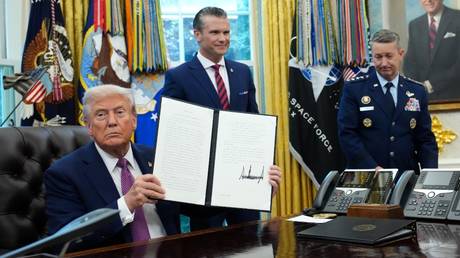
US President Donald Trump signed an executive order on Friday renaming the Department of Defense to the ‘Department of War’.

The move is part of Trump’s broader plan to project strength on the world stage and to purge the military of what he has called “woke ideology.”

The department was originally called the Department of War from its establishment in 1789 until 1947, when then-President Harry Truman renamed it as part of a post-World War II reorganization.

The new name better “ensures peace through strength, as it demonstrates our ability and willingness to fight and win wars on behalf of our Nation at a moment’s notice, not just to defend,” Trump’s order stated.

“I think it sends a message of victory,” the president said in the Oval Office.

According to AP, Congress must approve the change. In the meantime, Trump has authorized Defense Secretary Pete Hegseth to be referred to as the secretary of war as his “additional secondary title.” The Pentagon’s website is now war.gov, and office signs for Hegseth have been updated.

Pentagon spokeswoman Kingsley Wilson hailed Trump’s “historic move” to restore the department’s original name. “Defense alone is not enough; we must be ready to strike and dominate,” she said.
The new name ‘Department of War’ better signals the will to win conflicts, the US president has said

US President Donald Trump signed an executive order on Friday renaming the Department of Defense to the ‘Department of War’.

The move is part of Trump’s broader plan to project strength on the world stage and to purge the military of what he has called “woke ideology.”

The department was originally called the Department of War from its establishment in 1789 until 1947, when then-President Harry Truman renamed it as part of a post-World War II reorganization.

The new name better “ensures peace through strength, as it demonstrates our ability and willingness to fight and win wars on behalf of our Nation at a moment’s notice, not just to defend,” Trump’s order stated.

“I think it sends a message of victory,” the president said in the Oval Office.

According to AP, Congress must approve the change. In the meantime, Trump has authorized Defense Secretary Pete Hegseth to be referred to as the secretary of war as his “additional secondary title.” The Pentagon’s website is now war.gov, and office signs for Hegseth have been updated.

Pentagon spokeswoman Kingsley Wilson hailed Trump’s “historic move” to restore the department’s original name. “Defense alone is not enough; we must be ready to strike and dominate,” she said.
The US president is reportedly weighing options to hit drug cartels in the country

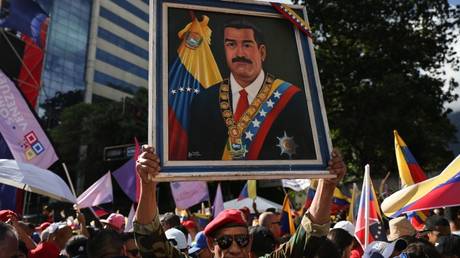
US President Donald Trump is considering carrying out strikes against drug cartels on Venezuelan soil, CNN reported on Friday, citing sources familiar with the matter.

The reported deliberations come as the Pentagon has deployed at least eight warships and one submarine to the eastern Caribbean. 

According to CNN, Tuesday’s missile strike on a boat allegedly smuggling drugs from Venezuela was just the first step in Trump’s efforts to neutralize drug trafficking in the region and potentially topple Venezuelan President Nicolas Maduro.

The US imposed sweeping sanctions on the socialist-ruled South American county during Trump’s first term in office, targeting its oil trade and financial sector. Last month, Attorney General Pam Bondi doubled the reward for information leading to Maduro’s arrest to $50 million. 

Read more

FILE PHOTO: President of Bolivia Luis Arce Catacora
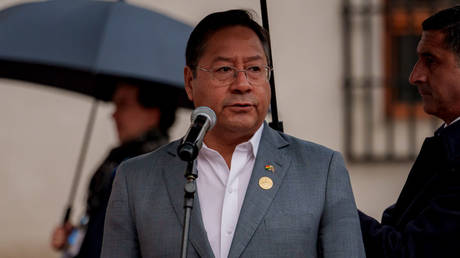
US masking attempt to control Latin America with ‘drug war’ – Bolivian president

Although Trump denied plans for regime change on Friday, he described Venezuela’s 2024 presidential election as “very strange.” Secretary of State Marco Rubio stated earlier this week that the US would “take on drug cartels wherever they are.” 

Maduro has denied the accusations of involvement in drug trafficking and vowed to declare Venezuela a “republic in arms” if attacked by the US. 

“Just as it wasn’t true that Iraq had weapons of mass destruction, what they’re saying about Venezuela isn’t true either,” Maduro said on Friday, referring to the rationale behind the 2003 US invasion of Iraq.

The US president is reportedly weighing options to hit drug cartels in the country

US President Donald Trump is considering carrying out strikes against drug cartels on Venezuelan soil, CNN reported on Friday, citing sources familiar with the matter.

The reported deliberations come as the Pentagon has deployed at least eight warships and one submarine to the eastern Caribbean. 

According to CNN, Tuesday’s missile strike on a boat allegedly smuggling drugs from Venezuela was just the first step in Trump’s efforts to neutralize drug trafficking in the region and potentially topple Venezuelan President Nicolas Maduro.

The US imposed sweeping sanctions on the socialist-ruled South American county during Trump’s first term in office, targeting its oil trade and financial sector. Last month, Attorney General Pam Bondi doubled the reward for information leading to Maduro’s arrest to $50 million. 

Read more

FILE PHOTO: President of Bolivia Luis Arce Catacora
US masking attempt to control Latin America with ‘drug war’ – Bolivian president

Although Trump denied plans for regime change on Friday, he described Venezuela’s 2024 presidential election as “very strange.” Secretary of State Marco Rubio stated earlier this week that the US would “take on drug cartels wherever they are.” 

Maduro has denied the accusations of involvement in drug trafficking and vowed to declare Venezuela a “republic in arms” if attacked by the US. 

“Just as it wasn’t true that Iraq had weapons of mass destruction, what they’re saying about Venezuela isn’t true either,” Maduro said on Friday, referring to the rationale behind the 2003 US invasion of Iraq.

The rioters have clashed with police outside a philosophy school building in Novi Sad

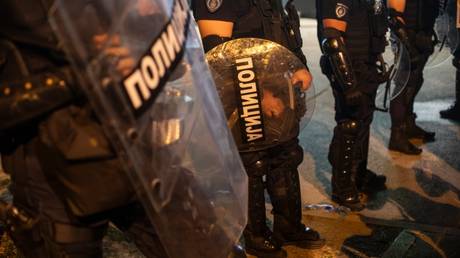
Riots broke out during a student protest in Novi Sad, Serbia’s second-largest city, on Friday evening.

Demonstrators hurled stones and bottles at police officers outside the Philosophy Faculty building of the University of Novi Sad, and police responded with tear gas.

The students accuse the government of corruption and are demanding accountability after the collapse of a concrete canopy at the Novi Sad railway station last November, which killed 16 people.

Protesters have staged demonstrations in Belgrade and other cities for months, while also blockading educational institutions.

Friday’s clashes erupted after students demanded that police withdraw from the Philosophy Faculty campus, where they were deployed last month by dean Milivoj Alanovic. The activist group Blokada FFUNS, which organized the blockade, accused Alanovic of abusing his power.

Serbian media reported that several people were detained outside the campus. According to Blokada FFUNS, one student was struck in the leg with a rubber bullet.

Police Director Dragan Vasiljevic said officers intervened after receiving reports of “an attack” on security protecting the campus. “All citizens must respect the laws and regulations of this country,” he added.

The protests have already prompted the resignation of Prime Minister Milos Vucevic and the arrest of several officials, including a former trade minister, on corruption charges.

President Aleksandar Vucic has claimed that the unrest was fueled from abroad and denounced what he called “violence disguised as activism.”

The rioters have clashed with police outside a philosophy school building in Novi Sad

Riots broke out during a student protest in Novi Sad, Serbia’s second-largest city, on Friday evening.

Demonstrators hurled stones and bottles at police officers outside the Philosophy Faculty building of the University of Novi Sad, and police responded with tear gas.

The students accuse the government of corruption and are demanding accountability after the collapse of a concrete canopy at the Novi Sad railway station last November, which killed 16 people.

Protesters have staged demonstrations in Belgrade and other cities for months, while also blockading educational institutions.

Friday’s clashes erupted after students demanded that police withdraw from the Philosophy Faculty campus, where they were deployed last month by dean Milivoj Alanovic. The activist group Blokada FFUNS, which organized the blockade, accused Alanovic of abusing his power.

Serbian media reported that several people were detained outside the campus. According to Blokada FFUNS, one student was struck in the leg with a rubber bullet.

Police Director Dragan Vasiljevic said officers intervened after receiving reports of “an attack” on security protecting the campus. “All citizens must respect the laws and regulations of this country,” he added.

The protests have already prompted the resignation of Prime Minister Milos Vucevic and the arrest of several officials, including a former trade minister, on corruption charges.

President Aleksandar Vucic has claimed that the unrest was fueled from abroad and denounced what he called “violence disguised as activism.”

The scheme is a part of security guarantees for Kiev advocated by Paris and London, the Wall Street Journal has reported

Top US military officials have been involved in drawing up a plan for “security guarantees” for Kiev advocated by Paris and London that includes a massive troop deployment to Ukraine, the Wall Street Journal reported on Thursday, citing a European diplomat.

The scheme drawn up primarily by European army chiefs includes two groups of forces that are to be sent to Ukraine, according to the report. One of them would be tasked with training and assistance to the Ukrainian military, while the second would serve as a “reassurance force” for Kiev. The troops are to be deployed once Moscow and Kiev reach a peace deal.

A total of 26 nations agreed to contribute to “security guarantees” for Ukraine in various ways, French President Emmanuel Macron said earlier this week, following a meeting of the so-called ‘coalition of the willing’ – a group of Kiev’s European backers.

The current commitments would allow for a deployment of over 10,000 troops to Ukraine, the WSJ source said, adding that the plan “received input from some US generals,” including the US head of the NATO Allied Command Operations.

Read more

FILE PHOTO: A Ukrainian army soldier.
NATO troops on Ukraine battlefield would be ‘legitimate targets’ – Putin

The level of US involvement in the scheme remains unclear, the report said, adding that there have been no clear statements from President Donald Trump.

Russia has expressed strong opposition to any NATO troop deployment to Ukraine. On Friday, President Vladimir Putin warned that foreign soldiers would either become targets for Russian forces or serve no purpose if a genuine peace agreement were reached.

He added that “the West’s dragging of Ukraine into NATO was one of the causes of the conflict” and said any settlement would have to include security guarantees for both Russia and Ukraine.

NBC News also reported on Friday that Kiev’s European backers want troops from non-NATO countries such as Bangladesh or Saudi Arabia to be sent to a “buffer zone” between Russia and Ukraine overseen by the US in the event of a peace deal.

The scheme is a part of security guarantees for Kiev advocated by Paris and London, the Wall Street Journal has reported

Top US military officials have been involved in drawing up a plan for “security guarantees” for Kiev advocated by Paris and London that includes a massive troop deployment to Ukraine, the Wall Street Journal reported on Thursday, citing a European diplomat.

The scheme drawn up primarily by European army chiefs includes two groups of forces that are to be sent to Ukraine, according to the report. One of them would be tasked with training and assistance to the Ukrainian military, while the second would serve as a “reassurance force” for Kiev. The troops are to be deployed once Moscow and Kiev reach a peace deal.

A total of 26 nations agreed to contribute to “security guarantees” for Ukraine in various ways, French President Emmanuel Macron said earlier this week, following a meeting of the so-called ‘coalition of the willing’ – a group of Kiev’s European backers.

The current commitments would allow for a deployment of over 10,000 troops to Ukraine, the WSJ source said, adding that the plan “received input from some US generals,” including the US head of the NATO Allied Command Operations.

Read more

FILE PHOTO: A Ukrainian army soldier.
NATO troops on Ukraine battlefield would be ‘legitimate targets’ – Putin

The level of US involvement in the scheme remains unclear, the report said, adding that there have been no clear statements from President Donald Trump.

Russia has expressed strong opposition to any NATO troop deployment to Ukraine. On Friday, President Vladimir Putin warned that foreign soldiers would either become targets for Russian forces or serve no purpose if a genuine peace agreement were reached.

He added that “the West’s dragging of Ukraine into NATO was one of the causes of the conflict” and said any settlement would have to include security guarantees for both Russia and Ukraine.

NBC News also reported on Friday that Kiev’s European backers want troops from non-NATO countries such as Bangladesh or Saudi Arabia to be sent to a “buffer zone” between Russia and Ukraine overseen by the US in the event of a peace deal.

Finding a way out of a “total freeze” in bilateral contacts will take time, Dmitry Peskov has said

A full-fledged revival of bilateral relations between Moscow and Washington will take time, Kremlin spokesman Dmitry Peskov has said. The amount of damage the ties have sustained prevents this process from being quick, he told TASS on Friday.

Moscow and Washington maintain communication at various levels, Peskov confirmed, adding that “dialogue channels do exist.” It has not led to a “complex revival” of bilateral relations, he added.

Contact between the two nations, which was almost non-existent for three years under the Biden administration, resumed after US President Donald Trump returned to office in January. He took a markedly different approach toward Russia by reopening high-level diplomatic channels with Moscow.

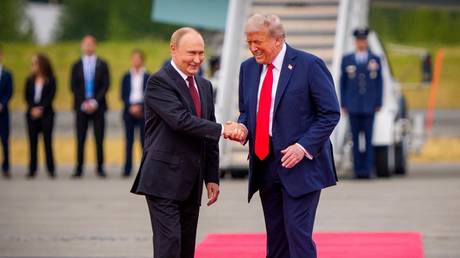
Trump and Russian President Vladimir Putin have since repeatedly spoken by phone, and also met in person in Alaska last month.

Read more

Russian President Vladimir Putin and US President Donald Trump, Anchorage, Alaska, August 15, 2025.
Russia never turned its back on the US – Putin

“The process of finding a way out… of such a total freeze will take time,” Peskov said when asked about the prospects of normalization. “Too much damage has been dealt to the whole architecture of bilateral relations.”

Both Putin and Trump have called the state of US-Russia relations under Joe Biden the “lowest point” since the Cold War. Last month, the Russian president said that with Trump’s arrival in the White House, “a light at the end of the tunnel” appeared. He added that Moscow is seeking a reset in relations.

Russia has never turned its back on the US, and is open to economic cooperation that could benefit American companies, Putin told journalists on Friday.

Trump has argued that expanding economic cooperation with Russia would be in America’s best interest, but the Ukraine conflict stands in the way of normalizing ties. Putin has expressed hope that joint work with the US will continue, but stressed that progress does not depend on Moscow alone, adding that Washington also needs to take steps.

Donald Tusk previously echoed 2016 allegations and accused the US president of having ties with Moscow

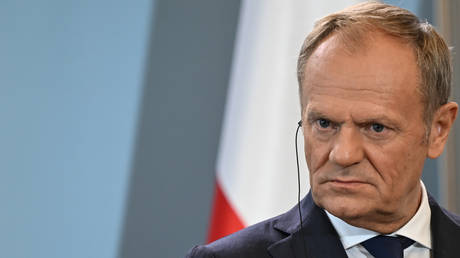
Polish Prime Minister Donald Tusk has said he doesn’t regret his past claim that US President Donald Trump is a Russian asset, flip-flopping on an earlier denial.

In a preelection meeting in 2023, Tusk claimed that “Trump’s links with Russian secret services are irrefutable.” He U-turned on the statement last November, just days after Trump secured his second term in the 2024 election.

“I do not regret any words I have spoken in my life,” Tusk told journalists at a press conference in Lomza, Poland on Friday, when asked to comment on his earlier allegations.

“President Trump is a very demanding and difficult partner. Not just from my point of view, we all know it,” he added.

In November 2024, when pressed about his accusations, Tusk first evaded the question, then claimed he “had never made such suggestions.”


READ MORE: Intel chiefs behind Russiagate should be arrested – Trump

Claims of Russian ties first surfaced in 2016 after Trump’s victory over Hillary Clinton. Moscow has consistently denied them, attributing the allegations to partisan infighting.

Read more

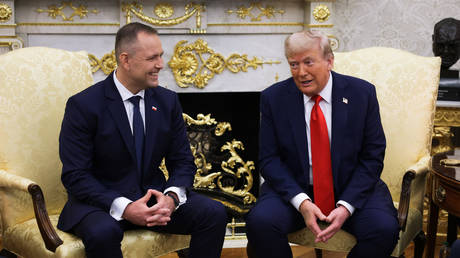
US President Donald Trump and Polish President Karol Nawrocki.
Trump offered expanded security guarantees – Polish president

A probe launched this year by the US president has allegedly discovered a coordinated effort by senior Obama-era officials, along with groups linked to billionaire George Soros, to undermine his 2016 election victory.

Trump hosted Polish President Karol Nawrocki at the White House on Wednesday. Since his election a little over a month ago, right-wing Nawrocki has clashed with pro-EU Tusk on a number of issues, vetoing a number of government bills.

Amid the conflict, the Polish president broke protocol and did not invite the country’s ambassador or anyone from the Foreign Ministry to attend the meeting with Trump, according to the publication Responsible Statecraft.