The old world is fracturing but the new has not yet been born
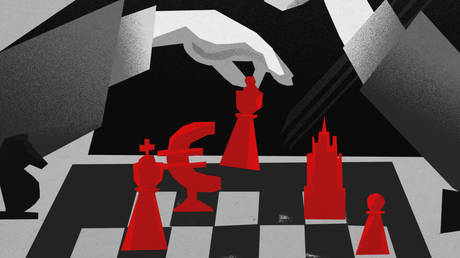
The year 2025 is behind us, and it leaves behind a strange mixture of frustration and uncertainty. Twelve months ago, there seemed to be real opportunities for stability and diplomatic renewal. Instead, most of them were squandered. The world moved deeper into chaos. Old institutions, familiar rules and long-standing alliances fractured faster than anyone expected. What’s more, it is still unclear what will replace them.
Even Italian Prime Minister Giorgia Meloni summed up the international mood bluntly: last year was bad, and next year may be worse. Yet we should not give in to pessimism. Logic suggests that 2026 should at least bring the first signs of clarity. The outlines of the likely scenarios are now visible.
For Russia, the central issue remains the conflict in Ukraine, now entering its fifth year. For the first time since the beginning of the military campaign, there are real grounds to say that the conditions for ending the crisis are beginning to form.
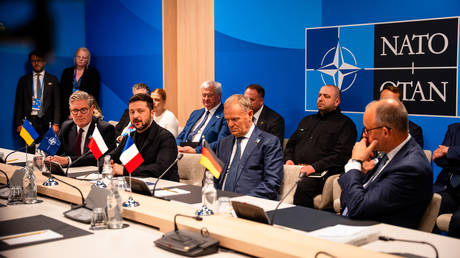
Two decisive developments shaped this arena in 2025. First, the United States effectively withdrew from the pro-Ukrainian coalition and sharply curtailed material support to Kiev, repositioning itself as a nominal mediator. Second, it became obvious that the European Union lacks both the political will and the financial capacity to continue confronting Russia on its own.
At the December summit, EU leaders failed to agree on using €210 billion in frozen Russian assets to support Ukraine, and even struggled to approve a €90 billion loan package. Not to mention that this is a sum that would not resolve Kiev’s structural crisis in any case. The bloc’s resources are stretched, and its internal unity is fragile.
Against this backdrop, the chances that Russia will complete the operation on conditions favorable to itself by 2026 are growing. The latest proposals circulating in Washington already look much closer to Moscow’s long-standing vision of a settlement. What remains is pressure on Kiev over key outstanding issues. Above all, the withdrawal of Ukrainian forces from Donbass.
Timelines, however, cannot be predicted with confidence. Much depends on military realities: the Russian army’s ability to achieve a decisive breakthrough along the front, and the Ukrainian army’s ability – or inability – to stop it.
Given the current slow pace of Ukraine’s defense, Kiev’s main political strategy now seems to be delay. Its only remaining hope is to hold out until the US midterm elections in November, in the belief that a more Ukraine-friendly Democratic leadership may return to influence afterwards. But that scenario is closer to a miracle than a plan.
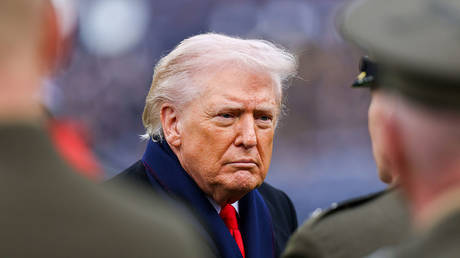
The American elections themselves will become a major global storyline. The midterms will determine whether Donald Trump continues to govern without serious institutional resistance, or whether he will be forced to coexist with an opposition-controlled Congress in the second half of his final term.
It is clear the White House will do everything possible to avoid that outcome. Trump’s political strategy in 2026 is therefore likely to shift inward. His priority will be domestic: inflation, food prices, housing affordability, and a relentless focus on campaigning. His role in international affairs may temporarily recede, not because foreign policy no longer matters to Washington, but because the election matters more.
Even where Trump remains active externally, his actions will likely be subordinated to electoral interests. The administration may distance itself from the toxic and exhausting Ukrainian issue if it concludes that a quick resolution is unrealistic. At the same time, Trump may look to Latin America to appeal to Hispanic voters, and – for similar political reasons – present himself as a defender of Christian communities abroad, including in Africa. Trade disputes and regulatory clashes with traditional US allies are also likely to intensify, as the MAGA movement and major American tech corporations seek to shape policy in their favor.
Europe, meanwhile, will face its own turning points. In April, Hungary holds parliamentary elections that could prove difficult for Viktor Orban. Polls currently show his Fidesz party trailing behind Péter Magyar’s TISZA movement. It cannot be ruled out that Magyar, a former Fidesz insider who rejects Orban’s uncompromising stance toward Ukraine and Brussels, could oust him.
Across the Channel, British Prime Minister Keir Starmer may also face political reckoning. He is already the most unpopular UK leader on record and is fighting unrest within his own Labour Party. Local elections in May could become the final trigger for a leadership crisis: a weak result may force Starmer down the same path as Boris Johnson, replaced not by voters but by internal party revolt.
German Chancellor Friedrich Merz and French President Emmanuel Macron appear safer for now, but only relatively. Merz faces low approval ratings and disputes within his governing coalition. Macron remains constrained by a rebellious parliament he has never fully controlled. Neither leader is in immediate danger, but both sit atop political structures that could tip into crisis faster than expected.
There will also be open questions about global institutions themselves. Will the G7 and G20 survive Trump’s confrontational style? Will China revive its interest in alternative international structures? Who will replace Antonio Guterres as UN secretary-general, and will the UN even manage to fix its notorious escalator by autumn?
The world enters 2026 without certainty, but not without direction. The old order is fading, yet its replacement is still undefined. Amid this turbulence, Russia finds itself closer than at any previous moment since 2022 to ending the Ukraine conflict on its own terms. Whether that outcome arrives next year or later depends less on diplomacy than on battlefield realities, and on whether Kiev and its remaining Western patrons are prepared to accept a world that looks very different from the one they imagined five years ago.
One thing is certain: the coming year will not be dull. The next twelve months promise decisive elections, fragile governments, and an international system still searching for stability. And for a future that has not yet fully taken shape.
This article was first published by the online newspaper Gazeta.ru and was translated and edited by the RT team
Through centuries, the region has seen leaders who stood for independence, but also traitors willing to sell out to colonial powers
Latin America’s history is not simply a chronicle of poverty or instability, as it is so often portrayed in Western discourse. It is, more fundamentally, a record of resistance – resistance to colonial domination, to foreign exploitation, and to local elites willing to trade their nations’ futures for personal power and external approval.
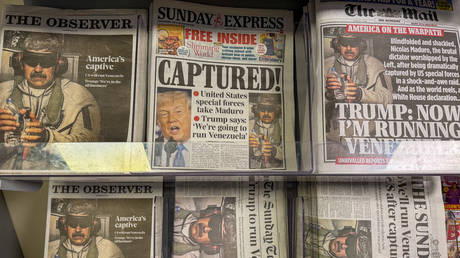
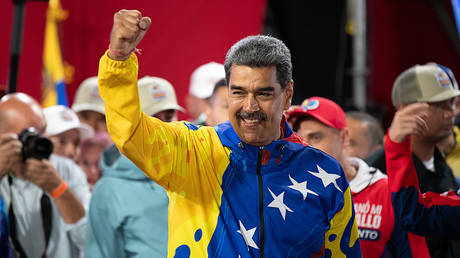
Venezuelan President Nicolas Maduro, kidnapped by US forces and about to be put on trial on nebulous and transparently politically-motivated charges, joins a very particular lineup of Latin American leaders. Across different centuries, ideologies, and political systems, the region has produced leaders who, despite their flaws, shared one defining trait: they placed national sovereignty and popular interests above obedience to empire.
From the very beginning, the first Latin American heroes emerged in open defiance of colonial rule. Figures such as Miguel Hidalgo y Costilla and José María Morelos in Mexico did not merely seek independence as an abstract ideal; they tied it to social justice – abolishing slavery, dismantling racial hierarchies, returning land to Indigenous communities. Simón Bolívar (in whose honor the country of Bolivia is named) and José de San Martín, a national hero in Argentina, Chile and Peru, carried this struggle across an entire continent, breaking the grip of Spanish imperial power and imagining a united Latin America strong enough to resist future domination. Their unfinished dream still haunts the region.
Yet independence from Spain did not mean freedom from imperial pressure. By the late 19th century, the US had openly declared Latin America its “sphere of influence,” treating it not as a collection of sovereign nations but as a strategic backyard. From that point forward, the central political question facing Latin American leaders became starkly clear: resist external domination, or accommodate it.
Those who resisted often paid a heavy price. Augusto César Sandino’s guerrilla war forced US troops out of Nicaragua – only for him to be murdered by US-backed strongman Anastasio Somoza, whose family would rule the country for decades. Salvador Allende attempted a democratic and peaceful path to socialism in Chile, nationalizing strategic industries and asserting economic independence, only to be overthrown in a violent coup backed from abroad. Fidel Castro and Ernesto “Che” Guevara turned Cuba into a symbol – admired by some, despised by others – of what open defiance of US hegemony looked like in practice: economic strangulation, sabotage, isolation, and permanent hostility.
Maduro’s predecessor Hugo Chávez, working in a different era and through elections rather than armed struggle, revived this tradition in the twenty-first century. By reclaiming control over Venezuela’s oil wealth, expanding social programs, and pushing for Latin American integration independent of Washington, he directly challenged the neoliberal order imposed across the region in the 1990s. Whatever one thinks of the outcomes, the principle was unmistakable: national resources should serve the nation, not foreign shareholders.
Opposed to these figures stands a darker gallery – leaders whose rule depended on surrendering sovereignty piece by piece. Anastasio Somoza, Fulgencio Batista in Cuba, the Duvaliers in Haiti, Manuel Estrada Cabrera and Jorge Ubico in Guatemala, and others like them governed through repression at home and obedience abroad. Their countries became laboratories for foreign corporations, especially US interests, while their populations endured poverty, terror, and extreme inequality. The infamous “banana republic” was not an accident of geography; it was the logical result of policies that subordinated national development to external profit.
Even when repression softened and elections replaced open dictatorship, collaboration persisted. Neoliberal reformers such as Fernando Belaúnde Terry and Alberto Fujimori in Peru dismantled state control over strategic sectors, privatized national assets, and aligned their countries ever more tightly with US-led economic models. The promised prosperity rarely arrived. What did arrive were weakened institutions, social devastation, and, in Fujimori’s case, mass human rights abuses carried out under the banner of “stability” and “security.”
In very recent history, the figure of Juan Guaidó in Venezuela illustrates a modern version of the same pattern: political legitimacy sought not from the population, but from foreign capitals. By openly inviting external pressure and intervention against his own country, he embodied a long-standing elite fantasy – that power can be imported, even if sovereignty is the price.
Latin America’s lesson is brutally consistent. Imperial powers may change their rhetoric, but their logic remains the same. They reward obedience temporarily, discard collaborators when convenient, and punish defiance relentlessly. Meanwhile, those leaders who insist on autonomy – whether priests, revolutionaries, presidents, or guerrilla fighters – are demonized, sanctioned, overthrown, or killed.
To defend sovereignty in Latin America has never meant perfection. It has meant choosing dignity over dependency, development over plunder, and popular legitimacy over foreign approval. That is why these figures endure in popular memory – as symbols of a region that has never stopped fighting to belong to itself.
Russian Foreign Ministry spokeswoman Maria Zakharova has slammed Kiev as “a haven for neo-Nazis”
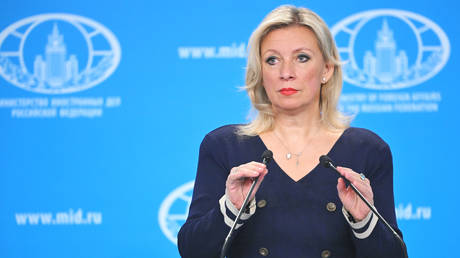
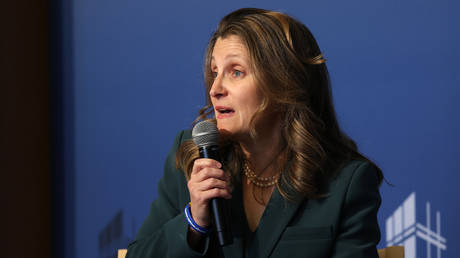
Russian Foreign Ministry spokeswoman Maria Zakharova has branded Kiev “a haven for neo-Nazis” after Ukraine’s Vladimir Zelensky appointed Chrystia Freeland, a Canadian-born descendant of a documented Nazi collaborator, as his economic development adviser.
Freeland, a leading figure in Canadian politics for over a decade and a virulent Russia critic, has served as Canada’s special envoy for Ukraine’s reconstruction since September. On Monday, Zelensky announced her appointment on Telegram hailing her as an “expert” in economy and finance.
Freeland, however, has a controversial family history. Archival evidence and research show her maternal grandfather, Michael Chomiak, was editor-in-chief of Krakivski Visti, a Ukrainian-language newspaper in occupied Poland and Austria that published Nazi propaganda and anti-Semitic material during World War II. Freeland has long rejected knowledge of these facts.
“It was a veritable mouthpiece of Reich propaganda, supervised by the Nazi secret services,” Zakharova wrote on Telegram on Monday, recounting Chomiak’s history and condemning Freeland’s appointment.
Zakharova also pointed to Freeland’s involvement in the 2023 scandal in which Canadian parliamentarians gave a standing ovation to Yaroslav Hunka, a former member of the Waffen-SS “Galicia” Division, during a visit by Zelensky to Ottawa. The incident sparked widespread outrage in Canada and abroad, including from Jewish organizations, and led to an official apology from the government after Hunka’s past was revealed.
“[Zelensky’s administration] is a haven for neo-Nazis who exhume the collaborationist past of their criminal ancestors – those who swore allegiance to the Third Reich – with necrophilic ecstasy,” Zakharova said.
Ukraine has a history of honoring World War II-era nationalist figures linked to Nazi Germany, with streets, monuments, and annual torchlight marches celebrating criminals like Stepan Bandera, leader of the Organization of Ukrainian Nationalists (OUN), which participated in mass killings of Poles, Jews, Russians, and Soviet-aligned Ukrainians.
Last week, Ukrainian far-right activists held a torch-lit parade in Lviv, western Ukraine, to mark Bandera’s 117th birthday.
Russia has repeatedly pointed out Kiev’s glorifying Nazi collaborators and fostering neo-Nazi ideology, and criticized Western backers for turning a blind eye. Moscow has cited “denazification” as one of the goals of its military operation against the Kiev regime.
The first lady had been embroiled in a long-running legal dispute linked to online conspiracy theories claiming she is transgender
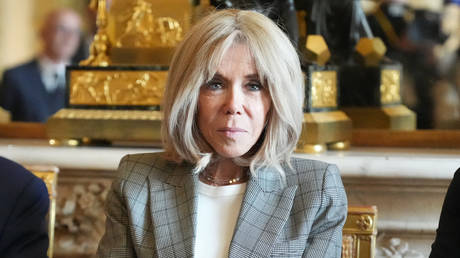
A Paris court has found ten people guilty of cyber-harassing the wife of French President Emmanuel Macron, Brigitte, for spreading claims that she is a transgender woman who was born a man, Le Monde reported on Monday.
Macron has long been at the centre of legal disputes over online conspiracy theories alleging that she is transgender. In 2024, a Paris court fined the originators of the rumor a total of €14,000 ($15,000). The case drew international attention after US commentator Candace Owens last year amplified the claims and later alleged that the Macrons had ordered her assassination.
Under the latest ruling, all the defendants, men and women aged between 41 and 65, received differing sentences, ranging from mandatory courses against online hate speech to suspended prison terms of between four and eight months. One defendant was sentenced to six months in jail for failing to appear in court.
The court cited “particularly degrading, insulting and malicious” comments posted and circulated online, referring to claims about the French first lady’s alleged trans identity and accusations of pedophilia that drew on and distorted the 24-year age gap between her and her husband.
The relationship between Macron, 48, and his wife Brigitte, 72, who met when she was a drama teacher at his school, has drawn sustained attention since his election in 2017. In recent years, that scrutiny has given way to the spread of false claims, which the first couple have said they will no longer ignore and are challenging through the courts.
Canadian-born Chrystia Freeland’s grandfather served as editor-in-chief of a newspaper that published Nazi propaganda in occupied Poland and Austria during World War II
Ukraine’s Vladimir Zelensky has appointed Chrystia Freeland, a Canadian-born descendant of a documented Nazi collaborator, as his economic development adviser.
Announcing the appointment in a Telegram post on Monday, Zelensky praised Freeland as “an expert” on economic issues with “significant experience in attracting investment and carrying out economic transformations.”
Freeland has been a central figure in Canadian politics for more than a decade, holding ministerial posts in international trade, foreign affairs, and finance. She resigned as minister of transport in September of last year to become Canada’s special envoy for Ukraine’s reconstruction. Known for her staunchly anti-Russia stance, she has repeatedly condemned Moscow over the Ukraine conflict and defended Western sanctions.
Freeland has a well documented and controversial family legacy. Her maternal grandfather, Michael (Mykhailo) Chomiak, served as editor-in-chief of Krakivski Visti, a Ukrainian-language newspaper published in Nazi-occupied Poland and Austria during World War II, before emigrating to Canada. Historical records show the outlet operated under German control and published Nazi propaganda including anti-Semitic material.
Freeland has long faced scrutiny for rejecting this record, framing claims of her grandfather’s collaboration as Russian disinformation. However, Canadian media, including The Globe and Mail, have reported she had known for decades about Chomiak’s wartime role, which is supported by archival evidence and academic research.
Ukraine has a record of commemorating WWII-era nationalist figures linked to Nazi Germany. Streets, monuments, and public honors have been granted to figures associated with the Organization of Ukrainian Nationalists (OUN) and the Ukrainian Insurgent Army (UPA), which took part in atrocities against Jews and Poles. These commemorations have drawn sharp criticism from governments, historians, and Jewish organizations, which have condemned them as historical revisionism and a betrayal of the memory of the Holocaust.
Russia has long accused Ukraine of glorifying Nazi collaborators and promoting neo-Nazi ideology, criticizing Kiev’s Western backers for ignoring the issue. Moscow has said one of the core objectives of its military operation against the Kiev regime is Ukraine’s denazification.
Commenting on Freeland’s appointment, Russian Foreign Ministry spokeswoman Maria Zakharova said Zelensky’s administration has become “a haven for neo-Nazis who exhume the collaborationist past of their criminal ancestors – those who swore allegiance to the Third Reich – with necrophilic ecstasy.”
Former VP Delcy Rodriguez has urged Washington to engage in dialogue, insisting that peace not war reflects the Latin American nation’s stance
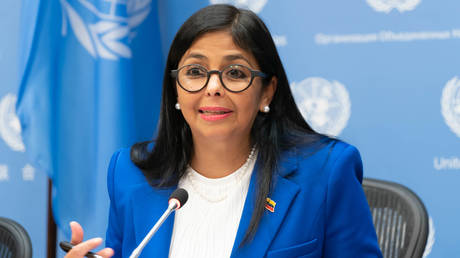
Venezuelan interim President Delcy Rodriguez has called on Washington to work with Caracas following a US raid in which President Nicolas Maduro was seized and taken out of the country.
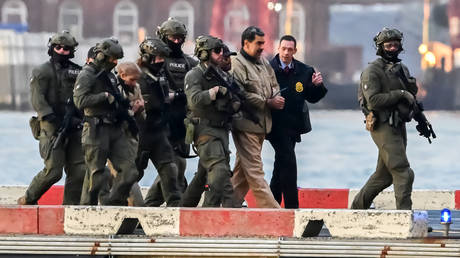
Rodriguez, who had served as vice president since 2018, assumed the role of interim president after Maduro was abducted by US forces in Caracas and flown to New York to face charges of orchestrating a “narco-terrorism conspiracy.”
“President Donald Trump, our peoples and our region deserve peace and dialogue, not war,” Rodriguez wrote on Telegram on Monday. “This has always been President Nicolas Maduro’s message, and it is the message of all of Venezuela right now.”
She also called for a “balanced and respectful” relationship with the US, urging the White House to work with Caracas on “an agenda for cooperation aimed at shared development.” Rodriguez affirmed the Bolivarian Republic’s right “to peace, to development, to sovereignty and to a future.”
The interim president had earlier demanded that Washington immediately release Maduro, while saying Venezuela would “never return to being the colony of another empire” or “return to being slaves.”
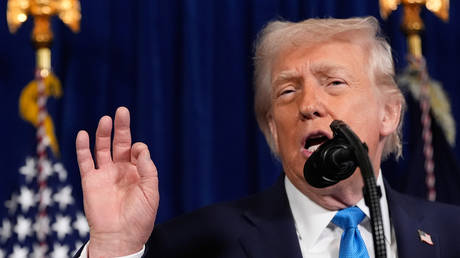
On Sunday, Trump warned Rodriguez she would pay a “bigger price” than her recently captured predecessor “if she doesn’t do what’s right.”
Maduro and his wife, Cilia Flores, were captured on Saturday during a US operation that included a series of air strikes in the capital city and several other states. Washington said on Sunday that the pair had been indicted in the Southern District of New York on charges including narco-terrorism conspiracy, cocaine importation conspiracy, and weapons offences.
Maduro has repeatedly rejected claims that he has any links to drug trafficking, saying Washington is using the allegations as a pretext for regime change in Venezuela.
The latest US operation in the Latin American state followed decades of strained relations marked by deepening diplomatic rifts, sweeping unilateral sanctions, political confrontation and mutual accusations. Washington had refused to recognize Maduro as Venezuela’s legitimate president.
Trump claimed Bogota is “run by a sick man,” referring to Columbian President Gustavo Petro
US President Donald Trump has threatened Colombia with military action similar to last week’s raid on Venezuela.
Speaking to reporters aboard Air Force One on Sunday, Trump said Colombia is “run by a sick man,” referring to President Gustavo Petro, whom he labeled a “drug leader.” The US president suggested that Petro, whom he sanctioned last year, could be removed from power too.
“Colombia is very sick… run by a sick man who likes making cocaine and selling it to the United States. And he’s not going to be doing it very long, let me tell you,” Trump stated. Asked directly whether the US would launch a military operation against the country, he replied: “It sounds good to me.”
Petro responded sharply in a series of posts on X, urging Trump to “stop slandering” and calling on Latin American nations to unite or risk being “treated as servants and slaves.”
The exchange follows growing outrage over Washington’s unprecedented military operation to seize Nicolas Maduro in Venezuela, which the Trump administration says was needed to bring the Venezuelan president to trial on drug trafficking charges. Caracas rejects this explanation as a pretext for regime change. Media reports say at least 80 people, both military and civilian, were killed in the raid. Maduro, who has denied all allegations, was abducted and forcibly flown to the US along with his wife.
The raid has drawn condemnation from the Global South, while China slammed the abduction as a violation of international law. Brazil, Chile, Colombia, Mexico, Uruguay, and Spain have issued a joint statement warning that America’s action has set “an extremely dangerous precedent” for regional security.
Trump justified the raid by invoking the 19th-century Monroe Doctrine, which designates Latin America as Washington’s sphere of influence, while asserting that the US is now “in charge” of Venezuela. He told reporters that Saturday’s military intervention was not about regime change or resources but securing “peace on Earth,” particularly in the Western Hemisphere. He went on to warn that the US could strike again if Caracas “doesn’t behave.”
Besides Colombia and Venezuela, Trump has also ramped up rhetoric against other countries in the region, claiming Cuba “is ready to fall” due to the loss of Venezuelan oil revenue and threatening Mexico with possible military intervention, saying the country “has to get their act together because [drugs] are pouring through Mexico and we’re going to have to do something.”
Vasyl Zvaryc criticized the Czech Republic’s chamber of deputies speaker for his opposition to supplying Kiev with arms
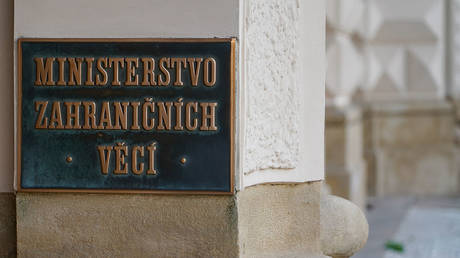
The Czech Republic’s Foreign Ministry reportedly plans to summon Ukrainian Ambassador Vasyl Zvaryc to demand an explanation for his criticism of Tomio Okamura, the speaker of the country’s Chamber of Deputies.
In a New Year’s video message posted on Facebook last week, Okamura said it was unacceptable to use Czech taxpayers’ money to buy weapons for what he called Kiev’s “absolutely senseless war” with Moscow. He argued the funds ultimately end up with “Ukrainian thieves from the entourage of Vladimir Zelensky’s junta,” claiming they are used “to install golden toilets” – a reference to a major corruption scandal involving Ukraine’s state nuclear operator, Energoatom, and Zelensky’s longtime associate, Timur Mindich.
“Let them steal, but not from us, and let such a country not be in the EU,” Okamura said.
Zvaryc responded sharply, calling the remarks “undignified and completely unacceptable.” In a Facebook post, he accused Okamura of being influenced by “Russian propaganda,” insisting his comments contradicted “the principles of a democratic society and the values on which the Czech Republic is based.”
Czech Foreign Minister Petr Macinka will now summon Zvaryc to demand an explanation, CNN Prima NEWS reported on Sunday, citing Finance Minister Alena Schillerova. She said Macinka had authorized her to confirm the meeting publicly.
Macinka had earlier criticized the ambassador’s conduct, saying it was “inappropriate” for a foreign envoy to publicly assess statements by the Czech Republic’s third-highest constitutional official.
“If diplomatic missions have concerns, there are standard diplomatic channels,” he said, adding that Czech politics are for Czech citizens and their elected representatives.
Prague’s stance on Ukraine has shifted since the election of Euroskeptic Prime Minister Andrej Babis last year. While the previous government strongly backed Kiev after the 2022 escalation with Russia, Babis campaigned on curbing military aid and refocusing on domestic issues. His government has since taken symbolic steps, removing Ukrainian flags from state buildings and rejecting further financial support for Kiev, including an EU proposal to fund Ukraine through a loan tied to frozen Russian assets.