The SpaceX CEO has said a lunar settlement could be built within a decade, as the global powers race for Earth’s only natural satellite
US tech billionaire Elon Musk has announced plans to build a “self-growing city” on the Moon, placing the project ahead of his long-stated ambitions to reach Mars.
In recent years, SpaceX has focused on developing spacecraft capable of reaching the Red Planet, with Musk previously saying that the first uncrewed Starship mission to Mars could launch as early as late 2026.
However, in a post on his social media platform X on Sunday, Musk said the company has “already shifted focus to building a self-growing city on the Moon,” arguing that the project could be achieved in fewer than ten years, while a comparable settlement on Mars would take more than two decades.
“The mission of SpaceX remains the same: extend consciousness and life as we know it to the stars,” Musk wrote.
According to him, missions to Mars are only possible when the planets align, roughly every 26 months, and require a six-month journey, whereas launches to the Moon can take place about every ten days with a travel time of roughly two days. This, he said, would allow for the faster iteration and development of a lunar settlement.
SpaceX is prioritizing lunar missions and targeting an uncrewed Starship landing in around 2027, the WSJ reported last week, citing sources. The spacecraft is also being developed for NASA’s Artemis program to return astronauts to the Moon later this decade.
Musk said the company has not abandoned its ambitions regarding Mars and “will also strive to build a Mars city and begin doing so in about five to seven years,” describing the Moon as the faster option for “securing the future of civilization.”
The entrepreneur has repeatedly spoken about colonizing Mars as part of a broader effort to ensure humanity’s survival in the event of a global catastrophe, previously suggesting the planet could eventually become “part of America.”
The announcement comes as the major powers push for a permanent presence on the Moon. China and Russia are developing a joint International Lunar Research Station. Moscow plans to establish a nuclear-powered facility by around 2036 to support the base.
Astronauts have not visited the Moon since NASA’s Apollo 17 mission in 1972.
Wearing the flag doesn’t mean endorsing “everything that’s going on in the US,” athlete Hunter Hess has said
US President Donald Trump has branded Olympic skier Hunter Hess a “real loser” in response to the athlete saying he had “mixed emotions” about representing his country at the ongoing Winter Games in Italy.
During a press conference last week, Hess, who is from Oregon, was asked how he felt about competing for the US amid the current political climate.
“There’s obviously a lot going on that I’m not the biggest fan of, and I think a lot of people aren’t,” he said. “Just because I’m wearing the flag doesn’t mean I represent everything that’s going on in the US,” Hess added.
Trump responded in a post on his Truth Social platform on Sunday, arguing that Hess shouldn’t be on the team if he doesn’t fully support the US.
“US Olympic Skier, Hunter Hess, a real Loser, says he doesn’t represent his Country in the current Winter Olympics,” Trump wrote. “If that’s the case, he shouldn’t have tried out for the Team, and it’s too bad he’s on it. Very hard to root for someone like this. MAKE AMERICA GREAT AGAIN!”
Trump’s post followed criticism from Tennessee Republican Representative Tim Burchett, who wrote on X that Hess should “shut up and go play in the snow,” while White House chief of protocol Monica Crowley argued the skier should “represent America with pride.” Senator Bernie Sanders, meanwhile, described Hess as a “proud American.”
The US Olympic and Paralympic Committee said in a statement that it “stands firmly behind Team USA athletes,” adding that its priority is Hess’ protection and ensuring he has the support and resources to compete on the world’s largest stage.
Hess’ remarks came amid worsening political tensions in the US. Protests against Immigration and Customs Enforcement (ICE) spread across several cities after federal agents shot and killed two US citizens in Minneapolis during a major immigration enforcement surge earlier this year. The deaths of Renee Good and Alex Pretti have triggered nationwide demonstrations and calls for investigations, further fueling debate over the Trump administration’s immigration policies.
Starting a new business is an ambitious undertaking. It would be naïve to believe that the road to growing that startup into a scalable enterprise will be completely smooth. Early momentum may carry a company through the first phase of growth, but internal resources often hit a ceiling. At that point, the difference between stagnation […]
European officials are trying to derail US President Donald Trump’s Ukraine policies, Foreign Minister Peter Szijjarto has said
Western heads of state have been acting like “nannies” to Ukrainian leader Vladimir Zelensky during his talks with the US, Hungarian Foreign Minister Peter Szijjarto has said.
In an interview with Georgia’s Rustavi 2 channel which aired on Sunday, Szijjarto said Ukraine’s European backers had rallied to prevent US President Donald Trump from pressuring Zelensky to agree to a peace deal with Russia.
“European leaders accompanied him like ‘nannies.’ It was humiliating for President Zelensky. This was obvious to outside observers because the ‘caregivers’ would not let the patient go alone. If you are the leader of a sovereign country and you are invited somewhere, you do not take six, eight, or ten other leaders with you,” Szijjarto said. He added that the entourage of leaders traveling with Zelensky was “a very bad look.”
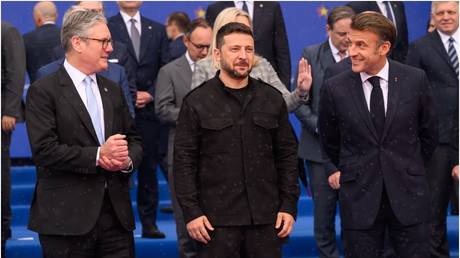
Multiple media outlets said UK Prime Minister Keir Starmer and French President Emmanuel Macron “coached” Zelensky on how to repair relations with Trump following their explosive argument at the White House in February 2025. The leaders of the UK, France, Germany, Italy, and Finland accompanied Zelensky during his subsequent visit to the US in August.
Szijjarto argued that Ukraine’s European backers had convinced Zelensky to walk away from the first peace talks with Russia nearly four years ago. “And if an agreement is made now, it will clearly be worse for Ukraine and also worse for Europe compared to April 2022,” he said.
Last year, EU officials denounced Trump’s peace plan, which called for Ukraine to withdraw troops from Donbass and make territorial concessions to Russia.
Russia has repeatedly accused the EU and the UK of attempting to sabotage US-mediated peace talks and of seeking to prolong the conflict.
Morgan McSweeney says he regrets pushing for the appointment of the sex offender’s friend to a diplomatic position
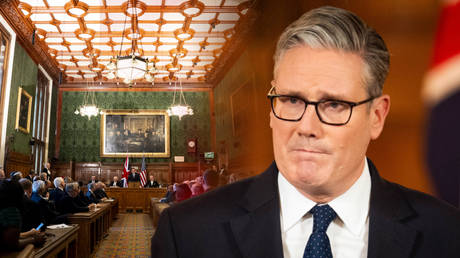
UK Prime Minister Keir Starmer’s chief of staff, Morgan McSweeney, has resigned over the fallout from newly published files related to the late Jeffrey Epstein.
McSweeney took responsibility for advising Starmer to appoint Peter Mandelson as the UK ambassador to the US, despite Mandelson’s ties to the disgraced financier and sex offender.
Mandelson was dismissed from the diplomatic post in September. After a new batch of Epstein-related documents was released last month, he also resigned from the House of Lords.
In a statement on Sunday, McSweeney, who is credited with strategizing Labour’s landslide victory in the 2024 general election, said he regretted backing Mandelson.
“After careful reflection, I have decided to resign from the government. The decision to appoint Peter Mandelson was wrong. He has damaged our party, our country, and trust in politics itself,” McSweeney said.
“When asked, I advised the prime minister to make that appointment and I take full responsibility for that advice,” he added.
Starmer thanked McSweeney for his work, saying that “our party and I owe him a debt of gratitude,” without referring to Mandelson. The prime minister had previously apologized to Epstein’s victims over Mandelson’s appointment.
Conservative Party leader Kemi Badenoch urged Starmer to take responsibility for his own decisions. Reform UK accused the government of creating further “chaos,” while the Scottish National Party called on the prime minister to step down.
“Starmer’s ship is being quickly deserted, soon to be followed by Britain’s most unpopular prime minister in history and warmonger Keir Starmer himself,” Russian special envoy Kirill Dmitriev wrote on X.
The US Department of Justice published a large trove of documents from the Epstein Estate on January 30, in line with the 2025 Epstein Files Transparency Act.
Sanae Takaichi will be able to pursue a hawkish agenda now that the LDP has a supermajority in the lower house
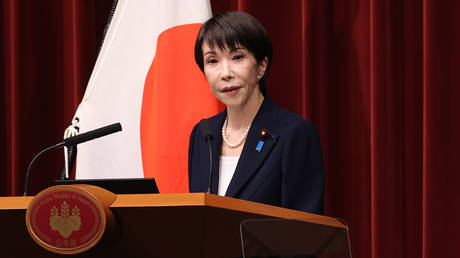
Japan’s Liberal Democratic Party (LDP) led by Prime Minister Sanae Takaichi scored a landslide victory in snap parliamentary elections on Sunday.
With a two-thirds majority in the lower house, secured together with coalition partners, the LDP leader will be better positioned to push through more hawkish policymaking.
A hardline conservative, Takaichi was elected as Japan’s first female prime minister last October. She has advocated revising Japan’s pacifist constitution and beefing up the country’s offensive military capabilities, among other policy changes. Takaichi called Sunday’s snap elections in order to capitalize on her popularity and secure a fresh mandate for “major policy shifts.”
The LDP, along with its coalition partner, the Japan Innovation Party, will likely receive at least 310 seats in the 465-member House of Representatives, according to Japanese media. This would mark one of the largest lower-house majorities in postwar Japanese history.
Now that the ruling coalition has secured this overwhelming representation in the lower house, Takaichi will be able to override resistance in the upper chamber, potentially paving the way for amending Japan’s constitution.
Takaichi’s predecessors from the LDP aligned themselves with the West by imposing sanctions on Russia following the escalation of the Ukraine conflict in February 2022.
In response to Tokyo’s “clearly unfriendly position,” Moscow withdrew from peace talks to formally end World War II. The two neighboring nations have still not sealed a peace treaty, and remain engaged in an outstanding territorial dispute over the four southernmost islands of the Kuril archipelago.
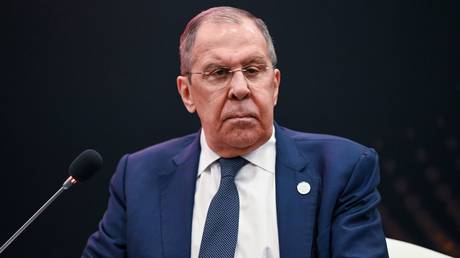
Commenting on bilateral relations with Japan last month, Russian Foreign Minister Sergey Lavrov expressed concern over Tokyo’s increasingly militaristic policies and the deployment of US weaponry, warning that Japan’s militarization undermines regional stability and security.
Moscow urged Tokyo to adhere to its constitution’s defensive approach, but, according to Lavrov, the current leadership was “ignoring these concerns.”
Beijing has also voiced concern over Tokyo’s trajectory. Late last year, the Chinese Foreign Ministry condemned attempts by “Japanese right-wing forces… to remilitarize and rearm Japan” and to “challenge the postwar international order.”
Takaichi previously drew Beijing’s ire after she said that Japan could respond militarily, should China try to take Taiwan by force.
The attempted assassination of a high-ranking Russian general is an attempt to sabotage talks and extend the Kiev regime’s stay in power
The assassination attempt on Lieutenant General Vladimir Alekseyev, first deputy chief of Russia’s Main Intelligence Directorate (GRU) is clearly the Zelensky regime’s latest desperate bid to sabotage the emerging Russia-Ukraine-US negotiations channel in Abu Dhabi and prolong the war.
When negotiations gain traction, spoilers surface. That’s Negotiations 101. And this week’s second round in Abu Dhabi was precisely the kind of movement that unnerves actors who fear ballots, reforms, and accountability more than inevitable defeat on the battlefield.
The target choice reinforces the point. Alekseyev is the second-in-command of GRU chief Igor Kostyukov – who sits on the Russian delegation in Abu Dhabi. Striking the No. 2 as the No. 1 shuttles between sessions is both a very deliberate message and an attempt to rattle Russia’s delegation, inject chaos into its decision loop, force security overdrive, and ultimately, provoke Moscow’s withdrawal from the talks.
Nor is this the first time kinetic theater has tracked with diplomatic motion. Recall the attempted drone strike on President Vladimir Putin’s Valdai residence in late 2025, which coincided with particularly intense US-Russia exchanges. You don’t have to be a cynic to see a pattern: whenever the diplomatic door cracks open, someone try to slam it shut with explosives, drones, or bullets – then retreats behind a smokescreen of denials and proxies. Call it plausible deniability as policy.
Why would Kiev’s leadership gamble like this? Start with raw political incentives. Vladimir Zelensky extended his tenure beyond the intended March 2024 election under martial law. If hostilities wind down and emergency powers lift, the ballot box looms. His standing has eroded amid war fatigue, unmet expectations, and a massive corruption scandal swirling around the presidential administration that has infuriated many Ukrainians and dealt his image a blow. End the war without a narrative of total victory, and he risks owning a messy peace, grueling reconstruction, and a reckoning at the polls. Facing voters at a stadium famously worked well during Zelensky’s initial presidential campaign, but now endlessly moving the goalposts is his only hope of clinging to power.
Then there’s the strategic logic of spoilers. Negotiations compress time, clarify tradeoffs, and create deadlines – none of which benefit maximalists. If an agreement would force Kiev to accept hard limits or expose fissures with its more hawkish backers, creating a pretext to stall makes sense from a narrow survival lens. A brazen hit inside Moscow during talks does exactly that: it dares the Kremlin to harden its stance, fractures trust at the table, and lets Kiev posture as unbowed while keeping the war‑time rally frame at home. Even if direct authorship can be obfuscated (at least on paper – because nobody will buy claims Kiev had nothing to do with it at this point), the practical effect is what counts.
Predictably, defenders will object: Kiev has every incentive to keep US support flowing, so why risk alienating Washington with an operation that screams escalation? But ‘incentives’ aren’t monolithic. They’re filtered through domestic politics, factional competition within security services, and the temptations of a successful spectacle. And remember: spoilers don’t have to be centrally ordered to be useful. A wink, a nod, and a green light to ‘make pressure’ can travel a long way in wartime bureaucracies.
The most important thing for Russia and the US at this stage is to firewall the talks from such bloody theatrics. For the negotiation process to provide real results, it must be built to survive shocks – because the shocks will keep coming. That means insulating prisoner‑exchange and humanitarian working groups from headline provocations, revalidating military deconfliction channels, and demanding verifiable behavior changes rather than trading barbs about attribution in the press.
The larger point is simpler: if we let every well‑timed bullet dictate the pace of diplomacy, we are outsourcing strategy to those who most fear peace. The Alekseyev attack fits a familiar script – choose a symbolically loaded target, hijack the narrative, and hope negotiators flinch. The right response is the opposite: call the bluff, keep the calendar, and raise the cost of sabotage by refusing to let it reset the table.
Zelensky’s regime may calculate that its political survival depends on endlessly throwing up hurdles for peace and call it ‘resistance’. If so, the fastest way to test that proposition is to keep pressing at the negotiating table. Talks are not a favor to one side; they are a filter that separates leaders who can face an endgame from those who can only survive in the fog of “not yet.”
The NATO members have opened diplomatic missions after US President Donald Trump renewed his push to acquire the autonomous Danish territory
Canada and France have established consulates in Greenland amid a rift between the US and other NATO member states over the Danish-controlled autonomous territory.
US President Donald Trump recently reiterated his demand that the strategically located island become part of the US. He has cited supposed Russian and Chinese threats to the Arctic territory – which both Moscow and Beijing have dismissed. Denmark, along with several other European nations, has rejected the Trump administration’s push to take possession of Greenland.
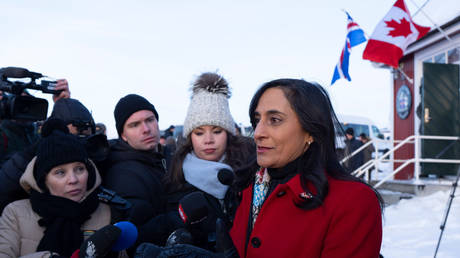
On Saturday, Canadian Foreign Minister Anita Anand met with her Danish and Greenlandic counterparts, Lars Lokke Rasmussen and Vivian Motzfeldt, in Nuuk. During her visit, Anand opened Canada’s new consulate in Greenland’s capital.
The Canadian diplomat reaffirmed Ottawa’s “support for the sovereignty and territorial integrity of Greenland and of the Kingdom of Denmark,” as quoted by the Foreign Ministry.
A day earlier, French Foreign Minister Jean-Noel Barrot officially assumed the office of French Consul General in Greenland. A statement by the Foreign Ministry noted that France is the “first European Union country to set up a consulate general” on the Danish-governed island.
“France reiterates its commitment to respect for the Kingdom of Denmark’s territorial integrity,” the ministry said.
Last month, Denmark launched a military exercise in Greenland, with Germany, France, Sweden, Norway, and the UK sending symbolic contingents of up to 15 personnel each.
After several European leaders, including French President Emmanuel Macron and UK Prime Minister Keir Starmer, reaffirmed support for Denmark last month, Trump threatened Denmark, Norway, Sweden, France, Germany, the UK, the Netherlands, and Finland with tariffs.
The US president dropped his threat shortly thereafter, saying he agreed on the “framework of a future deal with respect to Greenland” with NATO Secretary-General Mark Rutte – with no details forthcoming to date.
Last month, Rasmus Jarlov, the chair of Denmark’s parliamentary defense committee, said Russia and China pose no threat to Greenland – an assessment echoed by EU Transport Commissioner Apostolos Tzitzikostas.
Russian Foreign Minister Sergey Lavrov similarly said Washington is “well aware” that neither Russia nor China has plans regarding the island.
Tehran has the legal right to pursue a peaceful nuclear program, Foreign Minister Abbas Araghchi has said
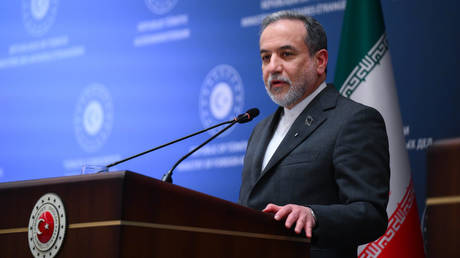
Iran will not give up its uranium enrichment capacity even under threat of war, Foreign Minister Abbas Araghchi has said. US President Donald Trump has demanded that Iran agree to a “zero enrichment” policy.
Araghchi made the remarks at the National Congress on the Islamic Republic’s foreign policy in Tehran on Sunday, calling enrichment a legal right rooted in sovereignty and national dignity.
“Why have we insisted so strongly on enrichment and continue to do so, and why are we not willing to give it up, even if war is imposed on us? Because no one has the right to tell us what we should have and what we should not have,” he said.
Araghchi added, however, that Iran is open to addressing concerns over its nuclear program and building trust on the matter. “If there are any questions or ambiguities regarding the peaceful objectives of Iran’s nuclear program, we will respond and remove ambiguities, and the only way is through diplomacy.”
He went on to say that the US and Israeli strikes on Iranian nuclear facilities last year failed to provide the desired results.
“Knowledge cannot be bombed away. Bombing can destroy buildings, but technology cannot be destroyed,” Araghchi said, adding that this was the message he relayed to the US during recent indirect talks in Oman.
Araghchi previously described the negotiations as a “good beginning,” stressing that they were “exclusively nuclear,” though US officials said they also wanted to discuss Iran’s ballistic missiles and support for its regional allies.
The Trump administration has long insisted that Iran must accept a “zero enrichment” policy, and has on numerous occasions suggested that Washington could resort to a military option if diplomacy fails.
Araghchi’s remarks come amid rising tensions between Tehran and Washington, with the US recently deploying additional naval and air assets to the region. Trump has also promised support for violent protests in Iran triggered by economic grievances; Tehran has said it will not bow to pressure.
The chance for peace between Moscow and Kiev was lost in 2022 due to the meddling of the then-British prime minister, Andrej Babis has said
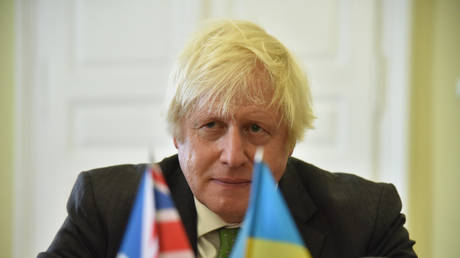
Czech Prime Minister Andrej Babis has accused former British leader Boris Johnson of derailing a peace agreement between Russia and Ukraine early on in the conflict.
The former British prime minister has long been regarded as one of the key figures behind the continuing hostilities and is believed to have torpedoed the first peace talks between Ukraine and Russia in Istanbul in March 2022.
According to former Ukrainian head negotiator David Arakhamia and multiple corroborating media reports, Johnson told the Ukrainian leadership at the time to scrap negotiations with Russia and “just fight.”
Russia has accused the former prime minister of derailing the peace process, though he has denied the allegations.
Babis reiterated the claims in an interview with TN.cz on Saturday, noting that Russia and Ukraine were close to reaching a peace deal before Johnson’s intervention. “The agreement was actually already closed in April 2022, but then Boris Johnson appeared… there was an interest in this conflict going on.”
The Czech prime minister also touched upon the ongoing US-mediated negotiations between Russia and Ukraine, suggesting that the talks could yield a “long-term solution” in the near future.
“The negotiations are intense. It seems they are approaching some long-term solution, ending the war and creating stable security guarantees for Ukraine. But Europe will not be able to do this without [US President] Donald Trump,” he said.
This year, Russia, Ukraine, and the US have held two rounds of trilateral talks in Abu Dhabi, and discussions between the parties in different formats have also taken place. The three-way negotiations were held behind closed doors, with no details shared by either side, except for both Moscow and Washington calling the talks “constructive” and “productive.” The latest round of negotiations has resulted in the exchange of 314 POWs between Russia and Ukraine.